-
-

-
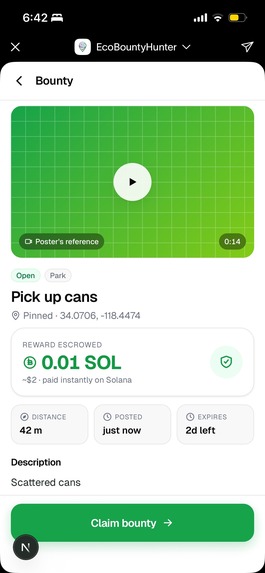
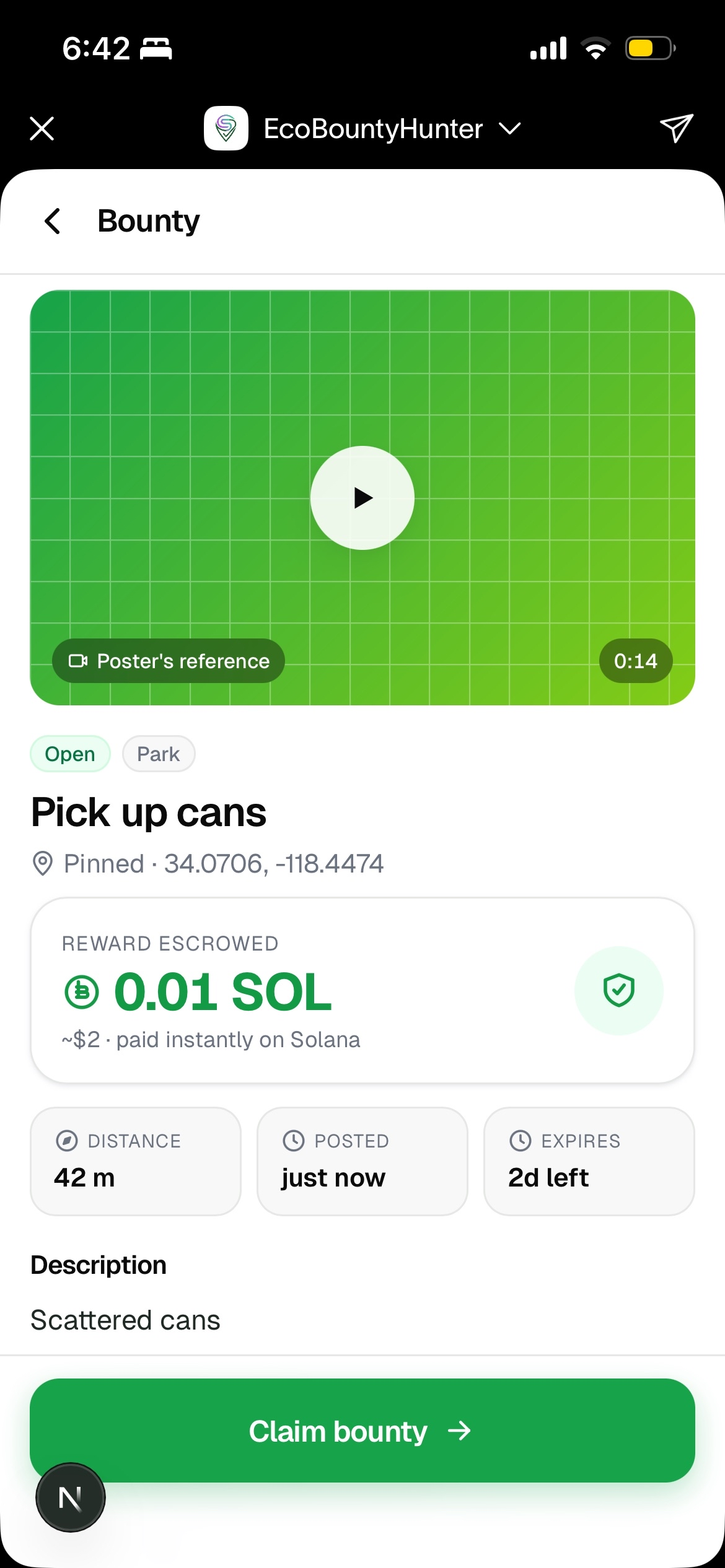
Bounty claim screen
-
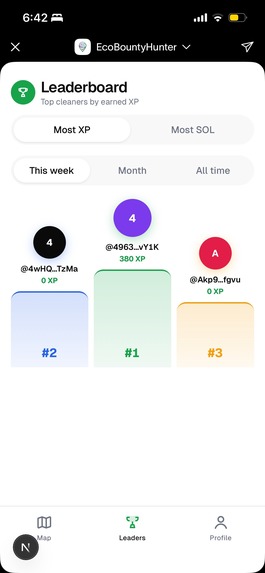
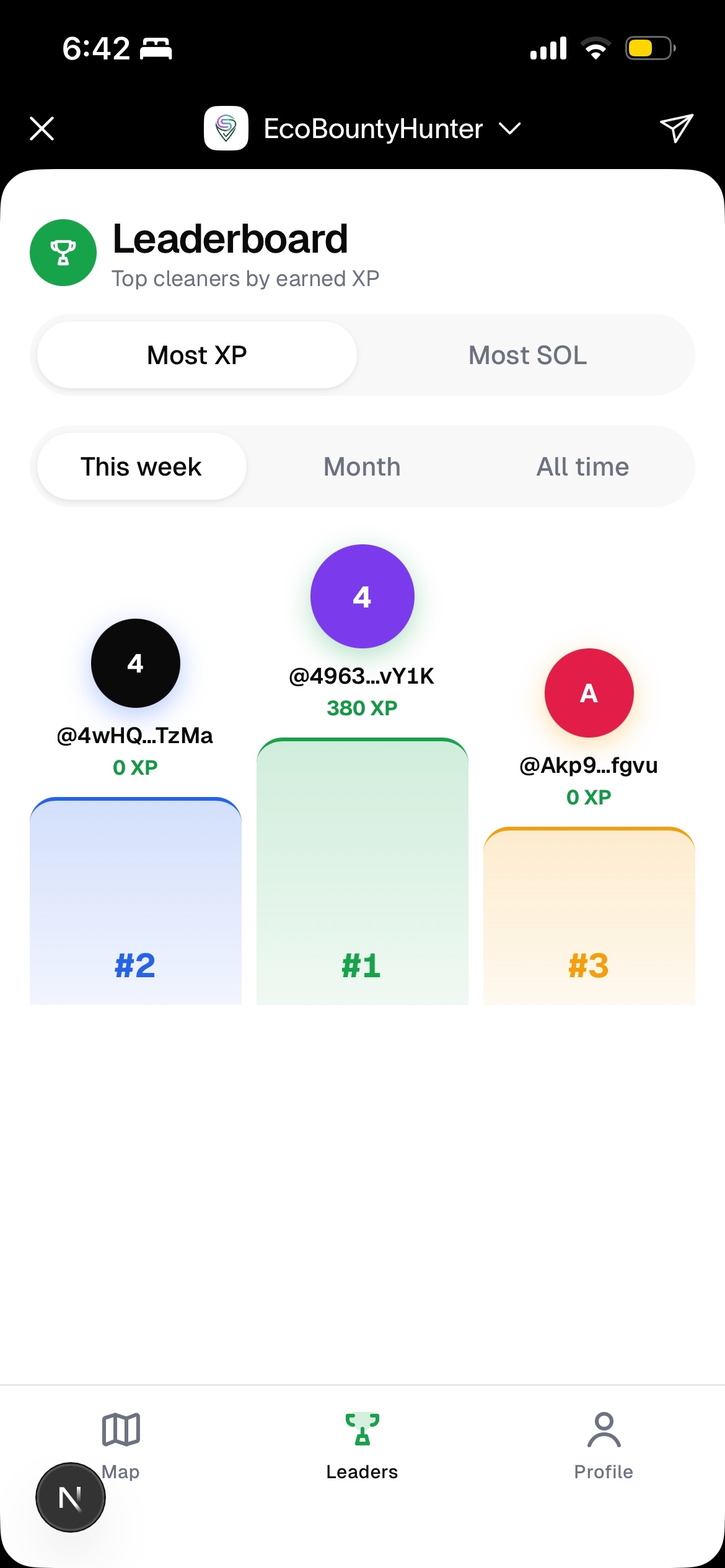
Leaderboard podium
-
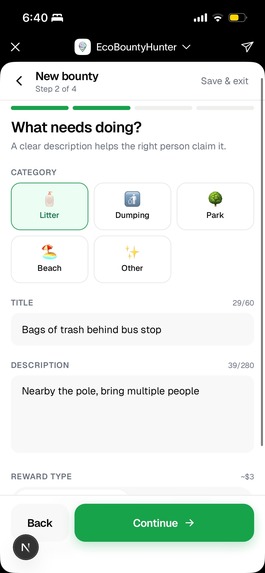
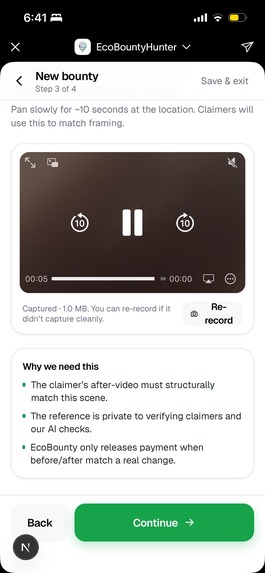
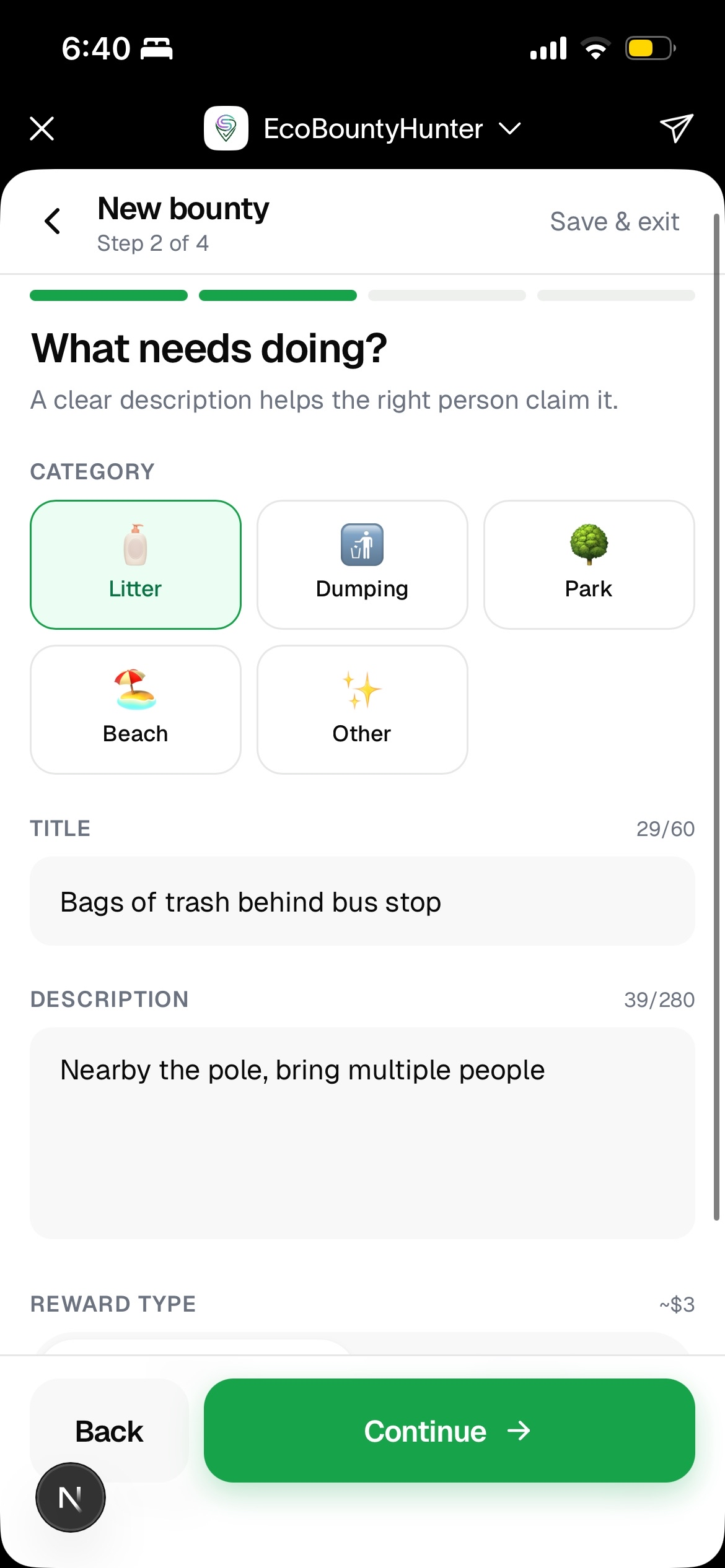
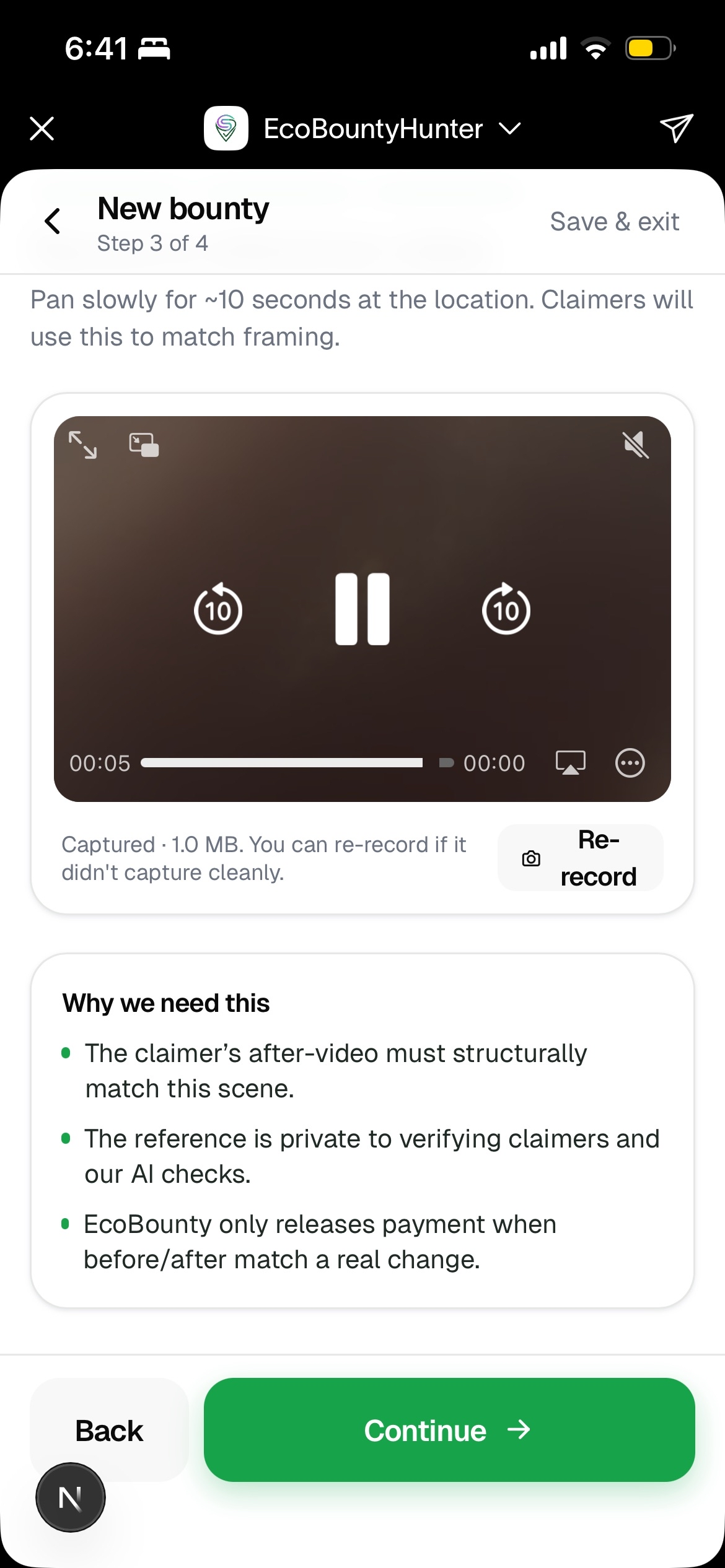
Post creation screen
-
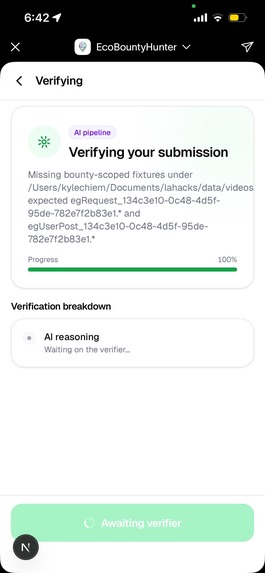
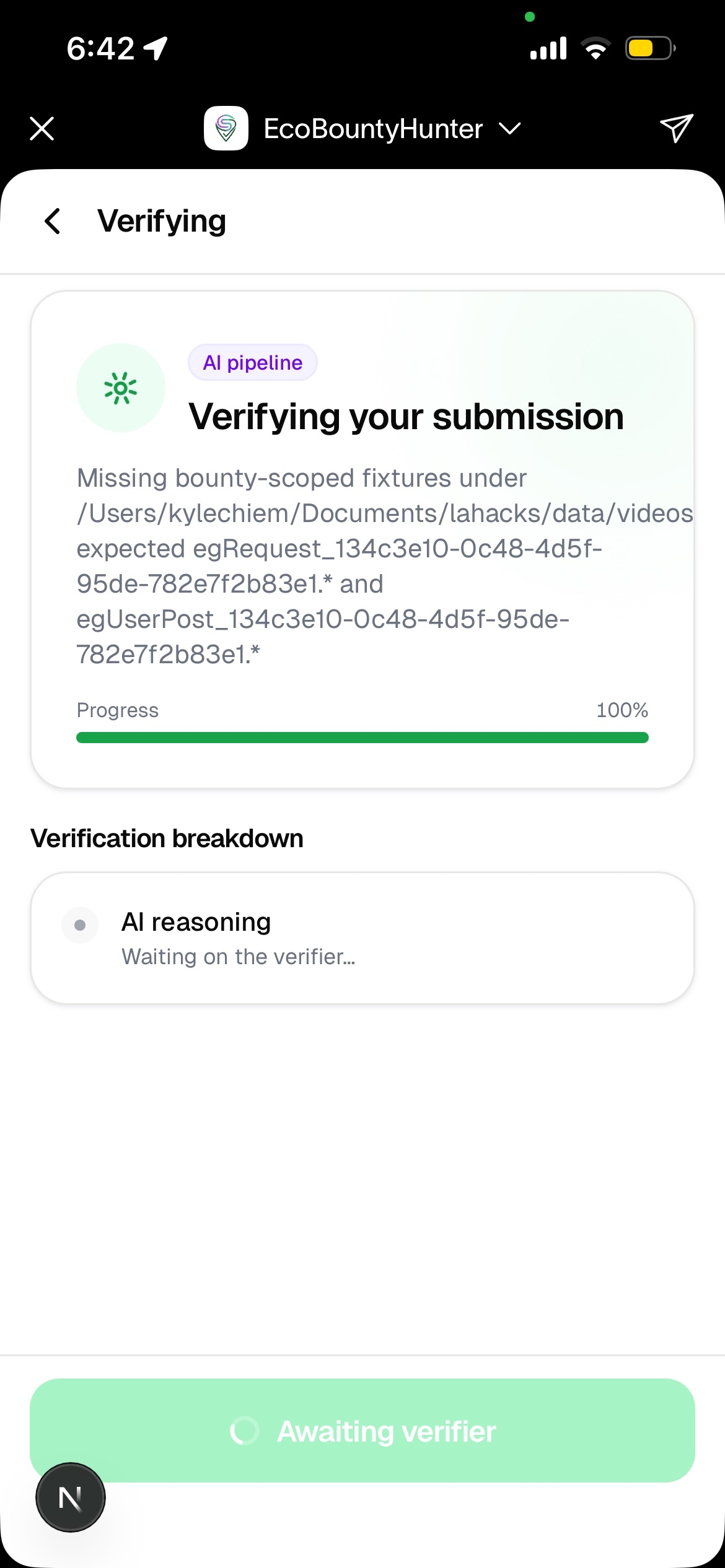
Verification progress bar
-
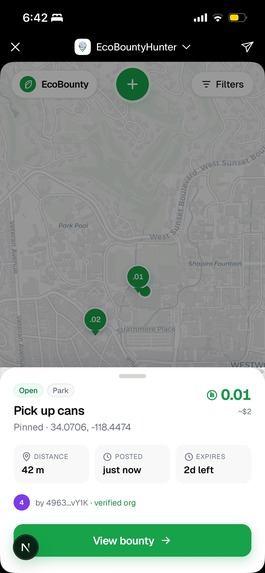
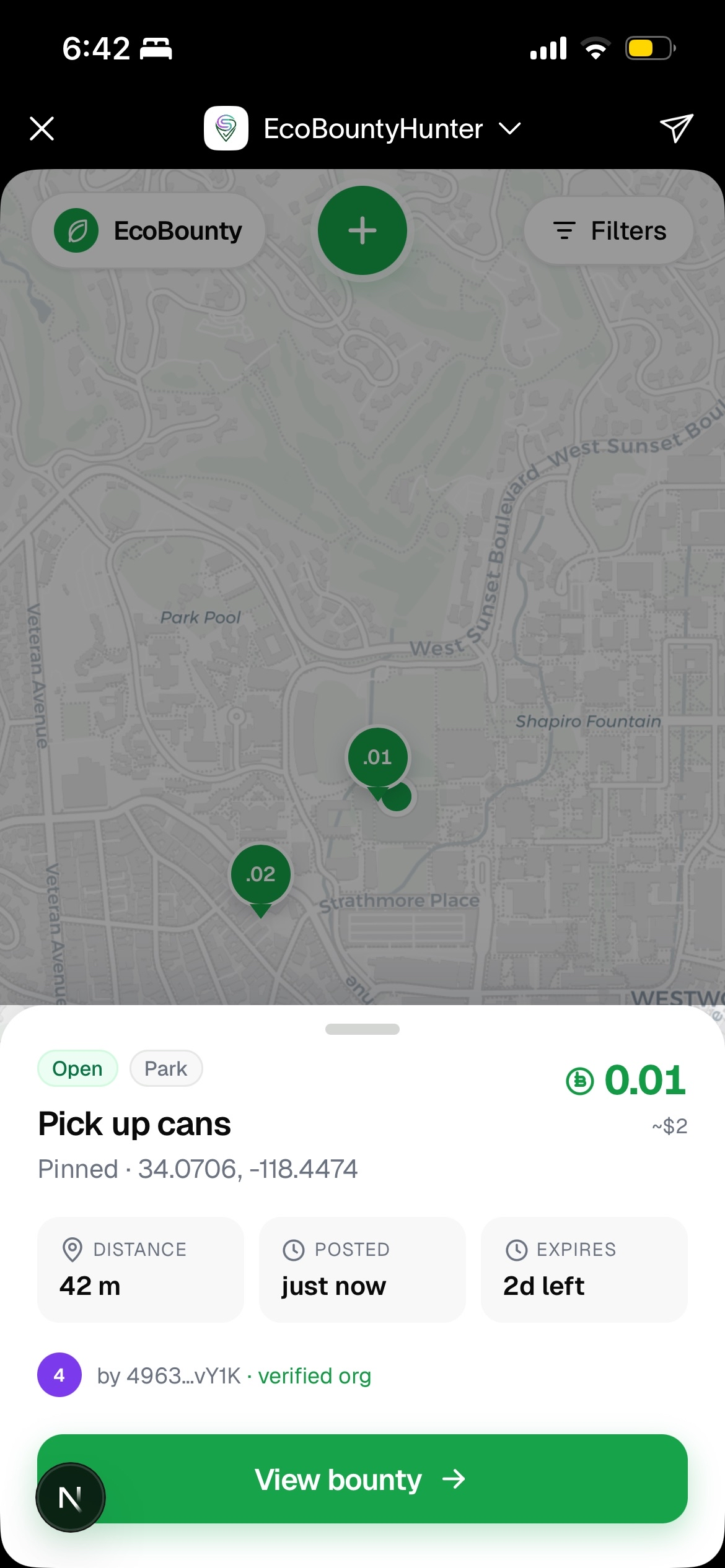
Interactive mapping
-
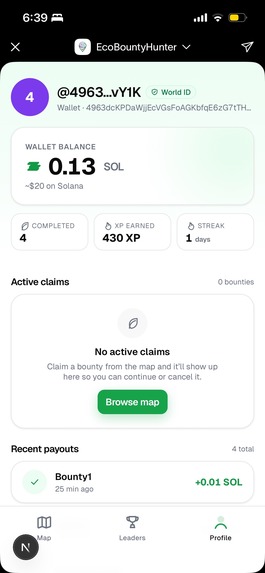
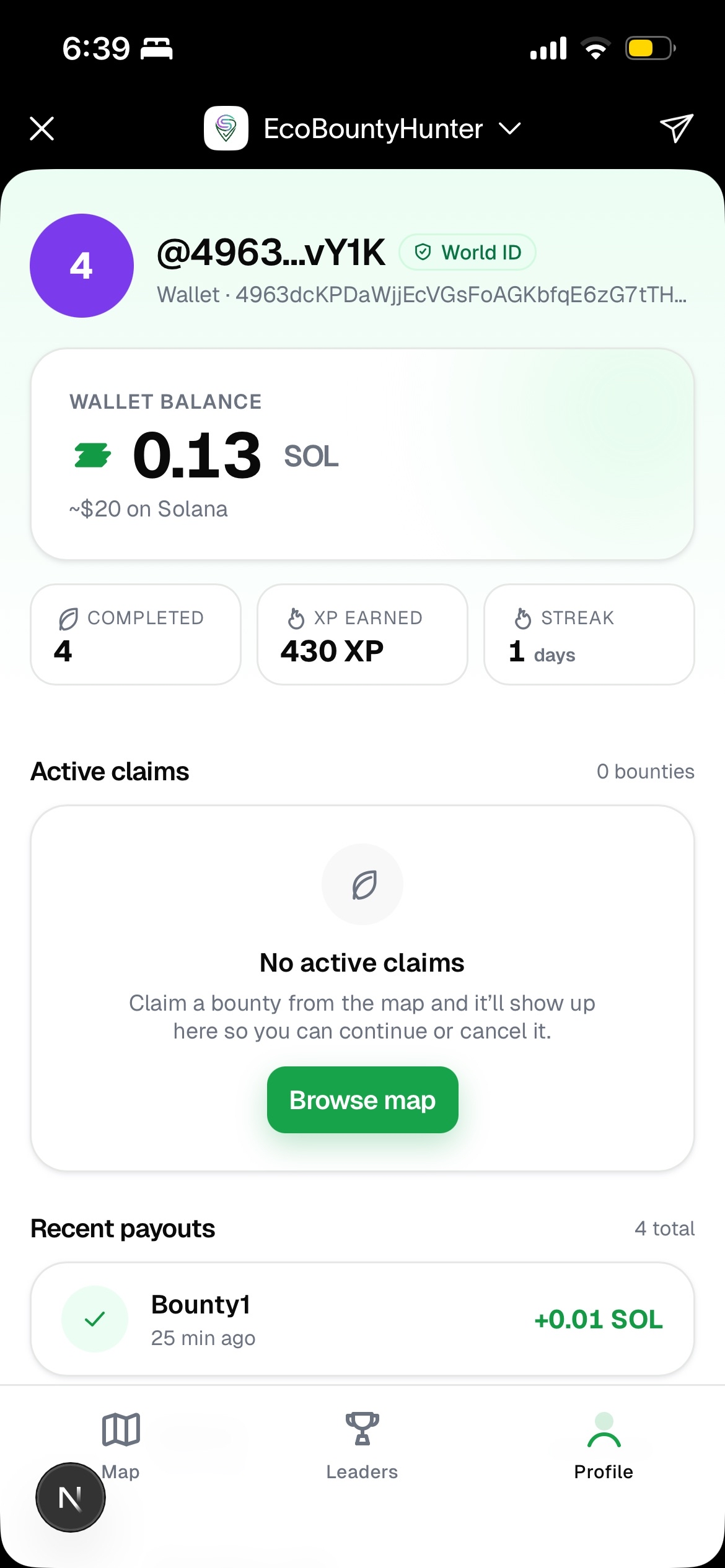
User profile screen
-

Inspiration
Illegal dumping and neighborhood litter are problems everyone sees - especially in major cities such as Mumbai, but cleanup coordination is usually informal and hard to trust. We wanted to build a system where anyone can post a cleanup bounty, anyone can complete it, and payout is tied to verifiable proof, not just “trust me.” The core inspiration was: can we make civic cleanup feel as reliable as a marketplace transaction?
What it does
Our project is a civic cleanup bounty marketplace with three trust layers:
Human coordination layer: posters create geotagged bounties and fund rewards. These posters can include NGOs who are already funding trash cleanup initiatives and regular people who would like to see a cleaner environment. Identity layer: high-impact actions are gated with World ID to reduce fake participants. Verification layer: an AI pipeline checks cleanup evidence (video + trajectory + fraud signals) before payout. If verification passes, the backend triggers escrow release on Solana (hackathon scope uses signed transfer-based escrow with tx audit trails). If verification fails, funds are refunded to the poster.
How we built it
We built this as a multi-service system:
Frontend (Next.js + React + TypeScript) User flows for map browsing, posting bounties, claiming tasks, submitting cleanups, profile/XP, and leaderboard views.
Backend (Express + TypeScript + Supabase) REST APIs for bounties, sessions, cleanups, users, and leaderboard. It also handles World ID verification, DB persistence, and Solana payout/refund orchestration.
AI Service (FastAPI + Python) Async /verify pipeline that evaluates:
Scene/task match signals, GPS trajectory consistency, Fraud heuristics (nonce/session/static/replay-style checks), Weighted confidence decisioning, then calls back to backend with a structured result. Blockchain integration (Solana) Escrow and payout flows are wired with transaction signature persistence for traceability, plus an Anchor/Rust scaffold for fuller on-chain escrow evolution.
Challenges we ran into
Asynchronous state coordination across frontend, backend, and AI callback flow (especially idempotent retries). Fraud-resistant verification design: balancing strict anti-cheat checks with real-world noise in GPS/video. Trust + UX tradeoffs: requiring verification and identity checks without making the flow too heavy. Hackathon-time blockchain pragmatism: delivering end-to-end payout reliability now while keeping a clean migration path toward PDA-based on-chain escrow.
Accomplishments that we're proud of
Built a full end-to-end civic bounty flow: post -> claim -> submit -> verify -> payout/refund. Shipped a real multi-service architecture under hackathon constraints (Next.js frontend, Express backend, FastAPI AI verifier, Solana integration). Implemented trust safeguards beyond a basic demo: World ID gating, async verification callbacks, and idempotent result handling. Designed a practical anti-fraud verification approach by combining scene/task checks, GPS trajectory analysis, and heuristic signals. Added payout transparency by persisting transaction signatures and maintaining an auditable state trail for escrow, release, and refund events. Kept the system forward-compatible by scaffolding an Anchor/Rust path for stronger on-chain escrow in future iterations.
What we learned
Verification quality comes from signal fusion, not one “magic” model output. Reliability depends heavily on idempotency and auditable state transitions in distributed pipelines. Product trust is socio-technical: identity proof, payout transparency, and clear user feedback all matter. Building civic tools requires optimizing not only for correctness, but also for low-friction participation.
What's next for EcoBounty
Scale up to large NGOs, receiving funding through initiatives to create large bounties for substantial trash cleanup projects. Move from transfer-based escrow to full Anchor PDA escrow per bounty. Add stronger payout confirmation and reconciliation loops. Expand verification with richer temporal/video consistency models. Ship moderation/admin tooling and richer on-chain analytics for bounty impact.

Log in or sign up for Devpost to join the conversation.