-
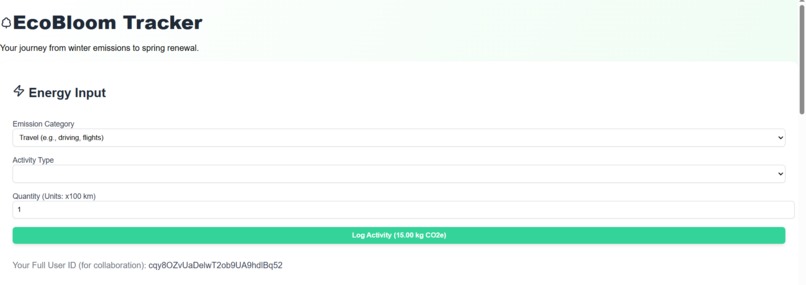
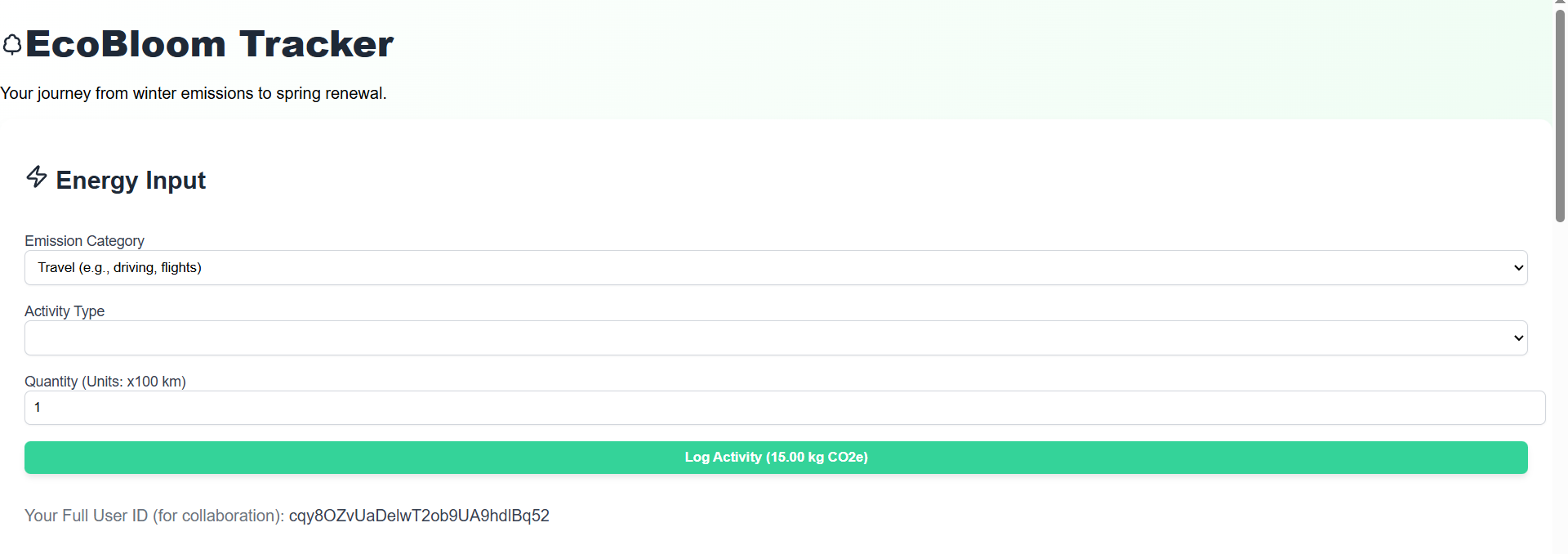
ui
Inspiration 💡 The primary inspiration for ECO-BLOOM stems from the urgent global mandate for sustainable development goals (SDGs), specifically the need to address food security and the pervasive inefficiencies inherent in conventional agriculture. We were motivated to apply advanced data science methodologies to create a demonstrable, autonomous system that minimizes ecological footprint and maximizes resource utilization optimization in controlled environments.
What it does ⚙️ ECO-BLOOM establishes a closed-loop Cyber-Physical System (CPS) for Controlled Environment Agriculture (CEA). It autonomously monitors environmental state vectors via a deployed IoT sensor array and leverages a Machine Learning inference model to execute real-time, high-precision actuation (irrigation, climate control). The system’s primary function is to provide a data-driven decision support mechanism that demonstrably enhances crop yield efficacy and facilitates optimal resource stewardship.
How we built it 🏗️ We employed an iterative, modular development methodology, dividing the project into three principal components:
Hardware Prototyping: Focused on microcontroller configuration, sensor calibration, and the integration of electromechanical actuators.
Cloud Infrastructure Deployment: Established a secure data pipeline for telemetry, configured the API endpoints, and created the persistent data storage layer.
Algorithmic Development: Involved the training and integration of a supervised Machine Learning model (specifically a time-series model) into the cloud environment for predictive analytics.
The software stack primarily utilizes Python for ML/backend logic and a React-based HMI (Human-Machine Interface) for front-end visualization and administrator override.
Challenges we ran into 🛑 Significant technical challenges included achieving minimal sensor-to-actuator latency across the wireless network, ensuring the robustness and external validity of the ML model under highly variable environmental inputs, and successfully integrating diverse, heterogeneous hardware and software components into a cohesive system of systems. The most intricate hurdle was the calibration and noise filtering required for accurate analog sensor data ingestion.
Accomplishments that we're proud of 🎉 We successfully deployed a fully functional closed-loop feedback mechanism, demonstrating true system autonomy in a live environment. We are particularly proud of the predictive accuracy achieved by our customized ML model in forecasting optimal water and nutrient requirements—a critical component of resource conservation. Furthermore, realizing a fully integrated, end-to-end CPS prototype with documented technical specifications within the given development cycle is a significant technical achievement.
What we learned 🎓 This project served as a rigorous exercise in cross-disciplinary systems integration, emphasizing the complexity of merging concepts from embedded systems, distributed computing, and advanced data science. We gained invaluable practical experience in optimizing IoT communication protocols, conducting real-time data stream processing, and understanding the methodological requirements for training robust predictive models on novel environmental datasets.
What's next for ECOBLOOM: Sustainable IoT-ML Greenhouse Autonomy 🚀 Future work will focus on system scalability and performance optimization. We plan to:
Edge Computing Migration: Port the current cloud-based ML model to an edge computing architecture to minimize network dependency and significantly reduce decision-making latency.
Enhanced Sensor Modality: Expand the sensor array to include non-destructive spectral analysis for early-stage pathogen and disease detection.
Advanced Control Logic: Implement a Reinforcement Learning (RL) approach to further refine the autonomous decision support, allowing the system to learn optimal long-term environmental strategies dynamically.

Log in or sign up for Devpost to join the conversation.