Inspiration
Every year, billions of tons of waste end up in landfills, causing severe environmental and social challenges. We noticed that most waste is not properly segregated due to a lack of awareness and infrastructure. This inspired us to create EcoBin—a platform that uses AI and IoT to make waste management smarter, easier, and more sustainable.
What it does
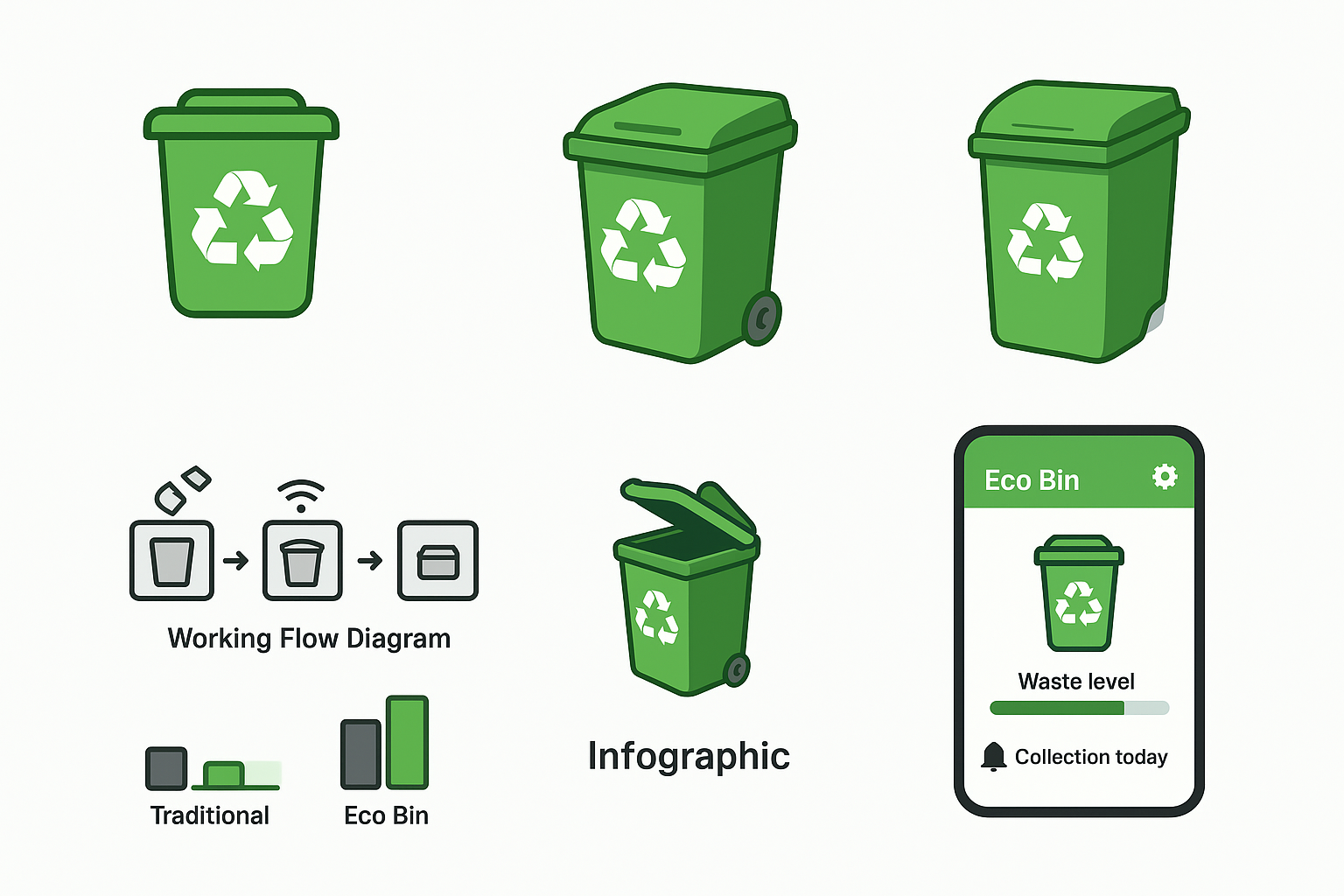
1.AI Waste Classifier: Users snap a photo of any waste item, and EcoBin’s AI model classifies it as recyclable, compostable, or landfill. 2.Smart Bins (IoT): IoT-enabled bins track fill levels and send real-time updates to a dashboard. 3.Eco-Score & Rewards: Users earn points and badges for eco-friendly habits, making sustainability fun and engaging. 4.Community Dashboard: Municipalities and housing societies can monitor bin data to optimize waste collection routes, reducing fuel usage and emissions.
How we built it
1.Frontend: Built using React/Next.js for a clean and responsive interface. 2.Backend: Node.js + Express + MongoDB to manage user data, eco-scores, and IoT updates. 3.AI Model: A CNN-based waste classifier trained using the TrashNet dataset, fine-tuned with TensorFlow/PyTorch. 4.IoT Hardware: Simulated with Arduino + ultrasonic sensor for bin fill detection, data transmitted via Wi-Fi (ESP32). 5.Hosting & Deployment: Vercel for frontend, Render/Heroku for backend, Firebase for optional authentication.
Challenges we ran into
1.Dataset Limitations: Finding a reliable and diverse dataset for waste classification was tough. 2.IoT Integration: Simulating real-time hardware data within limited hackathon time. 3.Time Management: Balancing between building the AI, the web app, and IoT features. 4.Scalability: Designing a solution that works both for individuals and city-scale use.
Accomplishments that we're proud of
1.Successfully integrated AI + IoT in a single platform within the hackathon timeframe. 2.Built a working prototype with live waste classification and dashboard visualization. 3.Designed a gamified eco-score system that motivates users to make sustainable choices. 4.Created a solution that is both scalable and impactful for real-world communities.
What we learned
1.How to train and deploy AI models for real-time classification. 2.Practical knowledge of IoT sensors and Arduino for environmental applications. 3.The importance of user experience + storytelling in hackathons—innovation is not just code, but also how well it’s presented. 4That collaboration and dividing tasks efficiently is key in high-pressure projects.
What's next for EcoBin – AI + IoT Powered Smart Waste Management
1.Blockchain-based Recycling Rewards: Tokens or credits for eco-friendly actions. 2.Mobile App Expansion: Full-featured iOS/Android app with AR-based waste scanning. 3.Partnerships with Municipalities: Pilot projects in schools, offices, and city blocks. 4.AI Model Improvements: Adding more categories (e-waste, hazardous, textiles) for precision. 5.Data Analytics: Big-data dashboards for governments to track waste trends and plan policy.
Built With
- canvas
- esp32
- express.js-database-?-mongodb-(atlas)-ai/ml-?-tensorflow
- firebase-(auth)-apis-?-rest-api-for-ai-classification-&-iot-data-sync-version-control-&-collaboration-?-github
- frontend-?-react
- git-design-&-ui/ux-?-figma
- next.js
- pytorch
- render/heroku-(backend)
- tailwind-css-backend-?-node.js
- trashnet-dataset-iot-hardware-?-arduino
- ultrasonic-sensor-cloud/hosting-?-vercel-(frontend)


Log in or sign up for Devpost to join the conversation.