Inspiration
Efficiency is usually treated as an automatic good. But in some systems, making something more efficient can reduce its cost or resource requirements enough to increase overall consumption—the rebound effect. We wanted to build a tool that could investigate these counterintuitive cases without hiding uncertainty or jumping straight to a conclusion.
What it does
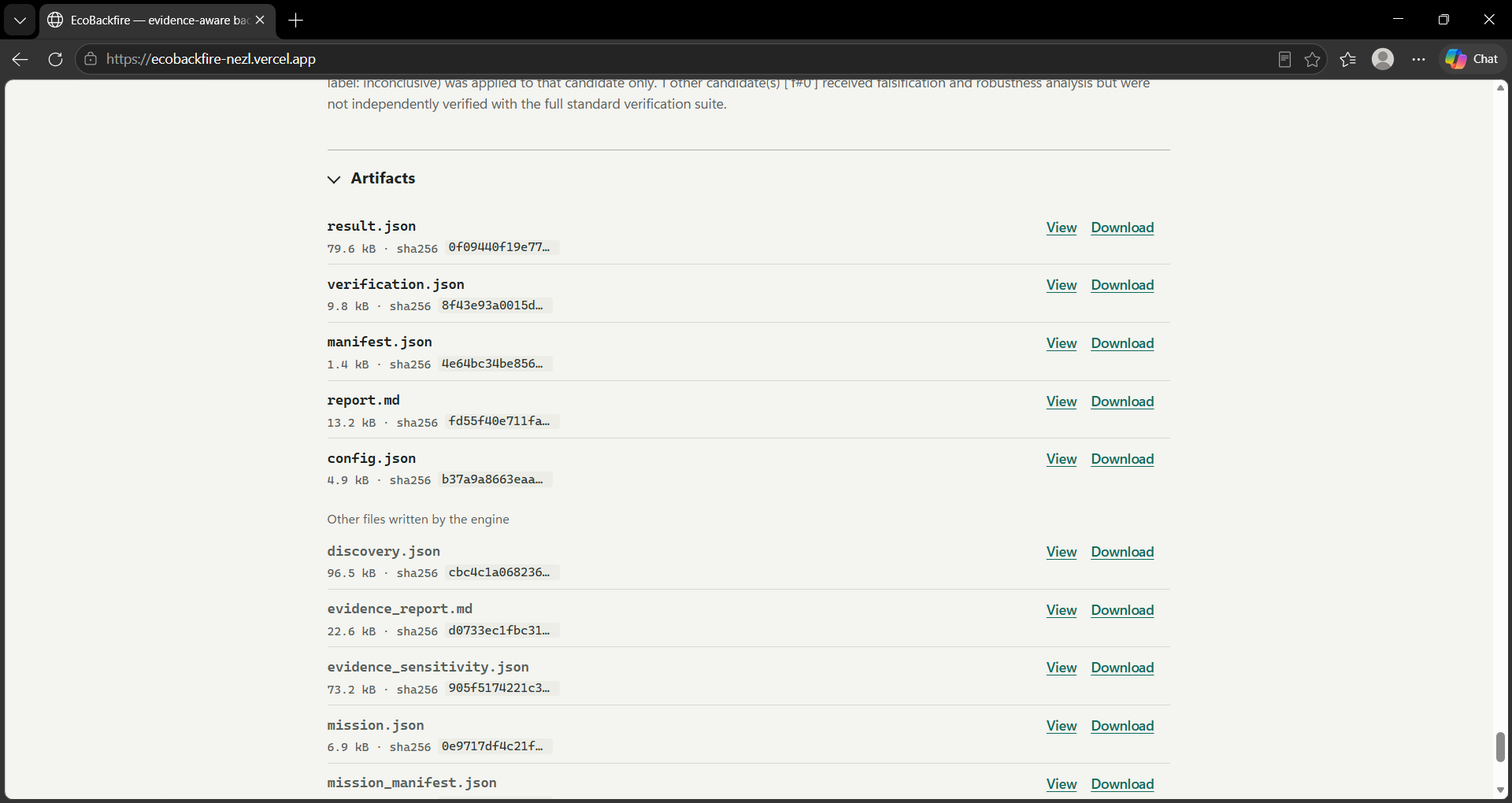
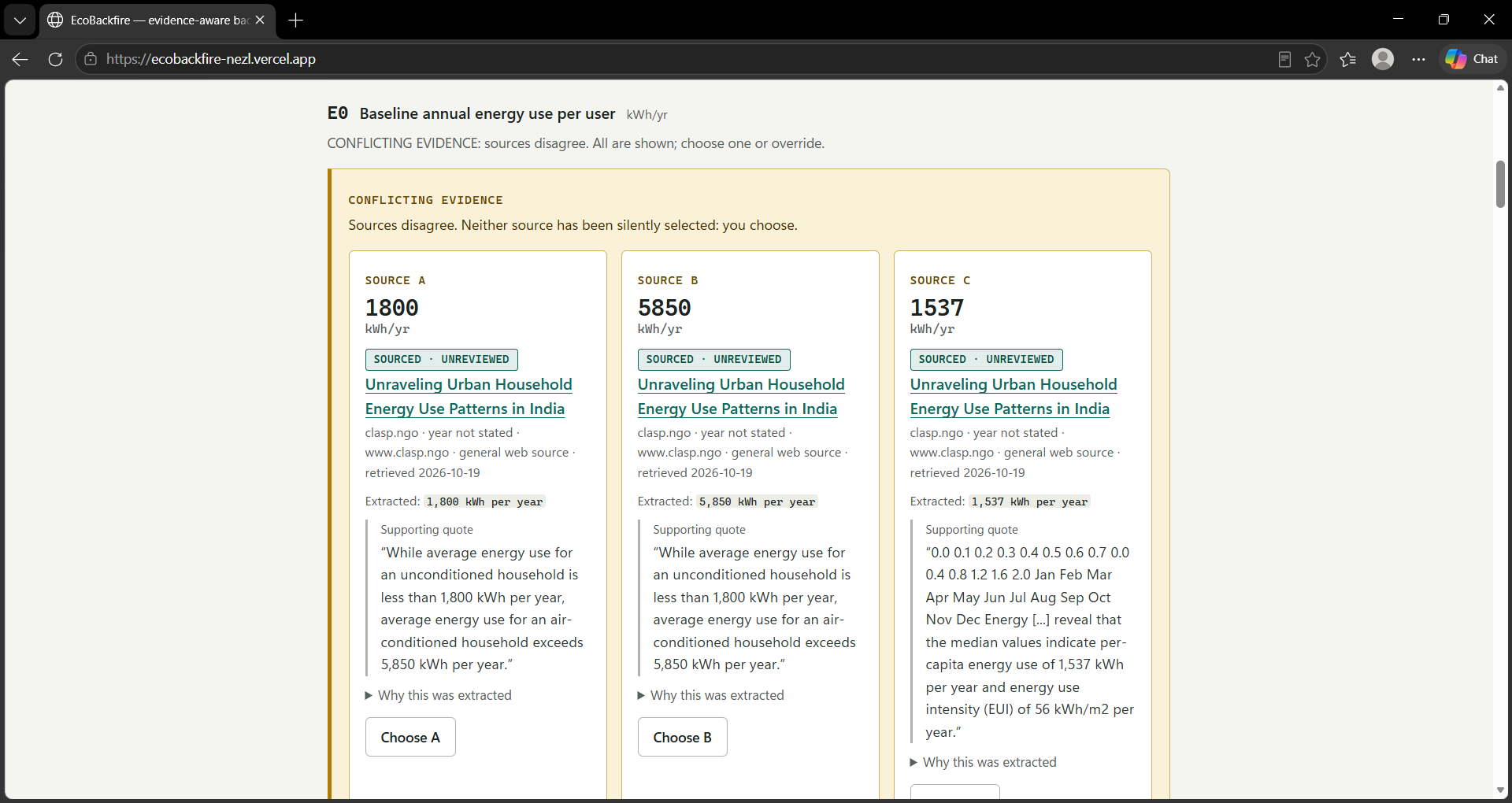
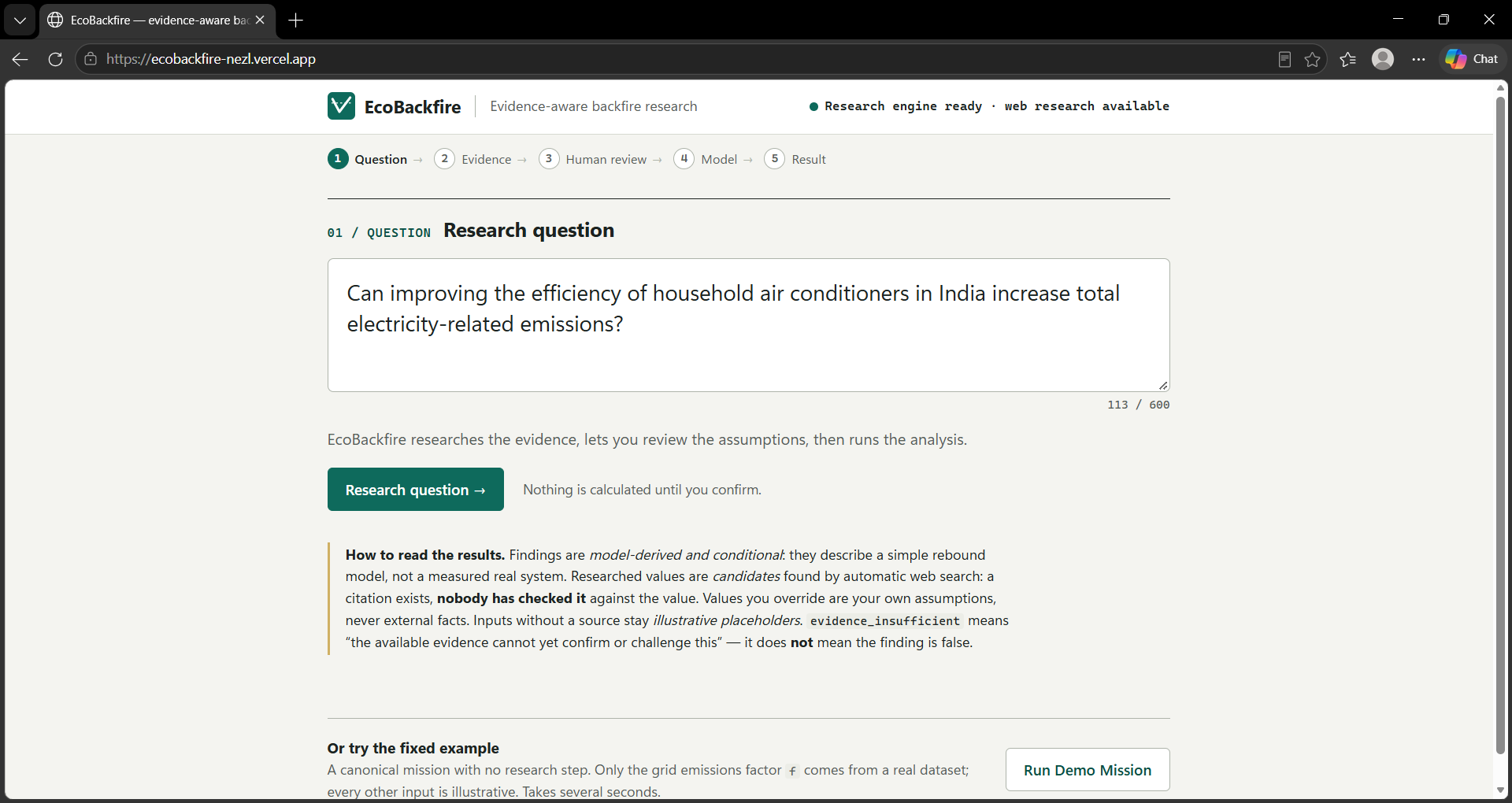
EcoBackfire takes a research question, searches for relevant real-world evidence, extracts model parameters and sources, and shows them to the user for review. Users can accept, reject, or override inputs before running the analysis. EcoBackfire then searches for potential backfire cases, tests candidates through falsification and robustness analysis, and reports the results with evidence status, provenance, and reproducibility information.
How we built it
We built EcoBackfire as a Python-based scientific research engine with a web interface. The engine handles model execution, candidate discovery, falsification, robustness analysis, evidence resolution, provenance, and reproducibility. The web layer adds the research workflow: web evidence → parameter review → user confirmation → real engine execution. We also added a Vercel-deployed interface so the workflow can be accessed through a browser.
Challenges we ran into
The biggest challenge was connecting real-world evidence to a scientific model without pretending that uncertain or missing information was reliable. We had to handle conflicting sources, missing evidence, unit conversions, geographic matching, uncertainty, user overrides, and reproducibility. We also had to keep the scientific engine deterministic while making the web research layer flexible.
Accomplishments that we're proud of
We built a complete workflow rather than just a model or a chatbot. EcoBackfire can research inputs, expose its evidence to the user, require explicit decisions, and then run the actual analysis. The system also distinguishes evidence insufficient from false, preserves provenance, records overrides, performs falsification and robustness checks, and can reproduce its results exactly.
What we learned
We learned that scientific AI needs a clear boundary between what the evidence says, what the model assumes, and what the model calculates. Making those distinctions visible is just as important as getting the calculation right. We also learned that letting users inspect and adjust evidence before analysis makes the system much more transparent and trustworthy.
What's next for Ecobackfire
Next, we want to expand EcoBackfire beyond the current rebound model, improve evidence extraction and uncertainty propagation, support richer multi-parameter robustness analysis, and connect discovered candidates more deeply to their underlying evidence. Ultimately, we want EcoBackfire to become a general-purpose research engine for finding and rigorously testing counterintuitive effects in real-world systems.

Log in or sign up for Devpost to join the conversation.