Inspiration
Watching friends and peers paralyzed by climate grief—overwhelmed by news, guilty about inaction, disconnected from meaningful change—sparked this project. As someone who’s felt that helplessness too, I wanted to bridge mental health support with tangible environmental action, creating a space that validates emotions and empowers action.
What it does
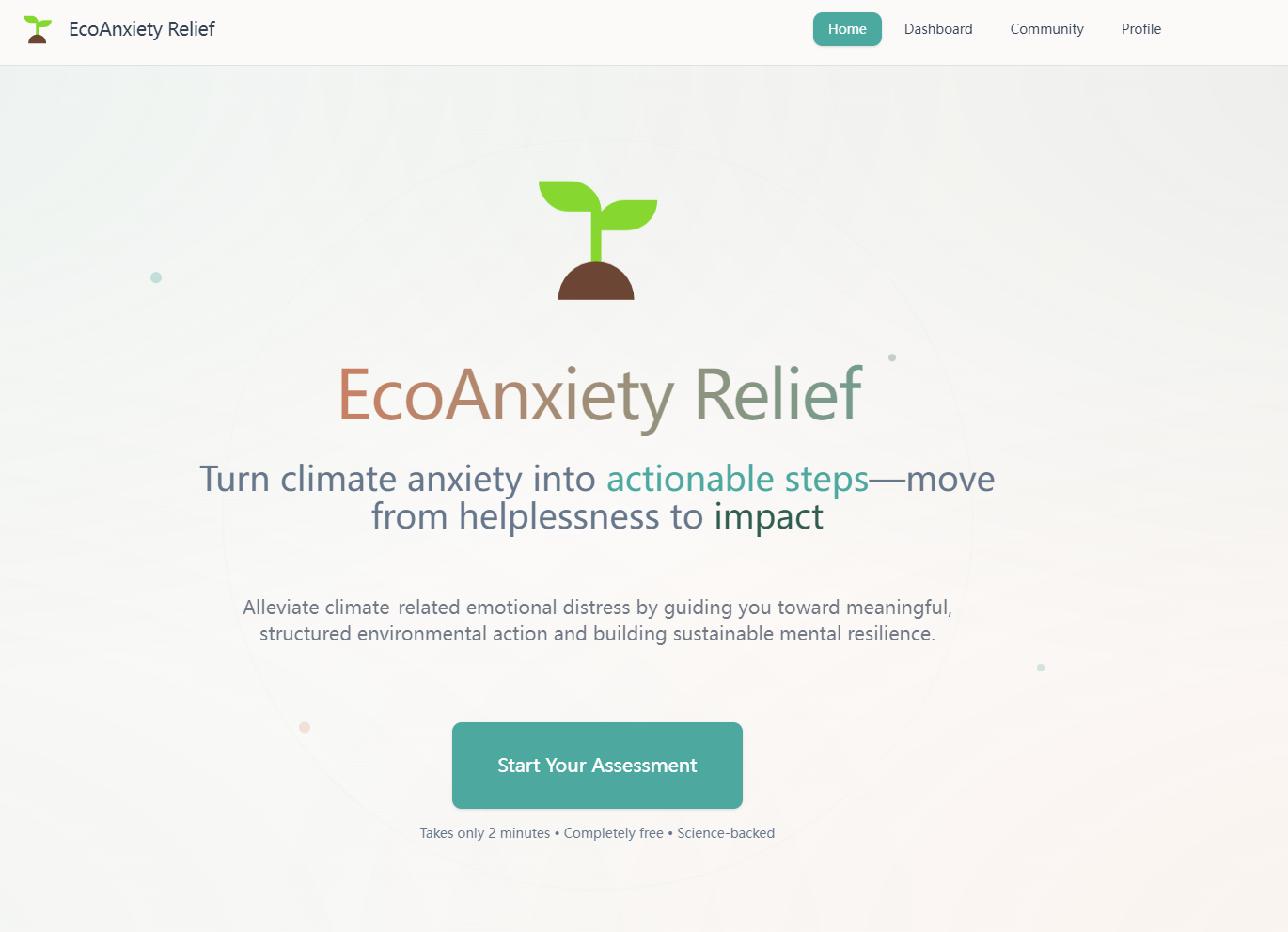
EcoAnxiety Relief is a web app that assesses climate anxiety levels via a science-backed questionnaire, then delivers a personalized dashboard: mental health coping tools, categorized high-impact green actions (trackable and completable), a media diet manager to limit fear-based content, weekly impact reports, and local climate community event listings.
How we built it
We started with user research—interviewing climate activists and mental health professionals—to shape the assessment and intervention logic. We built the frontend with React/Tailwind for calm, nature-inspired UX; Node.js/Express for backend logic (assessment scoring, action impact calculation); MongoDB to track user actions/events; and integrated Google Maps API for local event discovery and Chart.js for progress visuals.
Challenges we ran into
Balancing clinical accuracy (for anxiety assessment) with approachable, non-judgmental language was tough—we iterated 8+ times on questionnaire phrasing. Also, sourcing reliable local climate event data required refining API filters to avoid outdated/irrelevant listings. We struggled with making impact metrics simple enough to understand but accurate enough to feel meaningful.
Accomplishments that we're proud of
Creating an assessment that mental health experts validated as empathetic and scientifically sound. Seeing beta users report reduced feelings of helplessness after completing even small tracked actions. Building a fully responsive design that works seamlessly on mobile (where most users access climate content).
What we learned
Mental health and environmental action are inseparable—users need emotional validation before they can engage with action steps. Also, simplicity beats complexity: users abandoned overly detailed impact metrics, so we simplified to clear, relatable language (e.g., “This action saves 200 gallons of water monthly”).
What's next for this project
We plan to add integration with local environmental orgs to auto-sync event data, expand mental health content to include guided meditations, and test a beta of gentle reminder notifications (for action completion/media limits). Long-term, we want to partner with climate nonprofits to amplify high-impact action recommendations and expand community features.

Log in or sign up for Devpost to join the conversation.