-
-
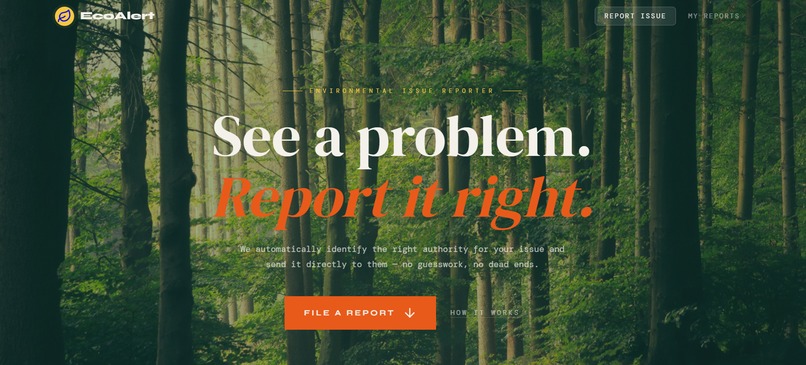
front page
-
-
-
-
-
-
Inspiration
Every day, people walk past illegal dumping, blocked drains, deforestation, and pollution — and do nothing. Not because they don't care, but because they have no idea who to tell. You can't call 911 for a chemical smell. You can't Google "who handles illegal tree removal in my city." The system is too fragmented and too confusing for the average person to navigate.
We wanted to fix that single point of failure: the gap between a citizen seeing a problem and the right authority hearing about it.
What it does
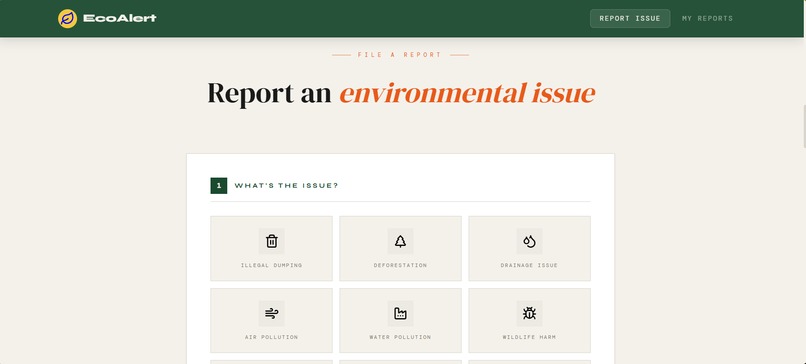
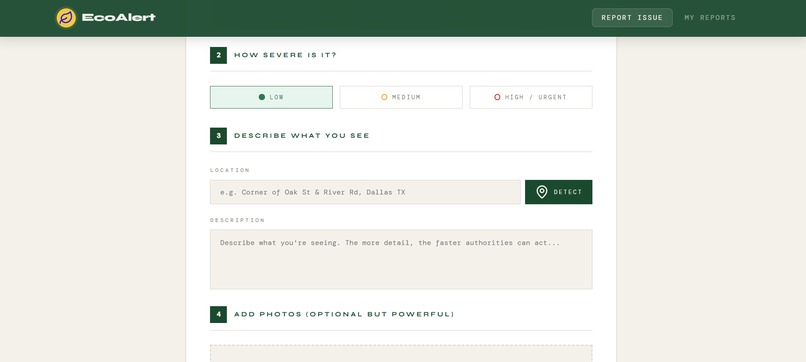
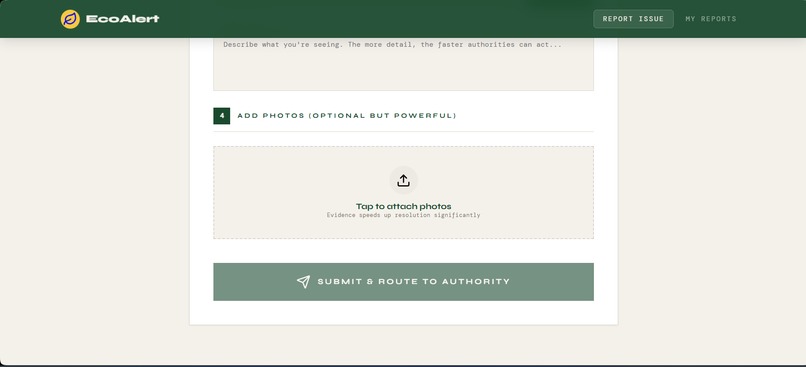
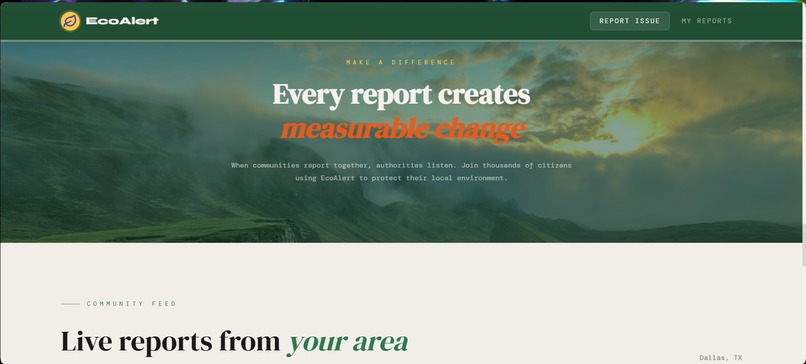
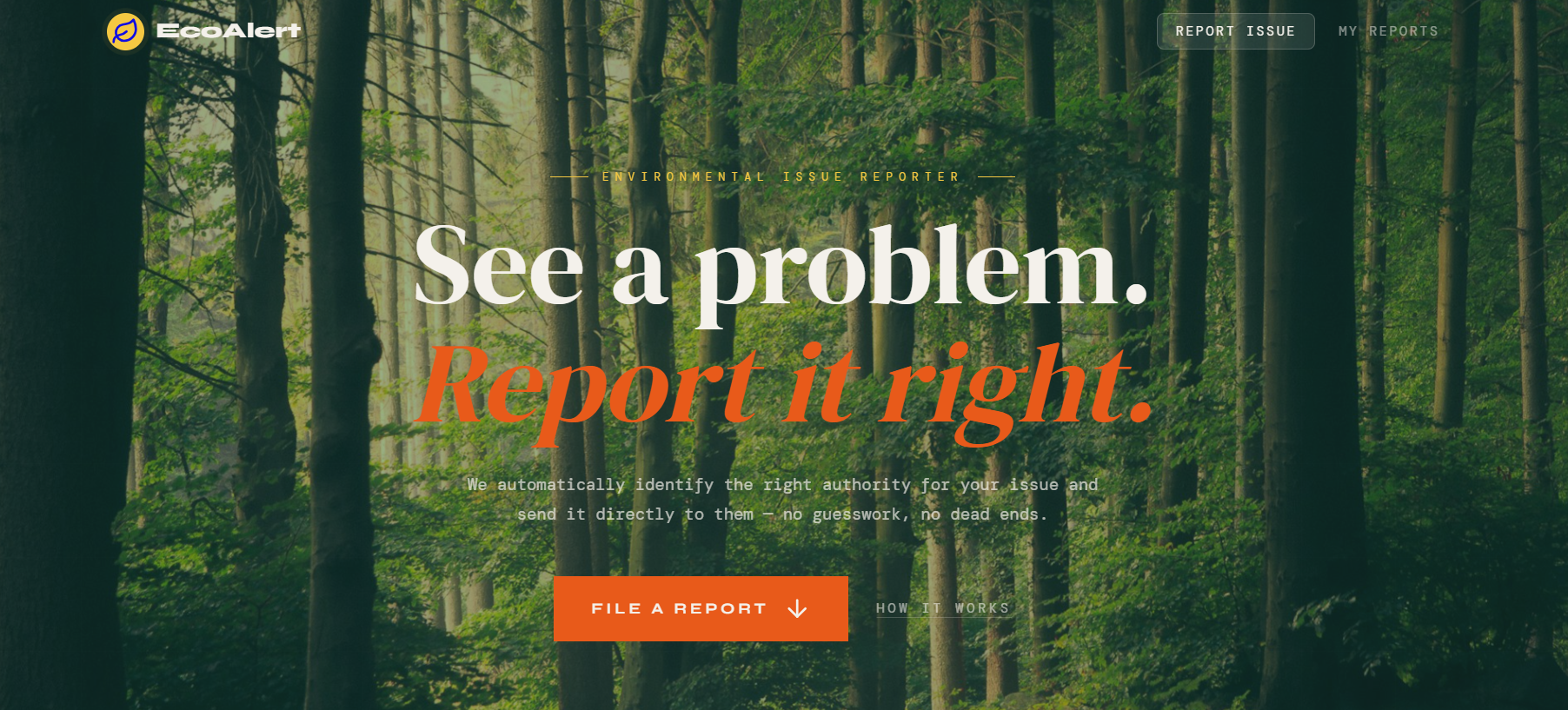
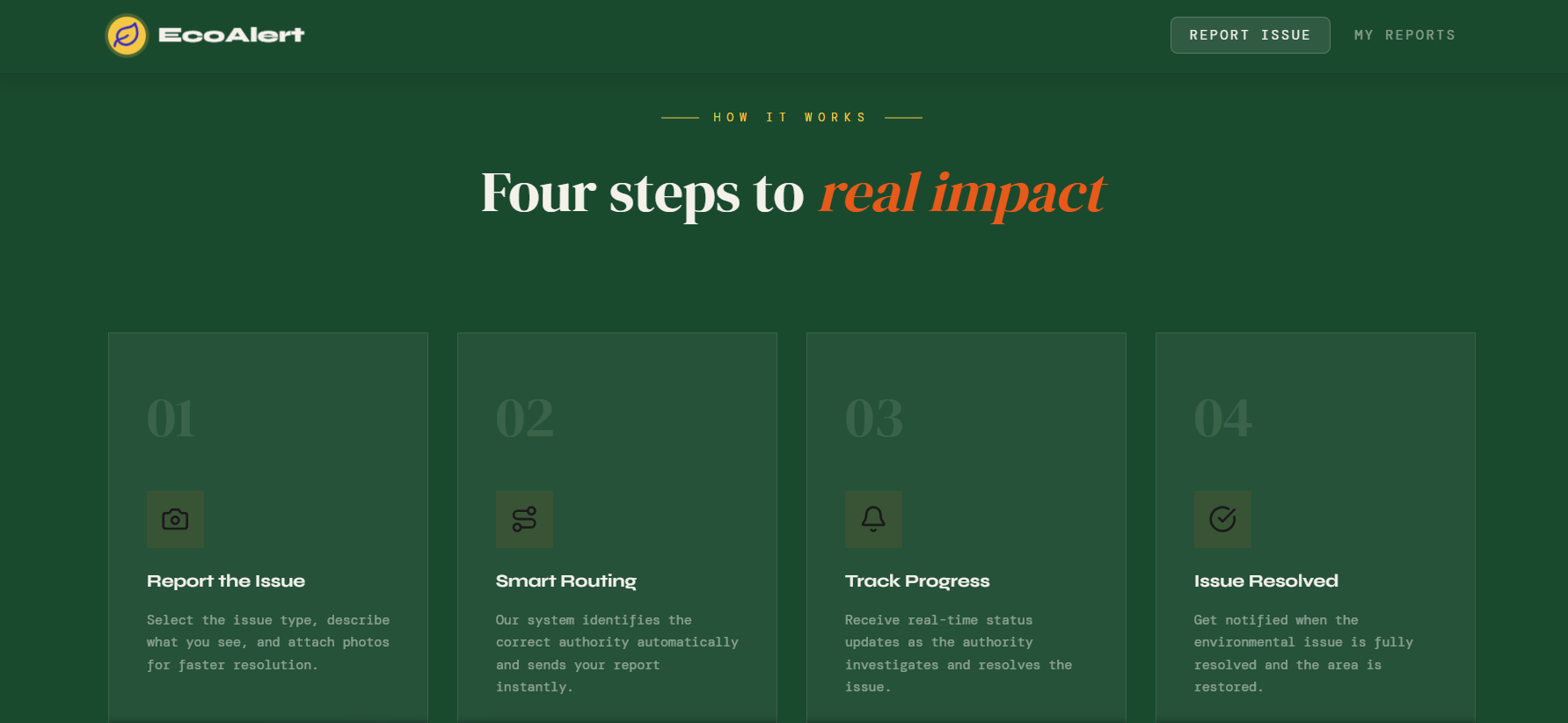
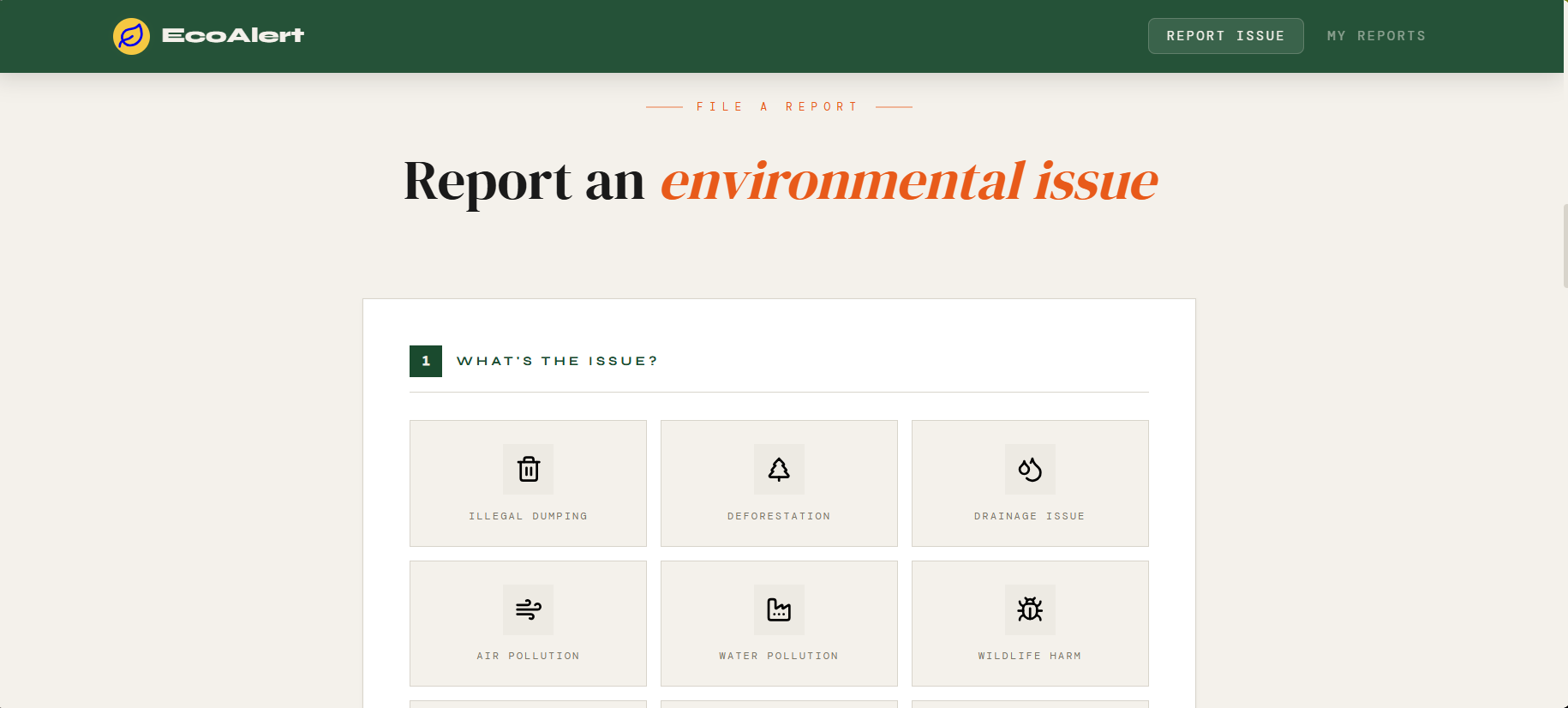
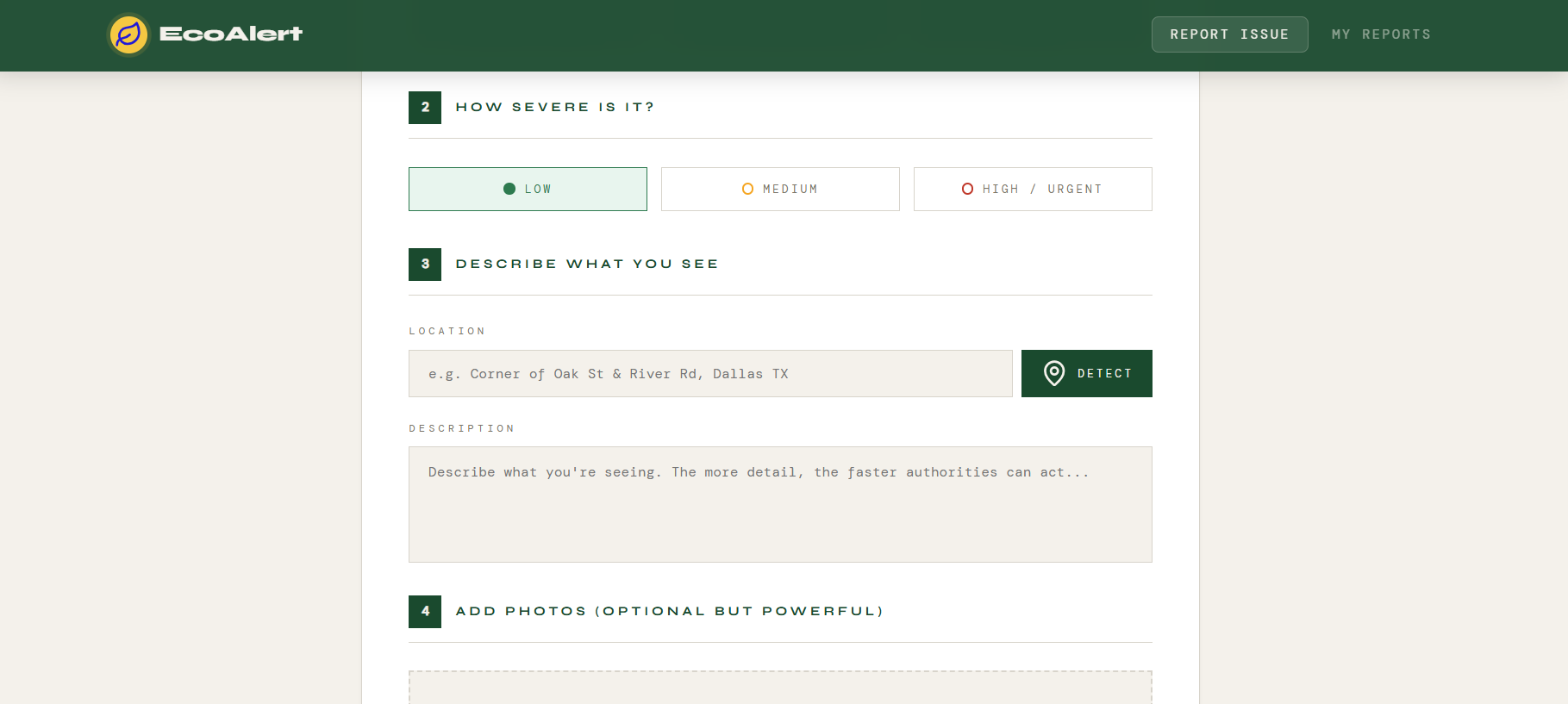
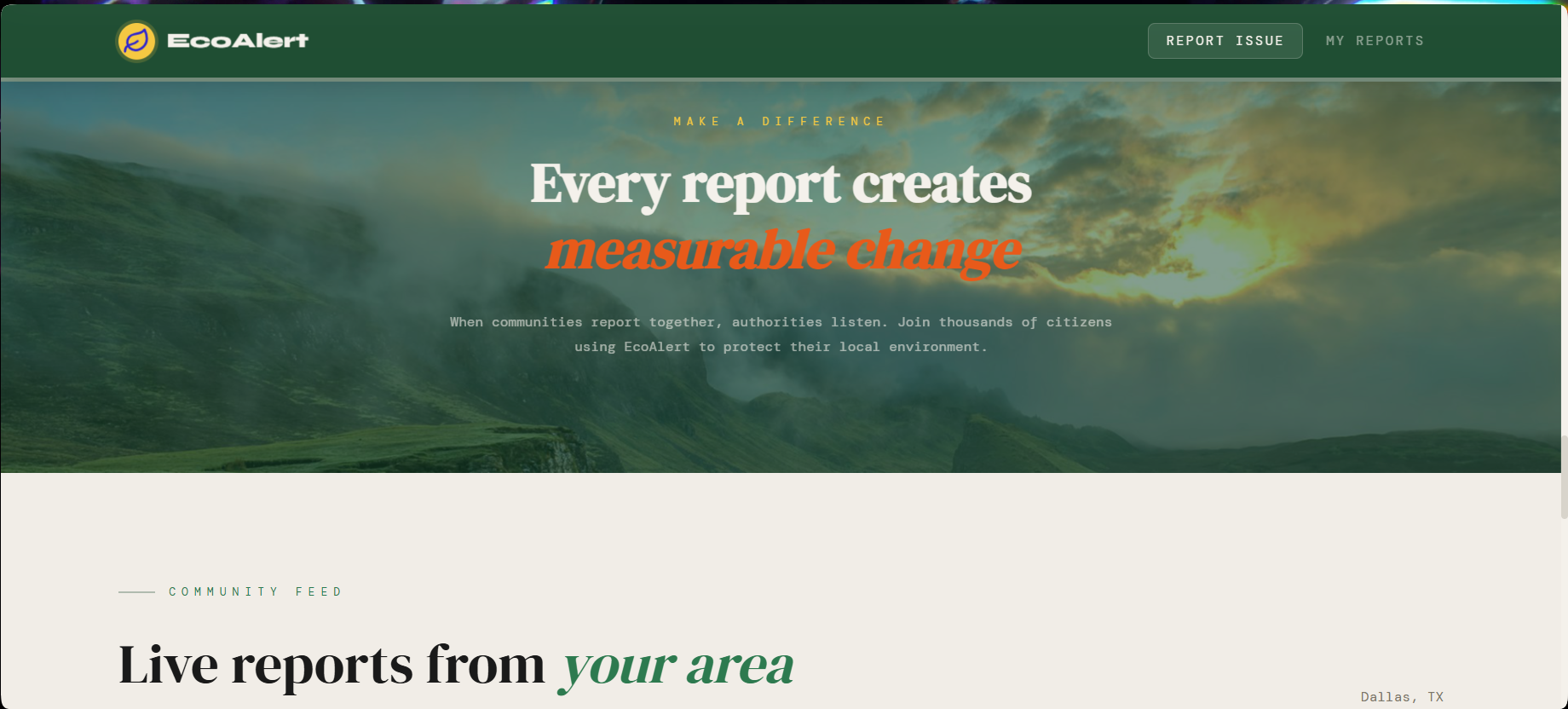
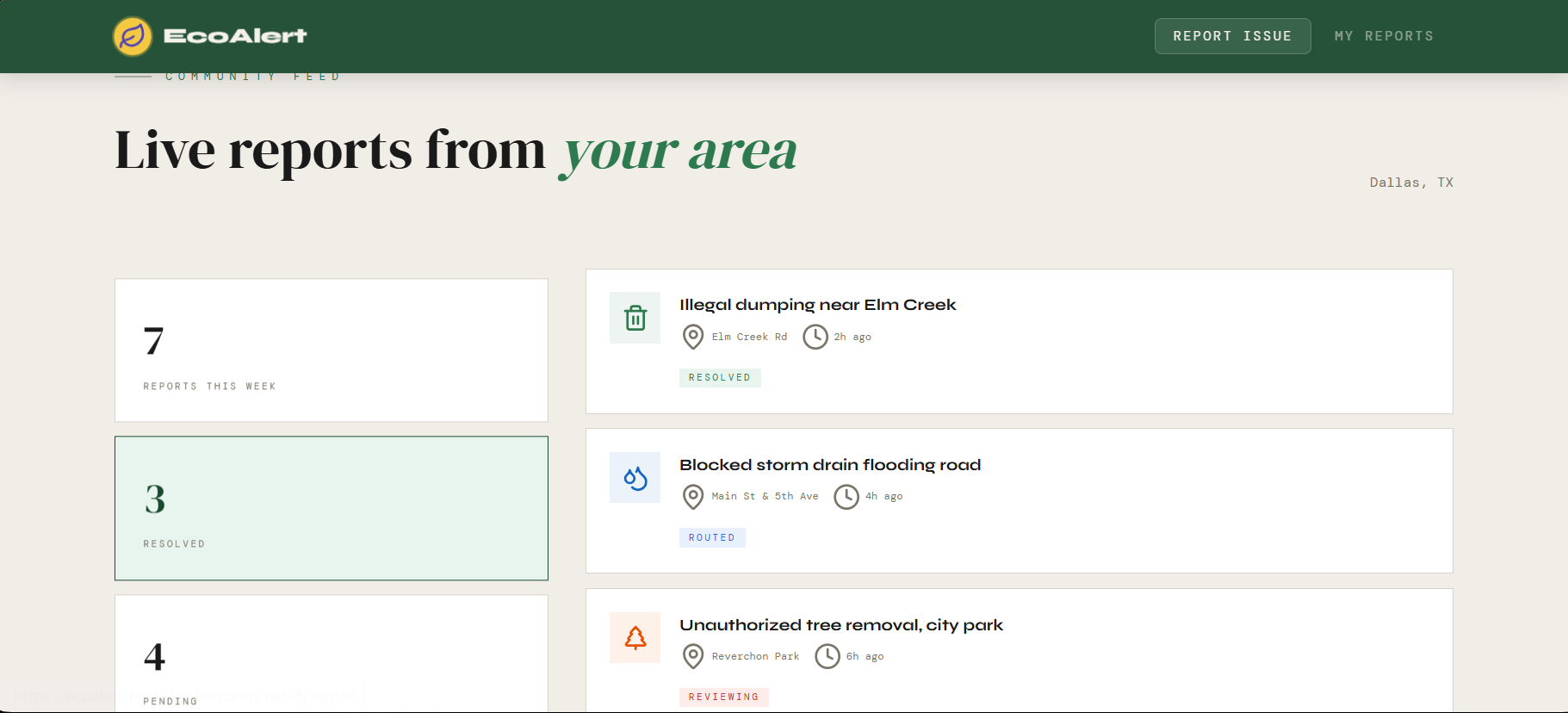
EcoAlert is an environmental issue reporting platform that lets anyone report a problem — illegal dumping, deforestation, drainage issues, water pollution, air pollution, wildlife harm — and automatically routes it to the correct government authority based on issue type and location.
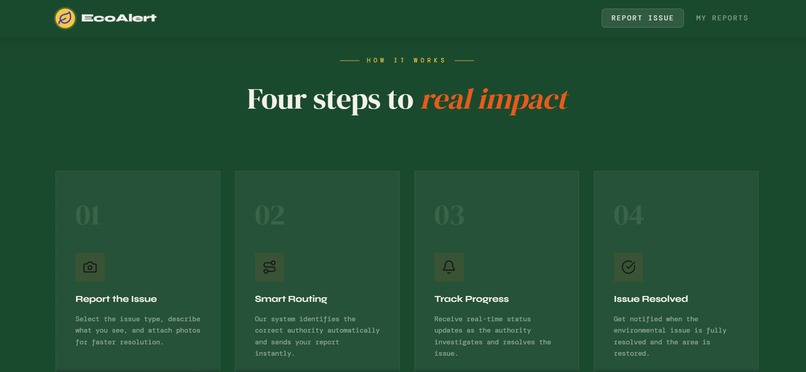
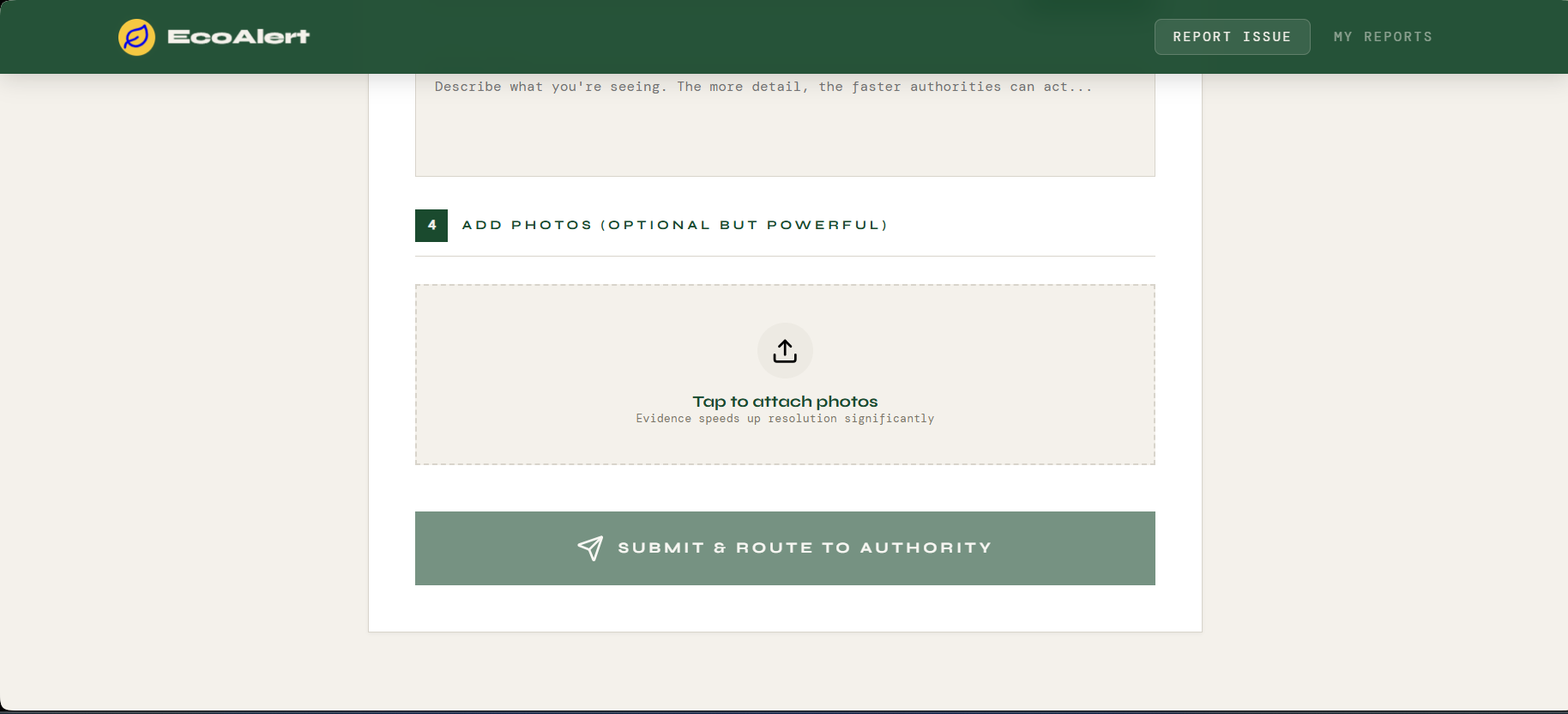
No more guessing who to call. No more reports disappearing into a generic inbox. Every report gets:
- A unique reference code
- Routed to the specific department responsible
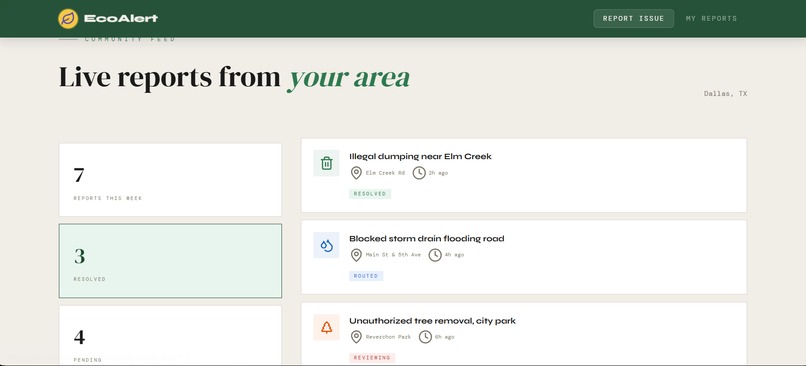
- A live status timeline (submitted → routed → investigating → resolved)
- Visibility on a community feed so neighbors can see what's being reported
How we built it
- Frontend: React + Vite for a fast, component-based UI
- Database & Realtime: Supabase (Postgres) for storing reports and pushing live updates to the community feed
- Maps: Leaflet.js + OpenStreetMap for location pinning with free reverse geocoding via Nominatim
- Routing Engine: A custom mapping layer that matches issue type + region to the correct government authority and contact
- Styling: CSS Modules with a custom design system built from scratch
Challenges we faced
The hardest part was building the routing engine — figuring out which authority handles which issue type varies by city, county, and state. What the EPA handles federally is different from what a city sanitation department handles locally. We had to research and map this manually for our target region, and building it in a way that scales to other cities is an ongoing challenge.
The second challenge was making the UI feel trustworthy and civic — this isn't a social app, it's a tool people use when they're frustrated and want action. The design had to feel official enough to be taken seriously, but simple enough that anyone could use it in 60 seconds.
What we learned
That the biggest barrier to civic environmental action isn't awareness — it's friction. People see problems. They just don't know what to do with what they see. Removing that friction, even slightly, can have outsized real-world impact.
What's next
- Expanding the routing table to cover all 50 states
- Email notifications to authorities with photo evidence attached
- User authentication so people can track their reports over time
- An authority-facing dashboard so departments can update report statuses directly in the app
- Mobile app version for on-the-spot reporting


Log in or sign up for Devpost to join the conversation.