-
-
Home Page -1
-
Home Page -2
-
Home Page -3
-
Upload Page
-
Market Place -1
-
Market Place -2
-
Market Place -3
-
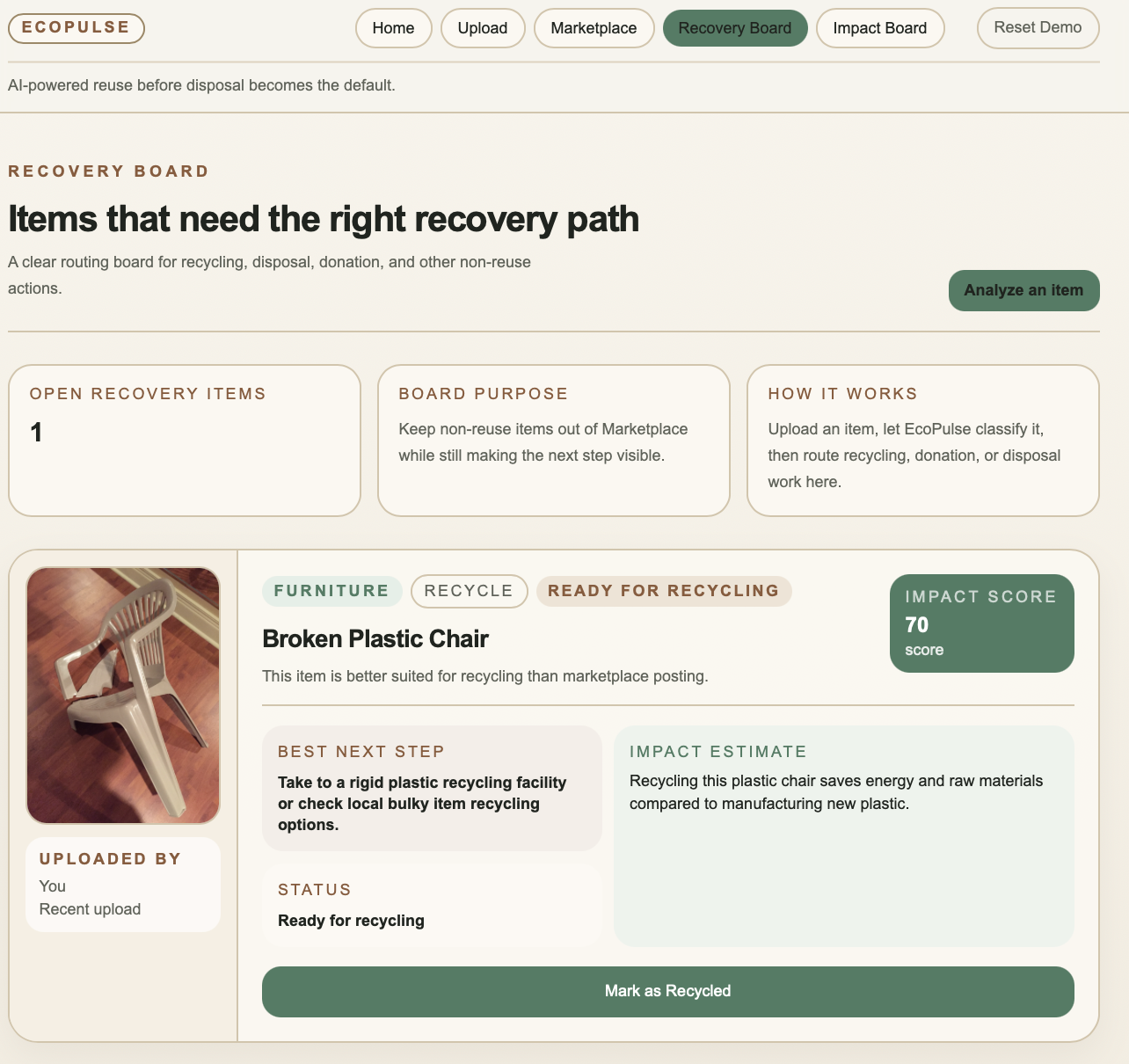
Recovery Board
-
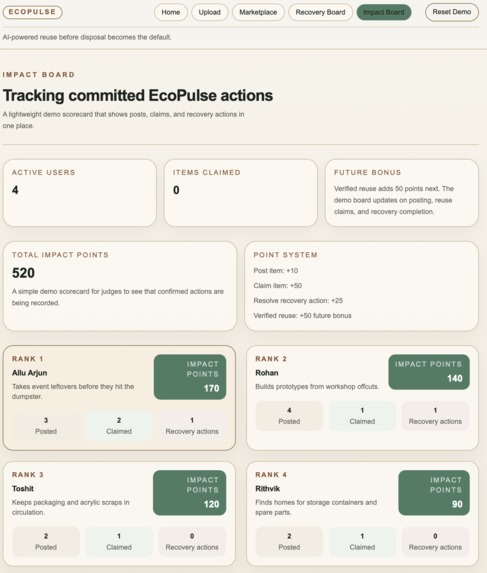
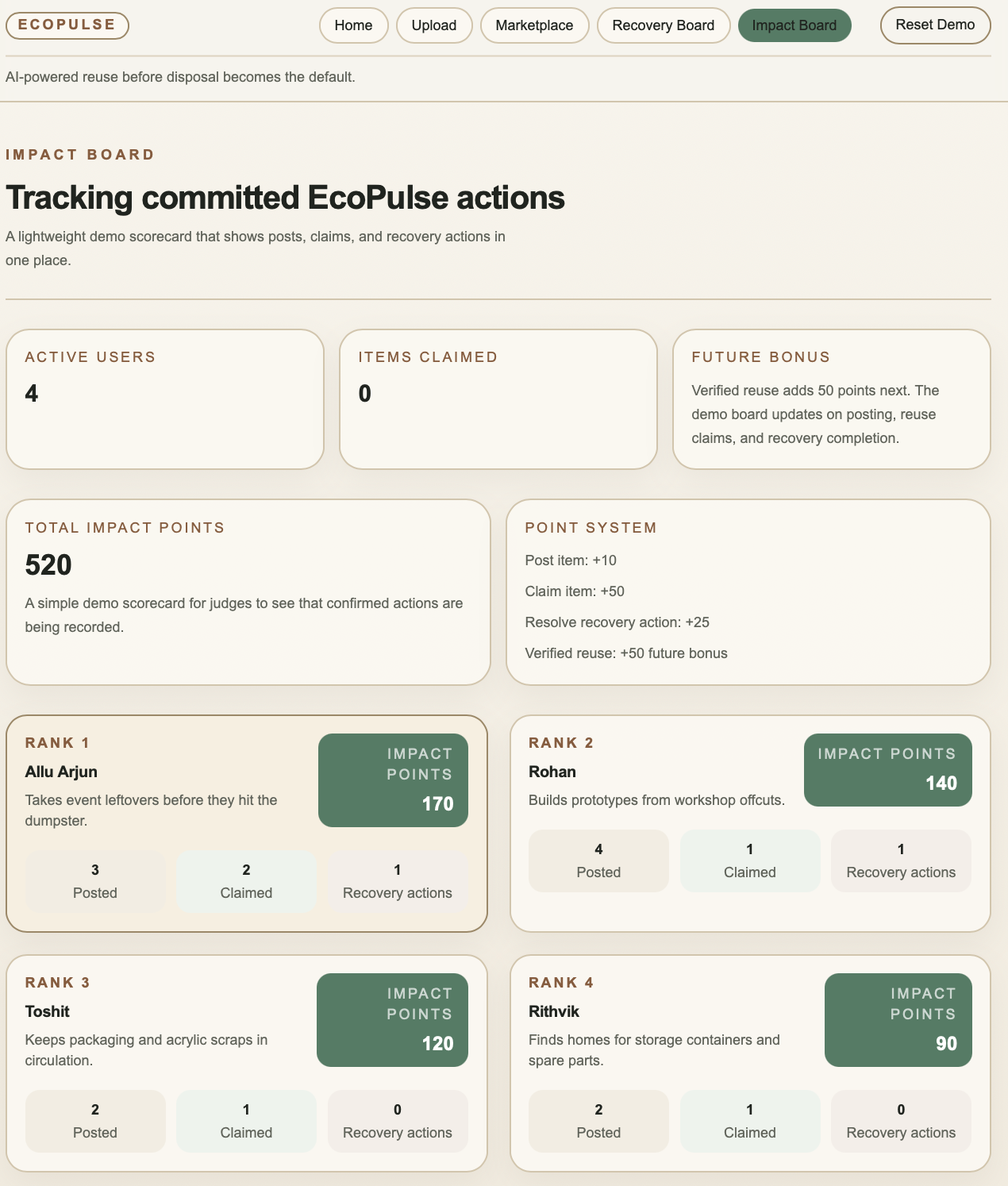
Impact Board
Inspiration
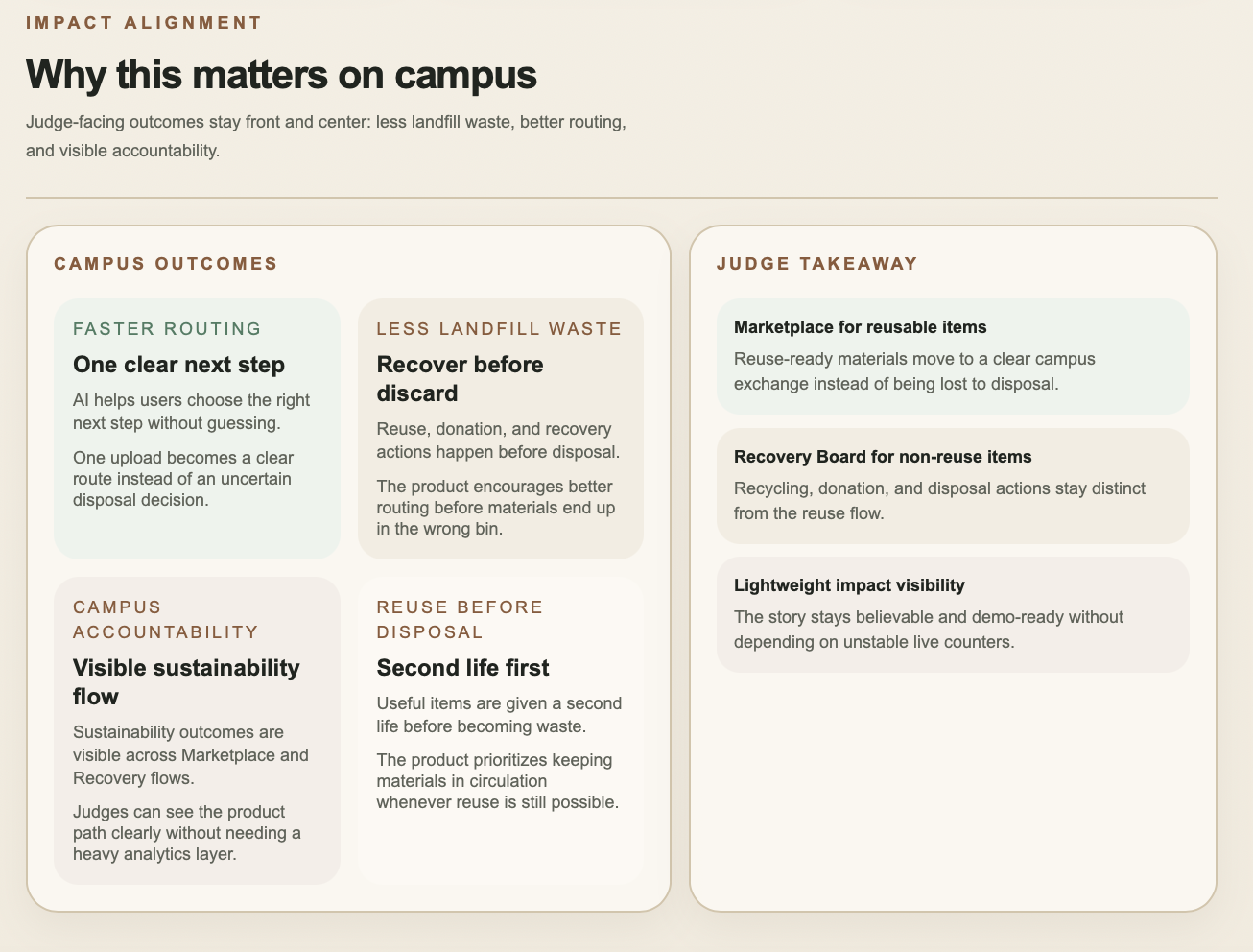
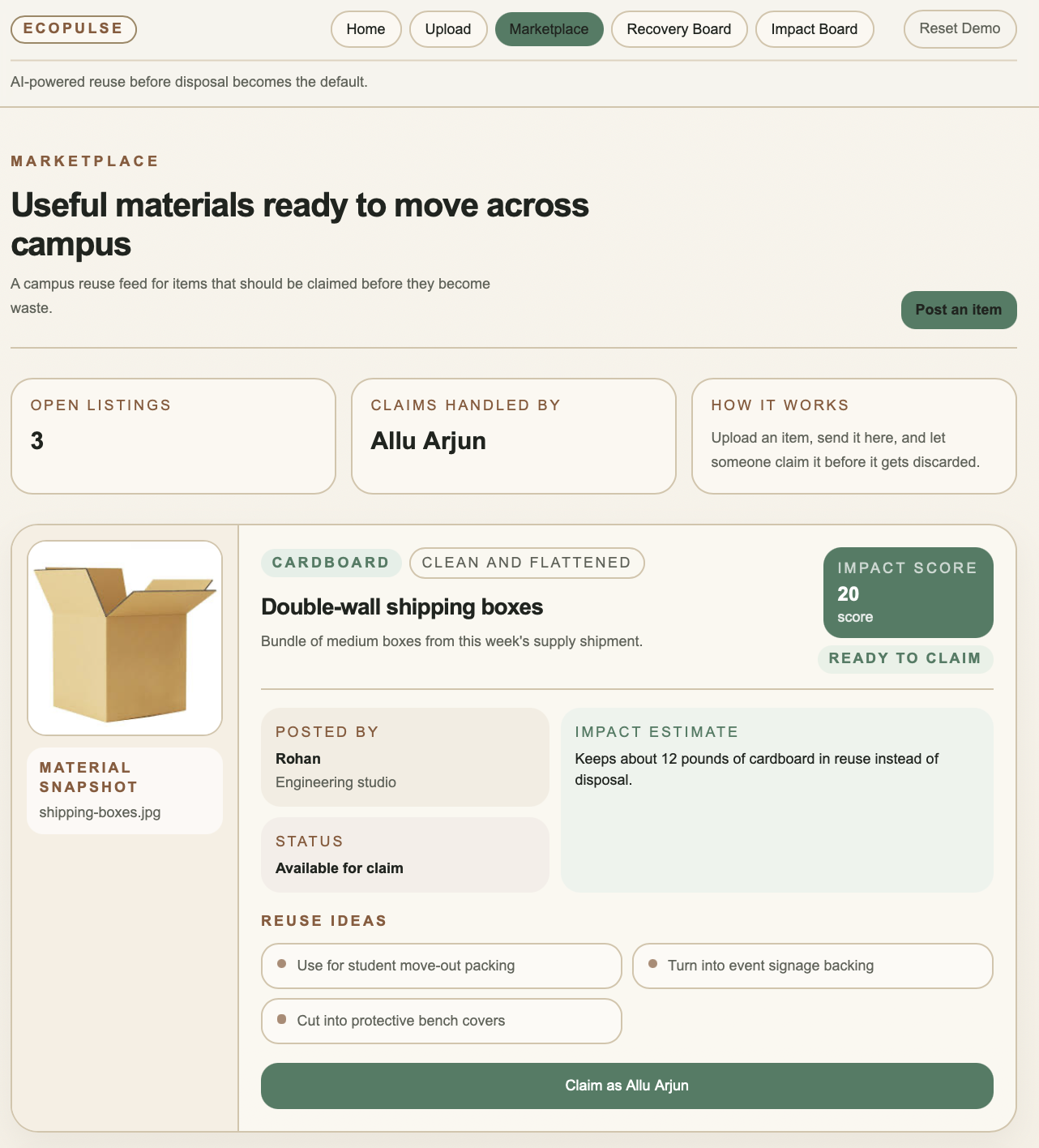
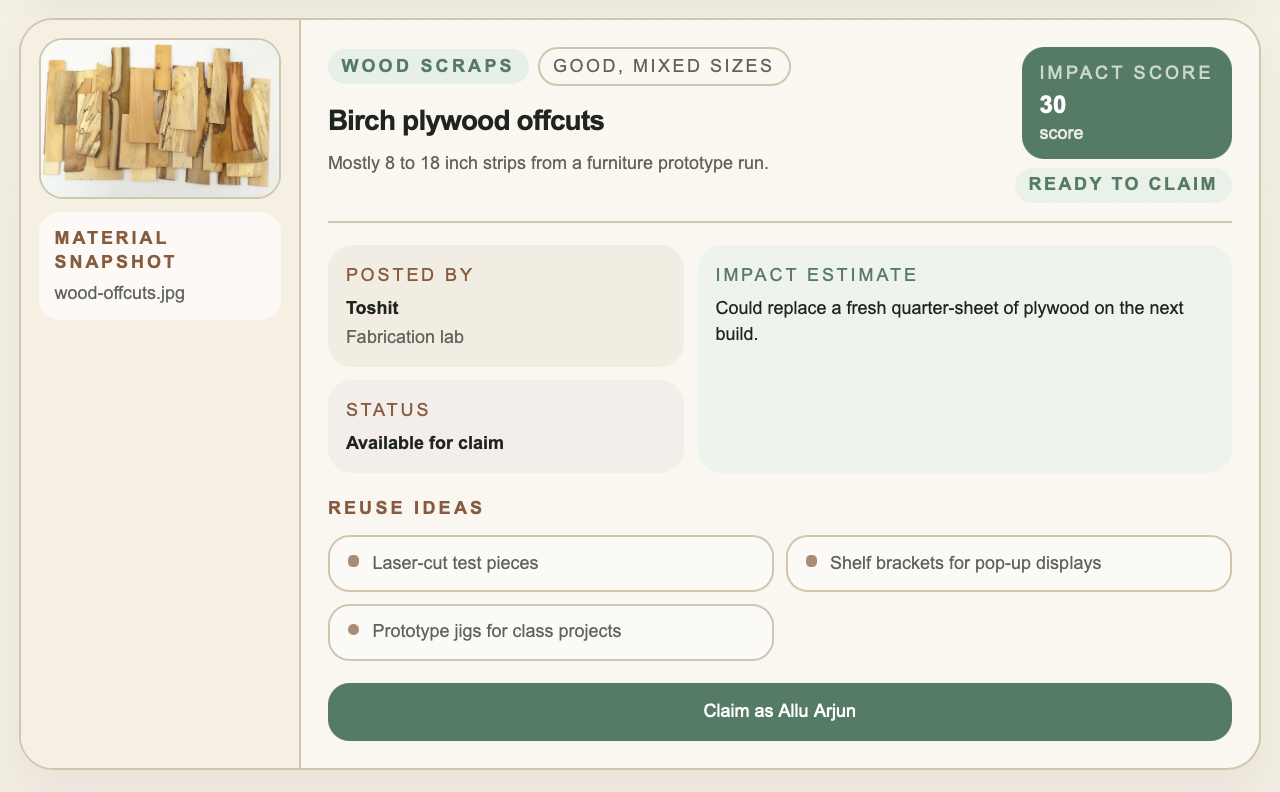
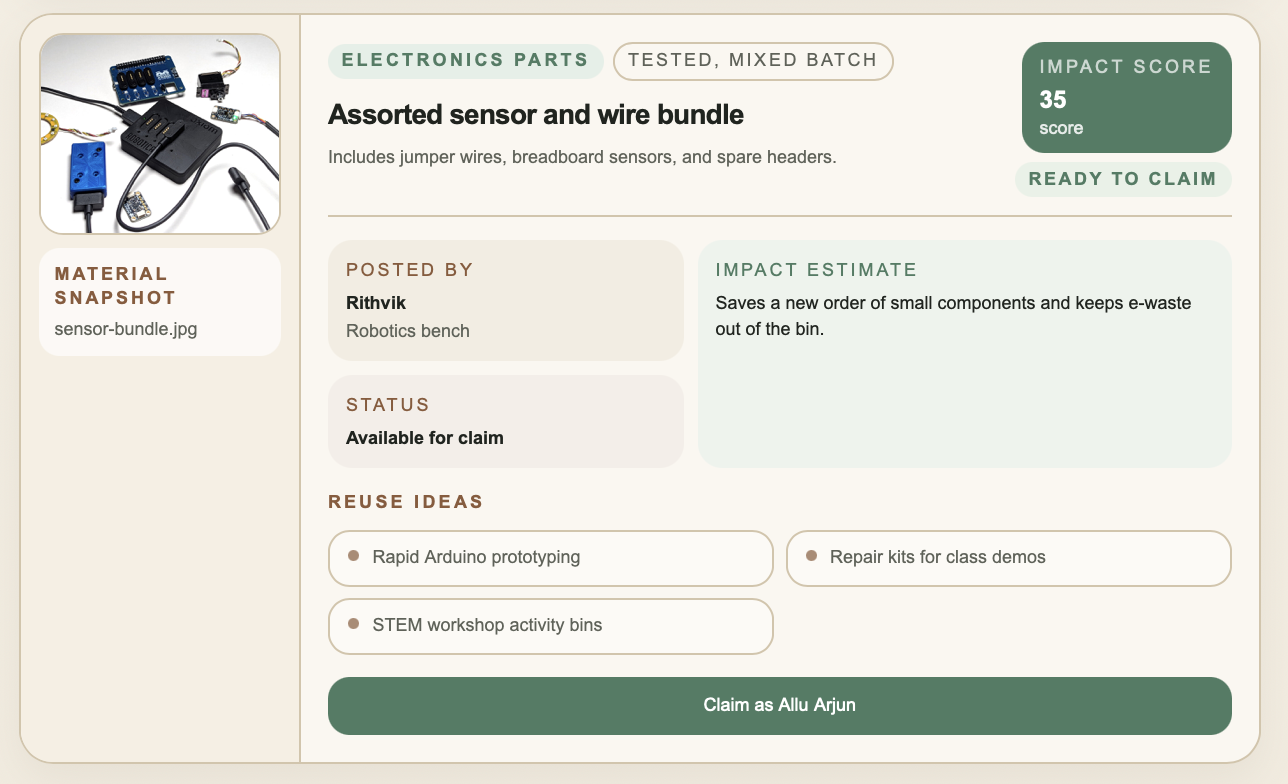
We were inspired by a simple campus problem: useful leftover materials get thrown away because reusing them is harder than tossing them. Boxes, event supplies, containers, electronics parts, and furniture often still have value, but there is usually no fast, low-friction way to identify them, route them, and get them to the next person who can use them. We wanted to make sustainable action feel easier than disposal.
What it does
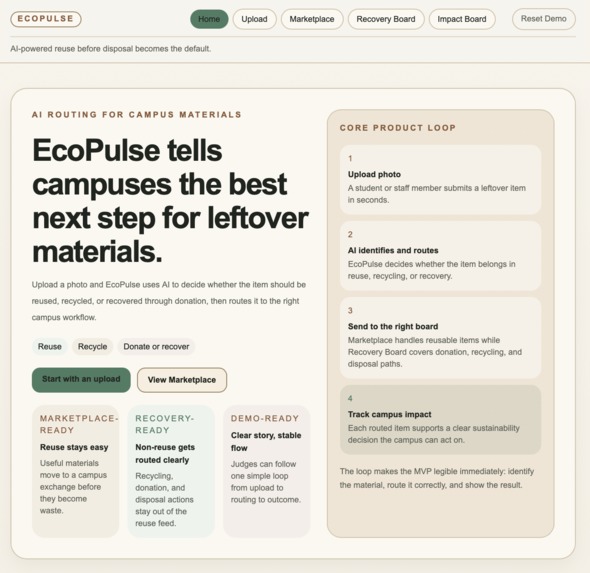
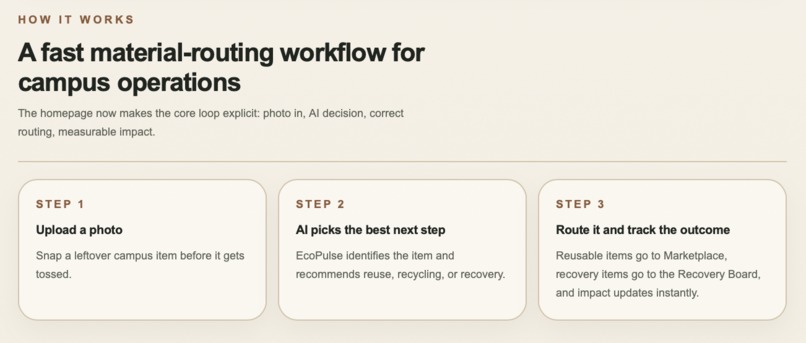
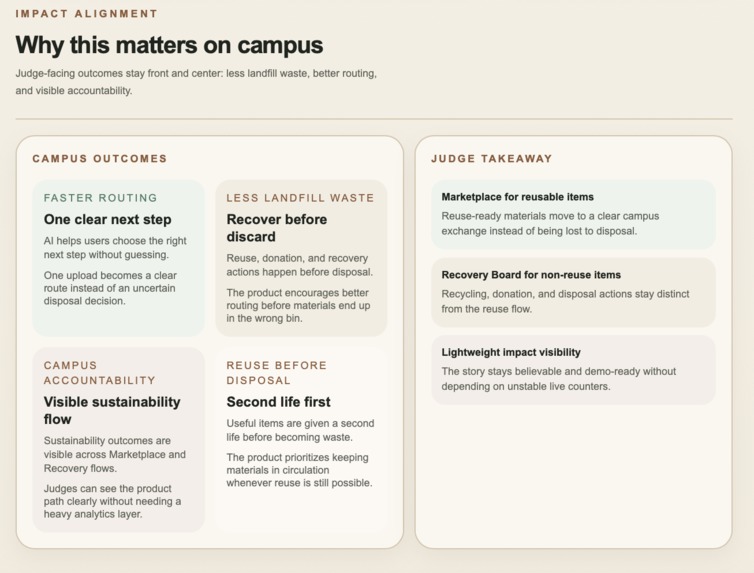
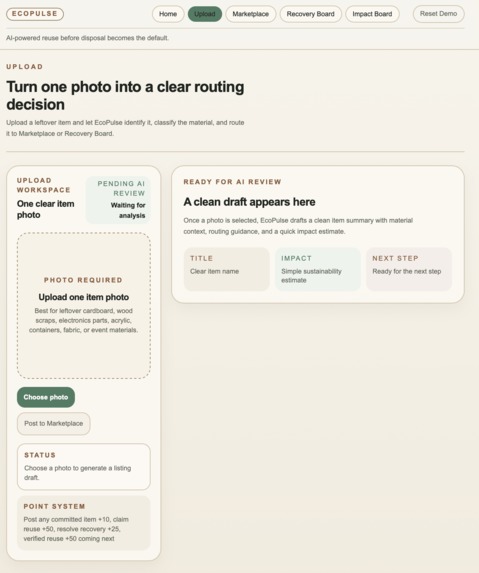
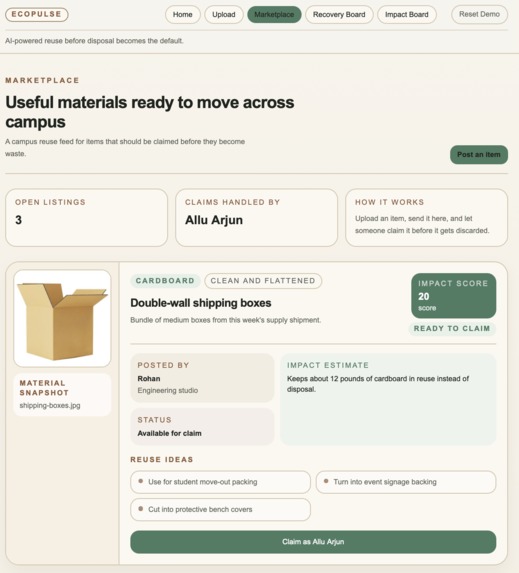
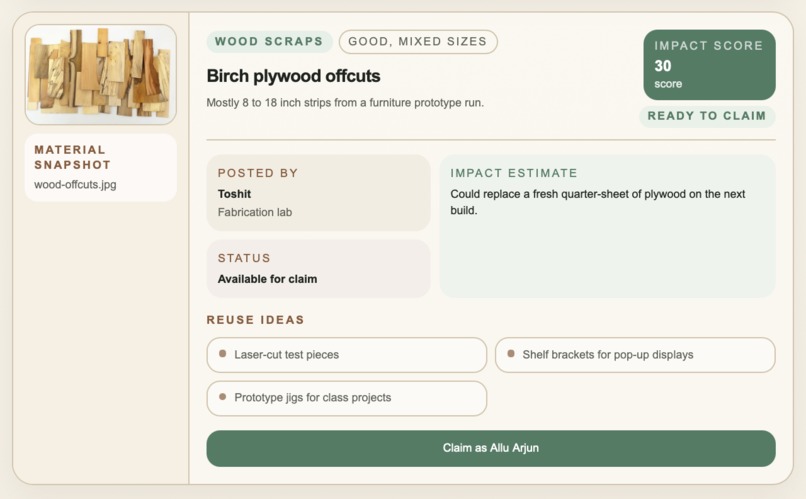
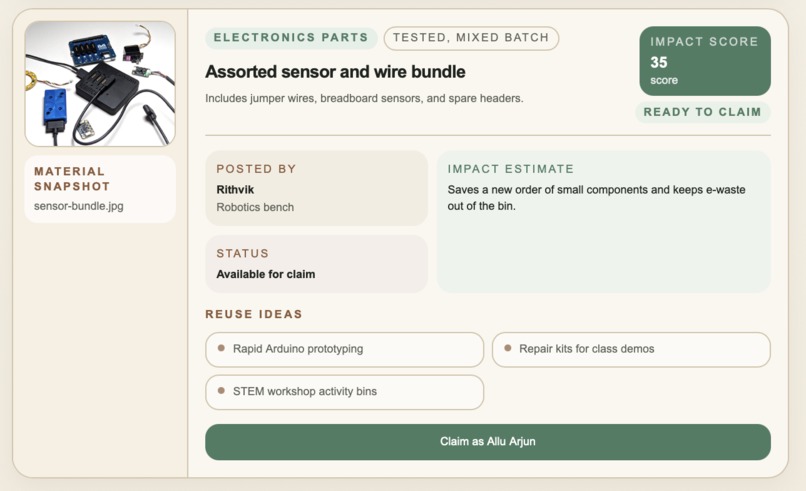
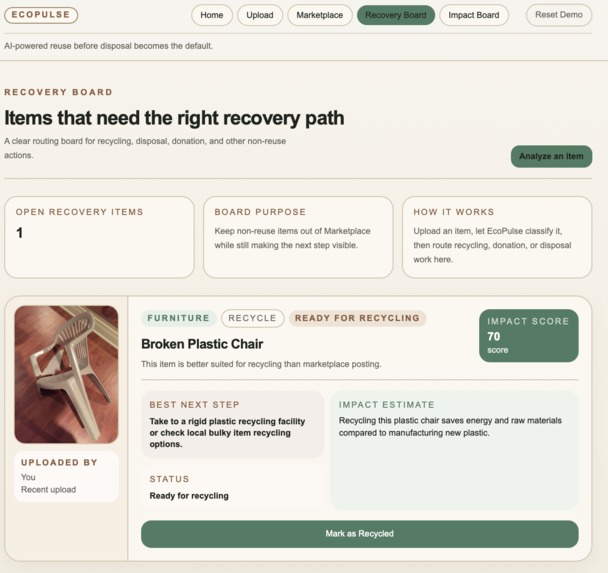
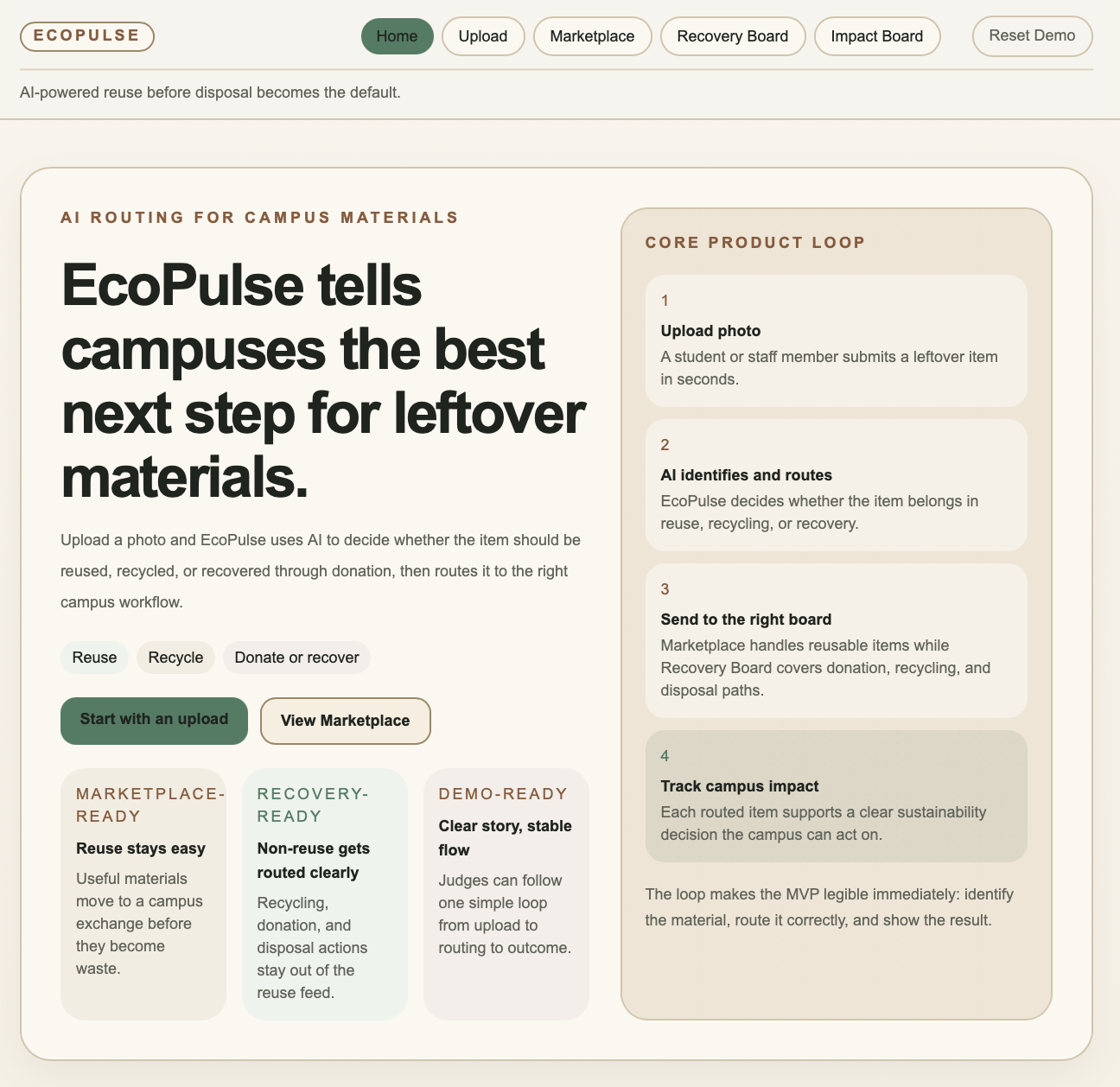
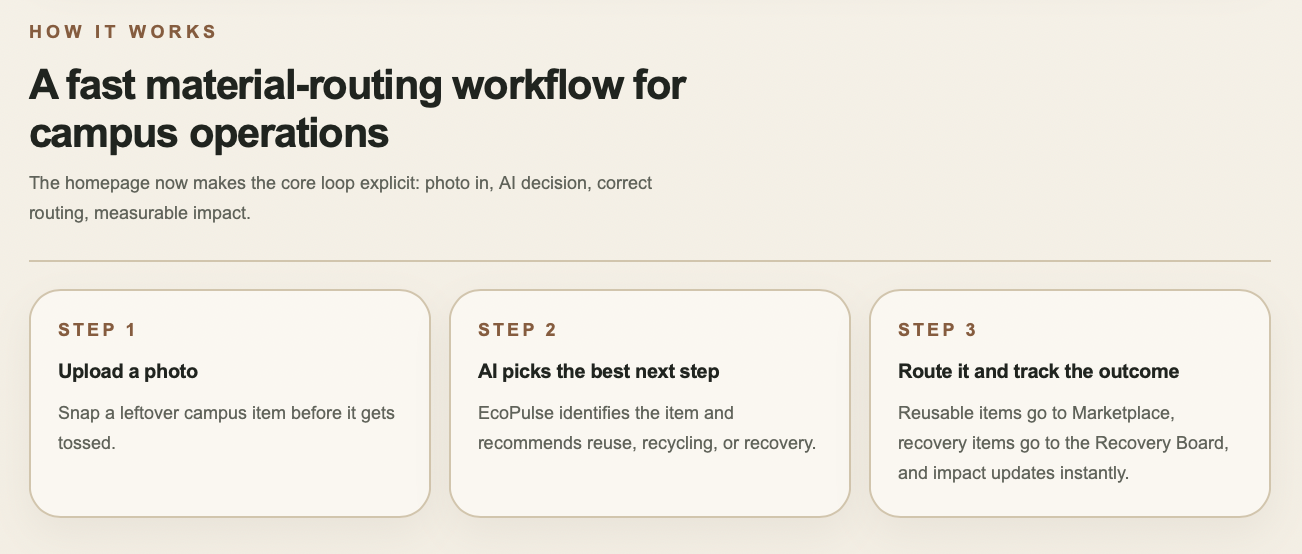
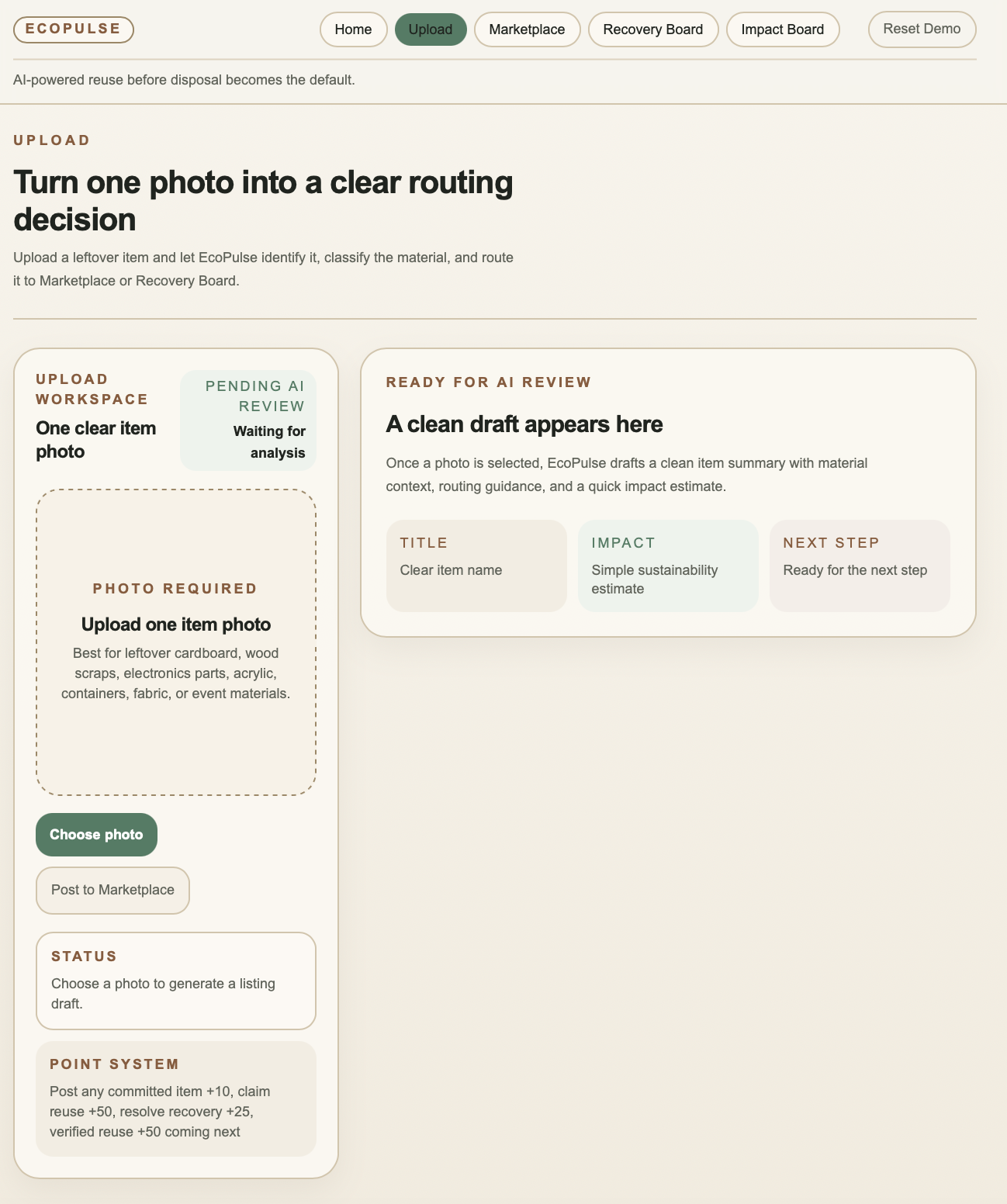
EcoPulse is a lightweight sustainability platform for campus reuse and recovery. A user uploads a photo of an item, the app analyzes it, recommends the best next action, and then routes it either to the Marketplace for reuse or to the Recovery Board for recycling, donation, or disposal. It also tracks simple impact metrics so users and judges can quickly see reuse activity, waste diversion, and campus sustainability alignment.
How we built it
We built EcoPulse with Next.js, TypeScript, and Tailwind CSS. The frontend uses a clean multi-page flow with local state and localStorage persistence so the demo works reliably without backend complexity. We added a Gemini-powered image analysis route, curated demo mappings for known images, deterministic fallback logic, and a lightweight manual review layer so users can quickly correct misclassifications before posting. The result is a polished MVP that feels believable for a one-day hackathon build.
Challenges we ran into
One of our biggest challenges came right at the end, when we ran out of free Gemini API usage while the image-analysis flow was still central to the product. It was one of those moments that can easily derail a hackathon build, because if the analysis becomes unreliable, the trust in the entire experience drops with it. We had to move quickly, stay calm, and make the system dependable again. We were able to recover, get the analysis flow working again, and reinforce it with safer fallback behavior and lightweight review so the demo stayed credible. At the same time, we were also solving the harder product question underneath it all: not every item should be reused, and making the right call between reuse, recycling, and disposal was essential to making EcoPulse feel real.
Accomplishments that we're proud of
We’re proud that EcoPulse feels focused, fast, and demo-friendly while still addressing a real sustainability problem believably. The app shows a full workflow from upload to analysis, routing, and impact tracking, which makes the product easy to understand quickly in a live demo. We’re also proud that the platform does not blindly treat every item as reusable. Instead, it makes more realistic decisions depending on the item’s condition, material, and likely recovery value, whether that means reuse, recycling, donation, or disposal. That made the product feel much more grounded and trustworthy.
What we learned
We learned that trust matters more than complexity in an AI-assisted product. A simpler system with good guardrails is often better than a “smarter” system that makes obvious mistakes. We also learned that sustainability tools work best when they reduce friction, not when they add more steps. Finally, we saw how far a small, well-scoped MVP can go when the flow is clear and the impact story is easy to understand.
What's next for Eco Pulse
Next, we’d want to improve the real image-analysis layer, expand the set of supported material categories, and add better confidence handling for uncertain items. We’d also like to connect EcoPulse to real campus reuse operations with user accounts, verified pickups, and stronger impact reporting over time. Longer term, we see EcoPulse becoming a campus sustainability tool that helps reduce waste, improve accountability, and make circular reuse behavior part of everyday campus life.
Built With
- apis
- cloud-services
- databases
- elevenlabs
- frameworks
- geminiapi
- github
- google-ai-studio
- next.js
- node.js
- platforms
- react
- tailwindcss
- typescript

Log in or sign up for Devpost to join the conversation.