-
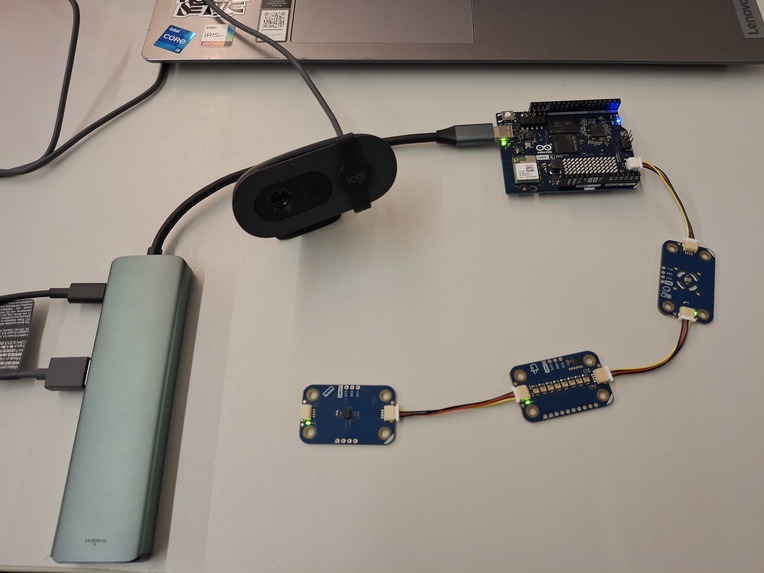
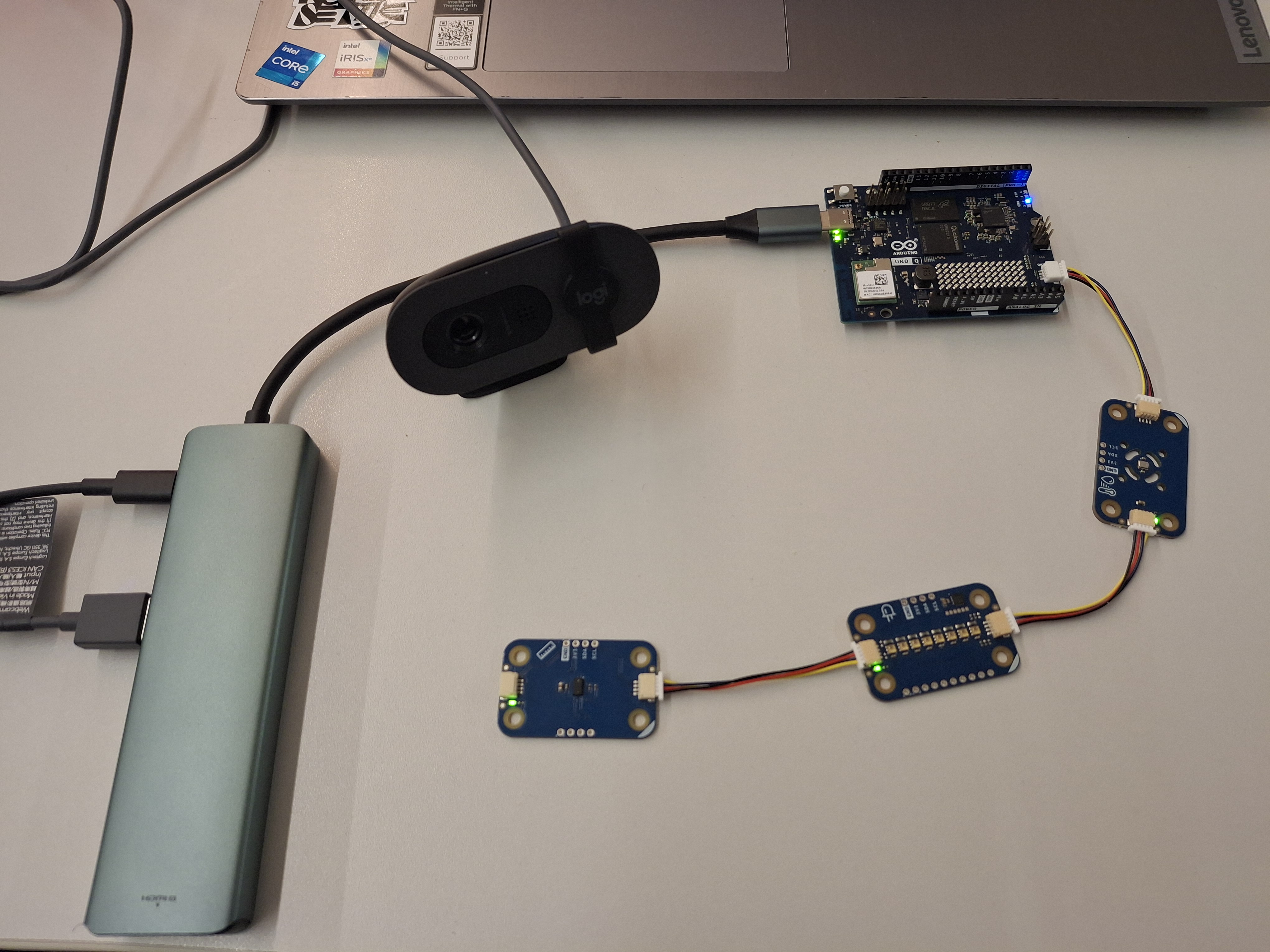
Arduino hardware setup
-
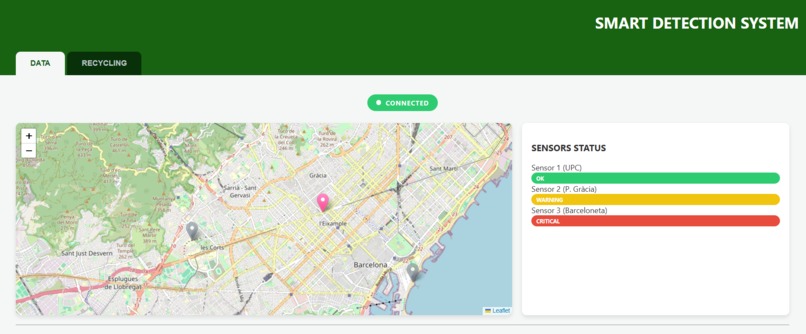
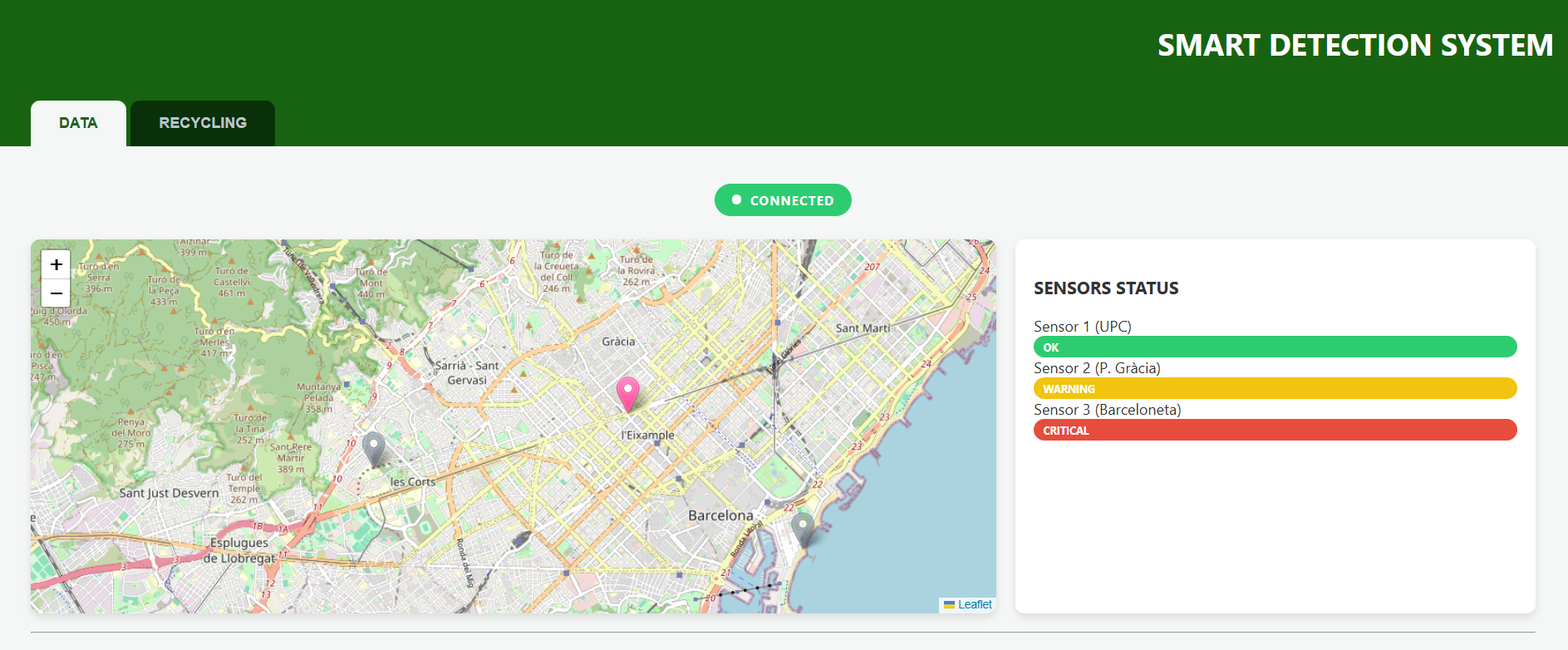
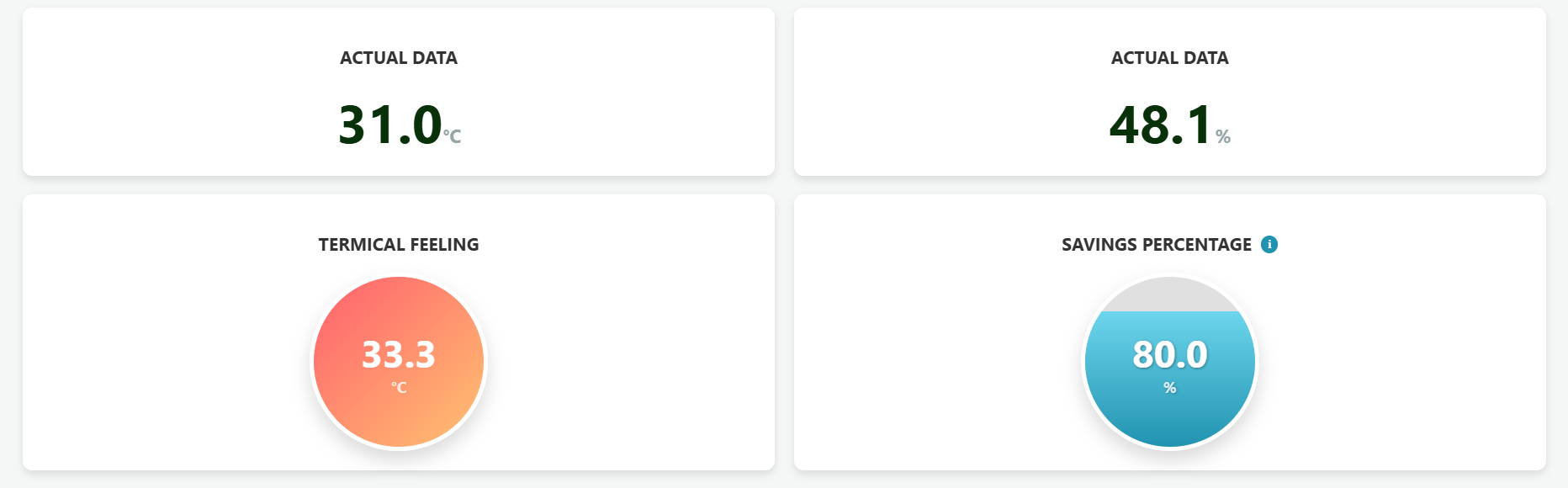
DATA tab screenshot (1)
-
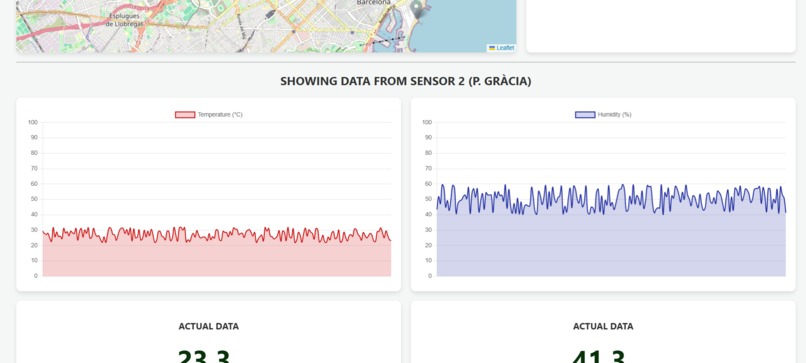
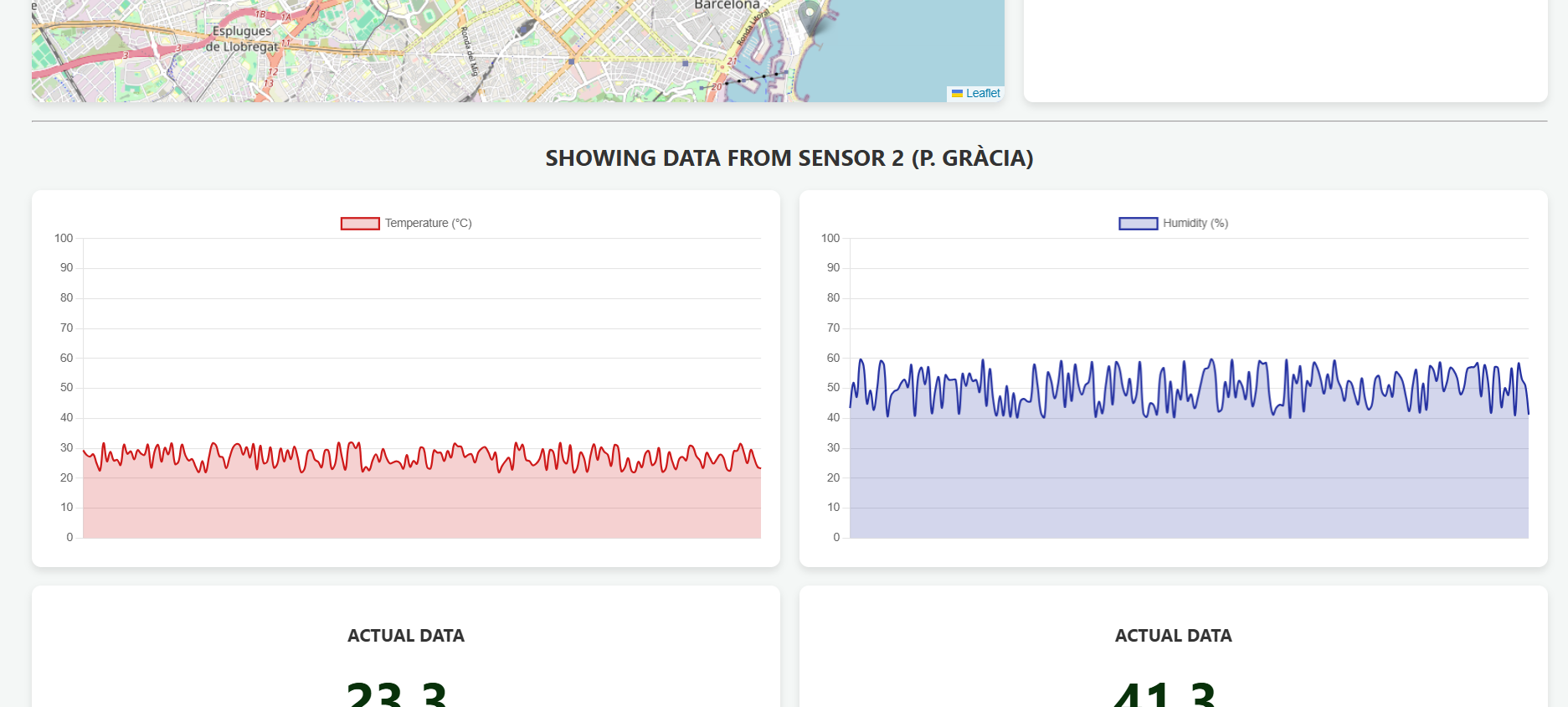
DATA tab screenshot (2)
-
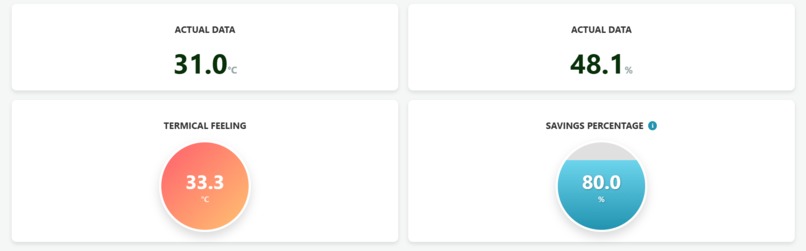
DATA tab screenshot (3)
-
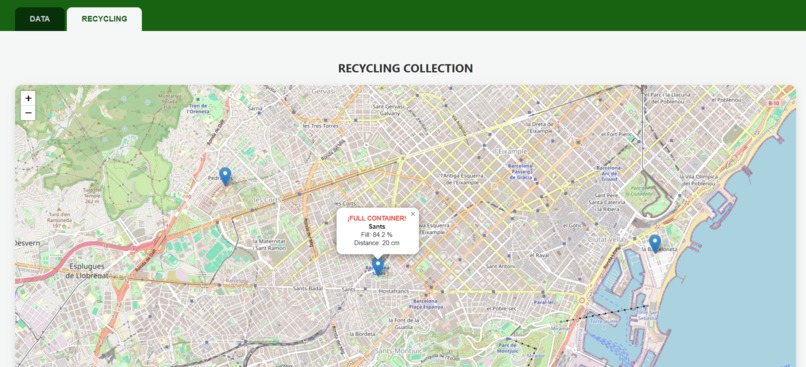
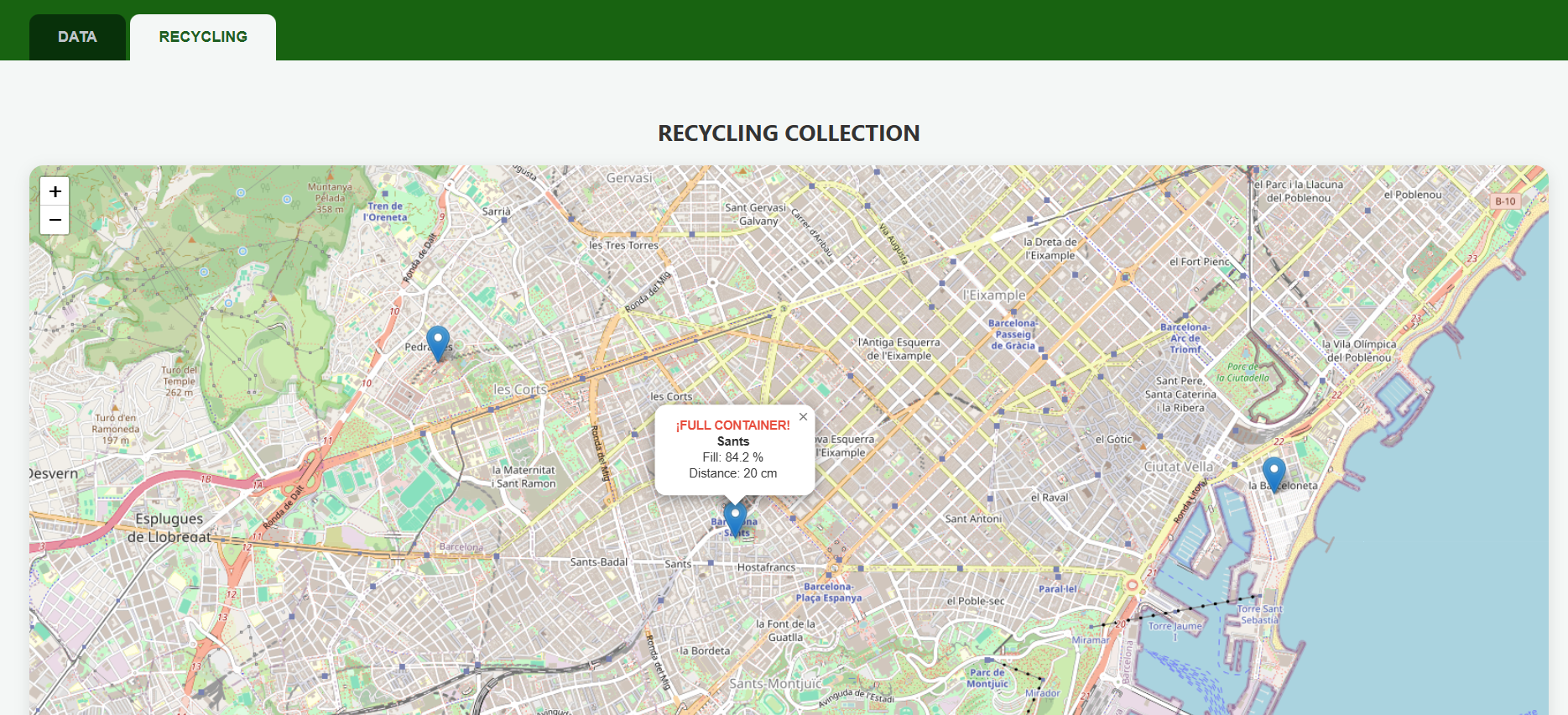
RECYCLING tab screenshot
Inspiration
We wanted to learn more about hardware and software applications and understand how the physical world can interact with digital interfaces. We realized that environmental monitoring was the perfect bridge between the two, allowing us to build something tangible that produces real, measurable data.
What it does
With the help of an Arduino, we built a real-time web dashboard that powers an intelligent system for urban cooling optimization and waste management.
The system continuously collects temperature and humidity data and uses real-time human detection via a camera to activate a smart misting system only when needed and when people are present, significantly reducing unnecessary water usage. At the same time, distance sensors monitor waste containers and detect when they are close to full. Containers above a defined threshold are automatically flagged on the dashboard, enabling more efficient and data-driven collection.
All data, including environmental conditions, cooling status, water-saving behavior, and waste alerts, is displayed live on a custom web interface, with future plans for optimized garbage collection routes.
How we built it
We split our project into two main components: the hardware side and the software side.
-Hardware: We used the Arduino UNO Q as the core of our system, leveraging its dual architecture for both sensor control and on-device processing. A Modulino Thermo sensor measures temperature and humidity, while a Modulino Distance (ToF) sensor monitors waste container fill levels. Instead of controlling a real sprinkler, we use a Modulino Pixels module to simulate diffuser states (OFF, LOW, HIGH) through LEDs. Additionally, a USB webcam (Logitech BRIO 105) enables real-time human detection, ensuring the cooling system only activates when people are present. Together, these components enable efficient water usage and smart waste monitoring in real time.
-Software: We built a custom, responsive web dashboard from scratch using HTML, CSS, and JavaScript. The web page continuously fetches and displays the live sensor data from the Arduino, processes the camera feed, and shows the real-time status of the cooling system in an intuitive UI.
Challenges we ran into
-Camera Configuration and Processing: It took a considerable amount of effort to properly configure the camera for detection. Integrating the video stream and processing images in real-time was a significant hurdle. We had to heavily optimize our Python code to prevent latency issues, handle varying lighting conditions, and ensure the visual detection was consistent and reliable without overloading the system's resources.
-Distance Sensor Calibration: Getting the distance sensor to provide accurate measurements was surprisingly complex. During our initial tests, the readings received by the Arduino (in C++) were highly unstable. We invested time understanding the sensor’s physical limitations and carefully accounting for its distance range constraints, enabling more reliable and stable measurements.
Accomplishments that we're proud of
We are incredibly proud of successfully bringing our complete vision to life within the time constraints of the hackathon. Building a fully functional system from scratch is no small feat, and our proudest achievements include:
Full-Stack IoT Integration: Successfully uniting the hardware and the software. Bridging the gap between the physical components (the Arduino, the distance sensor, and the cooling mechanism) and the digital environment (our Python camera logic and the web dashboard) was a massive milestone for us.
Building a Seamless Data Pipeline: We didn't just build separate, isolated pieces; we engineered a continuous flow of data. Watching the system work as a whole, where physical presence and distance measurements instantly trigger a physical response and update our web page in real-time.
Delivering a Working Prototype: Stepping out of our comfort zones to troubleshoot complex hardware-software synchronization and actually finishing the entire project exactly as we envisioned it is an accomplishment we are deeply proud of.
What we learned
Learned how to code html, csss, javascript, arduino uno q and the camera connection.
What's next for Eco Pulse
Our vision for Eco Pulse extends far beyond this initial prototype. Our immediate next steps include:
Smart Routing for Waste Management: We plan to develop an optimization algorithm that analyzes our sensor data to map out the most efficient routes for city garbage collection fleets. This would allow them to collect the maximum amount of waste in the shortest possible time, reducing municipal carbon emissions.
Advanced AI Computer Vision: We want to expand our camera's capabilities to monitor broader ecosystems. By tracking fauna behavior and correlating it with our environmental data (temperature, humidity, noise levels), we can study how wildlife reacts to climate shifts.
Real-Time Anti-Pollution Alerts: We aim to deploy the system in critical natural areas, such as beaches, using the camera to detect active littering. This real-time monitoring could instantly alert authorities or trigger automated warnings to prevent plastic waste from reaching the ocean.

Log in or sign up for Devpost to join the conversation.