-
-
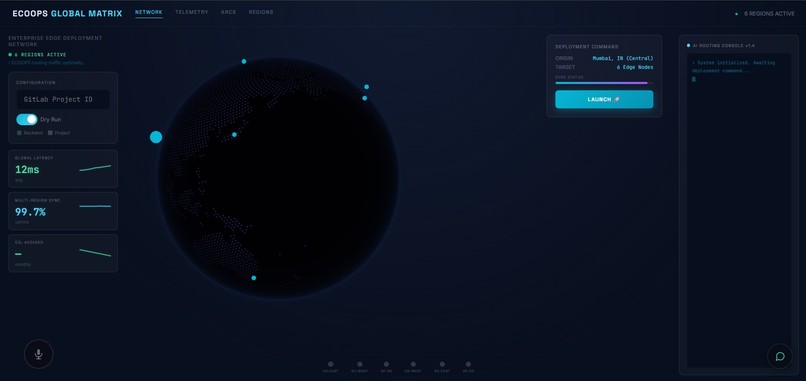
landing page
-
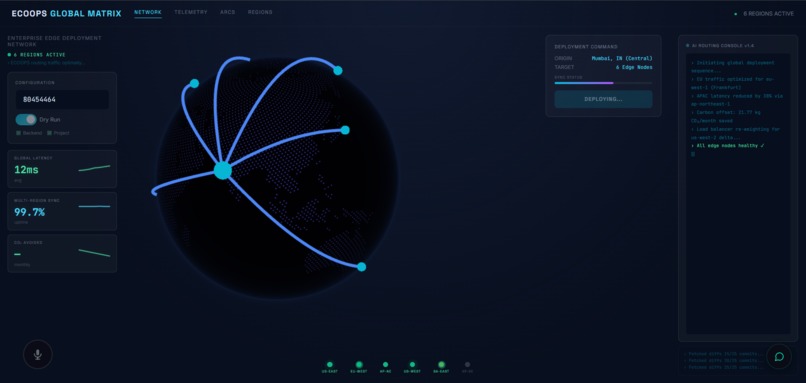
working overview
-
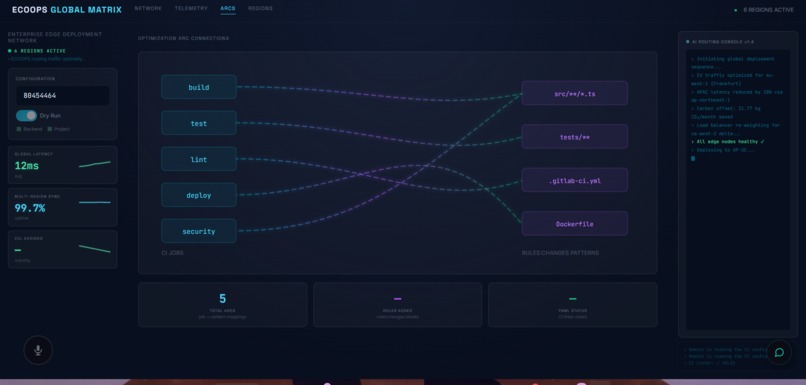
arcs page
-
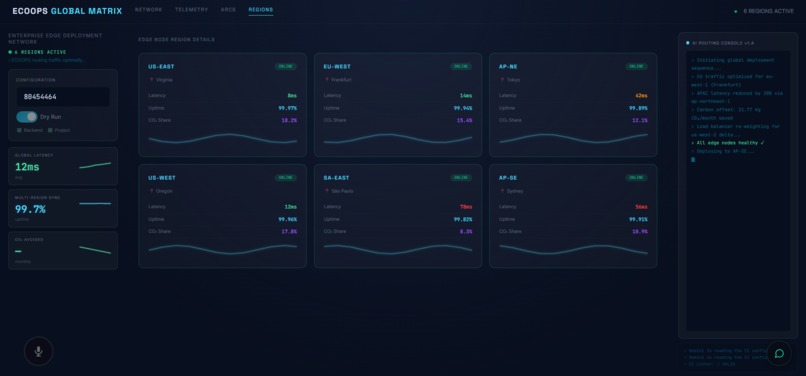
regions page
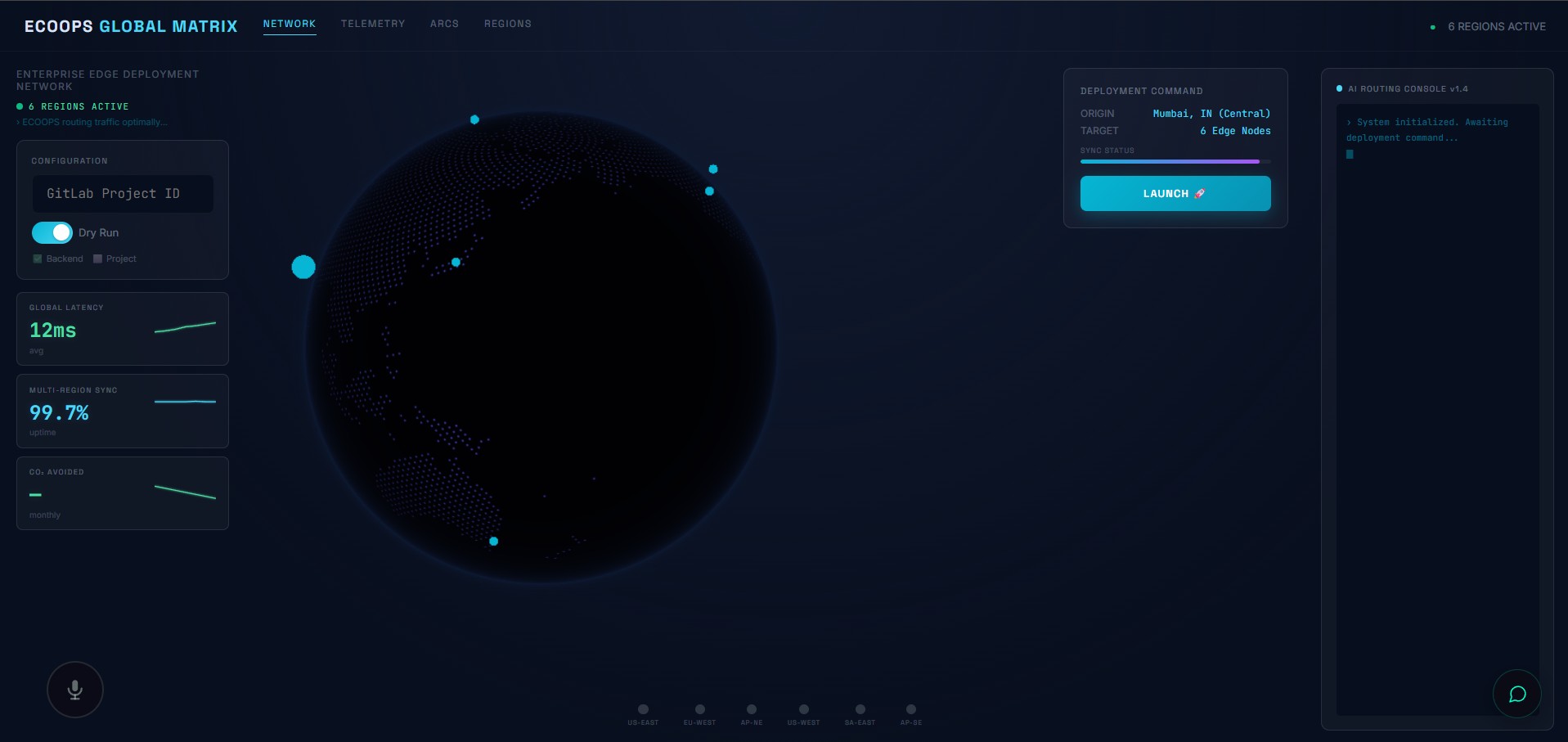
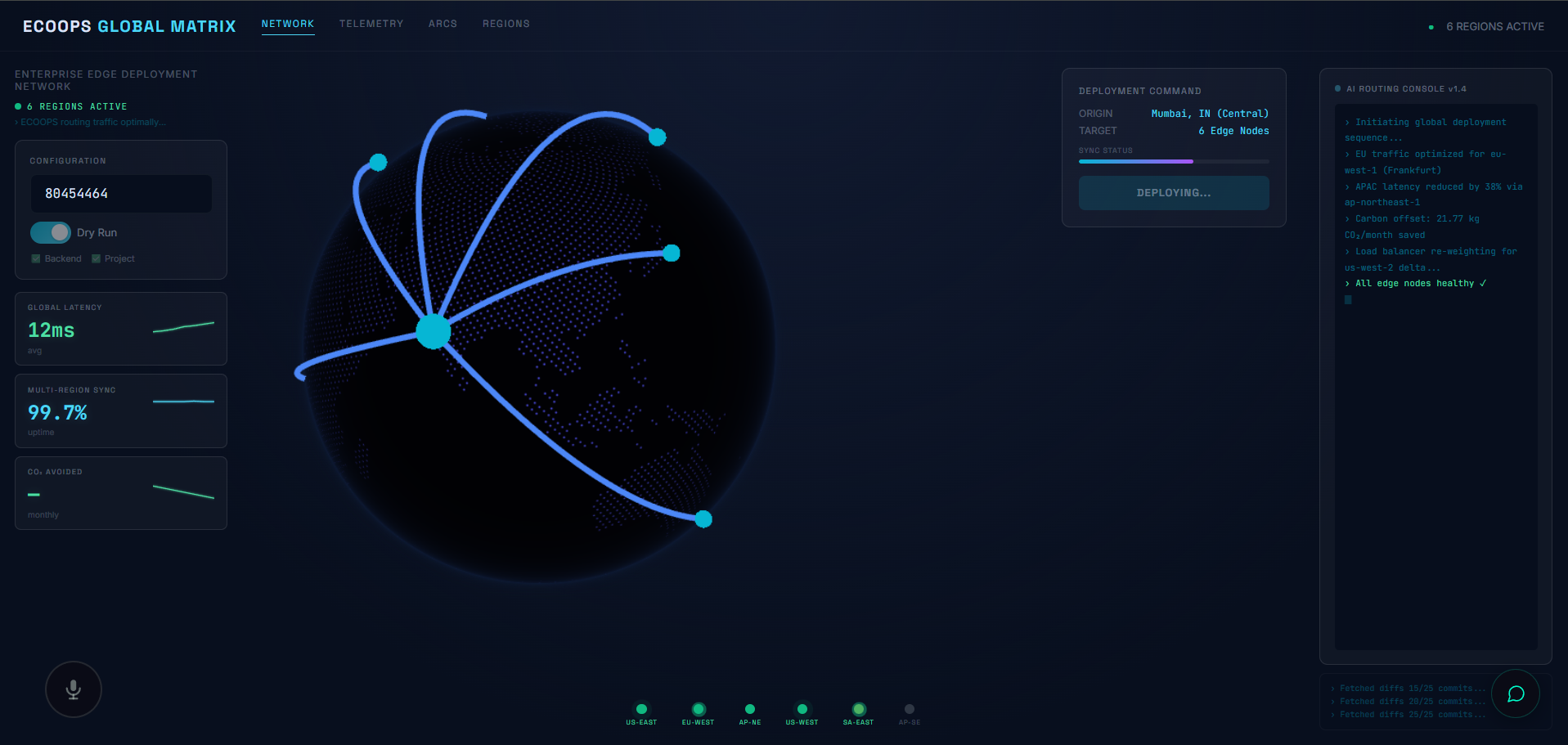
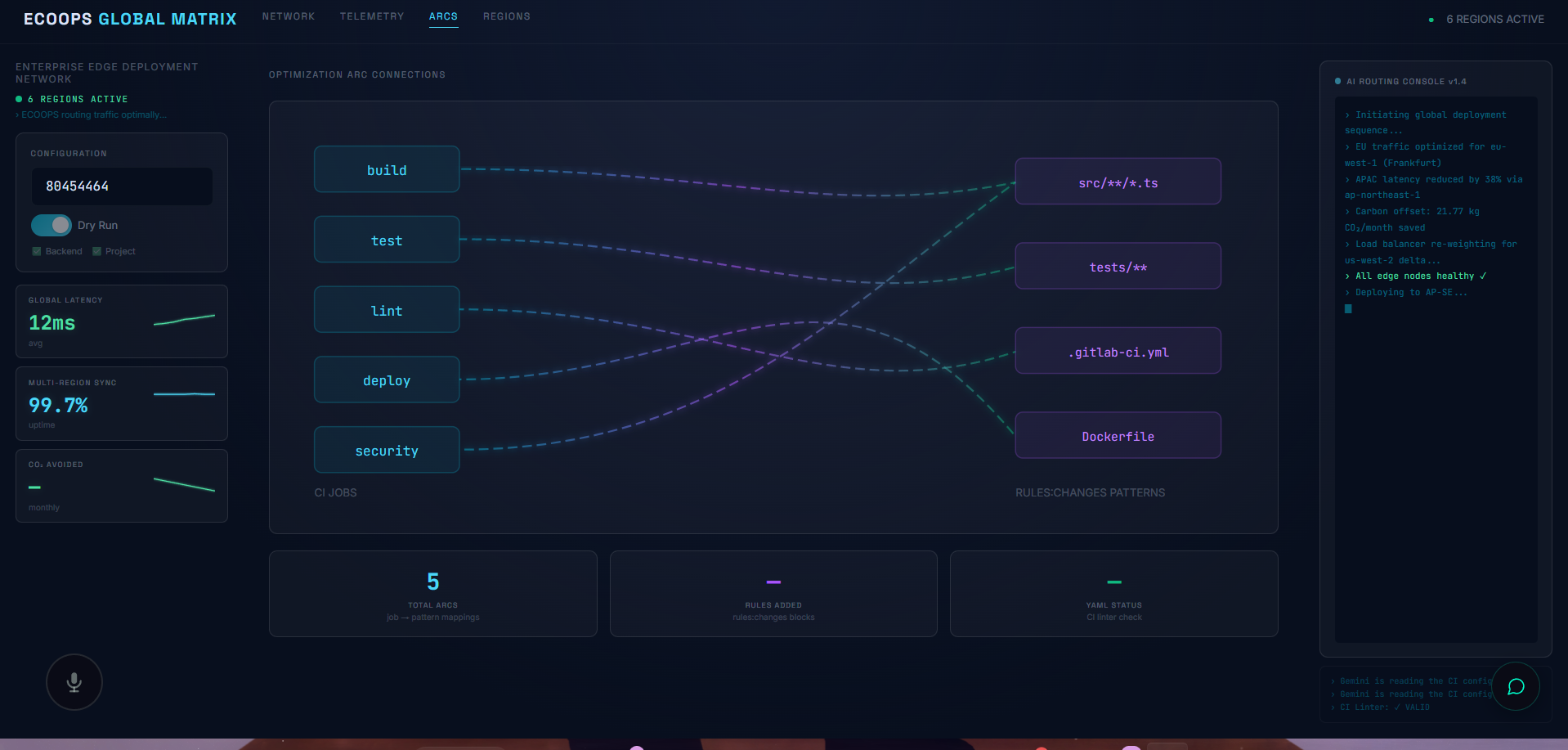
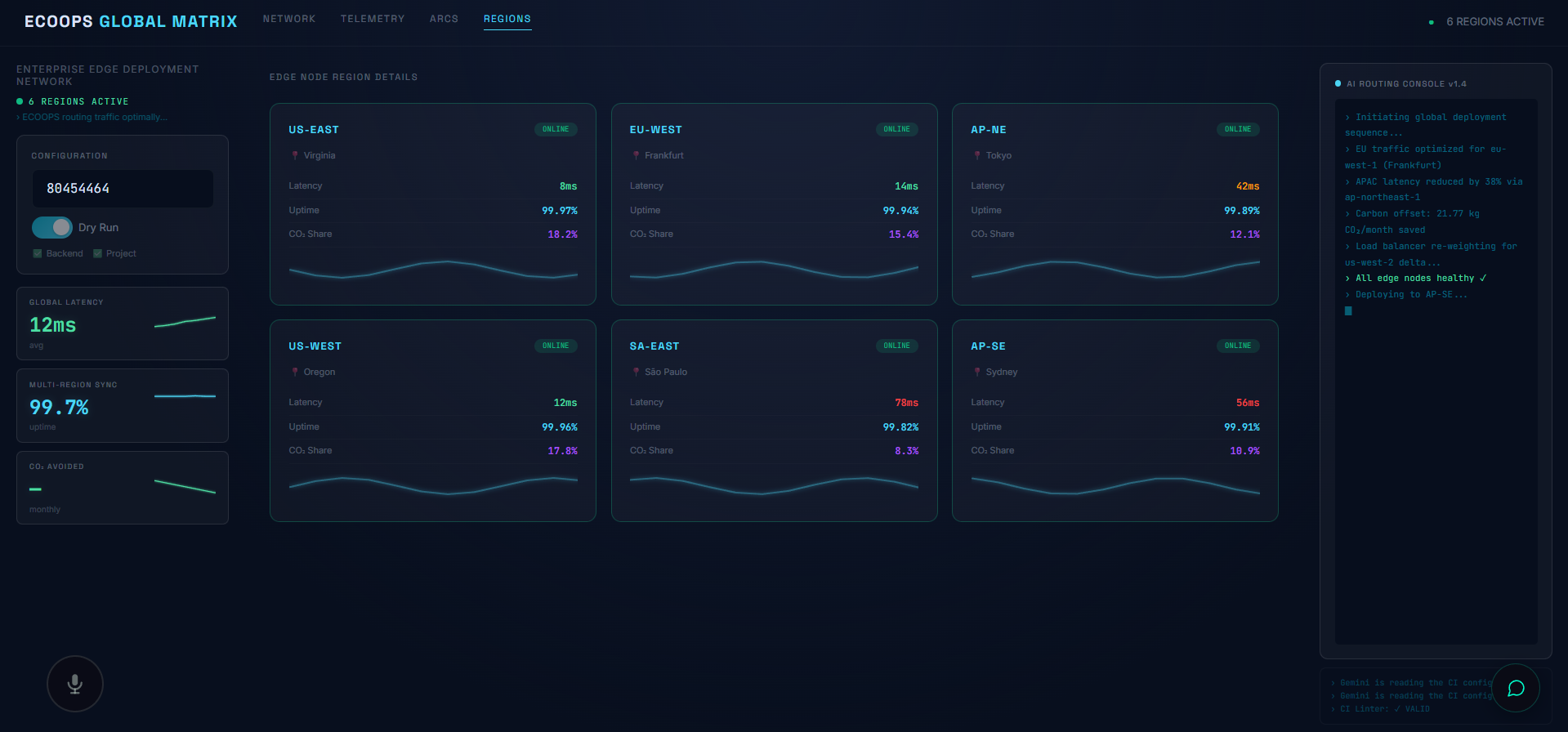
Inspiration: It started with pure developer frustration. We were waiting 20 minutes for a massive CI/CD pipeline to pass just because someone fixed a typo in a README.md. That’s when the lightbulb went off: engineering teams are burning 30–40% of their CI minutes running jobs that provide literally zero value for the actual commit.
That wasted compute translates directly to burned cash, wasted energy, and completely unnecessary carbon emissions going up in smoke. We realized we could fix this. We could perfectly align developer efficiency with environmental sustainability by building an AI agent smart enough to step in and stop the waste before it happens.
What it does: ECOOPS (Emission Cost Optimizer — Operations Pipeline System) acts as your team's automated sustainability engineer. It looks at your pipeline history and commit diffs to pinpoint exactly where compute is being thrown away.
Instead of just complaining about the waste, ECOOPS uses Gemini 2.5 Flash to fix it. It automatically optimizes your .gitlab-ci.yml files by injecting precise rules:changes: blocks, isolating your testing environments. Finally, it generates a Merge Request complete with a transparent Green Impact Report.
To prove our impact wasn't just guesswork, ECOOPS calculates the exact carbon reduction using a deterministic model. How we built it We glued the brain of the operation together using a Python/Flask API, connecting the GitLab REST API v4 with Gemini 2.5 Flash.
For the frontend, we didn't want a boring dashboard. We wanted the architecture to feel alive, so we built an interactive React and Three.js 3D globe visualization. To make the voice interaction feel completely natural, we implemented Gemini 2.5 Flash Native Audio via a custom AudioWorklet. The entire full-stack application is containerized and deployed on Google Cloud Run.
Here is a quick example of how our YAML Optimizer Agent modifies a wasteful job without breaking existing logic:
ECOOPS Automated Optimization
test-backend: stage: test script: - pytest src/backend/ rules: - changes: - src/backend/*/ - pyproject.toml
Challenges we ran into: Real-time streaming in the cloud is an absolute beast. Google Cloud Run's HTTP/3 multiplexing aggressively dropped our Server-Sent Events (SSE) streams. We spent hours pulling our hair out before finally engineering robust enough reconnection logic to keep the UI synced with the backend.
Additionally, getting the AudioWorklet to play nicely for real-time voice in a production environment threw us into a maze of complex module resolution and infuriating CORS workarounds. Fighting the browser audio APIs was tough, but finally hearing the AI speak back to us made it worth it.
Accomplishments that we're proud of: We are incredibly proud to have built a tool that actually takes action. ECOOPS isn't just a chatbot; it goes from analyzing a raw repository to delivering a ready-to-merge, fully optimized MR completely hands-free. Seeing the AI successfully identify and isolate ~40% of CI waste during our real-world demo testing was a massive validation of everything we built this weekend.
What we learned: When it comes to generating infrastructure code, prompt engineering is everything. We learned the hard way that open-ended prompts lead to broken YAML. Giving Gemini highly structured, rigid constraints produced dramatically more reliable, safe, and deployable optimizations.
What's next for ECOOPS: We want to make this effortless for any engineering team to adopt. Our next step is packaging ECOOPS as a simple, one-click GitLab CI/CD component, and expanding our AI's scope to analyze and squash compute waste across entire multi-project organizations.
latex math : To prove our impact wasn't just guesswork, ECOOPS calculates the exact carbon reduction using a deterministic model. For any given pipeline \(i\), the total emissions saved \(E_{saved}\) is calculated as:
$$ E_{saved} = \sum_{i=1}^{n} \left( \frac{M_i}{60} \times P_{runner} \times C_{intensity} \right) $$
Where \(M_i\) is the wasted compute minutes, \(P_{runner}\) is the server power consumption in kW, and \(C_{intensity}\) is the regional grid carbon intensity in \(kg/kWh\).
Built With
- cobe
- css
- docker
- flask
- gemini-2.5-flash
- gemini-2.5-flash-native-audio-preview-12-2025
- gemini-api
- gitlab-duo-agent
- gitlab-rest-api
- google-cloud-run
- html
- javascript
- python
- react
- sse
- three.js
- typescript
- web-audio-api
- yaml


Log in or sign up for Devpost to join the conversation.