-
-
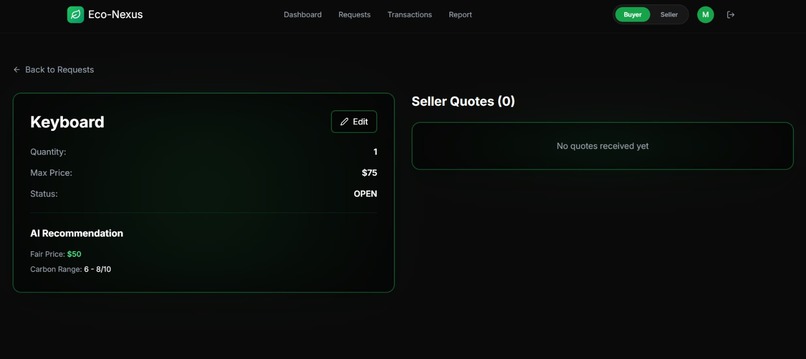
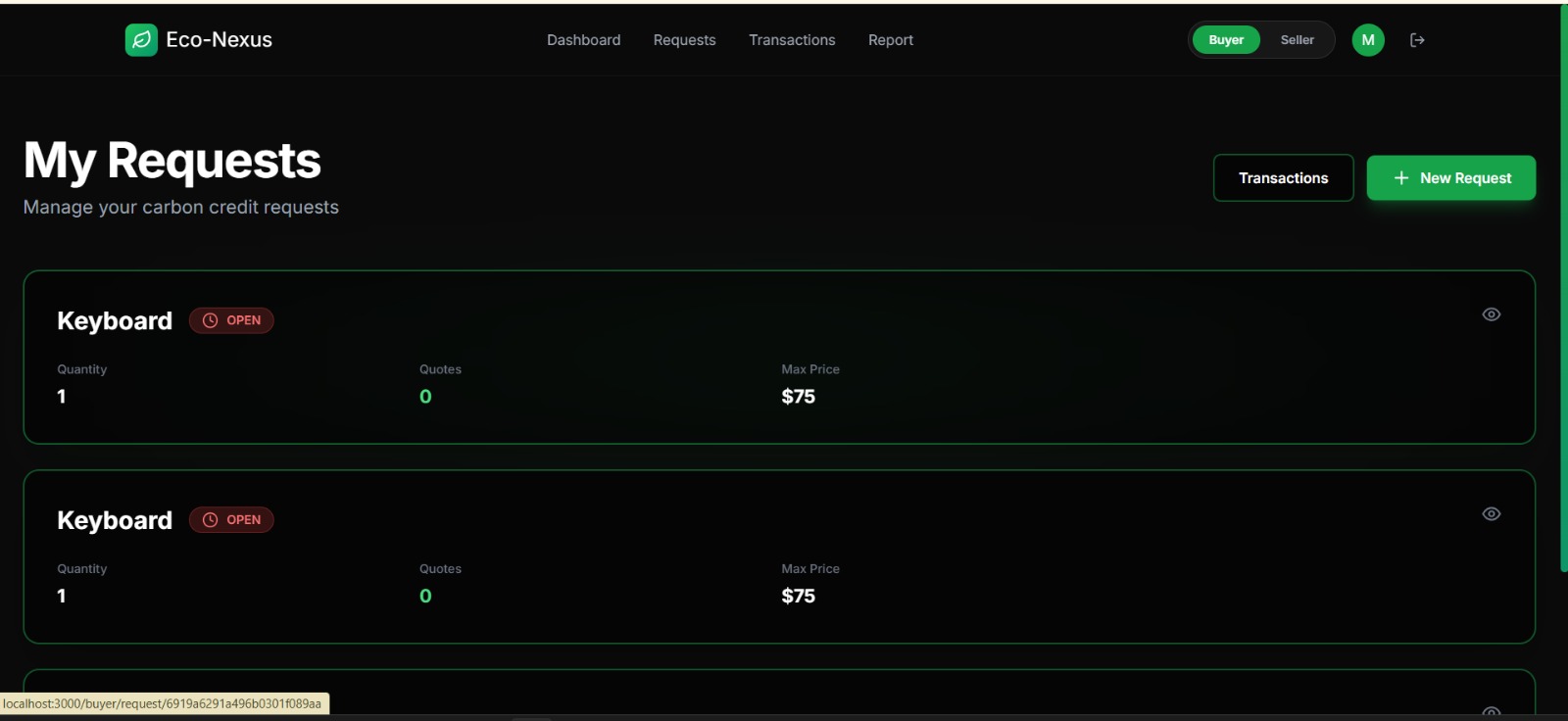
request
-
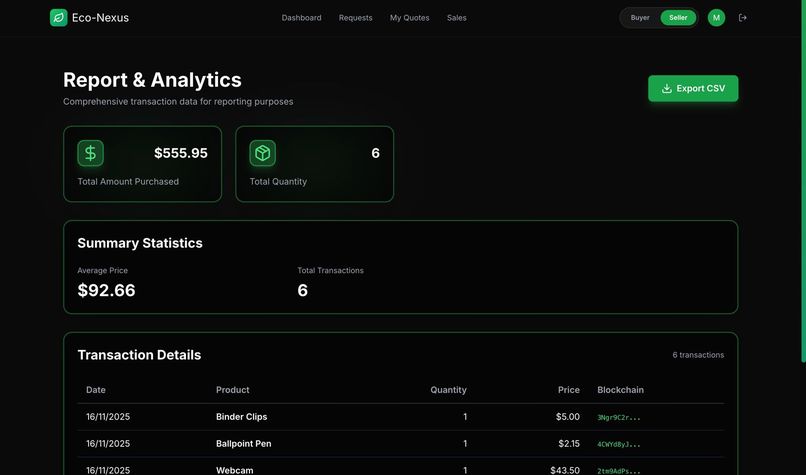
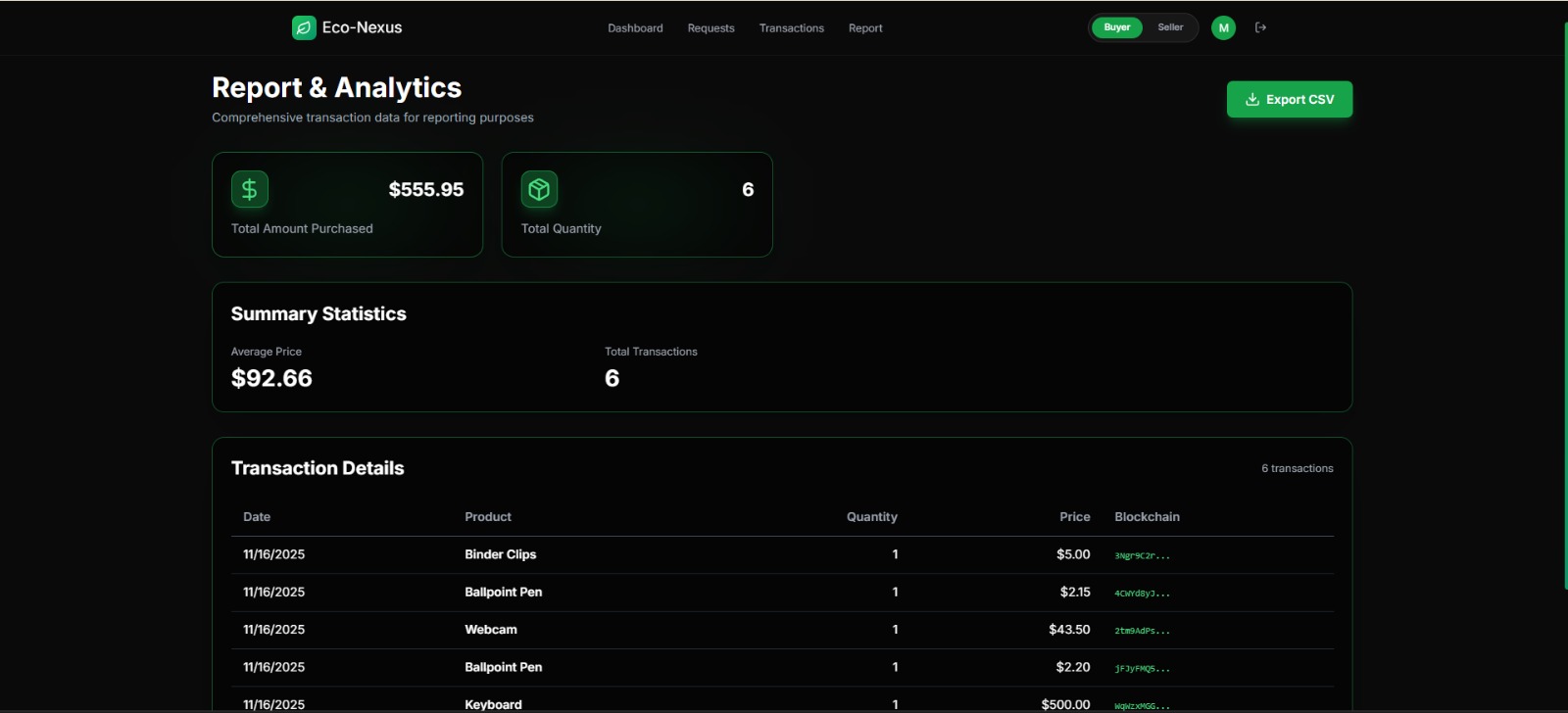
analytics
-
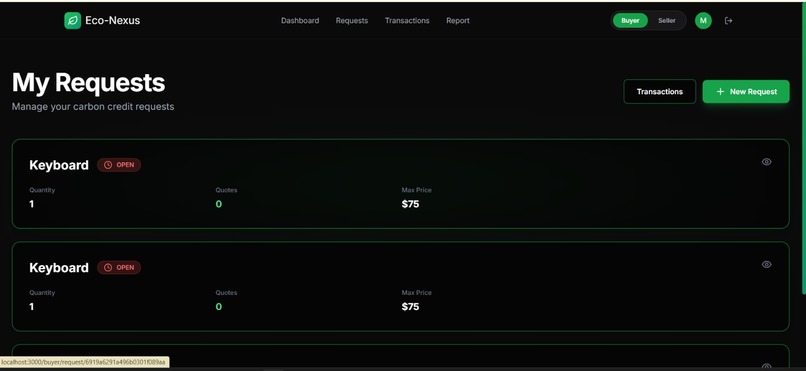
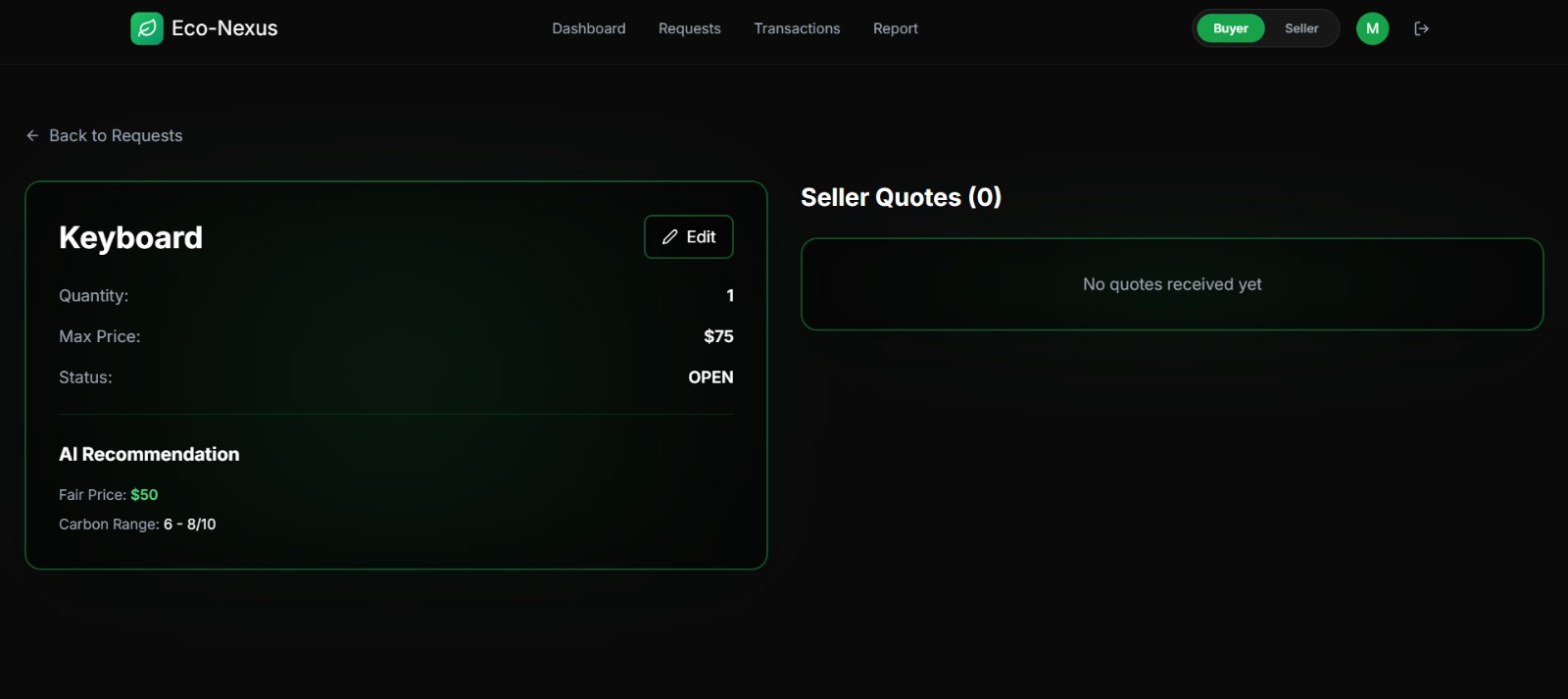
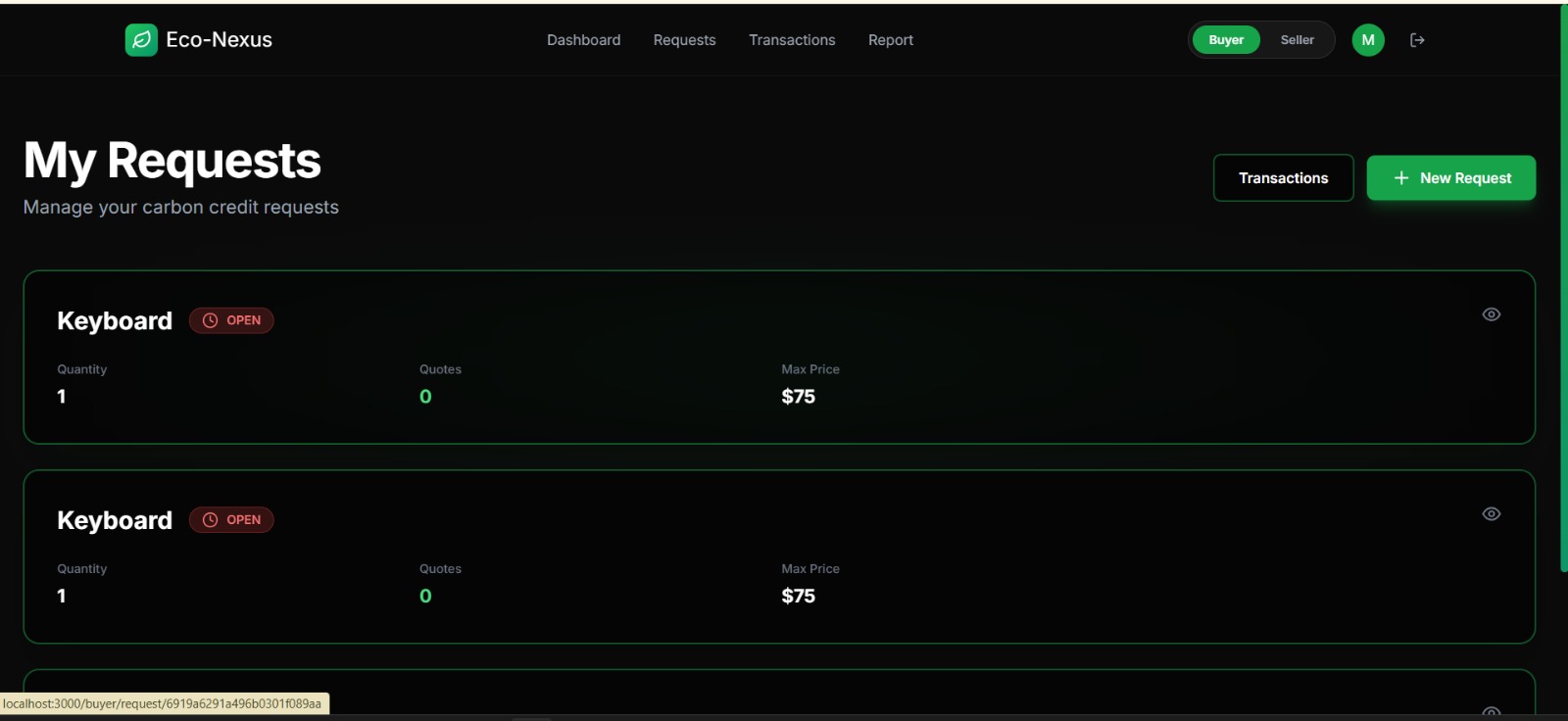
my requests as buyer
-
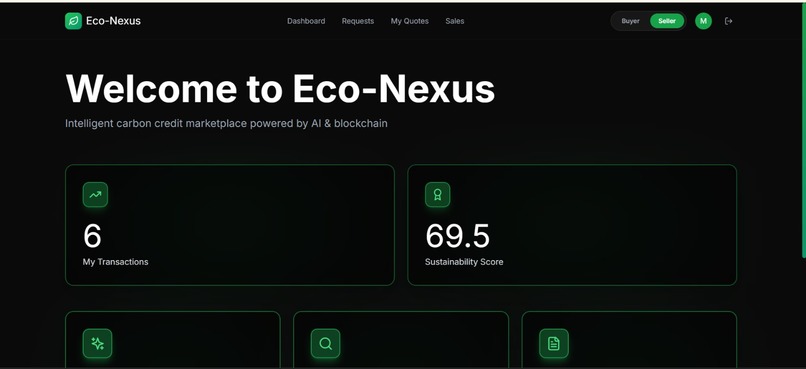
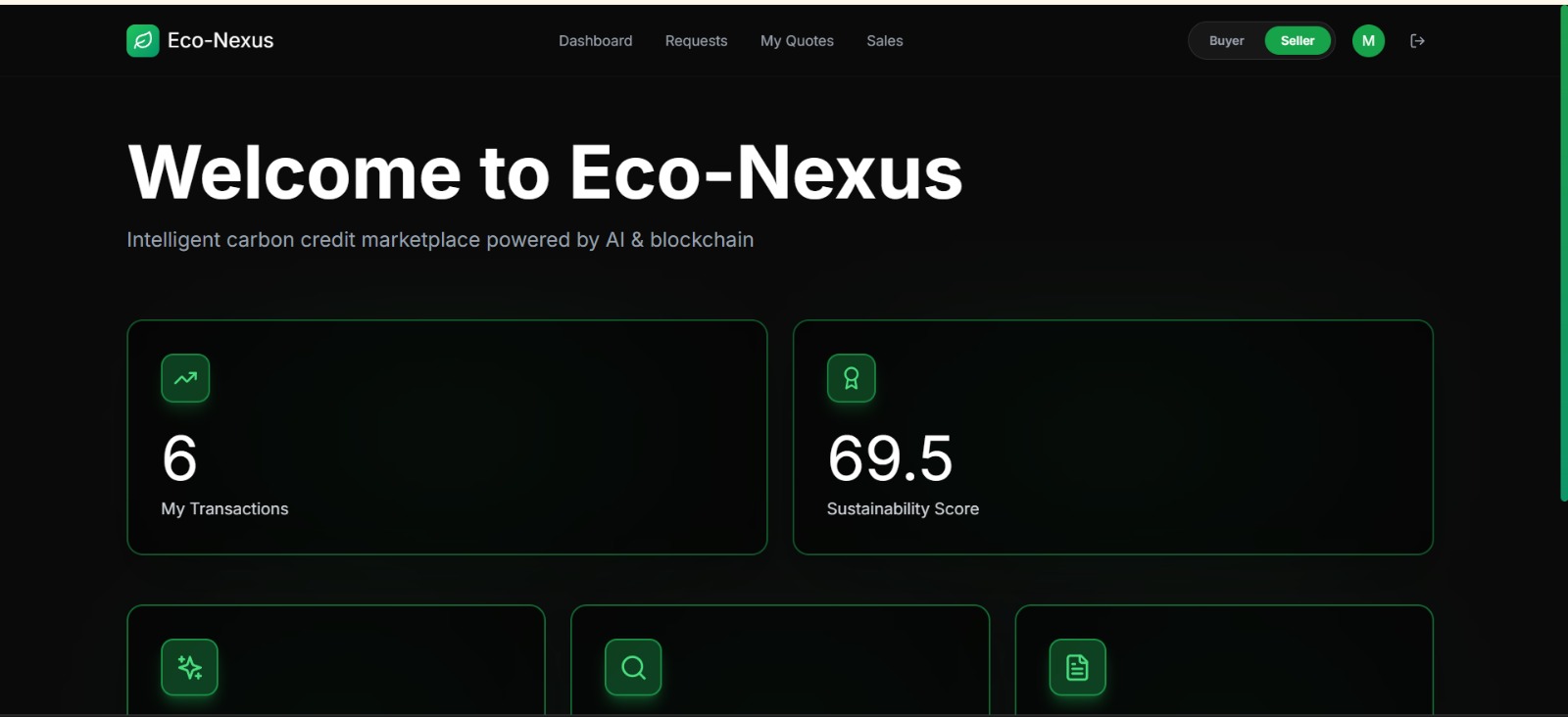
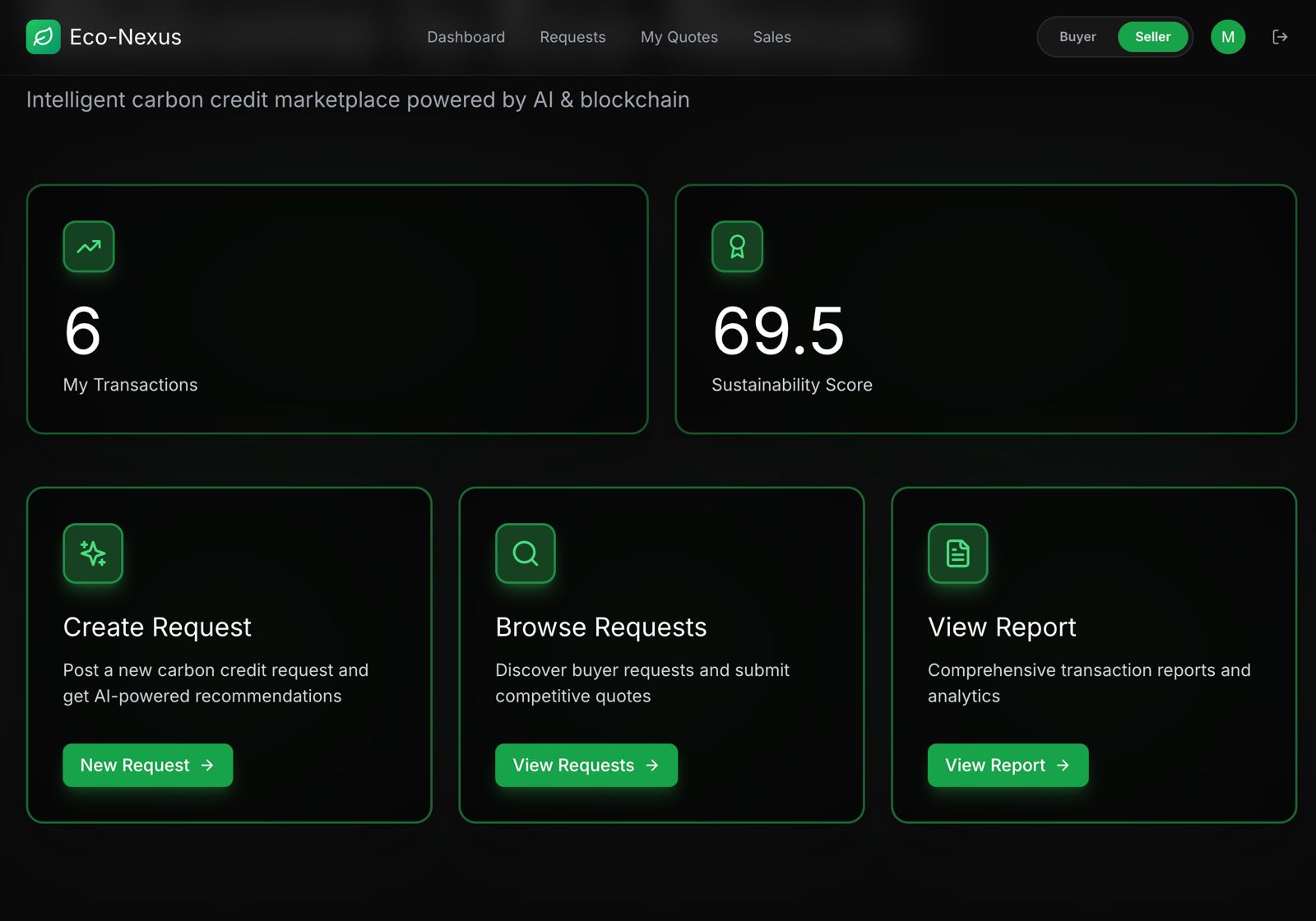
dashboard
-
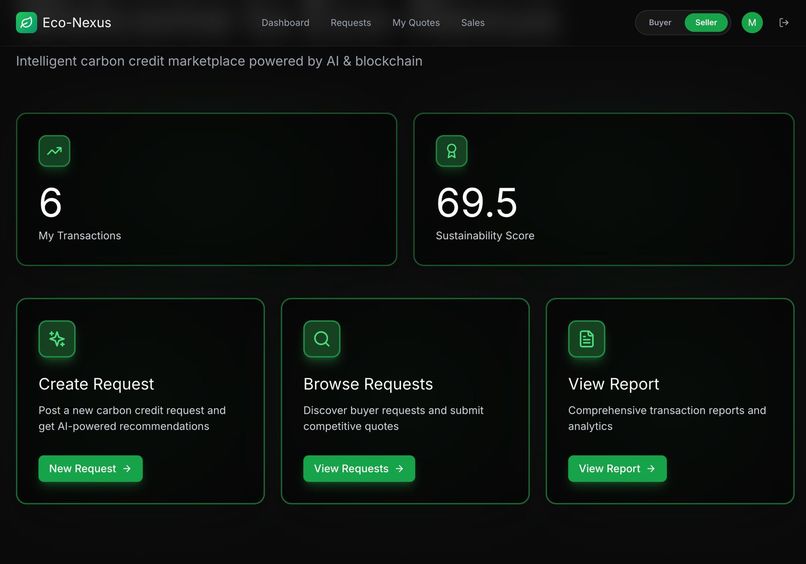
dashboard
-
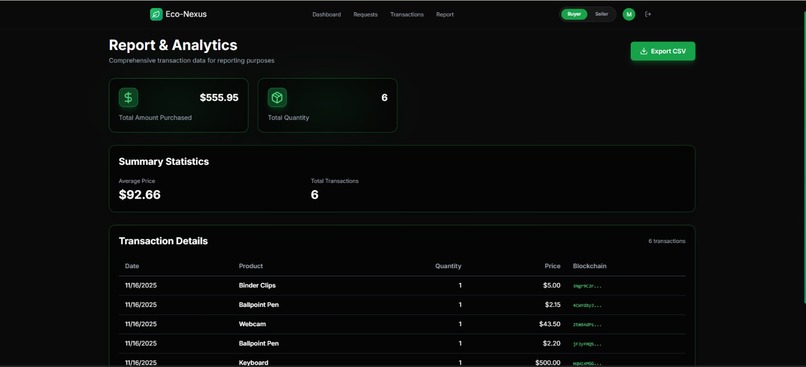
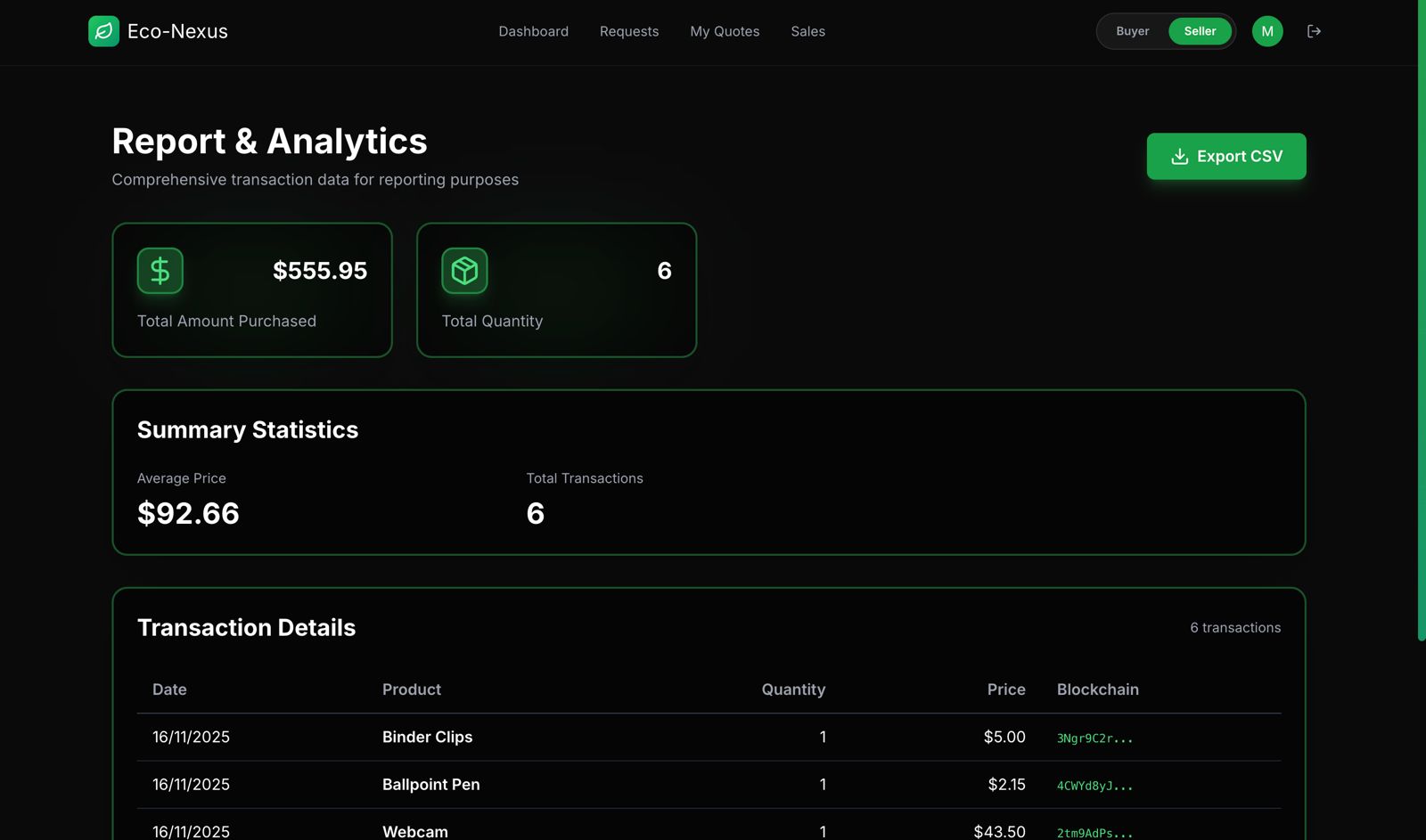
reports
-
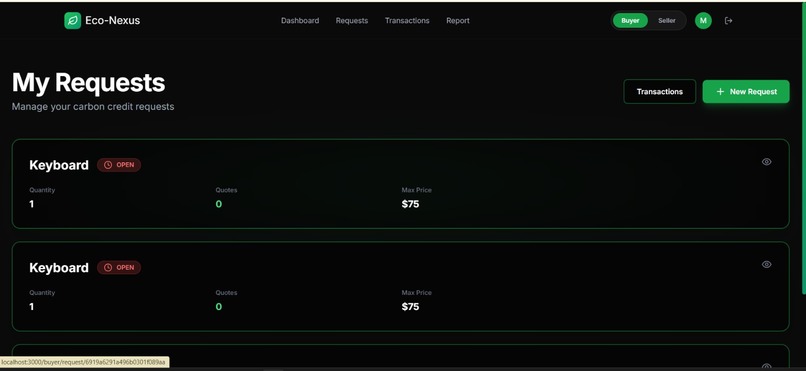
requests seller
-
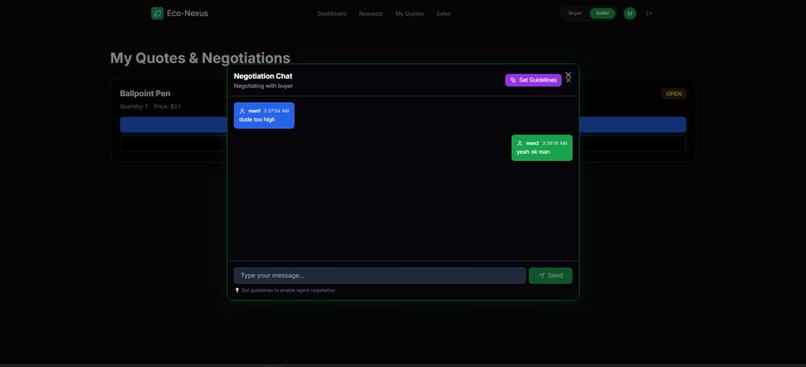
chatbot
-
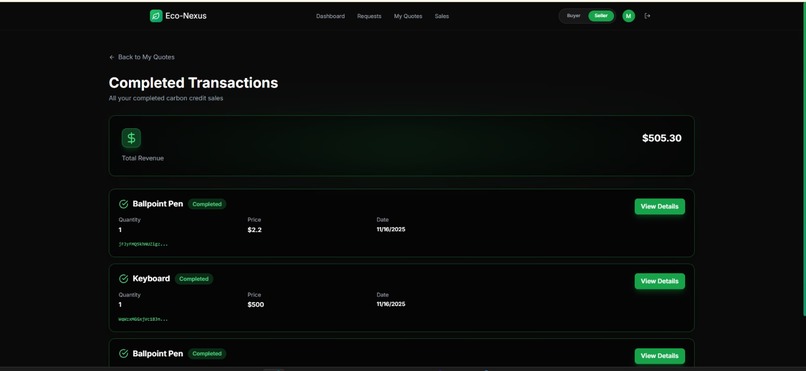
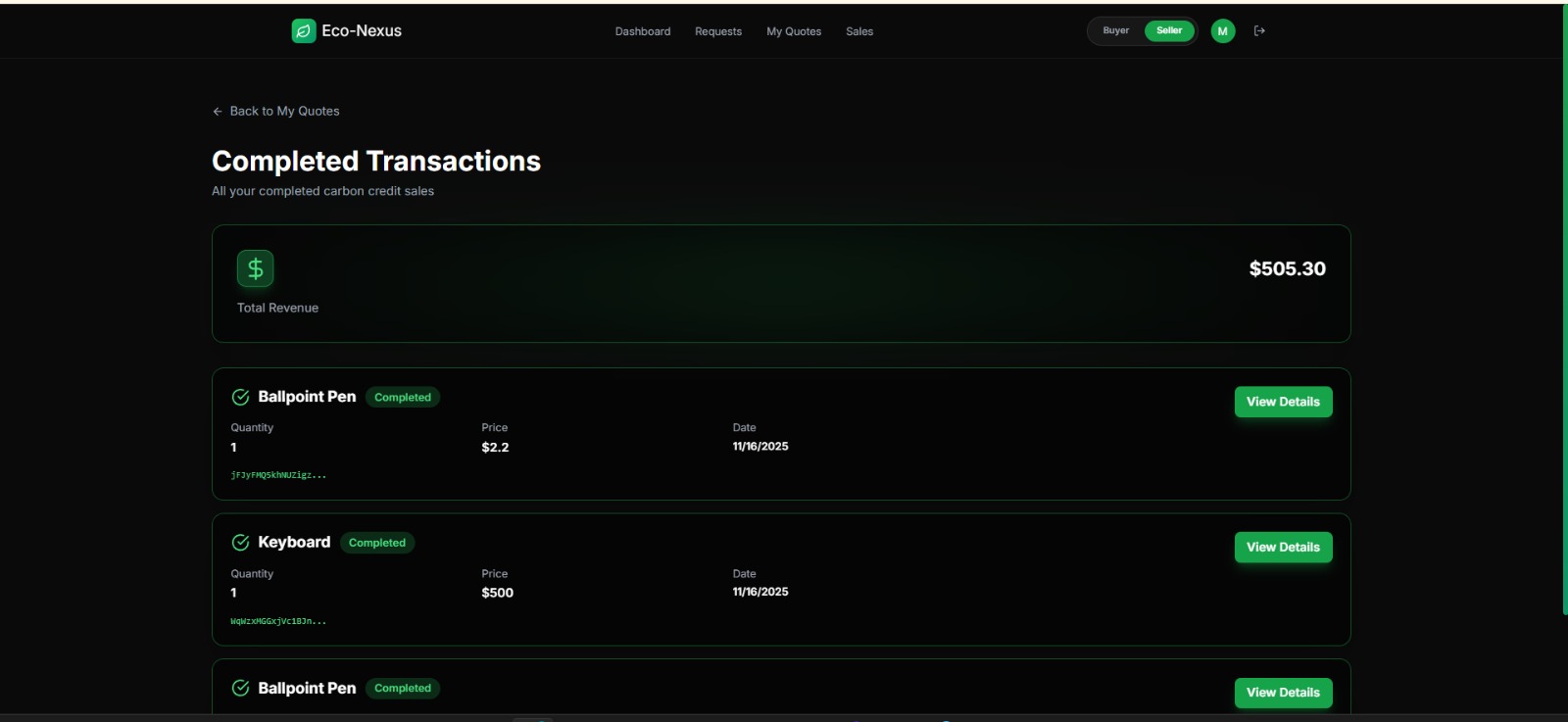
seller transactions
-
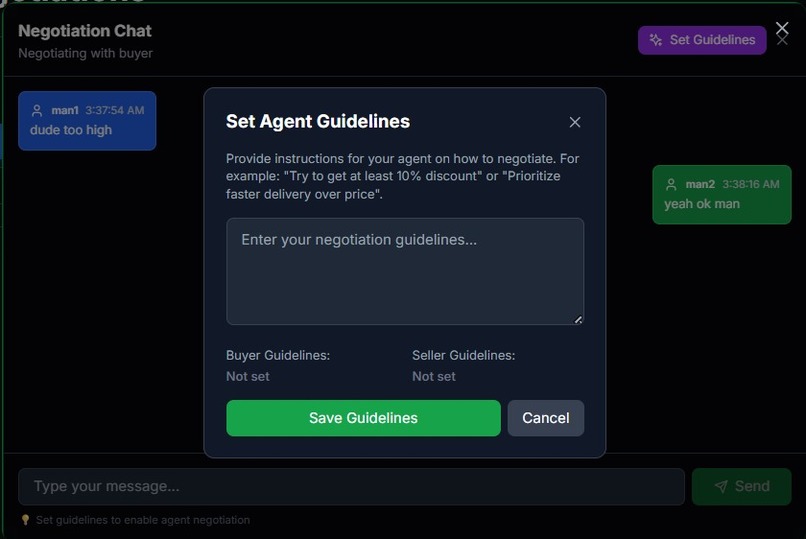
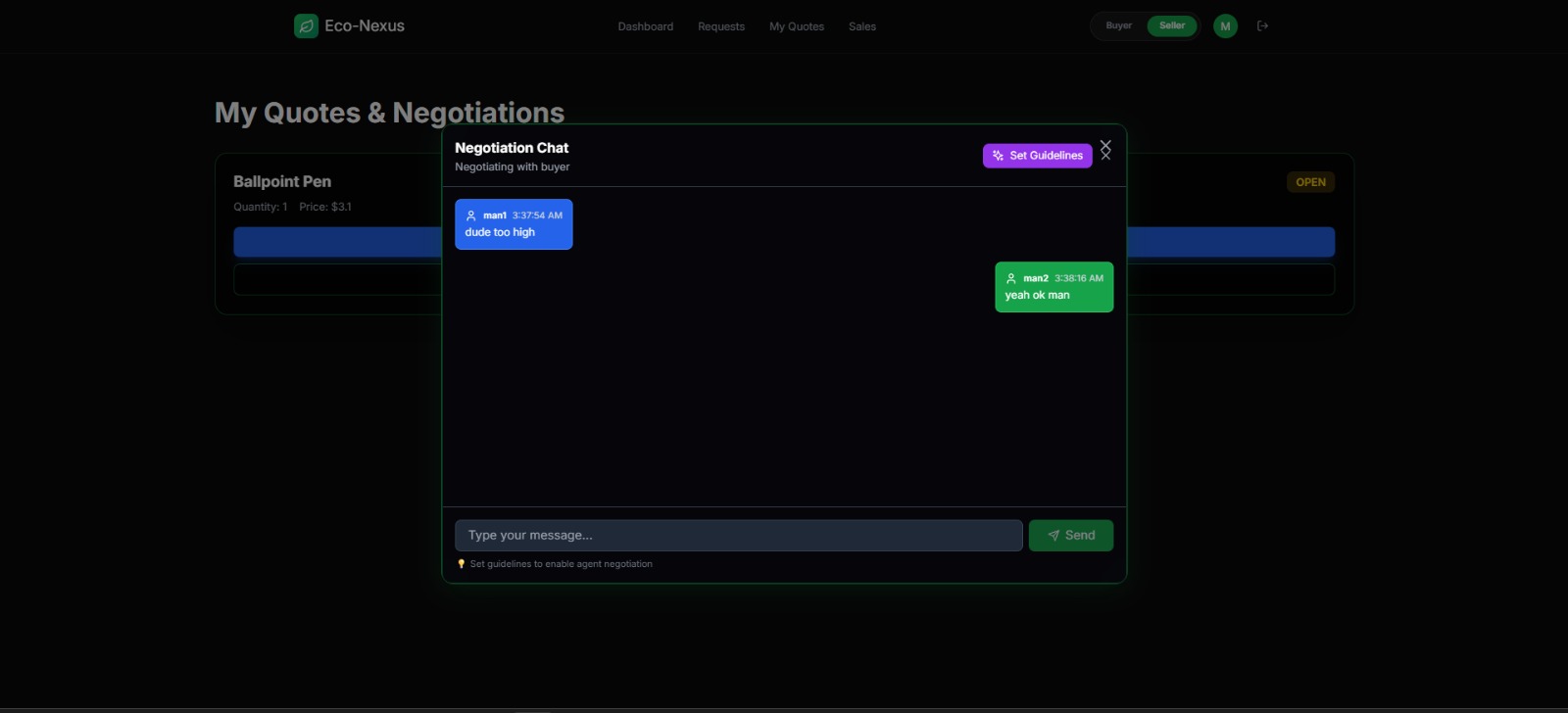
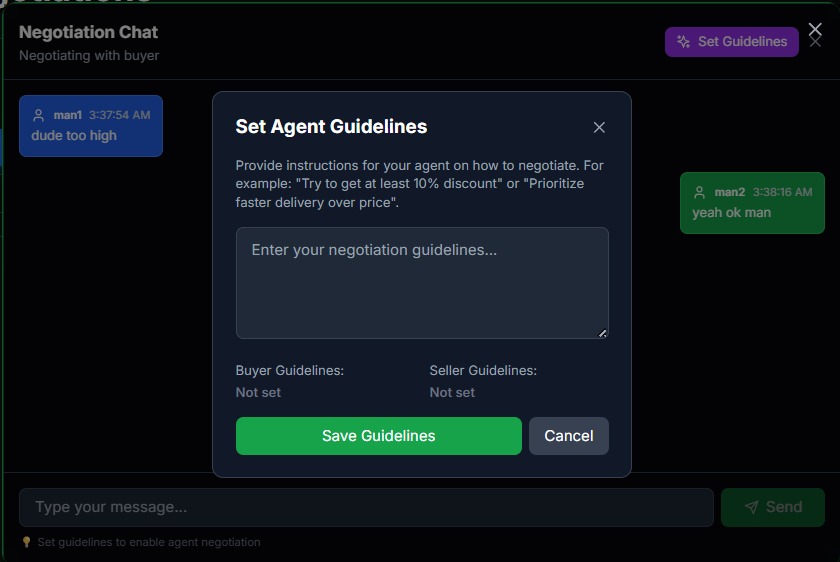
chat with ai help
About Eco-Nexus SCOS
What Inspired Us
The inspiration for Eco-Nexus SCOS came from observing that businesses want to be sustainable, but lack tools to make sustainable procurement decisions efficiently. We identified three critical pain points:
The Procurement Dilemma: Companies struggle to balance cost efficiency with sustainability goals. Traditional processes prioritize cost, leaving environmental impact as an afterthought.
The Manual Bottleneck: Vendor comparison and negotiation is a manual, time-consuming process. Procurement teams spend hours analyzing options without systematic multi-objective optimization.
The Incentive Gap: There's no real reward system for making sustainable choices. Companies make green decisions but see no tangible benefit.
We asked: What if we could automate sustainable procurement using AI, and provide real-time analytics? That became Eco-Nexus SCOS.
What We Learned
AI & Multi-Agent Systems
- Logos (Logical Analysis): Data-driven evaluation of cost, carbon, delivery metrics
- Ethos (Ethical Consideration): Sustainability and environmental responsibility
- Phronesis (Practical Wisdom): Balancing competing objectives
This taught us that explainable AI builds trust and enables better decision-making.
Blockchain Integration
The challenge was understanding how blockchain adds genuine value beyond hype.
Real-Time Systems
Building a real-time marketplace required:
- Socket.io for bidirectional communication
- State management across frontend and backend
- Handling concurrent negotiations
- Ensuring data consistency
We learned real-time is about seamless user experiences, not just speed.
Full-Stack Architecture
This project pushed holistic system design:
- Frontend: Next.js 14, TypeScript, React
- Backend: Express.js, MongoDB
- Analytics: Snowflake data warehousing
- AI: OpenRouter API with LLM reasoning
- Blockchain: Solana Devnet for transactions
Building production-ready systems requires thinking about scalability and user experience from day one.
How We Built It
We built Eco-Nexus SCOS as a full-stack platform:
Foundation: Next.js frontend with TypeScript and TailwindCSS, Express.js backend with MongoDB, JWT authentication, and comprehensive database schemas.
AI Framework: The core multi-agent negotiation system with BuyerAgent and SellerAgent classes. The framework uses weighted scoring:
Integrated OpenRouter API for LLM-enhanced insights and developed scoring algorithms balancing cost, delivery, and sustainability.
Blockchain Integration: Solana Web3.js SDK for SPL token minting (SCC - Sustainable Choice Coin), transaction commitment workflows, signature storage.
Real-Time Features: Socket.io for real-time chat, negotiation thread management, live transaction updates, and real-time analytics dashboard.
Analytics & ML: Snowflake integration for data warehousing, analytics scoring system:
ML sustainability prediction using random forest, and comprehensive dashboard with charts.
Challenges We Faced
Multi-Agent System Complexity: Building a system where multiple AI agents negotiate simultaneously required a structured protocol. We designed clear boundaries where Buyer Agent sets goals, Seller Agents generate proposals, and Aristotle Framework provides objective evaluation.
Real-Time Data Synchronization: Keeping frontend, backend, and database in sync during real-time negotiations required Socket.io, optimistic UI updates with rollback, event-driven architecture, and robust error handling.
Blockchain Transaction Reliability: Solana Devnet can be slow or unreliable. We implemented retry logic with exponential backoff, transaction status polling, fallback mechanisms, and signature storage for verification.
AI Reasoning Explainability: Making AI decisions transparent required the Aristotle Framework with explicit reasoning dimensions, detailed explanations, score breakdowns, and negotiation notes from each agent.
Performance at Scale: Ensuring good performance with concurrent negotiations required optimized database queries, connection pooling, efficient data structures, caching, and async/await patterns.
Integration Complexity: Integrating multiple external services (OpenRouter, Solana, Snowflake, MongoDB) required abstraction layers, graceful degradation, comprehensive error handling, and mock data fallbacks.
Impact & Future Vision
Current Impact: Automated procurement saves time and optimizes for multiple objectives. Transparent carbon tracking incentivizes sustainable choices. Real blockchain rewards for green decisions.
Future Vision: Enterprise integration with existing procurement systems, global marketplace scaling, advanced ML for carbon impact prediction, multi-chain blockchain support, and native mobile app.
Built with passion for sustainability and innovation.
Eco-Nexus SCOS - Smart Procurement, Sustainable Future
Built With
- axios
- bcryptjs
- built-with-##-languages-javascript
- express.js
- framer-motion
- joblib-##-blockchain-solana-web3.js
- jwt
- meta-llama-3.2-3b-instruct
- mongodb-##-databases-mongodb
- mongodb-atlas
- mongodb-atlas-##-apis-openrouter-api
- numpy
- pandas
- python
- react-18
- recharts
- render
- scikit-learn
- snowflake
- snowflake-##-ai-&-ml-openrouter-api
- socket.io
- socket.io-client
- solana-devnet-##-cloud-&-hosting-vercel
- solana-rpc
- solana/spl-token
- sql-##-frontend-next.js-14
- tailwindcss
- typescript
- zustand-##-backend-node.js


Log in or sign up for Devpost to join the conversation.