Inspiration
When we set out to think of an idea for Monday.com's Climate change app challenge, we tried thinking of how we could leverage Monday.com's impact for organizations in a meaningful way for the environment. We set out to understand how we could help teams be more environmentally conscious, after talking to some of the teams we have at our organization we thought that in-organization exchange of secondhand items could be a good direction and could potentially help, even by a bit, to environmental sustainability.
If we take the Fashion Industry as an example, fashion production makes up 10% of humanity's carbon emissions, dries up water sources and pollutes rivers and streams. What's more, 85% of all textiles go to the dump each year.(The Environmental Cost of Fashion)(UNECE,2018)
But even more importantly, it would help teams and individuals have a greener mindset when thinking of throwing away perfectly good items - which will contribute exponentially. And because Eco Market is an in-organization giveaway market, it addresses two pain points that exist with giving away and receiving second hand items, which are - having familiarity with the person giving away or receiving the item, and the place where they can meet (lighter items can be given away at the office).
What it does
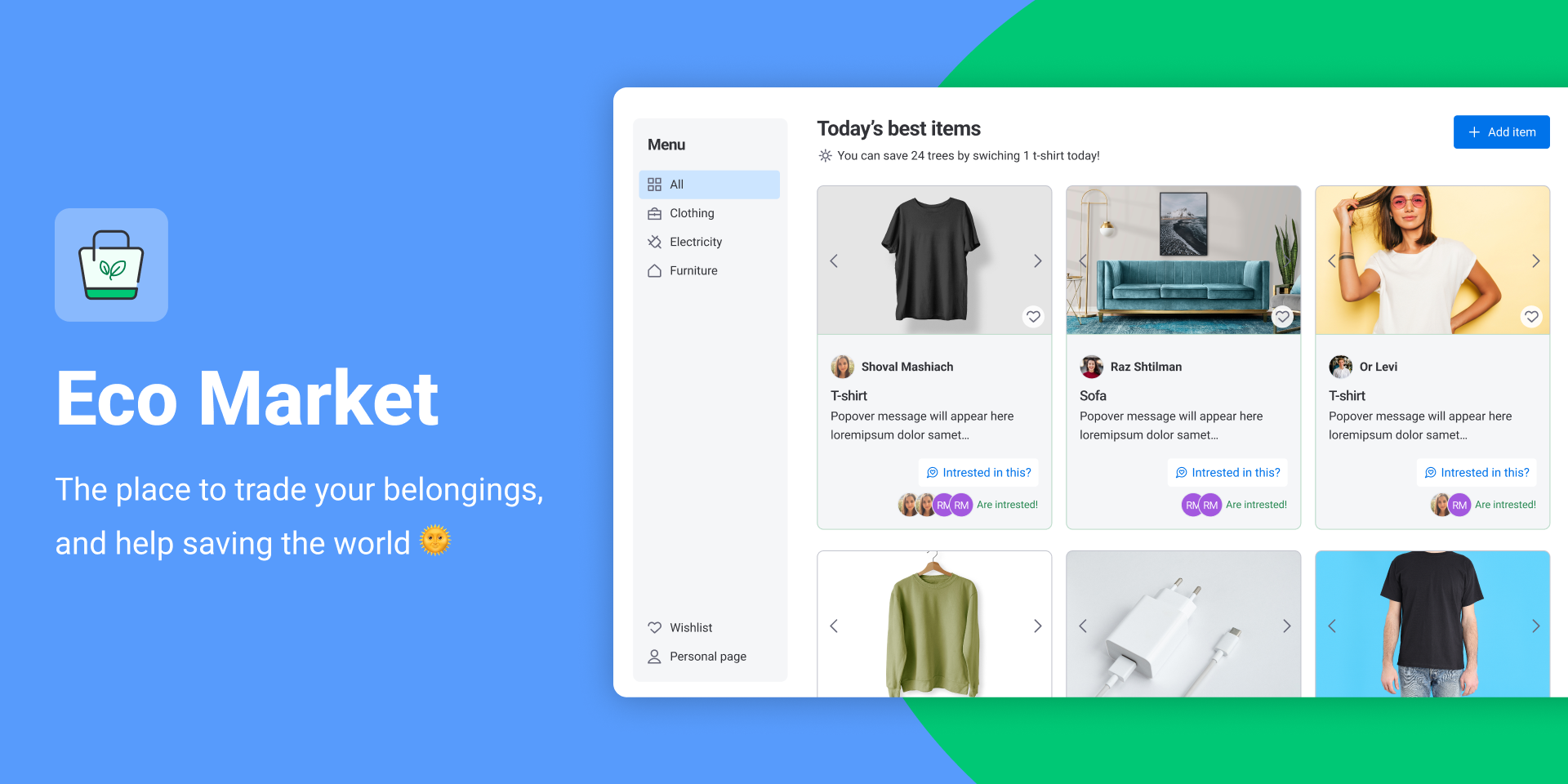
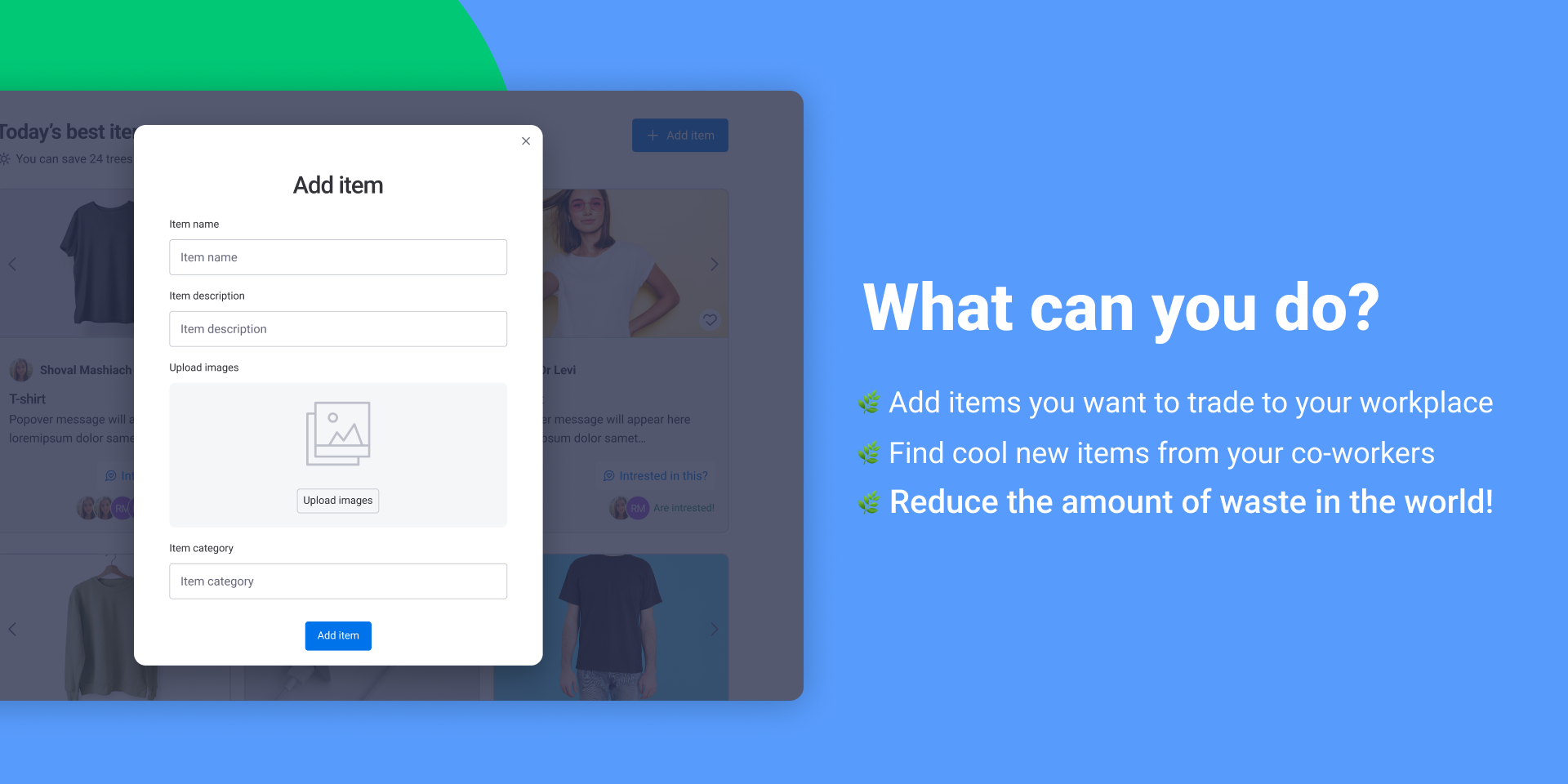
Eco Market is an in-organization second hand item marketplace, anyone who wants to give away an item of a variety of categories can upload it to the special board view and share it with their co-workers. Co-workers can contact the poster or mark themselves as interested in the item, which will trigger a notification for the poster.
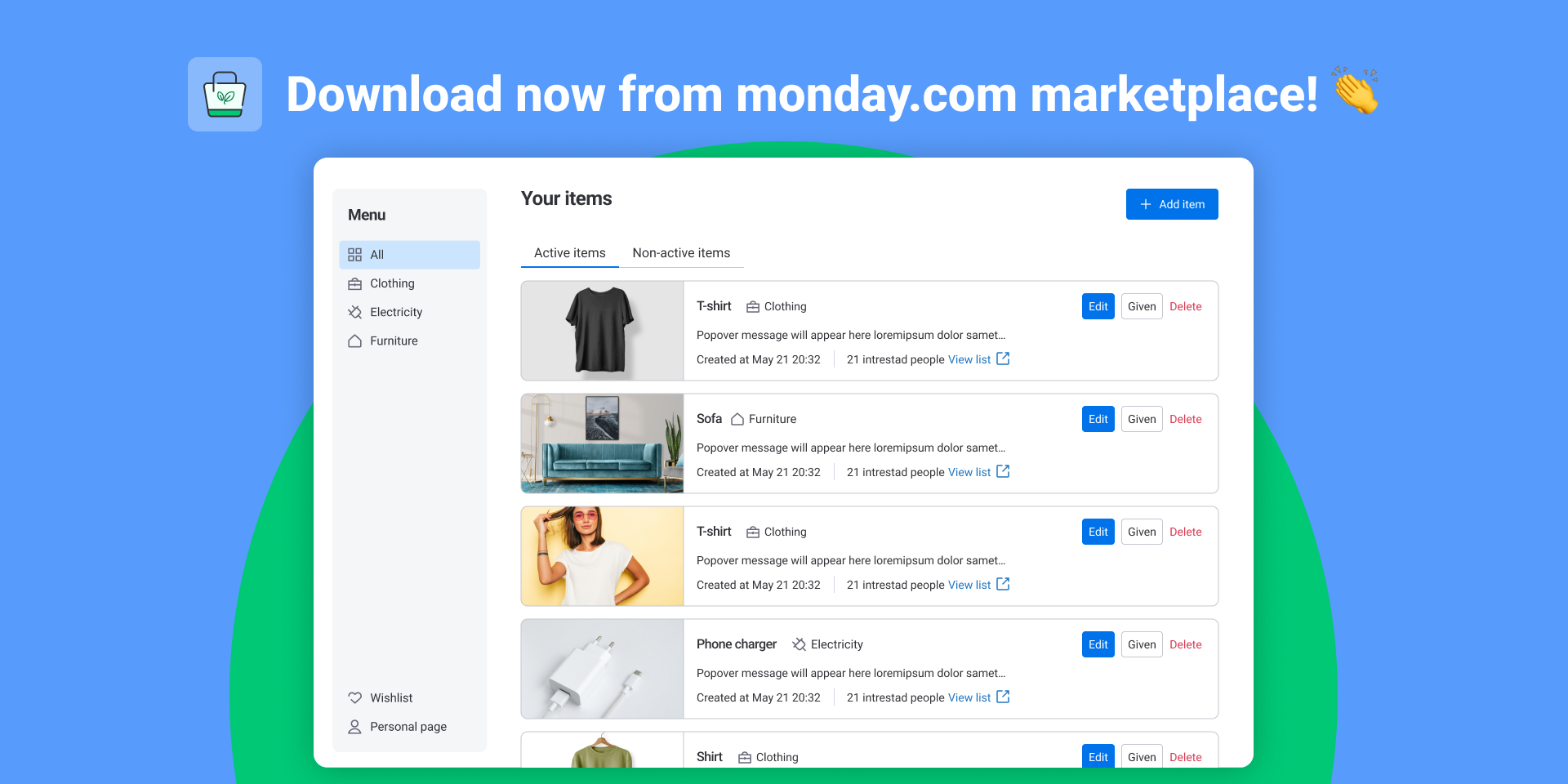
Eco Market has a personal page where you can see and manage all of the items you are giving away or have given away already. There is also an interested page where you can see all of the items you are interested in. Items that you are interested in and have been given away will trigger a notification for you to notify you that they are no longer available.
How to actually run it
- Create a new monday board.
- Install the Eco Market Board View app.
- Make the Eco Market Board View the default view for this board (the default board that was created will be used as a database for the app).
- Invite all your co-workers!
How we built it
Before even writing one line of code, we conducted user research, interviewed relevant co-workers, looked at notable references and tied down a specification and a wireframe that would help us determine if there was any market value for this idea. Once we finished with the specification and presented it to our co-workers and got their rejects we moved unto the tech specification.
When approaching the tech specification for this application, we wanted to avoid using any outside databases or tools and challenge ourselves by only using the tools available in the monday.com API.
Challenges we ran into
- Working with files and the monday.com API was quite challenging, we had to figure out how to leverage the api so we can upload multiple files, and also delete one or more files without deleting them all.
- Figuring out what features we could reliably build in the amount of time we had, considering we did this off-hours.
What we learned
- GraphQL is always a fun tool to use, we learned and implemented it as a team.
- As a team that is comprised mostly of backend and Vue developers, we had some fun in re-learning React.
What's next for Eco Market
- Search for the items that interest you.
- On-boarding for the application.
- Custom notifications, for example - mark a category that you are interested in and whenever a new item is added to that category, you could get a notification.
- Set a pick-up place.
- Send a message directly to the poster and start a conversation.
- Environmental statistics as delight features.
Built With
- graphql
- react
- styled-components
- typescript


Log in or sign up for Devpost to join the conversation.