-
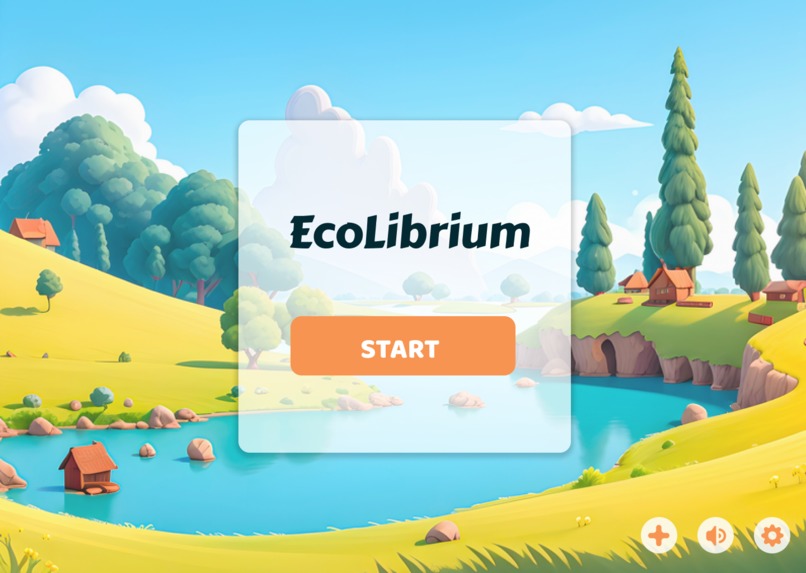
Welcome to EcoLibrium!
-
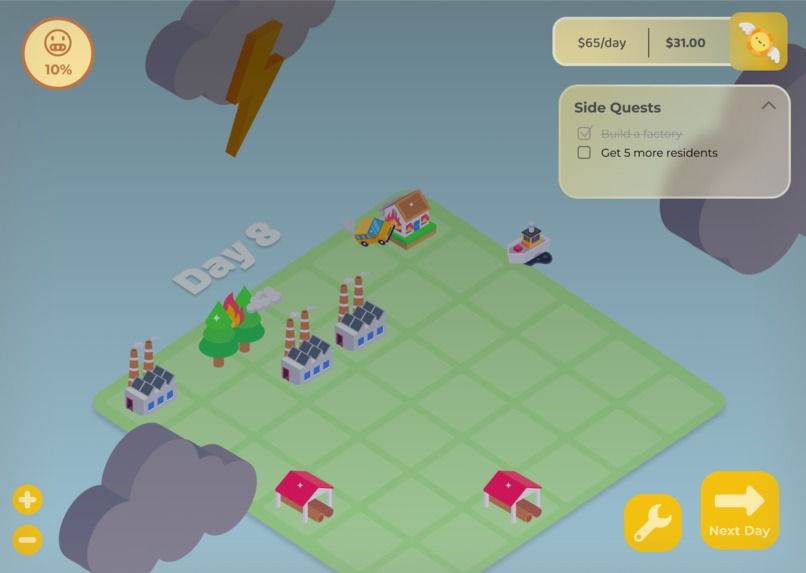
Yikes! Smog, oil spills, and fires everywhere :(
-
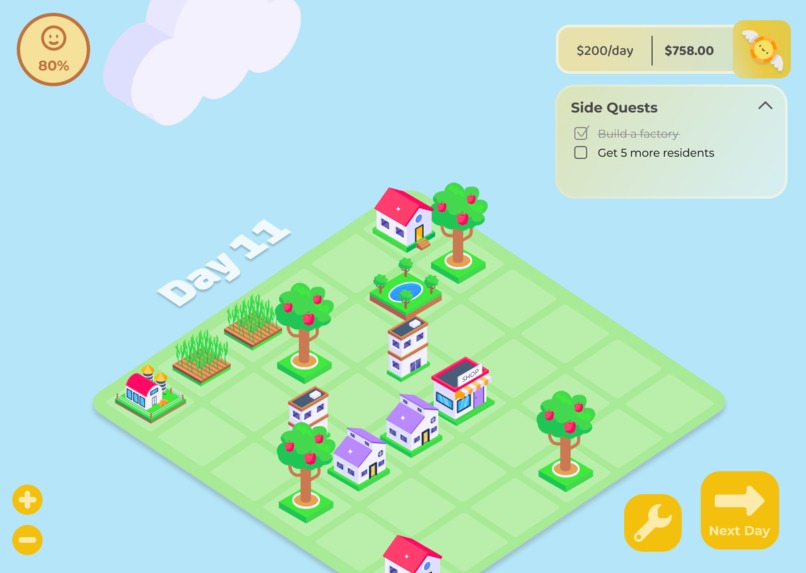
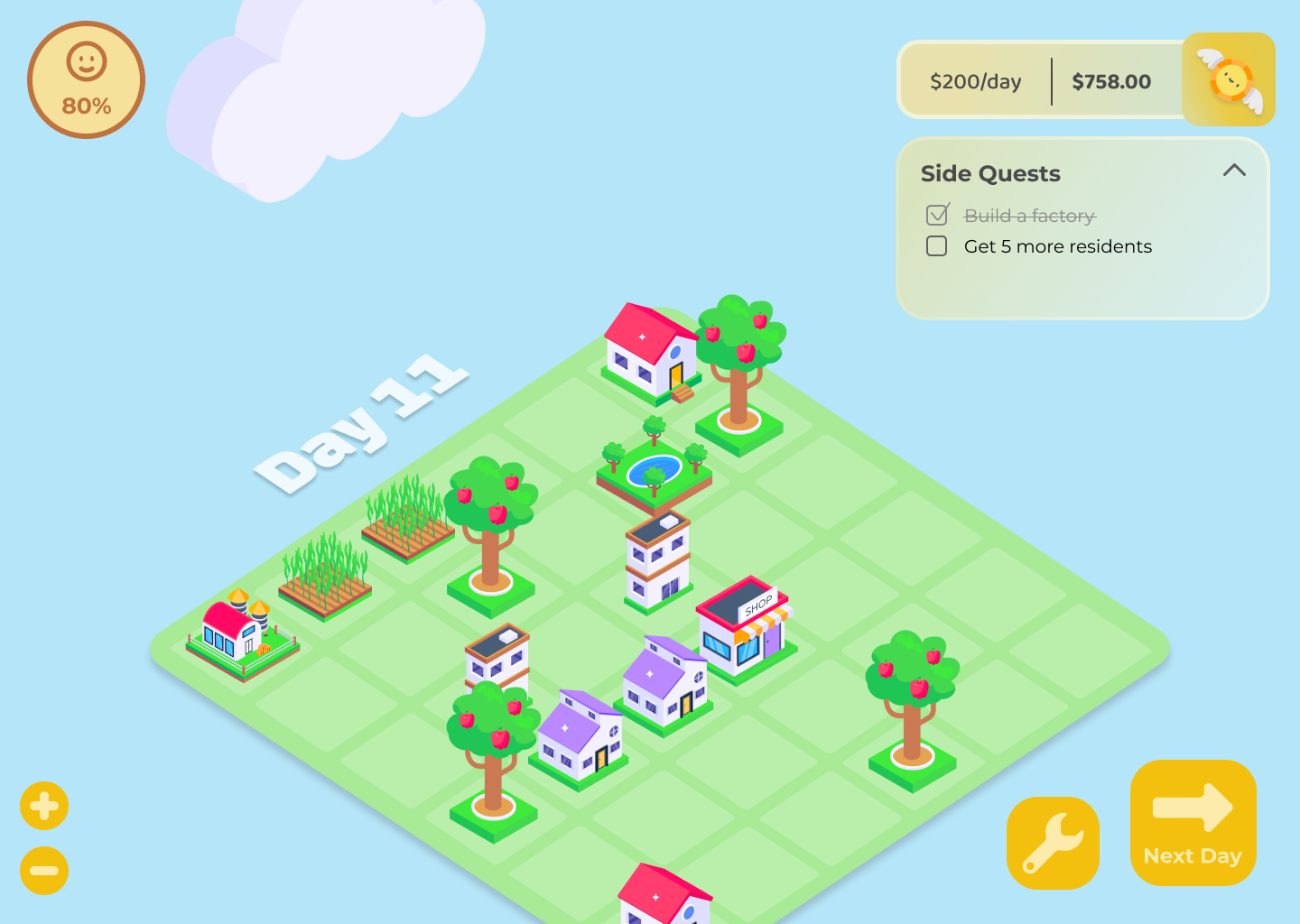
Wow! Green fields and happy residents! What more could I ask for? :)

Inspiration
We drew inspiration from the intersection of environmental sustainability and interaction design, particularly in games focused on civilization development.
What it does
EcoLibrium is a city-building game that prioritizes environmental consciousness, encouraging players to develop cities with the aim of addressing climate change through game mechanics and rewards.
How we built it
EcoLibrium was developed by a team of four using the prototyping software Figma, with designs later converted into HTML, CSS, and JavaScript. Despite running into issues with the limitations in a 3D software called Spline, we were quick to adapt and change directions.
Challenges we ran into
Our idea faced an immediate obstacle: Spline, the 3D software we decided to use, had difficulties with tying back-end to the front-end code. As a workaround, we switched to Figma, exporting our design into HTML, CSS, and JavaScript code!
Accomplishments that we're proud of
Quick decision making and adaptation. We would not have gotten to the end without making big decisions with little to no guidance, and making sure we weren't stuck in an infinite loop of ideating and prototyping. We knew when to move forward and when to step back, allowing for amazing progress in our code and design prototype!
What we learned
Initially, our team was split into front-end and back-end roles. Unexpectedly, everyone became involved in front-end design, collaborating on HTML, CSS, JavaScript, and Figma design. This was a new experience for some team members.
What's next for EcoLibrium
We'd love to implement more features on the code to match with our design prototype.
Built With
- css
- figma
- html
- javascript
- spline
- tailwind

Log in or sign up for Devpost to join the conversation.