-
-
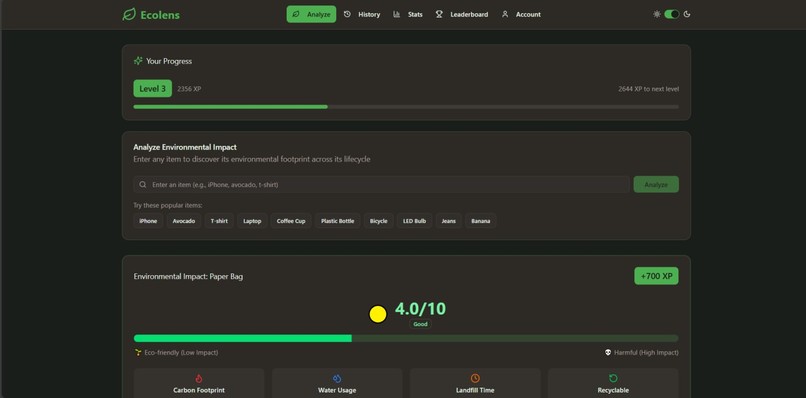
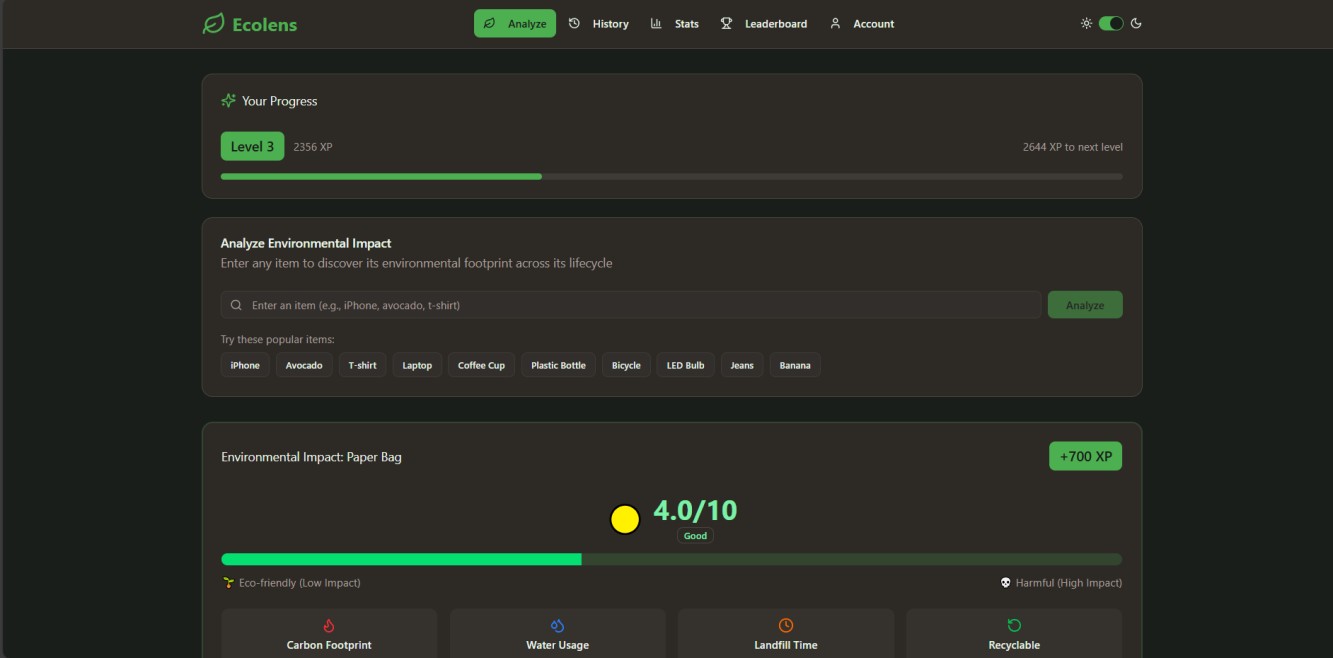
Home Page
-
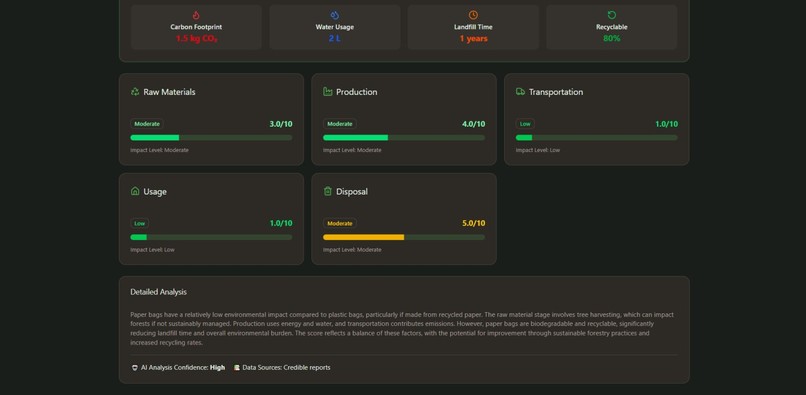
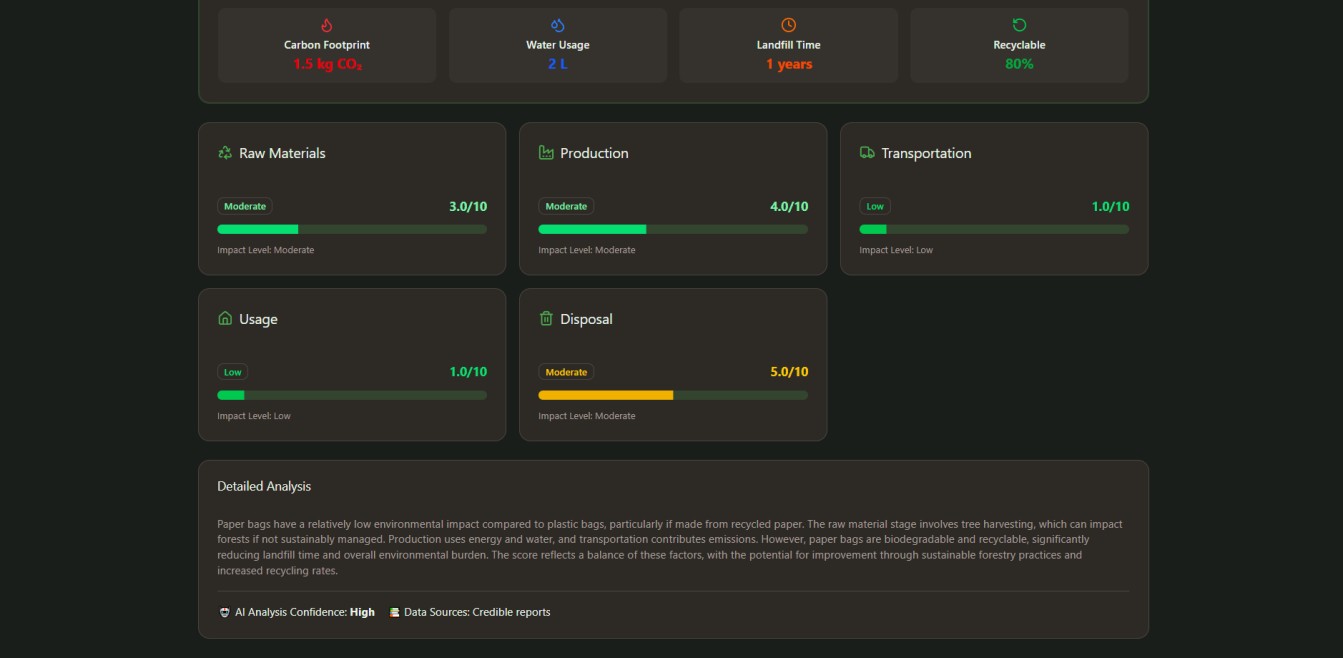
Second half of home page with customised statistics
-
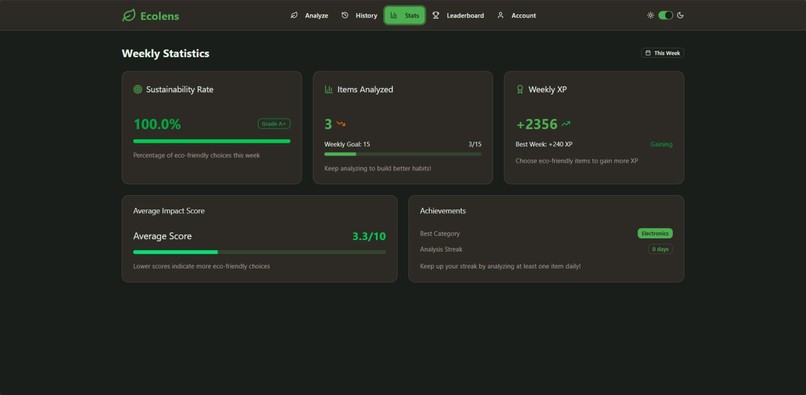
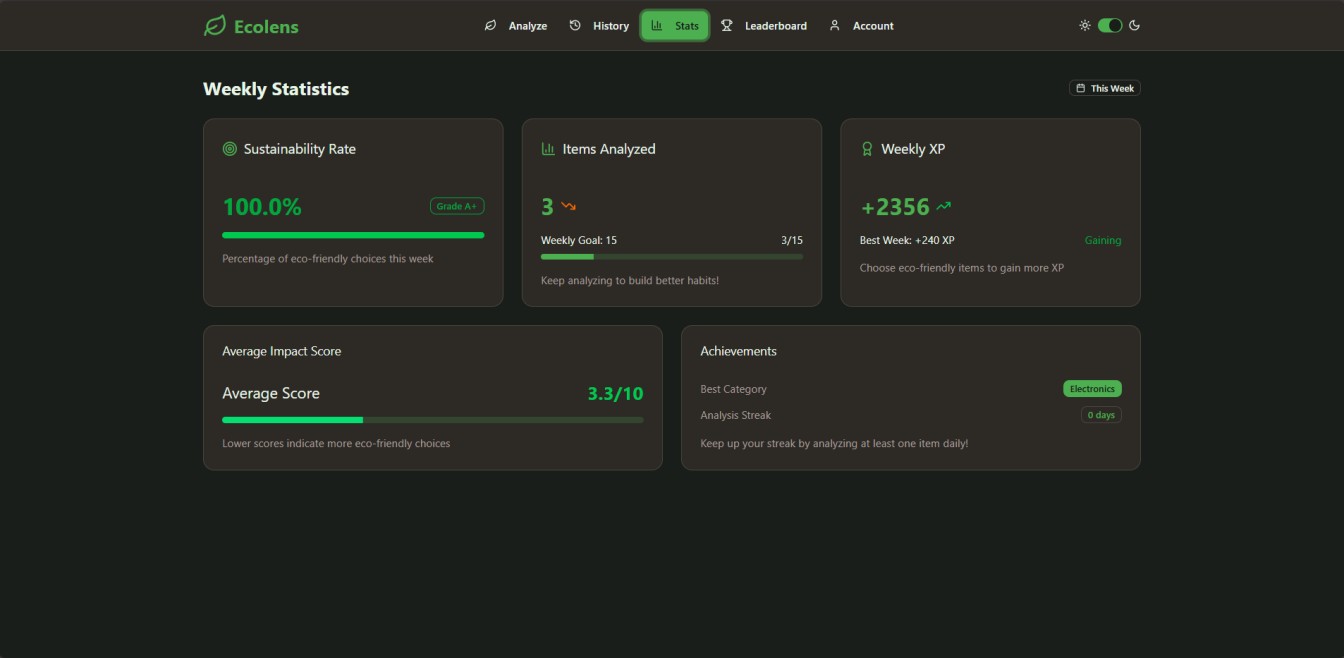
Statistics
-
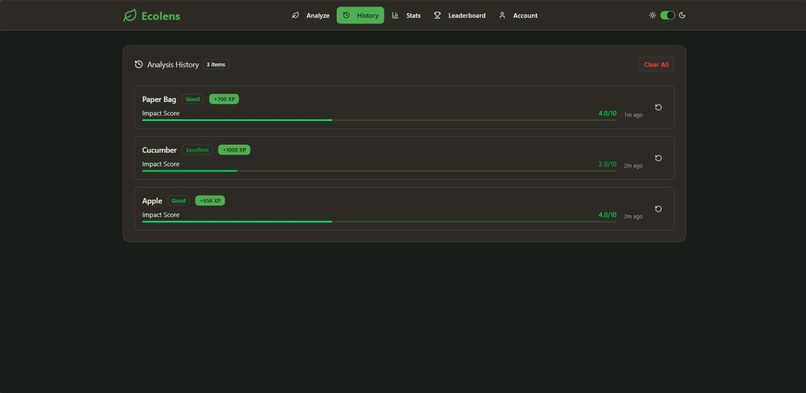
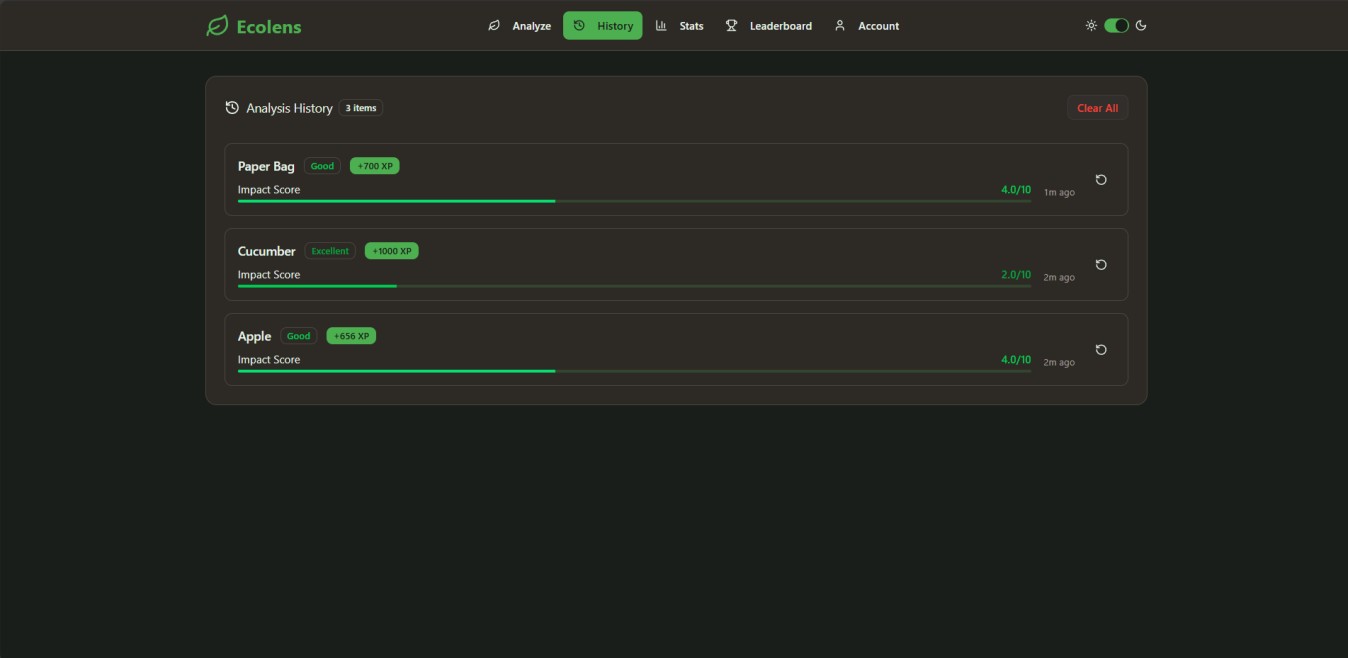
Product History with Summarised Stats
-
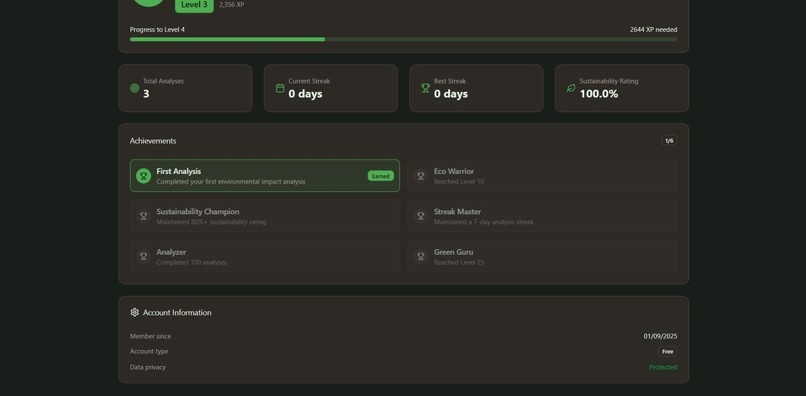
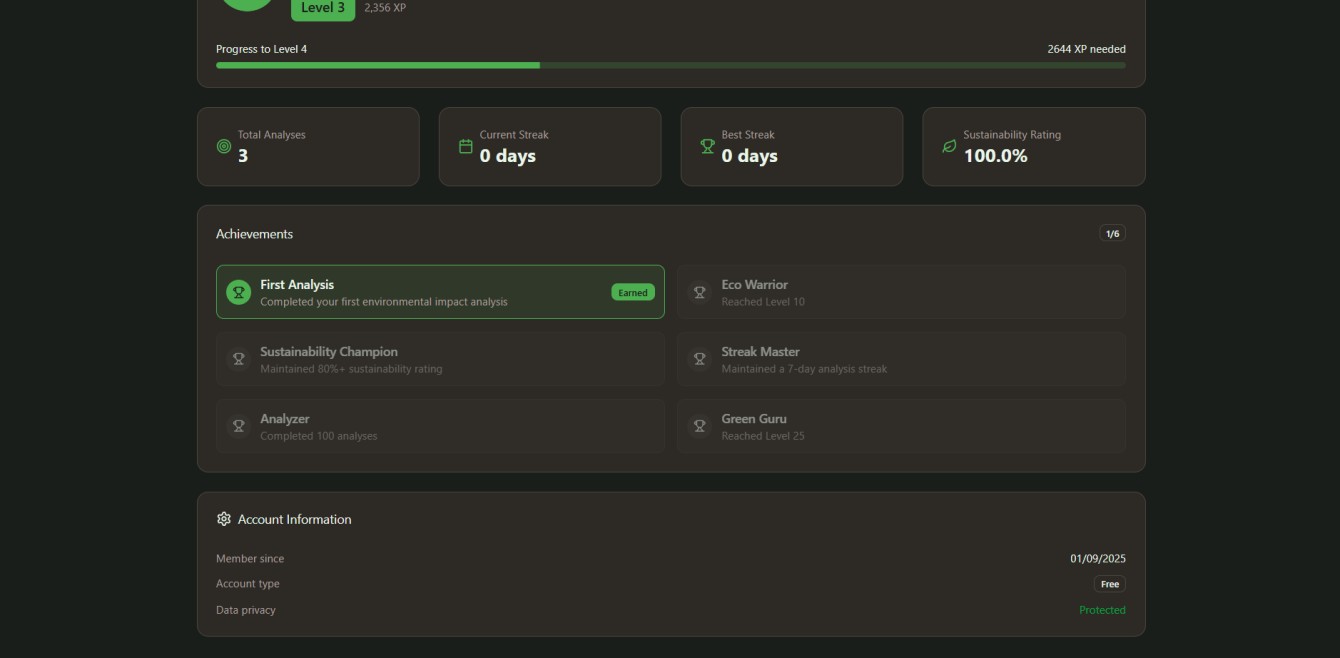
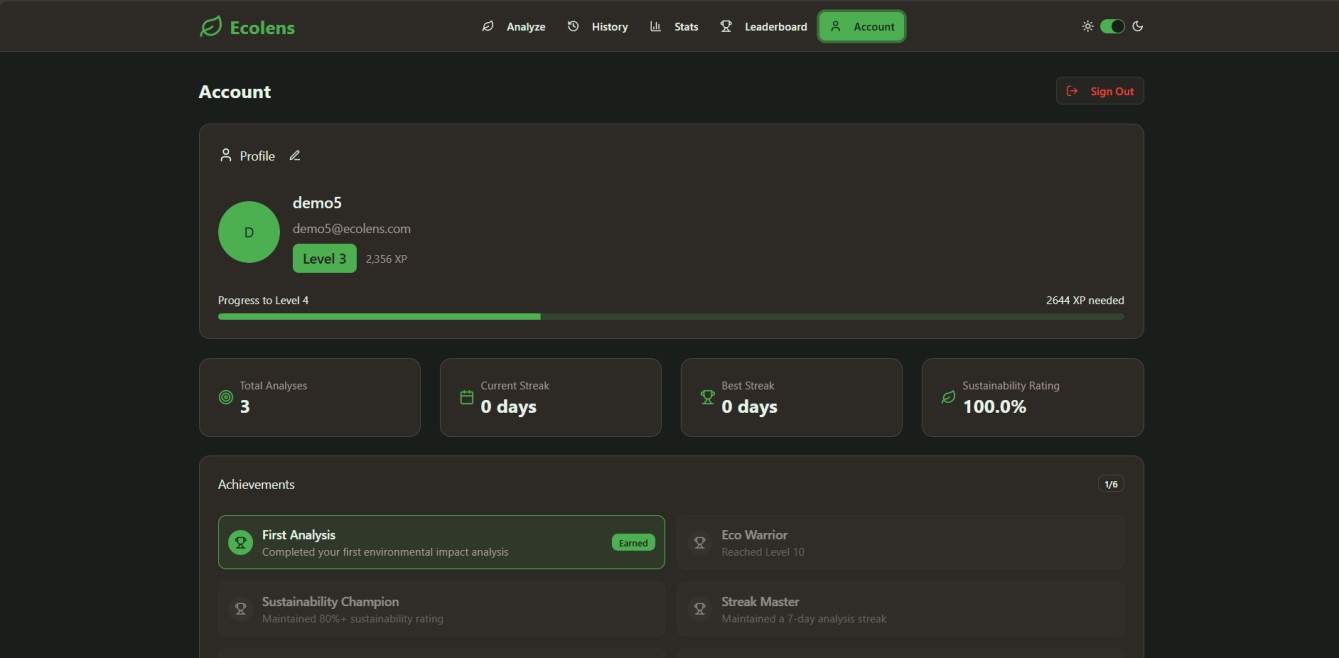
Account tab 2
-
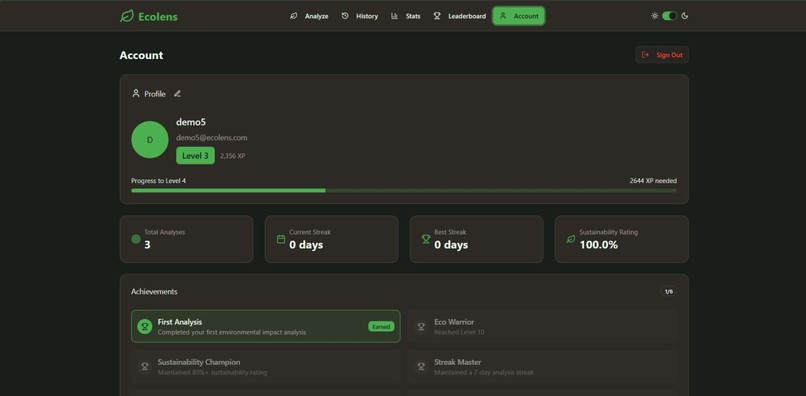
Account tab 1
-
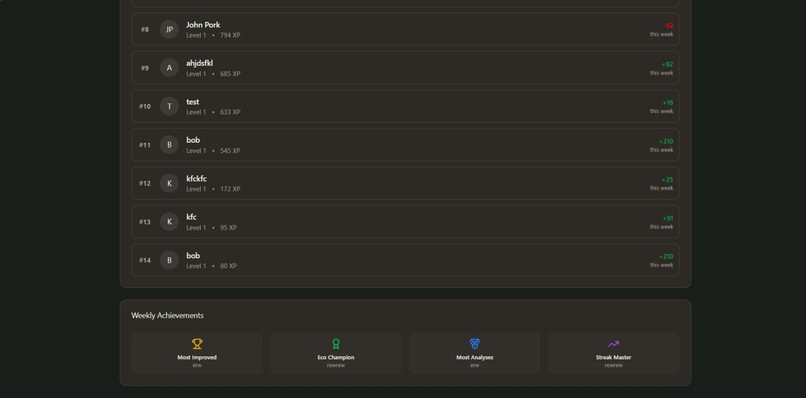
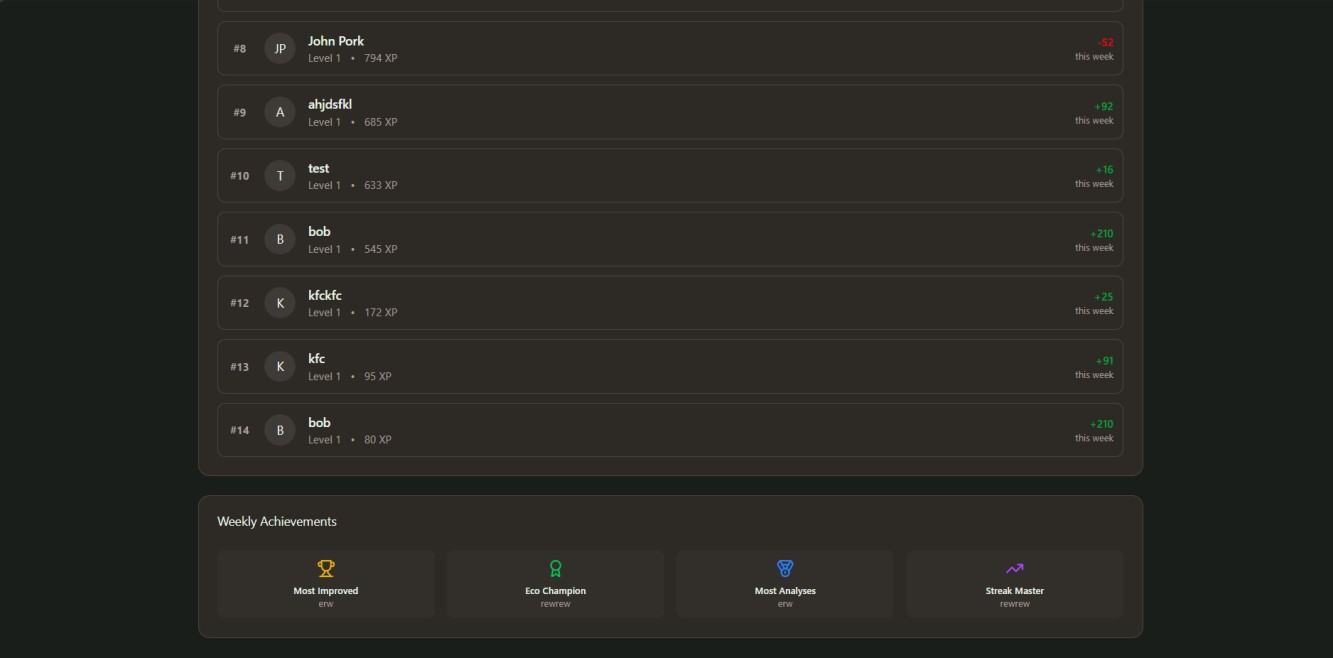
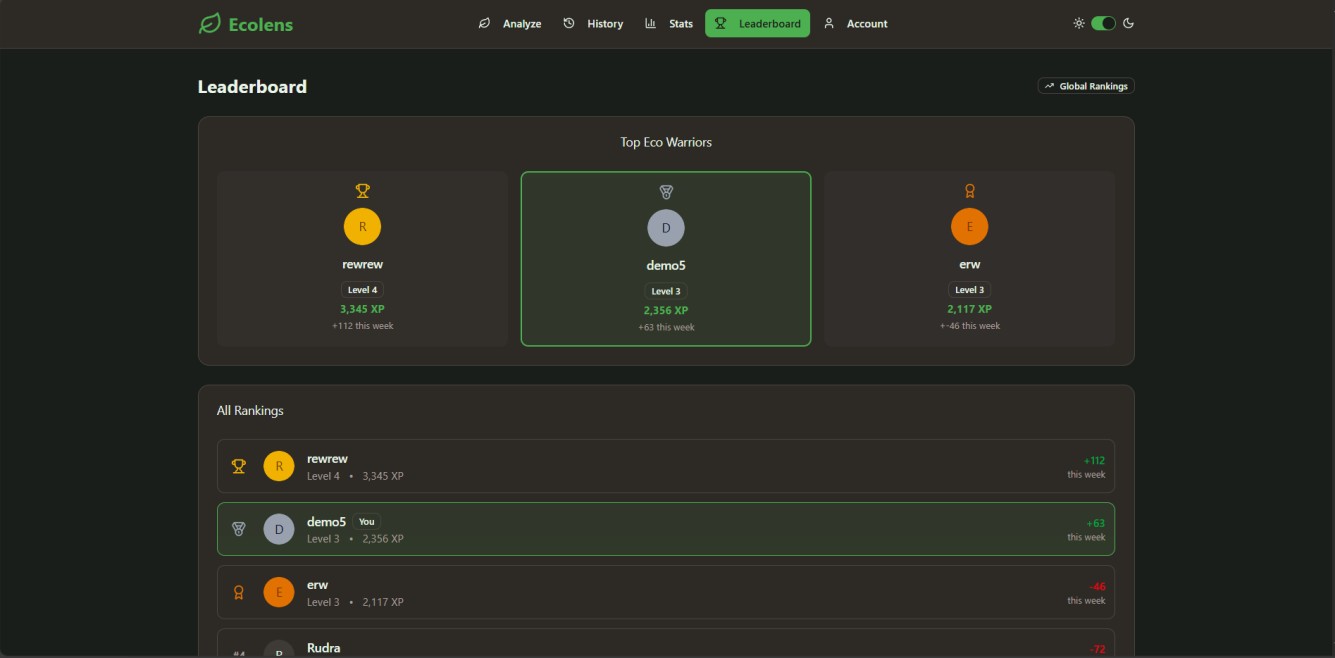
Leaderboard 2
-
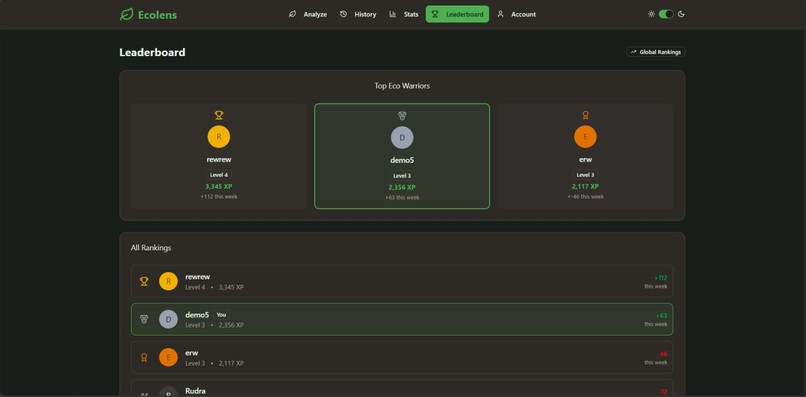
Leaderboard
EcoLens 🍃
AI-powered Sustainability Lifecycle Tracker
Inspiration
Most people are unaware of the hidden environmental costs behind everyday items. EcoLens was created to bridge this gap by making sustainability data tangible, visible, and engaging. Every purchase has a STORY, and those stories need to be told.
What It Does
EcoLens reveals the complete environmental story behind any item. Users simply enter an item name (like "plastic bottle" or "banana") and receive:
- Comprehensive Environmental Analysis: AI-generated lifecycle story of the item
- 5 Key Metrics: Carbon footprint, water usage, landfill time, recyclability, and impact scores
- Real-time Tracking: Weekly sustainability monitoring with visual dashboards
- Gamified Experience: Leaderboards to encourage competition and sustainable choices
How We Built It
- Backend: FastAPI with SQLite for lightweight, reliable performance
- AI Integration: Google Gemini API generates environmental lifecycle stories
- Frontend: Responsive single-page app with gradients, smooth animations, and intuitive design
- Scoring Algorithm: 1–10 environmental impact scale based on weighted lifecycle factors
- Database: 10,000+ items mapped to sustainability metrics with weekly progress tracking
- Architecture: Clean separation of concerns across backend, AI, database, and UI
Tech Stack
Frontend
- React & TypeScript – Main framework and type-safe JavaScript
- Tailwind CSS – Utility-first styling
- Framer Motion – Animations
- Recharts – Data visualization
Backend
- FastAPI – Python web framework
- Google Gemini AI – Environmental lifecycle analysis
Database & Infrastructure
- Supabase – Auth, database, and serverless functions
Development Tools & Architecture
- Node.js & npm – JavaScript runtime and package management
- SPA + RESTful API + Serverless Architecture – Clean separation of frontend and backend with modular React components
Challenges We Ran Into
- Designing a scoring system that was both accurate and explainable
- Integrating AI while keeping latency low for real-time responses
- Building a scalable database that covers thousands of items without bottlenecks
- Ensuring the UI was clean, simple, and hackathon-ready while still feature-rich
Accomplishments That We're Proud Of
- Developed a fully functional prototype within the hackathon timeframe
- Mapped 10,000+ items to sustainability metrics
- Built an AI storytelling feature that makes data relatable and human
What We Learned
- How to balance AI creativity with scientific accuracy
- The importance of gamification to keep users engaged with sustainability
- How to rapidly design, test, and ship a project within tight timeframes
- That a well-structured team can achieve way more than expected in 48 hours
What's Next for EcoLens
- Expand the database coverage to 100,000+ products
- Add barcode scanning for instant real-world use
- Partner with supermarkets and e-commerce platforms for real-time sustainability insights
- Develop a mobile app with push notifications and personal sustainability goals
- Release EcoLens as a browser extension for on-the-go product checks
Built With
- fastapi
- framer-motion
- google-gemini-ai
- node.js
- npm
- python
- react
- recharts
- supabase
- tailwind-css
- typescript


Log in or sign up for Devpost to join the conversation.