Inspiration2
Growing up in communities where power cuts were normal and safe, affordable lighting was rare, I saw how lack of energy held people back in school, business, and daily life. At the same time, youth unemployment kept rising, especially in rural areas.
What it does
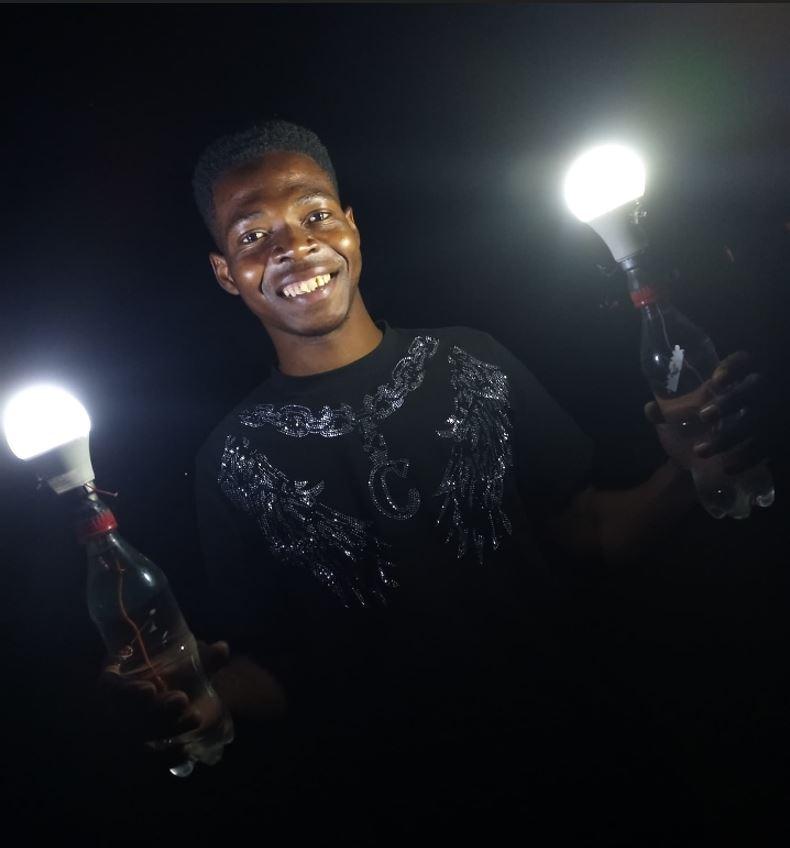
EcoGlow Lights — simple, water-powered lamps — and EcoLearn, a digital platform to teach people how to build them and earn income from them.
How we built it
To make EcoGlow affordable and accessible, I used materials that anyone in Zimbabwe can find easily:
Old light bulbs — repurposed as the lamp casing
Zinc plates — used as one electrode
Copper wire/plates — used as the second electrode
Saltwater — the electrolyte (salt + clean water)
Ashes — added to increase conductivity and extend battery life
Construction Steps
Carefully removed the inner parts of an old light bulb and cleaned the shell.
Inserted zinc and copper strips inside the bulb without touching each other.
Mixed salt, water, and a small amount of ashes to create a stronger electrolyte.
Poured the mixture into the bulb.
Connected the electrodes to a small LED.
Tested voltage output using
V=IR
to ensure the light was bright enough for home use.
Challenges we ran into
Challenges I Faced
- Material Limitations
Finding low-cost, locally available materials that still produced enough voltage was difficult. I had to test many combinations before achieving stable light output.
- Digital Access Gaps
Many learners lacked smartphones or stable internet. This pushed me to design USSD and offline-friendly learning options.
- Funding & Equipment
Building both the hardware and the digital platform with limited funding was tough. I relied on open-source tools, small experiments, and community feedback.
- Technical Complexity
Integrating AI, VR, and mobile payments into one system required multiple redesigns.
Accomplishments that we're proud of
Created a working water-powered EcoGlow light using old bulbs, zinc, copper, saltwater and ashes.
Successfully tried and tested by POTRAZ, validating safety, innovation and national relevance.
Built the EcoLearn digital platform with AI micro-courses teaching how to build and sell EcoGlow lights.
Developed AR/VR learning prototypes, allowing step-by-step assembly practice without real tools.
Integrated EcoCash mobile payments for easy learning and earning.
Launched a 5G-enabled marketplace for selling EcoGlow lights nationwide.
Made learning accessible offline using USSD and SMS for rural communities.
Worked as a strong, collaborative team, combining skills in engineering, coding, design and business.
Trained early youth testers who successfully built their first lights and earned income.
Contributed to solving energy poverty while promoting green tech, digital skills and entrepreneurship.
What we learned
How to turn simple, locally available materials (old bulbs, zinc, copper, saltwater, ashes) into a working eco-friendly light.
The science behind saltwater energy, including conductivity, voltage output and improving efficiency.
How to design and test prototypes, improving them through trial, error and feedback.
The importance of teamwork — combining skills in engineering, coding, design, research and presentation to build a stronger project.
How to create digital learning tools, including AI micro-courses and AR/VR simulations for hands-on practice.
How to make our platform accessible, using USSD and EcoCash so even rural villages can benefit without smartphones or internet.
How to build a marketplace model, helping youths learn, earn and sell directly using mobile money.
How to communicate and pitch ideas, improving our storytelling, confidence and innovation skills.
The value of local testing and certification, after our project was tried and tested by POTRAZ.
That real innovation starts with solving real community problems, not with expensive equipment.
What's next for ECO LEARN
How to turn simple, locally available materials (old bulbs, zinc, copper, saltwater, ashes) into a working eco-friendly light.
The science behind saltwater energy, including conductivity, voltage output and improving efficiency.
How to design and test prototypes, improving them through trial, error and feedback.
The importance of teamwork — combining skills in engineering, coding, design, research and presentation to build a stronger project.
How to create digital learning tools, including AI micro-courses and AR/VR simulations for hands-on practice.
How to make our platform accessible, using USSD and EcoCash so even rural villages can benefit without smartphones or internet.
How to build a marketplace model, helping youths learn, earn and sell directly using mobile money.
How to communicate and pitch ideas, improving our storytelling, confidence and innovation skills.
The value of local testing and certification, after our project was tried and tested by POTRAZ.
That real innovation starts with solving real community problems, not with expensive equipment.


Log in or sign up for Devpost to join the conversation.