-
-
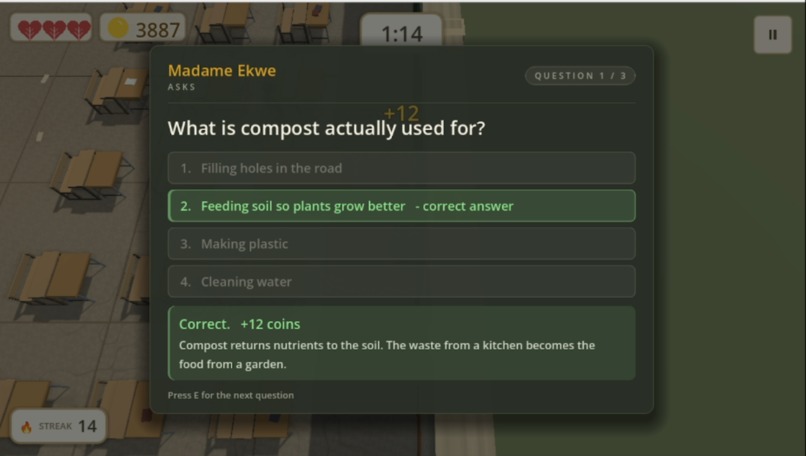
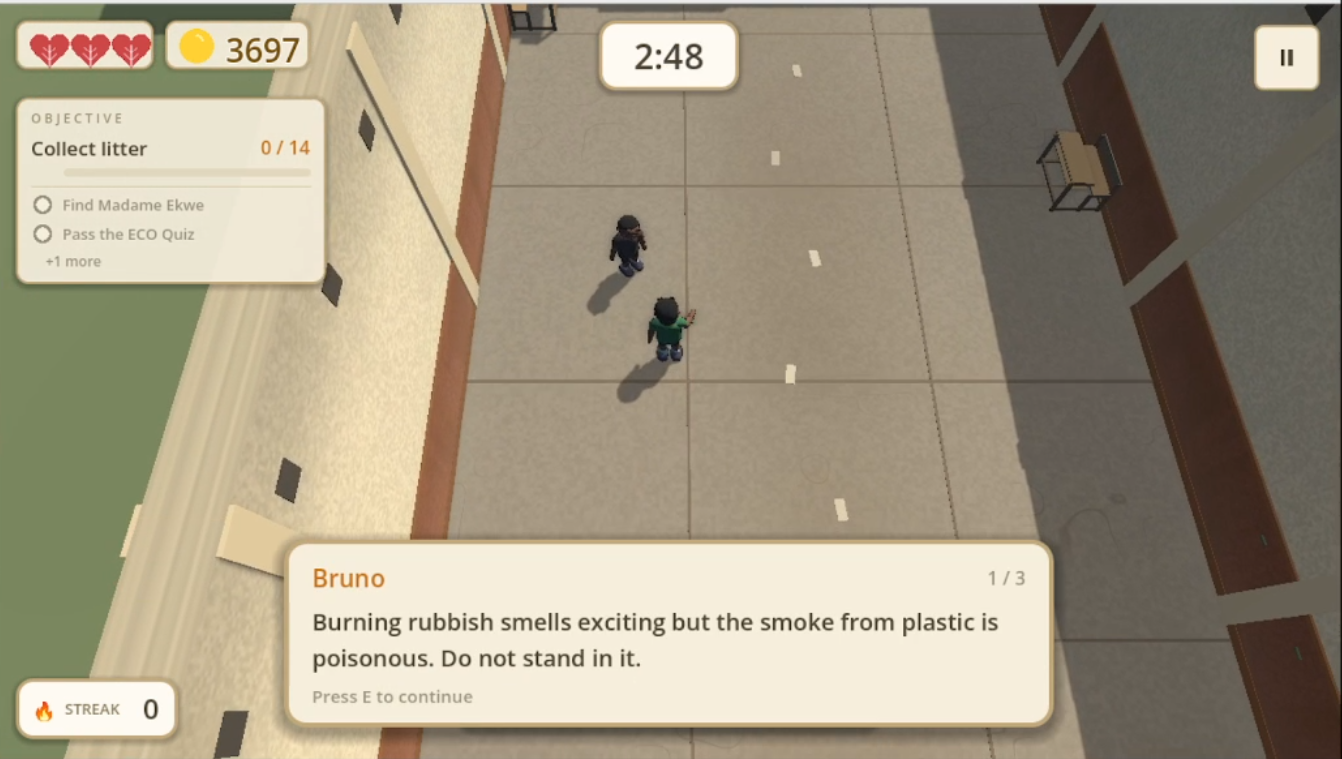
Environmental Awareness, NPC conversations turn everyday situations into opportunities to learn about responsible waste disposal.
-
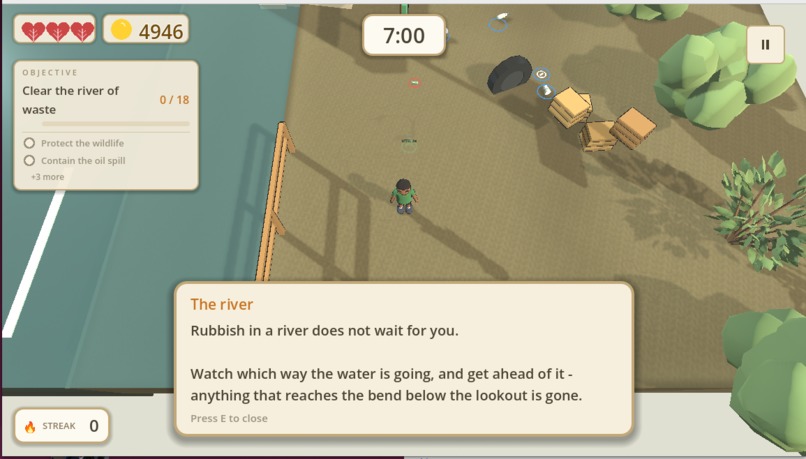
-
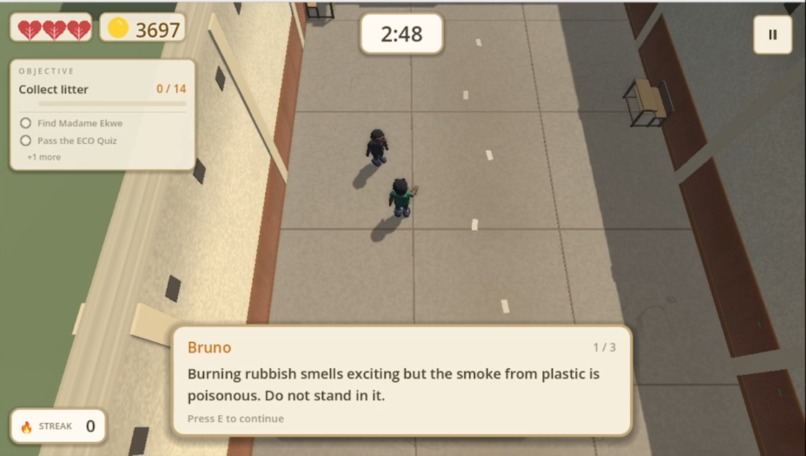
Players interact with NPCs who introduce environmental knowledge and real-world waste management challenges.
-
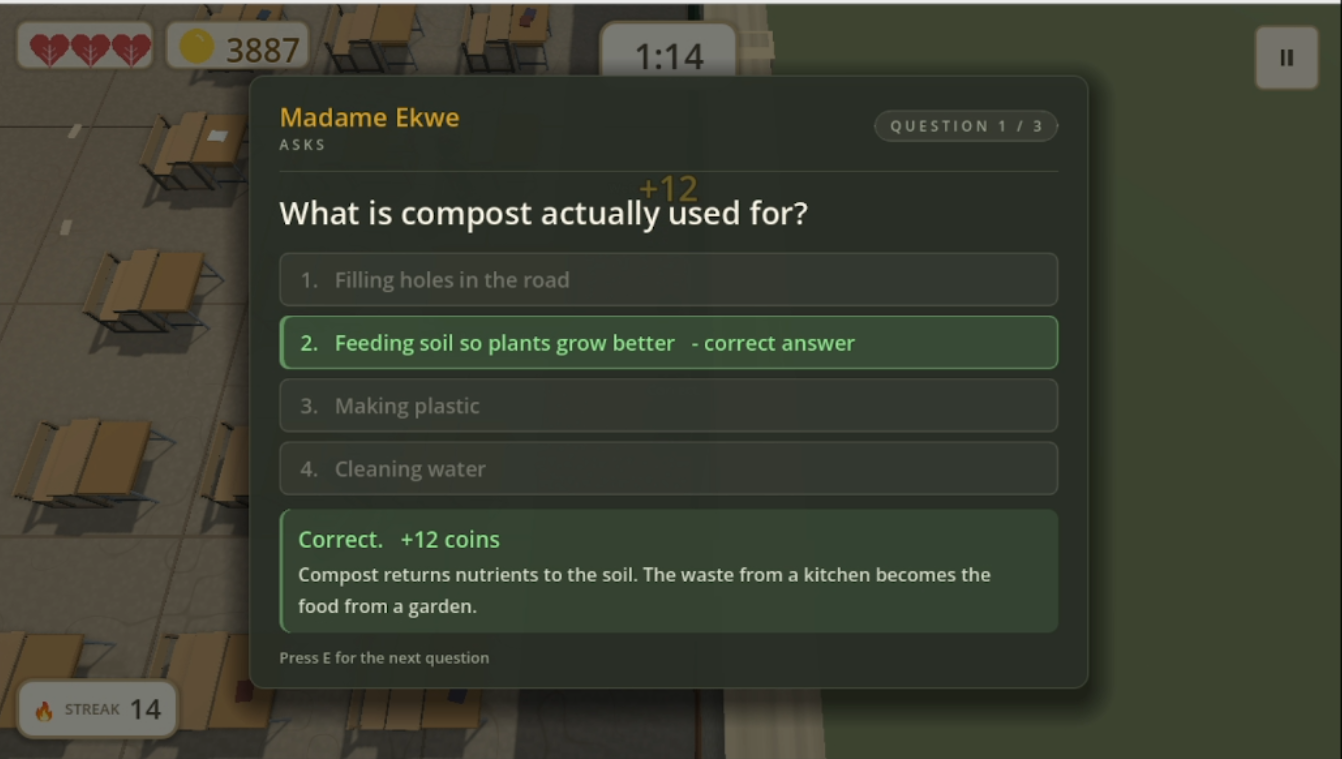
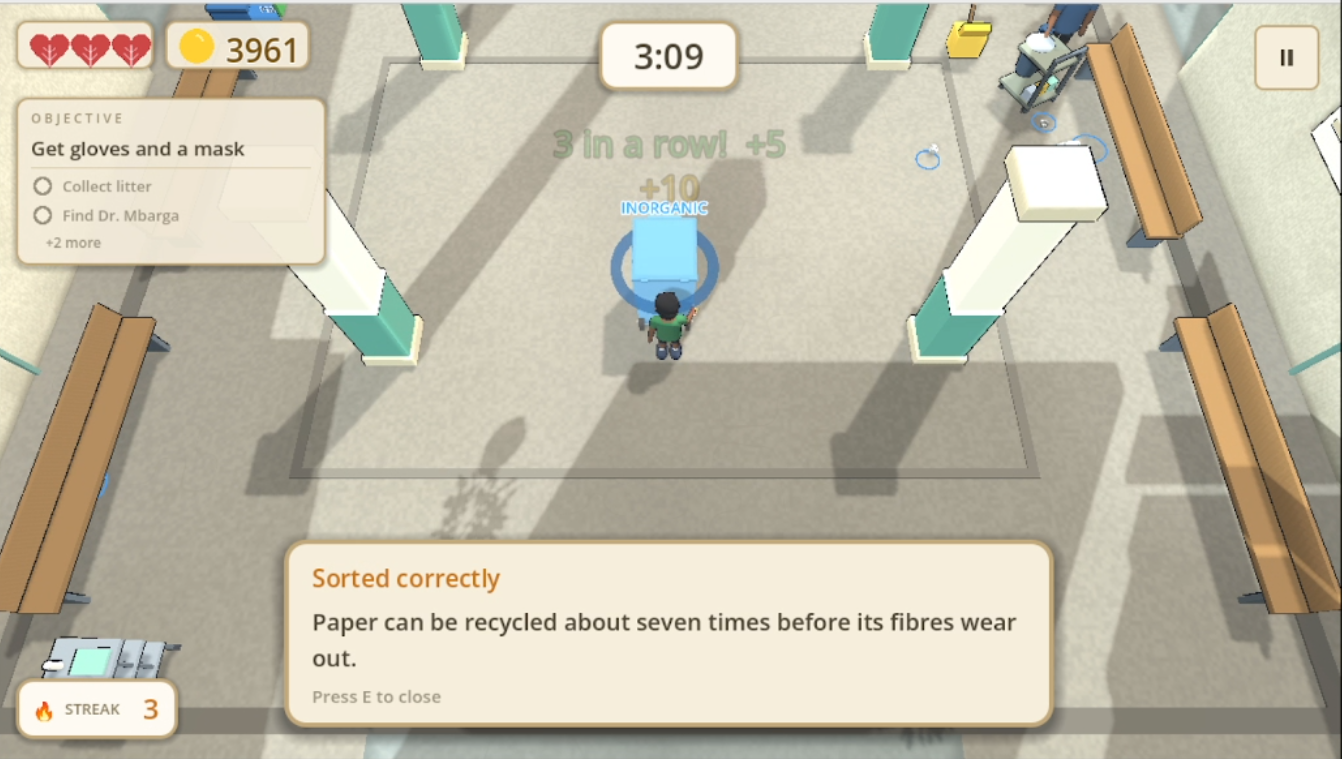
Quiz Test What You Learned Interactive quizzes reinforce environmental concepts and challenge players to apply what they discovered.
-
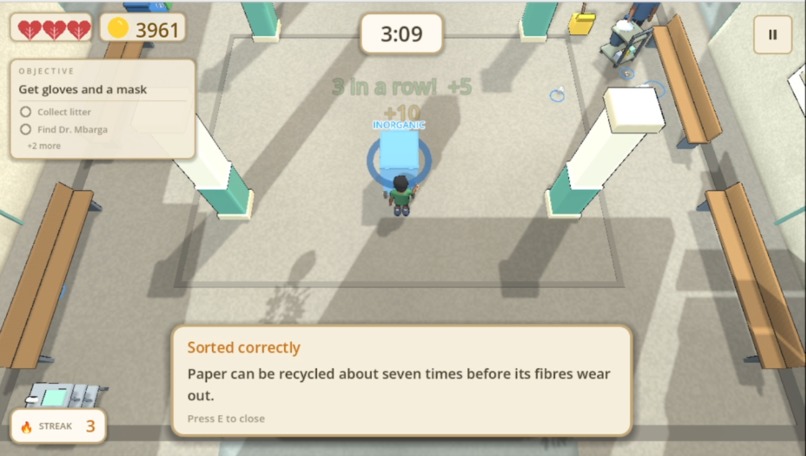
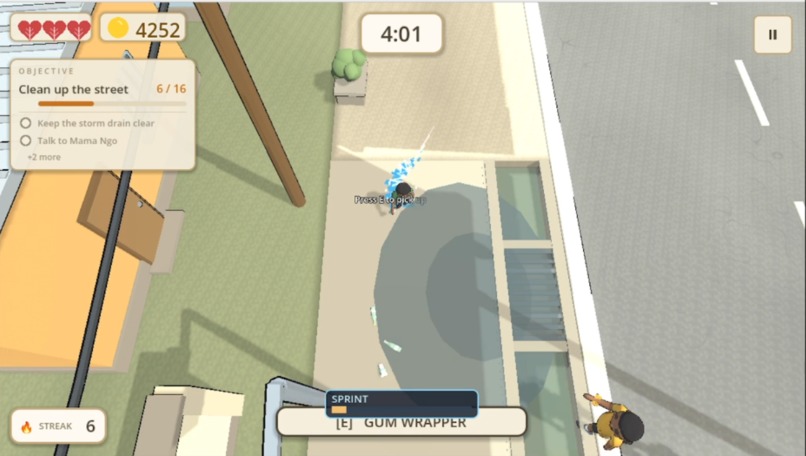
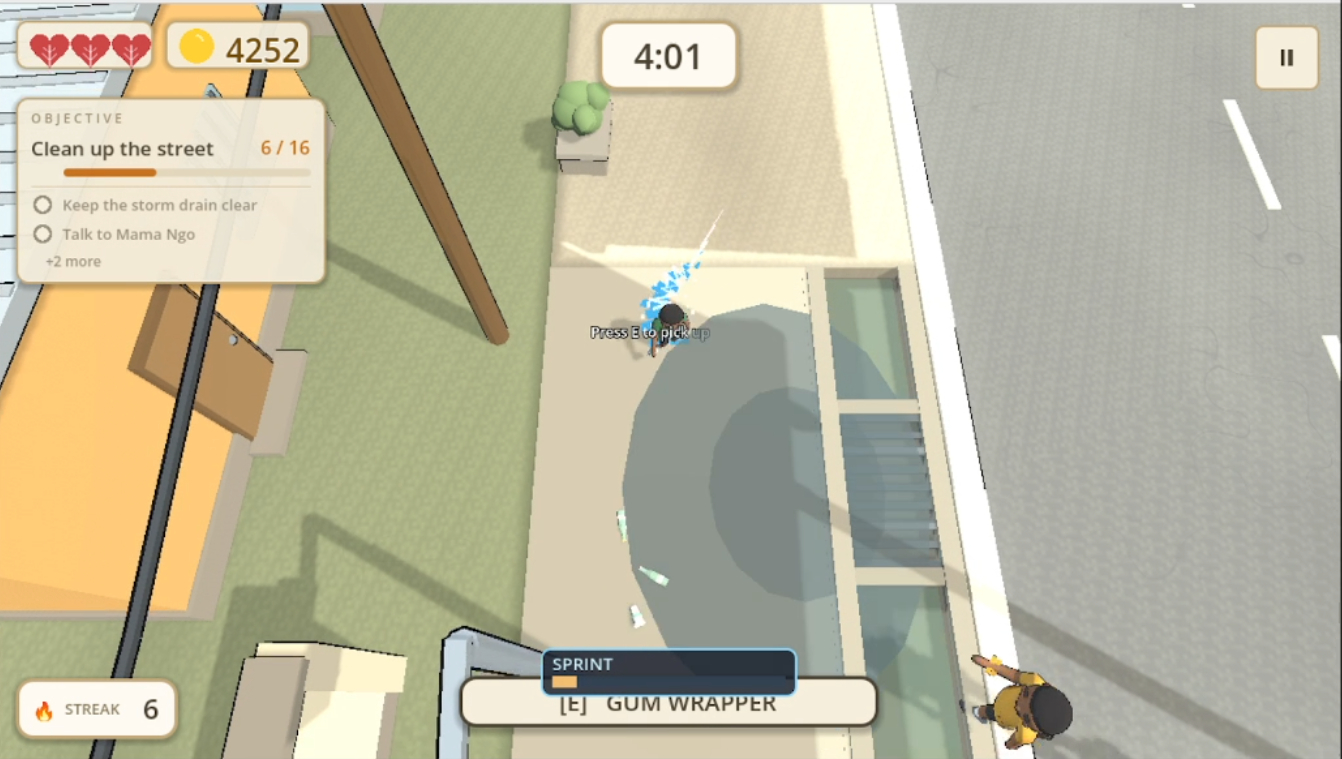
Sort. Decide. Make an Impact. Players collect waste and sort it into the correct bins: Recycle, Compost, or General Waste.
ECO-Hero: Learn. Play. Protect.
Inspiration
Environmental education is often presented to children as rules they have to memorize: put trash in the right bin, recycle, and keep your surroundings clean.
But knowing what to do does not always lead to doing it.
I wanted to create something that could make environmental responsibility interactive, memorable, and fun for children, especially within African communities. That idea became ECO-Hero, an educational game where players don't just learn about waste management—they experience it.
What It Does
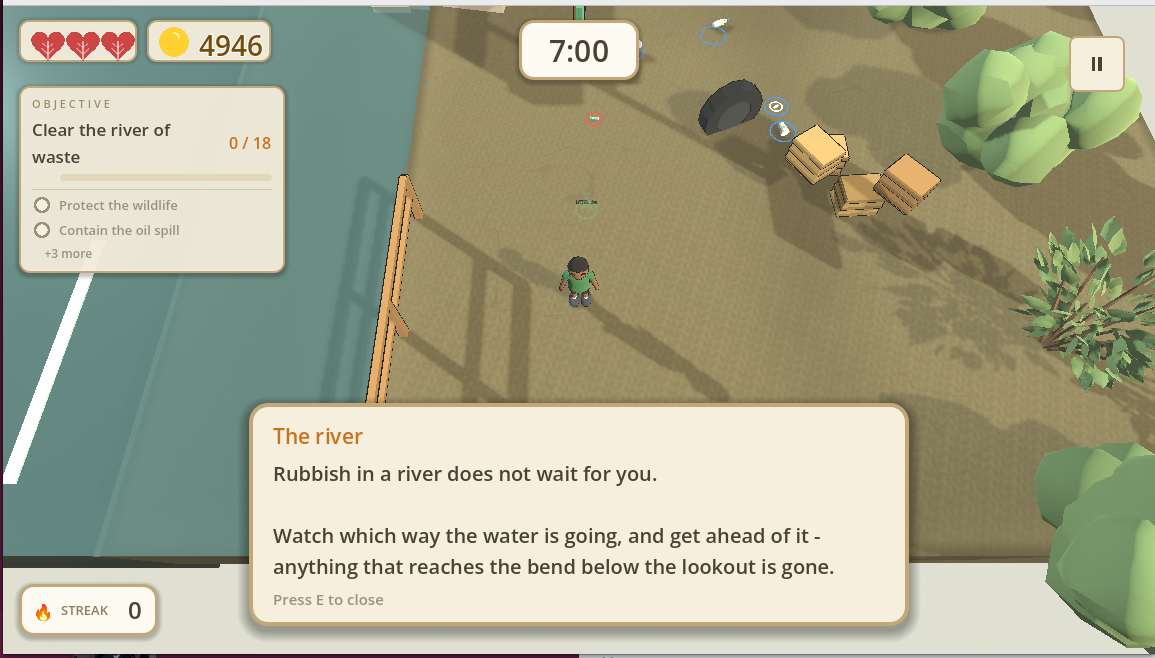
ECO-Hero places players in familiar community environments such as schools, hospitals, and streets and challenges them to clean their surroundings, identify different types of waste, and make the right environmental decisions.
Players can:
- Collect and sort waste into Recycle, Compost, and General Waste
- Explore multiple environments with different environmental challenges
- Learn environmental facts through interactive gameplay
- Complete quizzes and educational challenges
- Earn coins and interact with game systems as they progress
- Experience consequences that connect everyday waste disposal to larger environmental problems
The game is designed to make learning feel like an adventure rather than a lesson.
How We Built It
ECO-Hero was built as an interactive game using Godot. We developed custom gameplay systems for movement, waste collection, sorting, quizzes, NPC interactions, environmental facts, level progression, power-ups, timers, and the in-game economy.
The game currently includes multiple progressively challenging environments, with the gameplay designed around a simple learning loop:
Explore → Discover → Make a Choice → See the Consequence → Learn
We also focused on making the experience accessible to younger players through clear visual feedback, simple interactions, and game-based rewards.
Challenges
One of the biggest challenges was balancing education and entertainment. Too much educational content could make the game feel like a classroom, while too much action could make the learning objective disappear.
We also faced technical challenges involving game performance, collision systems, NPC behavior, level design, audio, asset size, and creating mechanics that worked consistently across different parts of the game.
Building the project taught me that creating an educational game is not just about adding educational information. The learning has to be integrated directly into the gameplay.
What I Learned
ECO-Hero taught me a lot about game development, systems design, user experience, and iteration.
Most importantly, I learned how powerful interactive learning can be. When a player makes a choice and immediately sees its effect, the lesson becomes something they experience, not just something they read.
Impact
ECO-Hero is designed to help children develop practical environmental habits from an early age while making environmental education more engaging.
The long-term vision is to expand the game with more communities, environmental challenges, educational content, and localized experiences so that children can learn about real-world environmental issues through play.
ECO-Hero is built around one simple idea:
Don't just teach children to protect the environment. Give them a world where they can practice protecting it.
Built With
- educational
- game-development
- gdscript
- godot-4


Log in or sign up for Devpost to join the conversation.