-
-
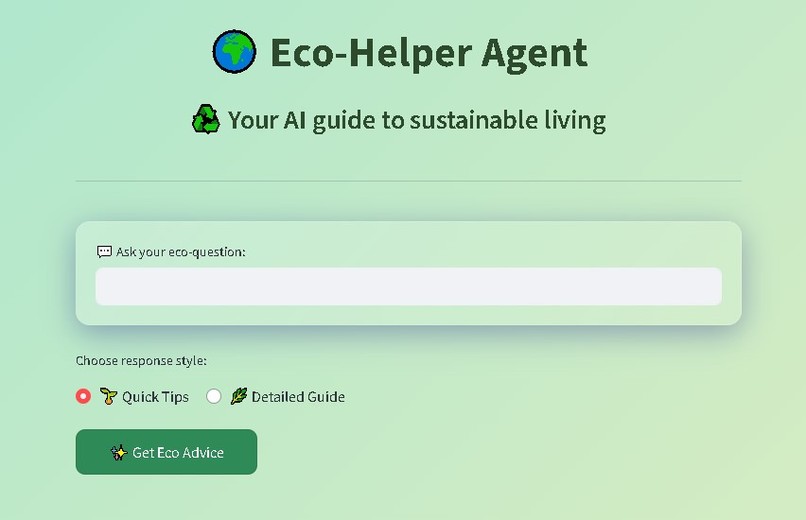
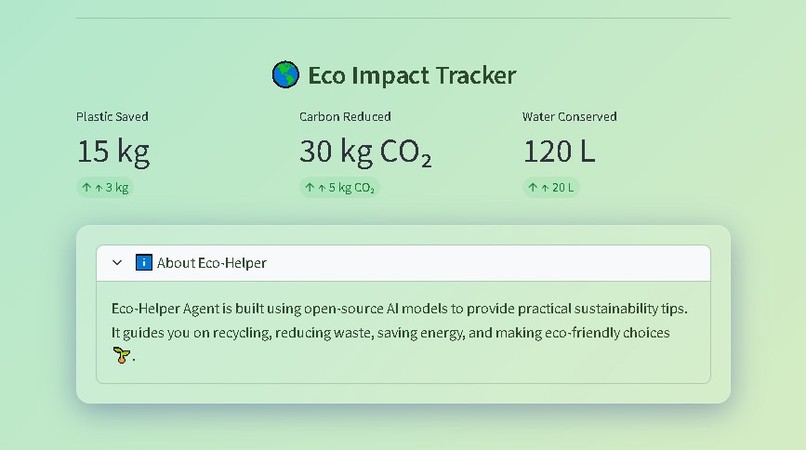
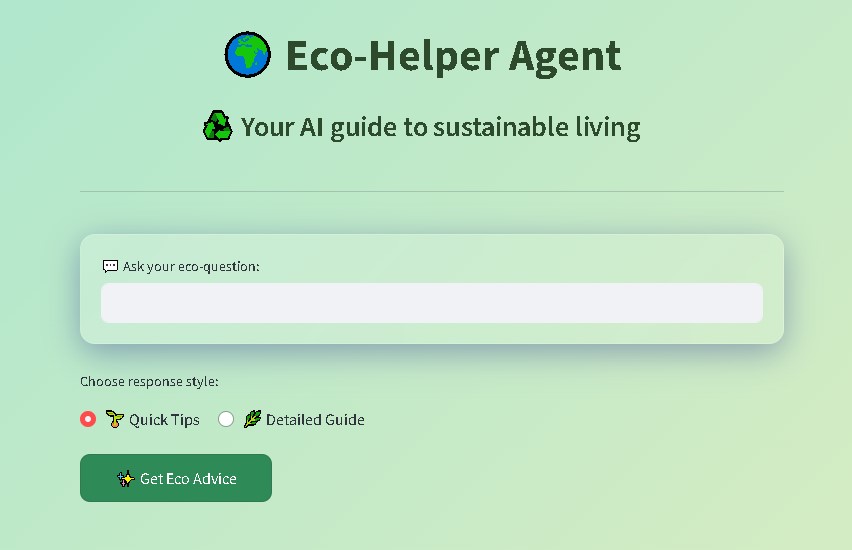
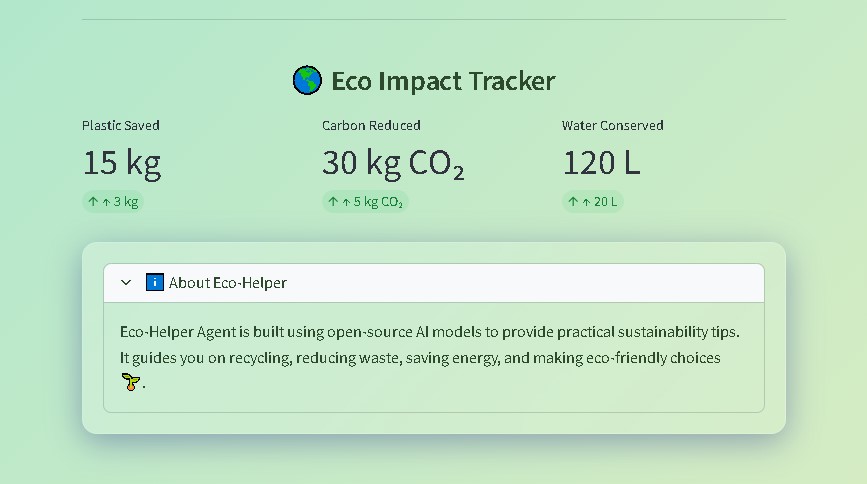
Eco-Helper Agent: An AI-powered assistant that offers quick tips and detailed guides to help users make sustainable lifestyle choices.
-
Inspiration
We’ve all been there — standing over the trash bin, holding a plastic bottle or food container, wondering “Can I recycle this?” Most people want to make eco-friendly choices, but they’re not sure how. And in many places, internet access isn’t guaranteed.
That’s why we built Eco-Helper Agent — a simple, offline AI assistant that helps anyone make greener decisions in everyday life. No jargon. No guilt. Just clear, practical guidance.
What it does
Eco-Helper Agent is like having a sustainability expert in your pocket.
You ask it natural questions — like:
“Can I compost orange peels?”
“How do I save energy in my kitchen?”
“What are some eco-friendly ways to wash clothes with less water?”
And it responds with easy, step-by-step advice tailored to your situation. It runs completely offline using GPT-OSS, so it works even in areas with limited or no internet.
How we built it
GPT-OSS model as the engine for generating eco-advice.
Streamlit to create a simple, lightweight, and user-friendly interface.
Designed a system prompt that makes the agent respond as an expert in sustainability.
Tested the application with common household scenarios (plastic, glass, food waste, energy saving).
Challenges we ran into
Making the advice feel practical and human — not robotic or generic.
Ensuring the tool runs smoothly offline for the demo.
Managing time: coding, designing, and preparing everything within the hackathon deadline.
Accomplishments that we're proud of
Built a working prototype in under two days.
Made something that’s simple, accessible, and genuinely helpful.
Proved that AI can support sustainability in a way that feels personal and empowering.
What we learned
How to fine-tune GPT-OSS for real-world, niche applications.
The power of good prompt design to shape AI behavior.
That even small tools can make a big difference when they solve real human problems.
What's next for Eco —Helper agent
Add local recycling rules so advice fits your city or country.
Introduce multilingual support to reach more communities.
Build a mobile-friendly version for easier access.
Explore fine-tuning with sustainability datasets for deeper, more accurate guidance.

Log in or sign up for Devpost to join the conversation.