-
-
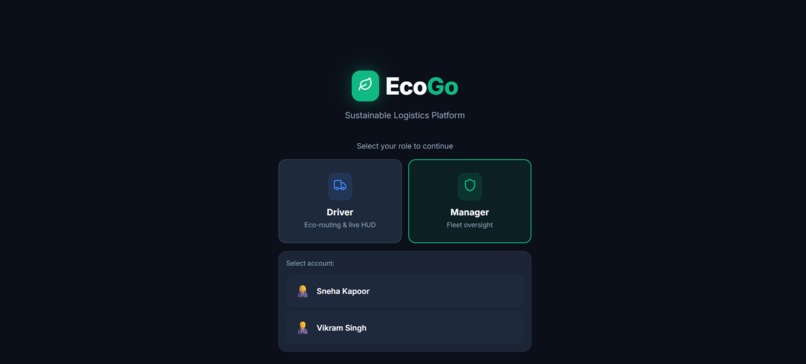
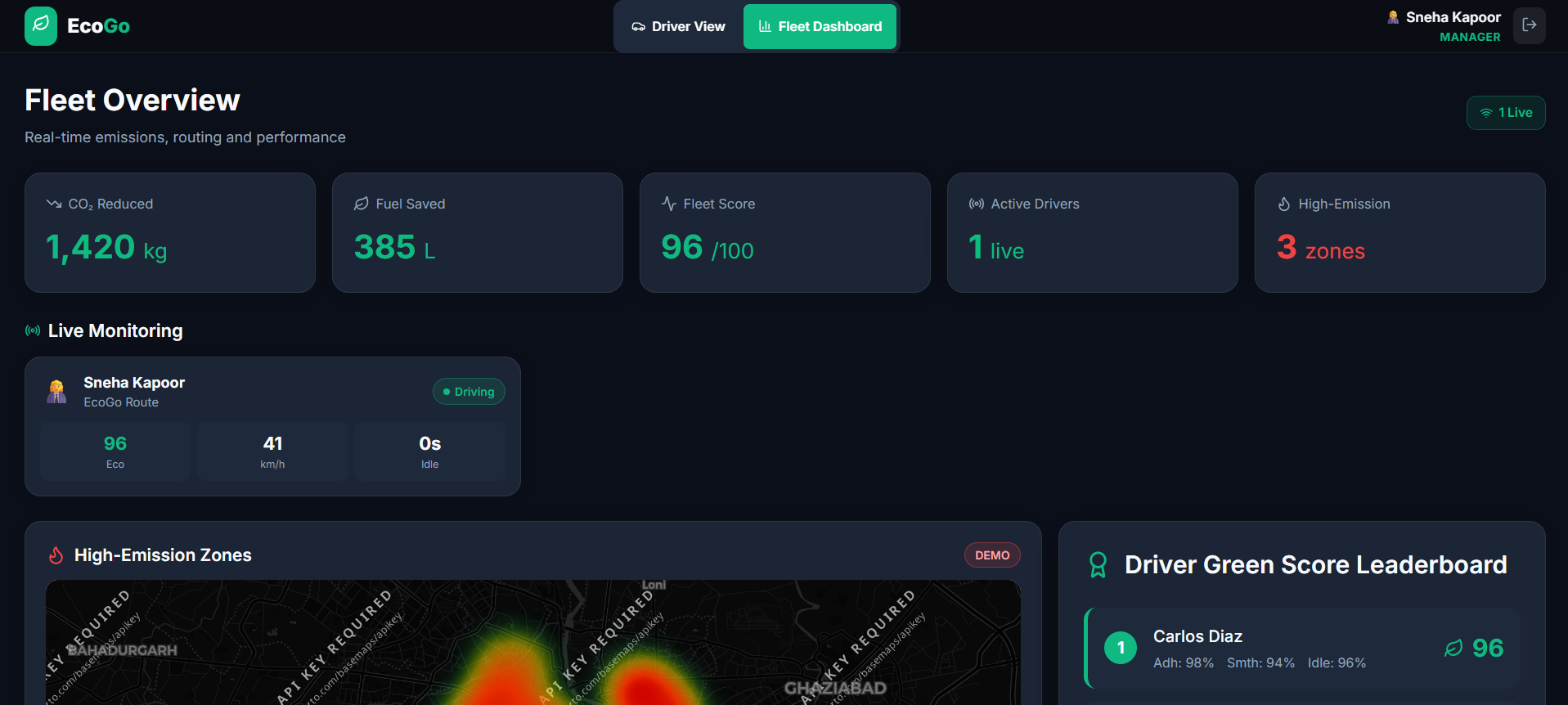
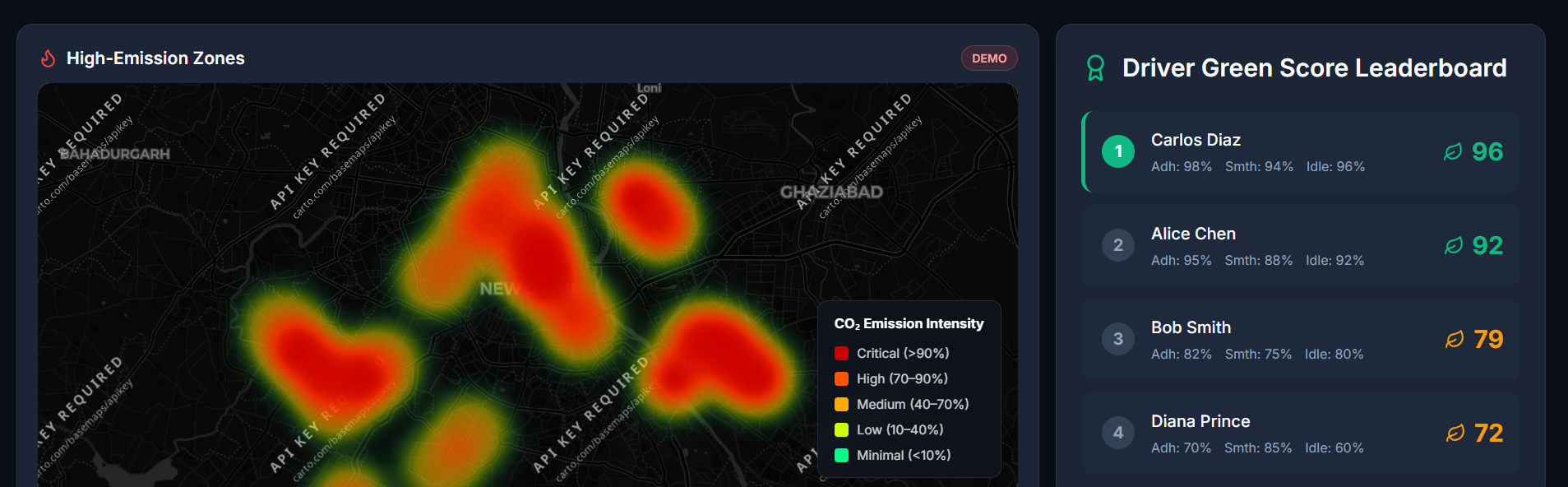
Admin dashboard
-
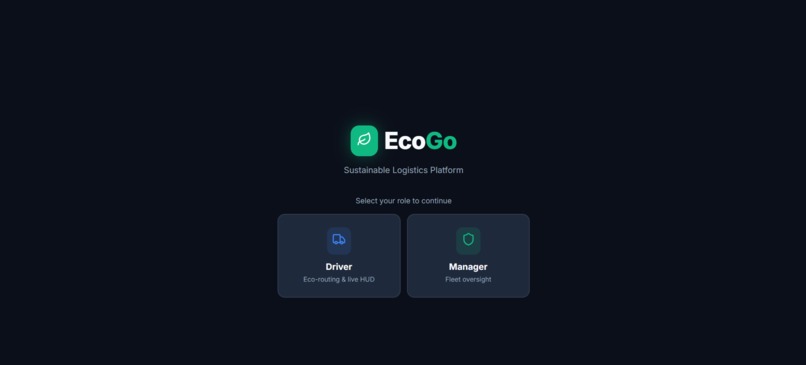
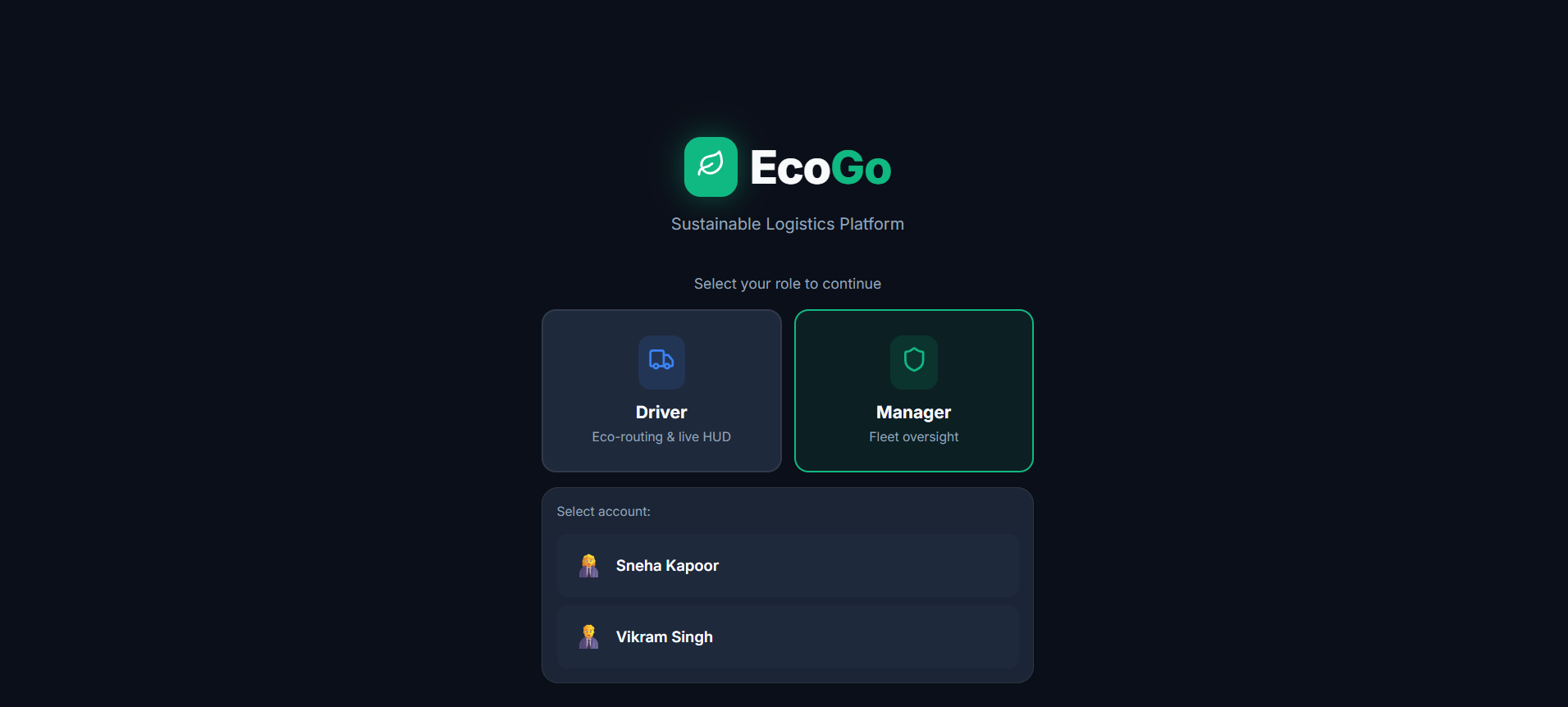
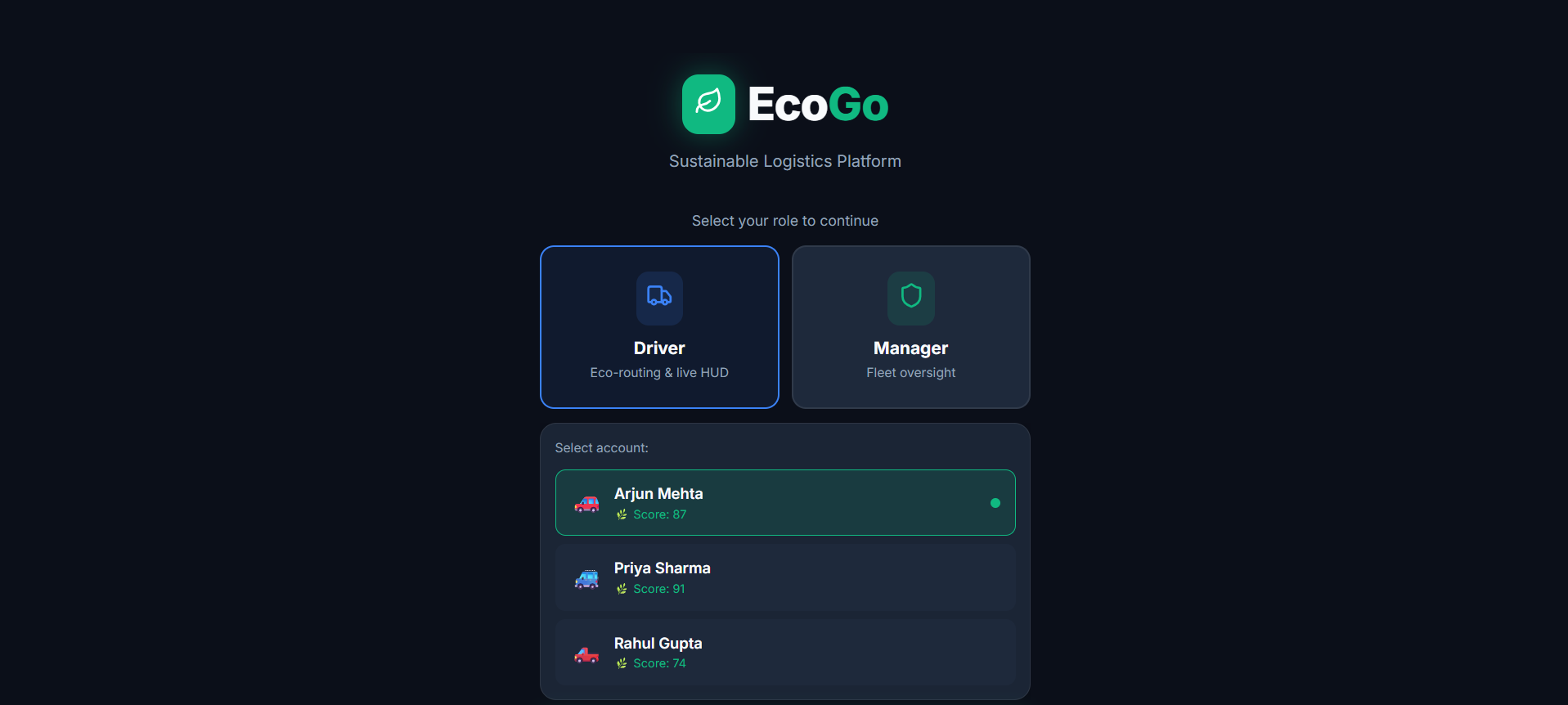
Landing page
-
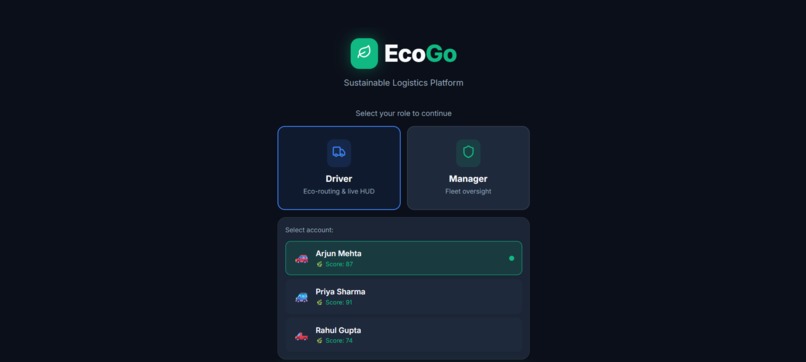
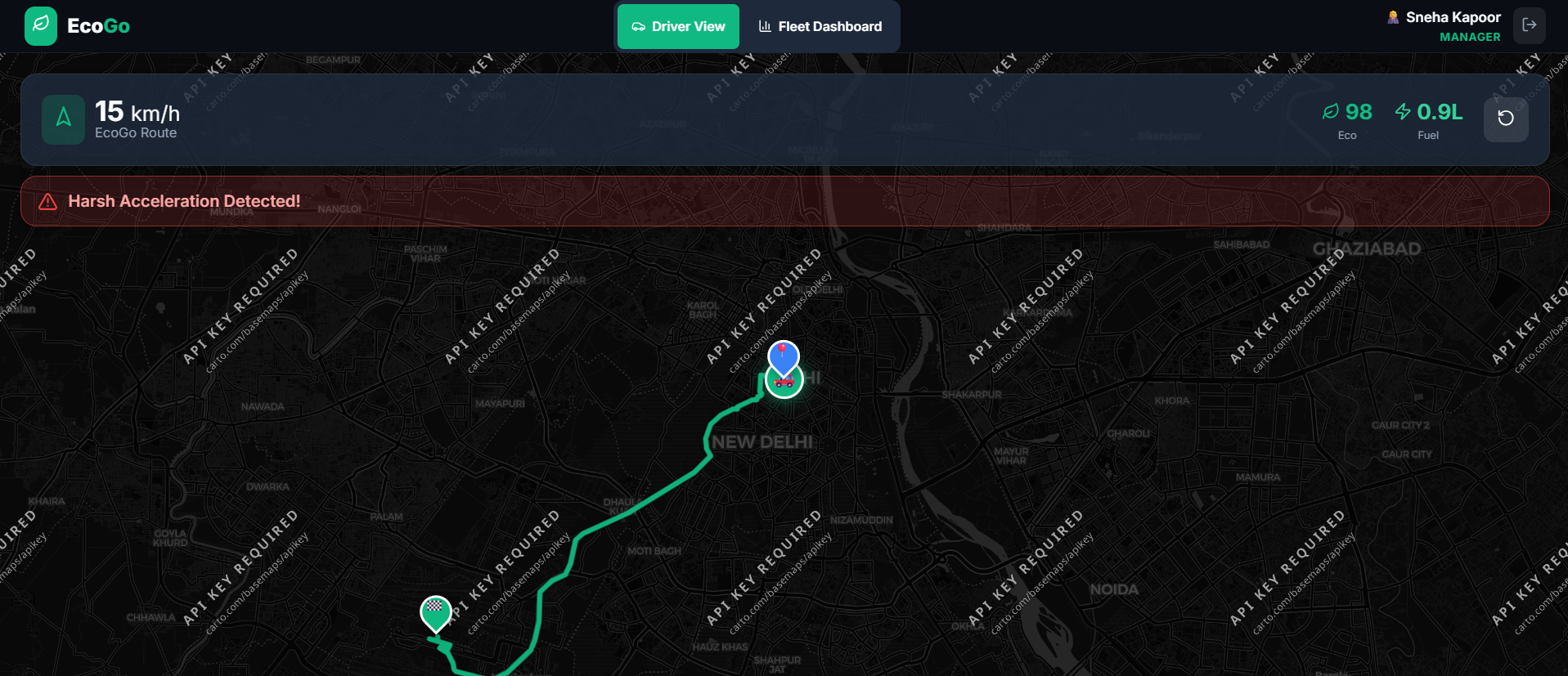
Driver dashboard
-
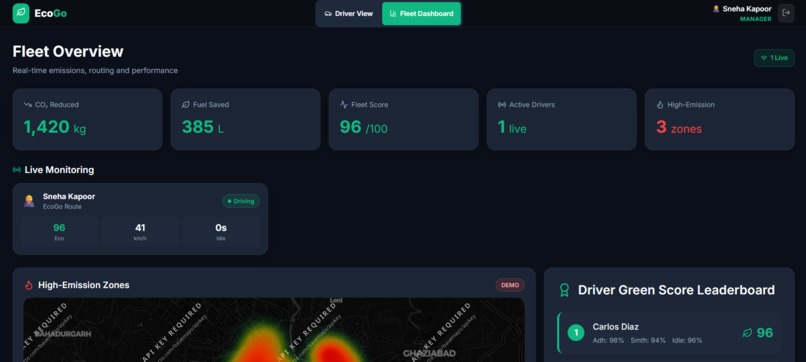
Overall
-
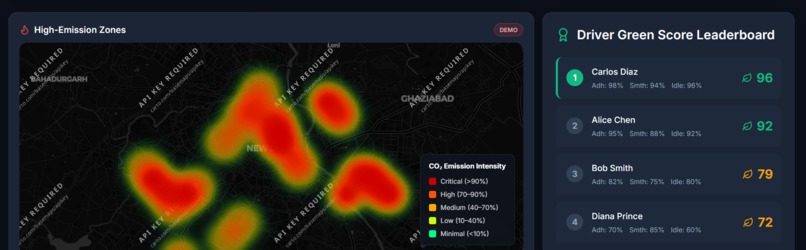
Heatmap
-
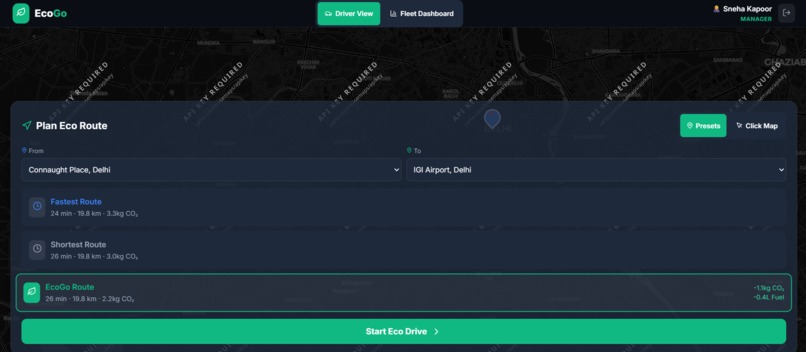
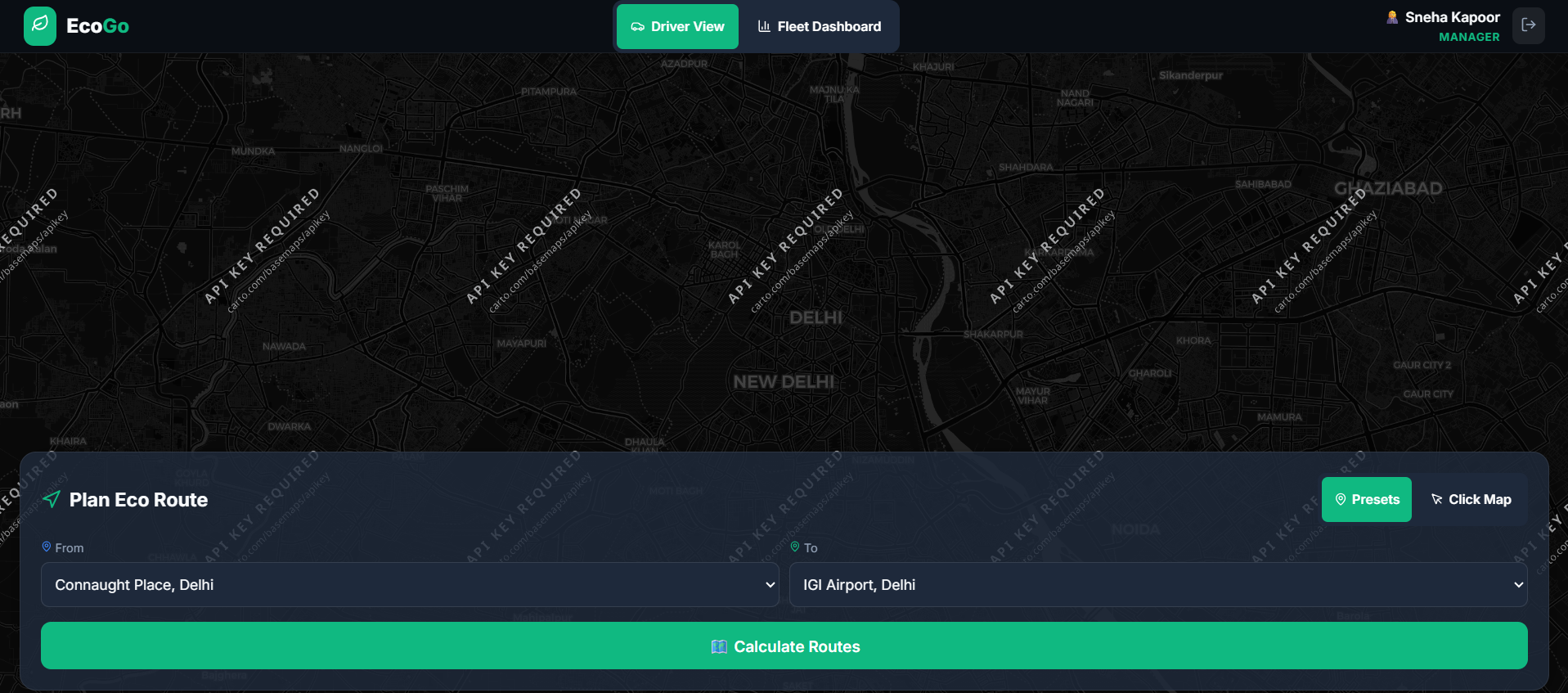
Calculating Route
-
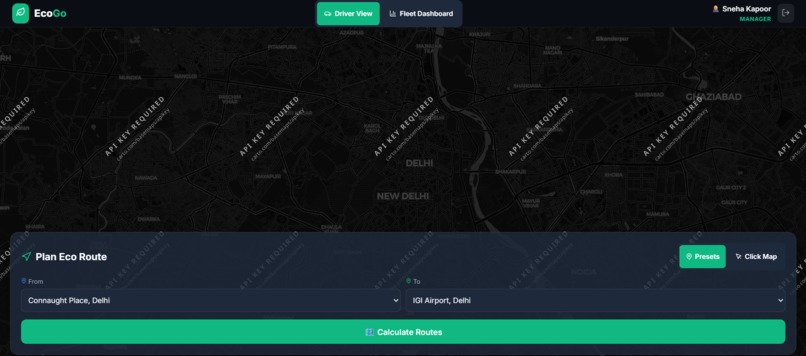
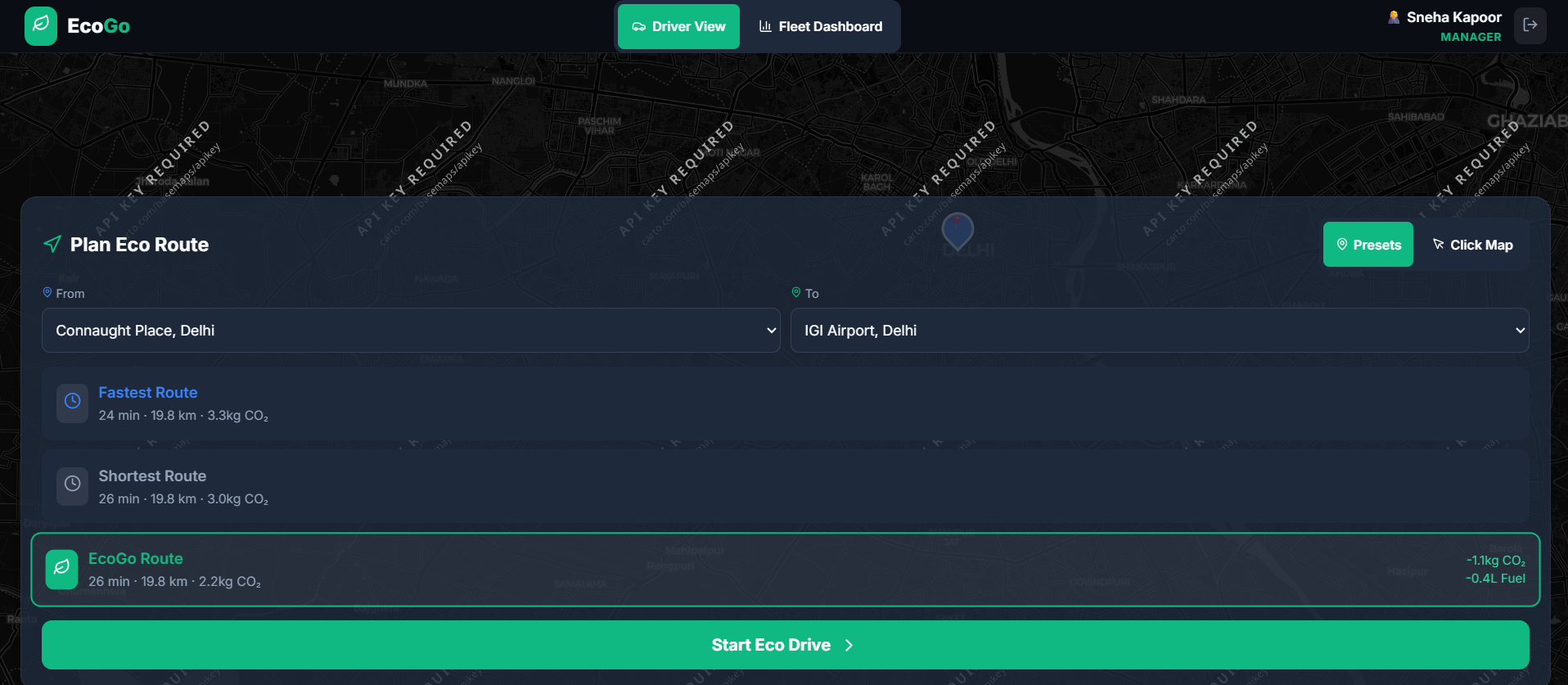
Destinations
-
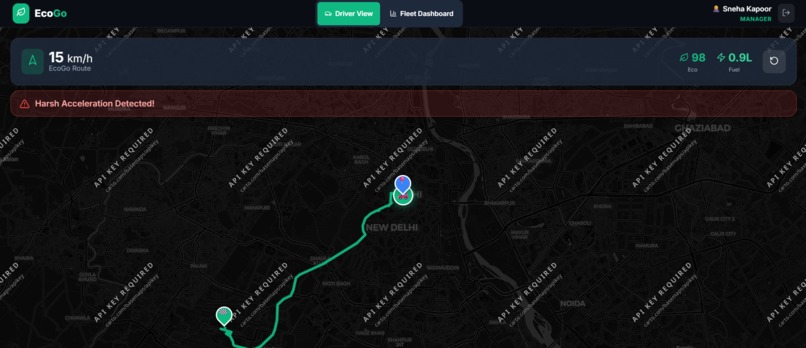
Eco route
Inspiration
We wanted to solve a common problem in logistics: vehicles often take routes based mainly on distance or time, without considering fuel consumption and emissions. This gave us the idea for EcoGo.
What it does
EcoGo suggests more fuel-efficient routes by considering traffic, terrain, vehicle type, and fuel usage. It also provides EcoScores, idle-time alerts, driver performance tracking, and fleet sustainability information.
How we built it
We built EcoGo as a web application using JavaScript, HTML, and CSS, along with mapping and routing services. We combined route data with our eco-routing logic to compare routes based on efficiency, fuel usage, and environmental impact.
Challenges we ran into
Our main challenge was balancing different factors such as distance, traffic, terrain, fuel consumption, and emissions. We also wanted the system to be simple enough for drivers while still being useful for fleet managers.
Accomplishments that we're proud of
We are proud of turning our idea into a working prototype with eco-routing, driver-focused features, and a fleet dashboard. We also managed to bring the environmental and cost aspects of logistics into one system.
What we learned
We learned how route optimization works and how different road conditions can affect fuel consumption. We also learned how to combine different features into one application and make the information easy to understand.
What's next for ECO GO
We want to improve the accuracy of our fuel and emissions calculations, add better real-time rerouting, improve offline navigation, and eventually connect EcoGo with vehicle telematics for real-world driving data.
Built With
- ai
- css
- html
- javascript
- maps-api
- react
- routing
- vercel
- web


Log in or sign up for Devpost to join the conversation.