-
-
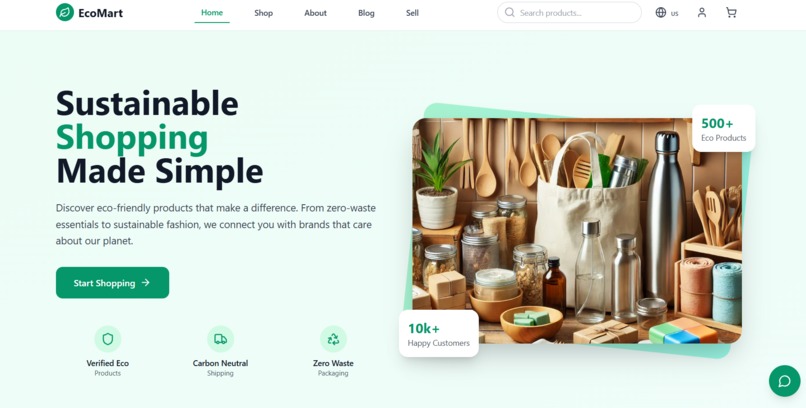
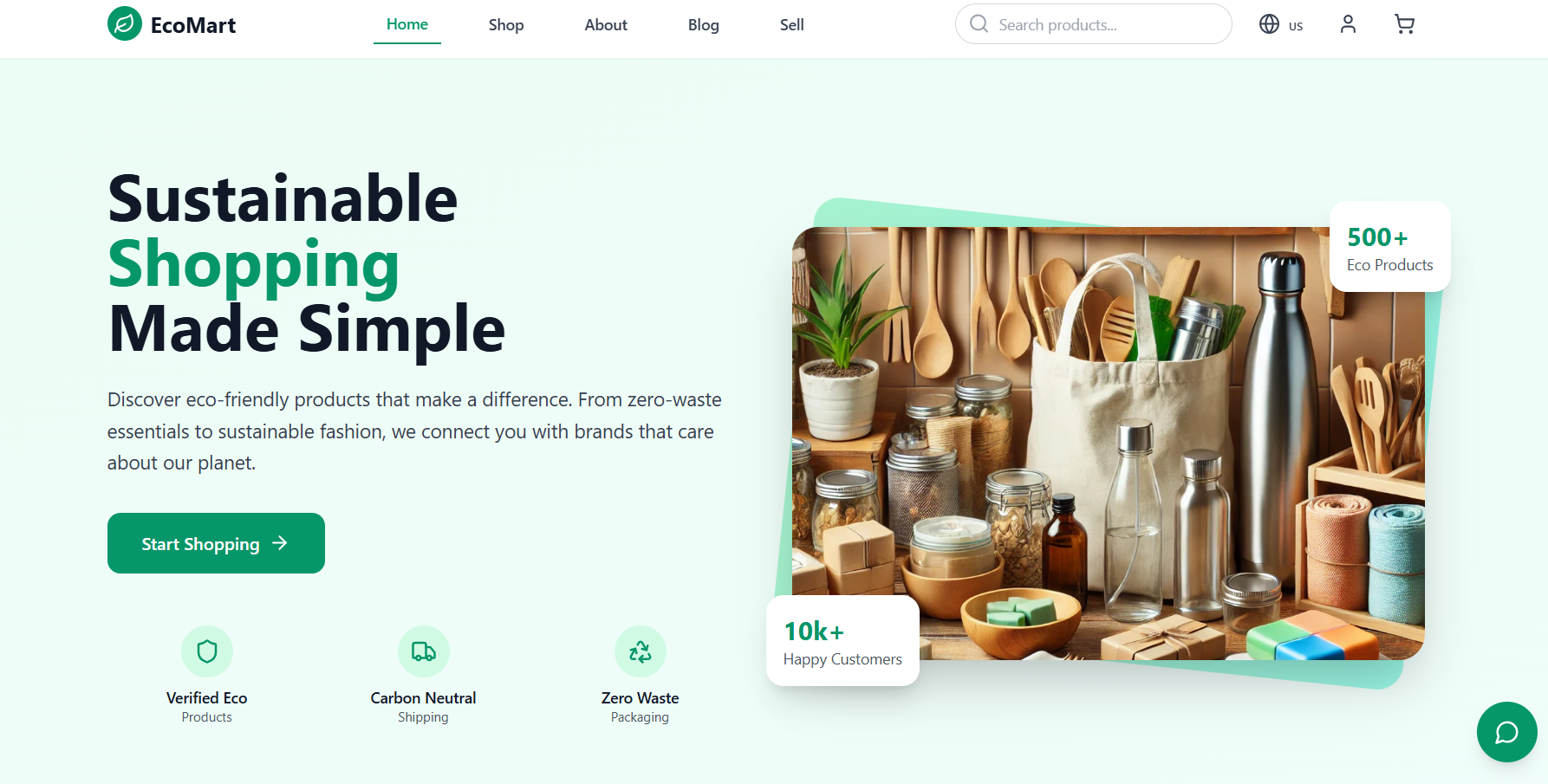
Home page
-
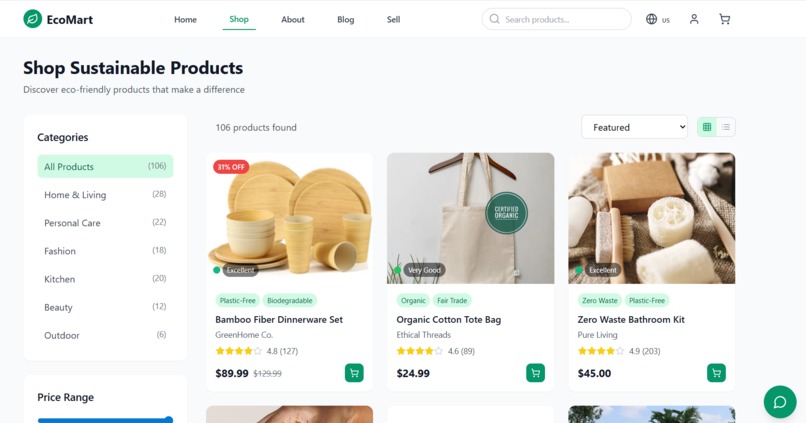
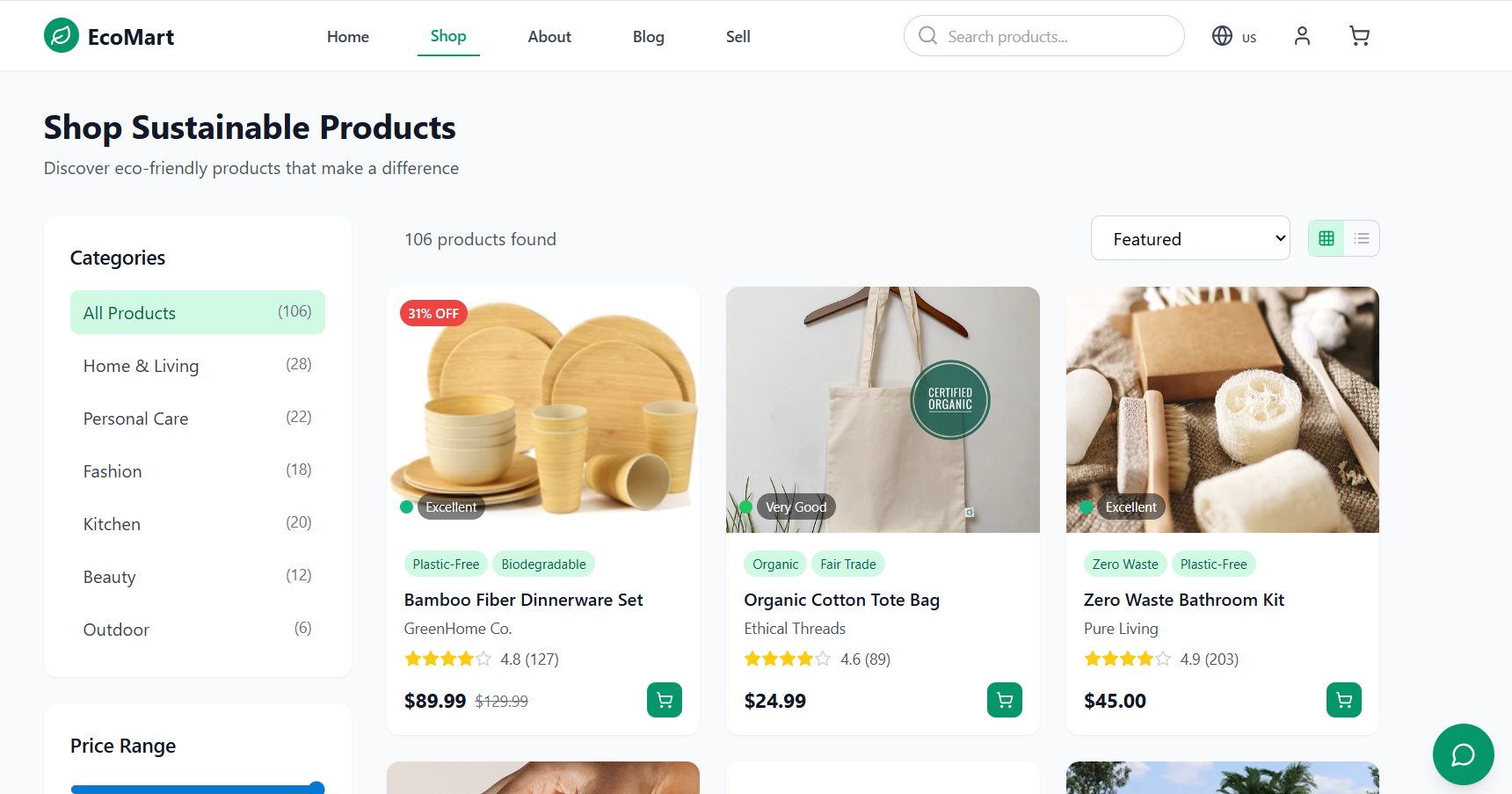
Shop page
-
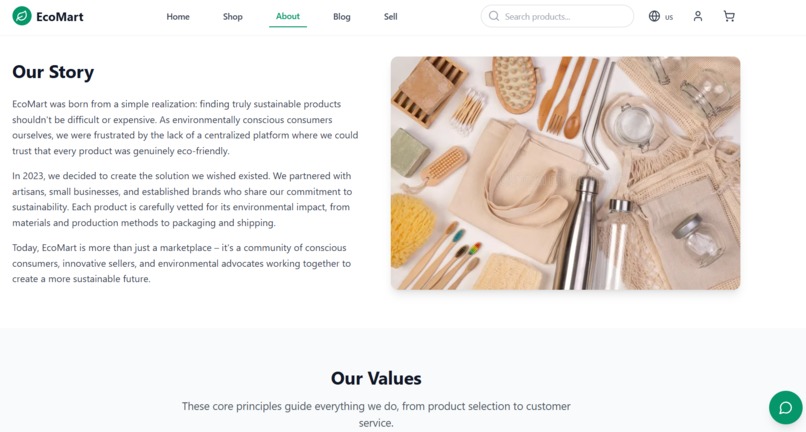
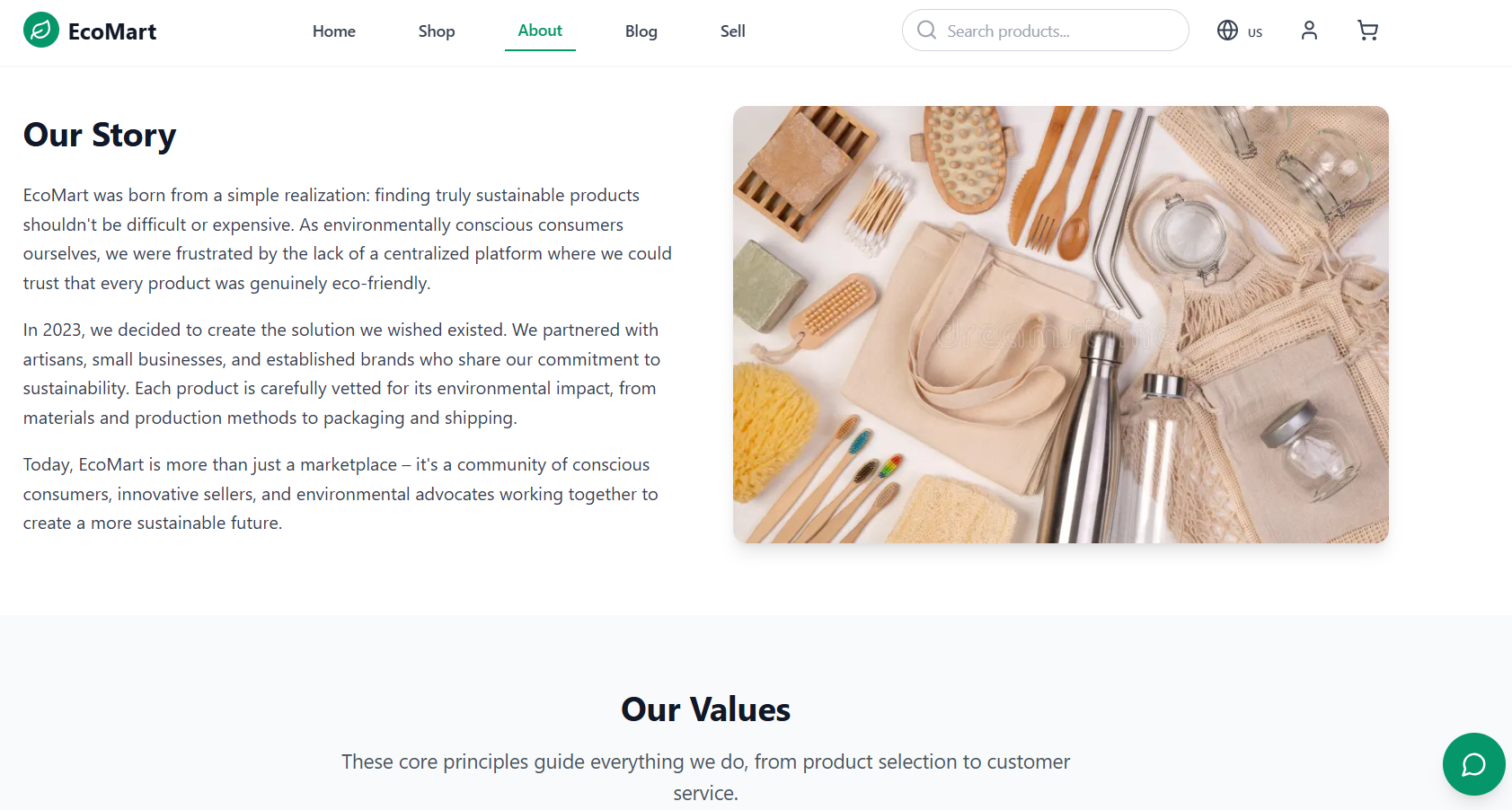
About page
-
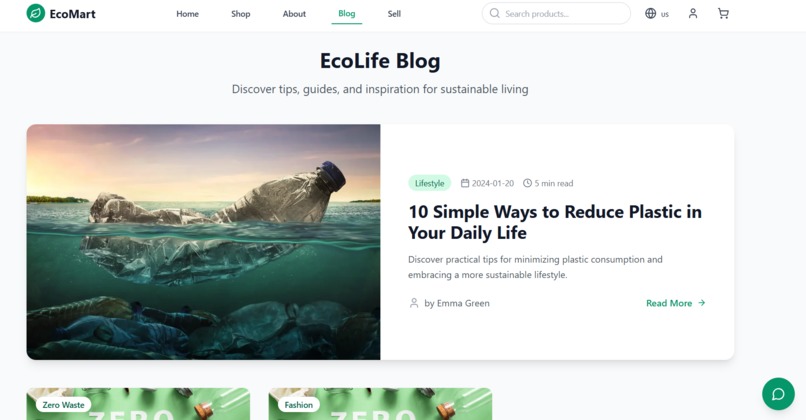
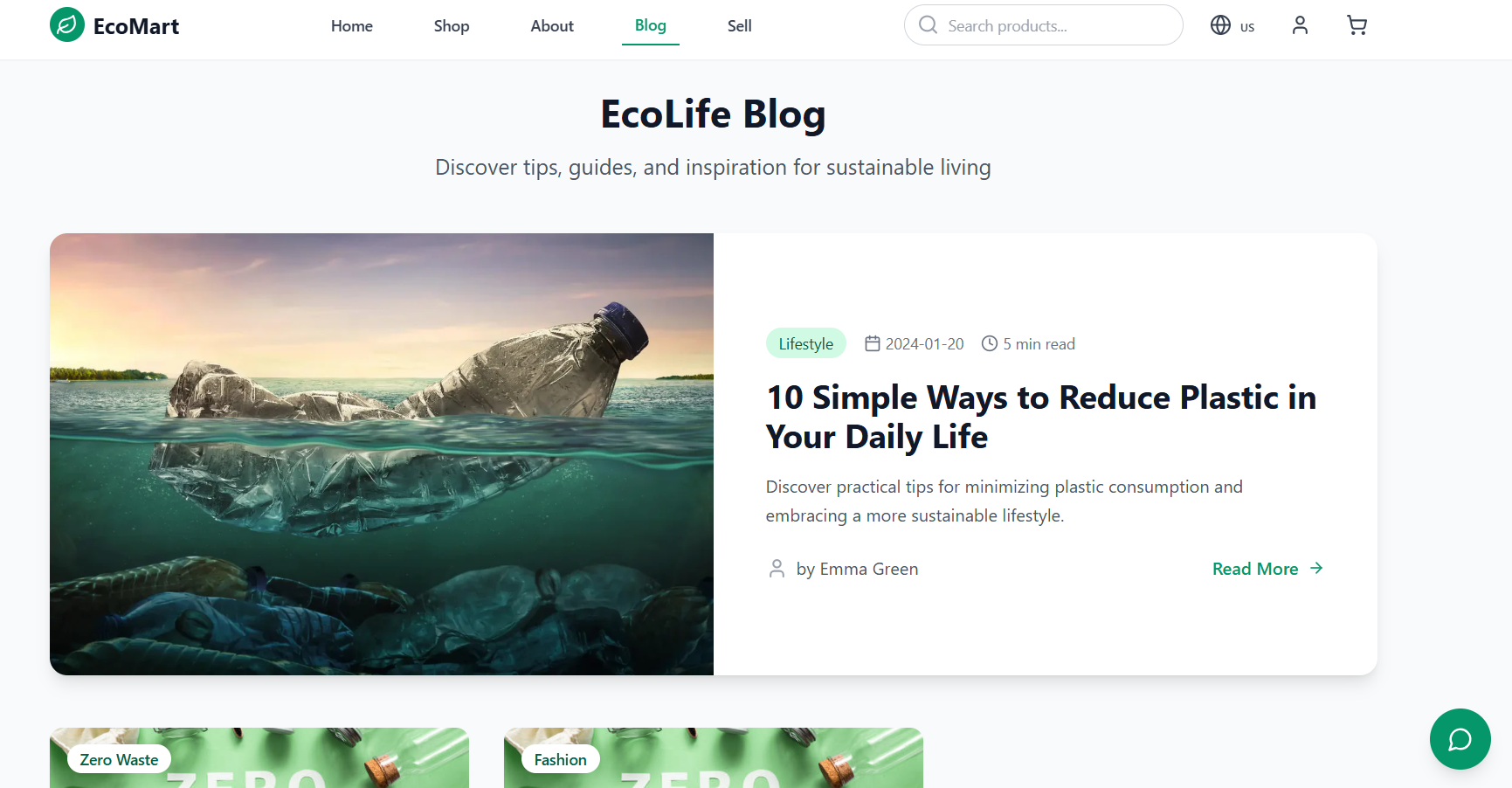
Blog page
-
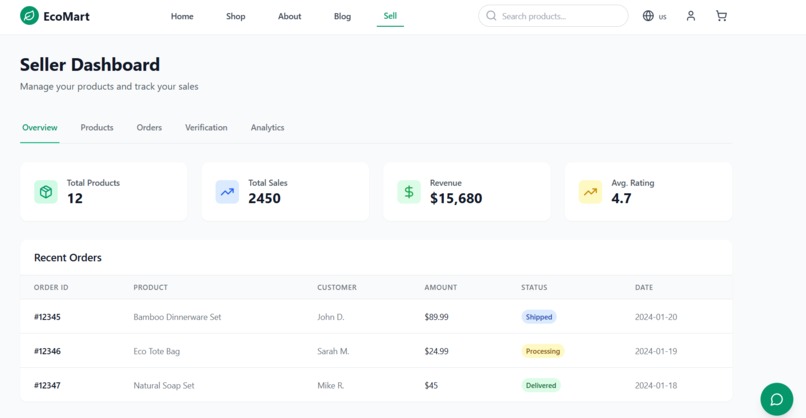
Sell page
-
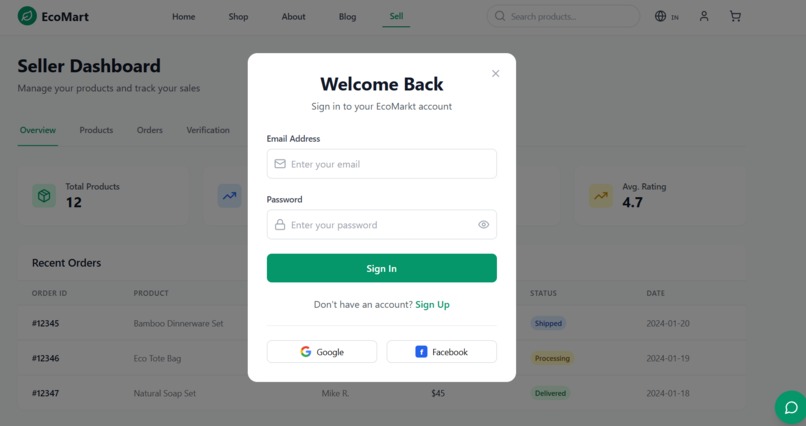
Authentication page
-
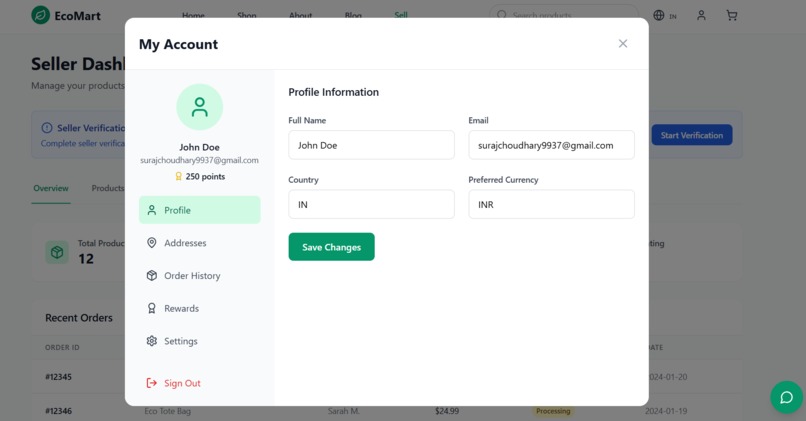
User dashboard
-
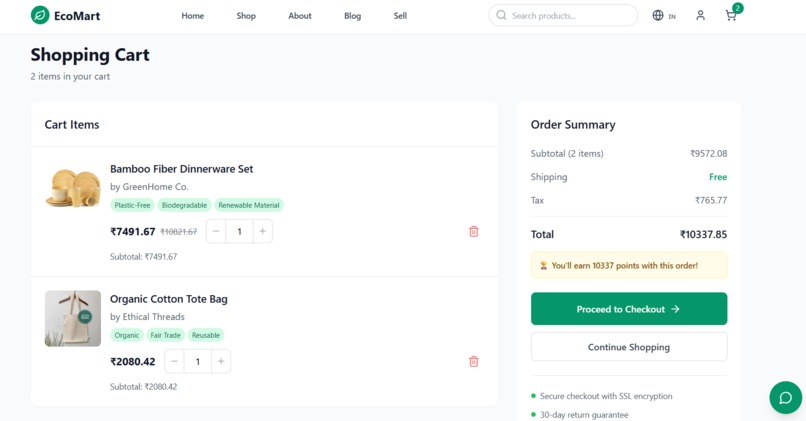
Cart page
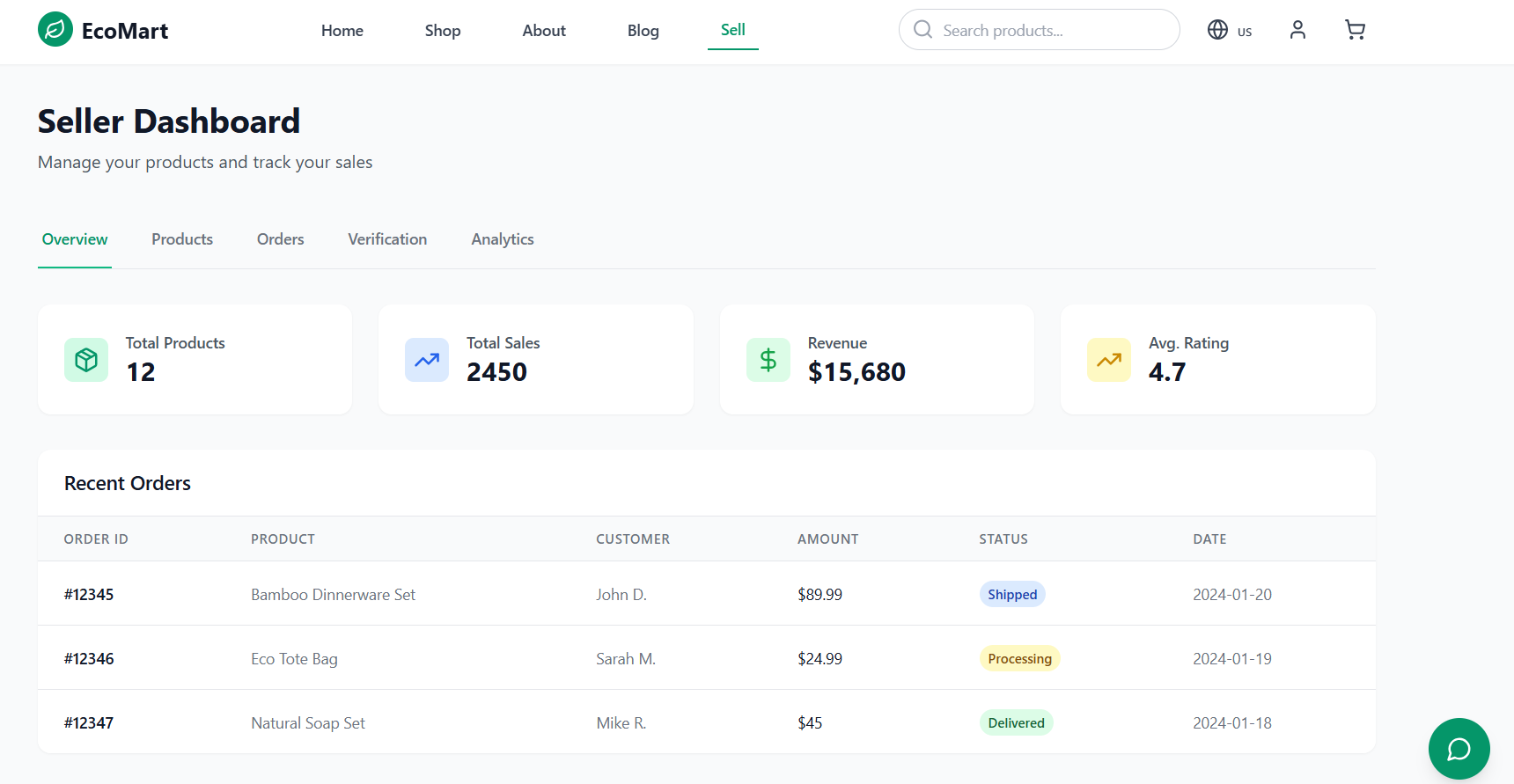
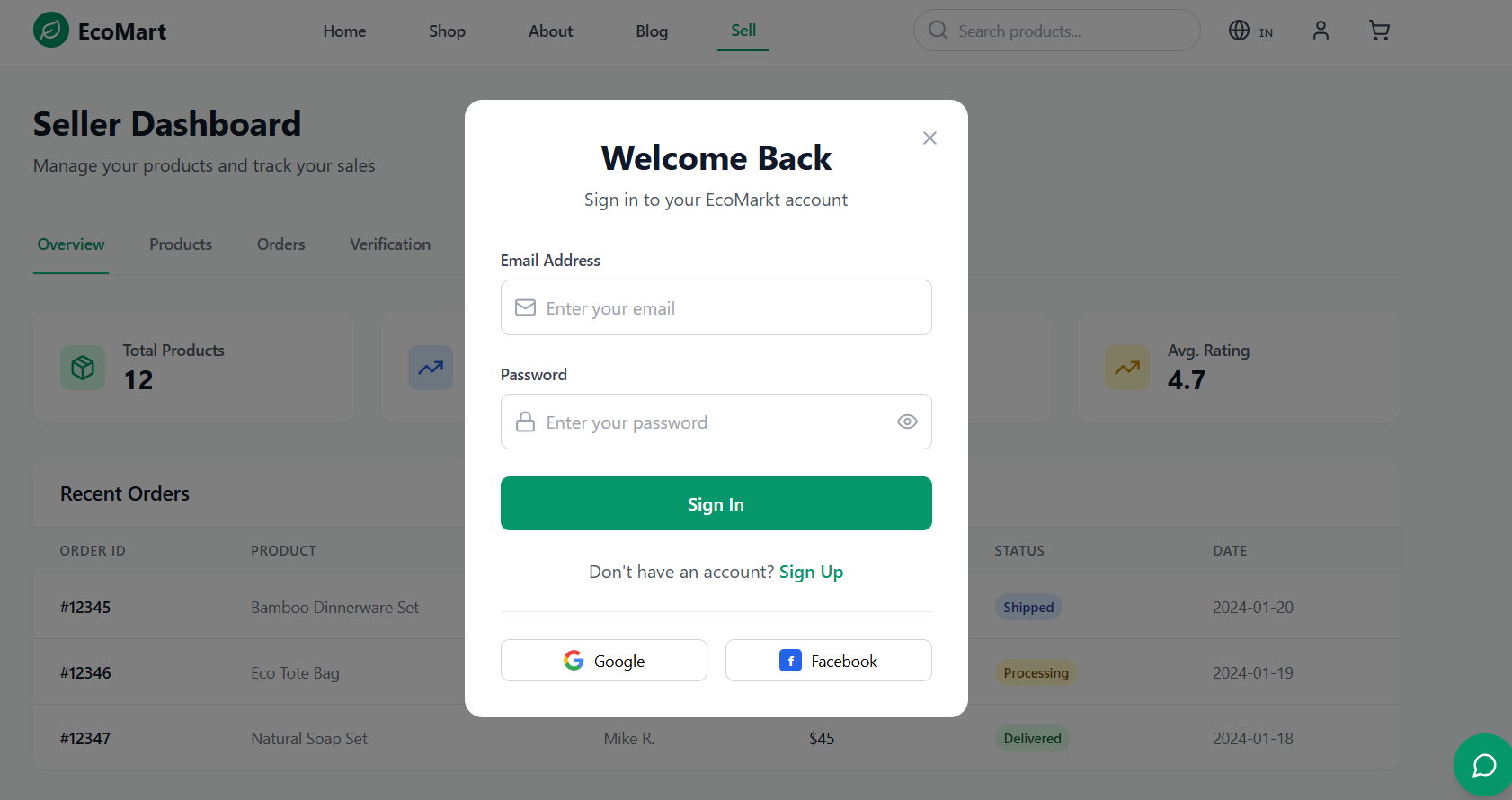
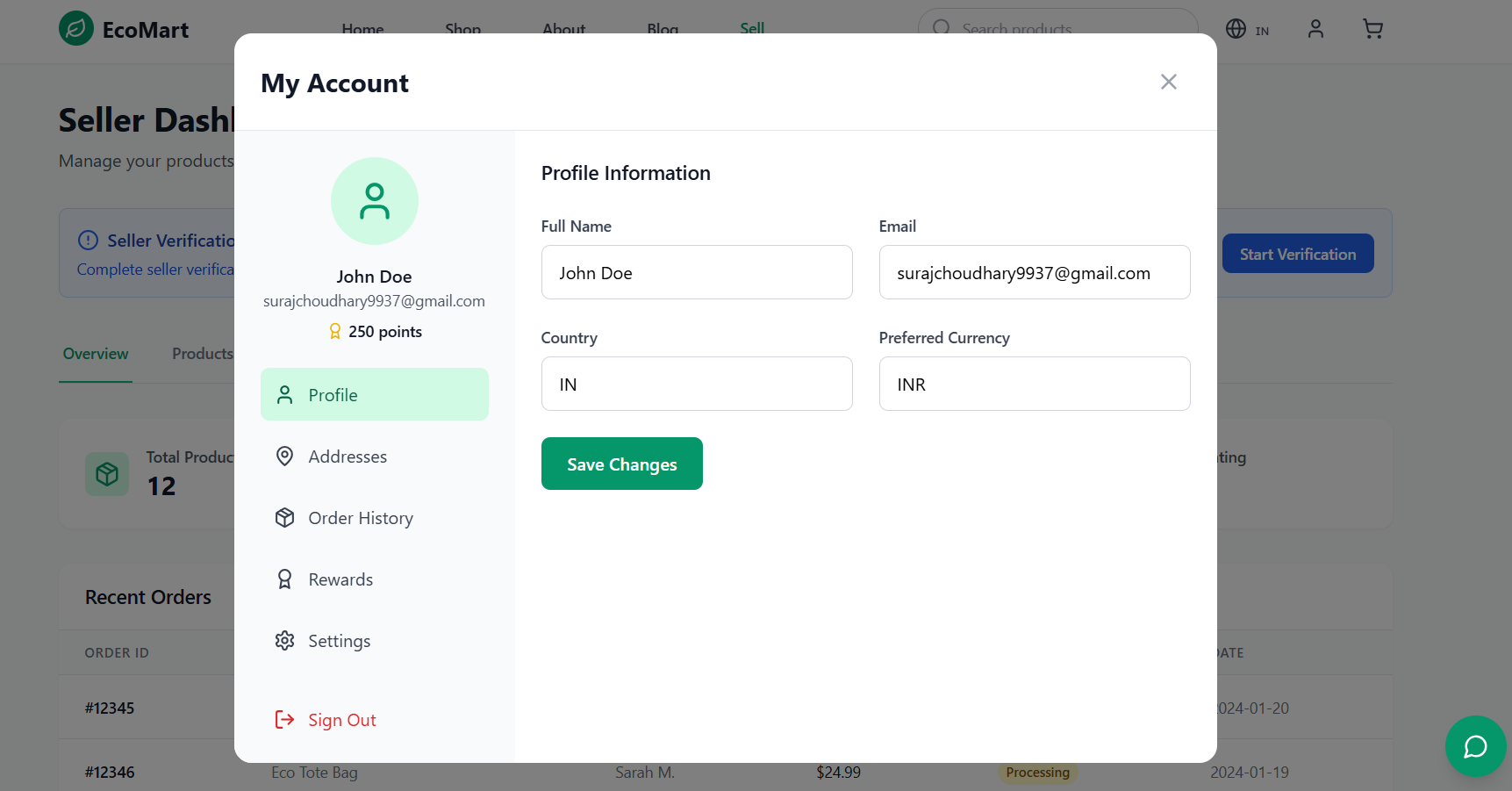
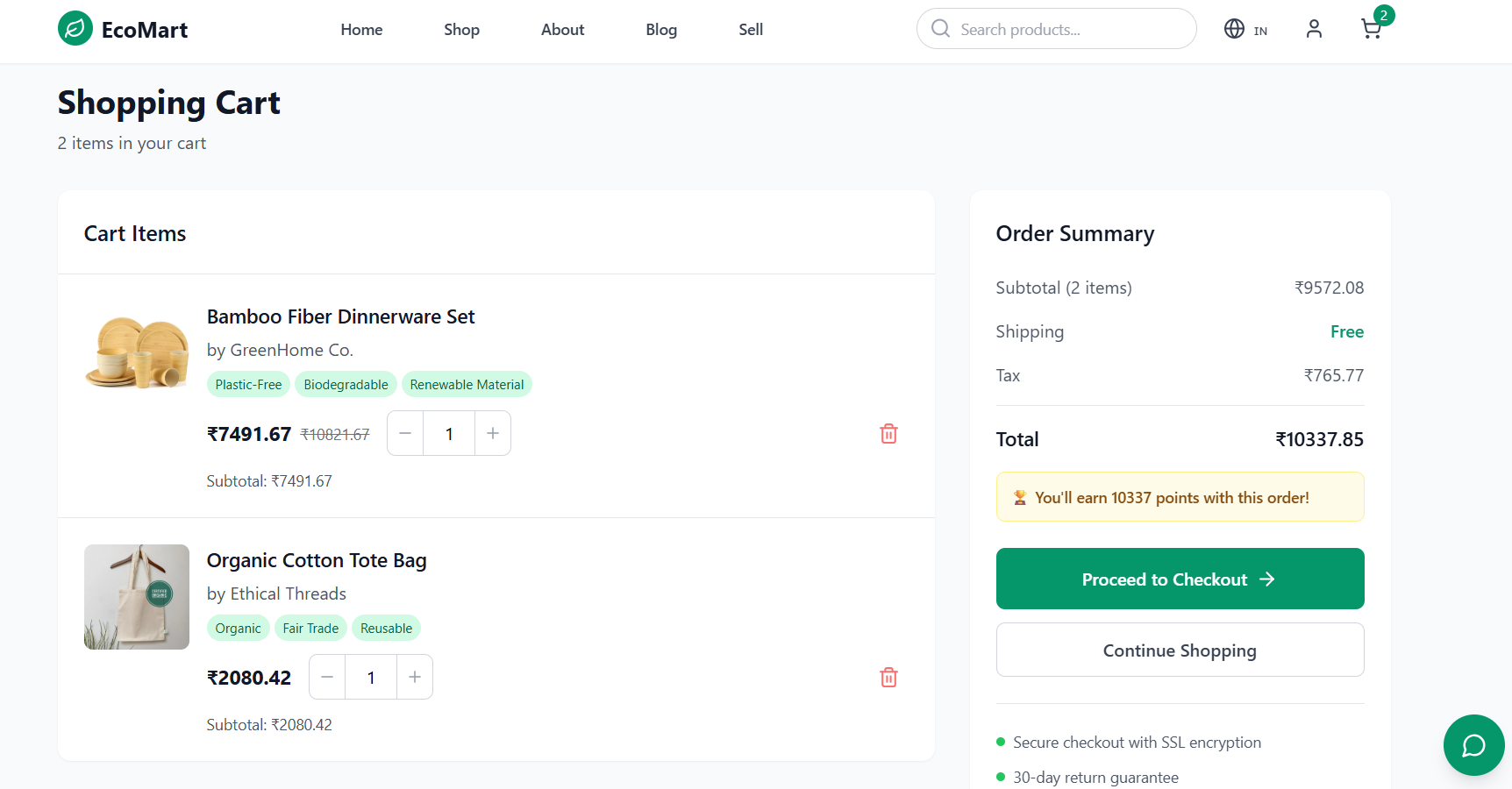
Certainly! Here's a clean and well-structured description of your Eco-Friendly Marketplace project using proper grammar, formatting, and clarity — suitable for presentations, portfolios, or documentation:
🌿 Eco-Friendly Marketplace
Inspiration: Our main inspiration behind building the Eco-Friendly Marketplace was the urgent need to reduce pollution and promote green living. We aimed to tackle the excessive use of harmful plastics and synthetic materials by offering sustainable alternatives. Even if our initiative helps decrease pollution by just 1%, we consider it a meaningful achievement toward a cleaner, greener Earth. What It Does Eco-Friendly Marketplace is an eCommerce platform that brings eco-conscious products directly to users’ fingertips — all at the lowest possible price. It’s designed especially for middle- and lower-middle-class families, making sustainability more affordable and accessible for all. Key offerings:
- Reusable, biodegradable, and plastic-free products
- Easy product browsing and ordering
- Responsive design for all devices How We Built It We used Bolt AI to generate our base code and then customized it based on our design and feature needs. Tech Stack: Frontend: HTML, CSS, JavaScript Backend: Supabase (used for user data storage and authentication) Custom Edits:Manual refinements were made to match our vision and ensure smooth functionality Challenges We Faced Research-Intensive: We spent a lot of time sourcing accurate information and verifying the authenticity of eco-friendly products. Product Validation: It was a challenge to find genuine eco-products and cross-check their benefits. Content Creation: Gathering relevant images, descriptions, and environmental impact data required effort and time. Accomplishments We are proud to say that we have taken a real step toward reducing pollution. This project has allowed us to:
- Raise awareness about eco-living
- Provide affordable green alternatives
- Build a tool that has the potential to impact lives and the planet positively What We Learned
- How to work with AI-generated code and improve it for real-world applications
- Basics of integrating frontend with Supabase backend
- Importance of user-centered design and clear, informative content
- Research and verification skills for sustainability-based products What's Next for Eco-Friendly Marketplace
- Add payment integration for real transactions
- Include product filters, user reviews, and wishlist features
- Expand the catalog with more verified eco-friendly products
- Partner with local eco-brands and NGOs to support sustainability at the grassroots level
- Launch a mobile-first version for rural accessibility


Log in or sign up for Devpost to join the conversation.