-
-
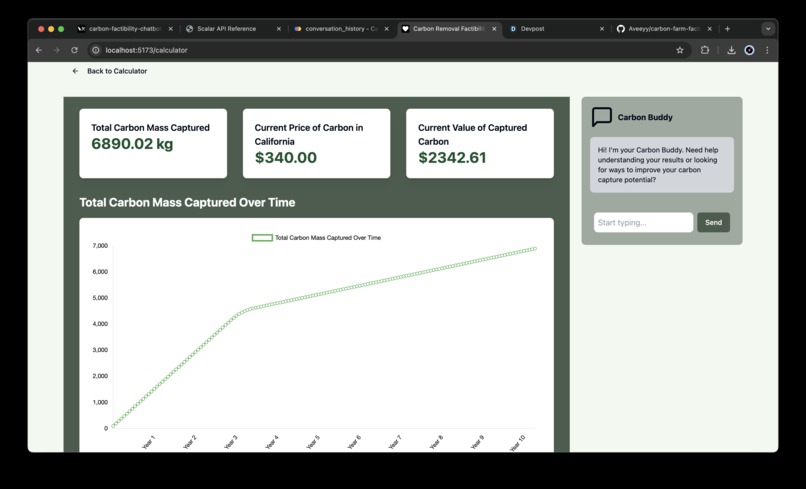
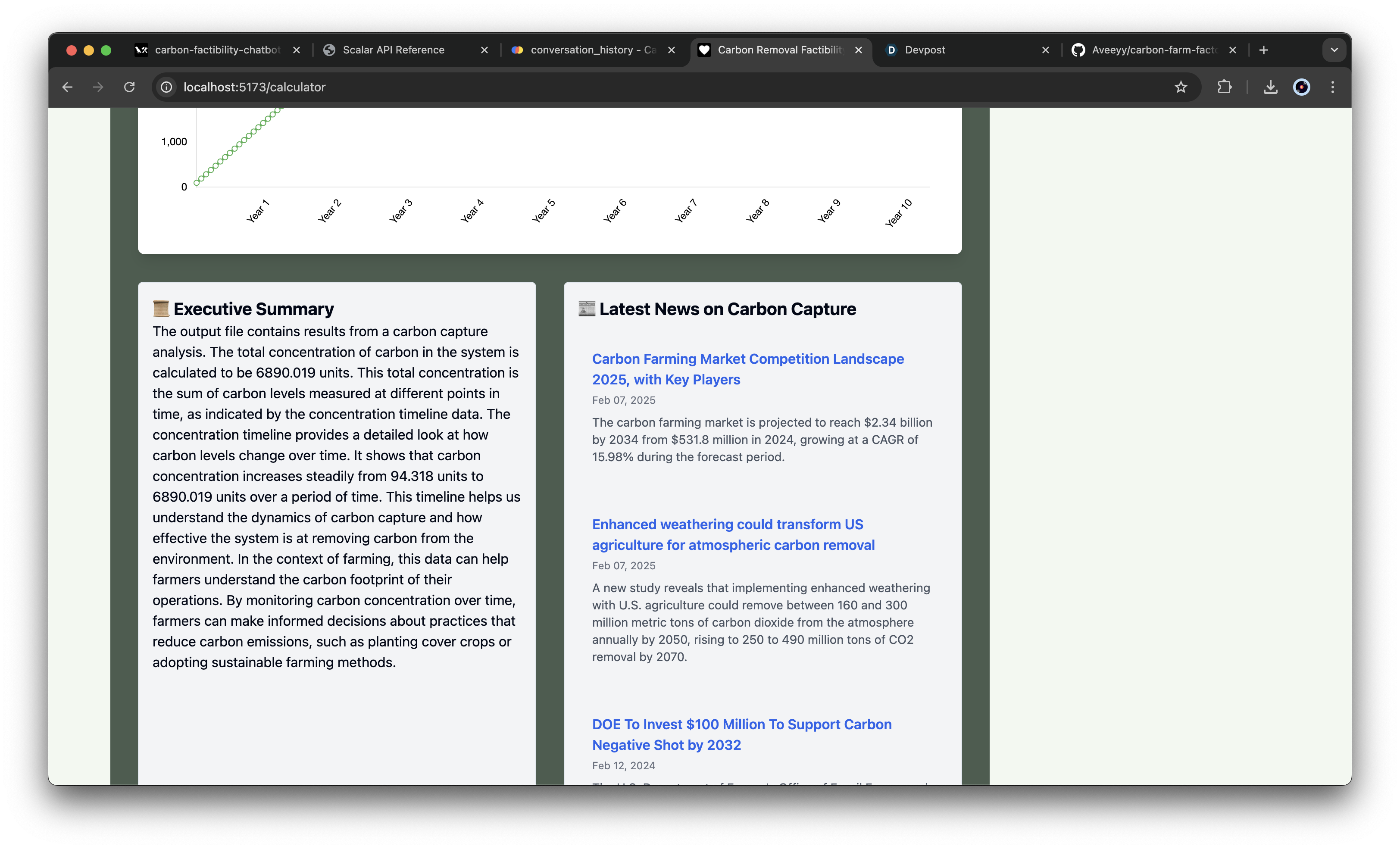
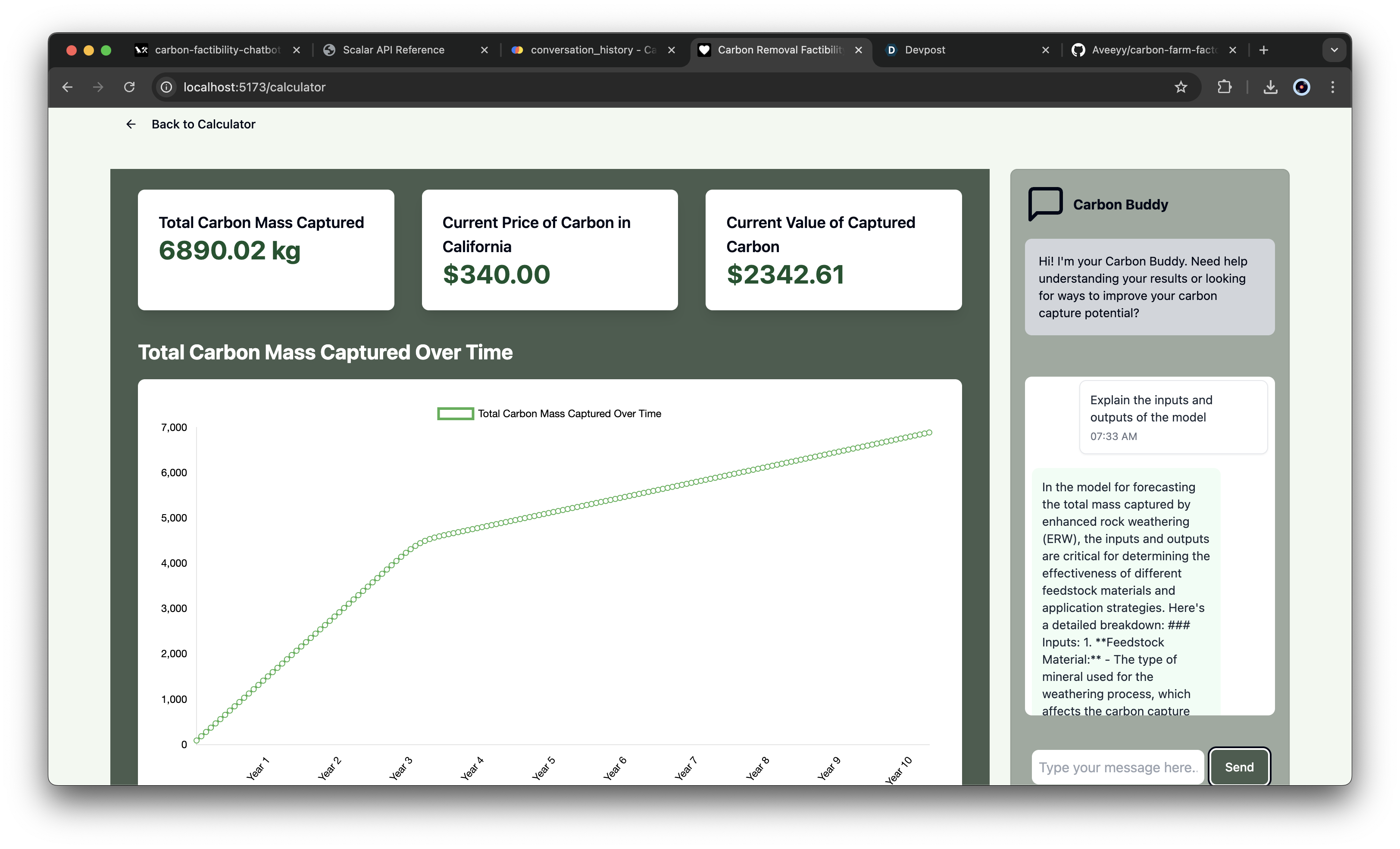
Model Predictions
-
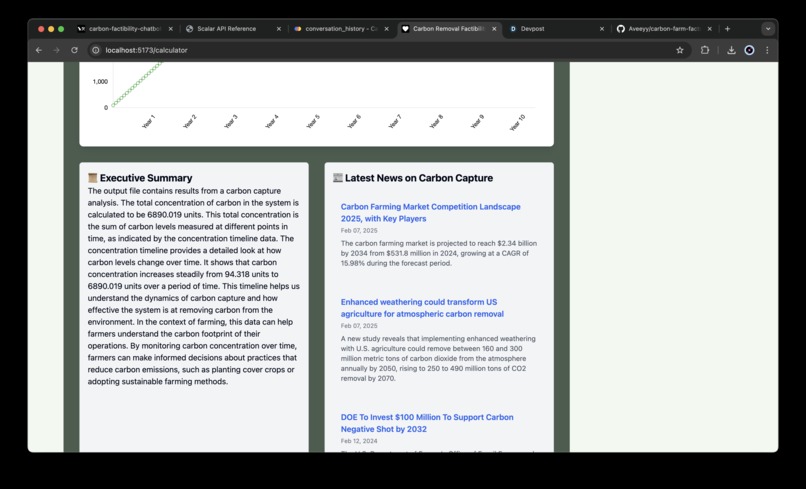
Executive Summary and Relevant News
-
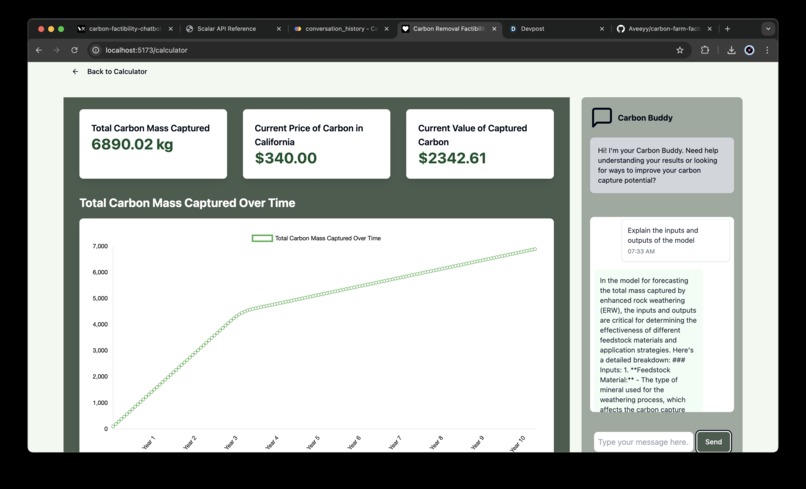
LLM Agent
Inspiration
Carbon net-zero policies are essential for ensuring a clean future, yet industrial adoption often lags because very few cost-benefit tools make it easy to compare carbon-efficient approaches with conventional methods. We believe that user-friendly analysis drives faster decarbonization. Enhanced Rock Weathering (ERW) remains underutilized partly due to the lack of accessible geochemical modeling platforms.
What it does
Eco Field is a web-based platform that integrates a CrunchFlow-based geochemical model. Users enter feedstock types, soil composition, and application rates to estimate carbon sequestration potential. The tool then provides cost and revenue calculations, including carbon credit earnings, and shows breakeven metrics without requiring any specialized background in Fortran or deep geochemistry.
How we built it
We containerized CrunchFlow (a legacy Fortran model) using Docker, wrapped it with a Python FastAPI layer for input/output orchestration, and built a front end using React and Tailwind. External APIs supply data such as temperature based on a user’s location. By consolidating and transforming these diverse inputs, we ensure seamless interaction with CrunchFlow so that simulations run smoothly.
Challenges we ran into
- Understanding the multiple parameters required by CrunchFlow and mapping them to user-friendly input fields was daunting.
- Coordinating FastAPI, Docker, and React demanded careful attention to data structures and type checks.
- Handling location-based temperature retrieval and merging it with soil composition information sometimes led to alignment issues and tricky debugging sessions.
Accomplishments that we're proud of
We modernized a Fortran-based codebase, enabling it to run in a containerized environment and allowing non-experts to access geochemical simulations through a simple interface. This approach has the potential to drive real environmental impact by making advanced carbon sequestration methods accessible to a wider audience. The combination of academic rigor (CrunchFlow) and practical user experience is a significant step forward.
What we learned
When complexity is high, start with the simplest version and increase complexity one step at a time.
We discovered that aligning on mission-oriented goals can sustain motivation, even when tackling unfamiliar frameworks and cryptic Fortran bugs. Working on a project with genuine climate relevance proved that a clear purpose helps the team push through each technical obstacle. Open communication and celebrating incremental wins kept progress steady.
What's next for Eco Field
We plan to approach potential pilot users—such as farmers, soil scientists, and climate-focused organizations—to see how Eco Field performs under real-world conditions. More carbon capture methods will be integrated to broaden the tool’s scope. Over time, we’ll incorporate advanced policy-driven carbon pricing and dynamic soil data for more comprehensive analyses.

Log in or sign up for Devpost to join the conversation.