Inspiration
I grew up in Shanghai, falling asleep to the sound of insects outside my window. Some of those sounds are gone now. I don't know which ones — because no one was tracking.
One million species are at risk of extinction. Wildlife has declined 69% since 1970. But when communities try to protect local nature from development, they show up with stories — and developers show up with data. In public consultation, stories lose. Data wins.
Tools like iNaturalist help identify species. But none generate the reports communities need to advocate. That's the gap Eco Evidence fills.
What it does
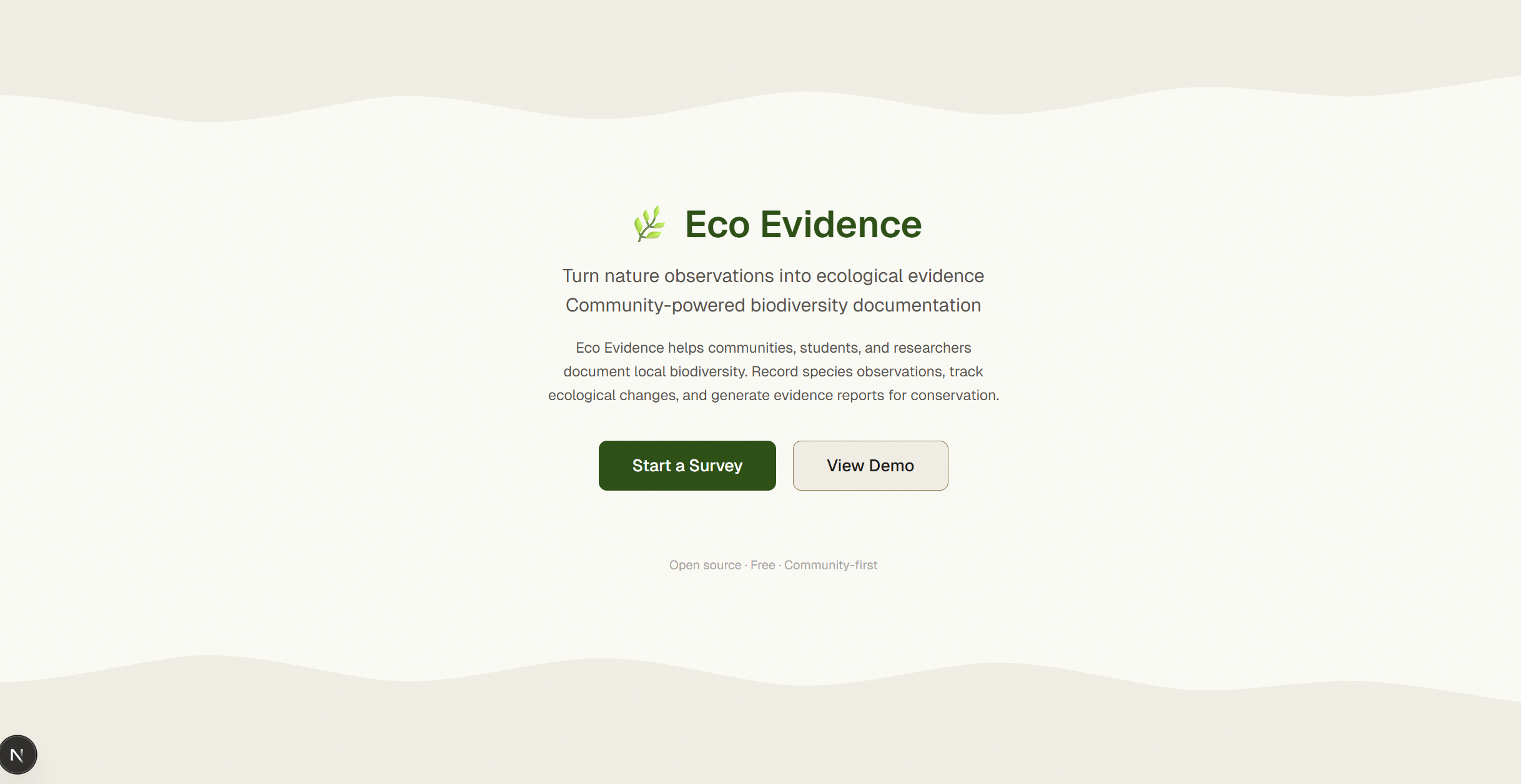
Eco Evidence turns everyday nature observations into professional ecological evidence reports:
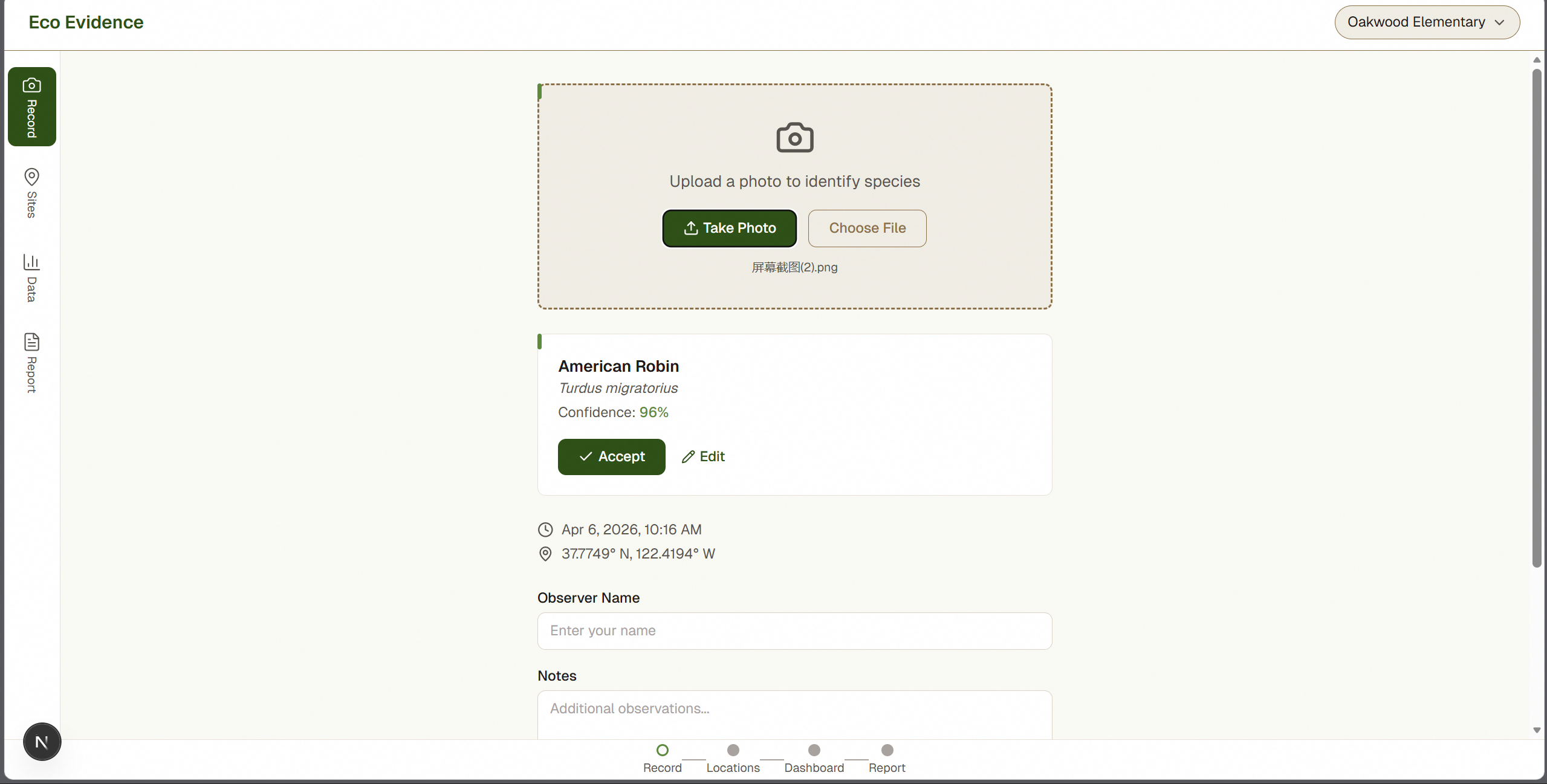
- Record — Upload a photo. AI identifies the species (via iNaturalist Computer Vision API). GPS and timestamp are captured automatically.
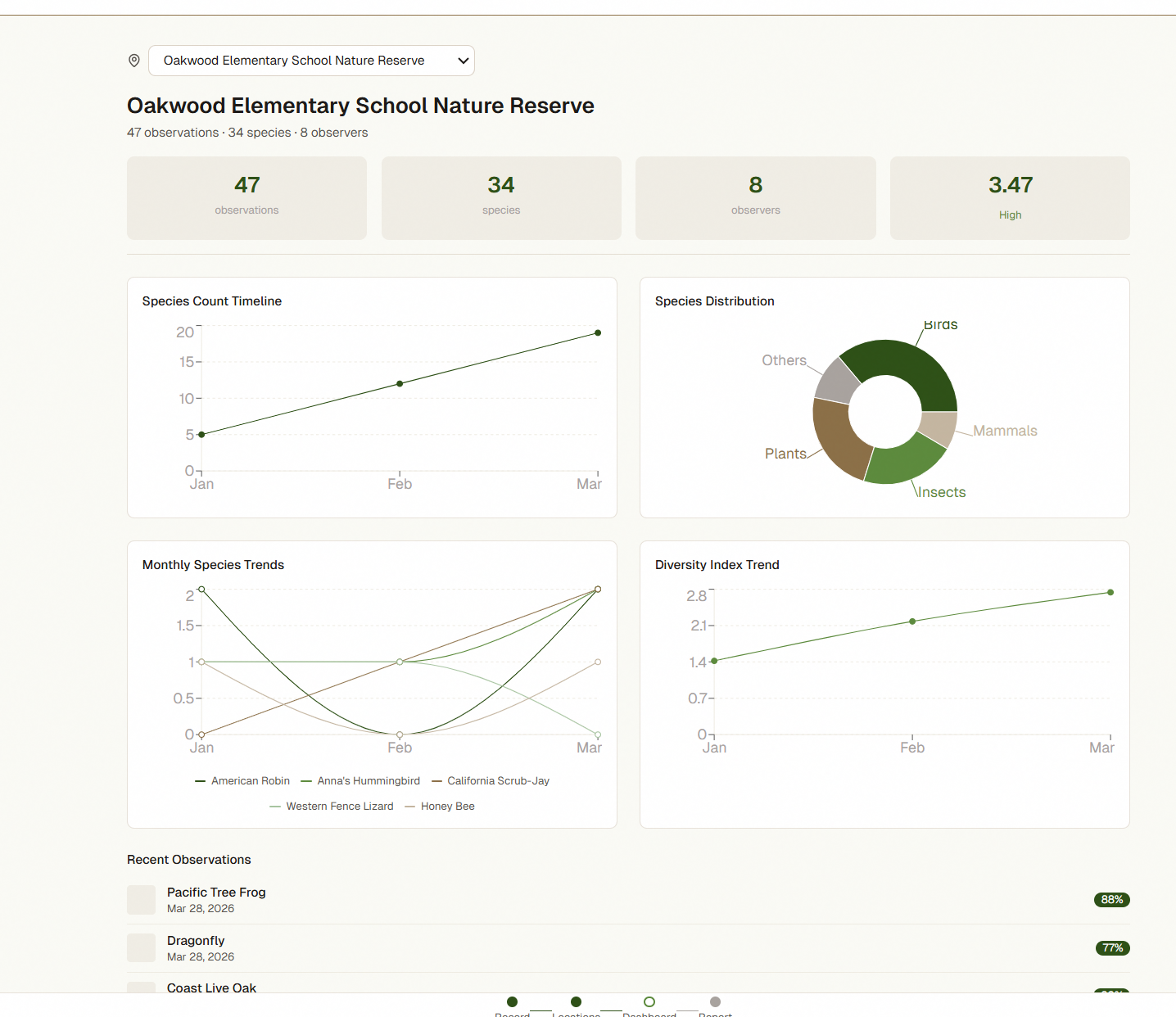
- Aggregate — All observations from community volunteers are combined into a single dashboard with biodiversity metrics, species timelines, and the Shannon Diversity Index.
- Report — One click generates a professional PDF report following ecological survey standards — ready to submit to an Environmental Impact Assessment public consultation.
The tool also includes a Community Memory section in every report, placing traditional and local knowledge alongside scientific data (Two-Eyed Seeing).
How we built it
- Next.js 16 with React 19 and TypeScript for the web application
- iNaturalist Computer Vision API for AI-powered species identification
- Recharts for interactive data visualization (timelines, distribution, diversity trends)
- html2canvas + jsPDF for professional PDF report generation
- Tailwind CSS + custom design system with a warm, nature-inspired aesthetic
Challenges we ran into
- The iNaturalist CV API has strict rate limits and authentication requirements — we implemented a mock fallback system to ensure demo reliability
- Designing a report format that feels professionally credible without overpromising legal validity — we studied CIEEM (UK) ecological survey standards
- Balancing simplicity for non-technical users (students, community volunteers) with the depth needed for credible evidence
Accomplishments that we're proud of
- The Shannon Diversity Index is calculated automatically — users get real ecological science without knowing the math
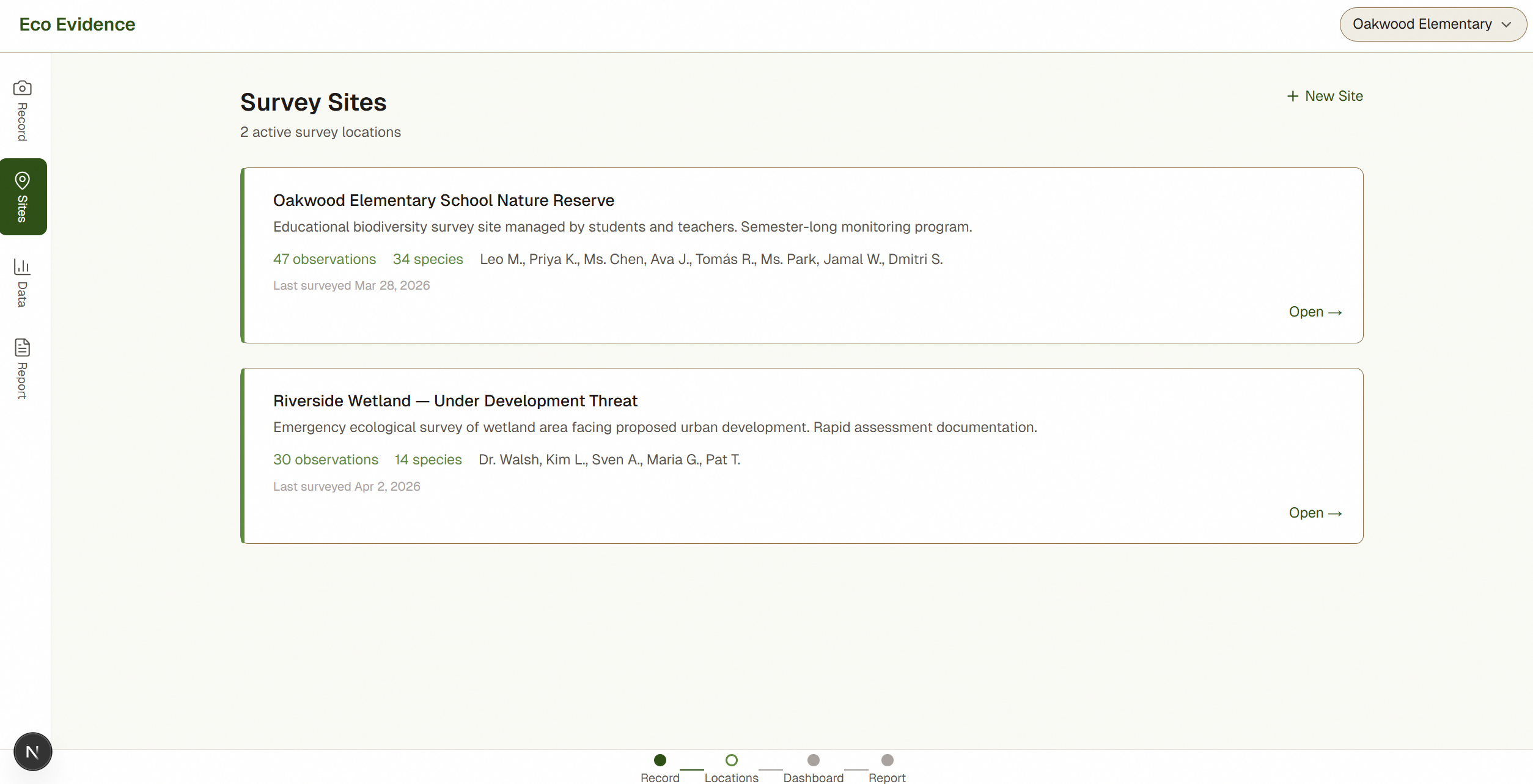
- Two demo scenarios tell two different stories: a school education project and a community responding to a development threat
- Community Memory integrates indigenous and local knowledge into a scientific framework
- The entire tool is free, open source, and works on any device with a browser
What we learned
- Over 100 countries legally require Environmental Impact Assessments with public participation — citizens CAN submit evidence, but most don't know how
- In the UK, volunteer surveys of the Great Crested Newt have influenced thousands of planning decisions — community data works when it's structured properly
- The hardest design challenge isn't technology — it's making the output credible enough that authorities take it seriously
What's next for Eco Evidence
- Multi-user collaboration (Google Forms model: organizer creates project, participants contribute via link)
- Conservation status integration (auto-flag endangered species)
- Multilingual support for global deployment
- Integration with government EIA submission portals
Built With
- html2canvas
- inaturalist-api
- jspdf
- next.js
- react
- recharts
- tailwind
- typescript



Log in or sign up for Devpost to join the conversation.