-
-
logo
-
Layout
Inspiration
The idea for the eco-commerce prototype stemmed from a desire to explore the intersection of technology and sustainability. Witnessing the growing concern for environmental issues and the increasing demand for eco-friendly products, I was inspired to create a prototype e-commerce platform that showcases the potential of sustainable shopping. My goal was to demonstrate how technology can be leveraged to promote environmental consciousness and empower consumers to make more sustainable choices in their purchasing habits.
What it does
The eco-commerce prototype is a front-end demonstration of an e-commerce platform that specializes in offering a curated selection of eco-friendly products. Here's what the prototype showcases:
Product Showcase: Browse through a selection of eco-friendly products ranging from household items to personal care products. Each product is carefully curated to meet sustainability criteria and promote environmentally friendly choices.
Product Details: Explore detailed product listings that include product descriptions, images, and pricing information. Get a closer look at each product to learn more about its eco-friendly attributes and benefits.
Search Functionality: Use the search feature to quickly find products of interest. Whether you're looking for reusable alternatives, organic ingredients, or biodegradable materials, the search functionality makes it easy to discover eco-conscious options.
Responsive Design: Experience seamless browsing across devices with the prototype's responsive design. Whether you're accessing the platform from a desktop, tablet, or mobile device, the layout adjusts dynamically to provide an optimal viewing experience.
Intuitive Navigation: Navigate through the prototype with ease thanks to intuitive navigation menus and user-friendly interfaces. Find what you're looking for quickly and efficiently, whether you're exploring product categories or accessing the checkout process.
Checkout Simulation: While the prototype does not feature full e-commerce functionality, it provides a simulation of the checkout process to illustrate the user flow from product selection to purchase confirmation.
Overall, the eco-commerce prototype serves as a proof of concept for an e-commerce platform that prioritizes sustainability and eco-conscious consumer choices. It demonstrates the potential of technology to empower individuals to make more informed and environmentally friendly purchasing decisions.
How we built it
The eco-commerce prototype was a collaborative effort between two friends who share a passion for sustainability and technology. Working simultaneously using Git and GitHub, we leveraged the power of version control to streamline our development process and ensure seamless collaboration.
Technologies Used:
React.js: We chose React.js as the frontend framework for its component-based architecture and efficient rendering capabilities. Using React.js allowed us to build a dynamic and responsive user interface that delivers a smooth browsing experience across devices.
Tailwind CSS: To style our prototype, we opted for Tailwind CSS, a utility-first CSS framework. Tailwind CSS provided us with a versatile set of pre-built utility classes that enabled rapid prototyping and customization without the need for writing custom CSS styles.
Development Process:
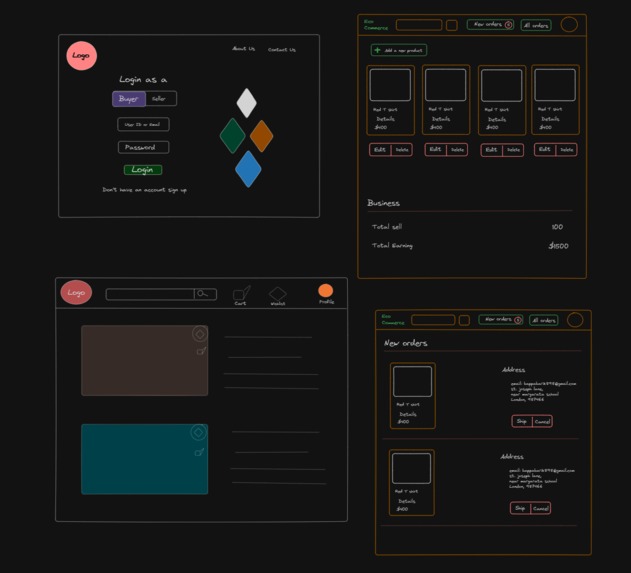
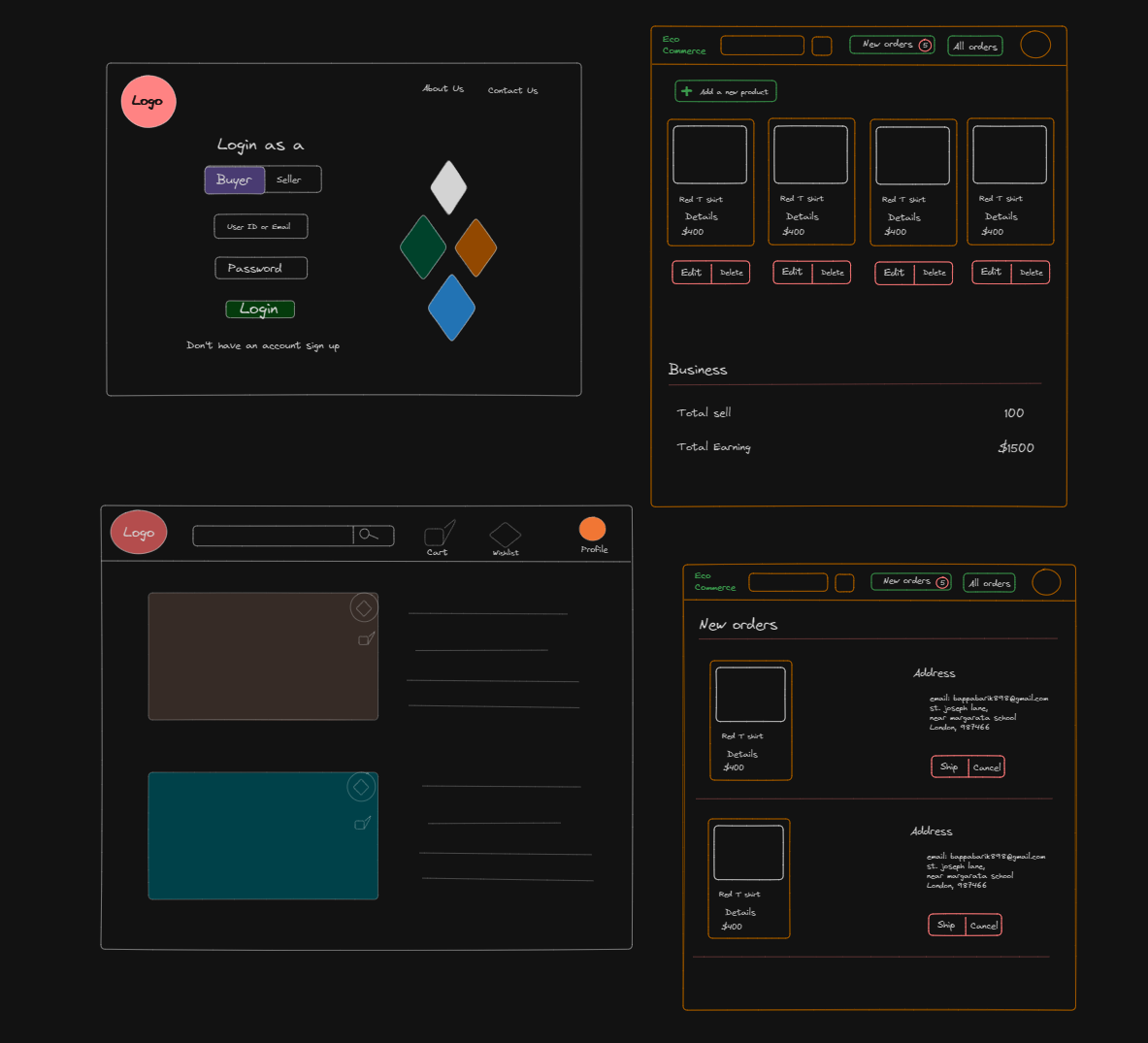
Planning and Design: We began by brainstorming ideas and sketching wireframes to outline the layout and user interface of the prototype. Collaboratively, we discussed the features and functionality we wanted to incorporate and iterated on the design until we reached a consensus.
Division of Tasks: With a clear plan in place, we divided the development tasks between us based on our strengths and areas of expertise. Utilizing Git branches, we worked on separate features simultaneously, periodically merging our changes to ensure code integration and compatibility.
Continuous Integration: Throughout the development process, we practiced continuous integration by regularly pushing our changes to a shared GitHub repository. This allowed us to stay in sync and provided visibility into each other's progress, facilitating seamless collaboration and communication.
Code Reviews and Feedback: We conducted code reviews and provided feedback to each other to maintain code quality and consistency. Leveraging GitHub's pull request feature, we reviewed each other's code, addressed any issues or concerns, and iteratively improved the prototype.
Challenges we ran into
Synchronization: One of the challenges we encountered was synchronizing our work to ensure that our changes didn't conflict with each other. However, through effective communication and coordination, we were able to overcome this challenge and maintain a cohesive development process.
Styling Consistency: Another challenge was achieving consistency in styling across different components and pages. Tailwind CSS helped mitigate this challenge to some extent by providing a standardized set of utility classes, but we still had to ensure uniformity in design and layout.
Accomplishments that we're proud of
1. Smooth Collaboration:
We're proud of our ability to work together efficiently using Git and GitHub, making it easy to manage our project and stay in sync.
2. Mobile-Friendly Design:
Ensuring our platform looks great and works well on mobile devices means more accessibility for our users, which we're thrilled about.
3. Curated Product Selection:
Finding and showcasing eco-friendly products was a challenge, but we're proud of the diverse and sustainable selection we've put together.
4. Continuous Improvement:
By regularly gathering feedback and making iterative changes, we've been able to make our prototype better and more user-friendly over time.
5. Focus on Usability:
Making sure our platform is easy to navigate and use means our users can shop with ease and confidence, which is a win for us.
6. Environmental Impact:
Above all, we're proud to be making a positive impact by promoting sustainability and encouraging eco-conscious shopping habits.
What we learned
1. Effective Communication:
Collaborating on this project taught us the importance of clear and frequent communication. From discussing ideas to resolving conflicts, effective communication was key to our success.
2. Technical Skills:
Working with React.js and Tailwind CSS helped us sharpen our front-end development skills. We gained hands-on experience with building responsive interfaces and styling web applications.
3. Project Management:
Managing tasks, timelines, and priorities was a valuable lesson learned. We became more adept at planning and organizing our work to meet deadlines and deliver quality results.
4. User-Centric Design:
Prioritizing user experience taught us to think from the perspective of our audience. We learned to anticipate user needs and preferences, leading to more intuitive and user-friendly design decisions.
5. Sustainability Awareness:
Researching and curating eco-friendly products deepened our understanding of sustainability issues. We became more aware of the environmental impact of consumer choices and the importance of promoting sustainable alternatives.
6. Continuous Improvement:
Iterating on our prototype taught us the value of continuous improvement. We learned to embrace feedback, adapt to changing requirements, and strive for excellence in every aspect of our project.
What's next for Eco-Commerce
1. Backend Integration:
Transitioning from a frontend prototype to a fully functional e-commerce platform requires the implementation of a robust backend infrastructure. We plan to integrate backend technologies such as Node.js and Express.js to handle user authentication, product management, and order processing.
2. Seller Enrollment:
Expanding our platform to include seller enrollment functionality will allow eco-friendly brands and artisans to showcase their products on Eco-Commerce. We aim to create a seamless onboarding process for sellers, empowering them to reach a wider audience of eco-conscious consumers.
3. Supply Chain Optimization:
Ensuring the authenticity and sustainability of our product offerings is essential. We will work on establishing partnerships with ethical suppliers and implementing transparent supply chain practices to trace the origins of our products and promote fair trade.
4. Payment Gateway Integration:
Enabling secure and convenient payment options is crucial for a smooth shopping experience. We plan to integrate popular payment gateways such as Stripe or PayPal to facilitate seamless transactions and ensure customer satisfaction.
5. Enhanced User Experience:
Continuously improving the user experience is a priority for us. We will focus on refining the navigation, search functionality, and product recommendations to make it easier for users to find and purchase eco-friendly products that align with their values.
6. Community Engagement:
Building a thriving community of eco-conscious consumers is integral to our mission. We will explore ways to foster community engagement through features such as user reviews, discussion forums, and educational content on sustainability practices.
7. Scalability and Performance:
As we prepare to launch Eco-Commerce into production, we will prioritize scalability and performance optimization. From server infrastructure to code optimization, we will ensure that our platform can handle increased traffic and deliver a seamless experience to users.
8. Marketing and Promotion:
Promoting Eco-Commerce and raising awareness about sustainable shopping will be essential for driving user adoption. We will develop marketing strategies to reach our target audience, including social media campaigns, influencer partnerships, and SEO optimization.
9. Feedback and Iteration:
Listening to feedback from users and stakeholders will guide our future development efforts. We will continuously iterate on the platform based on user insights, market trends, and emerging technologies to stay ahead of the curve and deliver value to our community.
10. Impact Measurement:
Measuring and tracking the environmental impact of our platform and product offerings will be a key focus. We will implement tools and metrics to monitor metrics such as carbon footprint reduction, waste reduction, and support for sustainable practices to demonstrate our commitment to making a positive difference in the world.
11. Non-Profit and Open Source:
As a non-profit initiative, we are committed to transparency and collaboration. We will open-source our codebase to encourage contributions from the community and foster innovation in sustainable e-commerce. Additionally, we will explore partnerships with non-profit organizations and initiatives to amplify our impact and support environmental conservation efforts globally.
This roadmap outlines our vision for the future of Eco-Commerce, as we strive to evolve from a prototype to a fully operational e-commerce platform that empowers consumers to shop sustainably and make a positive impact on the planet. We are excited about the journey ahead and look forward to realizing our vision with the support of our community and partners.


Log in or sign up for Devpost to join the conversation.