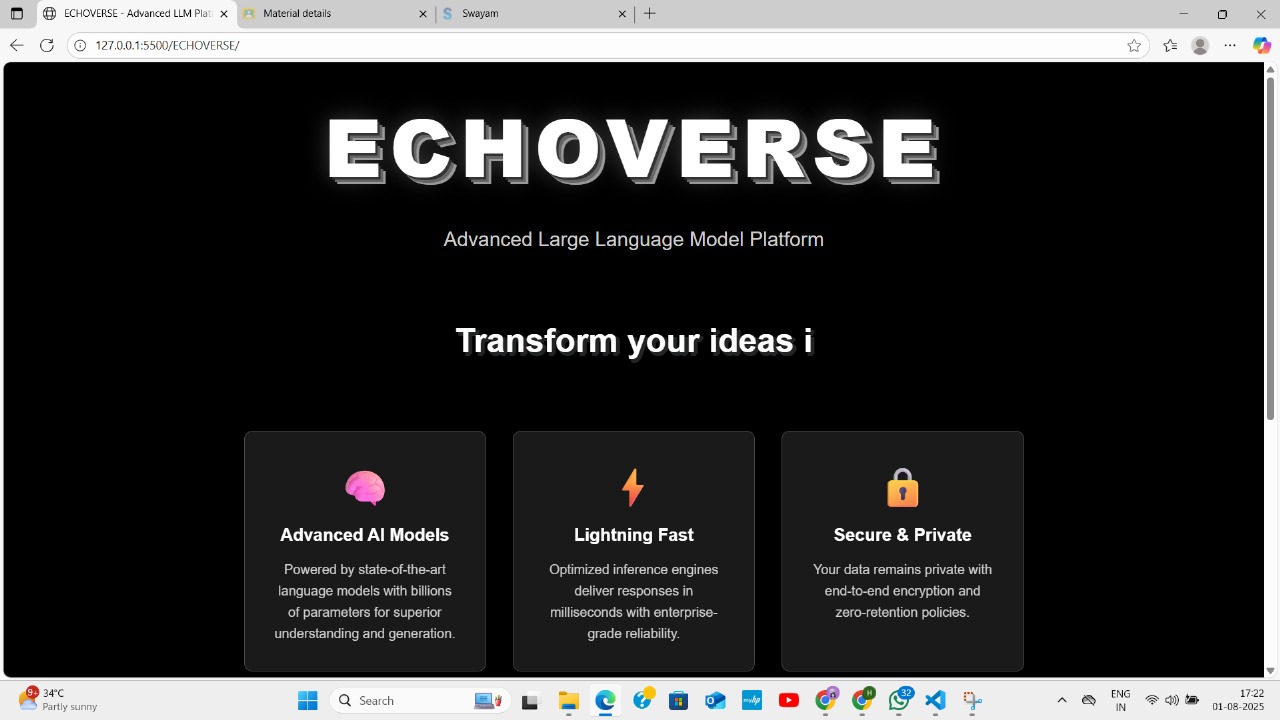
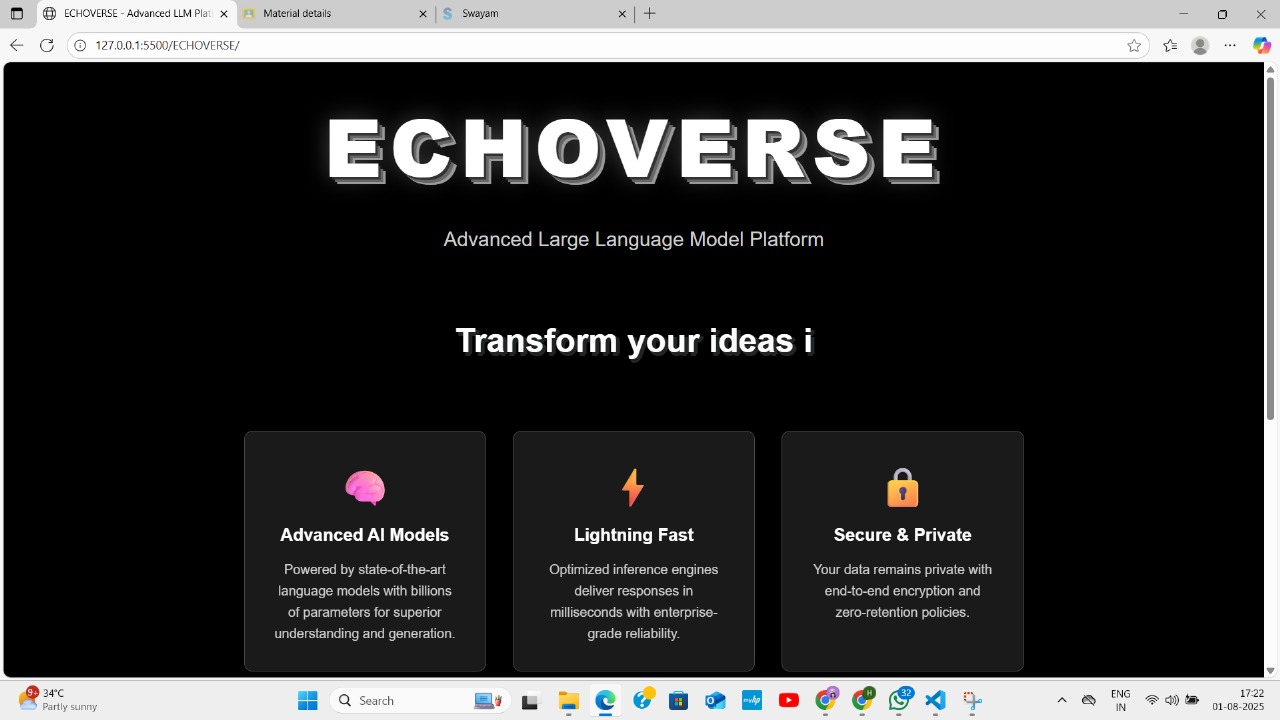
Inspiration
We started EchoVerse as a conversation with ourselves: "Why can’t our quirks and favorites—like vinyl records at midnight or street‑food vendors with flickering neon lights—be the seeds of our personal stories?" In essence, EchoVerse is our answer to the question: “What stories do our tastes tell?” We're translating the simple, often poetic preferences of people into intimate, reflective memoirs—transforming your daily likes into soulful snapshots of identity.
What it does
Takes your taste — a single preference like "rainy indie music" or "street food by night" Fetches related entities via Qloo’s Taste AI™, which can map your taste across domains like food, film, and travel using its vast, privacy‑first knowledge of 3.7 billion cultural entities and trillions of behavioral signals
How we built it
Architecture & Tech Stack We built EchoVerse using Flask (Python) for our backend and SQLite for lightweight user storage. The front end is a minimal chat interface (HTML/JavaScript) for users to input their preference cues. Core Workflow: User enters a taste cue (e.g. “rainy indie music”) Backend sends the cue to Qloo’s Taste AI API Qloo returns relevant entities like “ambient shoegaze,” “urban indie cafés,” “third‑wave coffee” based on cross‑domain taste signals We build a prompt combining those entities and the original user text, then call OpenAI GPT‑4 to generate a memoir-style snippet.
UX & Session Handling We use Flask sessions with hashed passwords (Werkzeug) to manage users. Preferences are logged in order to allow iterative refinement and continuity.
Challenges we ran into
Navigating Qloo API Response Structure: Qloo’s Taste AI requires specific formatting for entity queries (e.g. tags vs. entities), and the correct header case (Authorization vs. X-Api-Key) is crucial. Early mistakes caused failed calls and parsing errors Prompt Engineering and Tone Balance: It was difficult to strike the right tone. If prompts were too structured, the output felt robotic; too creative, and it drifted off-topic. We iterated prompt formats to balance emotional resonance with relevance. Fallback Handling and API Reliability: API calls to Qloo or OpenAI could timeout, rate-limit, or return unexpected formats. We added retry logic, clear error messaging, and fallback prompts to maintain a smooth experience even during backend failures.
Accomplishments that we're proud of
What we learned
Taste + LLM = Rich Narrative Synthesis: Combining Qloo’s structured, cross-domain cultural signals with GPT-4’s language generation yields deeper, more personalized content than using either tool individually. This mirrors insights from projects like TasteMuse and CultureSphere AI Prompt Design is an Ongoing Craft: Narratives evolve with input. We learned that effective prompt design is fluid—tailored to user style, temperature settings, and entity inclusion.
Privacy by Default Works: Following Qloo’s privacy-first design (never using PII, anonymized taste signals), we found we could create intimate narratives without storing personal data—thus respecting both ethics and user trus
What's next for EchoVerse : AI Memoirs Amplified by LLM & Qloo Taste AI
User Profiles & Taste Evolution: Create optional user accounts so preferences and generated memoirs can evolve over time. Visualize taste growth and how themes change.
Feedback-Driven Narrative Tuning: Enable users to like or dislike snippet styles to fine-tune prompts dynamically—feeding that back into entity selection or prompt phrasing.
Multimodal Output: Pair memoir snippets with mood-based imagery or audio clips for richer reflective experience—moving beyond text-only outputs.
Domain Expansion & Theme Modes: Offer style presets—e.g., nostalgic, poetic, minimalist, playful—so users can choose tone. Expand to cover taste across books, art, travel, and lifestyle more deeply.

Log in or sign up for Devpost to join the conversation.