-
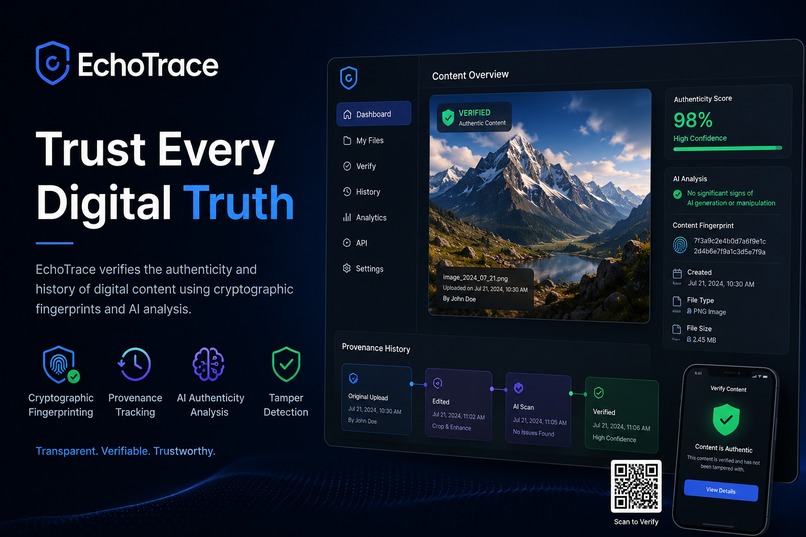
EchoTrace secures digital trust with AI-powered verification, cryptographic fingerprints, and transparent content history.
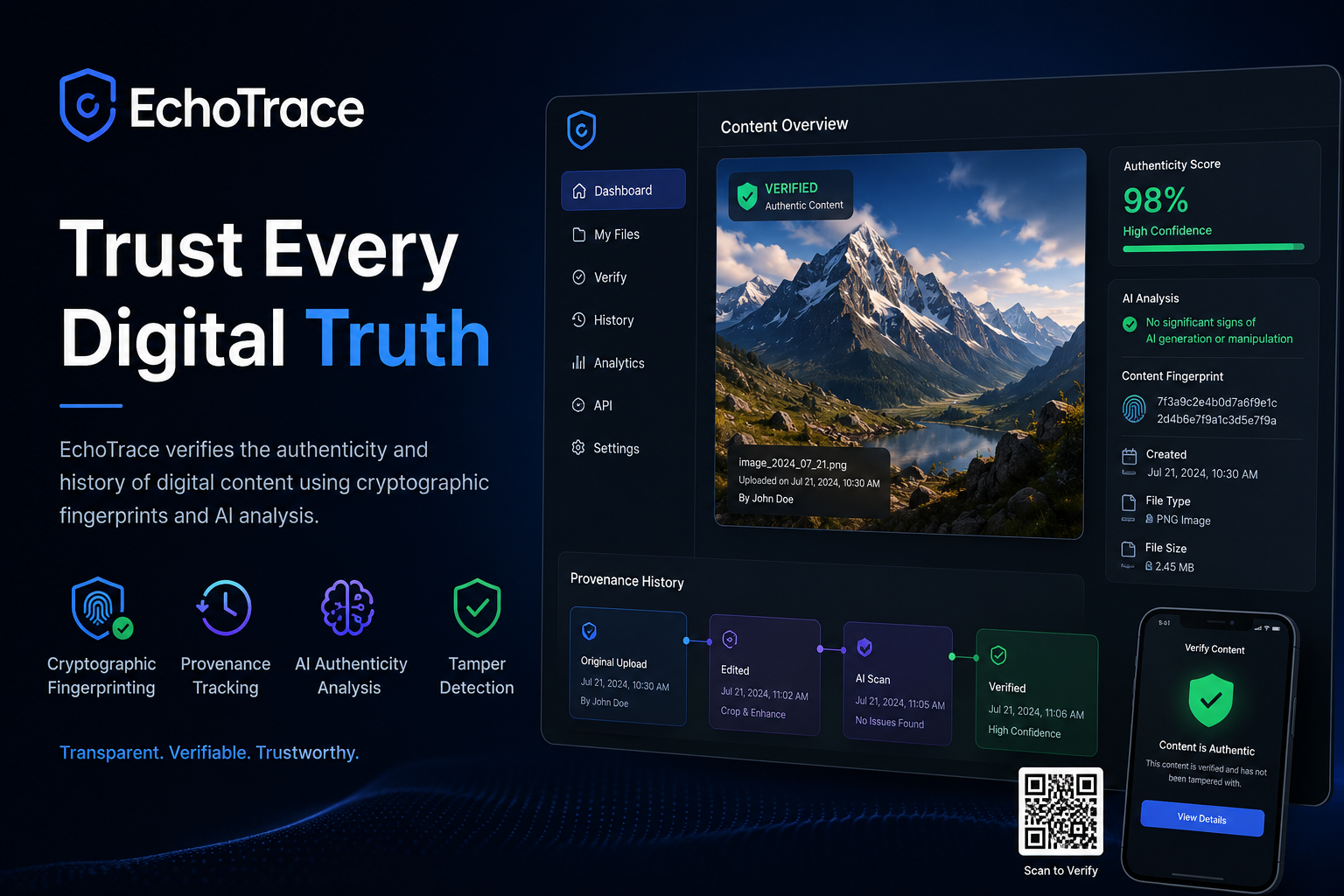
Inspiration
As AI-generated images, videos, documents, and audio become increasingly realistic, verifying their authenticity is becoming one of the biggest digital challenges. Deepfakes, manipulated media, and AI-generated misinformation can spread rapidly, while creators and organizations struggle to prove ownership and integrity.
We asked a simple question:
What if every digital file had a verifiable history that anyone could trust?
That idea became EchoTrace.
What it does
EchoTrace is an AI-powered digital provenance platform that creates a transparent, tamper-evident history for digital content.
Users can upload images, videos, documents, or audio files to generate a unique cryptographic fingerprint. Every modification is recorded as a new version, creating an immutable audit trail that helps verify authenticity and detect unauthorized changes.
The platform also analyzes uploaded content using AI to estimate the likelihood that it was AI-generated or manipulated. Instead of only providing a score, EchoTrace explains the indicators behind the result, making verification easier to understand.
Key features include:
- Cryptographic content fingerprinting
- Version history and provenance tracking
- AI-powered authenticity analysis
- Tamper detection
- Trust score with explainable insights
- QR code for instant verification
- Public verification portal
- Secure dashboard for content management
How I built it
The project combines modern web technologies with AI and cryptographic techniques.
Frontend:
- Next.js
- React
- Tailwind CSS
Backend:
- Node.js
- Express
Database:
- PostgreSQL
Storage:
- Cloudinary
Authentication:
- Clerk Authentication
AI:
- Google Gemini API
Security:
- SHA-256 content hashing
- Digital signatures
- Version tracking
Deployment:
- Vercel
Challenges we ran into
One of the biggest challenges was designing a verification process that is both secure and easy for non-technical users to understand.
Another challenge was balancing AI-based authenticity analysis with deterministic cryptographic verification. We wanted users to receive transparent explanations instead of simply seeing a "fake" or "real" label.
Designing a scalable provenance model that can support multiple versions of the same asset while maintaining trust was also a key architectural challenge.
Accomplishments that we're proud of
- Built a complete provenance workflow for digital assets
- Integrated AI-assisted authenticity analysis
- Designed an intuitive trust dashboard
- Created an explainable verification process
- Developed a scalable architecture for future expansion
What I learned
This project reinforced that trust is becoming one of the most valuable aspects of the AI era.
We learned how AI, cryptography, and modern web technologies can work together to improve digital transparency while maintaining a smooth user experience.
What's next for EchoTrace
Future plans include:
- Browser extension for one-click verification
- Blockchain-backed proof of origin
- Enterprise APIs
- Browser plugin for journalists
- Social media verification tools
- Watermark detection
- Mobile application
- Batch verification
- Organization dashboards
- Integration with digital publishing platforms
Our long-term vision is to make EchoTrace the trust layer for AI-generated content across the web.
Built With
- api
- clerk
- cloudinary
- css
- express.js
- gemini
- github
- jwt
- next.js
- node.js
- postgresql
- prisma
- react
- rest
- sha-256
- tailwind
- typescript
- vercel


Log in or sign up for Devpost to join the conversation.