-
-
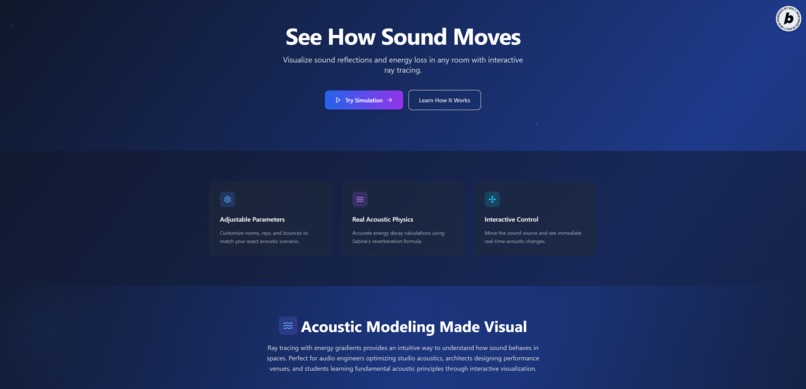
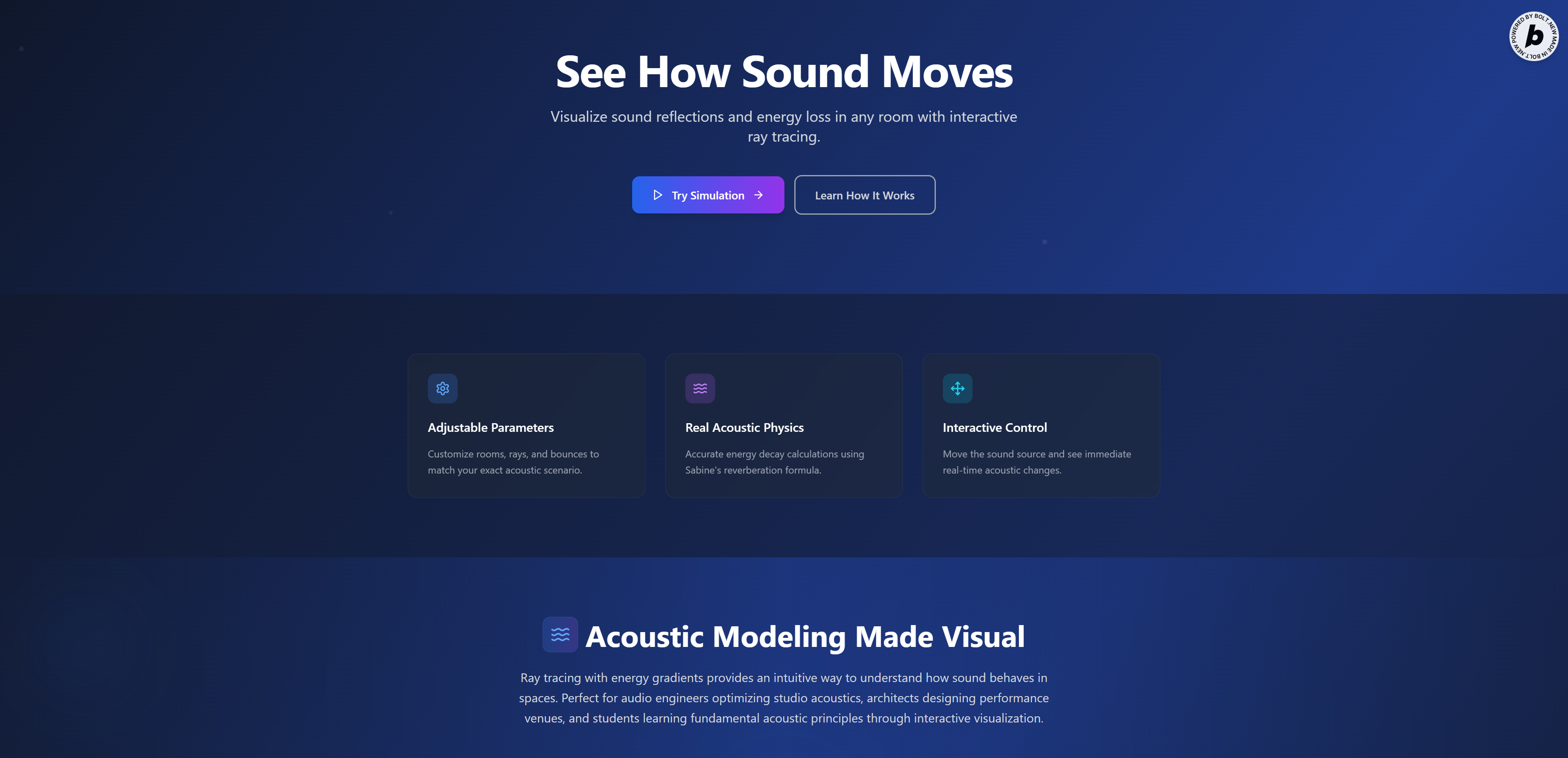
landing page hero
-
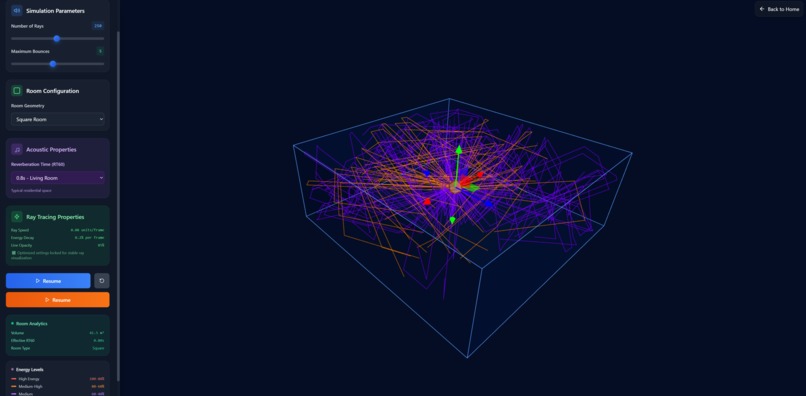
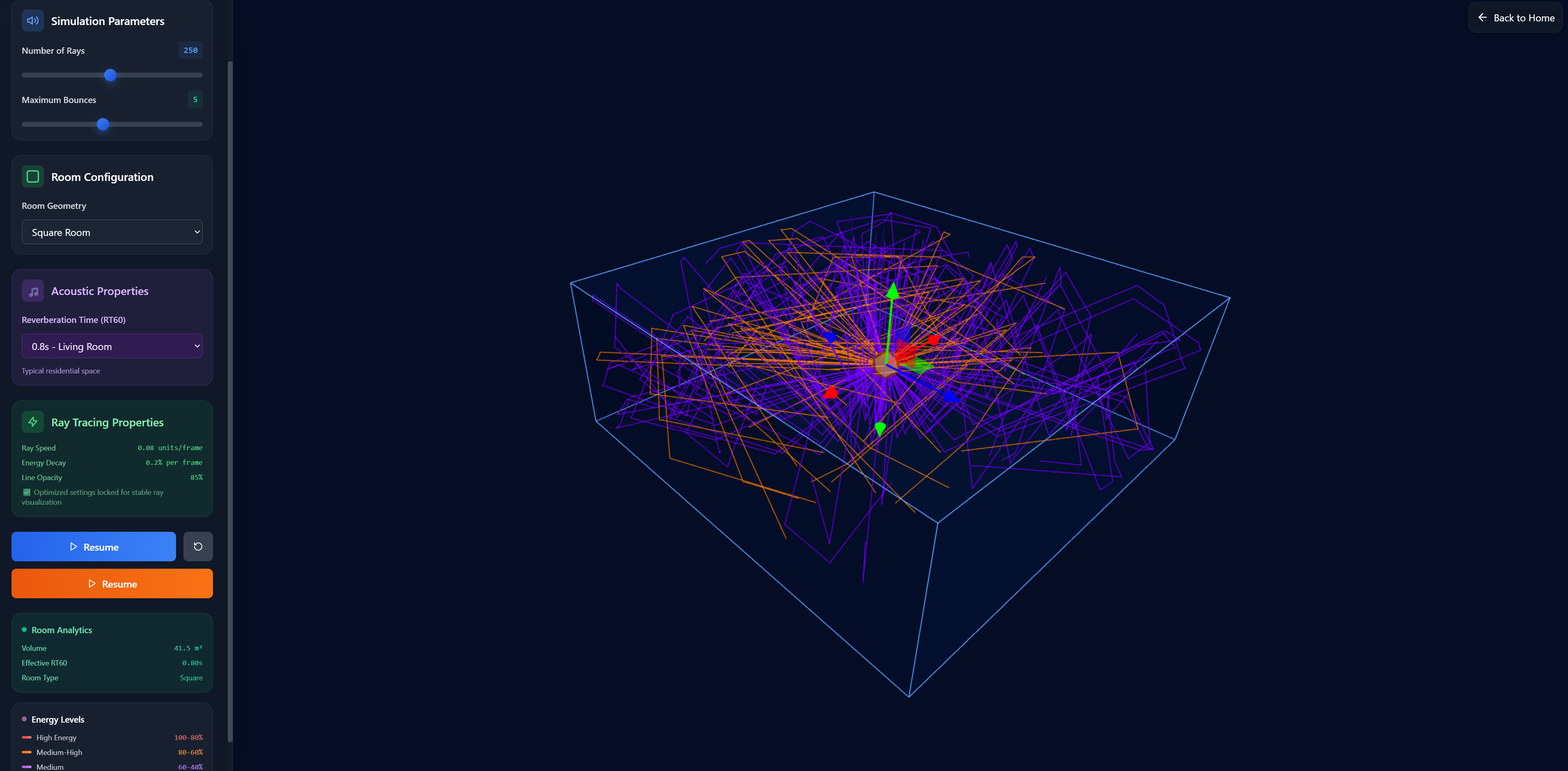
simulation 2
-
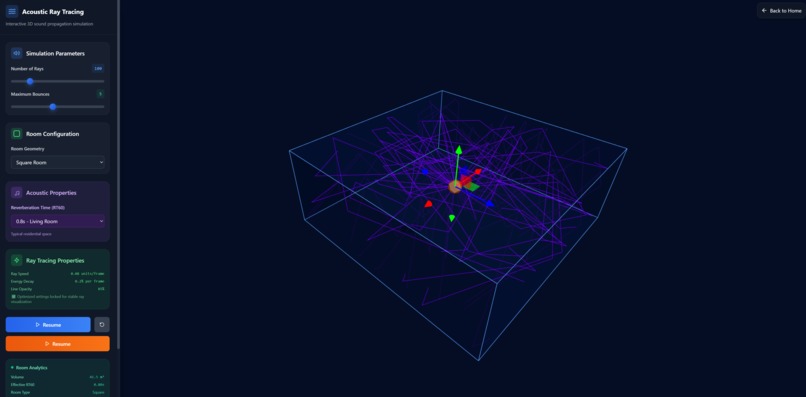
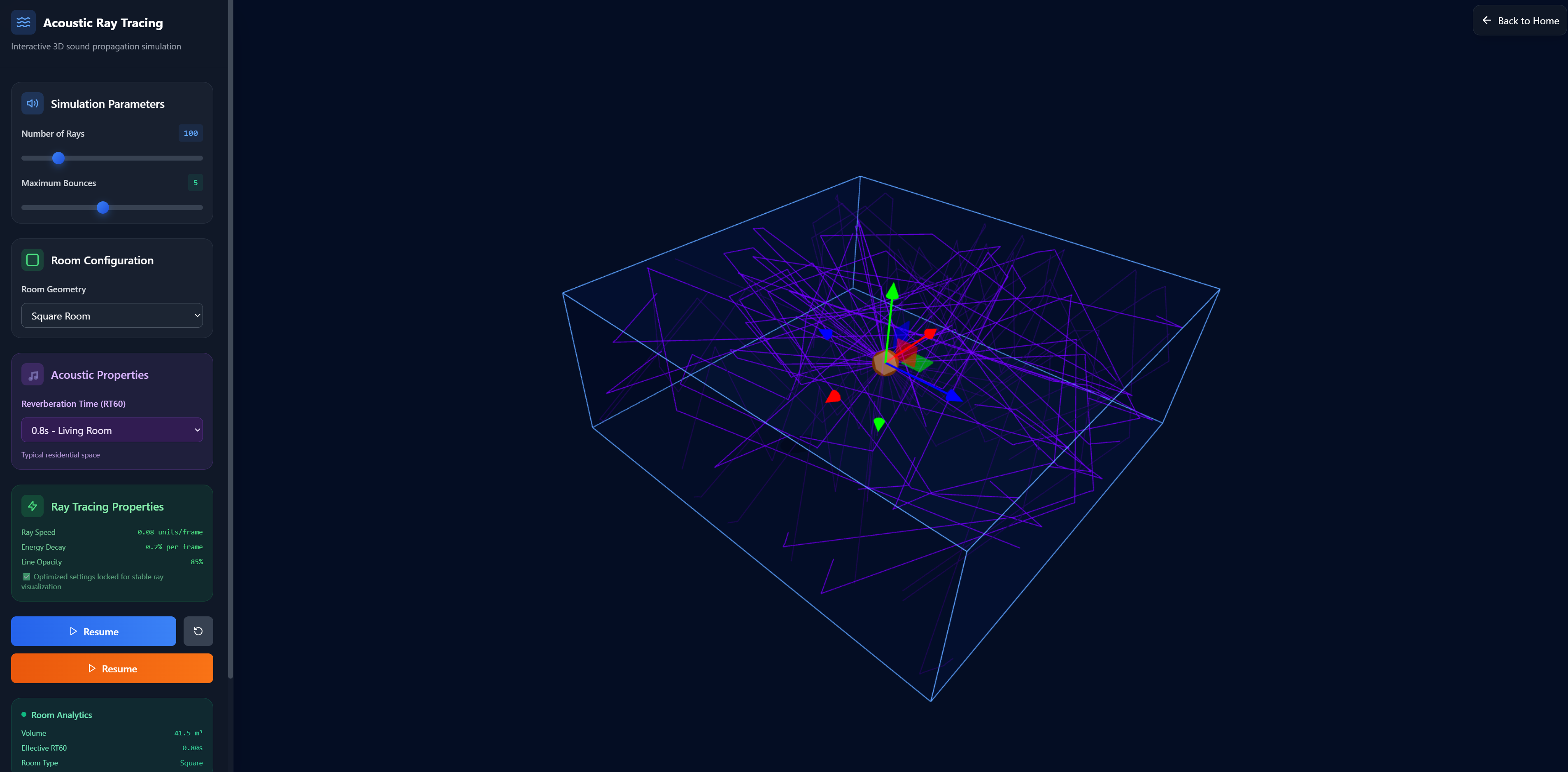
simulation 1
-
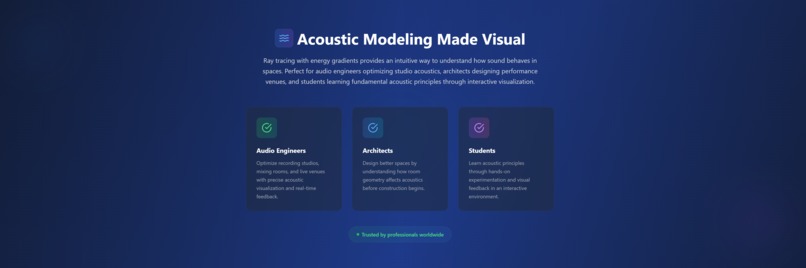
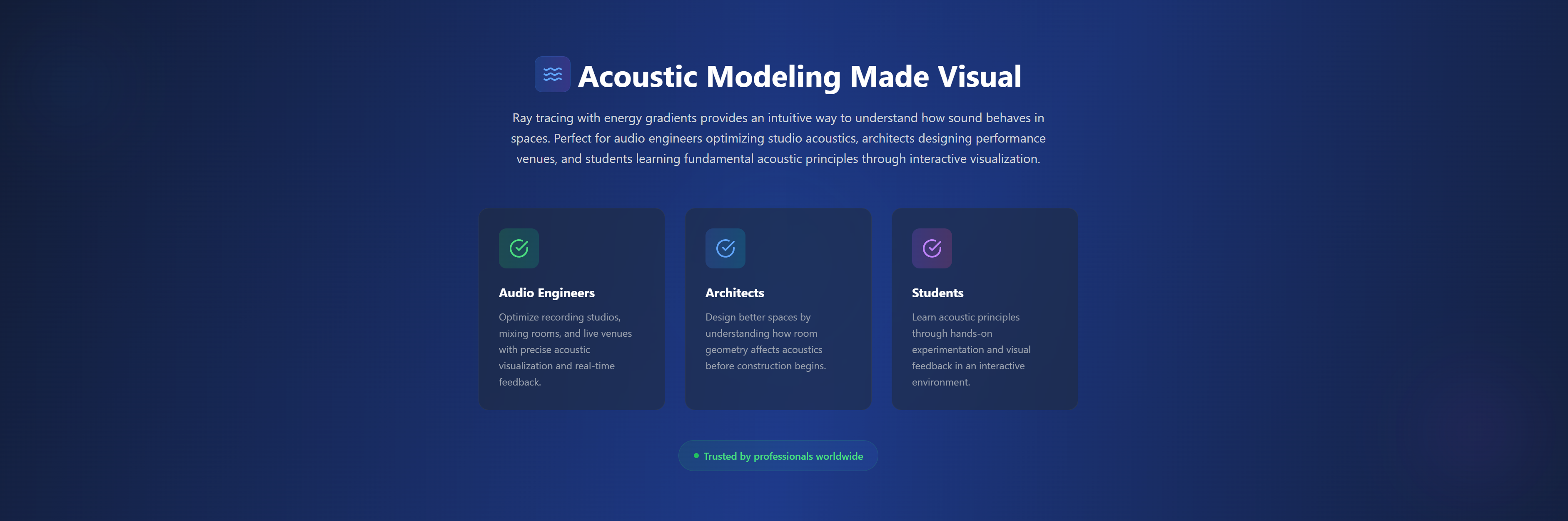
landing page evidence
-
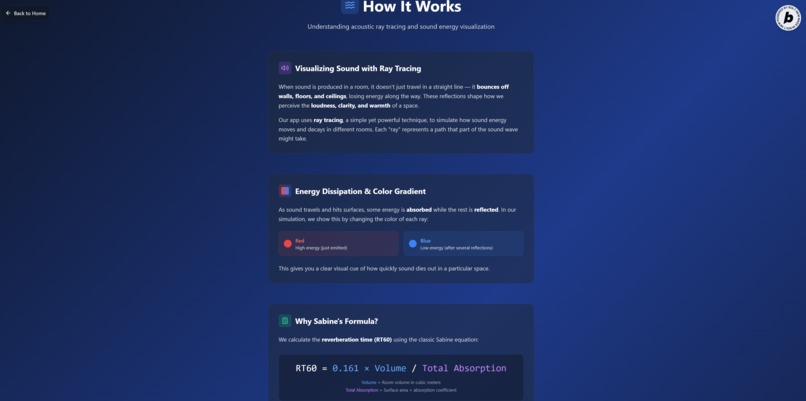
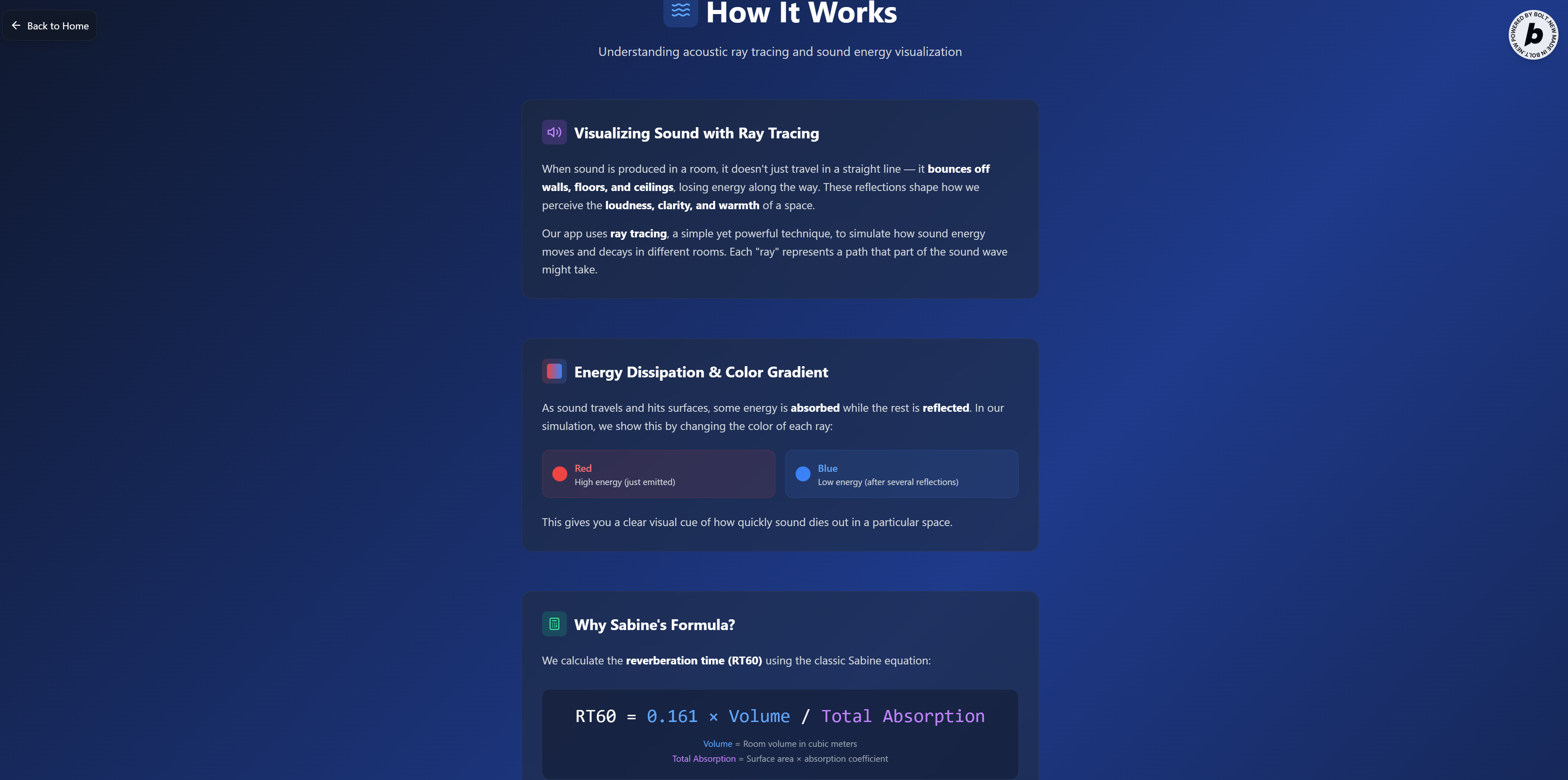
how it works page
-
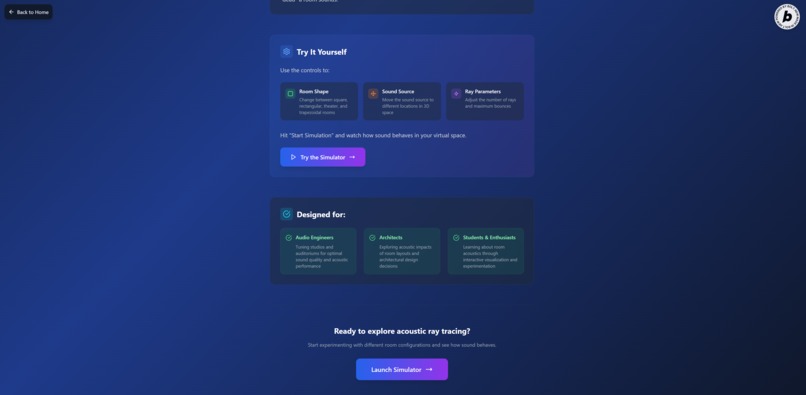
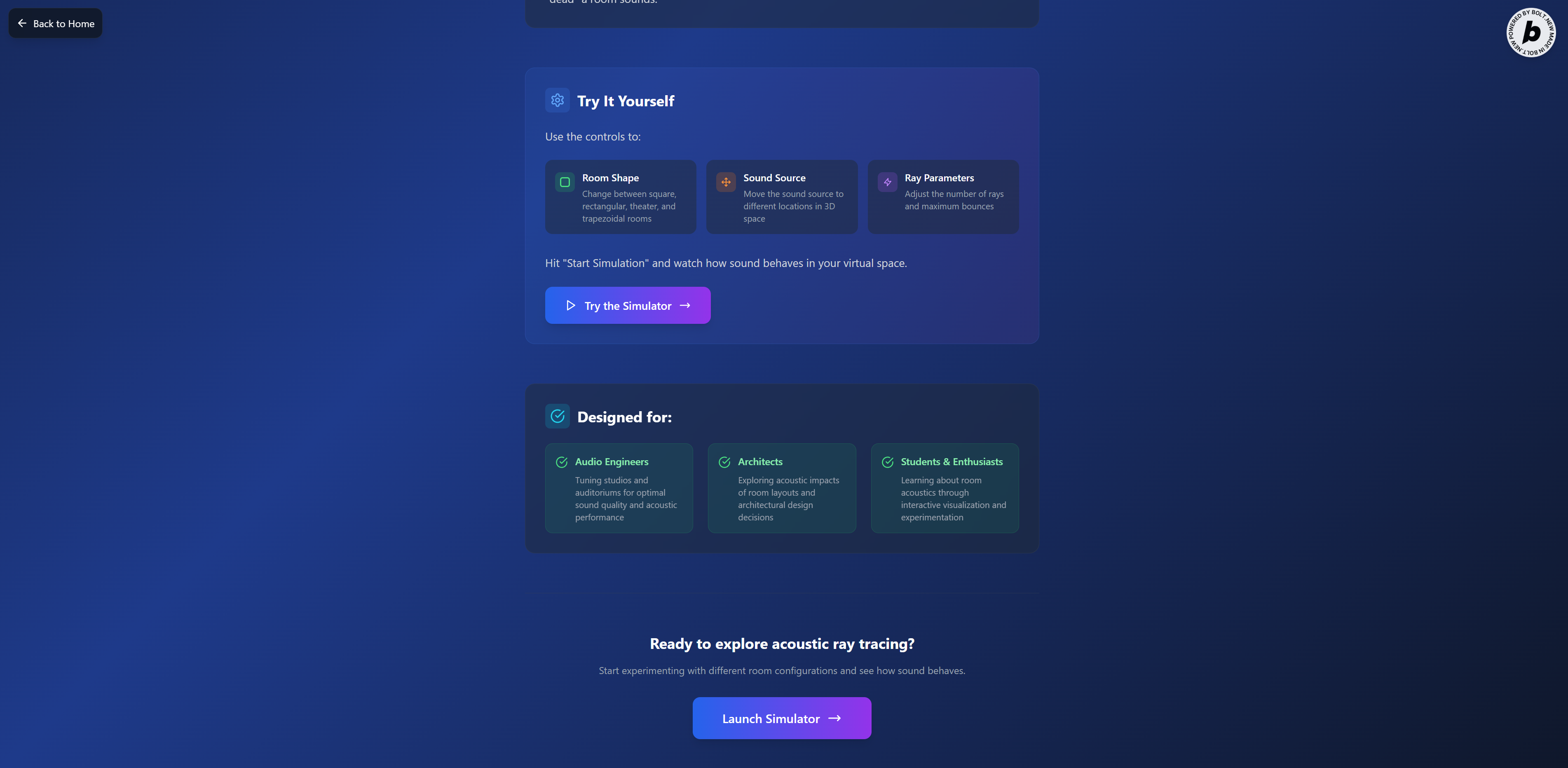
how it works page 2
-
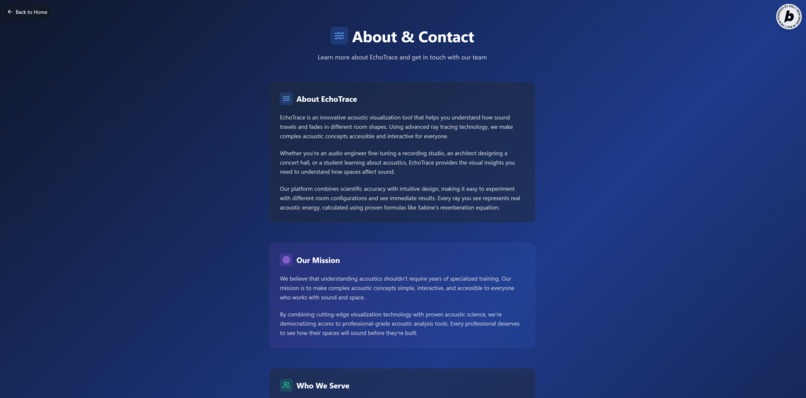
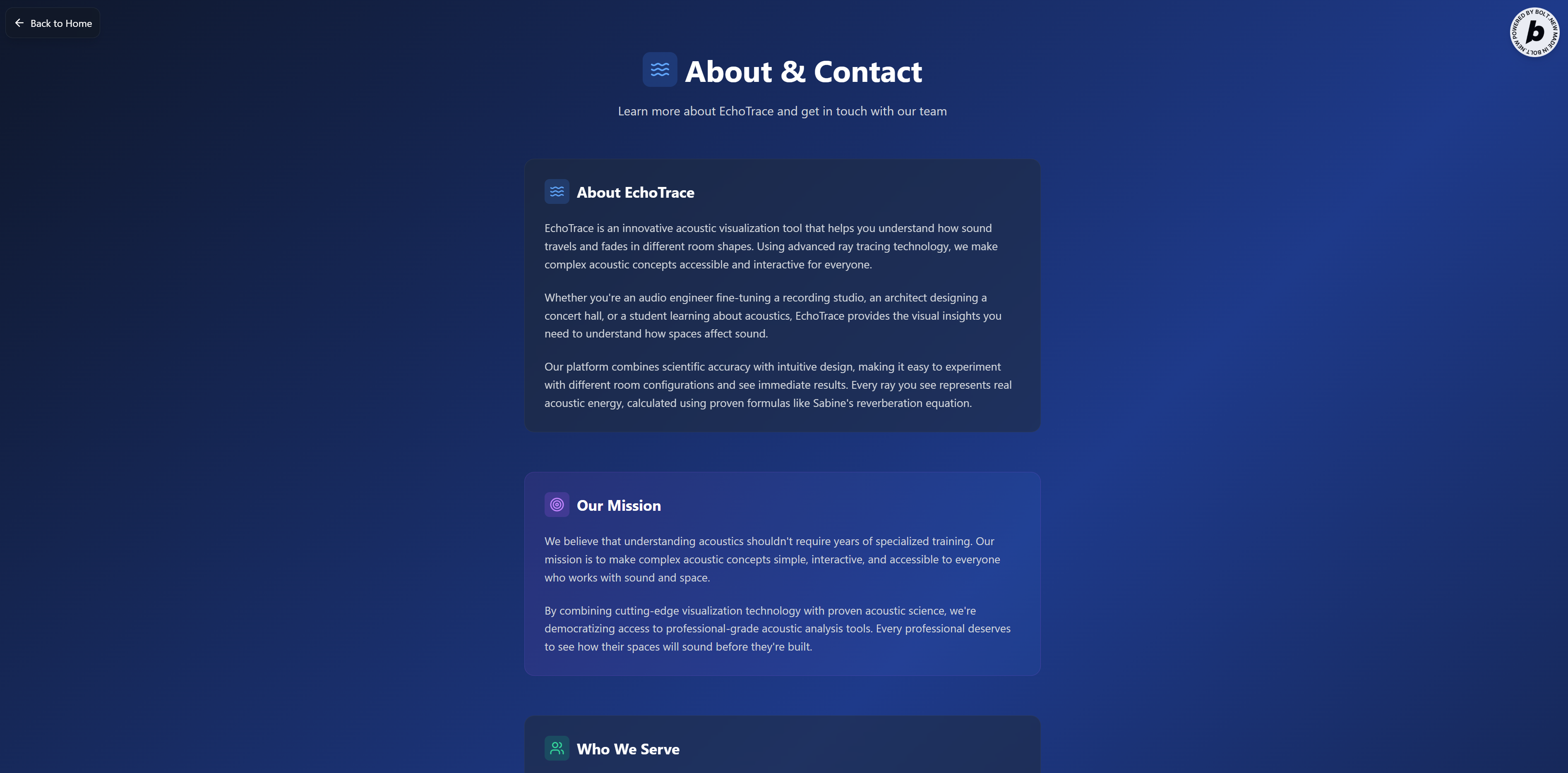
about us
-
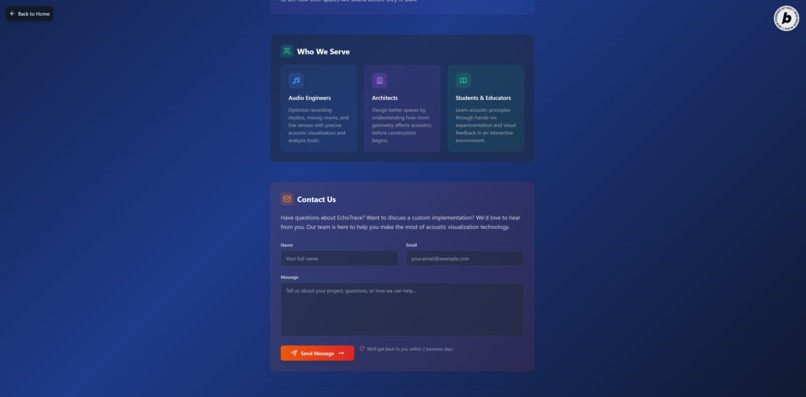
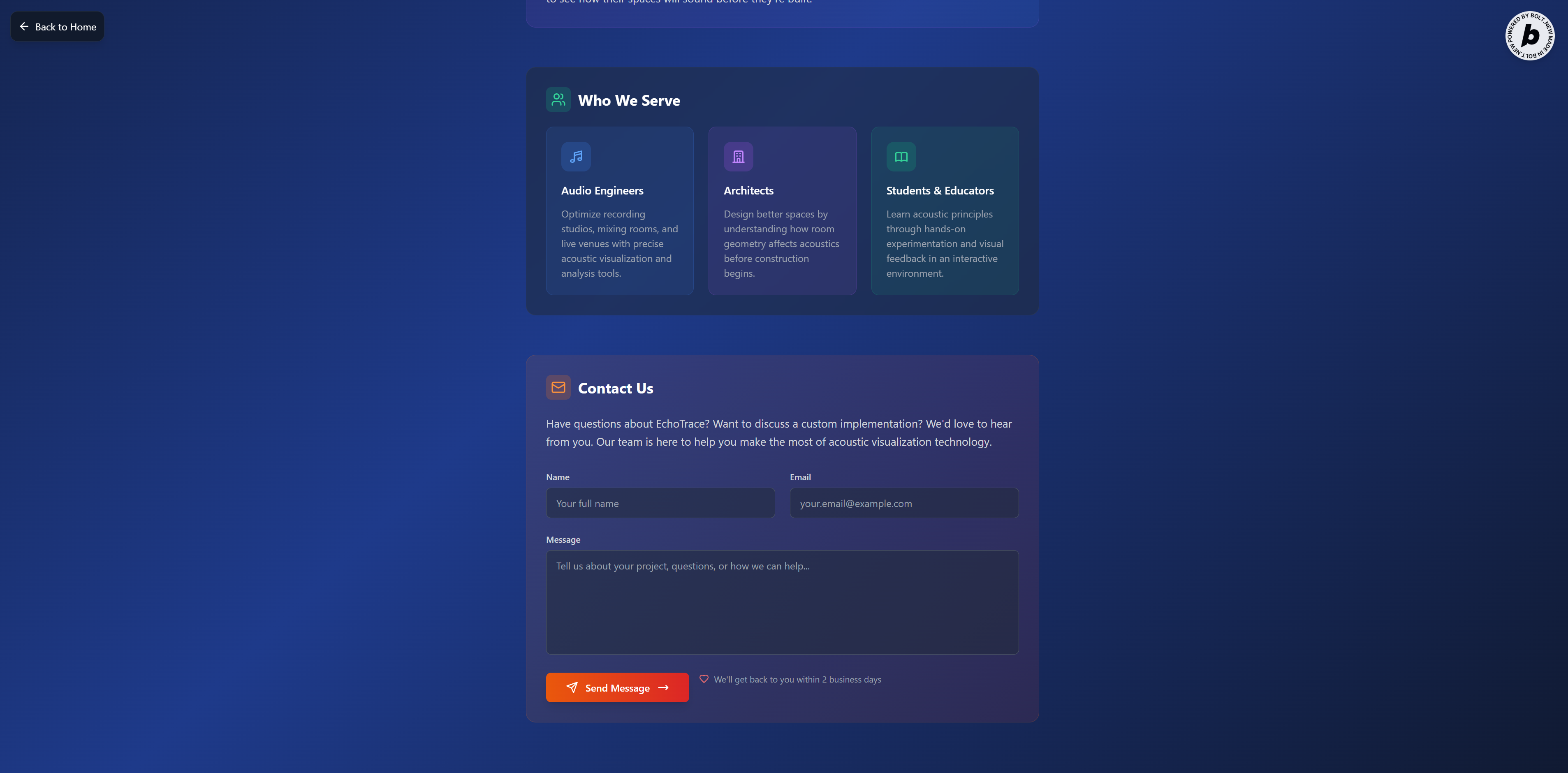
contact
Inspiration
I was inspired to create my own acoustics application because, as an architecture professor, I have tested out a few different tools that are available and found them to be overly complicated to introduce my students to the concepts of room acoustics. While the alternatives are great and contain a lot of complex calculations, I found that the complexity is overwhelming for my students to learn in a 2-week component of a larger class on building systems. The recent advent of vibe coding tools rekindled my interest and passion for building my software tools. I had many starts and stops in the past because of the learning curve, but this hackathon pushed me to give this a try, and Bolt.new's features made it possible to push past the learning curve and barriers that used to stop me.
To my knowledge, there is no other tool out there that is as simple to provide acoustic visualization in a web application. All other competitors require the use of proprietary or otherwise expensive CAD software.
What it does
Once you arrive at the landing page, you are presented with some information about the tool, and then a button to try the simulator moves you to the core tool. Once here, you have a sidebar menu with a variety of interactive sliders and dropdown menus to configure an acoustic environment. Once you have made your selection,s you can push the run simulation button and the main window will render the animation. If you would like to pause the simulation so you can take a screenshot, there is a button to do that. Click it again and the simulation resumes. After the animation completes, you can change any of the parameters and rerun the simulation as many times as you like.
There is a How it Works page that explains more details about the calculation being used and why this matters. There is a contact page with a simple signup so users can get in touch with me and I can follow up with questions about the software or acoustic design. I hope to connect supabase to capture contact information and build a database of users.
At the moment, it is not monetized, but I am planning on adding other architectural visualization tools that could be behind a paywall. My initial intention is to deploy this for my students to be used an interactive learning component to enhance the classroom experience.
How we built it
I built it 100% in Bolt, starting with the core simulation functionality. I did use ChatGPT bolt prompter to help set up the original prompt. But once it was generated I worked through the chat function in Bolt to debug and expand all of the functionality. Once the core app was working, I moved on to develop the landing page and additional pages for information and contact.
Challenges we ran into
The core functionality is where I spent the majority of my time and tokens. There were quite a few points where I thought I was not going to make it because of the bugs I was getting. But then there were a-ha moments that everything started working, and I was extremely proud to have pushed through. There are still a few things that are not quite right, but I am not sure I will have time to revise. There seems to be a lag in the simulation animation once the start button is pushed. As a non-coder, I am not sure where to look to figure this out.
Accomplishments that we're proud of
The whole thing! I didn't think I could create this on my own, let alone this quickly. I estimate that I spend 8-10 hours of back and forth on the core functionality. Since I have a day job and am in the middle of moving houses, I feel that this was an excellent use of my time and proved successful. I am excited to share it with my students and hear their feedback on the tool as a part of their learning. If this tool can improve the experience for the students, that is the best validation for the time I spent working on it.
What I learned
From a technical standpoint, I learned how to be as concise as possible with my prompts to garner better and more accurate output. Through the YouTube livestreams and X threads, I learned about others who are working on their projects, and there is a great community building up around vibe coding. Also, those live streams are extremely helpful for extending Bolt's functionality, for example, the Netlify and Supabase integrations.
I also learned a lot about myself. I have more confidence to try out more project ideas with Vibe coding to become more independent within my career in architecture and education.
What's next for EchoTrace
Thinking about additional functionality like more room shapes, the ability to upload external model files to get custom acoustic analysis. I teach many more subjects on building systems, and I would love to build more tools to help students visualize these functions, too!
If it stays an educational tool I would love to keep it free for students because the cost of college is extremely stressful and burdensome. I would love to structure monetization in a way where the cost of using the tools is offset by professional sponsorships of some kind.
Built With
- lucide
- react
- reactrouterdom
- tailwind
- three.js
- typescript
- vite

Log in or sign up for Devpost to join the conversation.