CleanCloud
Our Inspiration
With 1.7 billion tonnes of greenhouse gas emissions estimated to be produced in the manufacture and running of digital technologies between all internet users around the world, each of us is responsible for approximately 414kg of carbon dioxide (CO2) a year. Surprisingly, a large part of these emissions are caused by emails. Due to intense energy demands of data centres, you can drastically increase your carbon footprint without noticing by sending and receiving emails.
Here at CleanCloud, we recognize the desire for convenience can often suppress action towards environmental change. We strived to create a solution that could help fight greenhouse gas emissions while integrating seamlessly into user routines.
What it Does
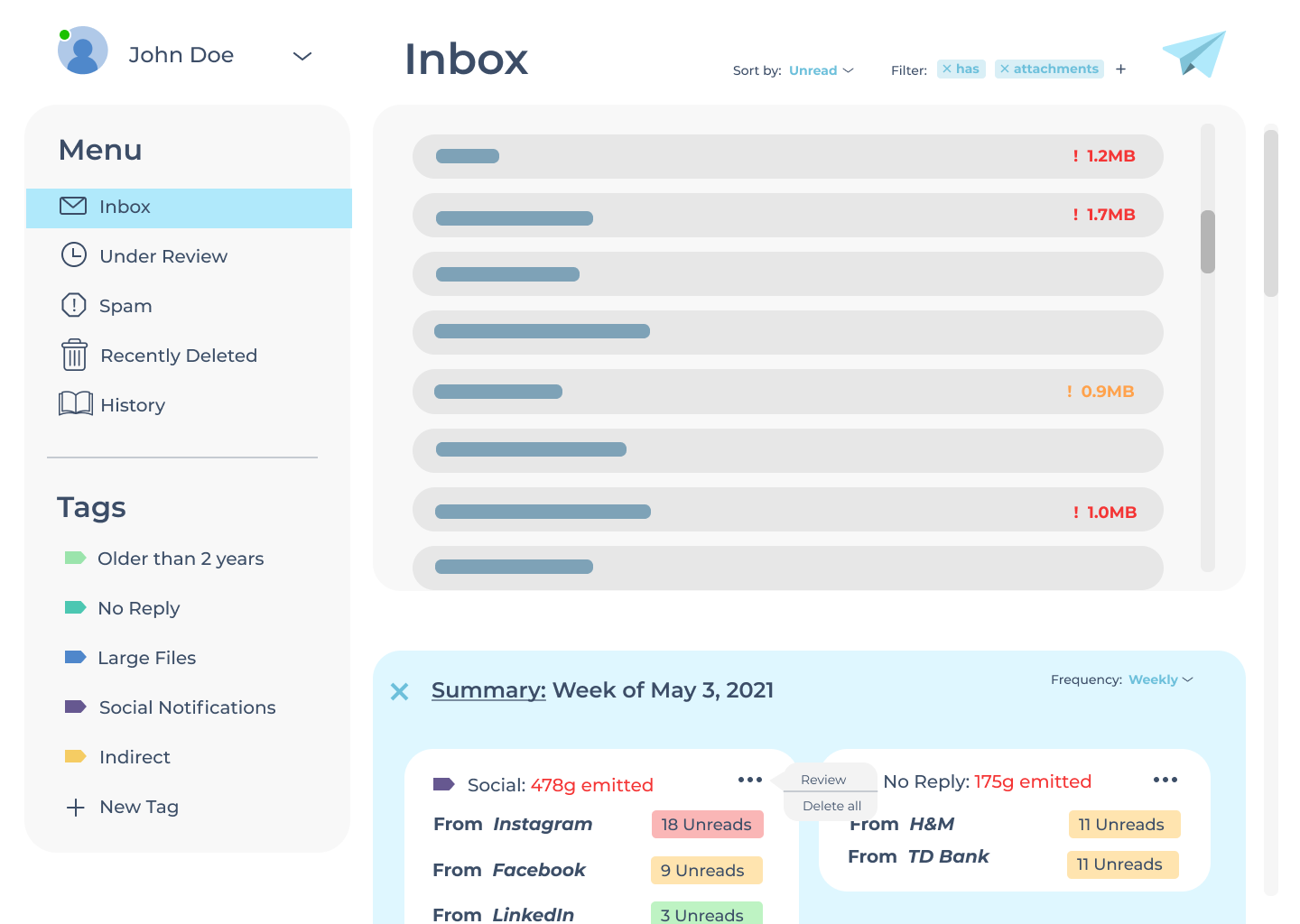
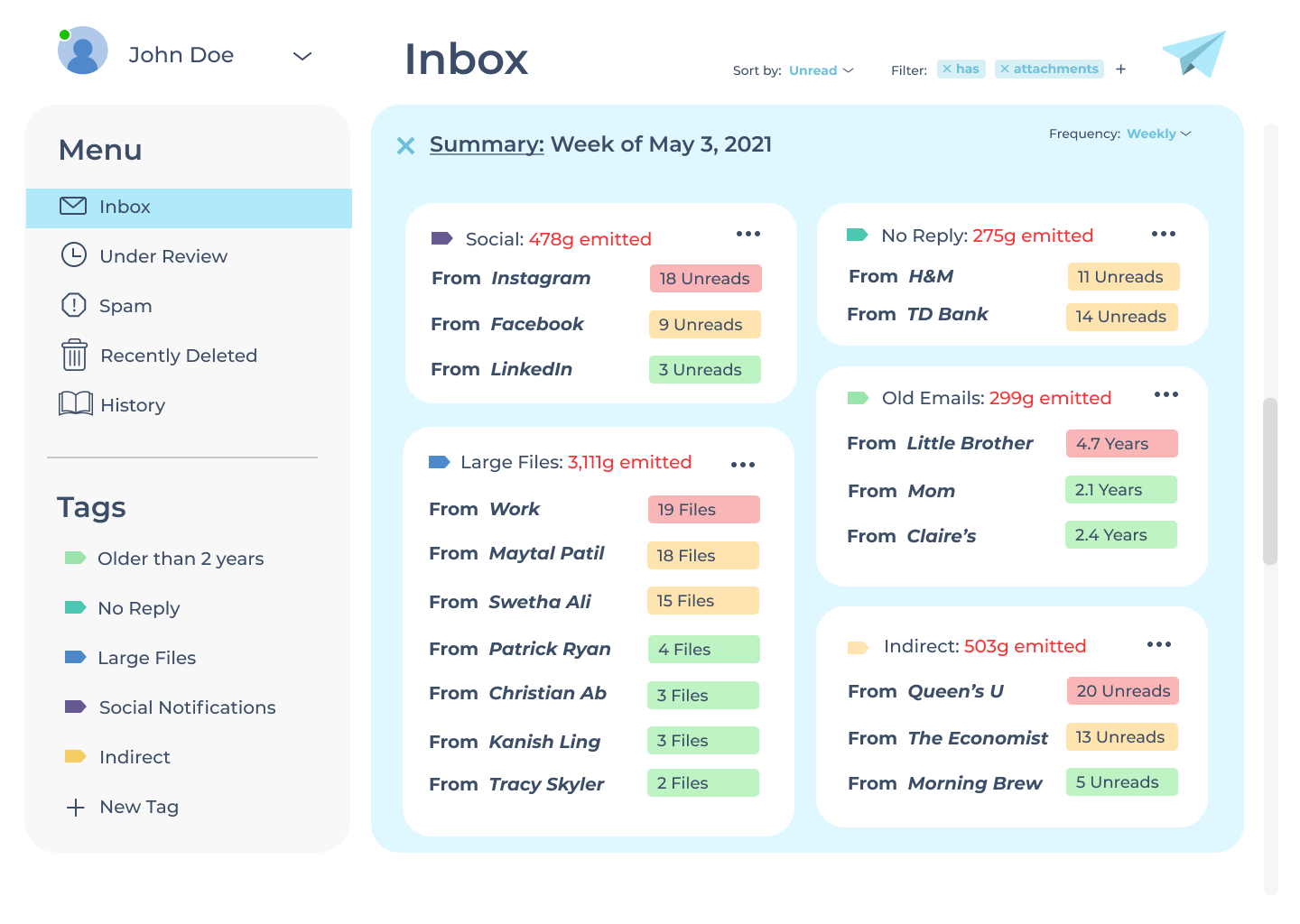
Users can link existing email accounts to CleanCloud and use the platform like any other mail application. In addition, CleanCloud displays the carbon footprint of each email and offers periodic summaries of your inbox. These summaries are grouped by “Tags” as determined by a Natural Language Processing algorithm that sorts for unwanted messages and displays emails that could be deleted. Users then have the option to review the emails and select the ones they’d like to delete, or simply delete all the emails from that tag. These emails are kept in “Recently Deleted” for 15 days, and then permanently deleted.
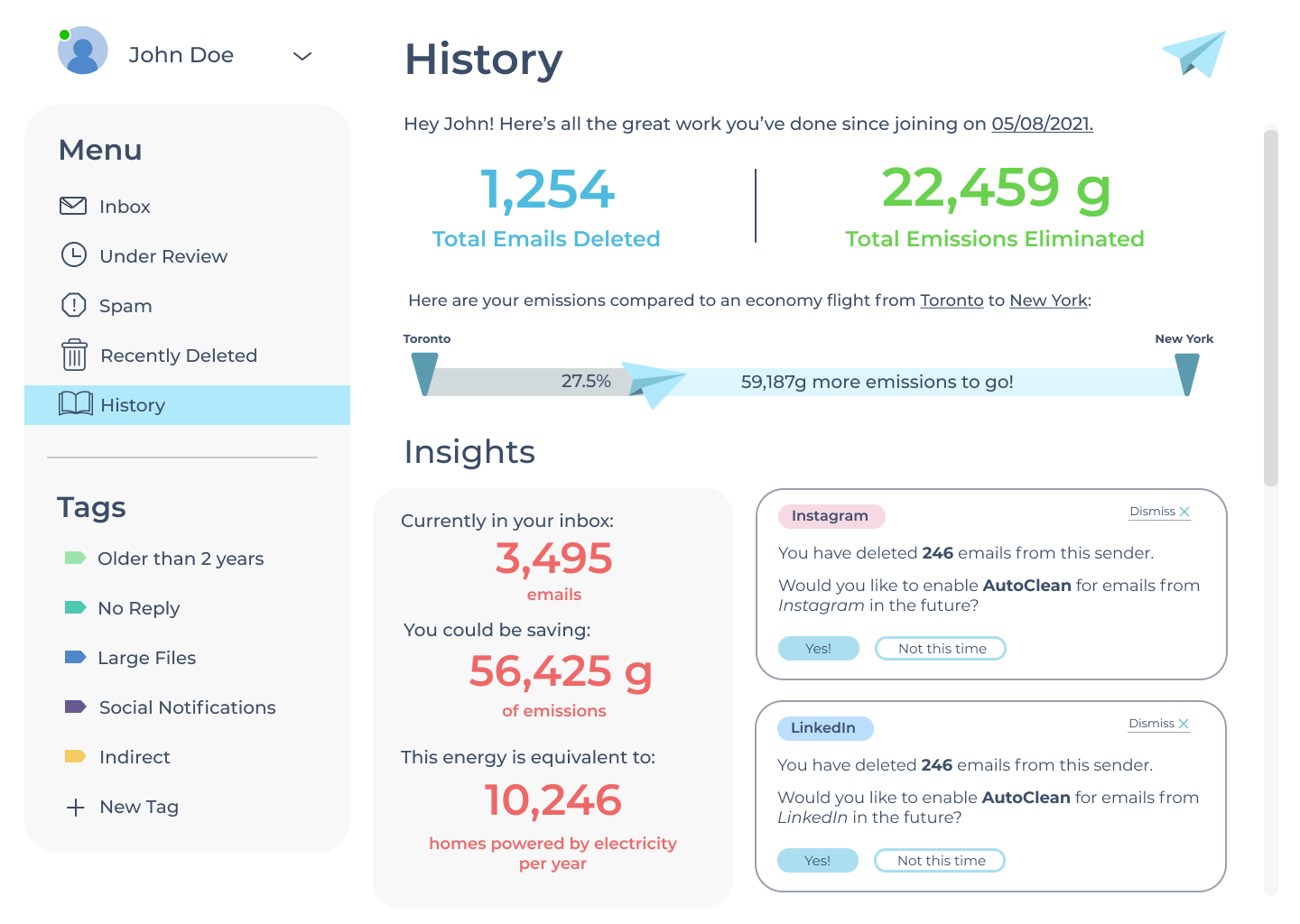
Users can also access their overall environmental impact since joining CleanCloud and compare their impact to pre-set milestones. For example, saving enough emissions for an economy flight from Toronto to New York after deleting a set number of emails. While users will never empty their entire inbox, CleanCloud hopes to encourage users to be more mindful of the environmental impacts of their emails.
How it Works
With our NLP algorithm, CleanCloud filters emails into three main types; how old the email is, the sender the email is from, and suspected spam.
From there, the application summarizes the email through the categories of social notifications, “No Reply” emails, large files, emails from 2 years and older and indirect emails (not to the user, not from the user). This highlights the emails that are the most likely to have irrelevant content and therefore, offer the optimal amount of greenhouse emissions saved.
To protect the privacy of our customers, we store only necessary information for 15 days. This information only includes our analysis of emails and not the emails or associated addresses themselves. Our servers can only make outbound connections and do not accept inbound connections, meaning we are able access emails however other parties cannot access our servers. Furthermore, customer information is encrypted to the bank-level standard, ensuring the safety of their credentials.
How it was Built
Our demo was constructed using Figma Prototype to represent the various pages that the application holds.
As we work towards making CleanCloud available to the public, we want to ensure that our algorithms for sorting the emails can do so accurately. Suspected spam will be determined by using Natural Language Processing (NLP). Syntactic analysis will detect suspicious words, while semantic analysis will find phrases that indicate the email is spam. As well, the senders will be compared and flagged as necessary to our database of blacklisted domains and reported IP addresses.
Challenges Faced
As novice hackers without a background in computing or code, we spent quite a bit of time deliberating how to create our product. The technical resources provided by the hackathon organizers, required the knowledge of basic code, APIs, cloud computing, etc; as a result, we found that this lay outside of our circle of competency. However, we have used the Figma software previously for design purposes and spent the time to learn the Prototyping feature in order to create our demo.
What's Next For CleanCloud
Our next step is to create a Google Chrome extension to further integrate clearing emails into our everyday lives. Currently, our application is within a separate window from the main email site, to more easily present our technology and build our own infrastructure. However, as we become more proficient in code, we plan to add this integration to various internet browsers such as Google Chrome so that it is more knit into our user’s daily routine.
Built With
- figma


Log in or sign up for Devpost to join the conversation.