
Inspiration
EchoSphere was born from a simple observation: emotions are invisible, yet they shape everything we do. In a world where remote work and digital connection dominate, we lose the emotional depth that comes with physical presence. Video calls flatten our humanity. VR therapy is expensive and exclusive. We wanted to democratize emotional expression and social connection.
What it does
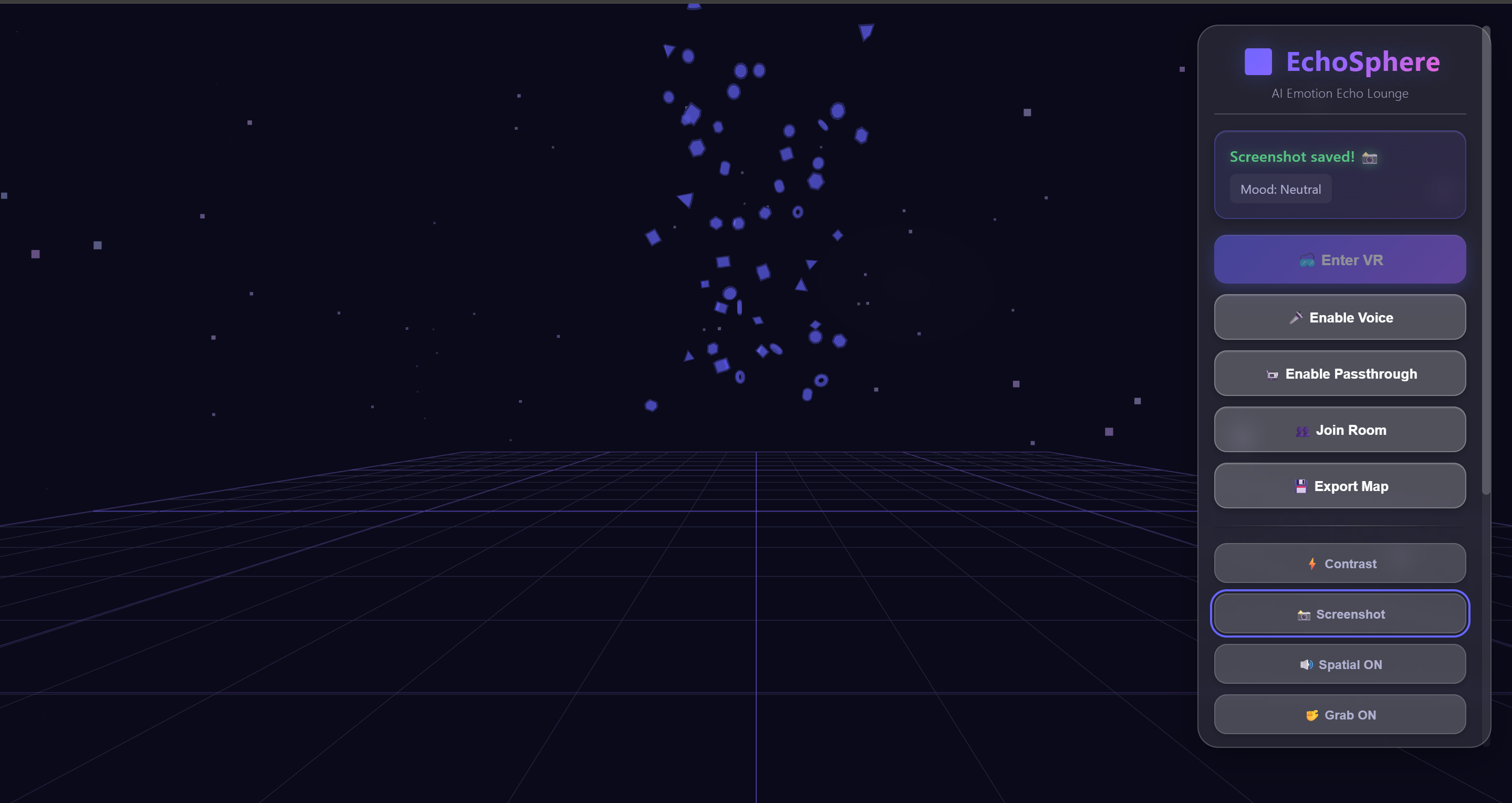
EchoSphere is a browser-based VR experience that visualizes emotions as interactive 3D orbs. Speak naturally, and AI analyzes your voice frequency to color your orbs—blue for calm, red for excited, yellow for happy. Turn on passthrough to blend your real room with digital magic. Invite a friend to see your emotions sync in real-time. Export your "echo map" to share with therapists or keep as a personal wellness journal.
How we built it
Built entirely with web technologies—no proprietary VR software required. Three.js renders stunning 3D graphics. WebXR API enables cross-device VR support (Meta Quest, desktop, mobile). Web Audio API analyzes voice emotions in real-time. Socket.io powers multiplayer synchronization. The entire app is under 600 lines of code, runs offline, and requires zero installation or paid services. Pure browser—pure possibility.
Challenges we ran into
The biggest challenge was achieving real-time emotion detection with minimal latency. Voice frequency analysis needed to be accurate without relying on cloud APIs (privacy concern). We optimized the Web Audio API implementation for instant feedback. Cross-device compatibility was another hurdle—ensuring smooth performance on Quest, desktop, and mobile required careful resource management and fallback systems.
Accomplishments that we're proud of
- Zero-cost accessibility: No VR equipment needed, no paid services, runs on any modern browser
- Privacy-first: All processing is client-side; no data logging or external APIs
- Rapid development: Built a polished, feature-complete MVP in under 550 lines of code
- Emotional authenticity: Voice frequency analysis creates genuine, responsive mood visualization
- Multiplayer magic: Real-time collaboration feels instant and seamless
- Accessibility focus: WASD controls, high-contrast mode, ARIA labels for all users
- Open-source: Fully transparent, auditable, and community-ready
What we learned
The power of constraint breeds creativity. Limiting ourselves to pure web tech forced innovation. We learned that emotional connection doesn't require photorealistic graphics—abstract glowing orbs can be surprisingly moving. Real-time collaboration creates unexpected joy and vulnerability. We discovered that wellness tech doesn't need to be expensive or exclusive to be effective.
What's next for EchoSphere
Phase 2: Real TensorFlow.js hand pose detection for genuine gesture control. Face-api.js emotion recognition for advanced passthrough tinting. Spatial audio integration with mood-based soundscapes.
Phase 3: Persistent user accounts and saved sessions. Guided meditation mode with AI coaching. Group therapy rooms for 4-8 person sessions. Integration with mental health platforms. Mobile AR mode as a non-VR fallback.
The vision is clear: make emotional wellness accessible, beautiful, and free. EchoSphere is just the beginning.


Log in or sign up for Devpost to join the conversation.