-
-
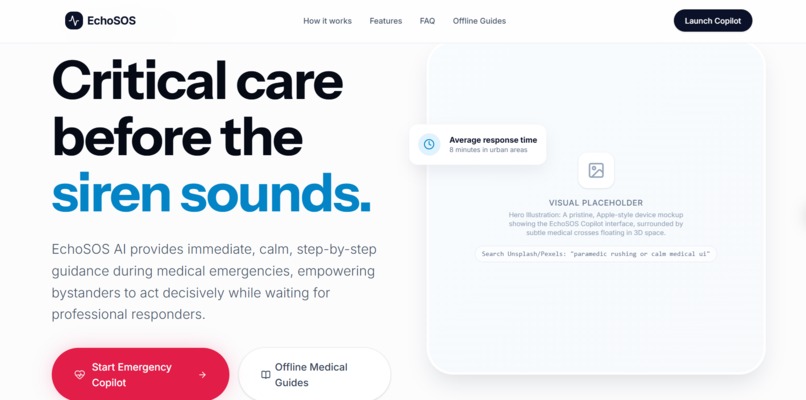
Landing page
-
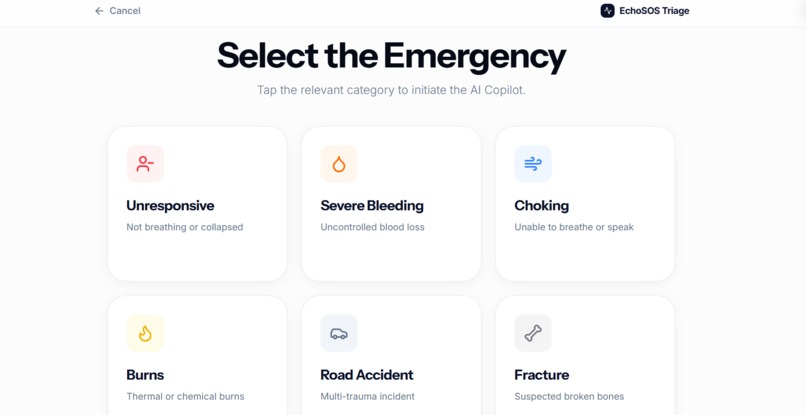
Accidents happened
-
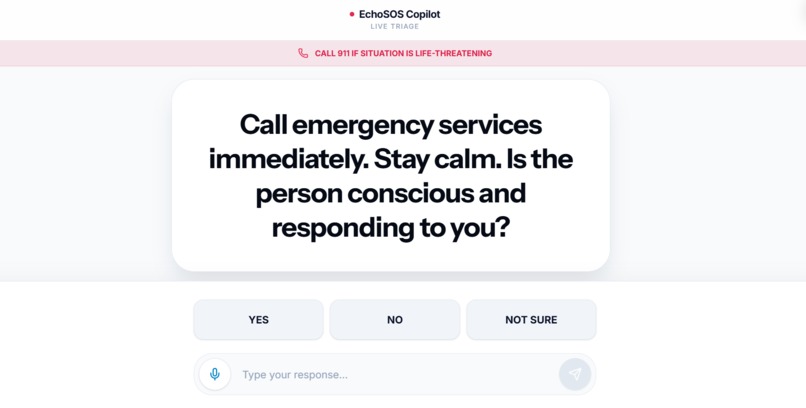
AI-Assistant
-
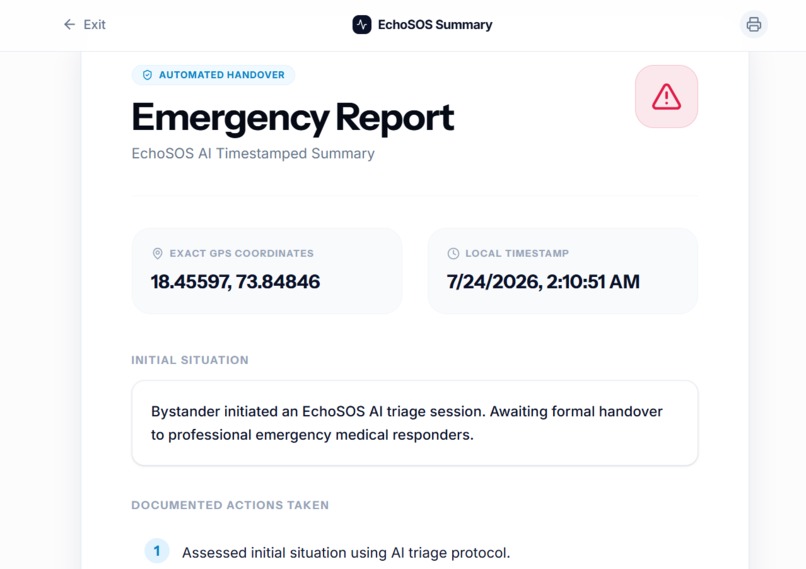
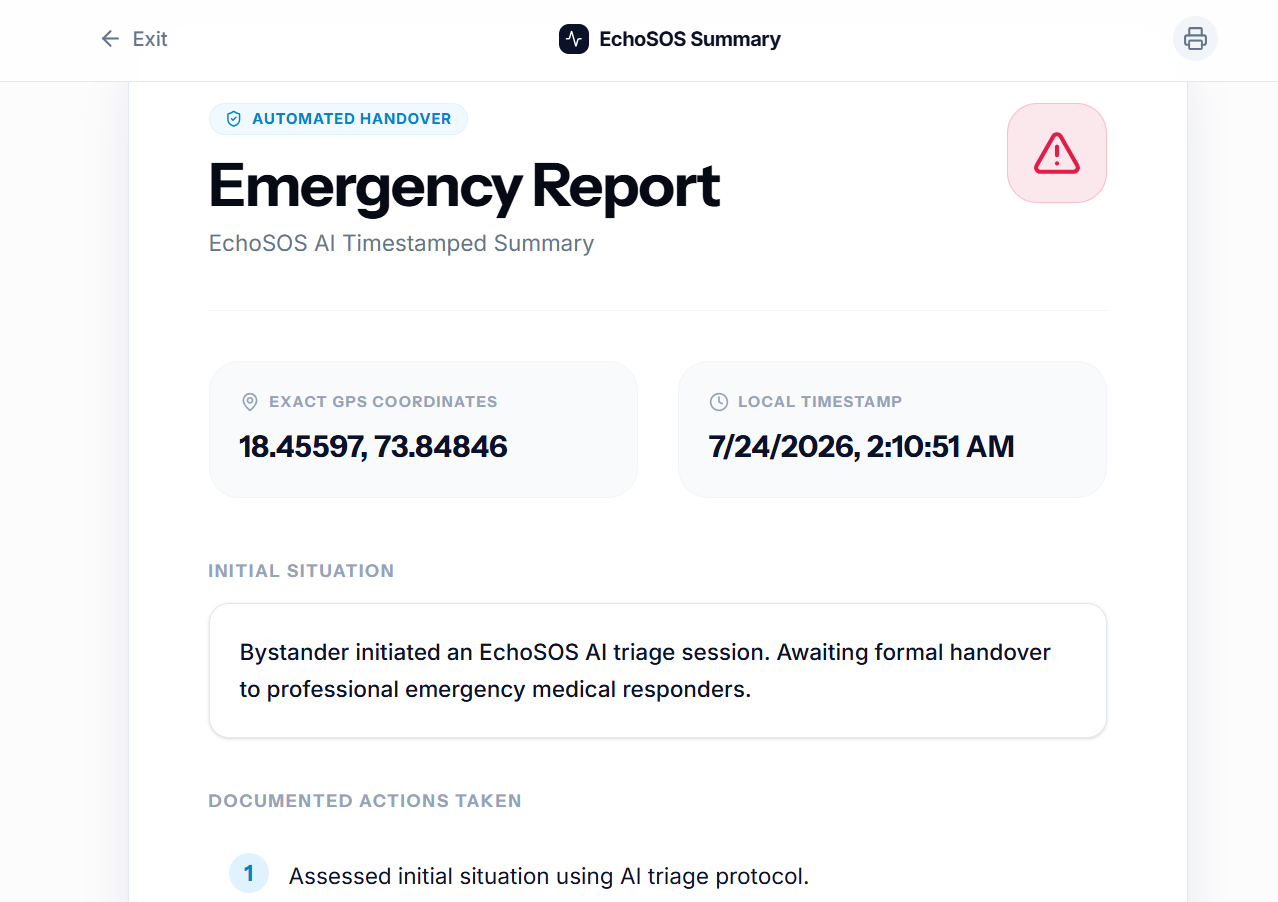
Summary report
-
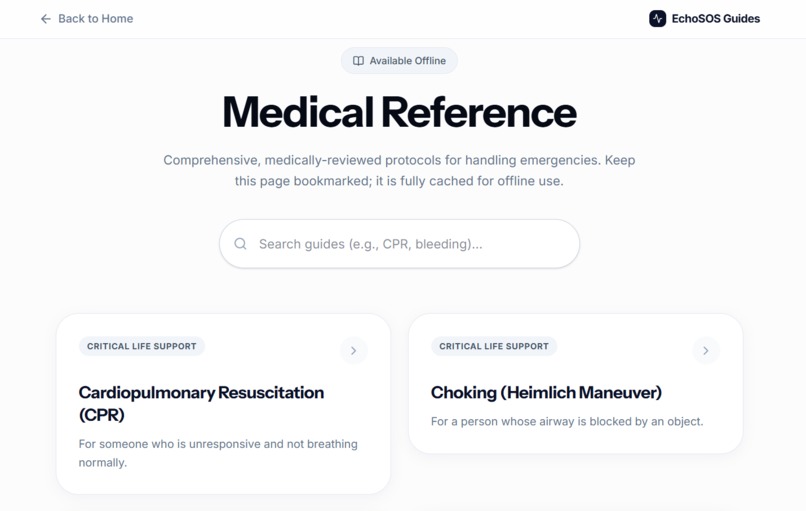
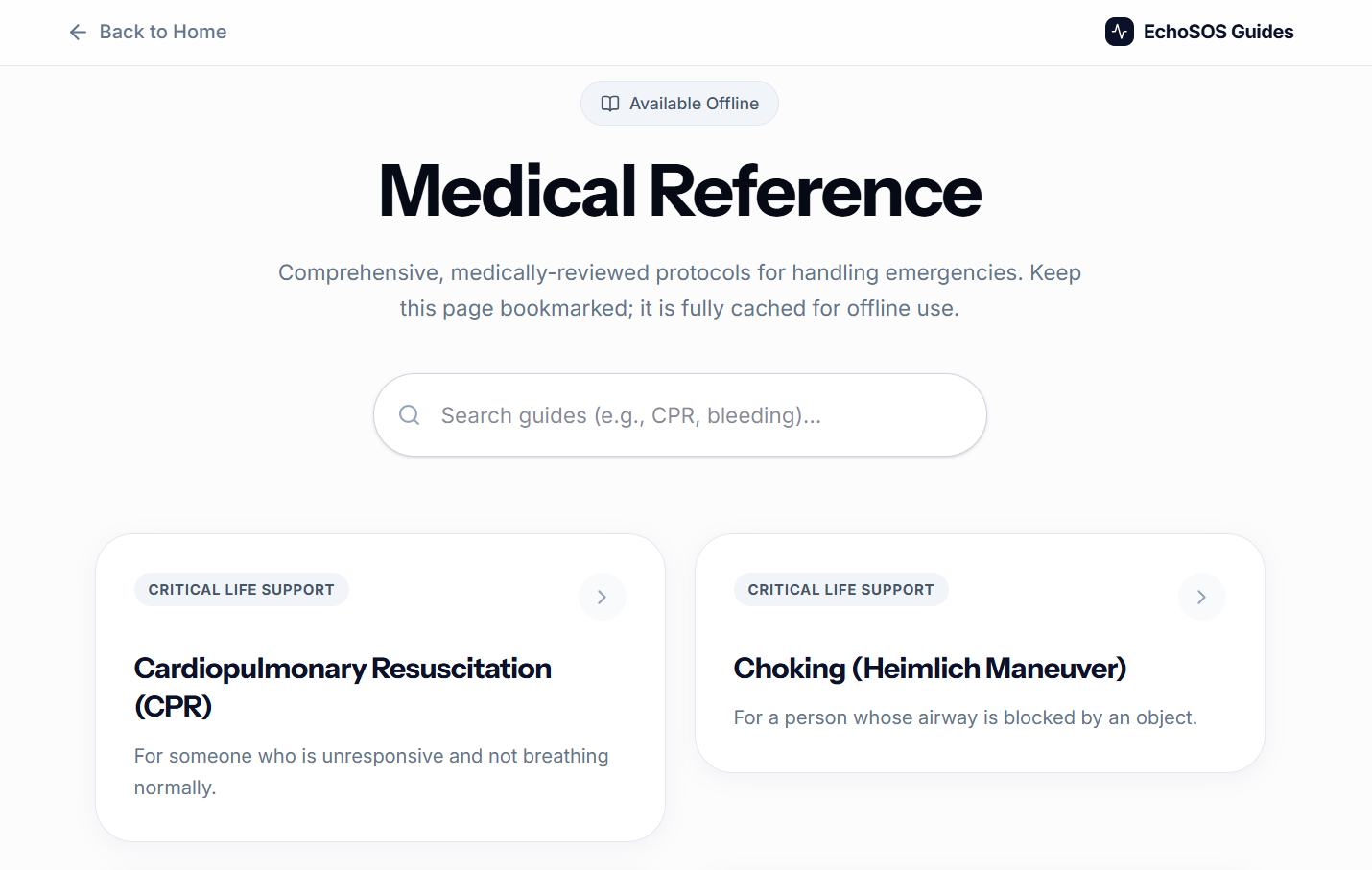
Offline guides
-
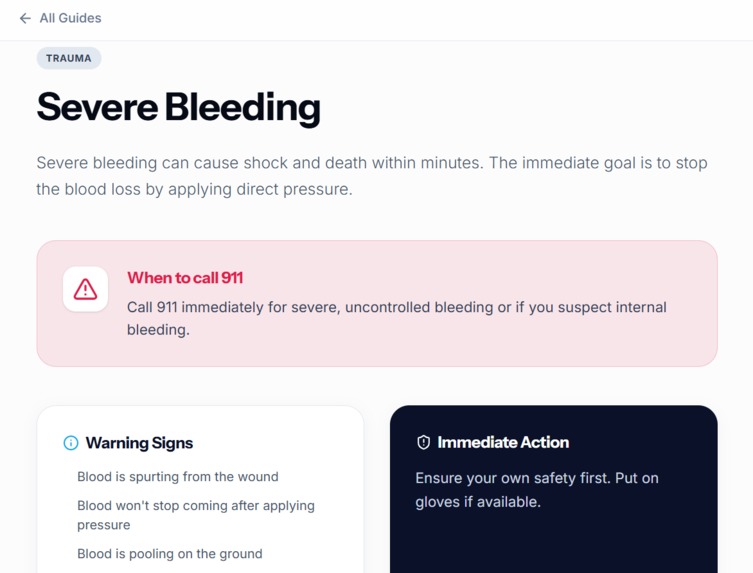
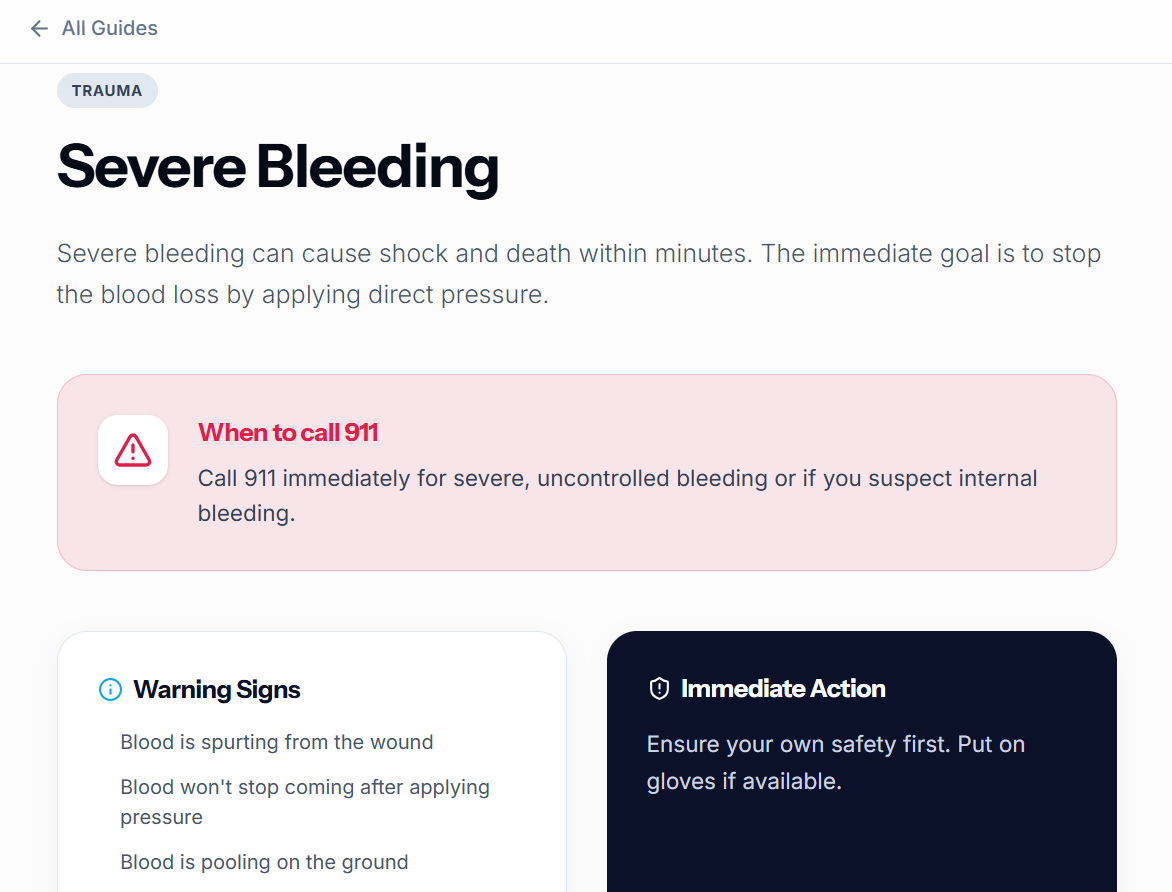
Research back guides
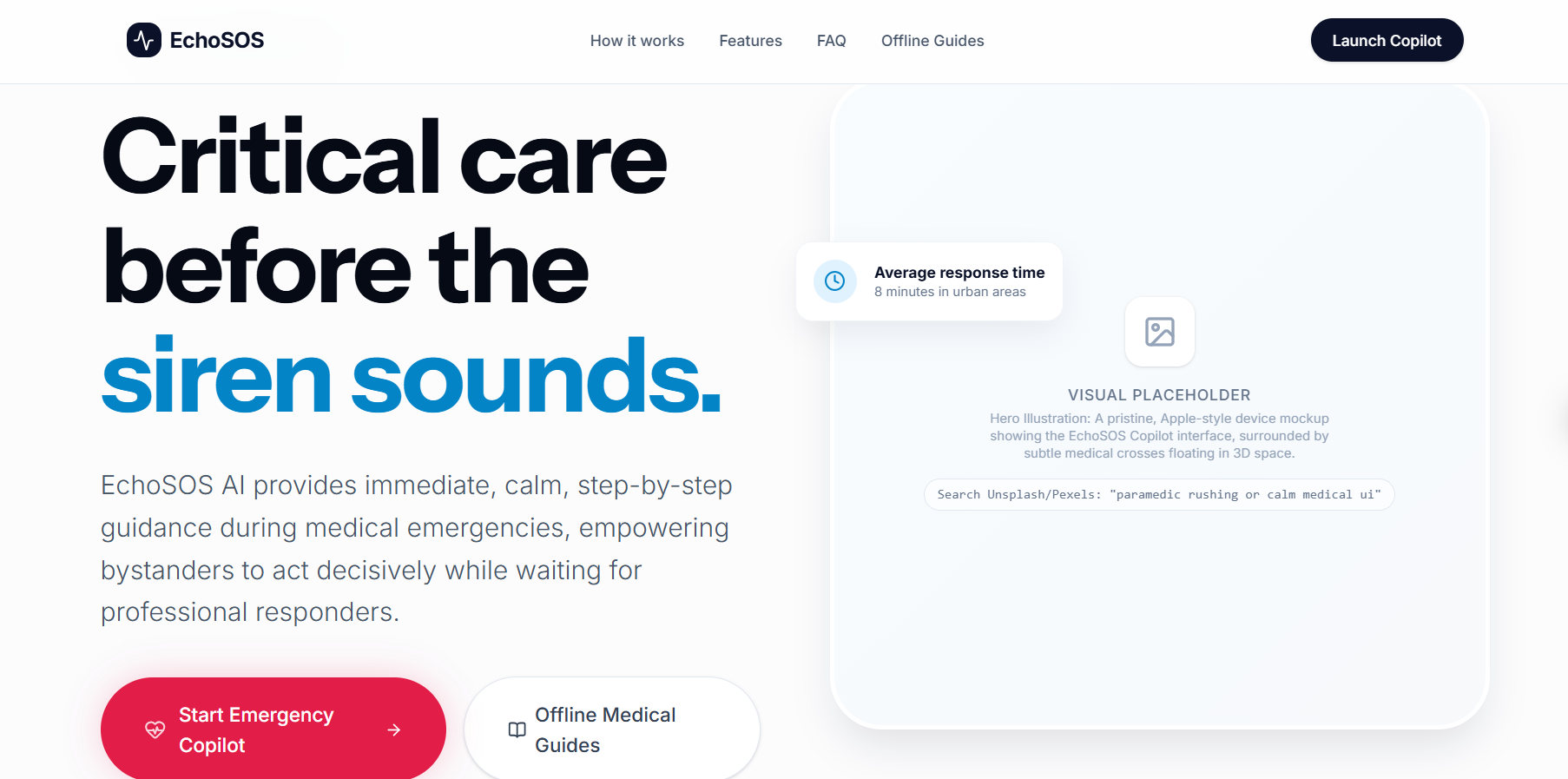

🚑 EchoSOS AI
Inspiration
In an emergency, the first few minutes are often the most critical. Unfortunately, most people panic, don't know what to do, or waste valuable time searching the internet for first aid instructions.
We wanted to build a tool that could guide anyone through an emergency with calm, step-by-step instructions until professional medical help arrives.
EchoSOS AI was inspired by a simple question:
What if everyone had an intelligent emergency companion in their pocket?
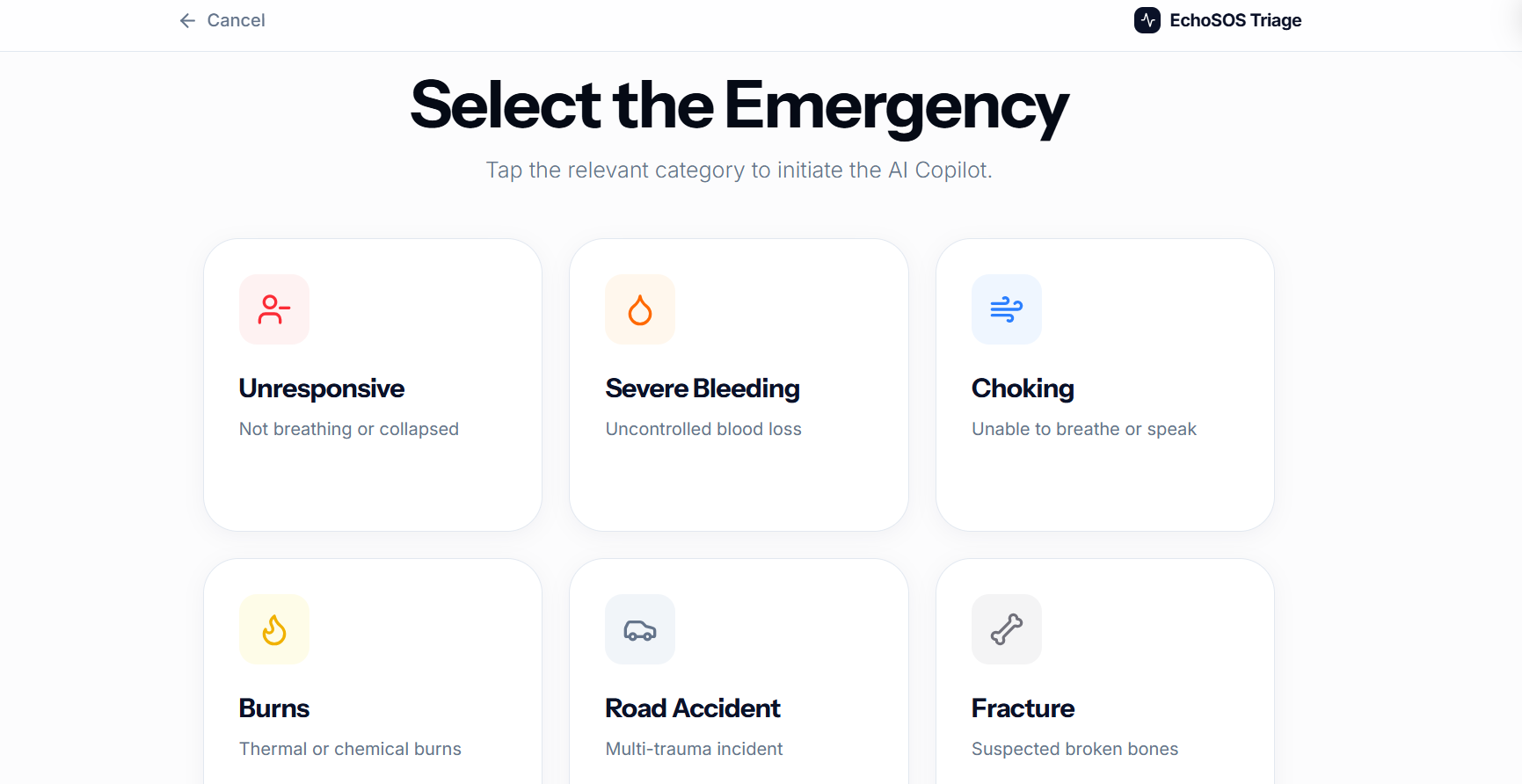
Instead of overwhelming users with long articles or generic chatbot responses, EchoSOS AI asks one question at a time, adapts to the user's situation, and provides clear first-aid guidance designed to reduce panic and encourage informed action.
What it does
EchoSOS AI is an AI-powered emergency copilot that assists people during critical situations.
The platform currently supports:
- AI-guided emergency conversations
- Adaptive first-aid instructions
- Voice interaction
- Offline emergency guides
- Emergency summary generation
- GPS location retrieval
- Multilingual support
- One-tap emergency contact assistance
Unlike traditional search engines, EchoSOS AI focuses on asking the right questions before suggesting the next appropriate first-aid step.
It is designed to assist, not diagnose, and always encourages contacting emergency services whenever appropriate.
How we built it
We focused on building a lightweight and scalable architecture that could be completed within the hackathon while maintaining a polished user experience.
Frontend
- Next.js
- JavaScript
- Tailwind CSS
- Framer Motion
- shadcn/ui
- Lucide React
AI
Gemini API powers:
- Dynamic emergency conversations
- Step-by-step guidance
- Emergency summaries
- Translation
- Educational explanations
Backend
- Next.js API Routes
Deployment
- Vercel
The application intentionally avoids authentication to ensure anyone can access emergency assistance immediately without creating an account.
Challenges we ran into
One of our biggest challenges was designing an AI experience that felt safe and trustworthy.
We wanted to avoid building another generic chatbot.
Instead, we focused on creating a guided decision-making experience that asks one question at a time and provides concise, actionable responses.
Another challenge was balancing speed with medical responsibility. The AI is designed to avoid making diagnoses and instead focuses on first-aid guidance based on publicly accepted recommendations.
Designing a calm, intuitive interface that users could navigate during stressful situations was equally important.
Accomplishments that we're proud of
- Built a complete AI-powered emergency guidance platform during the hackathon.
- Created a conversational emergency workflow instead of a traditional chatbot.
- Designed a mobile-first interface optimized for stressful situations.
- Implemented voice interaction and multilingual support.
- Built comprehensive offline emergency guides.
- Delivered a polished user experience with modern animations and responsive design.
What we learned
This project taught us that good AI products are not simply about generating answers.
They are about asking the right questions, presenting information responsibly, and reducing cognitive load for users during high-pressure situations.
We also gained valuable experience in prompt engineering, designing AI workflows, and creating accessible user experiences for healthcare-related applications.
What's next for EchoSOS AI
Future improvements include:
- Image-based first-aid assistance using computer vision
- AED and nearby hospital locator
- Emergency contact notifications
- Wearable device integration
- Accessibility improvements for visually impaired users
- Expanded multilingual support
- More evidence-based emergency guides
- Regional emergency numbers based on user location
Our long-term vision is to make emergency first-aid guidance more accessible, understandable, and available to everyone.
Built With
- ai
- api
- gemini
- healthcare
- javascript
- lucide-react
- nextjs
- react
- speechapi
- tailwind
- vercel

Log in or sign up for Devpost to join the conversation.