-
-
landing-problem
-
landing-tagline
-
scenario-intake
-
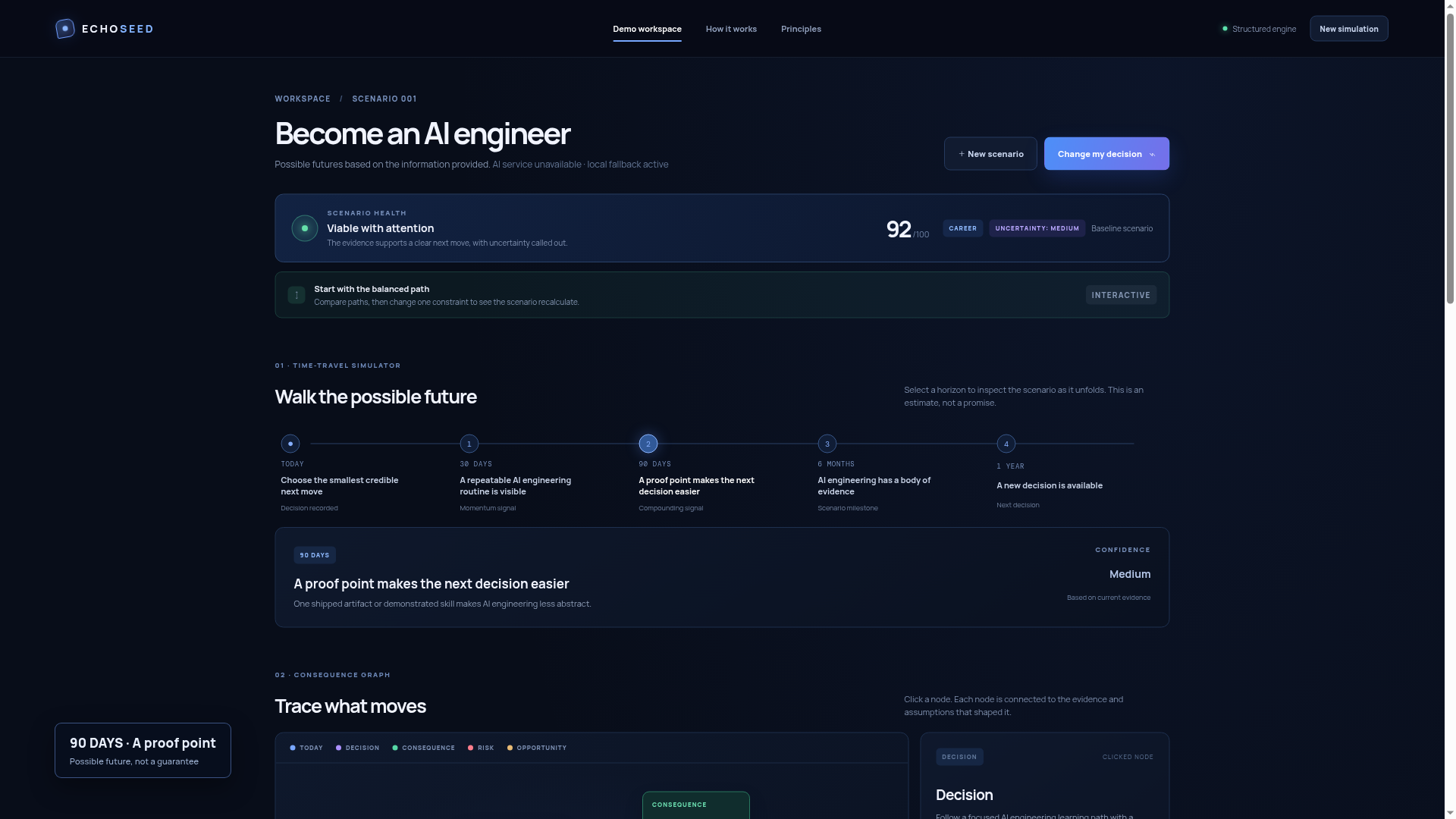
timeline-today
-
timeline-30
-
timeline-90
-
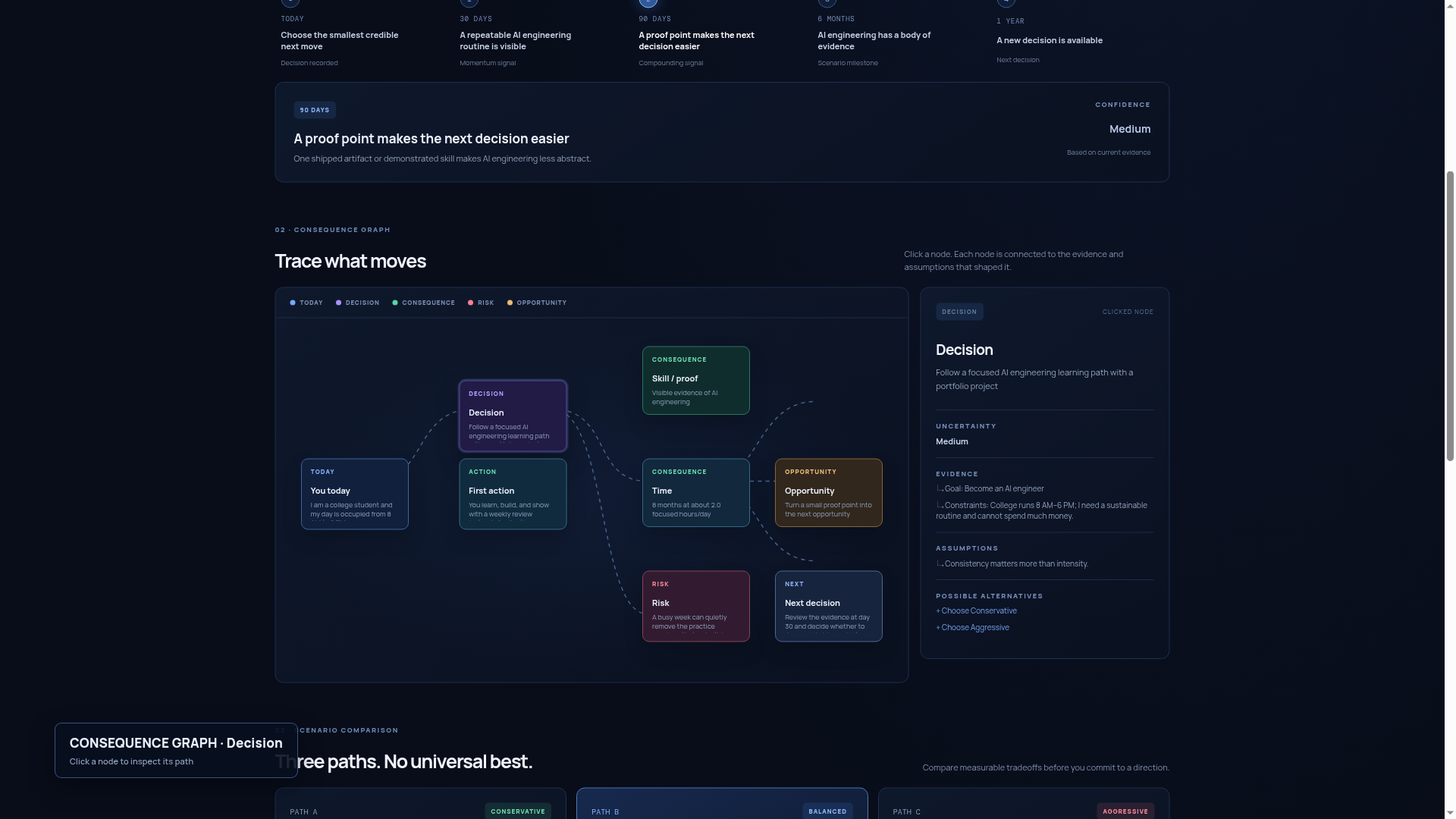
graph-decision
-
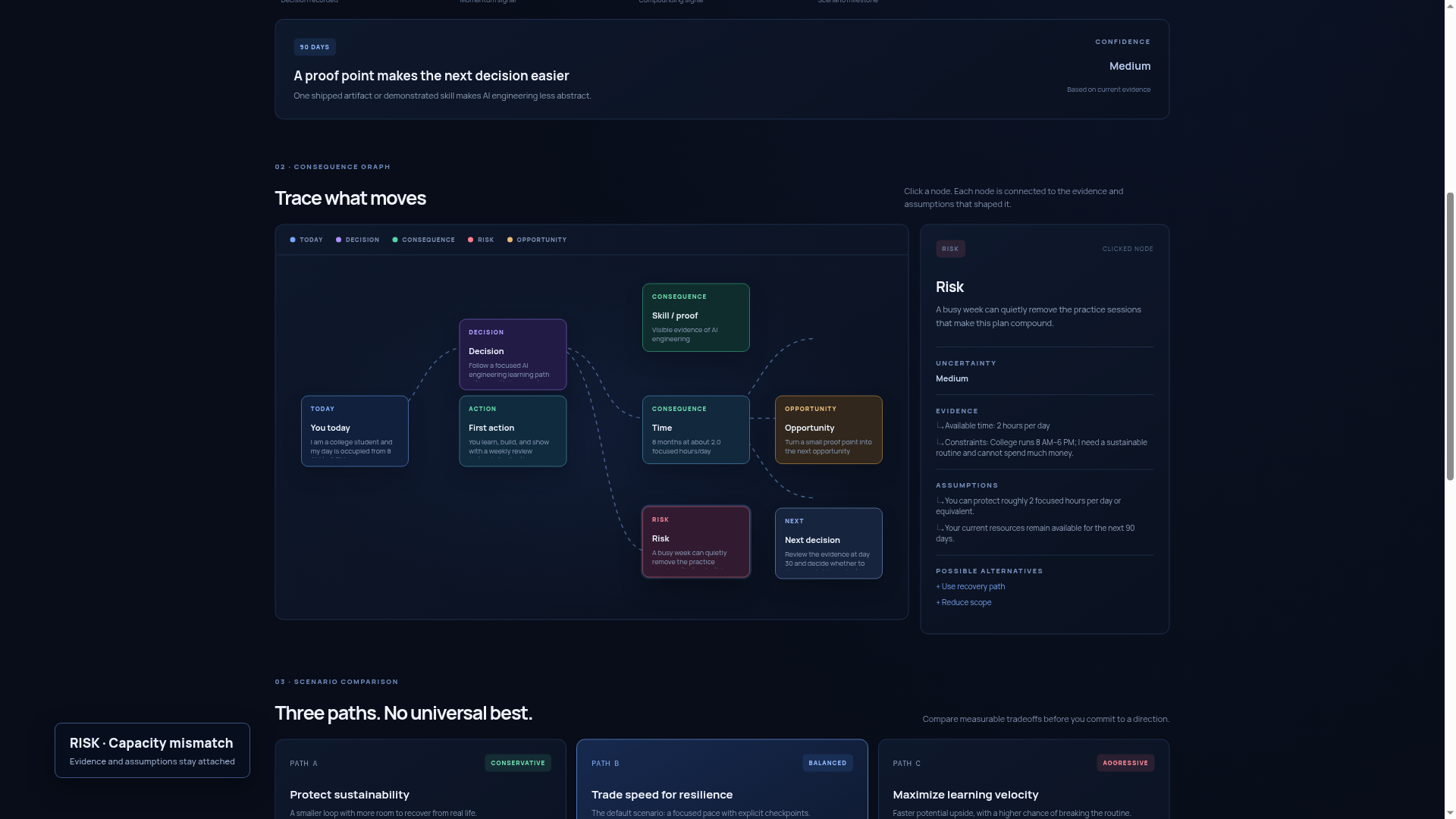
graph-risk
-
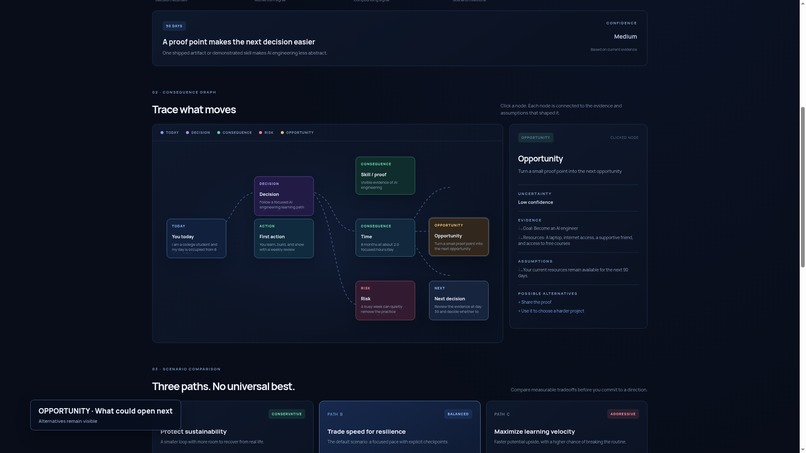
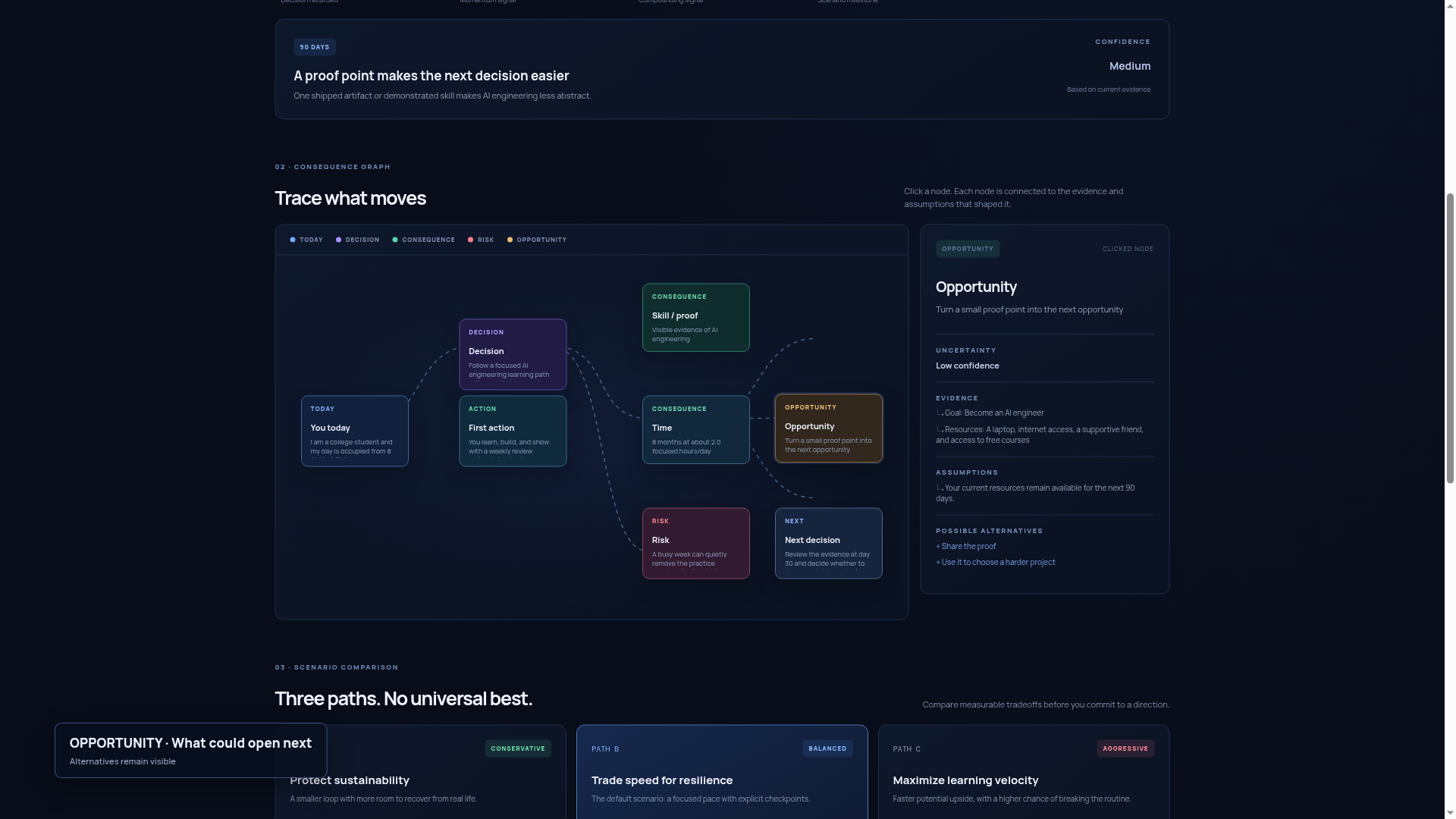
graph-opportunity
-
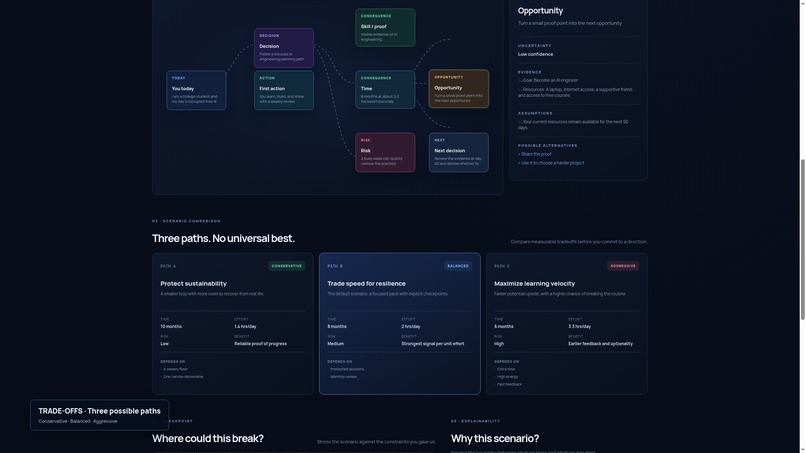
path-comparison
-
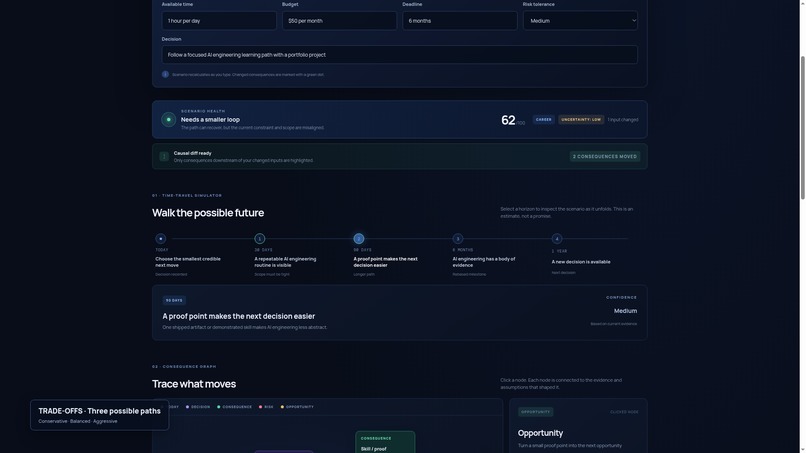
counterfactual-one-hour
-
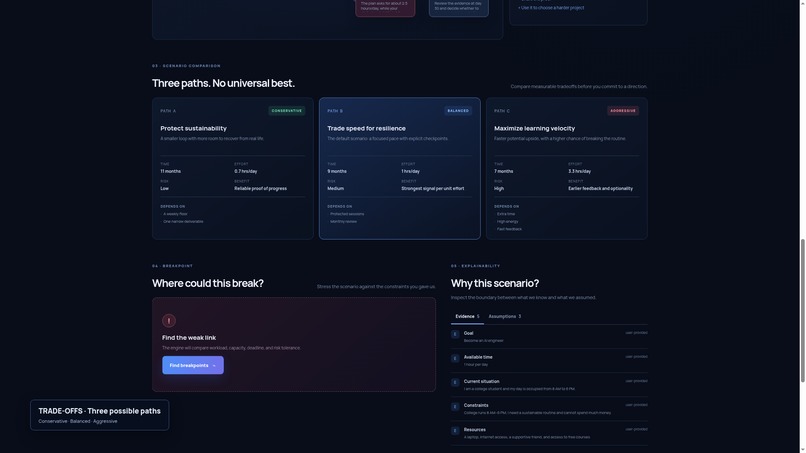
12-breakpoint
-
breakpoint-result
-
recovery
-
closing-dashboard
ECHOSEED
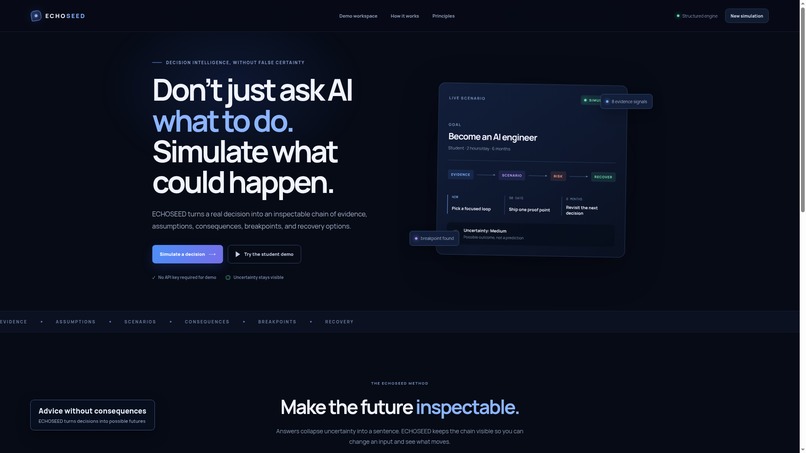
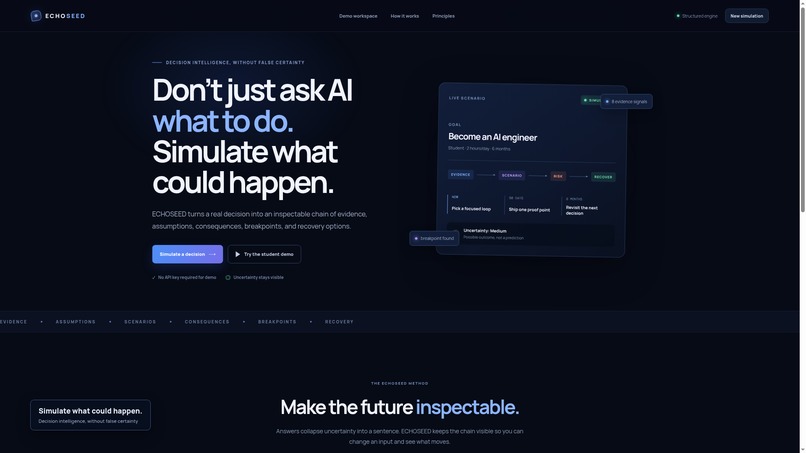
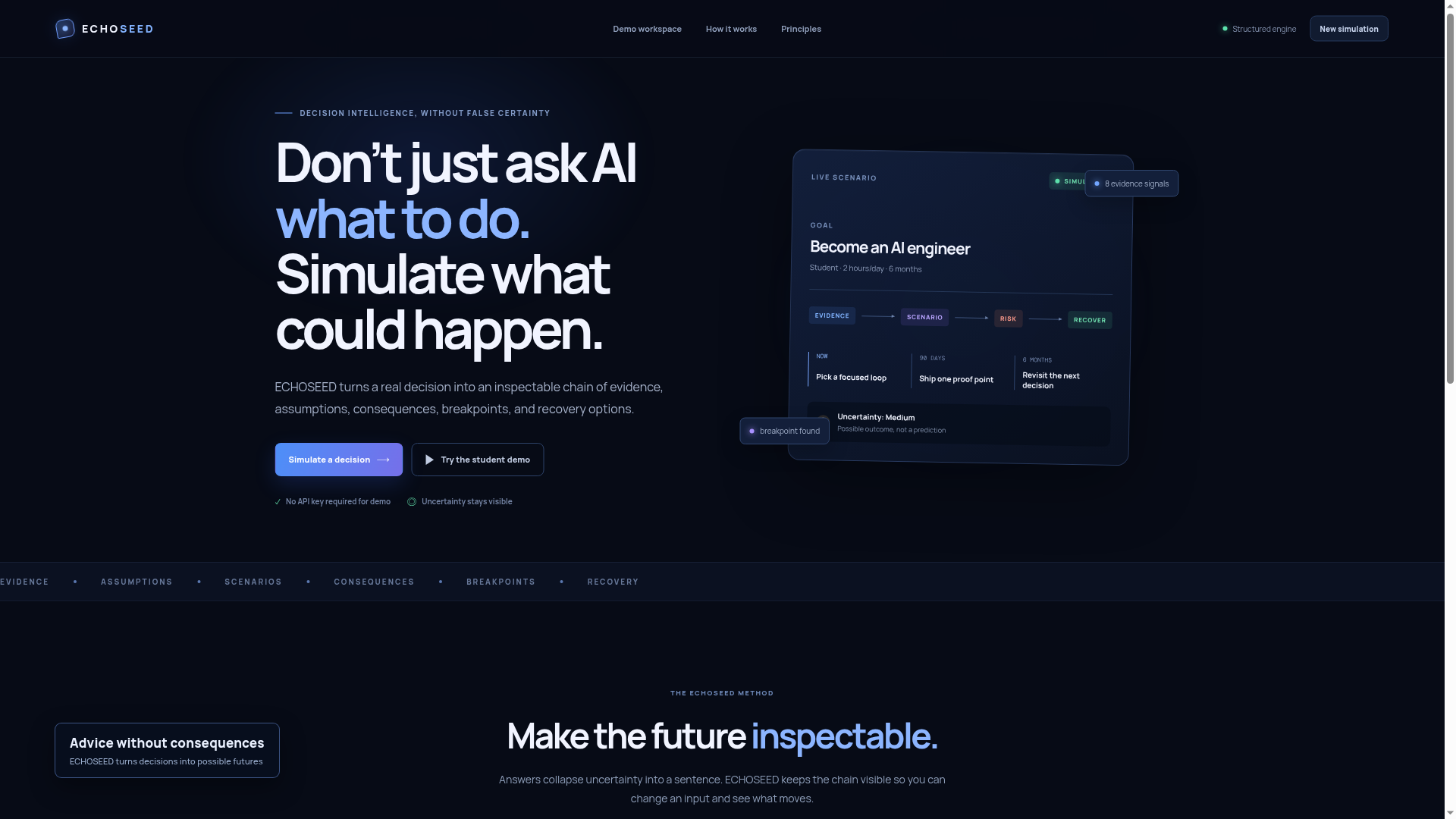
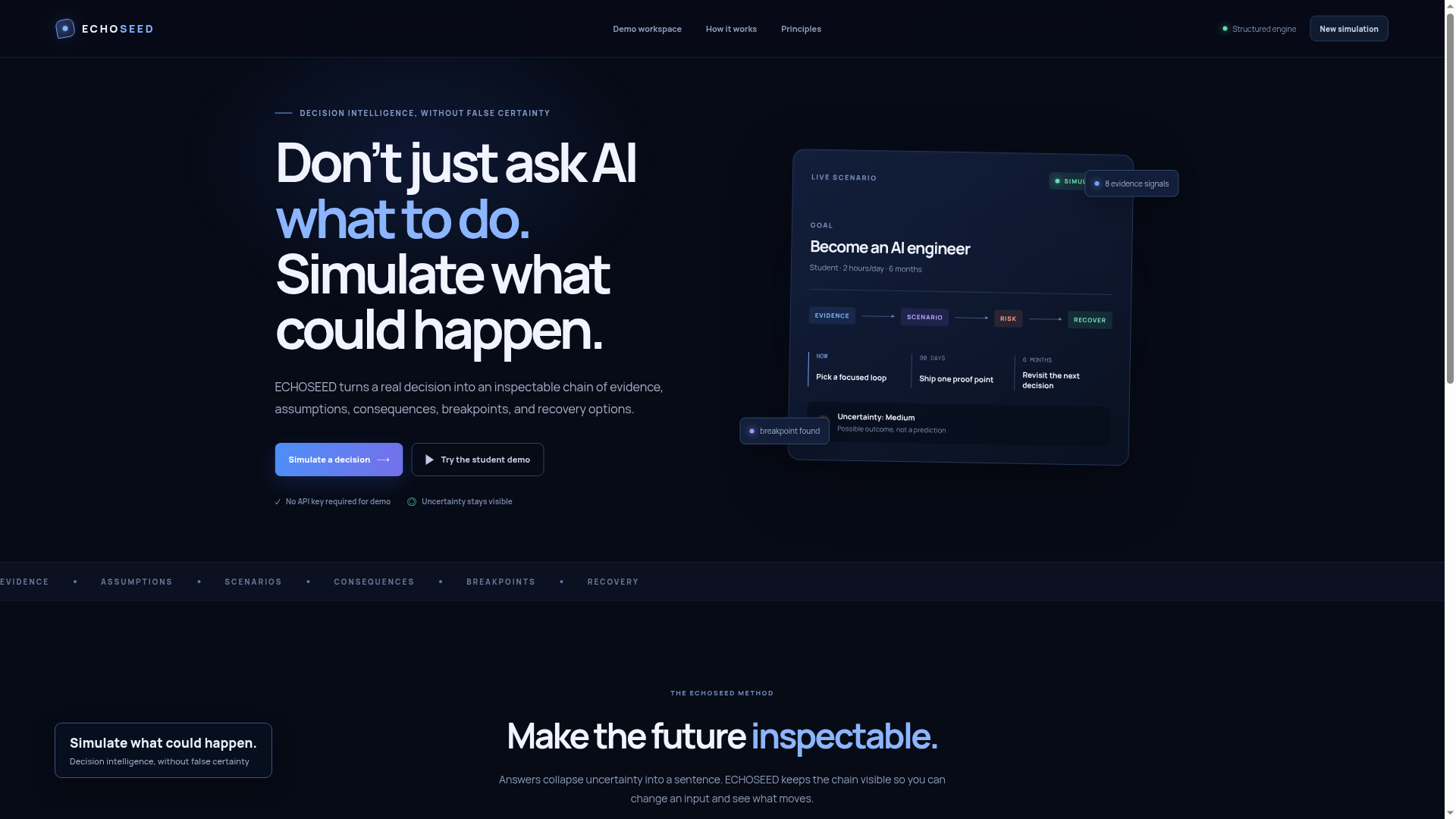
Don't just ask AI what to do. Simulate what could happen.
Inspiration
Most AI assistants are designed to give people an answer.
But many real-world decisions are not simply questions with answers.
A student deciding how to build a career, a founder deciding whether to launch a product, or anyone choosing between different paths needs to understand something deeper:
"If I make this decision, what could happen next?"
That question inspired us to build ECHOSEED.
We wanted to create something that moves beyond the traditional chatbot experience and turns AI into an interactive scenario simulation engine.
Instead of telling users what they should do, ECHOSEED helps them explore possible consequences of different decisions.
What is ECHOSEED?
ECHOSEED is an AI-powered decision simulation and consequence-mapping platform.
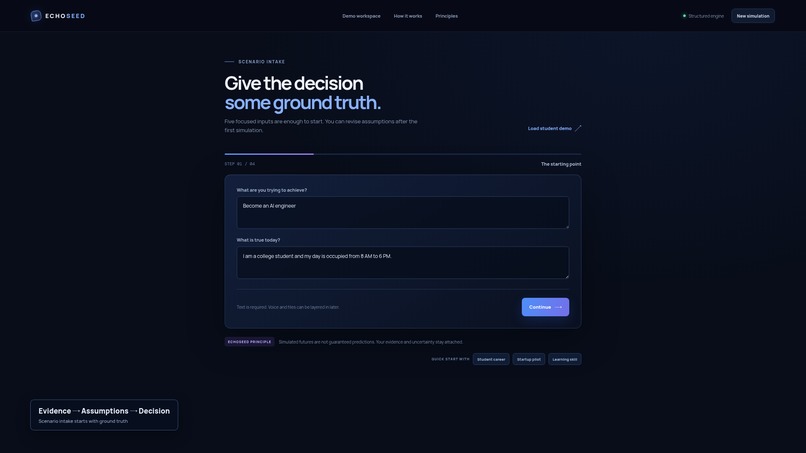
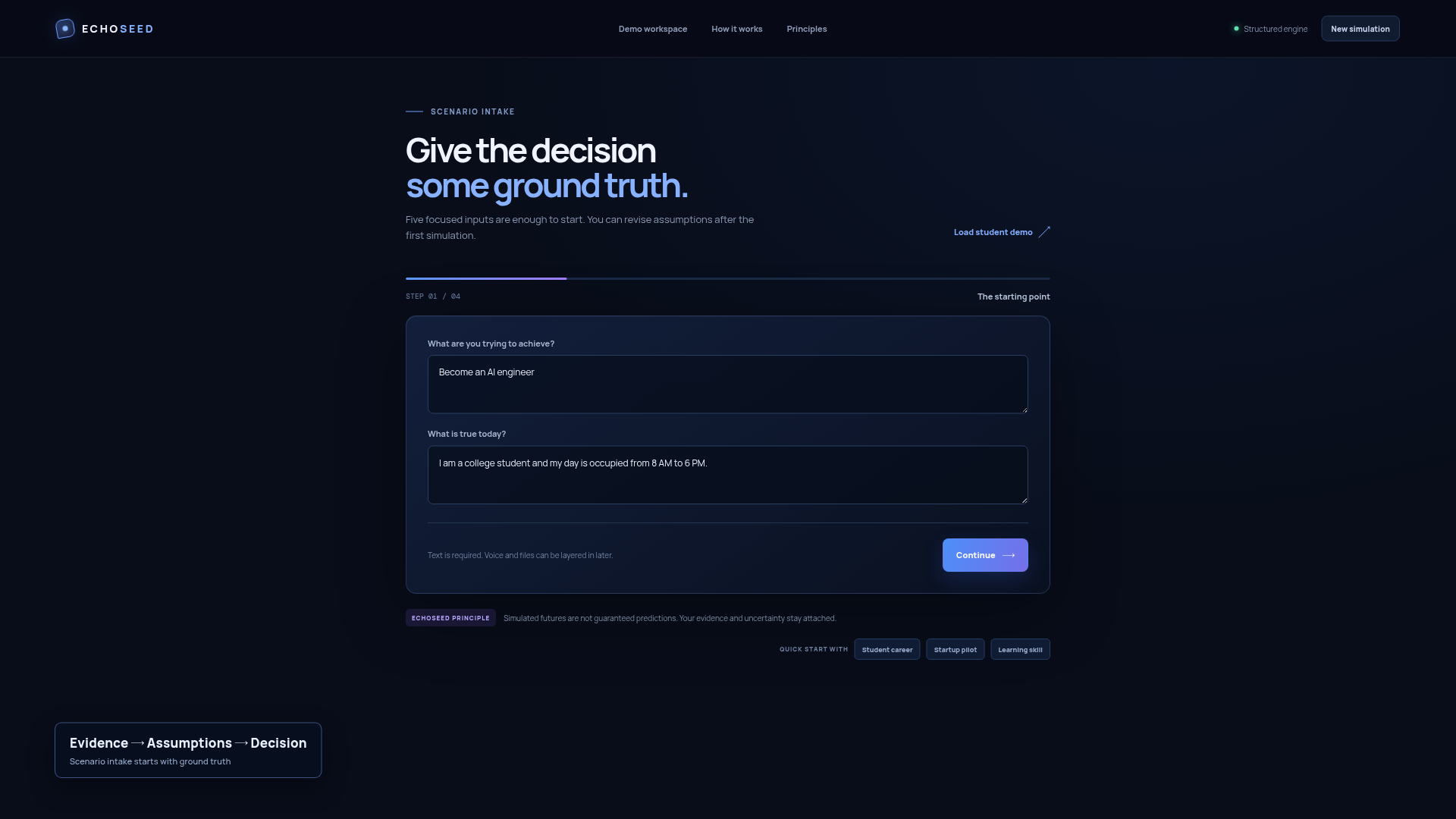
A user provides information about:
- Their goal
- Current situation
- Available time
- Skills
- Resources
- Constraints
- A decision they are considering
ECHOSEED transforms that information into an interactive scenario containing:
Evidence → Assumptions → Decision → Scenario → Consequences → Breakpoints → Recovery Paths
The system is designed to distinguish between what the user actually provided, what the AI assumes, and what represents a possible future scenario.
This makes the experience more transparent than simply receiving a generated AI answer.
The Core Idea
Traditional AI:
Question
   ↓
AI
   ↓
Answer
ECHOSEED:
Evidence
   ↓
Decision
   ↓
Possible Scenario
   ↓
Consequences
   ↓
Breakpoint Detection
   ↓
Recovery Path
   ↓
Next Decision
The goal is not to predict the future with certainty.
The goal is to help users reason through possible futures before making a decision.
Our Key Innovation — The Time-Travel Decision Simulator
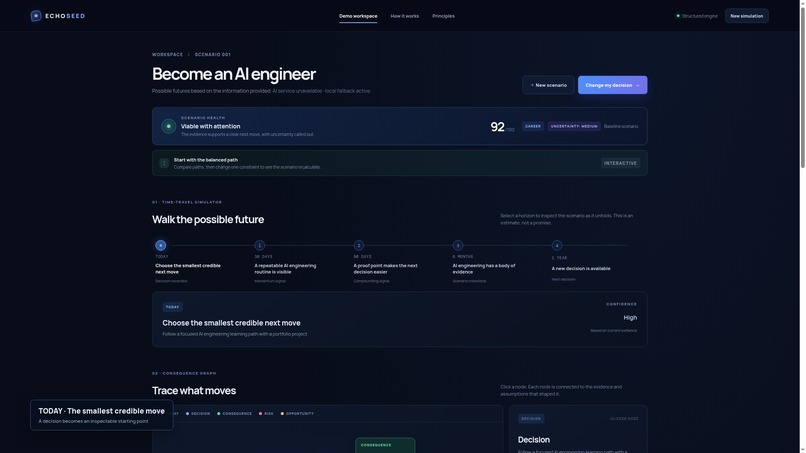
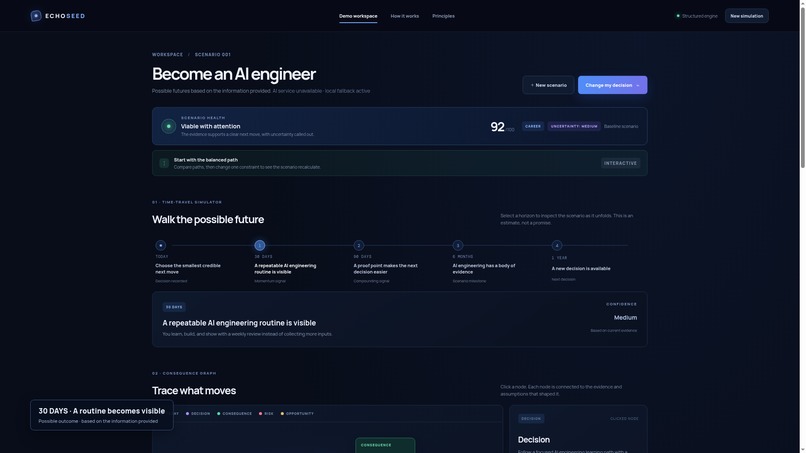
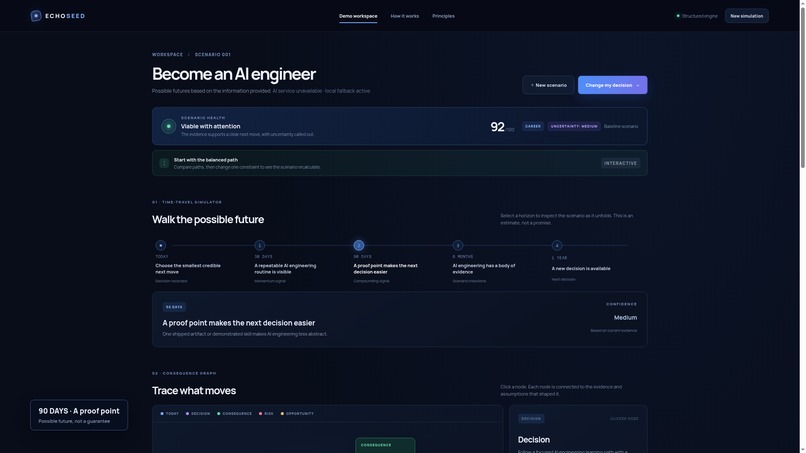
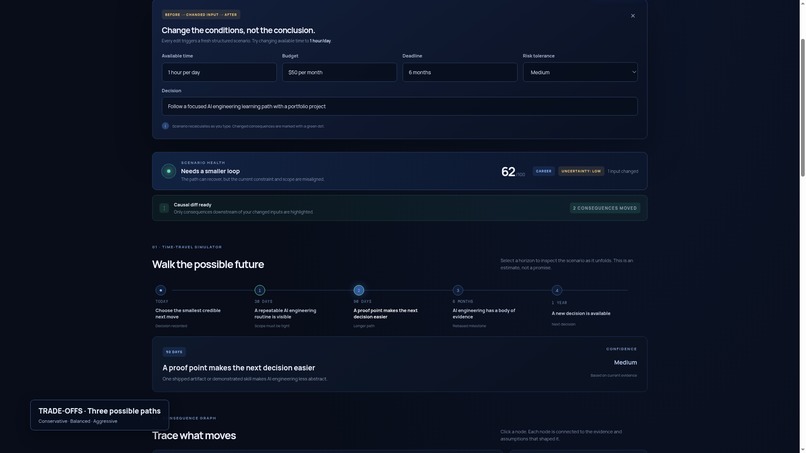
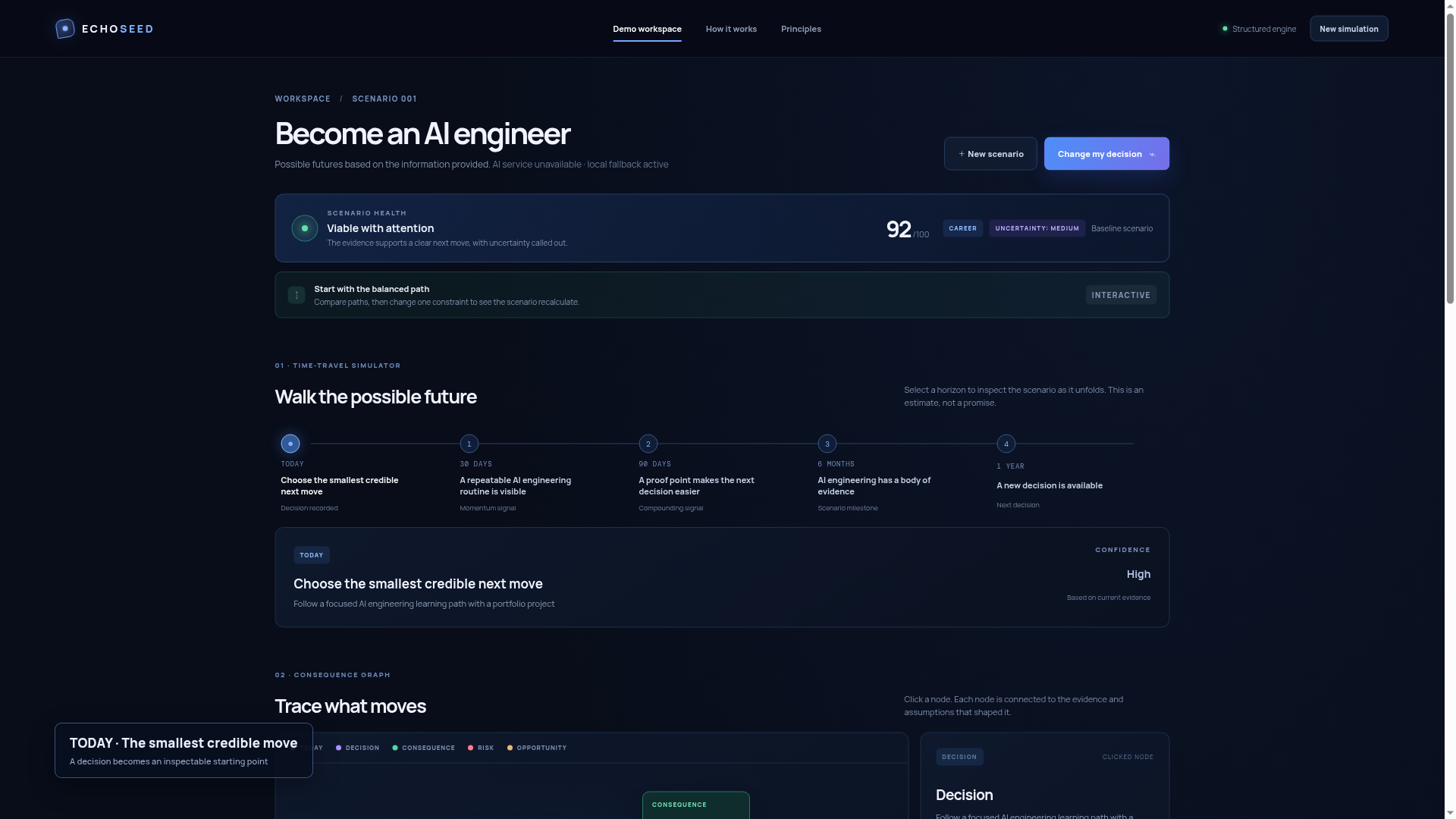
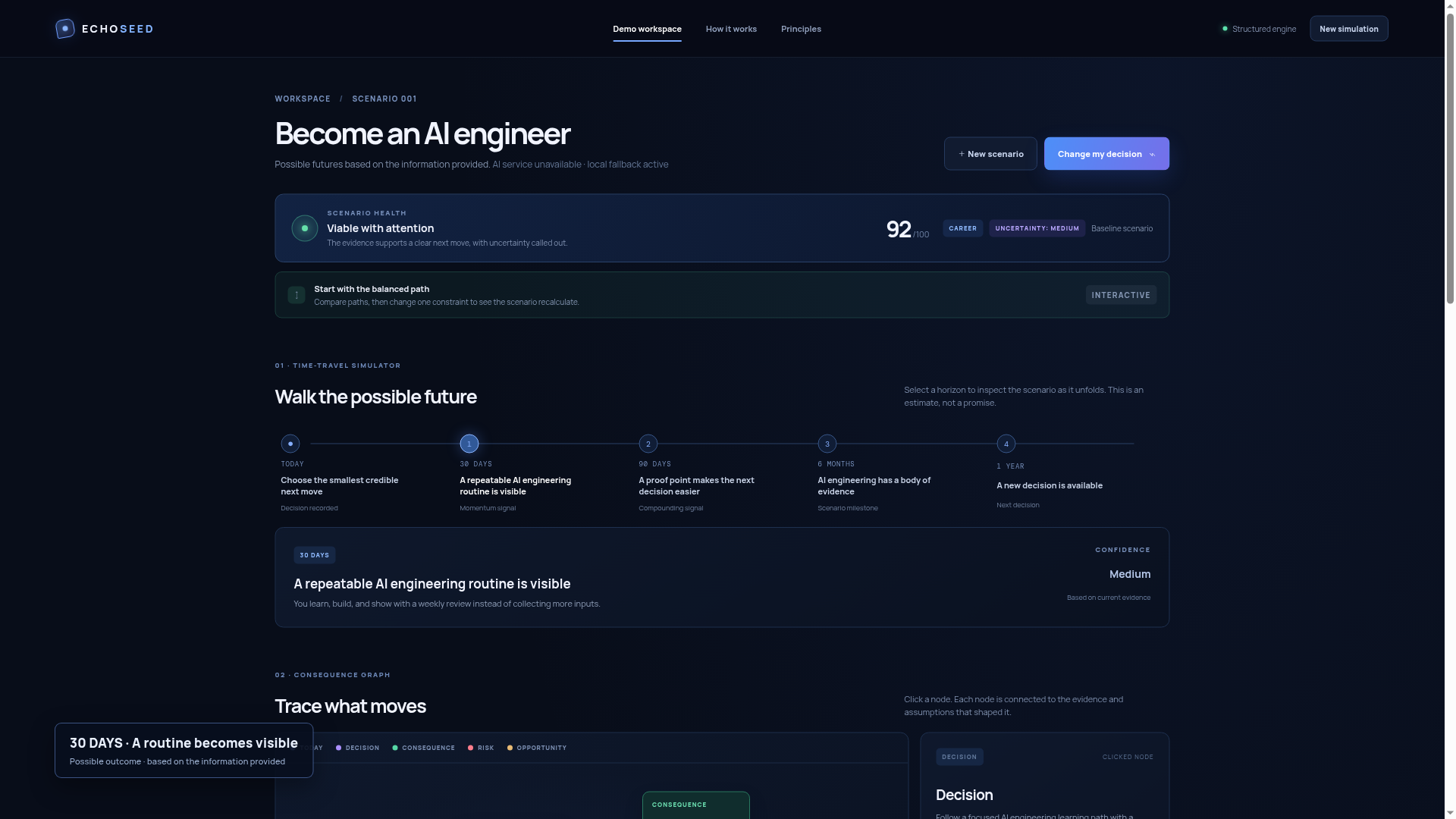
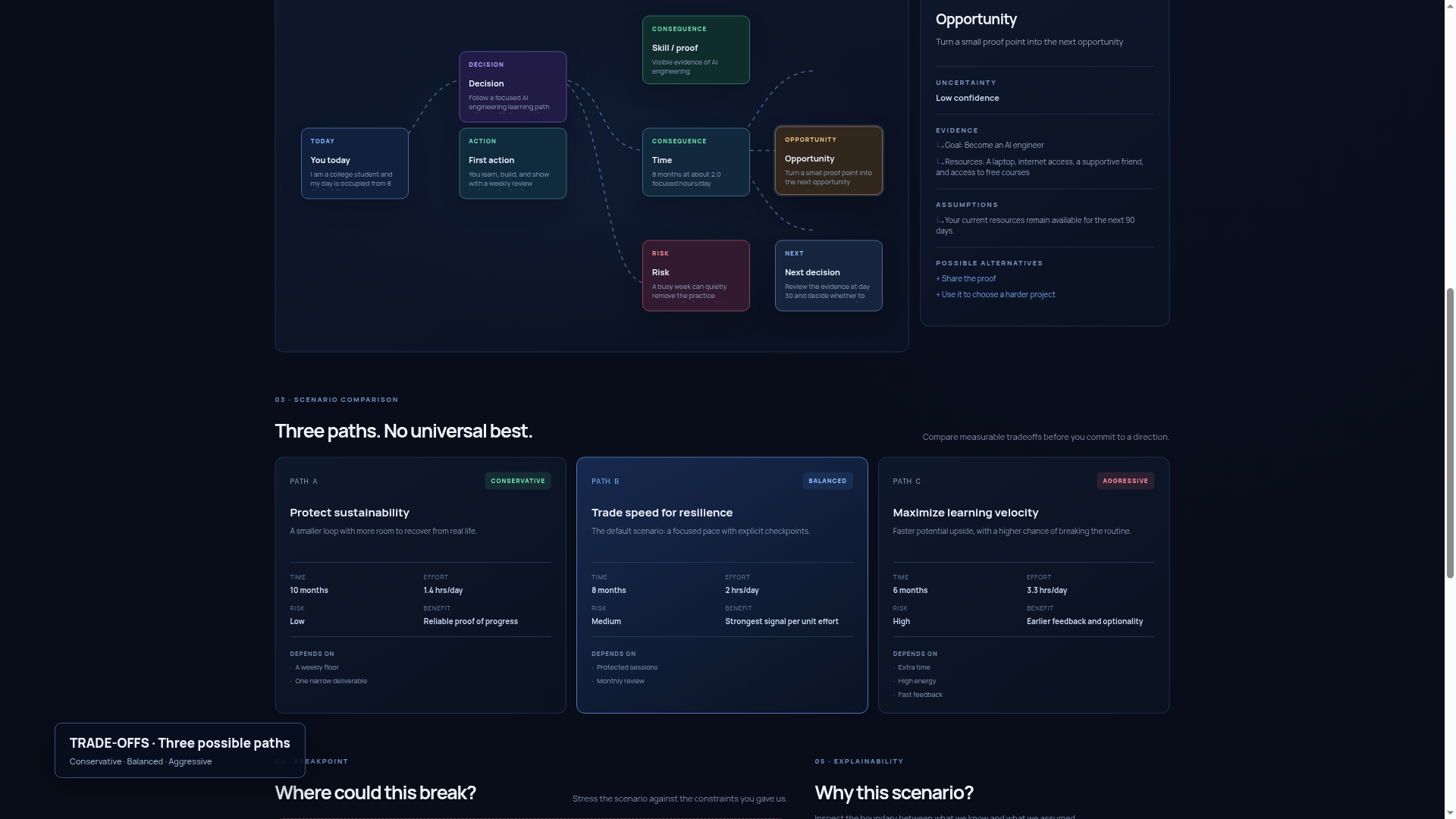
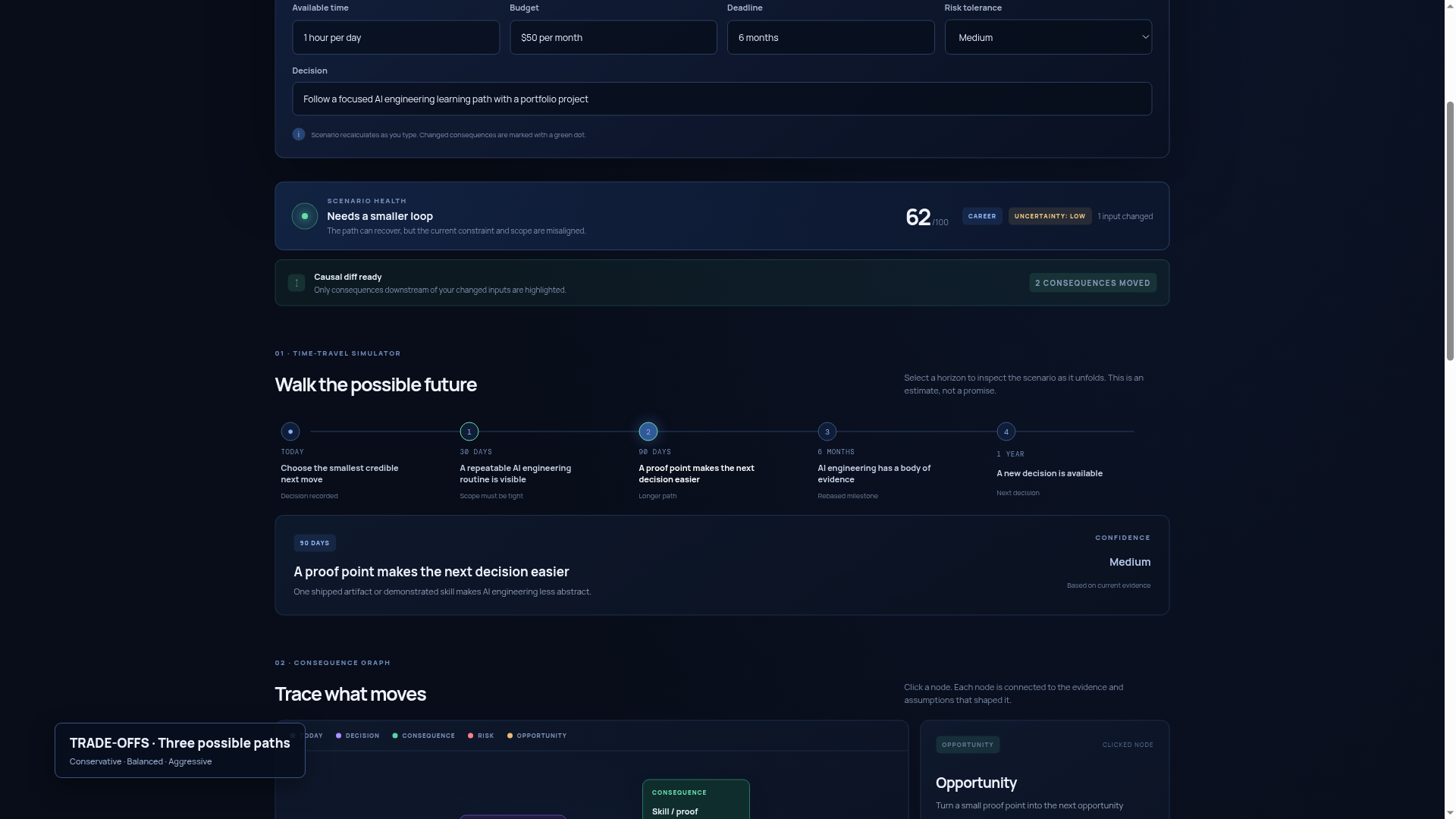
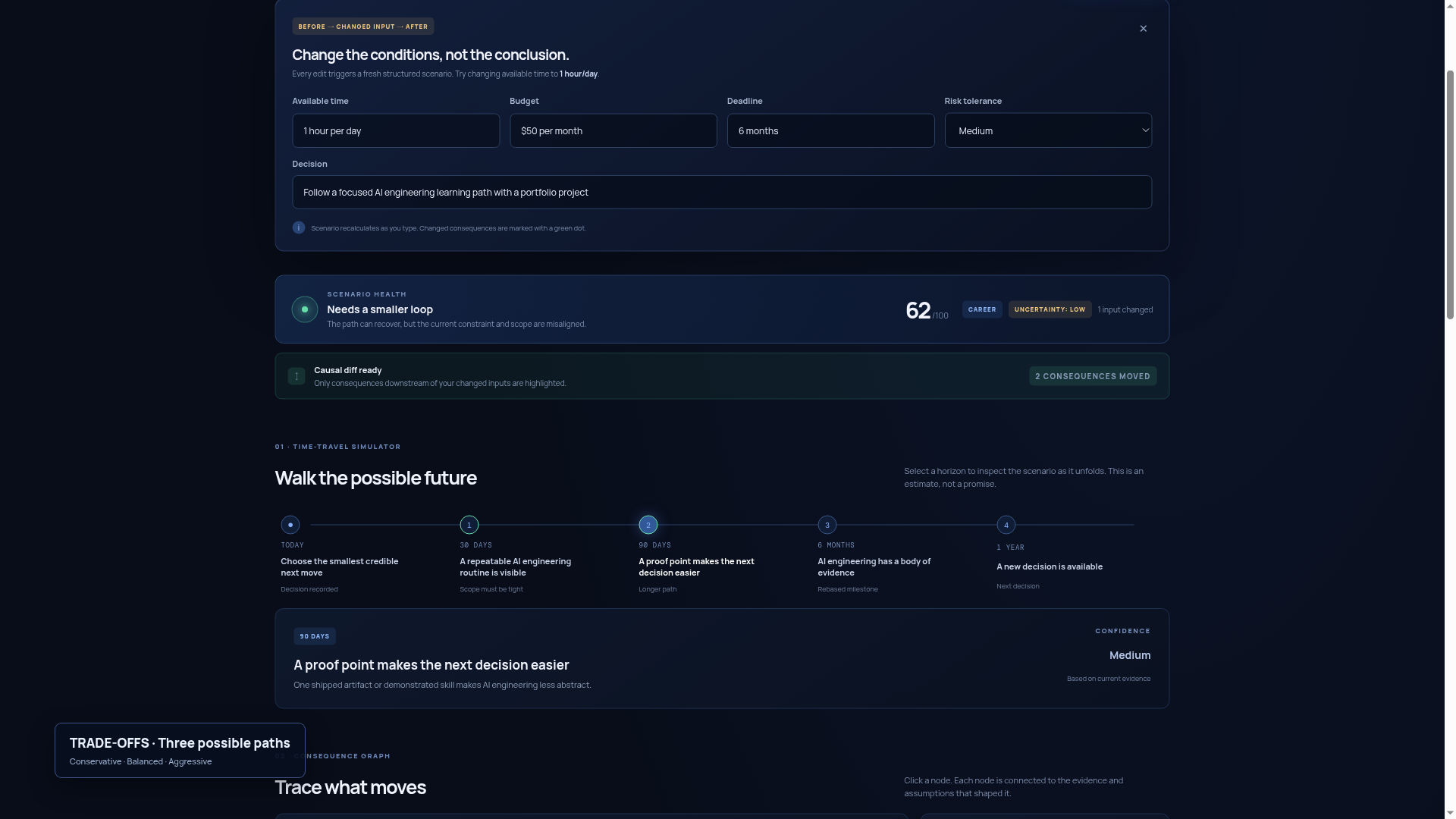
The central experience of ECHOSEED is an interactive timeline.
A scenario can be explored across different time horizons:
TODAY
  ↓
30 DAYS
  ↓
90 DAYS
  ↓
6 MONTHS
  ↓
1 YEAR
Users can change important constraints and see how the scenario changes.
For example:
A student may initially have:
2 hours/day available
and receive one scenario.
They can then change the constraint to:
1 hour/day
and simulate the decision again.
The application can then show how the timeline, consequences, risks, and recovery options change.
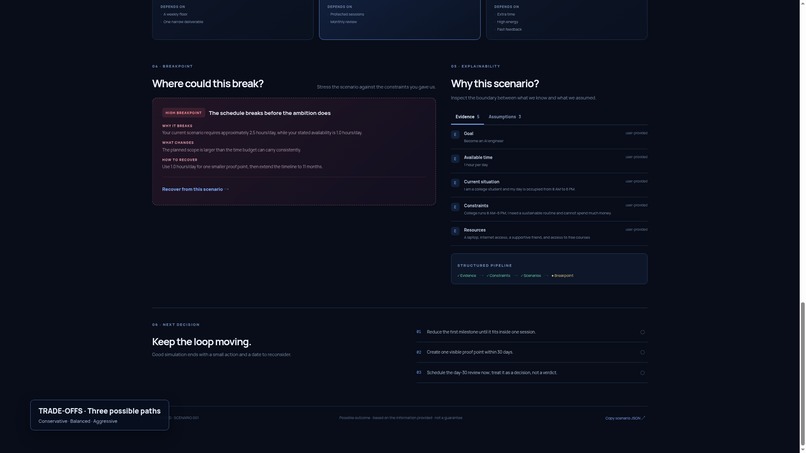
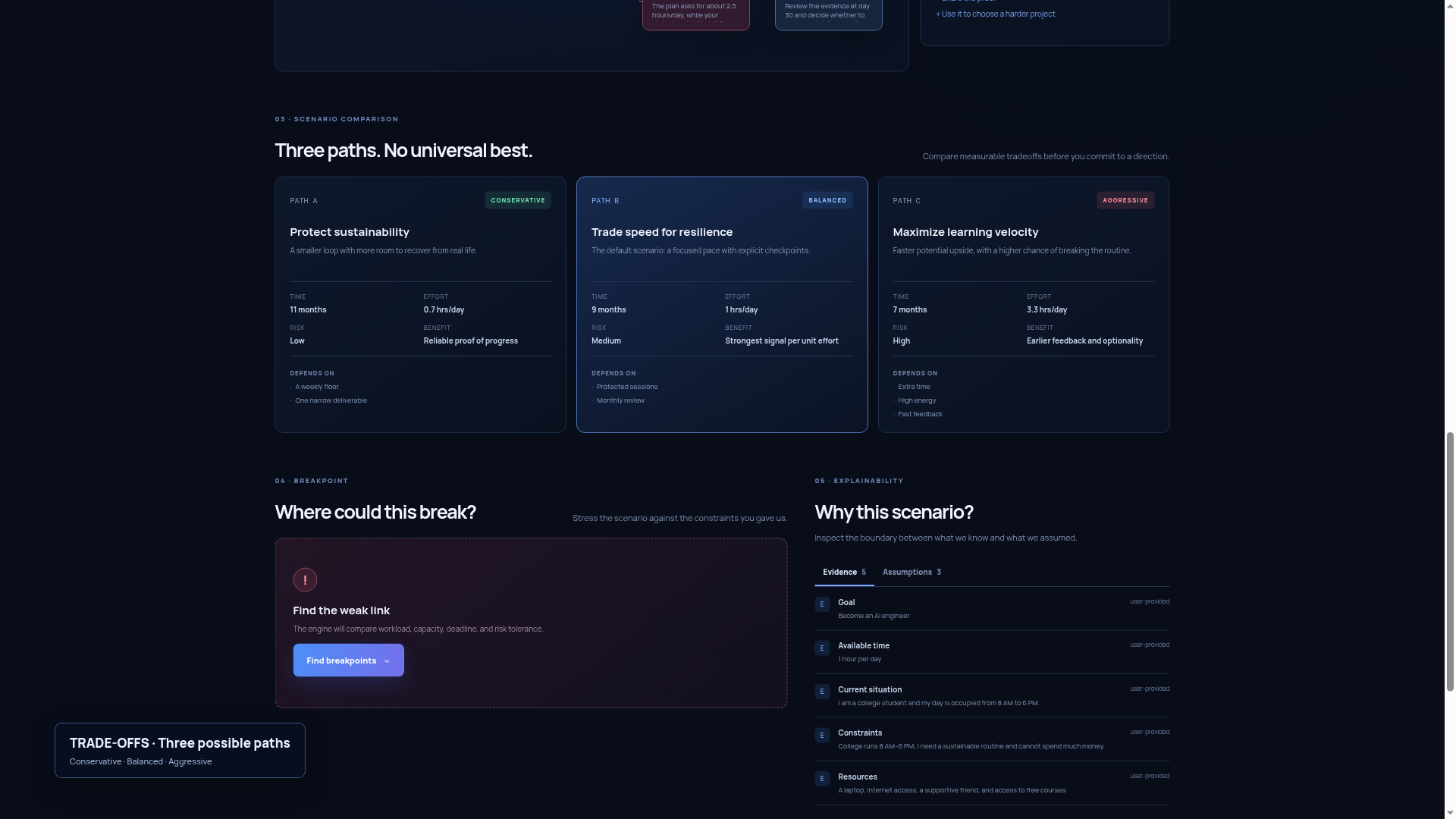
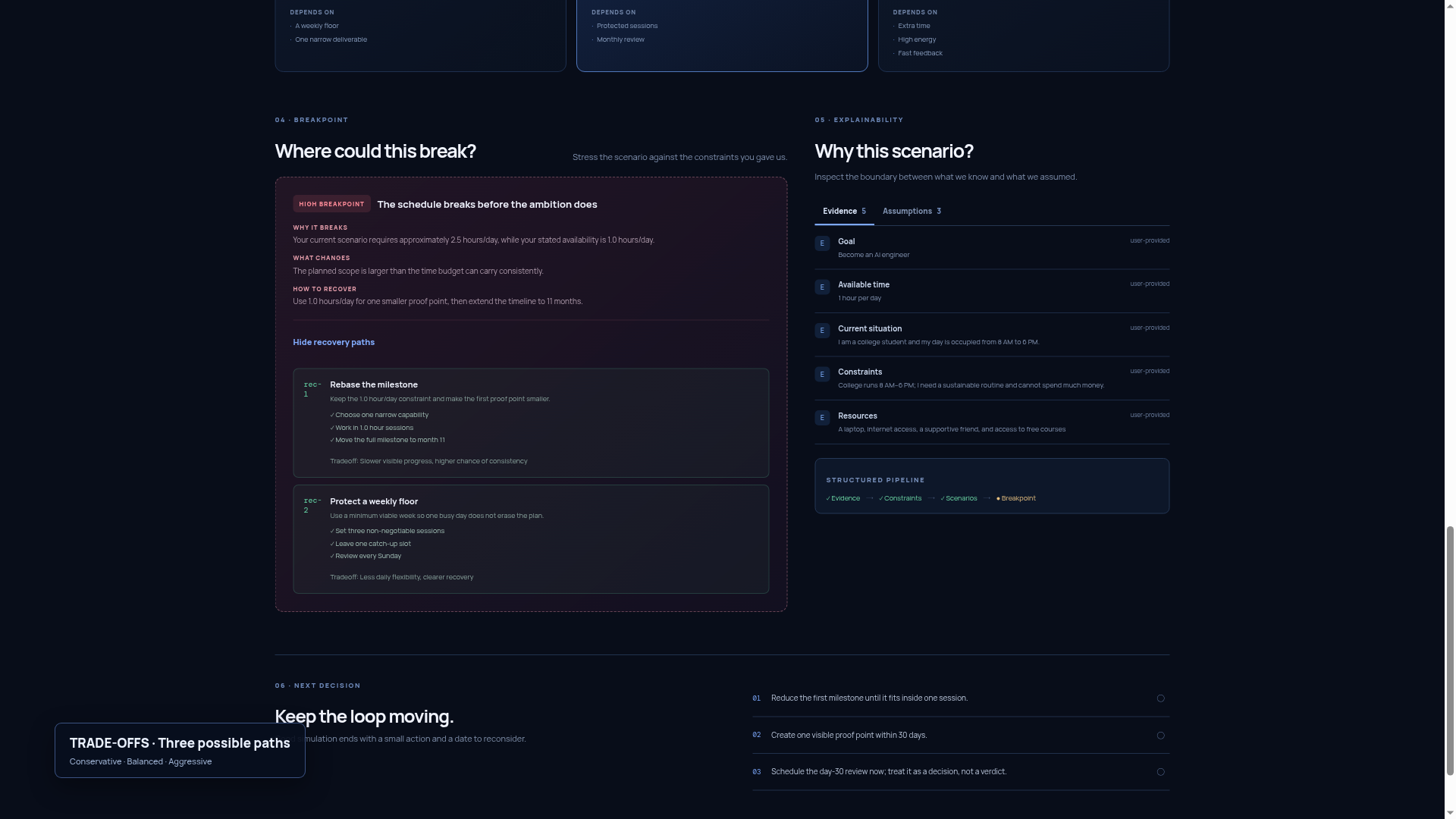
BREAKPOINT — Where Could the Plan Fail?
One of ECHOSEED's important concepts is BREAKPOINT.
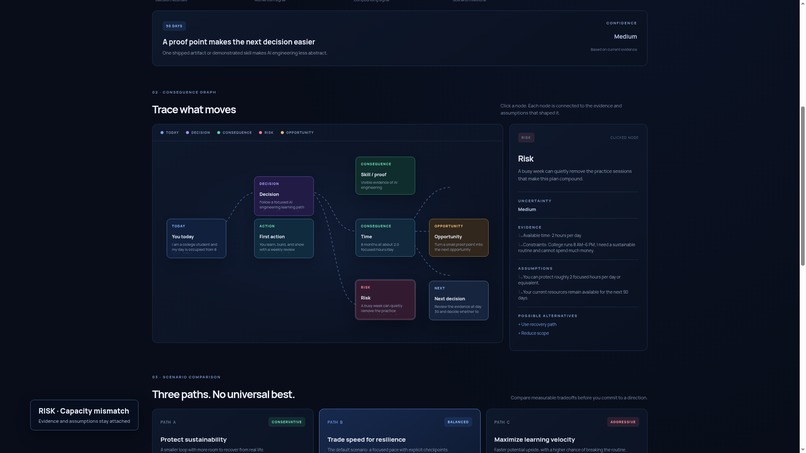
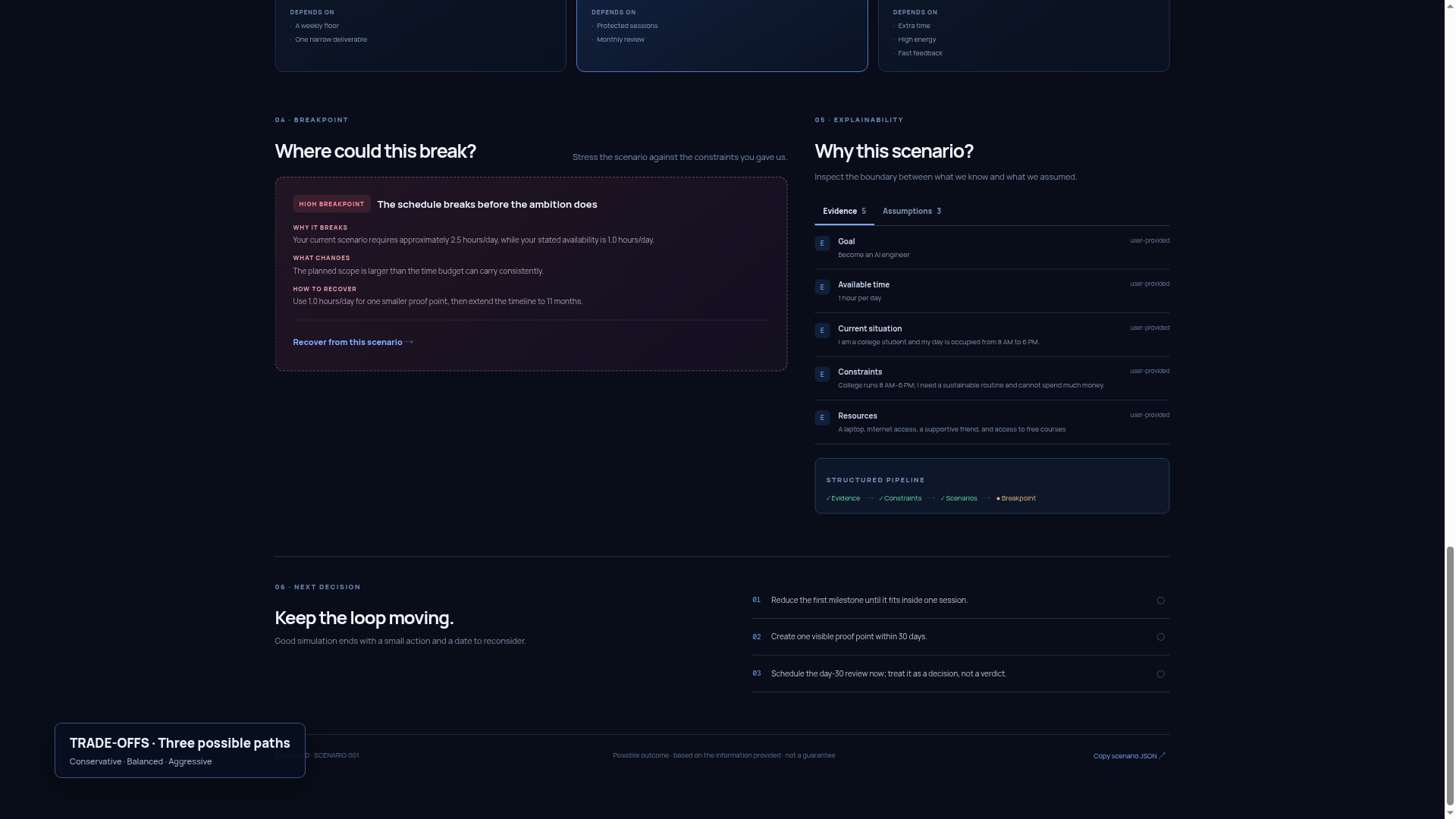
Instead of only showing a successful scenario, ECHOSEED looks for potential points where the scenario may become difficult or unrealistic.
For example:
Available time: 1 hour/day

Required workload: 3 hours/day

             ↓

       BREAKPOINT

Workload exceeds available time
             ↓
       Scenario Risk
The system can then explain:
- Why the breakpoint occurred
- Which assumption caused it
- What could change
- What alternative path could be considered
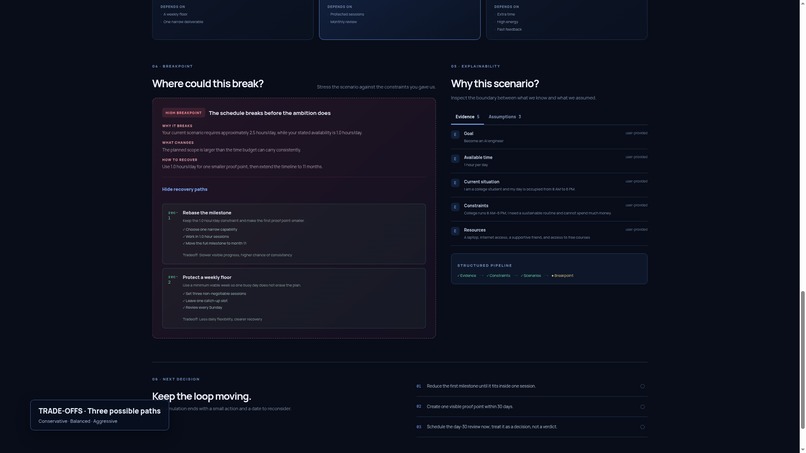
RECOVERY — What Can We Change?
A failure does not have to end a scenario.
ECHOSEED introduces a second step:
RECOVERY PATH
Instead of simply saying that a plan may fail, the system can explore alternative approaches such as:
Original Plan
     ↓
Breakpoint
     ↓
Identify Constraint
     ↓
Change Timeline / Scope / Resources
     ↓
New Scenario
This turns the application from a simple prediction interface into an interactive decision exploration system.
Evidence vs Assumptions vs Scenarios
One of the design principles of ECHOSEED is transparency.
The system separates:
Evidence
Information directly provided by the user.
Assumption
An inference required to construct a scenario.
Scenario
A possible future generated from the available evidence and assumptions.
Uncertainty
An indication that the scenario is not a guaranteed prediction.
This is important because ECHOSEED is designed to help people reason about uncertainty rather than pretending that an AI system can know the future.
What We Built
During LovHack, we focused on building a complete interactive experience around scenario simulation.
The core product architecture consists of:
User Input
    ↓
Evidence & Constraint Extraction
    ↓
AI Scenario Engine
    ↓
Consequence Generation
    ↓
Breakpoint Detection
    ↓
Recovery Generation
    ↓
Timeline
    ↓
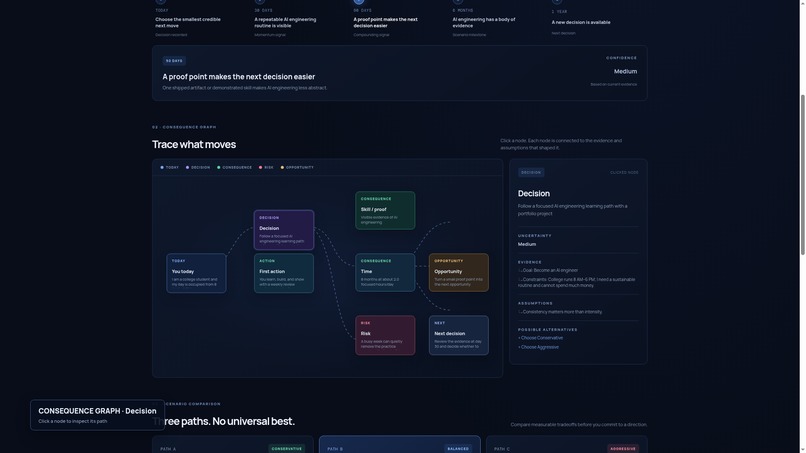
Interactive Consequence Graph
The application is designed as a web-based experience so that a judge can understand and interact with the concept directly.
Technology
ECHOSEED is built using modern web and AI technologies.
The architecture includes:
- React
- TypeScript
- Vite
- Tailwind CSS
- Interactive graph visualization
- AI/LLM-based scenario generation
- Backend API architecture
- Structured JSON-based AI responses
- Environment-based API configuration
The AI output is structured rather than directly controlling the interface. This allows the application to validate and visualize scenario information consistently.
What We Learned
One of our biggest lessons was that adding AI does not automatically make a product innovative.
The interesting part is how AI changes the user's interaction with a problem.
We learned to think about AI as a reasoning component inside a product rather than simply placing a chatbot on a webpage.
We also learned the importance of:
- Structured AI outputs
- Explainability
- Failure handling
- Interactive visualization
- Scenario state management
- Designing for a real demo rather than a static prototype
Challenges
One of the biggest challenges was making an AI-generated scenario feel like an actual product rather than a collection of generated text.
We needed to create a structured flow where the AI output could become:
data → timeline → graph → consequences → breakpoint → recovery
Another challenge was uncertainty.
A scenario simulator should not present generated possibilities as guaranteed predictions. Therefore, ECHOSEED separates evidence, assumptions and scenarios so users can understand the basis of the generated result.
We also focused on reliability because a hackathon demo should remain usable even when an external AI service encounters an error.
Why ECHOSEED Is Different
ECHOSEED is not designed around:
"Ask an AI and receive an answer."
It is designed around:
"Change a decision and explore how the possible future changes."
The product combines:
AI reasoning + interactive timelines + consequence graphs + breakpoint detection + recovery paths
into one decision-exploration workflow.
Future Vision
ECHOSEED can eventually become a general-purpose scenario engine for:
- Students
- Entrepreneurs
- Product teams
- Career planning
- Project planning
- Learning paths
- Strategic decisions
Future versions could incorporate richer user evidence, historical outcomes, collaborative decision-making, additional simulation models, and deeper scenario comparison.
Final Thought
We cannot know the future with certainty.
But we can make our decisions more informed by exploring what could happen before we commit to a path.
ECHOSEED
Don't just ask AI what to do.
Simulate what could happen.
Built With
- ai
- fastapi
- github
- llm
- postgresql
- react
- react-flow
- supabase
- tailwind-css
- typescript
- vite

Log in or sign up for Devpost to join the conversation.