-
-

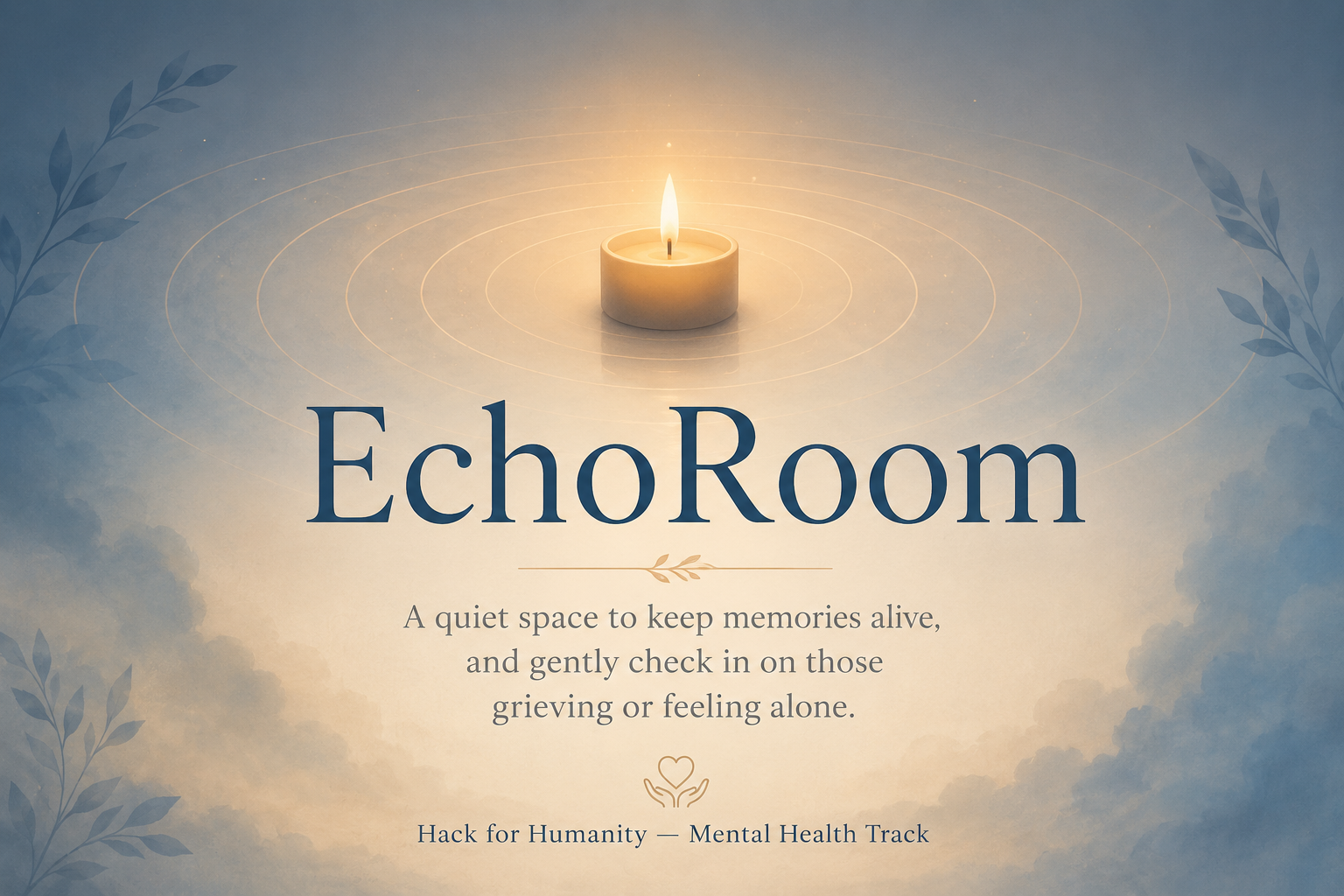
EchoRoom — a quiet space for memory and grief
-
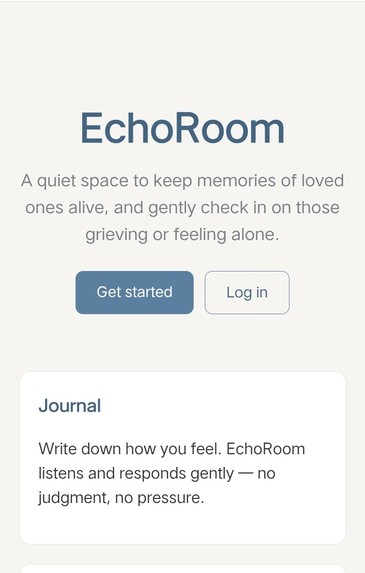
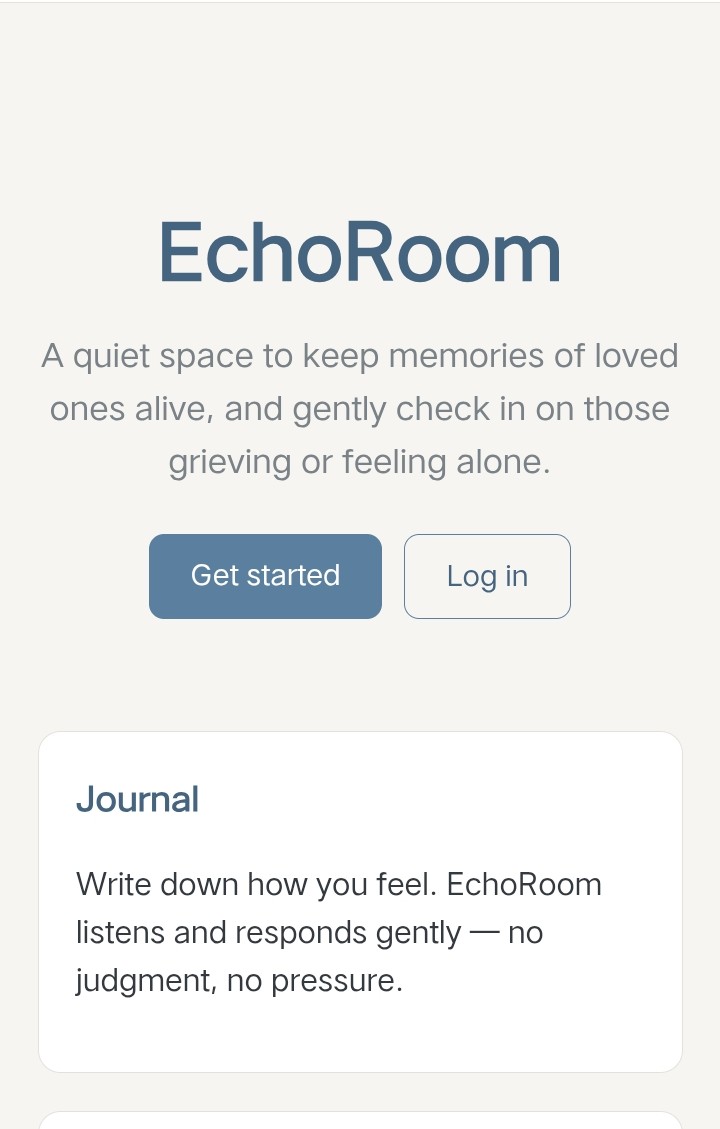
The EchoRoom landing page
-
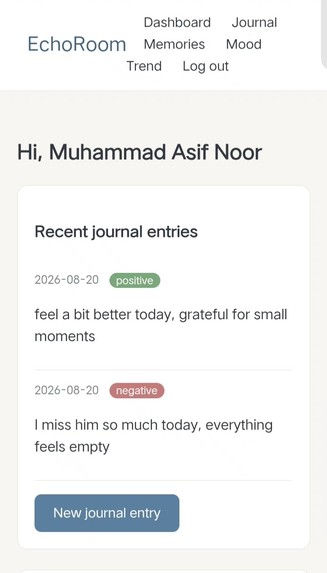
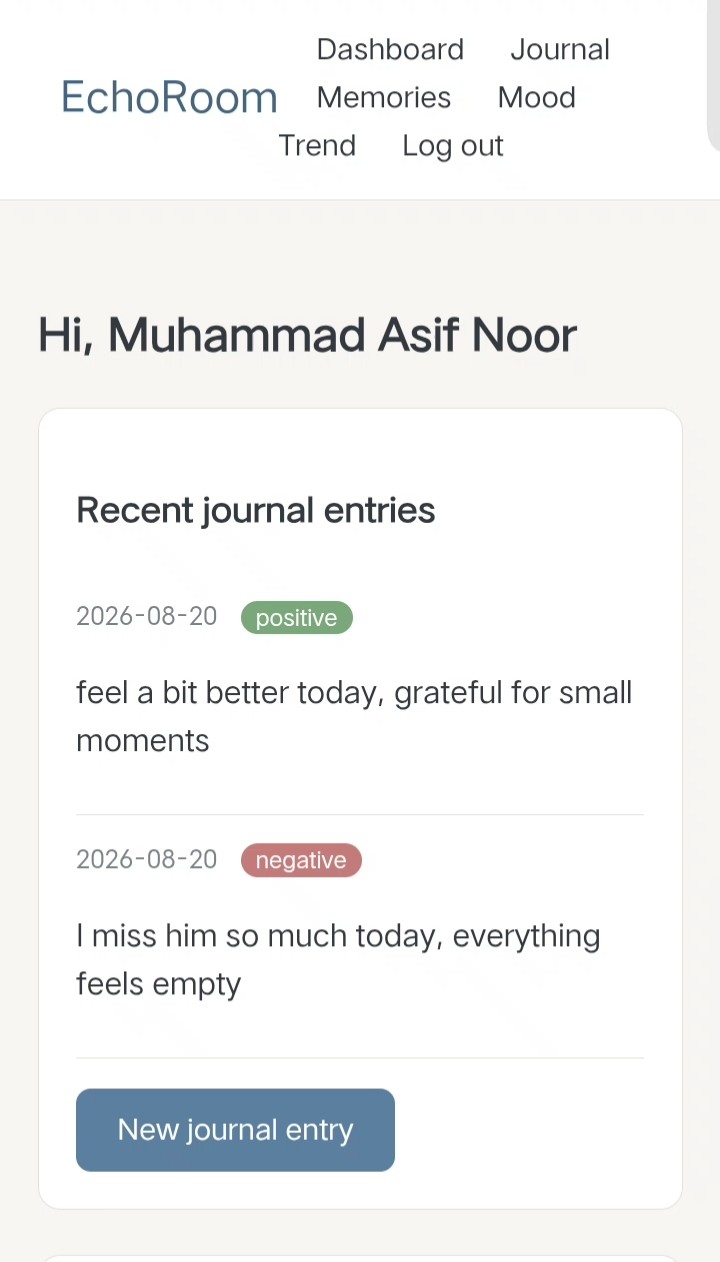
AI reflects the specific themes in each journal entry
-
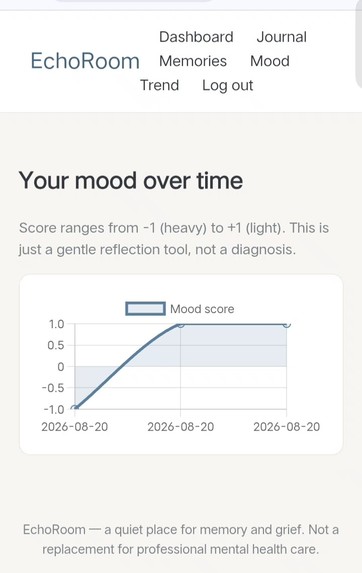
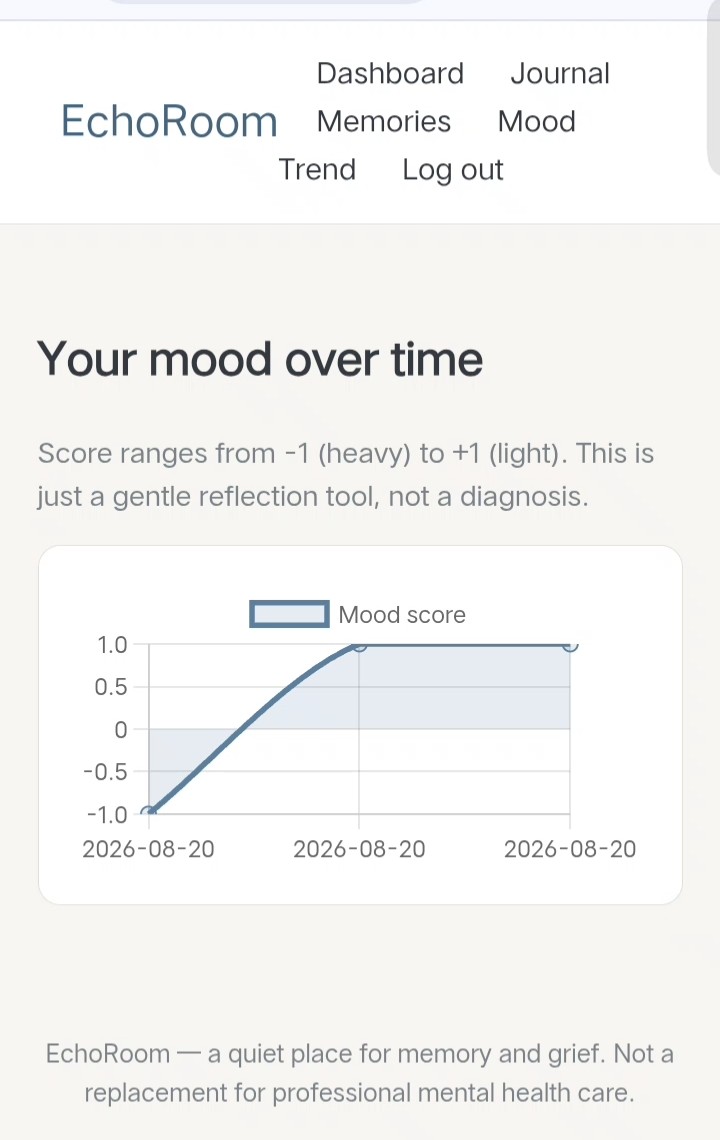
Mood trend over time, visualized gently
-
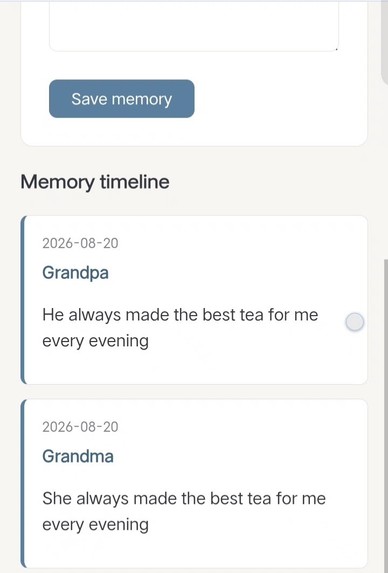
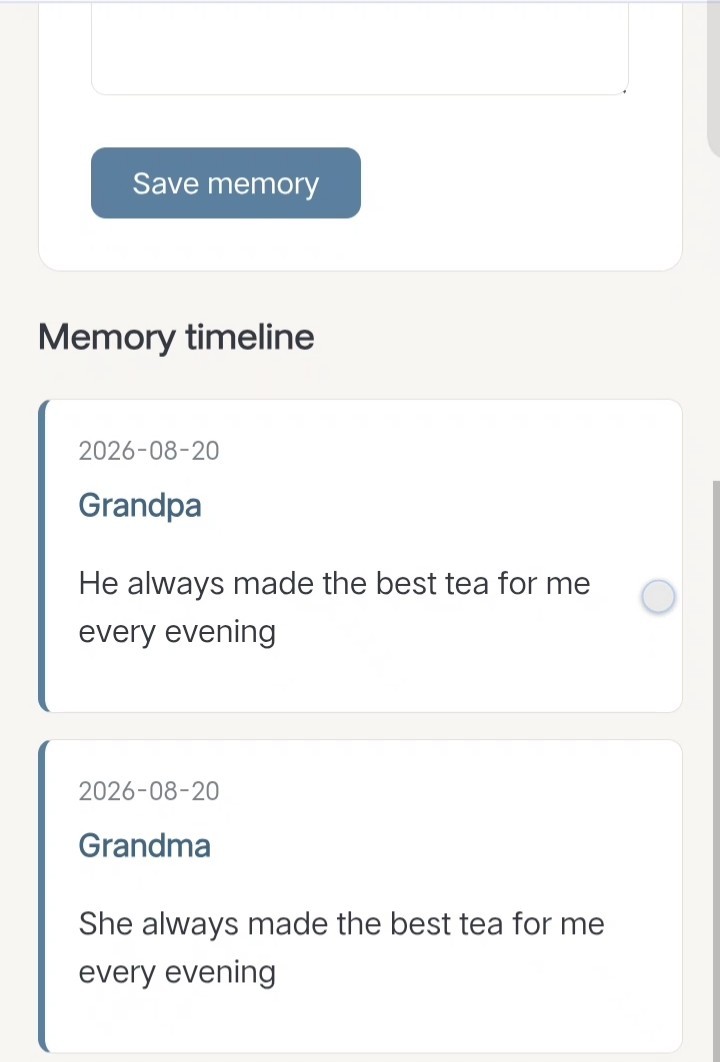
The Memory Corner keeps loved ones close
Inspiration Grief and loneliness affect millions of people every year, but most mental health apps are built for general mood tracking. Very few are designed specifically for people who have lost someone they love, or who feel isolated in their daily life. We wanted to build a space that speaks directly to that experience — somewhere quiet, private, and genuinely reflective of what someone is going through, rather than a generic wellness checklist. What it does EchoRoom is a quiet, AI-supported space for people processing grief or isolation. Users can: Write private journal entries about how they're feeling Receive a response from a built-in AI sentiment engine that detects specific emotional themes in their writing (like missing someone, loneliness, exhaustion, or grief) and reflects those exact themes back to them, instead of a generic canned reply Save memories of a loved one in a "Memory Corner," building a personal timeline over time Track their mood over time with a simple visual chart Receive a gentle, non-intrusive alert on their dashboard if their last few entries have all been heavy, encouraging them to reach out for support How we built it EchoRoom is built with Python and Flask on the backend, with a SQLite database storing users, journal entries, and memories. Authentication uses password hashing for security. The sentiment analysis is a custom-built lexicon and theme-detection system rather than an external paid API. It scans journal text for emotional themes — missing, loneliness, emptiness, grief, hope, gratitude, and more — and builds a response by reflecting the specific themes it detects back to the user in supportive language. The frontend uses HTML, CSS, and Chart.js for mood visualization. The application is deployed and live on PythonAnywhere. EchoRoom also includes a dedicated Privacy & Data page, explaining that journal entries and memories are stored securely, never shared with third parties, and processed entirely through our own lexicon engine rather than sent to any external AI service. Challenges we ran into The biggest challenge was making the AI response feel genuinely personal rather than repetitive. Our first version simply picked a random supportive phrase based on whether the entry was positive, negative, or neutral — but that meant two very different entries could get the same generic reply. We redesigned the system to detect specific themes in the user's actual words (for example, distinguishing "missing someone" from "crying" from "exhaustion") and combine reflections of those themes into a response, so it reads as though the app actually understood what was written. We also learned how to deploy and debug a Flask app on a live server, including troubleshooting database path issues that only appeared once the app was running outside of local development. Accomplishments that we're proud of Building a complete, working, deployed application within the hackathon timeline — including authentication, a custom sentiment engine, a memory timeline feature, and mood visualization — while keeping the tone genuinely sensitive to the people it's meant to support. What we learned We learned how to design AI-adjacent features that feel emotionally intelligent without needing a large external model, and how important tone and specificity are when building anything related to mental health and grief. What's next for EchoRoom Future plans include a private "Circle of Care" feature to let users optionally connect with trusted people during difficult moments, and expanding the theme-detection system with a broader emotional vocabulary.


Log in or sign up for Devpost to join the conversation.