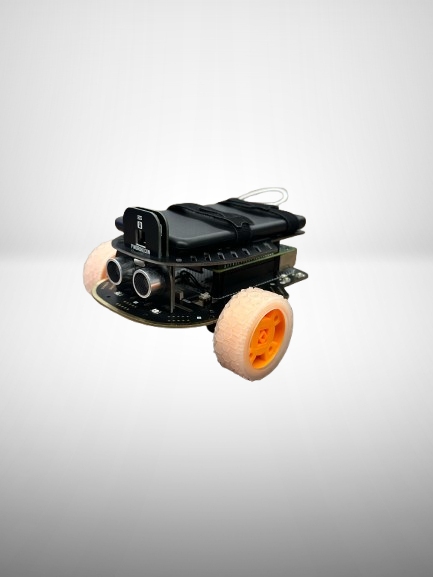
About the Project
Our project, EchoRoam, was born out of a deep desire to save lives when every second counts. In disaster zones, war areas, and minefields, traditional rescue efforts can be too slow and dangerous. We envisioned an autonomous solution that could navigate treacherous terrain, map safe routes, and relay critical information back to rescue teams, all while keeping human rescuers out of harm’s way.
What Inspired Us
The Urgency of Crisis Situations:
When disasters strike, time is the biggest threat. Survival rates drop dramatically within the first 24–72 hours, inspiring us to develop a system that could rapidly and safely scout dangerous areas.The Limitations of Traditional Rescue Efforts:
Manual searches in hazardous environments put rescuers at risk. We wanted to leverage technology to minimize human exposure and maximize rescue efficiency.Real-World Impact:
By building an autonomous RC vehicle powered by QNX RTOS, we aimed to create a platform that could become a critical asset in search-and-rescue missions.
How We Built It
Foundation with QNX RTOS:
We started with a Raspberry Pi running QNX RTOS, which ensured that our system could handle the precise timing required for obstacle detection and navigation.Sensor Integration:
Ultrasonic sensors were integrated to detect obstacles in the vehicle’s path. These sensors continuously provide data to our pathfinding algorithm, allowing EchoRoam to navigate safely.Pathfinding Algorithm:
At the heart of our project is a straightforward yet effective algorithm that processes sensor data in real time, reroutes when obstacles are detected, and logs the safe paths it finds—ensuring that the vehicle can both navigate and retrace its steps.Data Logging:
Using QNX’s robust file handling capabilities, we implemented a data logging system that records the route and obstacle data. This detailed map can be used to optimize future rescue missions.
Challenges We Faced
Tight Deadlines:
Working within a hackathon’s limited timeframe meant focusing on core functionalities, which left little room for more advanced features.Learning Curve with QNX:
Adapting to the QNX microkernel architecture was challenging, particularly when setting up drivers and achieving real-time performance.Hardware Limitations:
Ensuring sensor calibration and maintaining a stable power supply under real-time conditions were significant hurdles that required innovative problem-solving.
What We Learned
The Power of Real-Time Systems:
QNX RTOS highlighted the importance of reliable, predictable processing in critical applications, particularly in time-sensitive rescue scenarios.Modular Design is Key:
Breaking the project into distinct modules (sensing, motor control, and data logging) helped us develop, test, and refine our solution effectively under pressure.Adaptability in High-Pressure Situations:
The project underscored the value of rapid prototyping and the necessity of prioritizing essential functionalities when faced with time and resource constraints.
Our journey with EchoRoam has only just begun. The insights we gained and the challenges we overcame have paved the way for future enhancements, including AI-driven decision-making, advanced sensor integration, and coordinated swarm robotics for comprehensive search-and-rescue operations. We are excited to see how EchoRoam evolves into a full-scale crisis response system that transforms disaster management and saves lives.


Log in or sign up for Devpost to join the conversation.