-
-
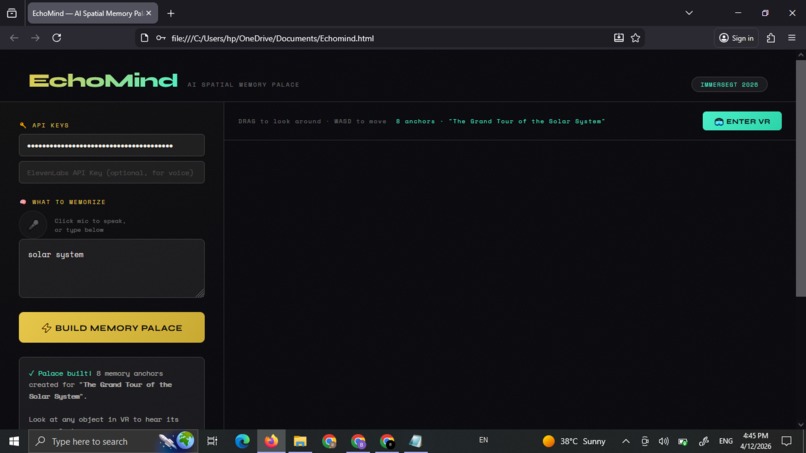
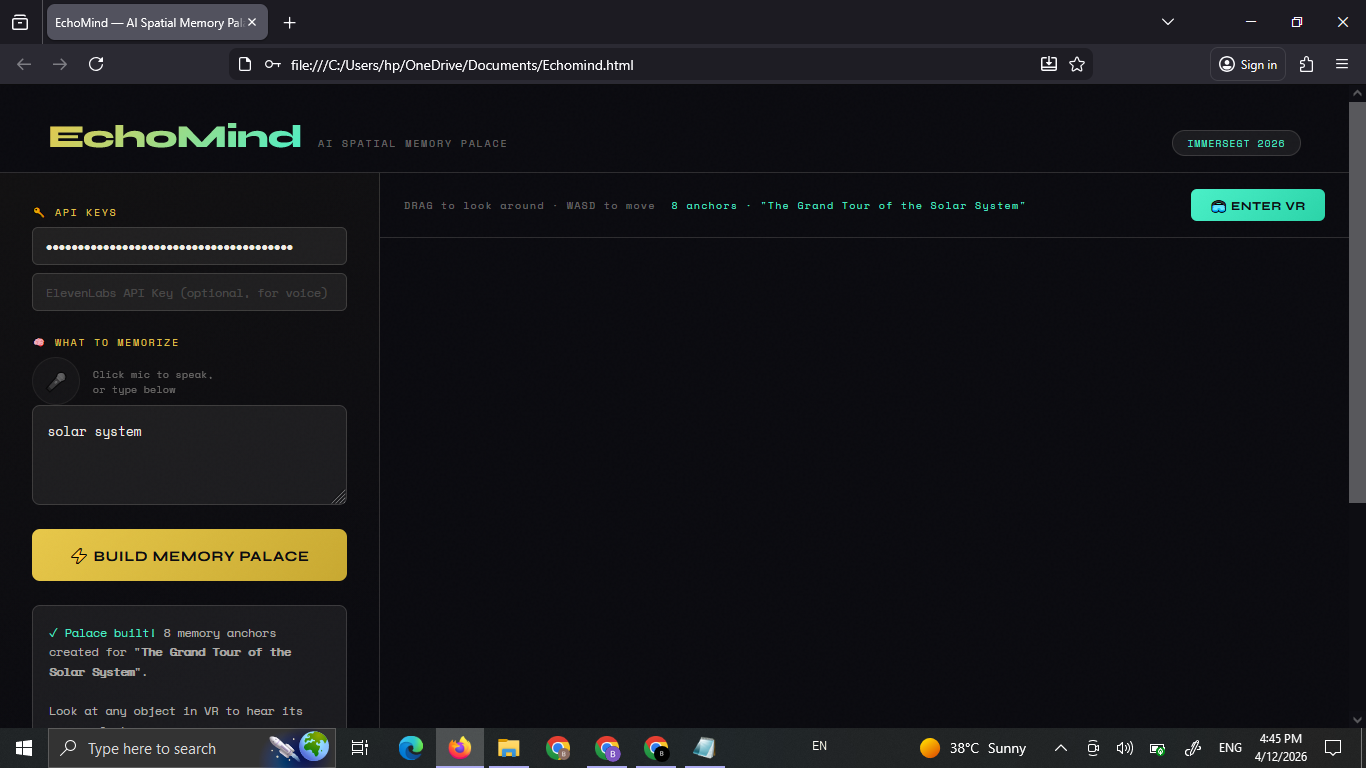
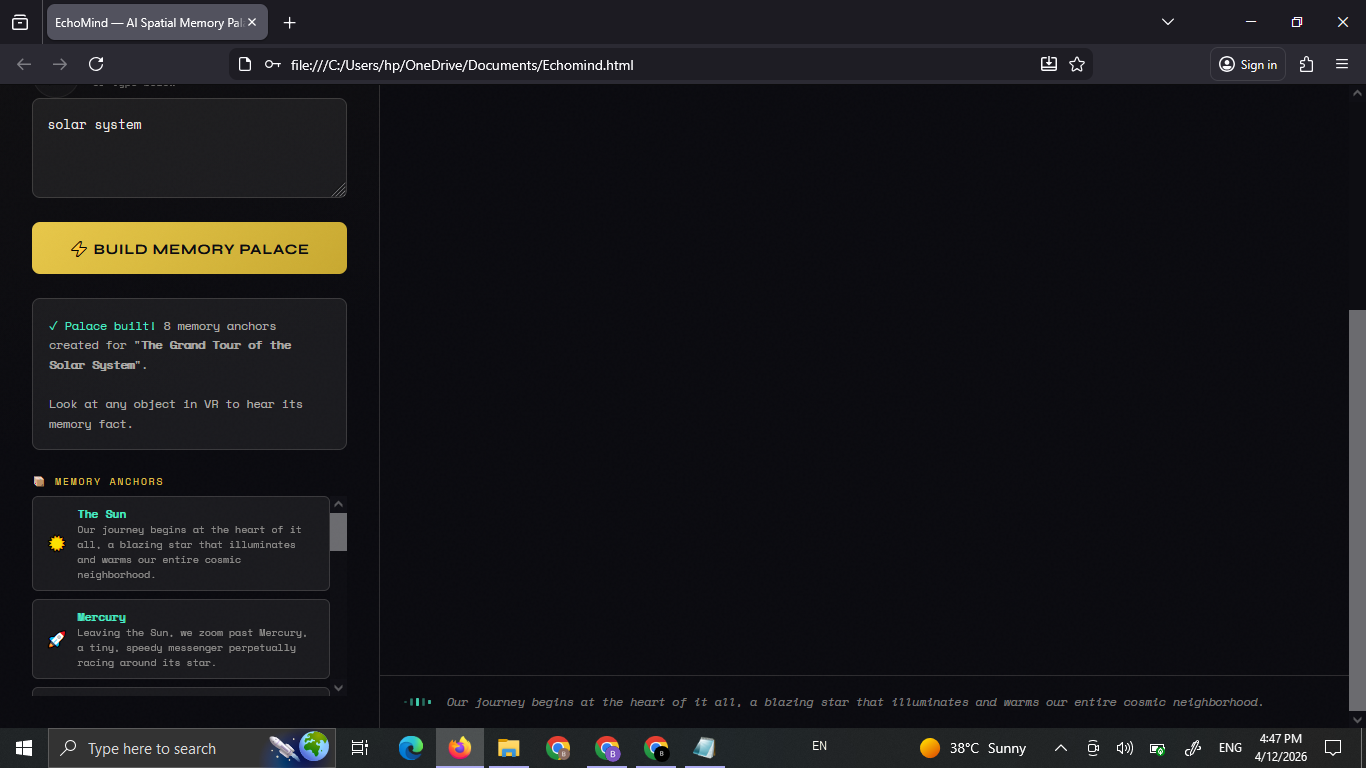
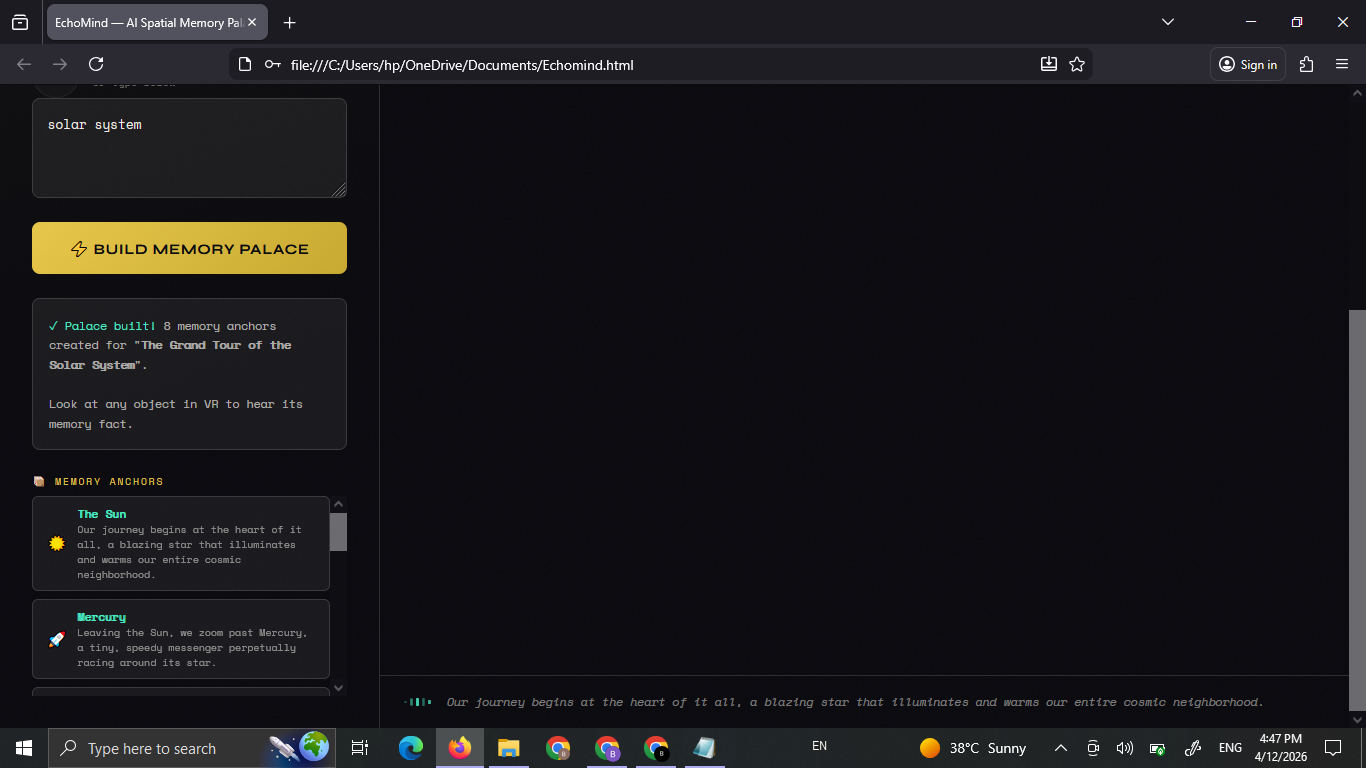
Dashboard Image
-
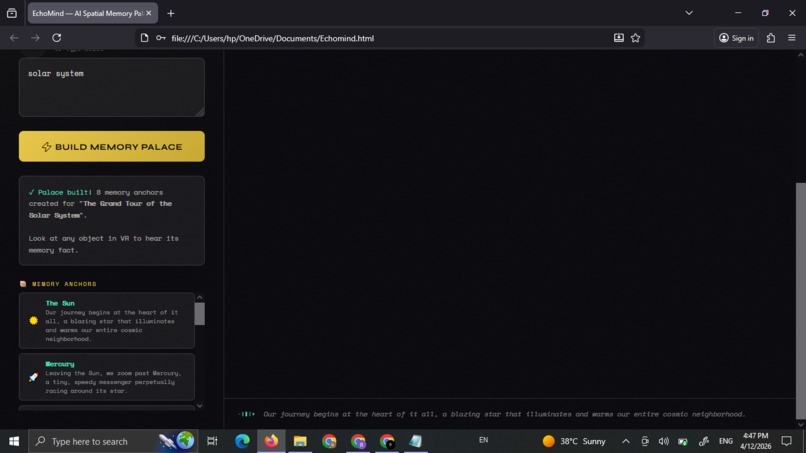
Memory Area
-
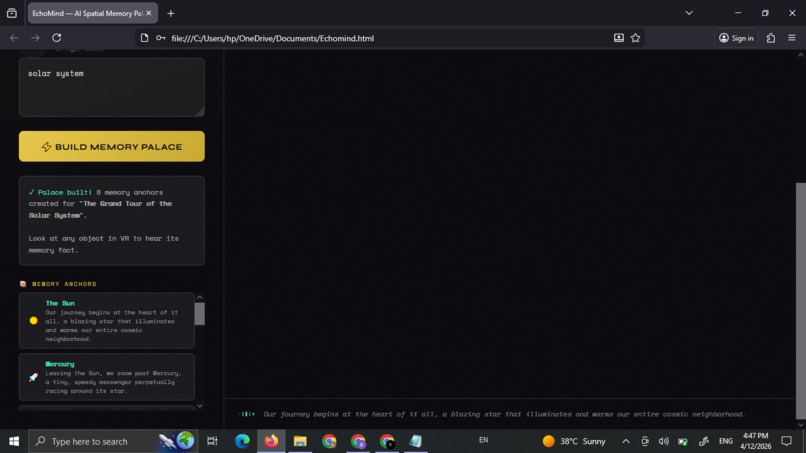
Full screen using Enter VR button
Inspiration
Learning complex topics is difficult because most of it is abstract and invisible. We rely on text and repetition, but the human brain is naturally better at remembering spaces, visuals, and stories.
I was inspired by the ancient memory palace technique and wondered:
What if learning wasn’t something you read… but something you could walk through?
EchoMind was born from this idea — to make knowledge spatial, interactive, and unforgettable using AI and XR.
🚀 What it does
EchoMind transforms any topic into an immersive 3D memory palace.
Users input a topic (text or voice) AI generates key concepts as vivid “memory anchors” These anchors appear as interactive 3D objects in space Users explore them in XR and hear explanations through voice
With the new guided story mode, the experience becomes a journey — where each concept connects to the next, making learning feel natural and engaging.
🛠️ How we built it
EchoMind combines XR, AI, and voice interaction:
XR Layer: Built using A-Frame/WebXR for interactive 3D environments AI Layer: Powered by Google Gemini API to generate structured memory objects and narratives Voice Layer: Integrated ElevenLabs and browser speech synthesis for narration Frontend: HTML, CSS, and JavaScript for UI and interaction
The system dynamically converts AI-generated structured data into a spatial scene with animated objects and interactive elements.
⚡ Challenges we ran into Designing a structured AI output format that reliably converts into 3D objects Making the experience feel intuitive in XR, not overwhelming Synchronizing AI-generated content with real-time rendering Balancing simplicity vs immersion within limited time 🏆 Accomplishments that we're proud of Built a fully functional AI-powered XR learning system as a solo project Successfully combined AI + spatial computing + voice interaction Created a guided narrative experience, not just a visualization Designed a clean and intuitive interface for non-technical users 📚 What we learned Spatial learning is far more engaging than traditional methods AI becomes more powerful when combined with interaction and visualization Small UX details (like narration and flow) greatly impact user experience Building for XR requires thinking in experiences, not screens 🔮 What's next for EchoMind Personalized learning styles (e.g., visual, story-based, simplified explanations) Multi-user collaborative memory spaces AR mode for real-world learning overlays Adaptive AI that quizzes users and tracks retention over time
Our vision is to make learning experiential instead of passive — where knowledge isn’t just consumed, but explored.
Built With
- a-frame
- api
- css
- html
- javascript

Log in or sign up for Devpost to join the conversation.