-
-
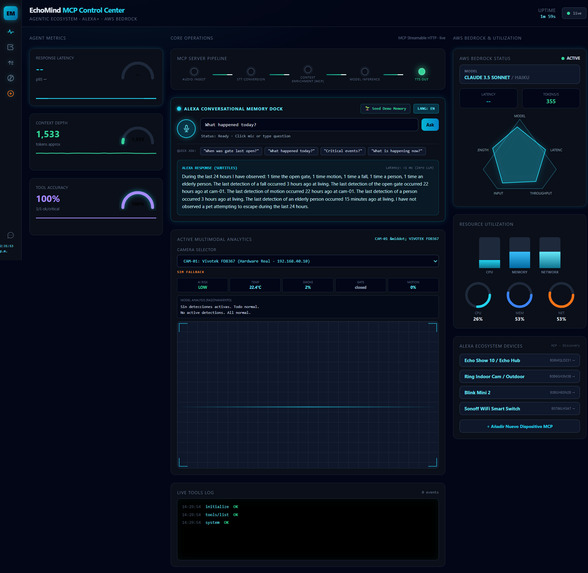
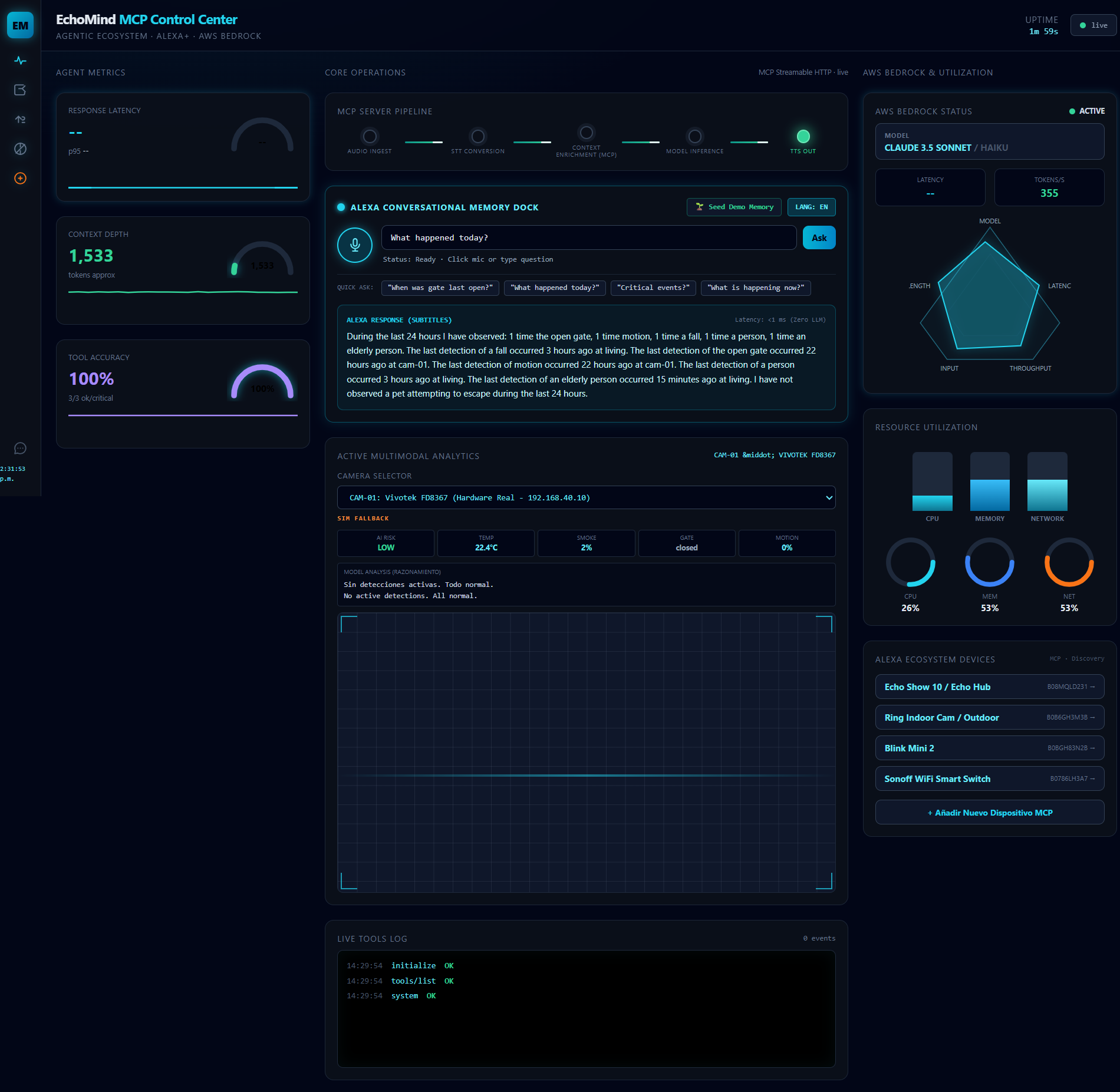
EchoMind Executive Dashboard
-
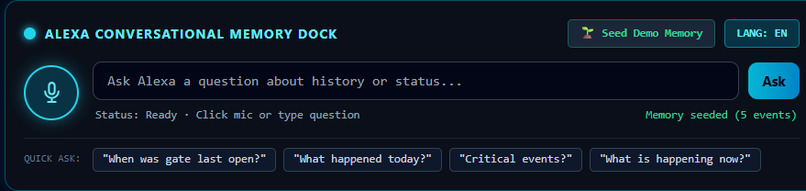
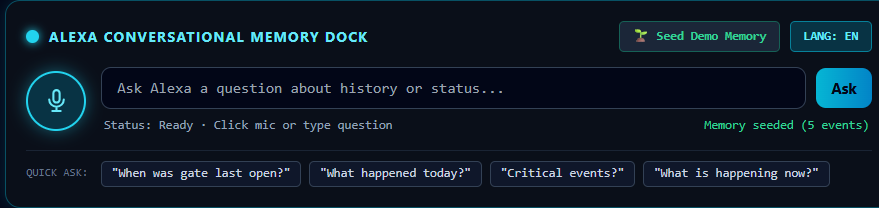
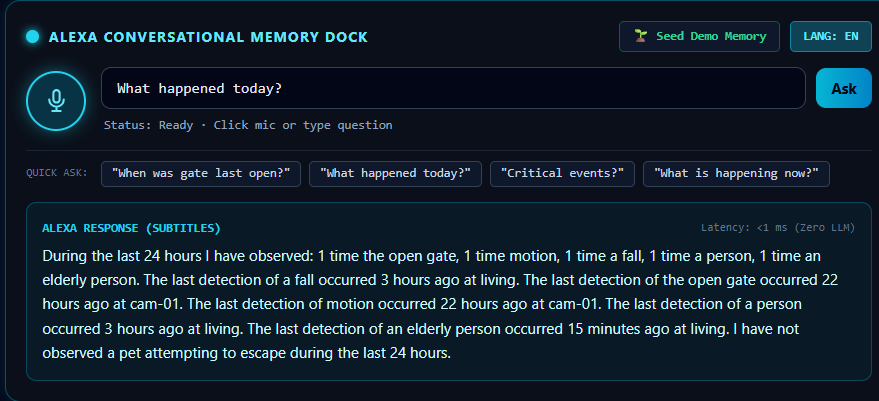
Alexa Conversational Memory Dock
-
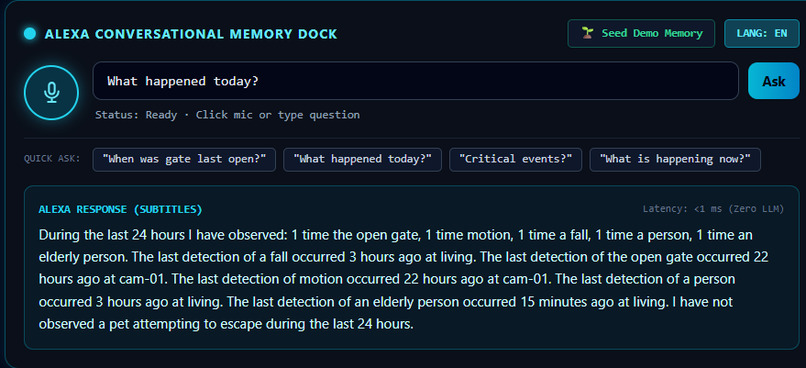
Explainable Memory Recall `
-
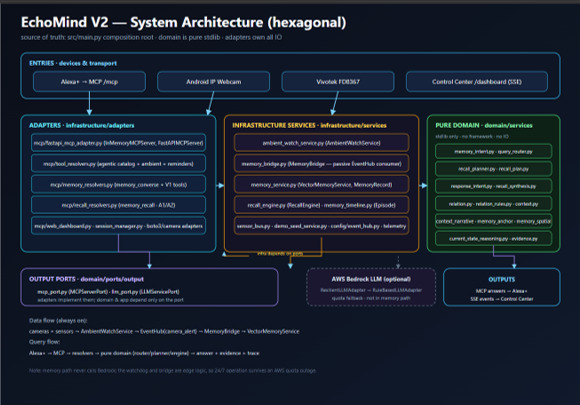
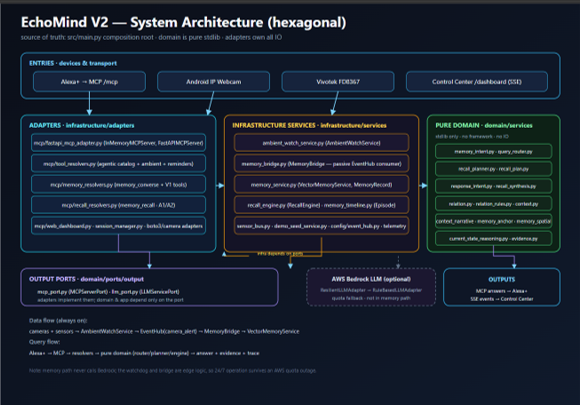
Hexagonal Architecture
-
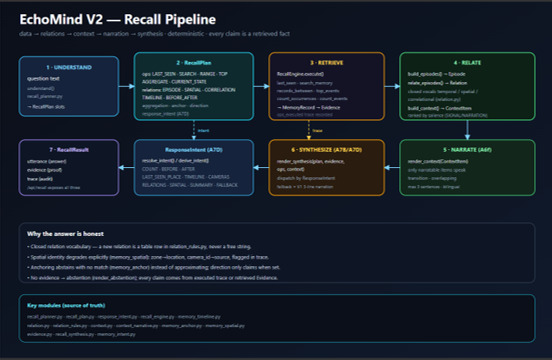
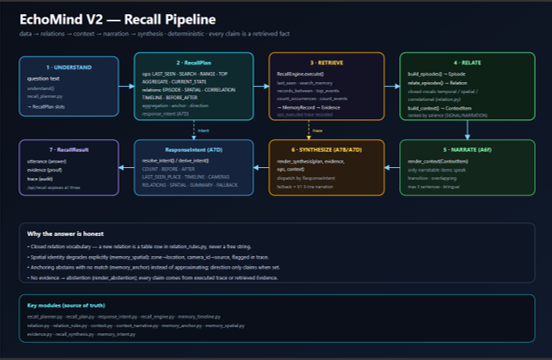
Memory Reasoning Pipeline
-
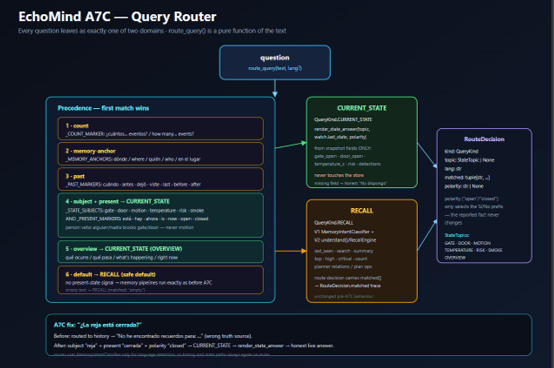
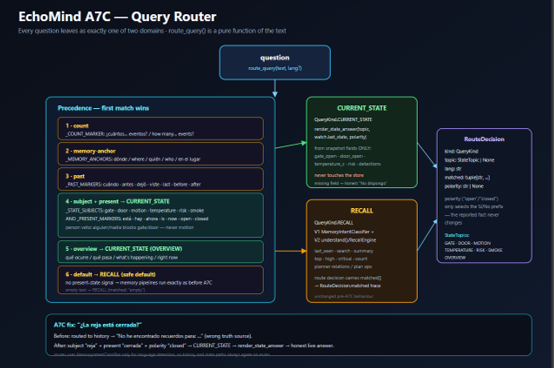
Intelligent Query Routing
-
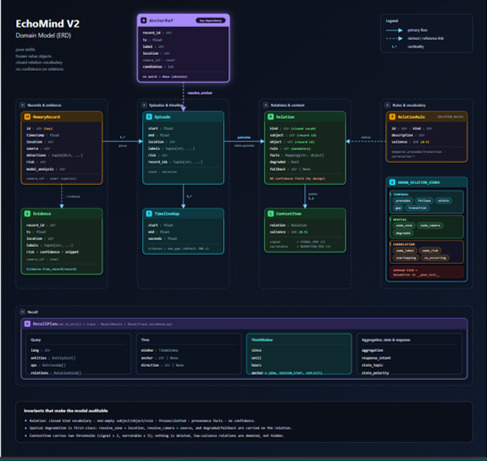
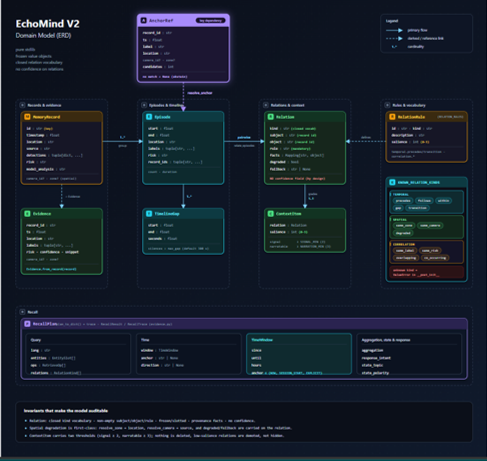
Domain Model and Entity Relationships
Inspiration
Most AI assistants can answer questions, but they struggle to remember events, connect observations over time, and explain how they reached a conclusion.
With the introduction of Alexa+ and the Model Context Protocol (MCP), we saw an opportunity to build something different: a memory-first intelligence system capable of observing, remembering, reasoning, and responding using evidence.
That vision became EchoMind.
What it does
EchoMind is a memory-driven intelligence layer designed for the Alexa+ ecosystem.
Instead of responding only to prompts, EchoMind records meaningful events, stores evidence, reconstructs timelines, maintains current-state awareness, and provides explainable answers.
The platform combines:
- Event Memory
- Evidence Tracking
- Contextual Recall
- Relation Reasoning
- Current State Awareness
- Executive Dashboard Monitoring
The result is an AI system that can explain not only what is happening now, but also what happened before and why it matters.
How we built it
We built EchoMind using Hexagonal Architecture (Ports and Adapters) and Domain-Driven Design principles.
The system includes:
- Python backend services
- FastAPI-based MCP server
- AWS Bedrock integration
- Event-driven memory and recall engine
- Contextual reasoning layer
- Executive dashboard for visualization and monitoring
The architecture keeps memory, reasoning, infrastructure, and presentation concerns fully separated and scalable.
Challenges we ran into
One of the biggest challenges was designing a memory-first AI workflow that separates historical recall from current-state awareness.
We also had to balance explainability, low latency, multimodal event processing, and clean architectural boundaries while integrating Alexa+, MCP, and AWS Bedrock technologies.
Accomplishments that we're proud of
- Built a memory-first reasoning system for Alexa+
- Created evidence-based and explainable responses
- Implemented contextual recall and relationship reasoning
- Developed a real-time executive monitoring dashboard
- Applied clean Hexagonal Architecture and DDD practices
- Produced a reusable foundation for future Alexa+ intelligent agents
What we learned
Building EchoMind taught us that memory is a critical missing layer in modern AI assistants.
We learned how MCP enables agent interoperability, how AWS Bedrock accelerates intelligent orchestration, and how structured memory can dramatically improve explainability and user trust.
Most importantly, we learned that intelligent assistants become far more useful when they can remember, relate, reason, and explain.

Log in or sign up for Devpost to join the conversation.