Inspiration
Your doctor speaks English, but you don't. What do you do?
Arpan and I both grew up in India, a country with 22 official languages, where a doctor trained in one state is often posted to another and suddenly can't understand the patient in front of them. Then we came to the US and found the same problem: about 25 million people here have limited English, and when they see a doctor it's often a family member who ends up interpreting the diagnosis. For some rare diseases the one specialist who can help may be in another country, speaking another language.
So we built EchoMD: a patient and a doctor who share no language can have a safe visit, in the same room or across the world, and the care continues after the visit ends.
What it does
- Live two-way conversation. Hold to talk, speak your own language, and the other person reads and hears it translated. Translation is in the first person, so the doctor reads the patient's own words, and a back-translation lets the speaker check the meaning.
- Safety by plain rules, not AI opinion. Red-flag symptoms (like chest pain), allergy conflicts (including brand names, typos and drug families, so Augmentin is caught for a penicillin allergy) and medicine cautions (like naproxen with kidney disease) are checked by plain code and shown to the doctor with the exact words quoted. Food allergies (like shellfish) are told apart from drug allergies.
- AI that helps the doctor decide. Notes, tone, a drug suggestion for the diagnosis, and a prescription card the doctor confirms. Unsafe suggestions are filtered out by the rules.
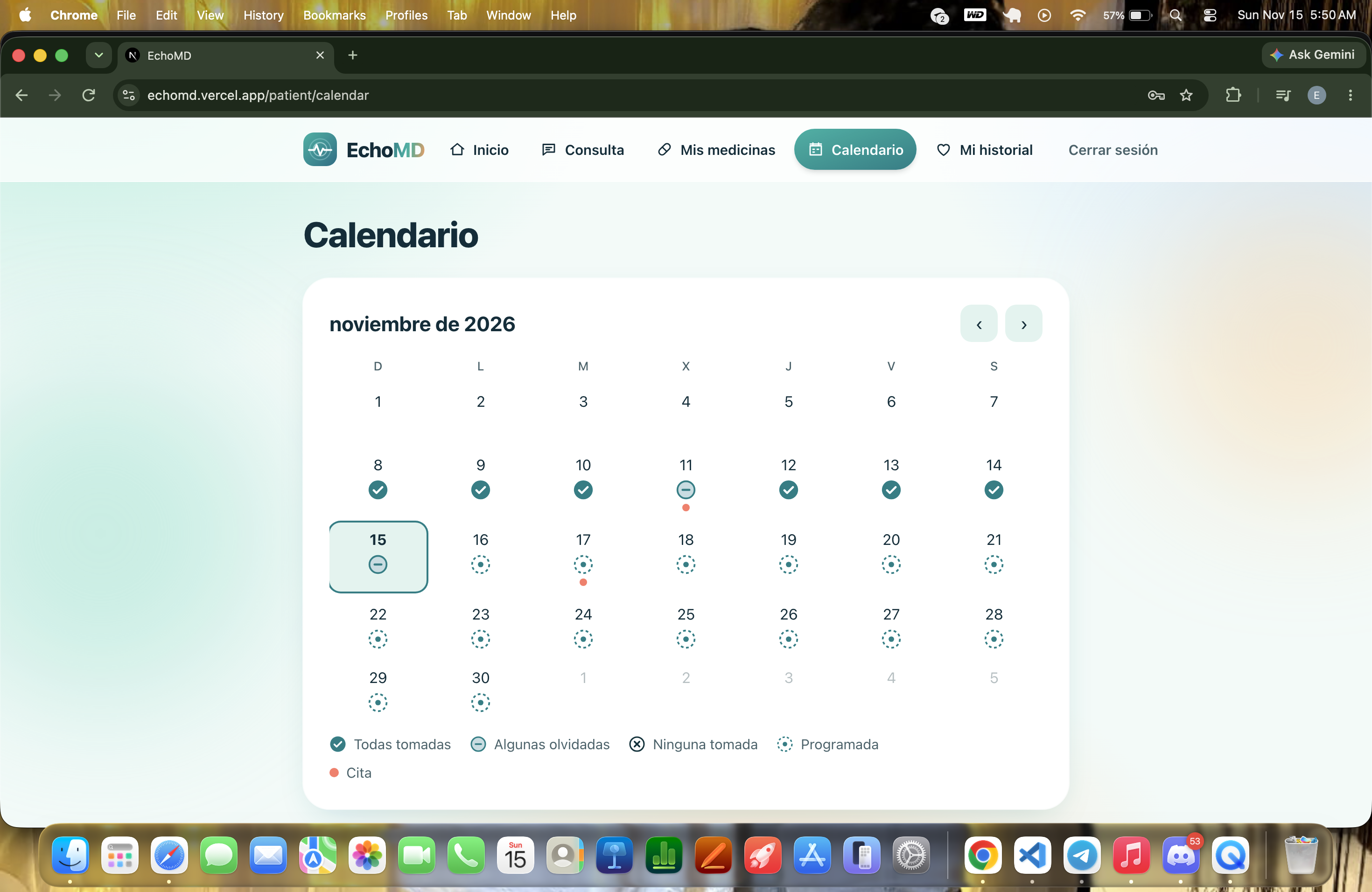
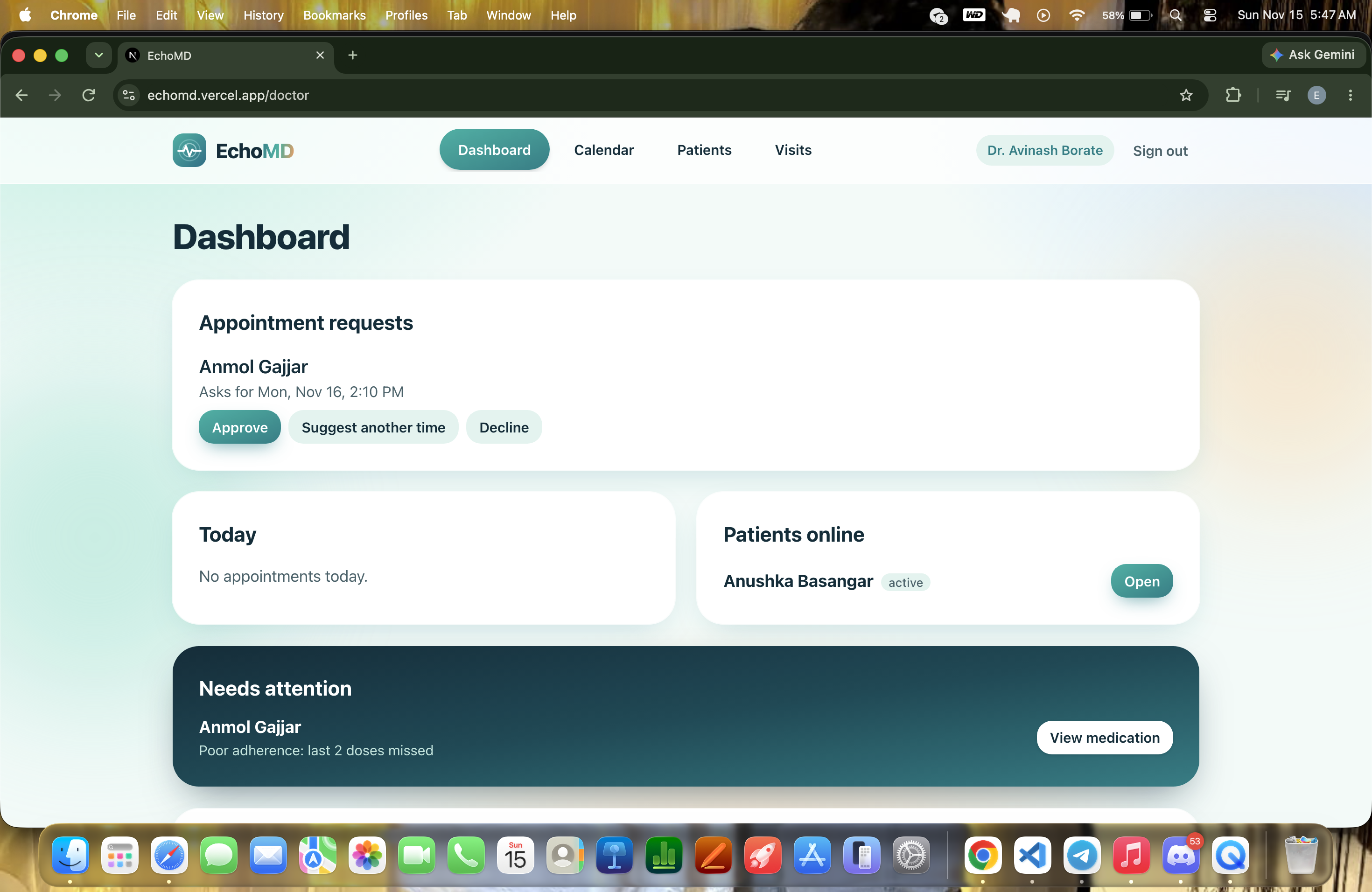
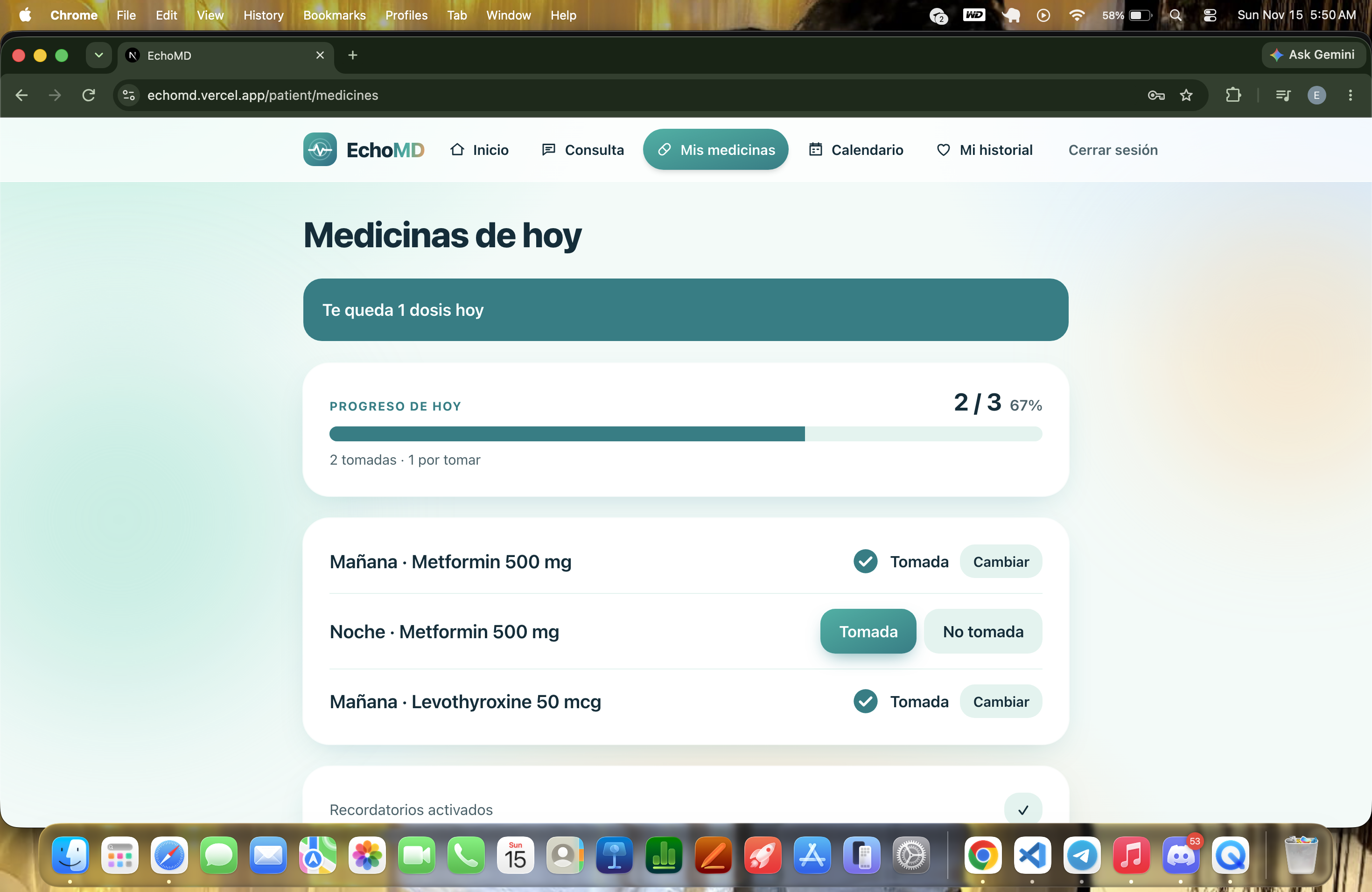
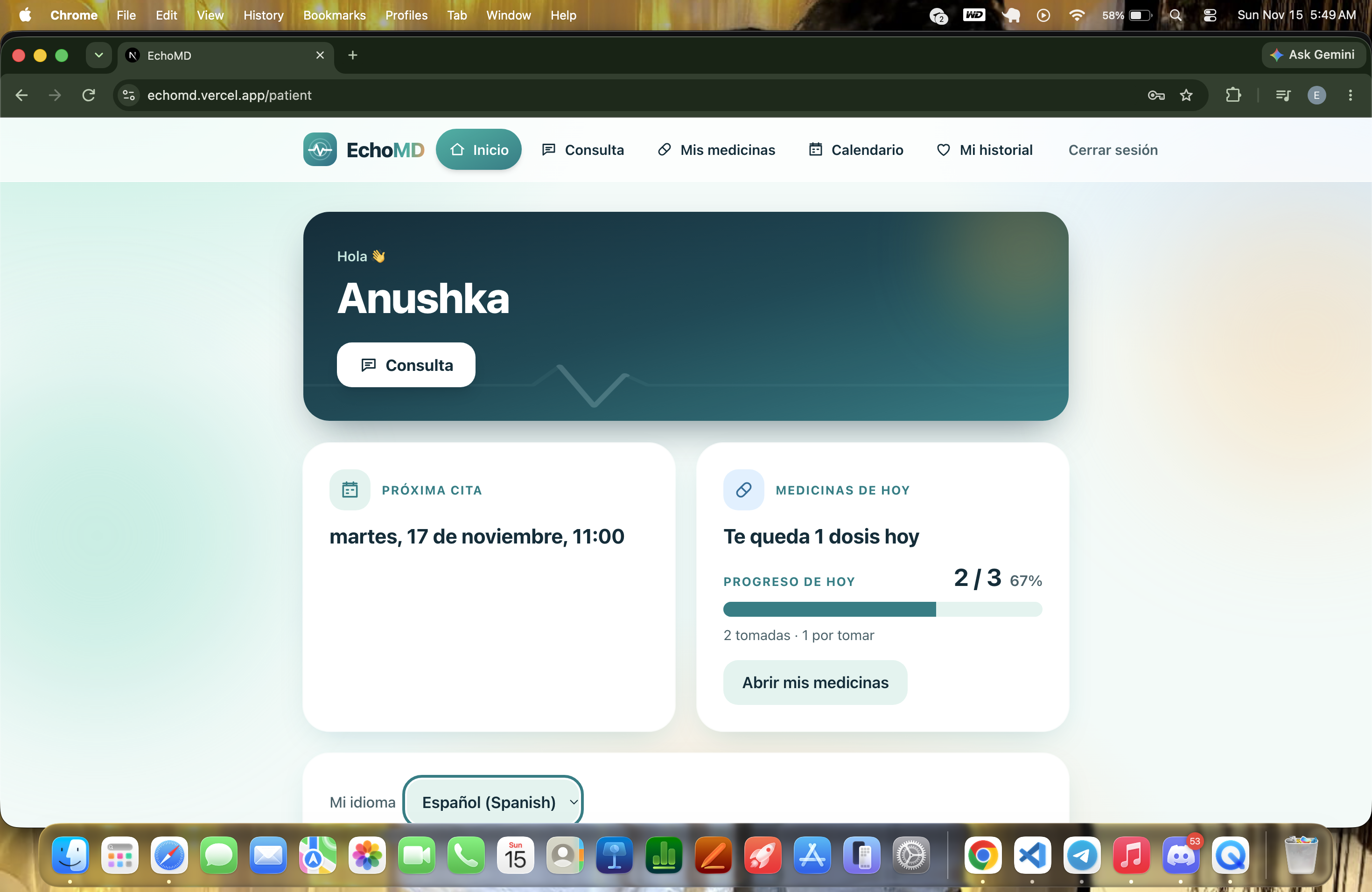
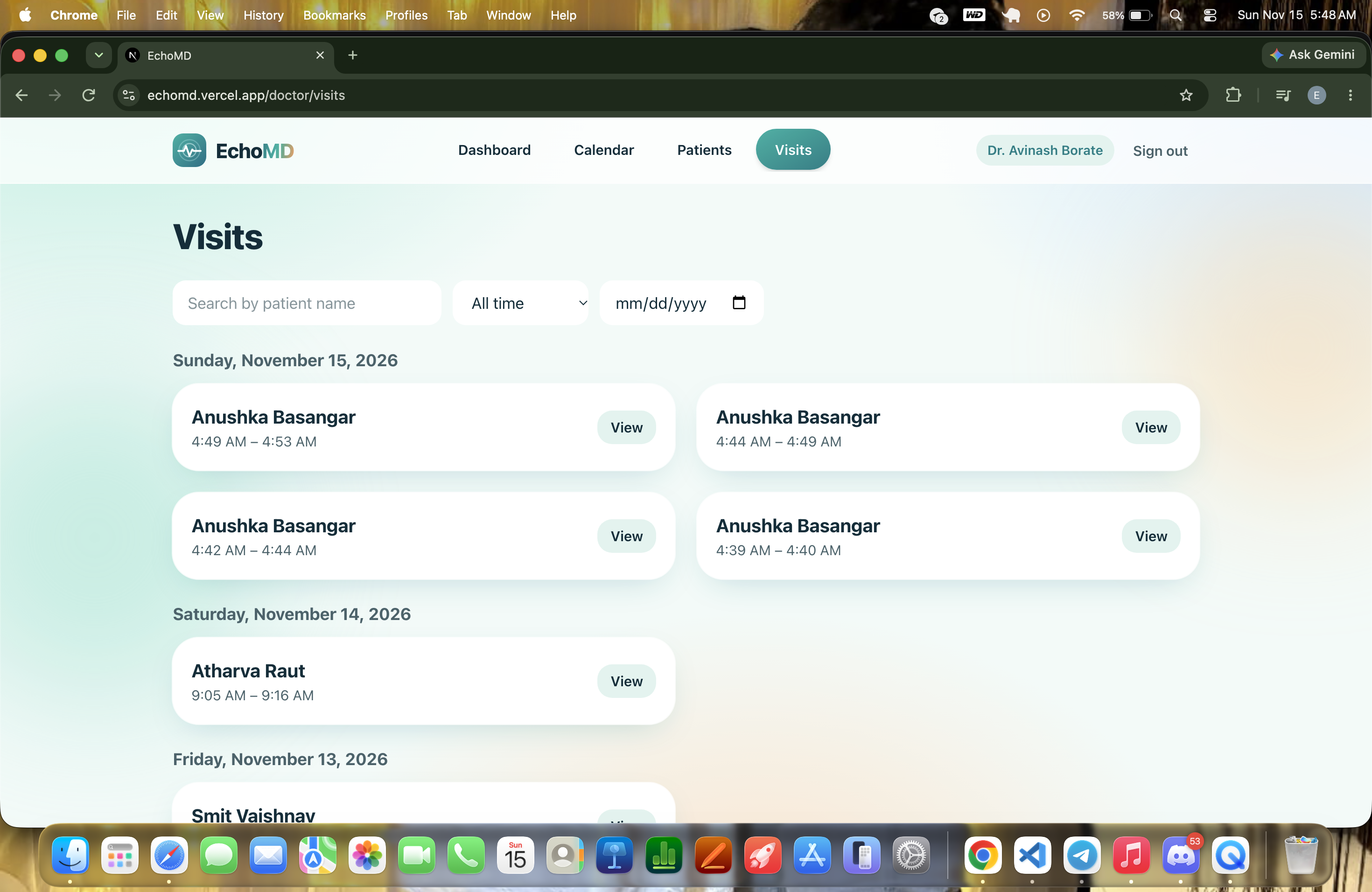
- Care that continues. Summaries after every visit: English for the doctor, the patient's language for the patient. A medicine schedule, a calendar, Telegram reminders with one-tap answers, and ignored doses marked "not taken" automatically, so the doctor sees who needs attention.
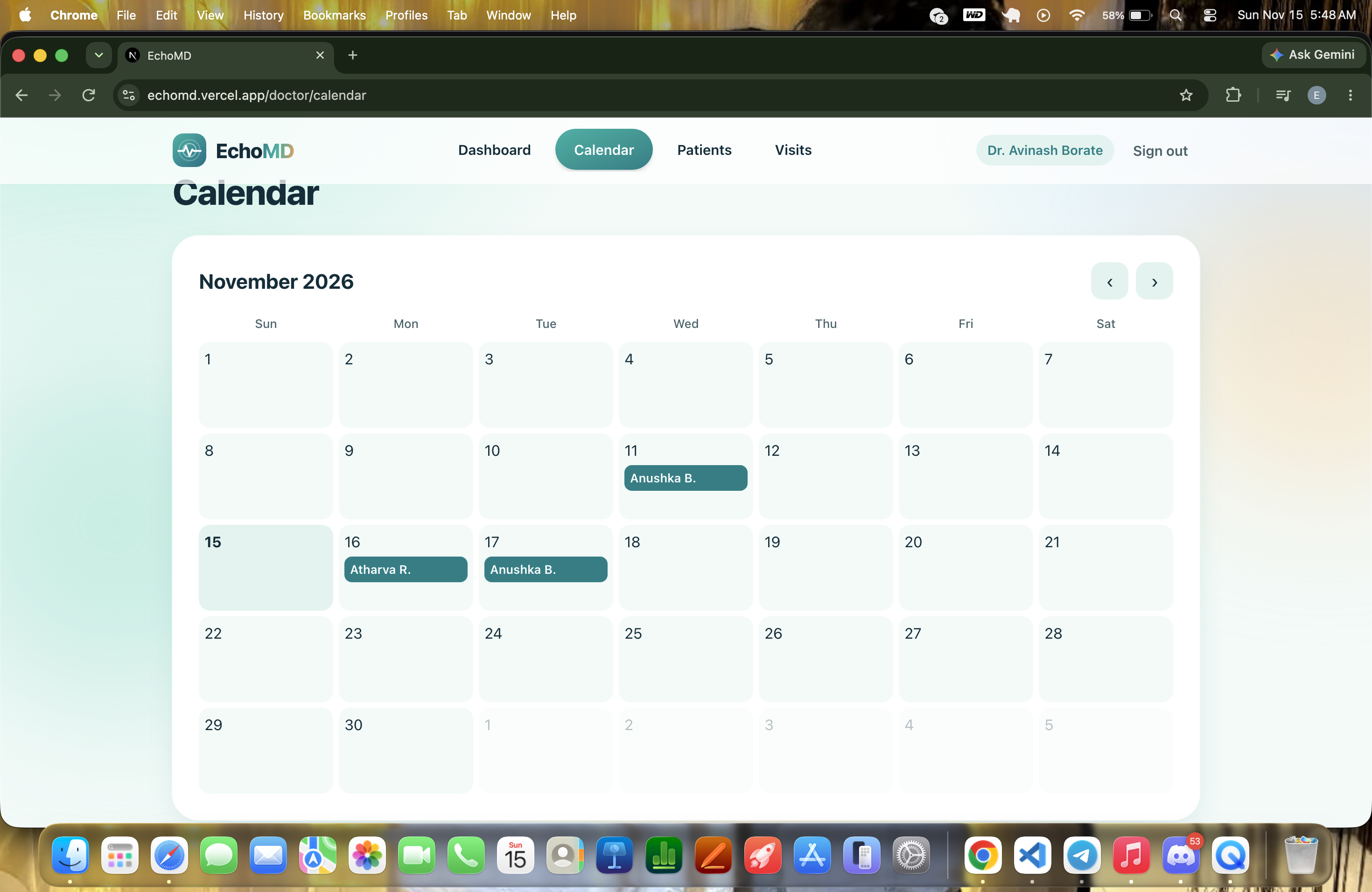
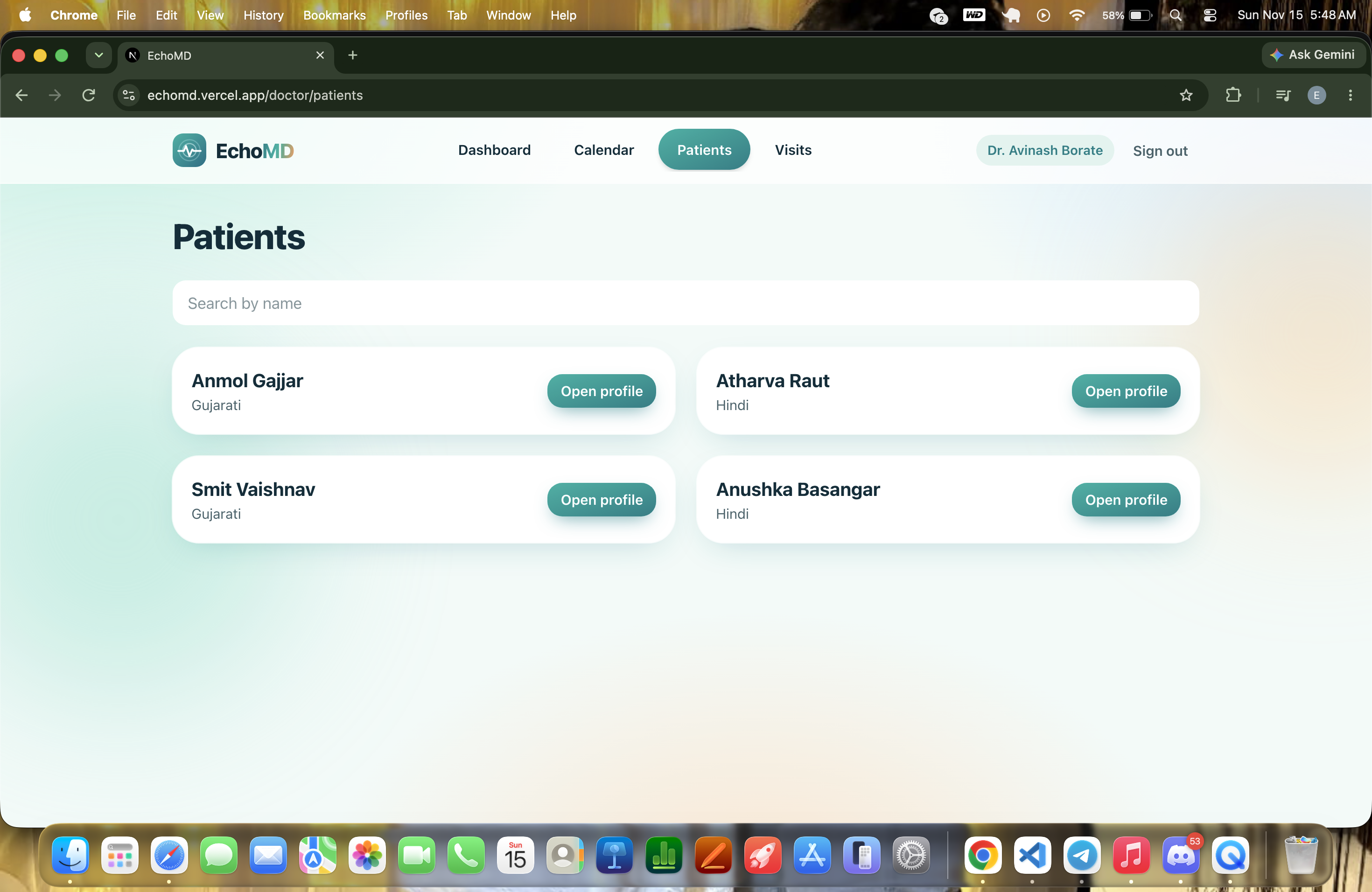
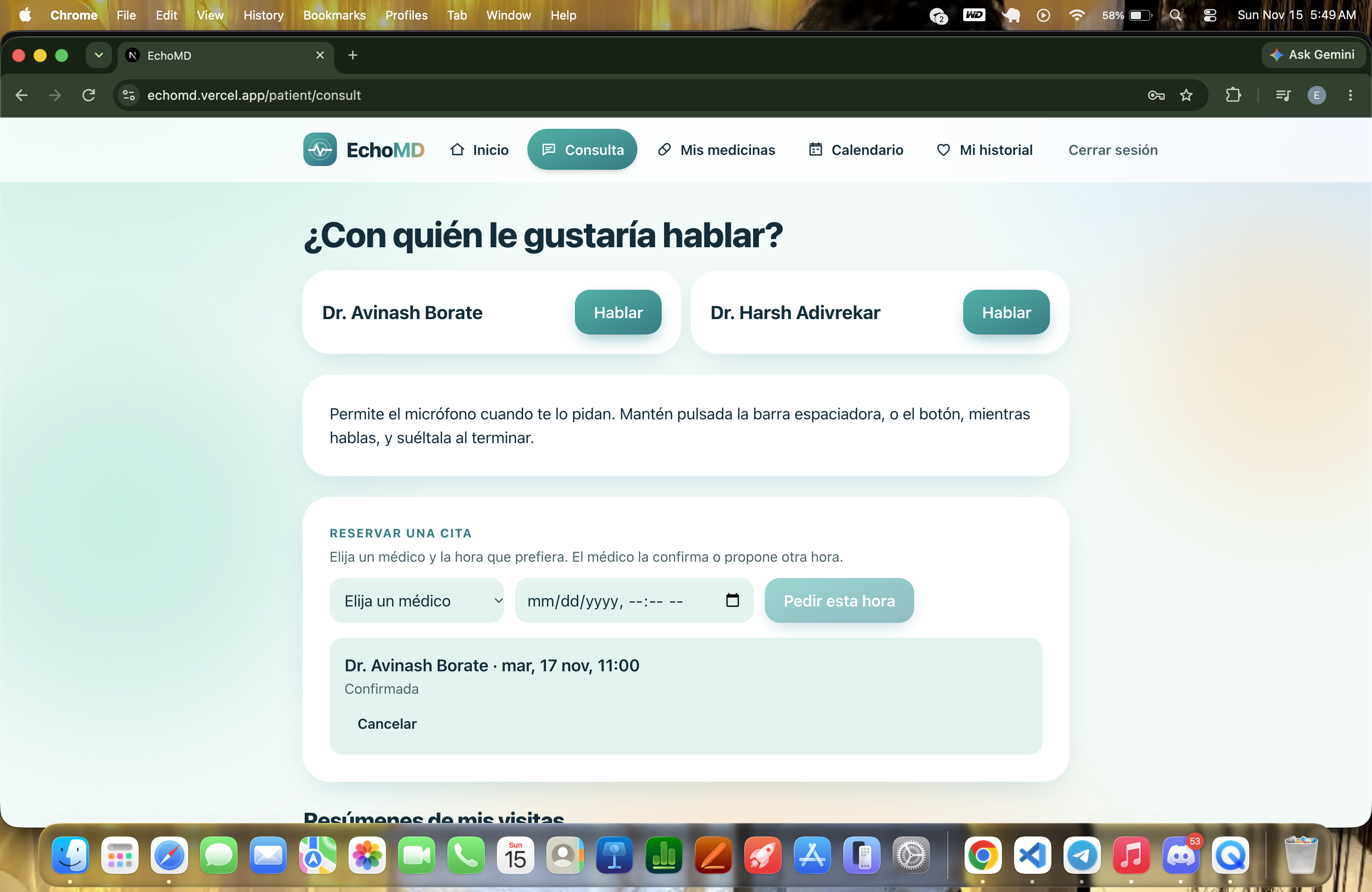
- Patients choose their doctor and can book ahead. The doctor approves only when free, or suggests another time.
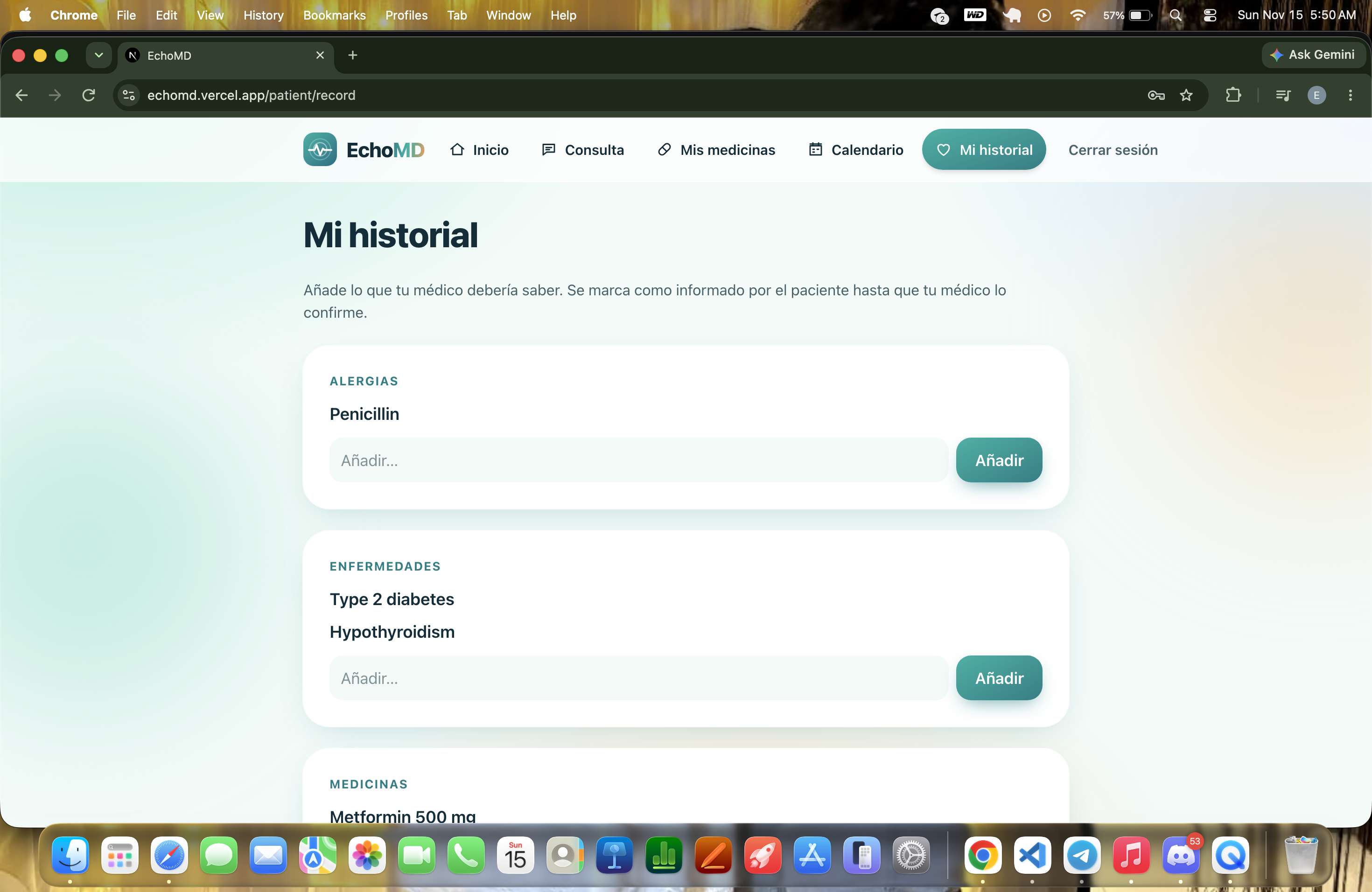
- Records in their own language. Patients keep their allergies and conditions, upload lab reports and get a plain explanation in their language.
- An AI activity log separates what the AI did from what the rules did.
How we built it
- App: Next.js and TypeScript on Vercel, with a layout that works on phones and laptops.
- Data and security: Supabase (auth, Postgres with row-level security, realtime, file storage).
- Speech: ElevenLabs for speech-to-text and text-to-speech.
- Language model: Claude Haiku 5.5 for translation, notes, summaries and suggestions.
- Reminders: a Telegram bot with a scheduled job.
- Turn pipeline: speech to text, then translation, then the turn is saved at once. Back-translation, safety rules, notes and the drug suggestion then run in the background, so the other person sees the message in about 2 seconds.
Challenges we ran into
- Making translation feel natural and safe. Early versions said "the patient says…". We rewrote the prompt so it speaks in the first person, never comments, and asks the speaker to repeat instead of guessing when the speech is unclear.
- Not trusting the model with safety. We moved every alert into plain code and tested it with typos, brand names, negations ("not penicillin") and food-versus-drug allergies.
- A real privacy bug. Early on, one patient's screen showed another patient's last visits. We fixed it and added a regression test.
- Time rules for medicines. When is a dose missed? We settled on a 90-minute window after the dose time, and didn't count doses from before a prescription existed.
- Speed and cost. We moved from a larger model to Haiku to make replies fast, and added a spend guard. Across all our testing, the AI cost about 0.04 cents per call.
- Real-world friction. Microphones need HTTPS, one network blocked Telegram, and some networks reset connections to a hosting address.
Accomplishments we're proud of
- A working product, live on the internet, with real spoken conversations in Hindi, Gujarati, Mandarin, Spanish and English.
- Safety that can be explained to a doctor: every alert shows the rule that fired and the exact words.
- Tested end to end: 200+ plain tests, a backend suite against a real database, a real-speech suite, and a page crawl.
What we learned
- Use the AI for what it's good at (language) and plain code for what must never be wrong (safety).
- Show your work: quoted evidence builds trust faster than a confident answer.
- Small details decide whether a health app feels safe: the person's own script, first-person wording, and what happens when speech is unclear.
What's next
- Review the translations with native speakers and with medical interpreters.
- Validate drug suggestions and cautions with clinicians.
- More languages, and video visits across the world.
- A path to real clinic use with proper privacy and compliance review.
Honest limits
EchoMD is a prototype on synthetic data. It is not medical advice and not a medical device. The Hindi, Gujarati and Chinese wording has not been reviewed by native speakers, and the drug suggestions are unvalidated.
Tracks
Healthcare and Amazon Practical AI: a real problem for millions, a product that works today, AI that helps while rules keep it safe and the doctor decides, and costs of about half a cent per spoken turn.
Built With
- anthropic
- claude
- elevenlabs
- healthcare
- next.js
- node.js
- postgresql
- react
- speech-to-text
- supabase
- tailwindcss
- telegram-bot-api
- text-to-speech
- typescript
- vercel


