-
-
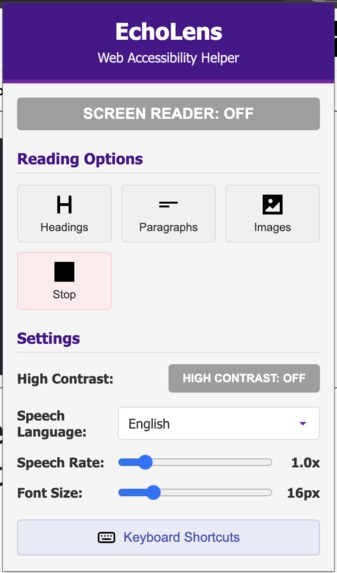
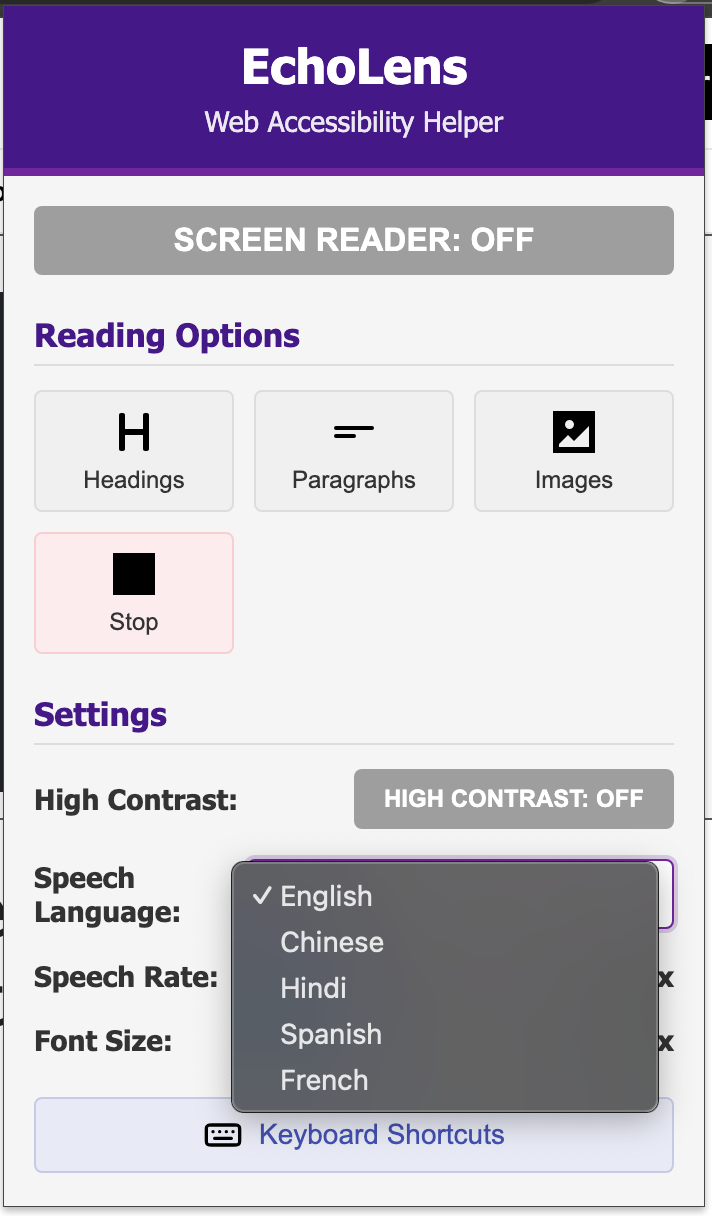
List of available languages
-
-
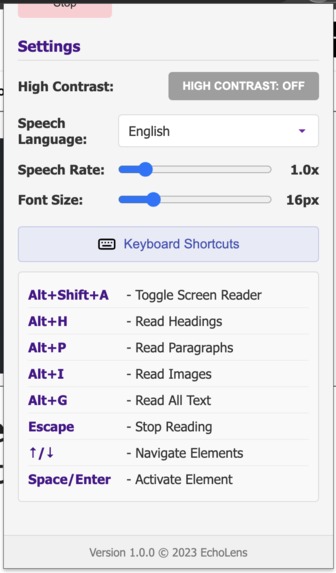
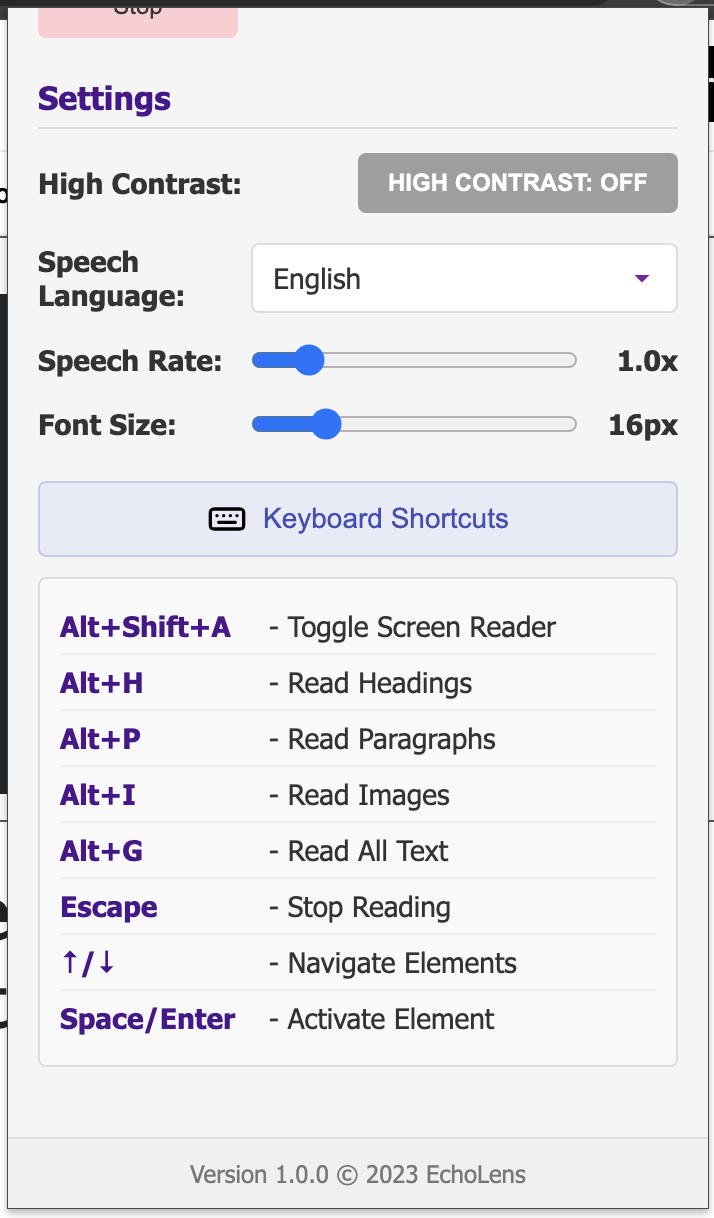
Information on different shortcuts
Inspiration
Echo Lens was born out of a desire to make digital content more accessible, especially for people in developing countries where standard accessibility guidelines might not always be enforced. The idea was inspired by a close friend who, despite acquiring visual impairment at a young age, never allowed it to hinder his achievements, from winning Olympiads to excelling academically and even exploring creative pursuits like standup comedy. His journey highlighted both the potential of assistive technologies and the limitations of existing screen reading software. This project aims to fill those gaps by not only providing text-to-speech capabilities but also by introducing innovative features like image recognition and multilingual summaries to help users get the essence of long-form content quickly.
What it does
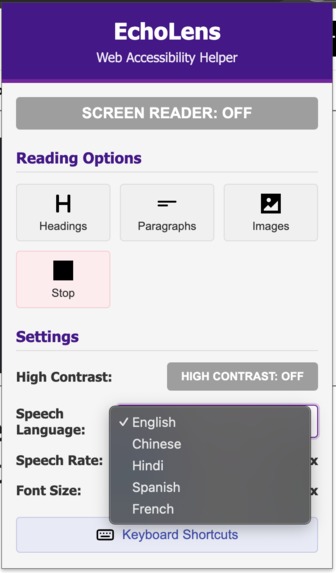
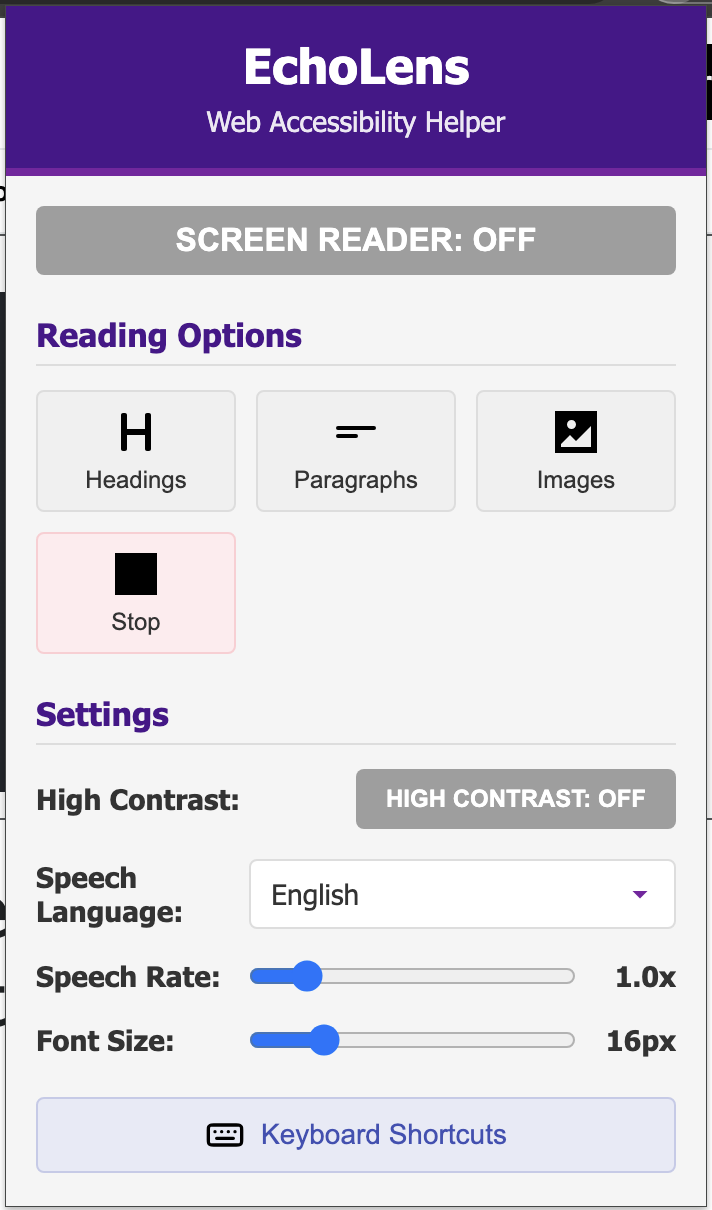
Echo Lens is a Chrome extension designed to transform how users interact with digital content. It goes beyond traditional screen reading tools by:
- Enhanced Accessibility: Offering a more intuitive and enriched reading experience for users with visual impairments.
- Image Support: Integrating advanced image recognition capabilities to describe visual content that standard screen readers often overlook.
- Summarization: Using state-of-the-art summarization techniques powered by Gemini to distill lengthy blogs and articles into concise, need-to-know insights.
- Multilingual Options: Allowing users to select their preferred language so that both the full content and the summary are accessible in multiple languages.
This combination of features is particularly useful for developers and general users alike, especially in regions where access to high-quality assistive technology is limited.
How we built it
We built Echo Lens as a browser extension using modern web technologies. The project leveraged:
- Web Extensions API: To integrate seamlessly into the Chrome browser and provide a smooth user experience.
- Gemini Integration: For real-time content summarization, ensuring that users receive quick and accurate summaries of extensive web pages.
- Cross-Platform Tools: To incorporate multilingual support and robust image recognition, making the tool versatile across different languages and content types.
Our development process was agile and iterative. We started with core functionality and gradually integrated advanced features based on user feedback and emerging research in accessibility technologies. The open-source nature of the project on GitHub allowed for community contributions, further enriching the project.
Challenges we ran into
Developing Echo Lens wasn't without its hurdles. Some of the major challenges included:
- Balancing Performance and Functionality: Integrating image recognition and summarization in real-time posed significant performance challenges. We had to optimize our code to ensure that the extension remained responsive, even on resource-limited devices.
- Multilingual Complexity: Implementing seamless multilingual support required extensive testing and calibration. Ensuring that translations maintained the nuance and accuracy of the original content was a non-trivial task.
- Accessibility Standards: With accessibility being a central focus, we had to ensure that our tool met high standards and worked reliably across diverse user scenarios. This meant rigorous user testing and iterating on feedback, particularly from users in developing regions where accessibility tools are scarce.
What we learned
Through building Echo Lens, we gained valuable insights:
- User-Centered Design is Key: Engaging with end-users early in the development process helped us prioritize features that genuinely improve accessibility.
- The Importance of Performance: Even the most innovative features can be undermined by performance issues. Streamlining our code and optimizing resource usage was crucial.
- Collaboration Fuels Innovation: Open-source contributions enriched the project, offering diverse perspectives that helped us address unique challenges, especially in multilingual and image processing domains.
- Accessibility is a Global Need: Our work underscored how critical it is to develop tools that serve communities in developing countries, where access to cutting-edge assistive technologies is limited.
What's next for Echo Lens
Looking forward, there are exciting opportunities to expand Echo Lens:
- Expanded Language Support: We plan to incorporate additional languages and dialects to make the tool even more accessible globally.
- Enhanced Customization: Future iterations may include personalized settings for different types of content and user preferences, ensuring a tailored experience.
- Community-Driven Improvements: We will continue to welcome contributions from developers worldwide, fostering an ecosystem where continuous improvements are driven by real user needs.
- Integration with Other Platforms: Beyond Chrome, exploring compatibility with other browsers and platforms could widen our reach and impact, further supporting those who need accessible technology the most.
Echo Lens represents our commitment to innovation in accessibility, and we’re excited about the journey ahead. Whether you're a developer eager to contribute or a user in need of better screen reading tools, we invite you to join us in shaping the future of digital accessibility.

Log in or sign up for Devpost to join the conversation.