Inspiration
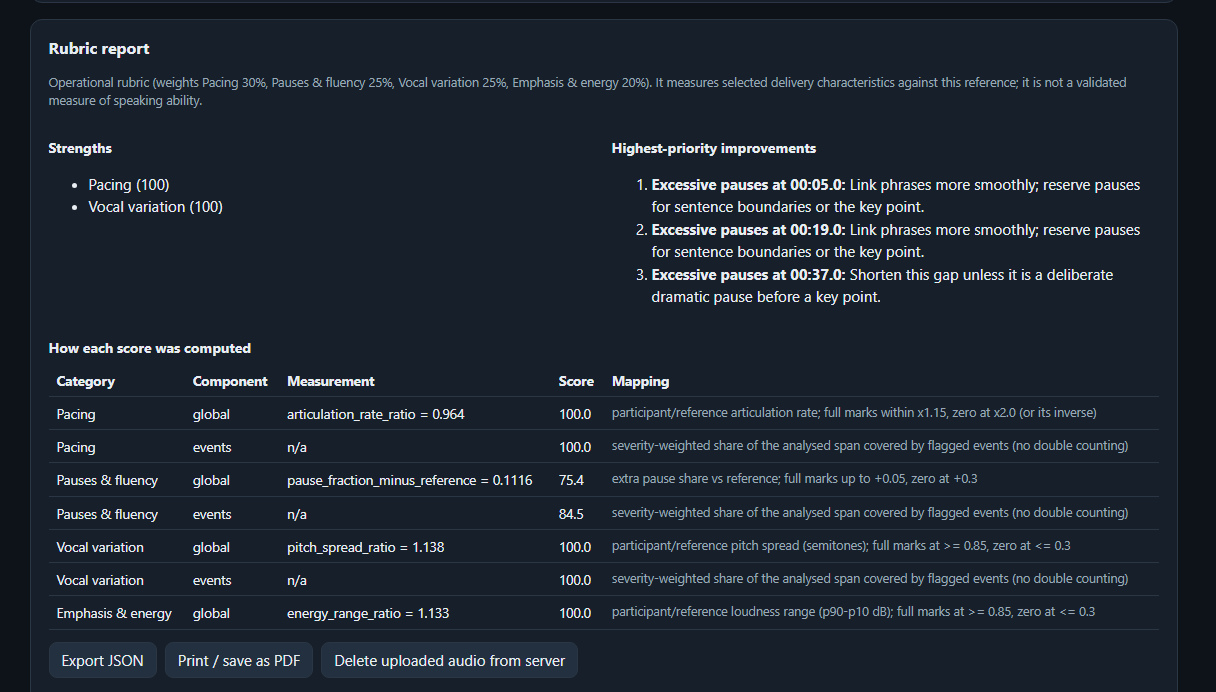
Speech quality depends on more than the words spoken. Pauses, pacing, and emphasis influence how effectively a message is delivered. We built EchoJudge to make speech evaluation more structured, measurable, and interpretable.
What it does
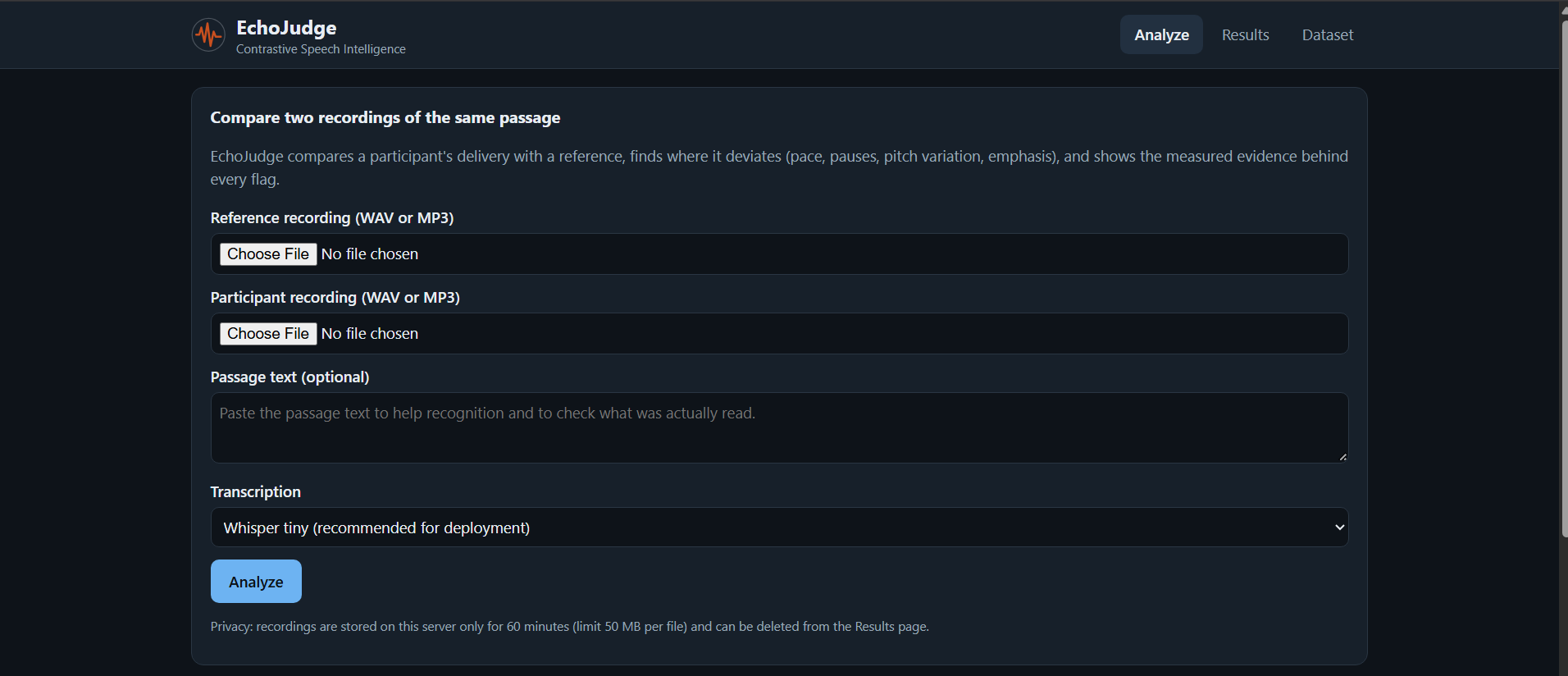
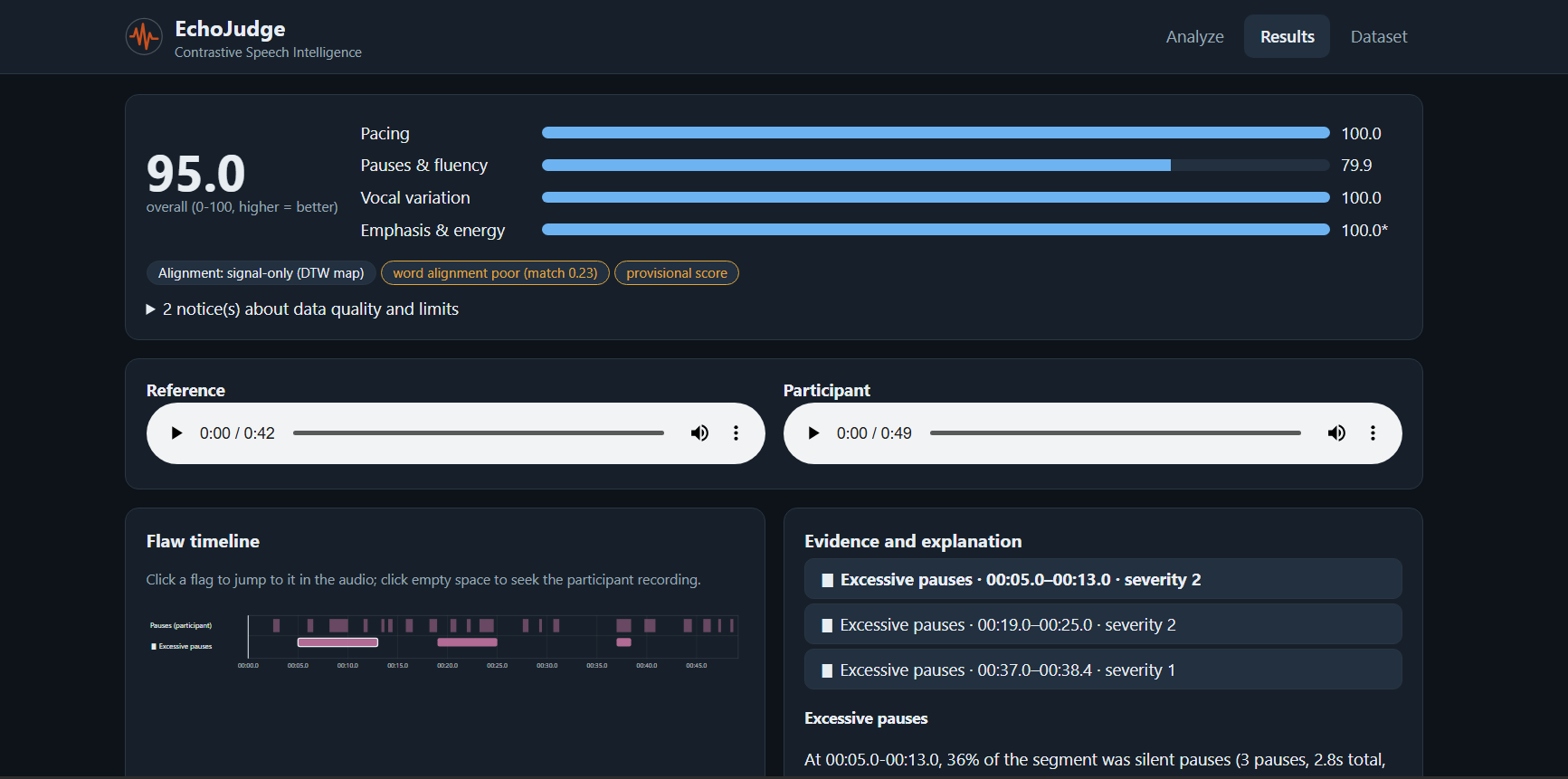
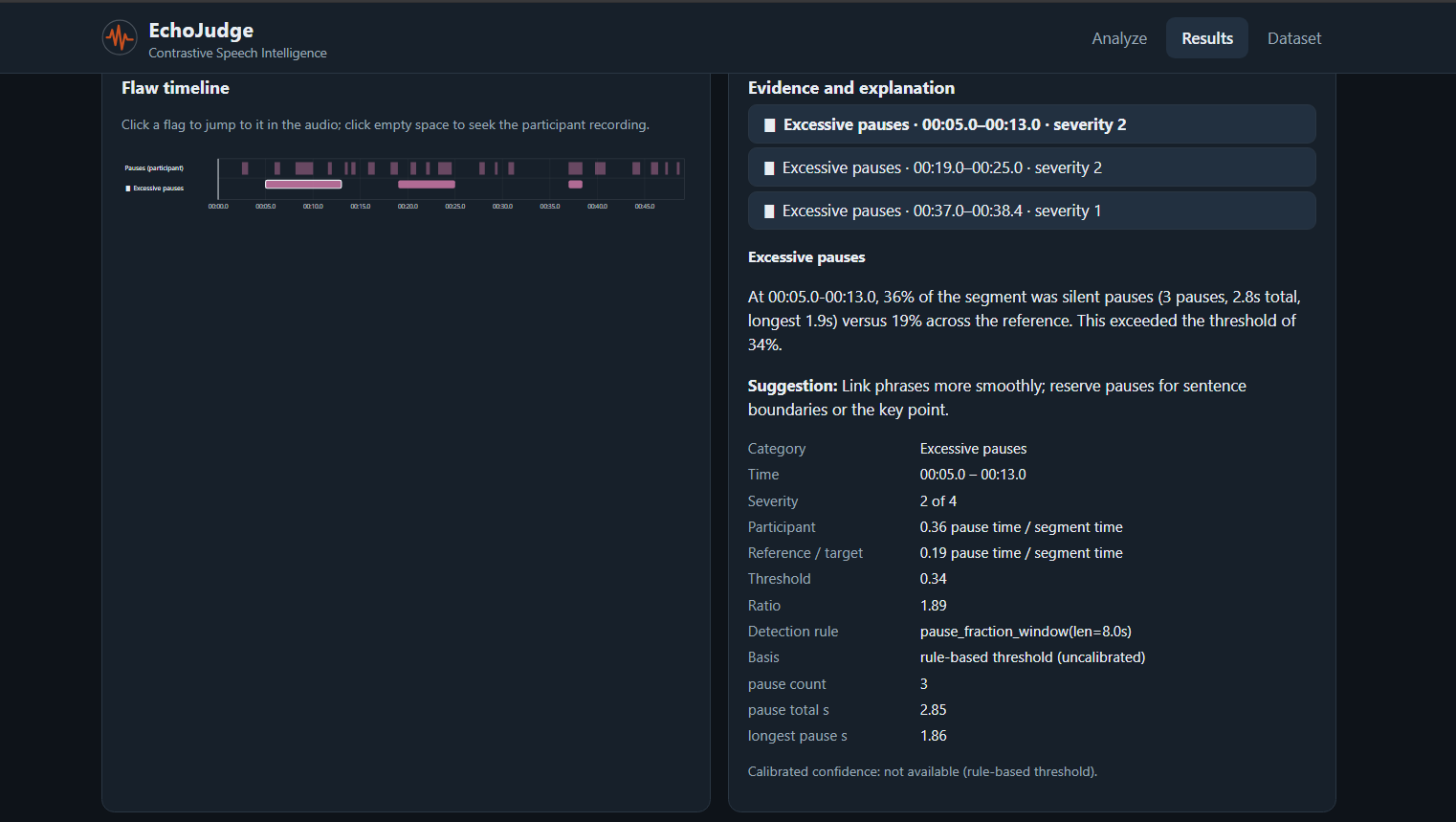
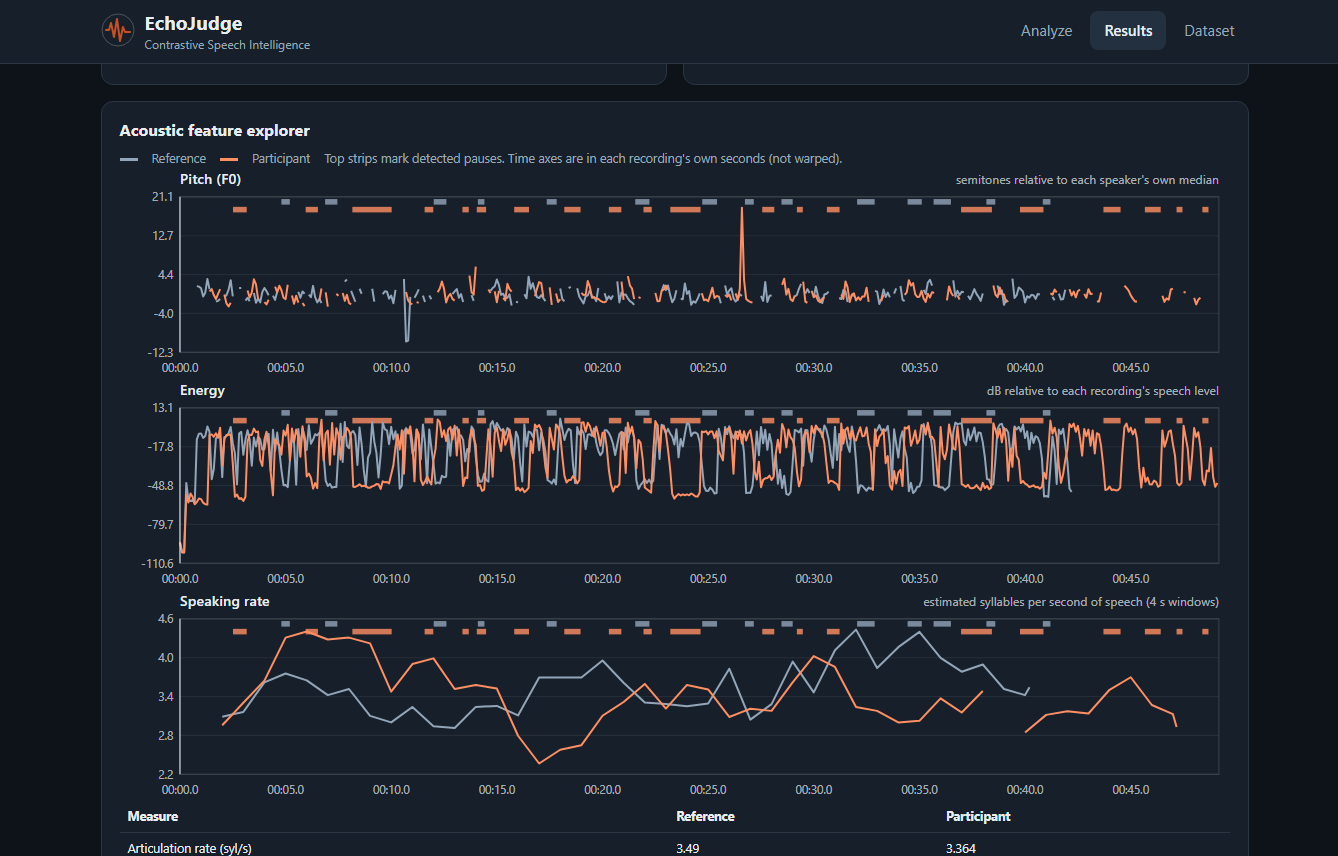
EchoJudge analyzes spoken audio against a reference passage to identify potential delivery issues. It combines speech transcription, reference alignment, and acoustic analysis to examine pacing, pauses, timing, and vocal delivery, providing evidence-based feedback.
How we built it
We used Python, FastAPI, Faster-Whisper, and audio-processing techniques to build a modular analysis pipeline. A browser-based frontend communicates with asynchronous APIs to submit recordings, track analysis, and display results. We also developed automated tests and deployed the application on Render.
Challenges we ran into
Transcription errors and inaccurate word timings made reliable analysis challenging. We incorporated alignment-quality warnings to communicate uncertainty. Deployment also exposed memory limitations when loading speech-recognition models, requiring us to optimize inference for resource-constrained environments.
Accomplishments that we're proud of
We built an end-to-end speech analytics platform integrating transcription, alignment, and acoustic analysis. We are particularly proud of its interpretable outputs, uncertainty warnings, automated tests, and accessible web interface.
What we learned
We learned that reliable speech evaluation requires more than a model: it needs careful validation, uncertainty handling, robust testing, and efficient deployment.
What's next for EchoJudge
We plan to improve deployment stability and alignment accuracy, test across diverse speakers and recording conditions, and validate detection results against human annotations. Our long-term goal is to make EchoJudge a transparent and practical tool for speech evaluation and communication training.
Built With
- artificial-intelligence
- audio-processing
- fastapi
- javascript
- machine-learning
- natural-language-processing
- python
- signal-processing
- speech-recognition

Log in or sign up for Devpost to join the conversation.