Inspiration
The spark for EchoHiveTSA came from a genuine fascination with the mechanics of how bees function and the intricate way they transfer pollen between plants. It wasn't just about "saving the environment," but more about the actual physics of pollination and how these small systems keep everything else running. We wanted to take that fascination and turn it into a hub where people could actually track these pollinators in real-time instead of just reading about them in a textbook.
What it does
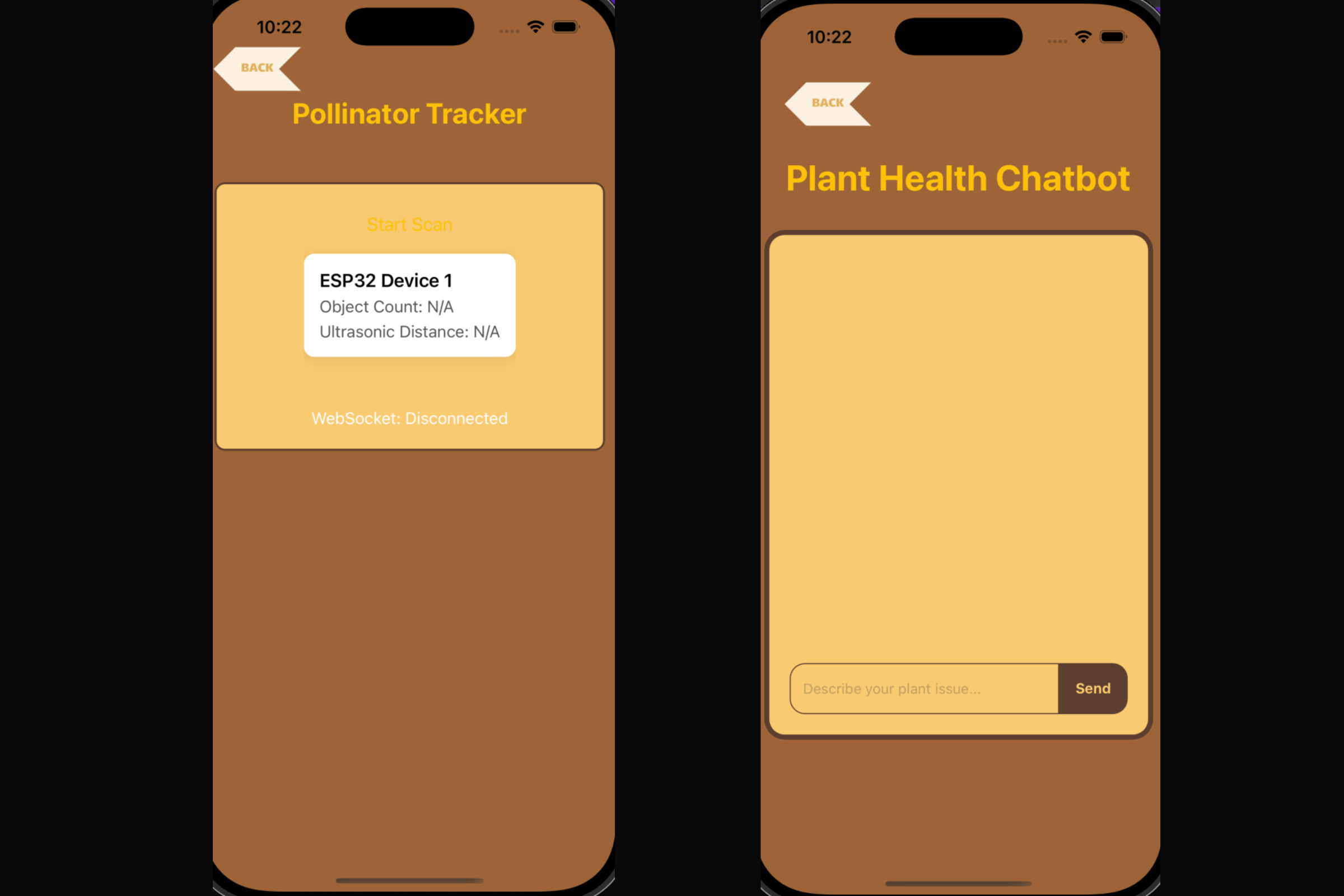
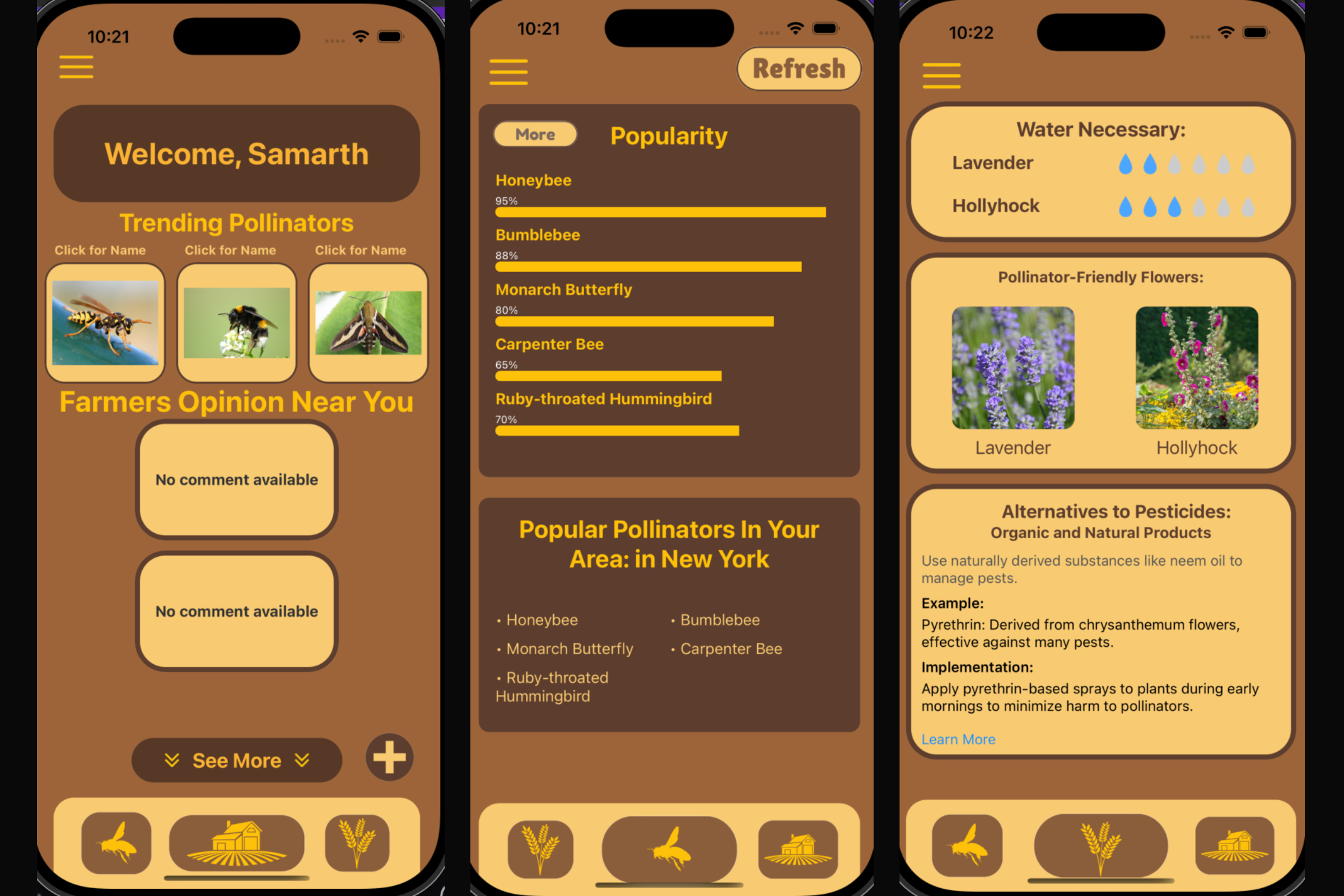
EchoHiveTSA is a multi-screen mobile application that acts as a central repository for pollinator tracking and botanical data. The app includes a dedicated Pollinator Tracker for logging sightings, a "Bee Page" for species identification, and a "Crop Page" that provides gardening information. We also integrated a ChatBot AI to handle specific environmental queries and a community comment section where users can share their own observations and tips.
How we built it
We built this project using React Native and Expo, utilizing a Stack.Navigator to manage the flow between thirteen different screens. For the backend, we implemented Firebase to handle user authentication and the comment database, while Axios was used to manage the AI API requests. I took on the responsibility of getting the UI to look professional by loading custom fonts like Lalezar and RammettoOne, while my partner worked on the intricate logic of the tracker.
Challenges we ran into
One issue we faced numerous times was the navigation logic between the SignUpScreen and the AdditionalInfoScreen, which worked inconsistently and was difficult to pinpoint. Additionally, we ran into a major roadblock with the ChatBot API, because we had to design it as a "bring your own key" system rather than hosting it ourselves. Also, our emulator would occasionally render UI elements perfectly one day and then completely break the next due to dependency conflicts in the package.json.
Accomplishments that we're proud of
We are really proud that we were able to stack multiple different technical aspects together—like Firebase auth, custom font assets, and complex navigation—to form a cohesive application. Seeing the tracker function as a stable structure on a physical device via Expo Go was one of our favorite parts of the build.
What we learned
This project taught us how energy and data management work in an open system, specifically how to prevent the application from crashing due to insufficient resource management. We learned that software development is less about the beauty of the app and more about group problem-solving to fix mistakes before they ruin the entire build. Most importantly, we learned how to manage a full-stack project from preliminary schematics to a final, functioning app.
What's next for EchoHive
One thing we would do differently next time would be to implement a more robust state management system to act as a stable support for our data paths. We also plan to secure long-term API keys so the ChatBot is more consistent and "connected" for every user. Eventually, we want to refine the intricate turns of our UI so the path from the "Welcome Page" to the "Pollinator Tracker" is perfectly smooth every single time.
Built With
- firebase
- javascript
- openai
- react

Log in or sign up for Devpost to join the conversation.