-
-
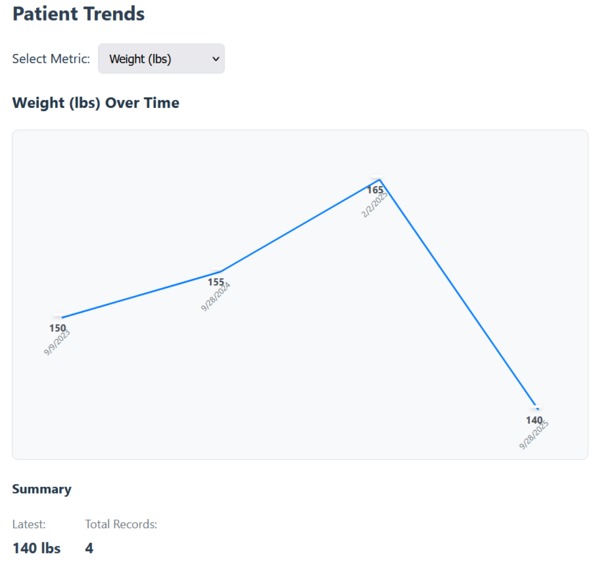
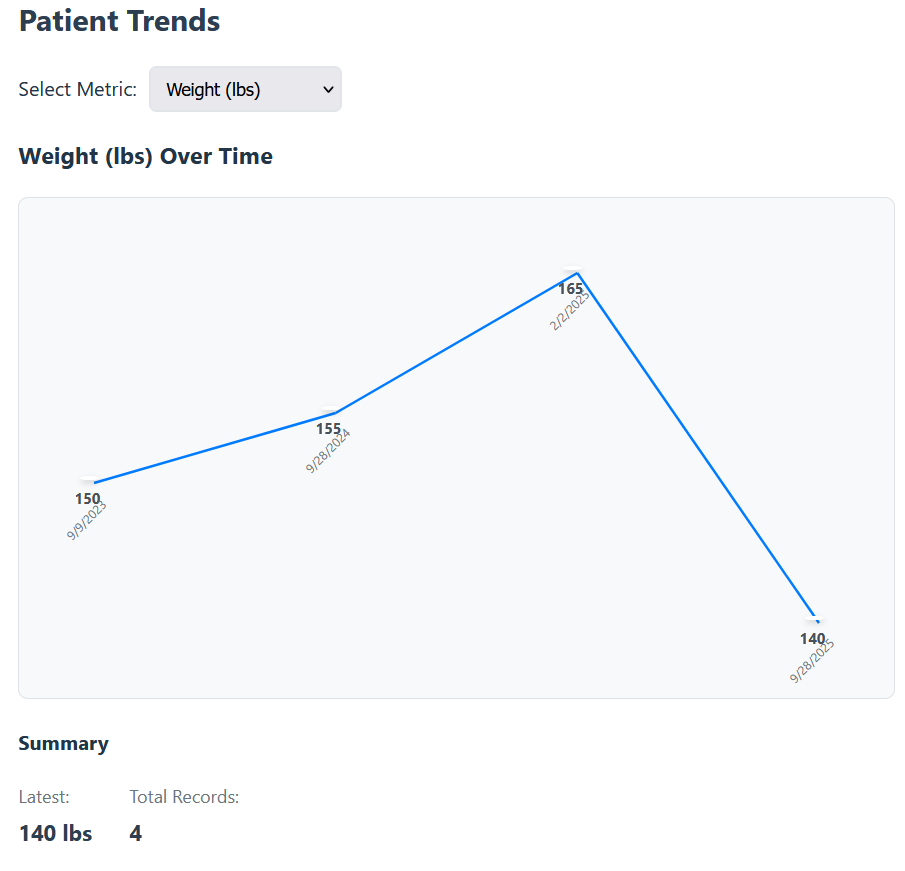
Patient Trends Chart for Weight
-
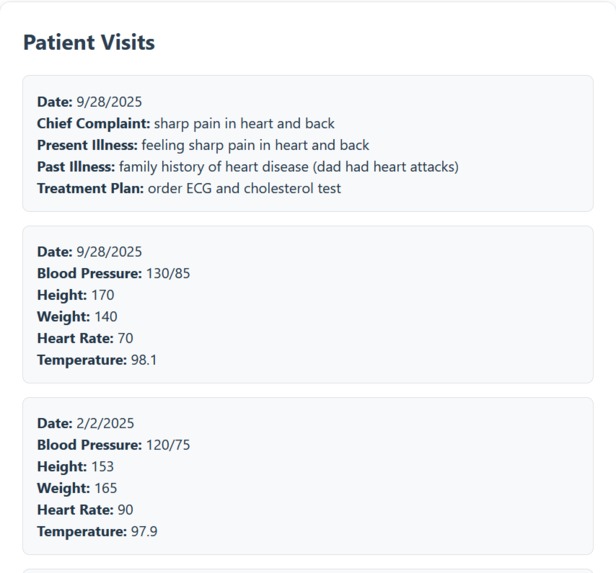
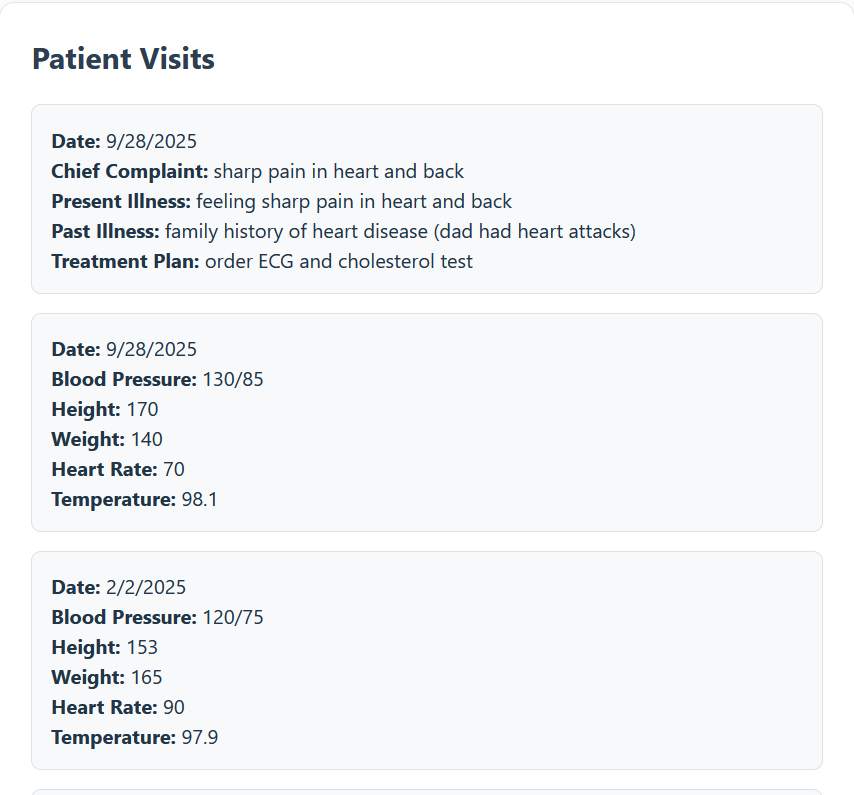
Patient Visits Dashboard
-
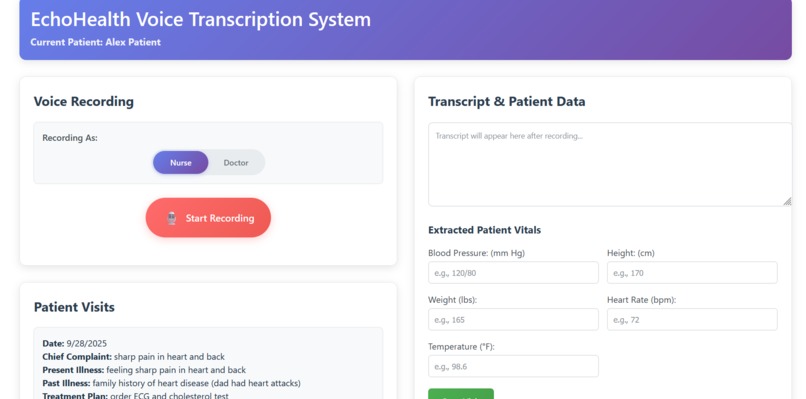
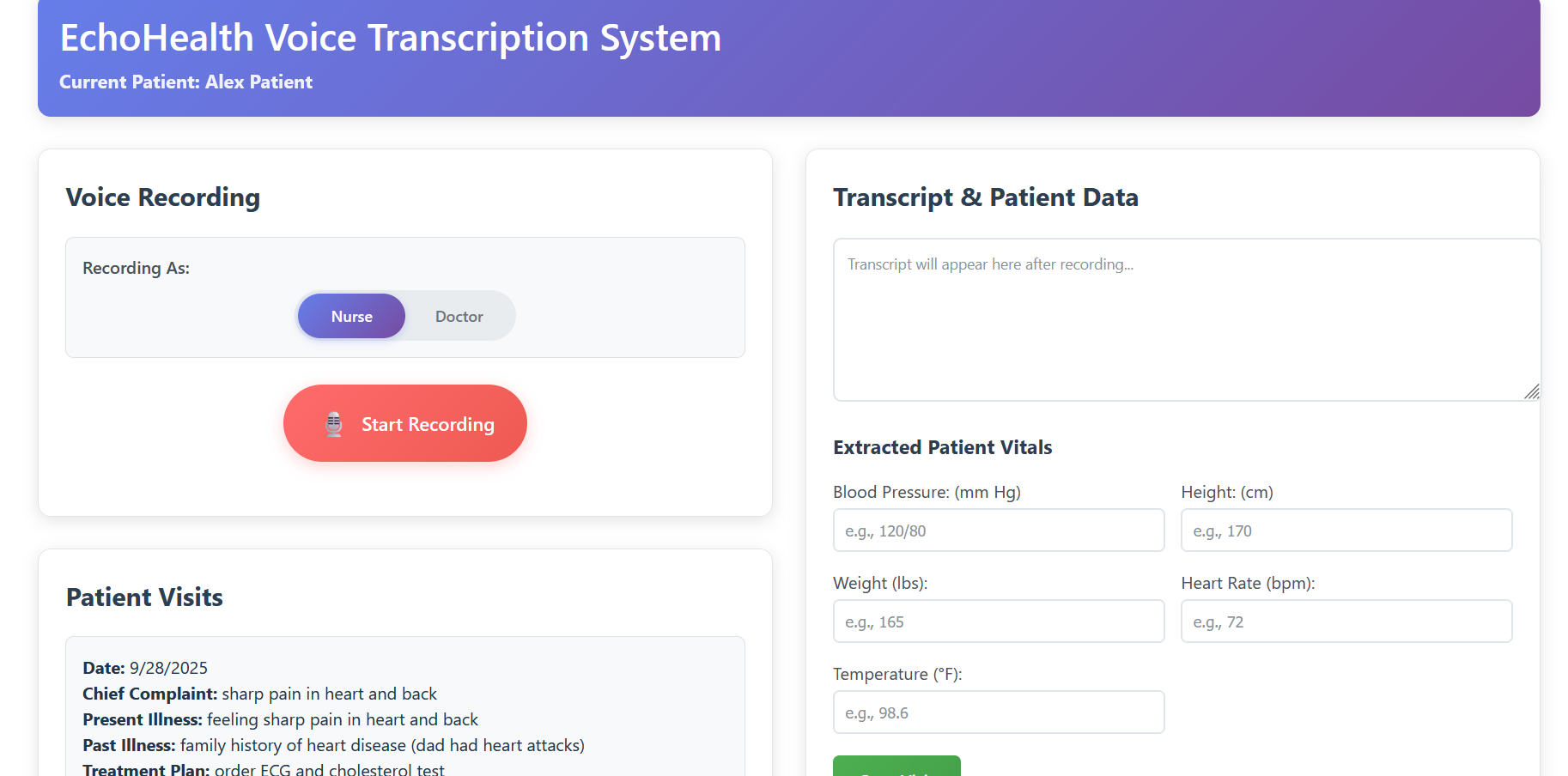
Home Page
-
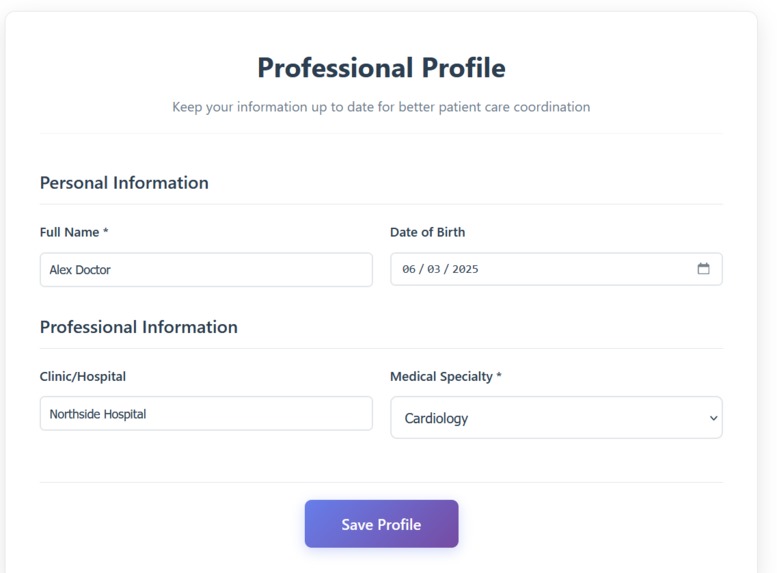
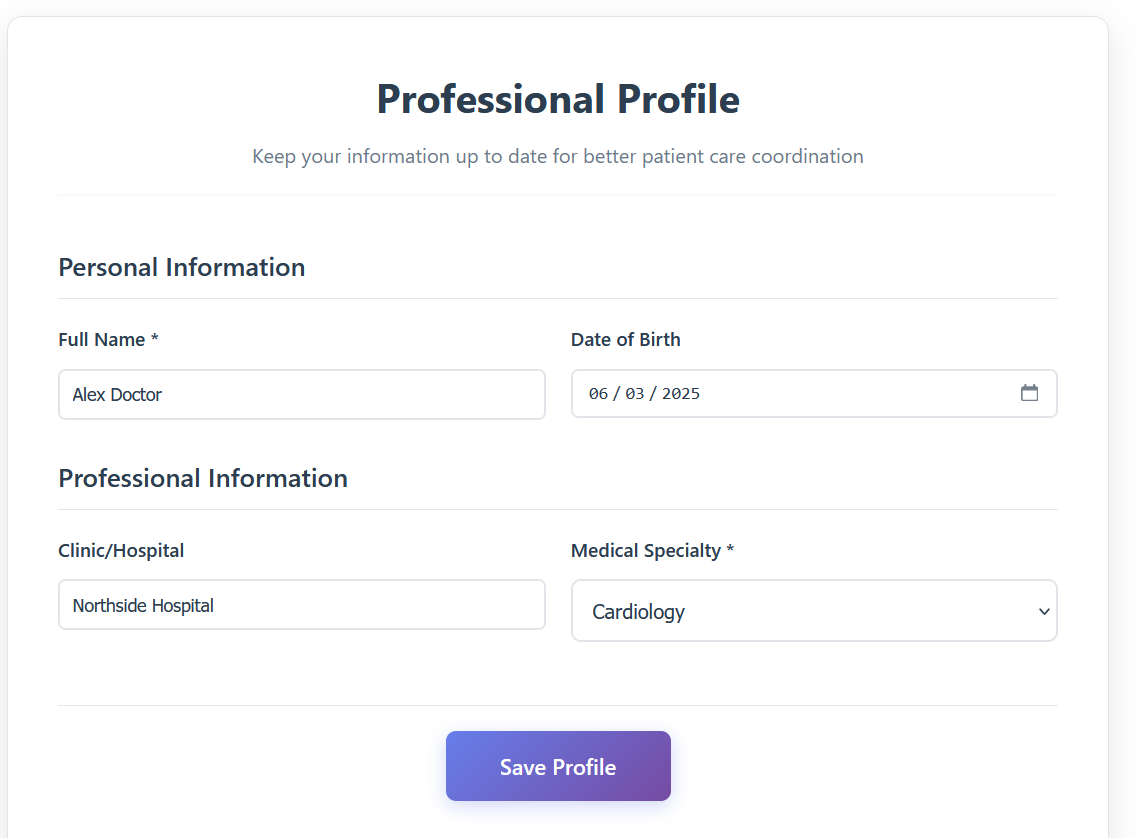
Profile Page
Inspiration
We’ve all been to the doctor and felt like most of the visit was spent with them staring at a screen instead of us. Something our teammate Leah has experienced recently is seeing doctors lean on transcription apps and noticing how much smoother the visit felt when the technology got out of the way. With EchoHealth, we wanted to take that a step further by not just transcribing, but removing the burden of documentation altogether. Speaking with Dr. Yap confirmed what we felt, that patients and providers both want the same thing: more face time, less screen time.
What it does
EchoHealth automates clinical documentation during patient visits. Our app records conversations, transcribes them, and extracts key quantitative metrics and qualitative insights, which are automatically logged into a patient’s record and displayed as trends over time (for quantitative data). At the end of a visit, EchoHealth generates a structured summary that providers can quickly review and edit before saving, reducing the burden of manual data entry.
How we built it
Frontend (React + Vite): For recording audio, displaying transcripts, graphs, and editable summaries. Backend (Node.js + Express): For handling transcription requests, extracting structured metrics, and managing patient data. Database (SQL/Supabase): To store patient visits and histories. Speech-to-Text API (Whisper): For accurate transcription of conversations. Data extraction (OpenAI): To extract metrics and insights, and to turn raw transcript into a dialogue.
Challenges we ran into
- Ensuring transcripts were formatted cleanly without hallucinations from the language model.
- Integrating the database into the front end.
- Refining the entire product and considering new design choices when improving user experience.
Accomplishments that we're proud of
- Built a working end-to-end prototype in under 36 hours.
- Successfully transcribed patient-provider dialogues and extracted structured metrics.
- Created a dashboard that graphs vitals across visits.
- Grounded our work with feedback from an actual physician.
- Attended most of the events at the hackathon!
What we learned
- How to design prompts and workflows to reduce AI hallucination and extract structured data.
- The complexity of EMR systems and why automation is both necessary and challenging.
- The importance of clinician feedback. Talking to Dr. Yap gave us real-world perspective and validation.
- How to rapidly iterate on a project across frontend, backend, and data layers under tight time constraints.
What's next for EchoHealth
- Integration with real EMRs: Building secure connections with systems that providers already use.
- Multilingual support: To make the tool inclusive and useful for diverse patient populations.
- AI-powered clinical support: Suggest possible treatments, follow-up questions, or relevant medical literature based on structured transcripts.
Built With
- express.js
- node.js
- openai
- react
- sql
- supabase
- vite
- whisper


Log in or sign up for Devpost to join the conversation.