
Inspiration
Phone fraud targets seniors with rehearsed pressure: a frozen account, an arrested grandchild, a code to read aloud. In the moment, there is no time to search the web — and silent spam filters only block numbers, they never explain this call. Victims consistently say the same thing afterwards: "It sounded so real, and it all went so fast."
What it does
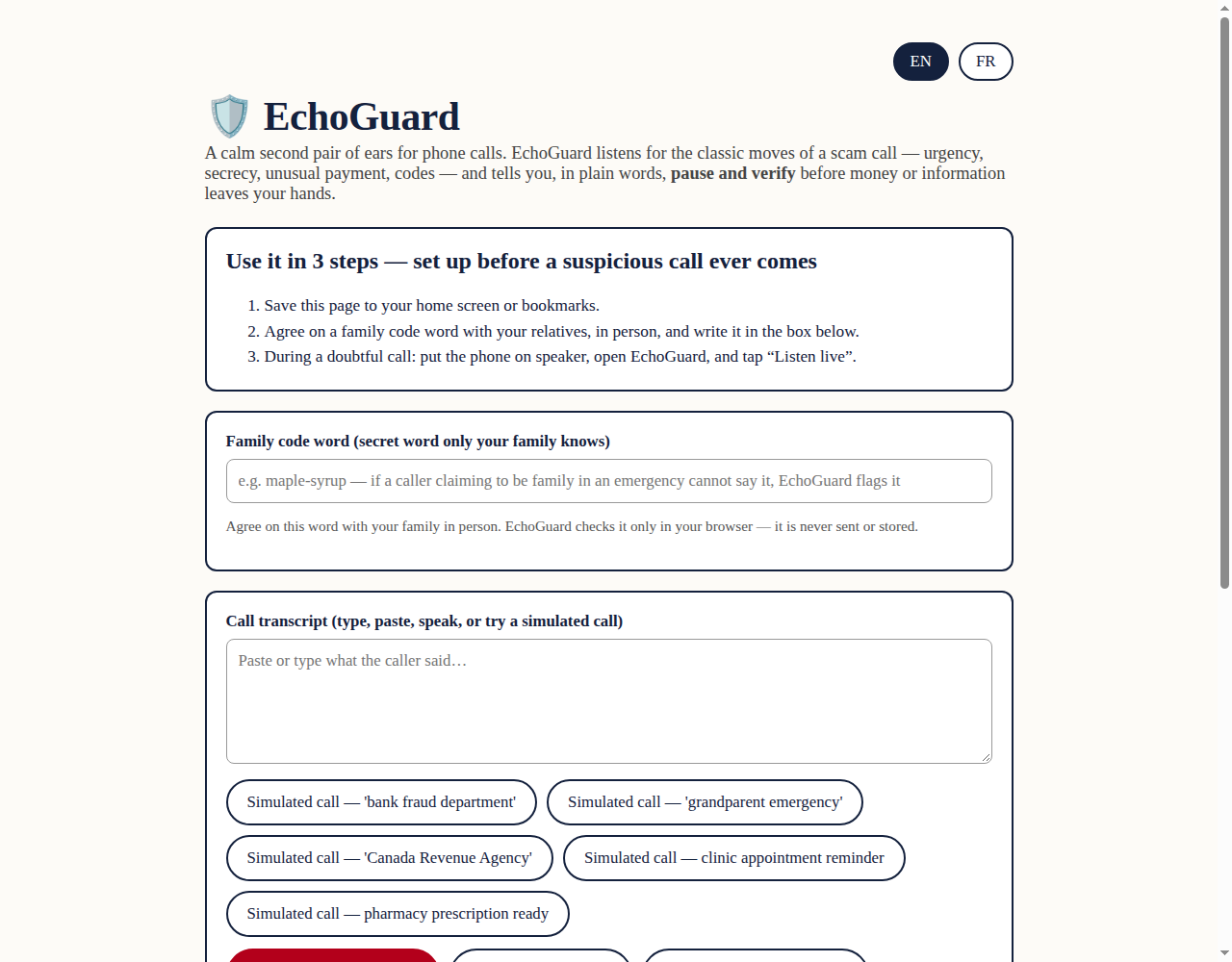
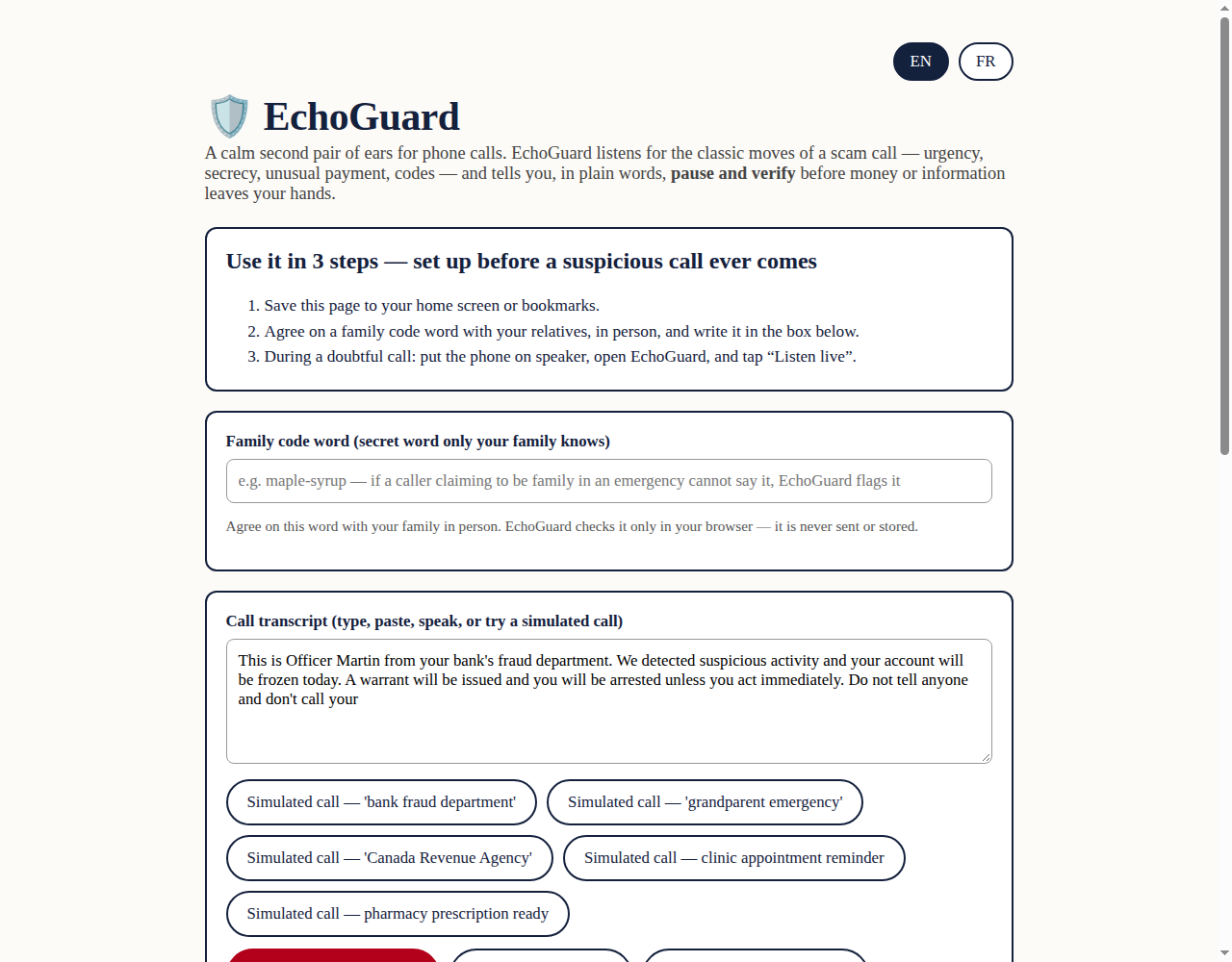
EchoGuard follows a call transcript (typed, pasted, or live from the microphone) and watches for the six classic social-engineering moves: artificial urgency, secrecy demands, unusual payment requests, credential requests, authority-plus-threats, and remote-access requests. Each detection is a named signal with the exact words that triggered it. The result is a clear, large-type verdict — LOW / CAUTION / HIGH RISK — and one safe next step: "Pause. Hang up. Call the official number yourself."
How we built it
A dependency-free web app (HTML/CSS/JS) so it runs anywhere, including an old family tablet. The detection engine is a transparent, explainable pattern system — every point of the score is auditable in the source — with live speech-to-text from the Web Speech API. The risk score is computed 100% on-device and nothing is recorded or stored; live transcription is performed by the browser's own speech service (in Chrome, audio is processed by Google), while typed, pasted and simulated transcripts never leave the device. A family code-word check adds a human-layer verification scammers cannot rehearse. Setup is three steps, shown at the top of the app: save the page, agree on a family code word in person, and during a doubtful call use speakerphone + Listen live.
Challenges we ran into
Making detection explainable instead of a black-box score; keeping the interface readable and calm for a stressed 80-year-old (large type, one action per screen state); tuning patterns so a legitimate clinic reminder scores 0 while real scam scripts score high.
Accomplishments that we're proud of
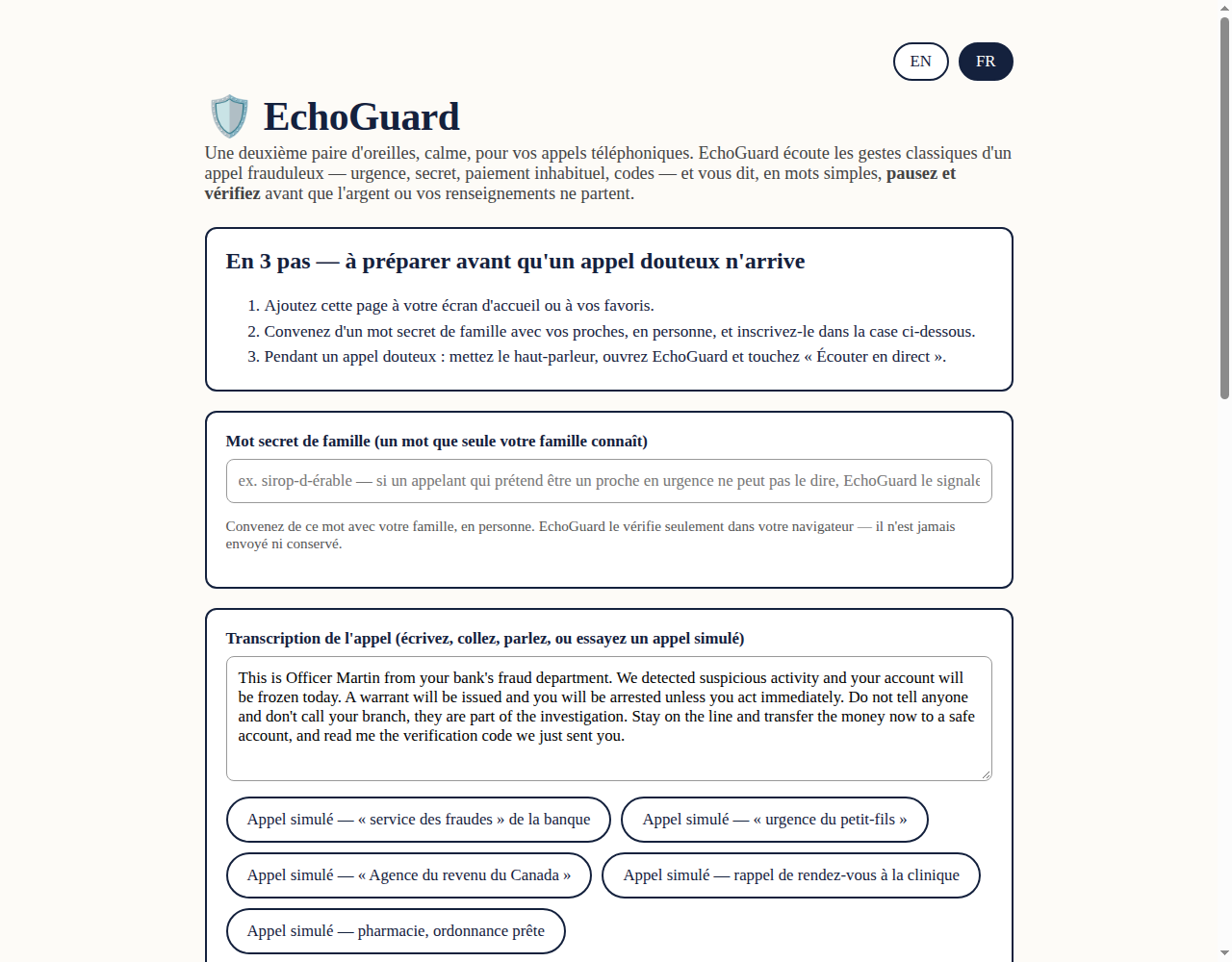
A working, tested engine — Node test suite 22/22 green: bank fraud-department scam 100 HIGH, revenue-agency (CRA) scam 100 HIGH, grandparent scam 75 HIGH and 100 with the family code-word check armed and the word missing, paraphrased scams in English and French caught HIGH, legitimate clinic and pharmacy calls 0 LOW. Plus: live-call simulation with a rising risk gauge, live microphone transcription, a family code-word check, and a full EN/FR interface.
What we learned
In fraud prevention, the explanation is the product. People don't need a probability — they need permission to hang up, and words for why.
What's next for EchoGuard
First post-hackathon step: put the 3-step setup in front of 3–5 seniors and measure whether the verdict is understood under pressure. Then: consent-based alert to a trusted family contact; optional on-device LLM second opinion behind the explainable score; carrier-free deployment as a simple home-screen app for seniors.
AI implementation
Explainable pattern-based NLP over call transcripts (six social-engineering signal families, weighted and auditable), plus browser speech recognition for live transcription. Responsible use: the score is computed fully locally and no automated action is ever taken on the user's behalf; live transcription is performed by the browser's speech service (in Chrome, audio is processed by Google), while typed, pasted and simulated modes send nothing; limits and false-positive behaviour are disclosed in the app's Responsible AI & limits page.
Built With
- css3
- html5
- javascript
- web-speech-api
