-
-
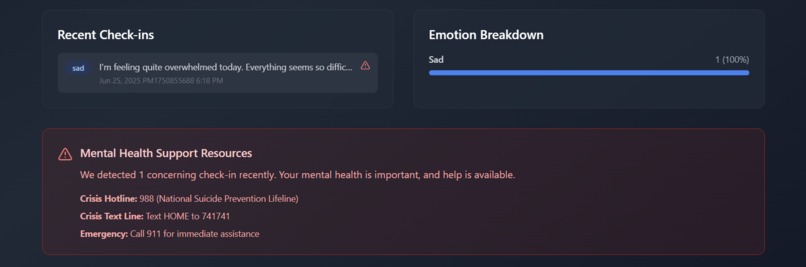
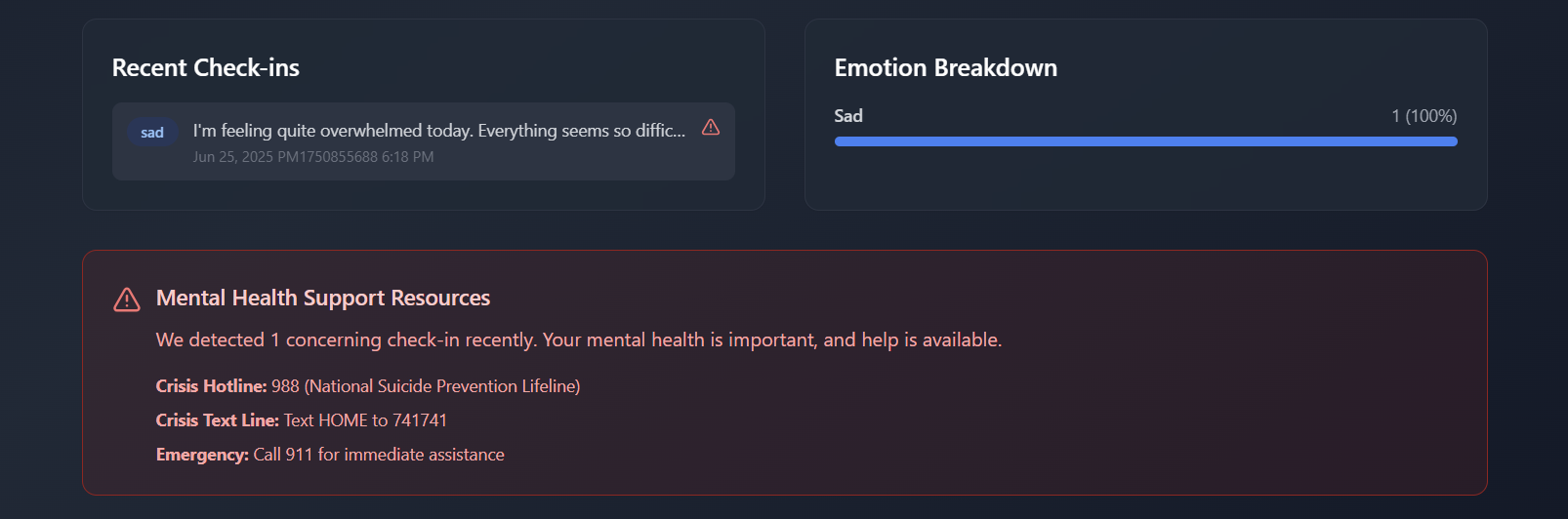
Check-In's
-
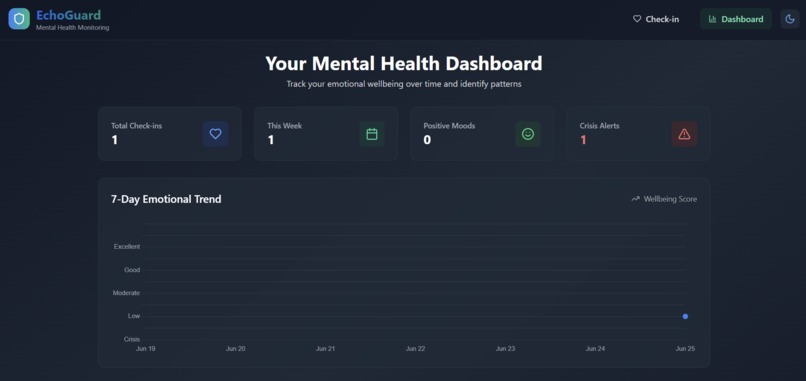
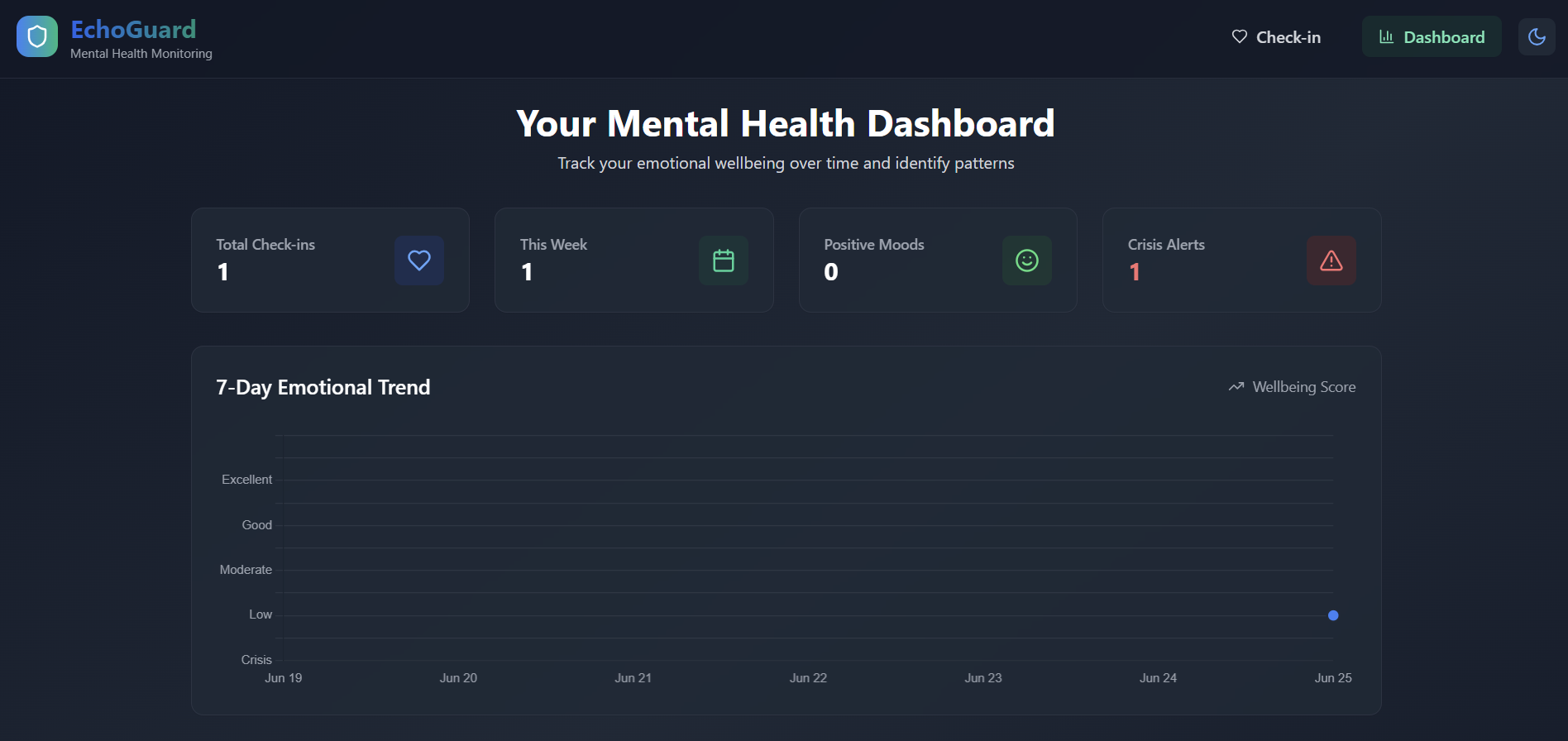
DASHBOARD
-
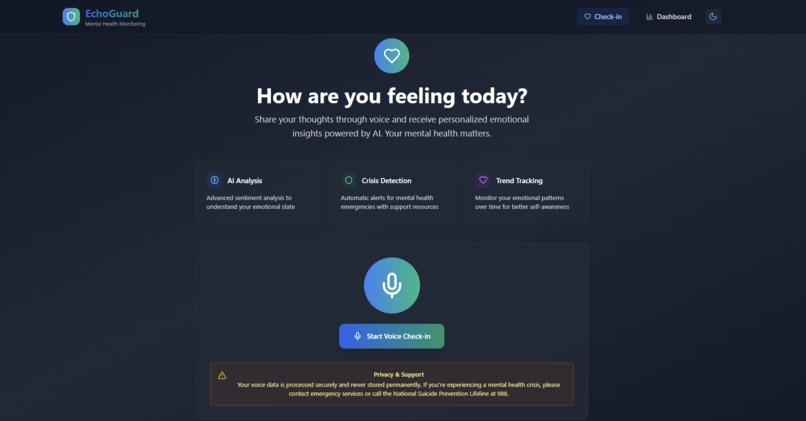
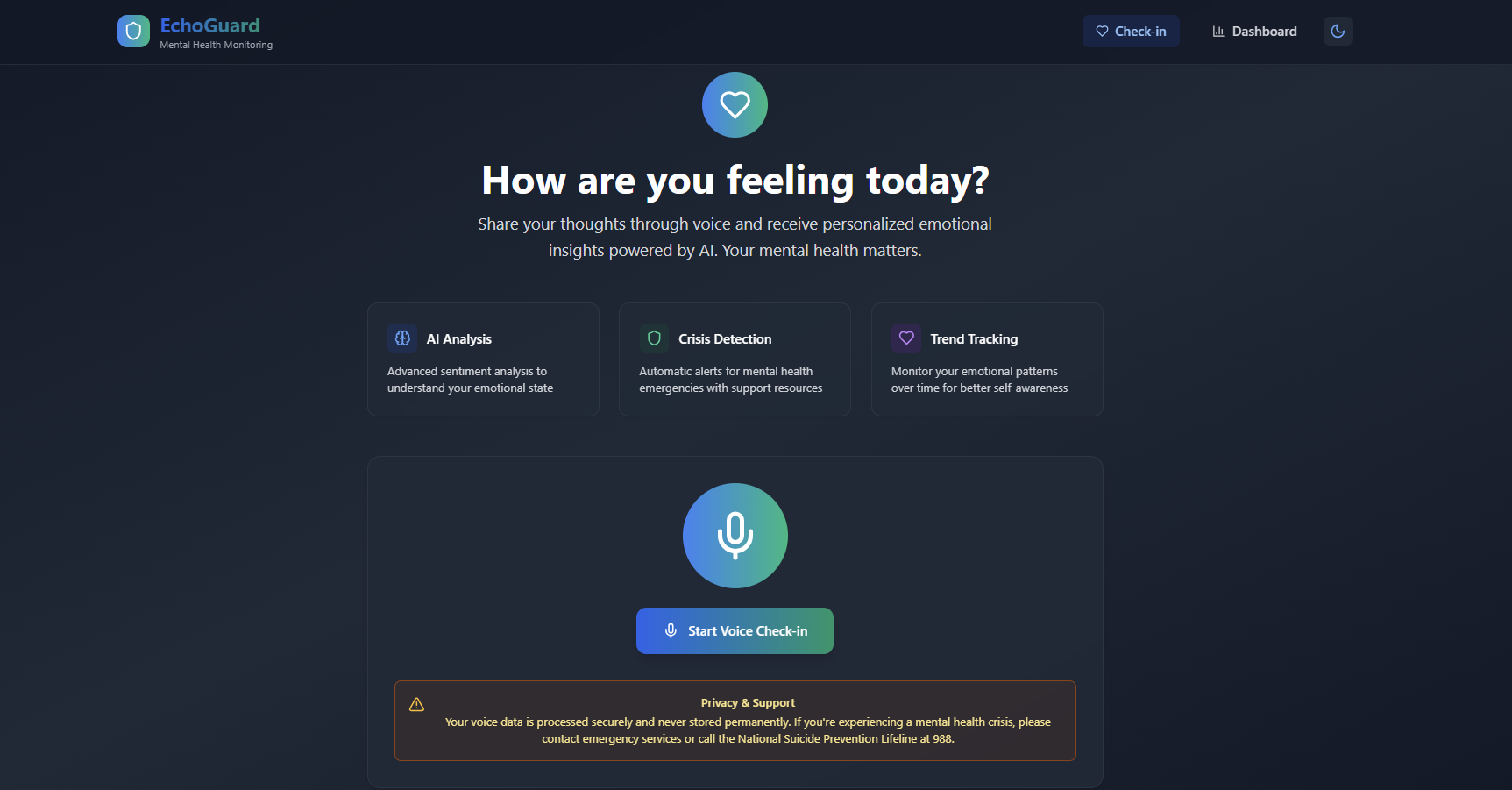
HOMEPAGE
-
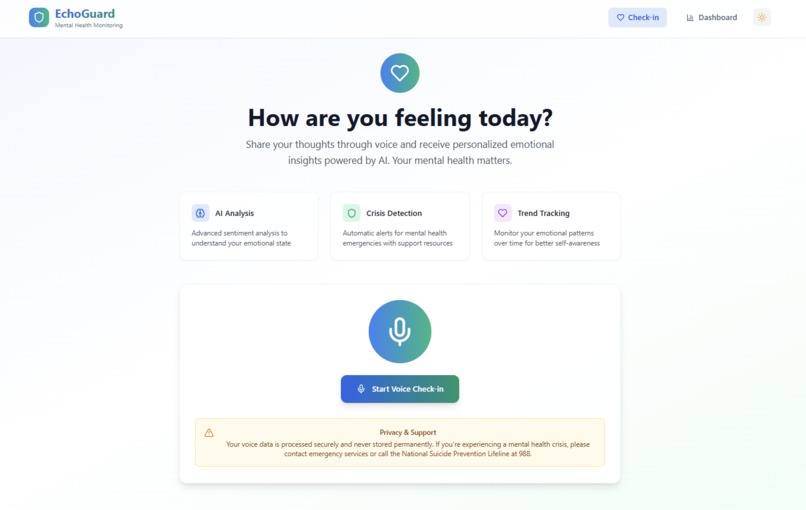
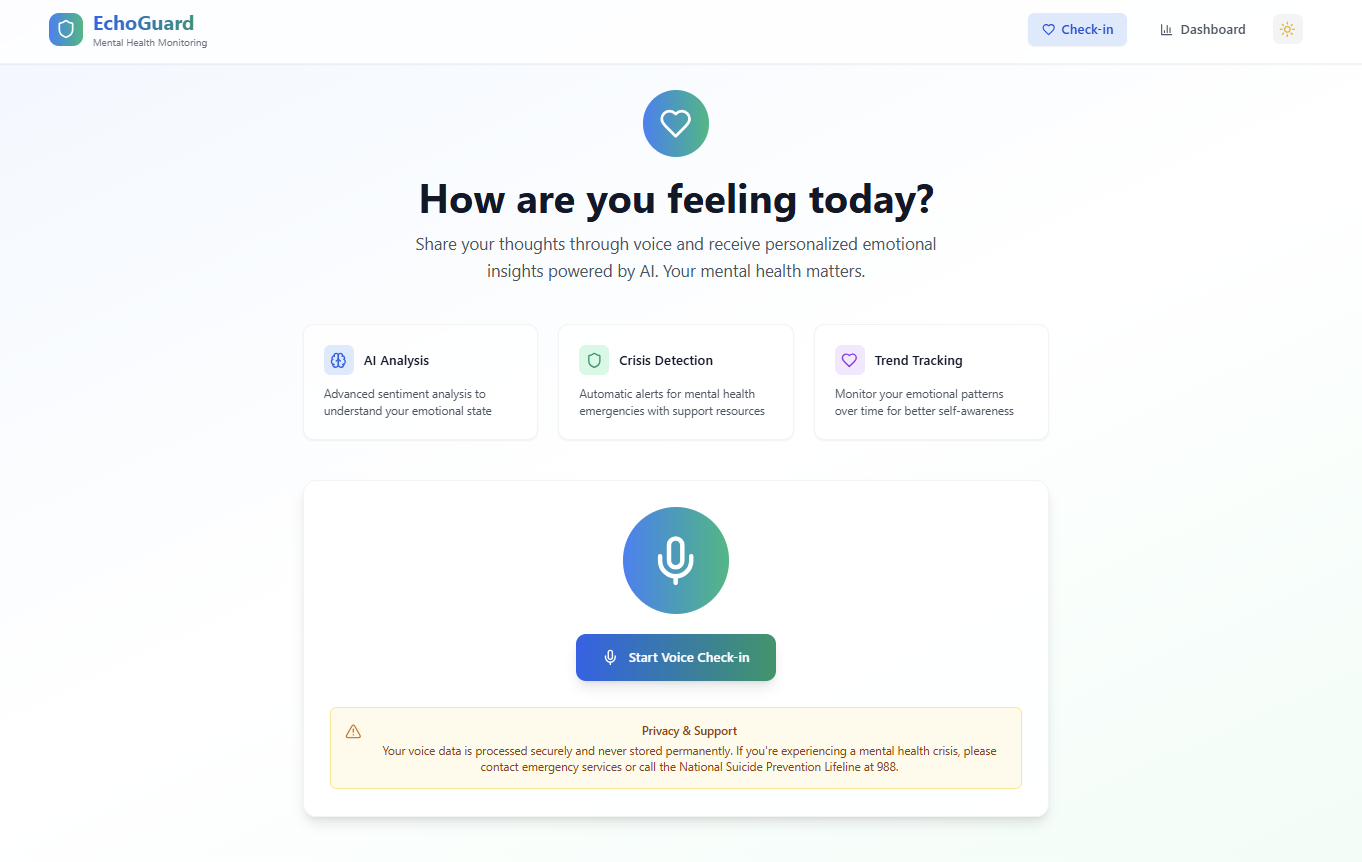
Light Mode
🧠 Inspiration
Mental health often goes unnoticed — especially online, where people share how they feel but no one truly “hears” them.
I wanted to create something that could listen without judgment, detect emotional patterns, and gently raise a flag if someone might be in crisis.
During a late-night chat with a friend who said “I don’t think I can do this anymore,” I realized how powerful it would be if tech could act as a first responder. That moment inspired EchoGuard.
💬 What it does EchoGuard analyzes the emotions behind messages/text and checks for distress signals or crisis phrases.
- Takes user input (text)
- Detects emotional tone (happy, sad, angry, anxious, or neutral)
- Checks for dangerous phrases (e.g. “I want to die”, “can’t go on”)
- Stores emotional history locally
- If a crisis is detected, it simulates an emergency alert It’s fast, light, privacy-respecting, and ready to plug into larger wellness platforms.
🛠️ How I built it
- Backend: Python + Flask + Flask-CORS
- Frontend: HTML, CSS, JavaScript (vanilla)
- Data store: JSON file (for mock database)
- Alert system: Crisis alert is simulated via console (can be extended with Twilio or email APIs)
- Deployed: Vercel The entire app runs on lightweight infrastructure with zero external dependencies unless extended.
🧗 Challenges I ran into
- Making emotion detection meaningful without using large transformer models (due to time and memory limits)
- Designing a simple and welcoming UI that doesn’t overwhelm users
- Handling edge cases in text (e.g. sarcasm or vague language)
- Getting Flask and frontend to work smoothly across local and web hosting setups
- Balancing between a "serious" tone and a friendly experience
🏅 Accomplishments I’m proud of
- Built a full-stack emotional intelligence tool solo in a short time
- Crisis detection logic works reliably for common phrases
- Clean API structure that could be reused in mobile or voice-based apps
- UI is cute, usable, and simple — without external libraries
- Created something that actually feels helpful and meaningful ❤️
-📚 What I learned
- Flask API structuring for emotion-based applications
- Better text processing logic using keyword context
- How to simulate critical alerting systems
- The power of minimal UI design — keep it human, not heavy
- That sometimes the simplest tools can make the biggest impact
🚀 What’s next for EchoGuard
- Integrate OpenAI Whisper for voice-to-text emotional analysis
- Add Twilio or email alerts for real-time emergency contacts
- Build a mobile app interface using React Native or Flutter
- Connect with licensed mental health resources via APIs
- Allow users to track emotional trends over time with analytics
- custom avatars, and supportive chatbot responses

Log in or sign up for Devpost to join the conversation.