-
-
Our finalized EchoGate logo.
-
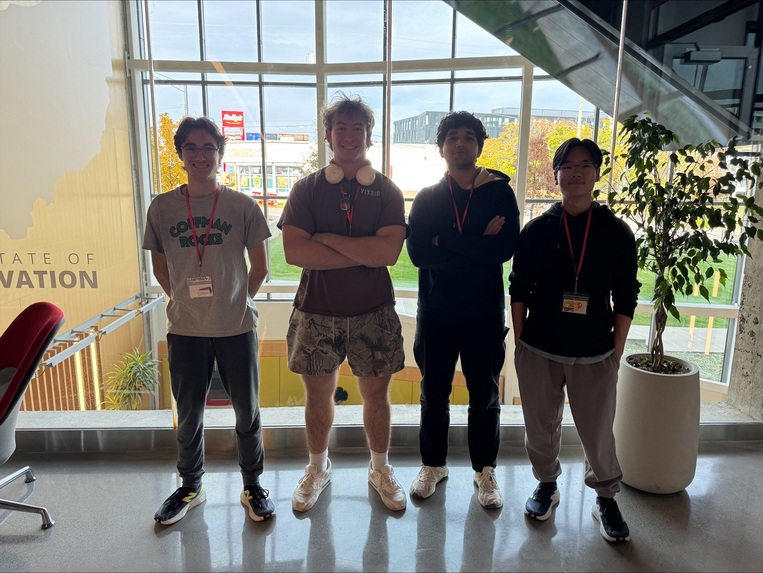
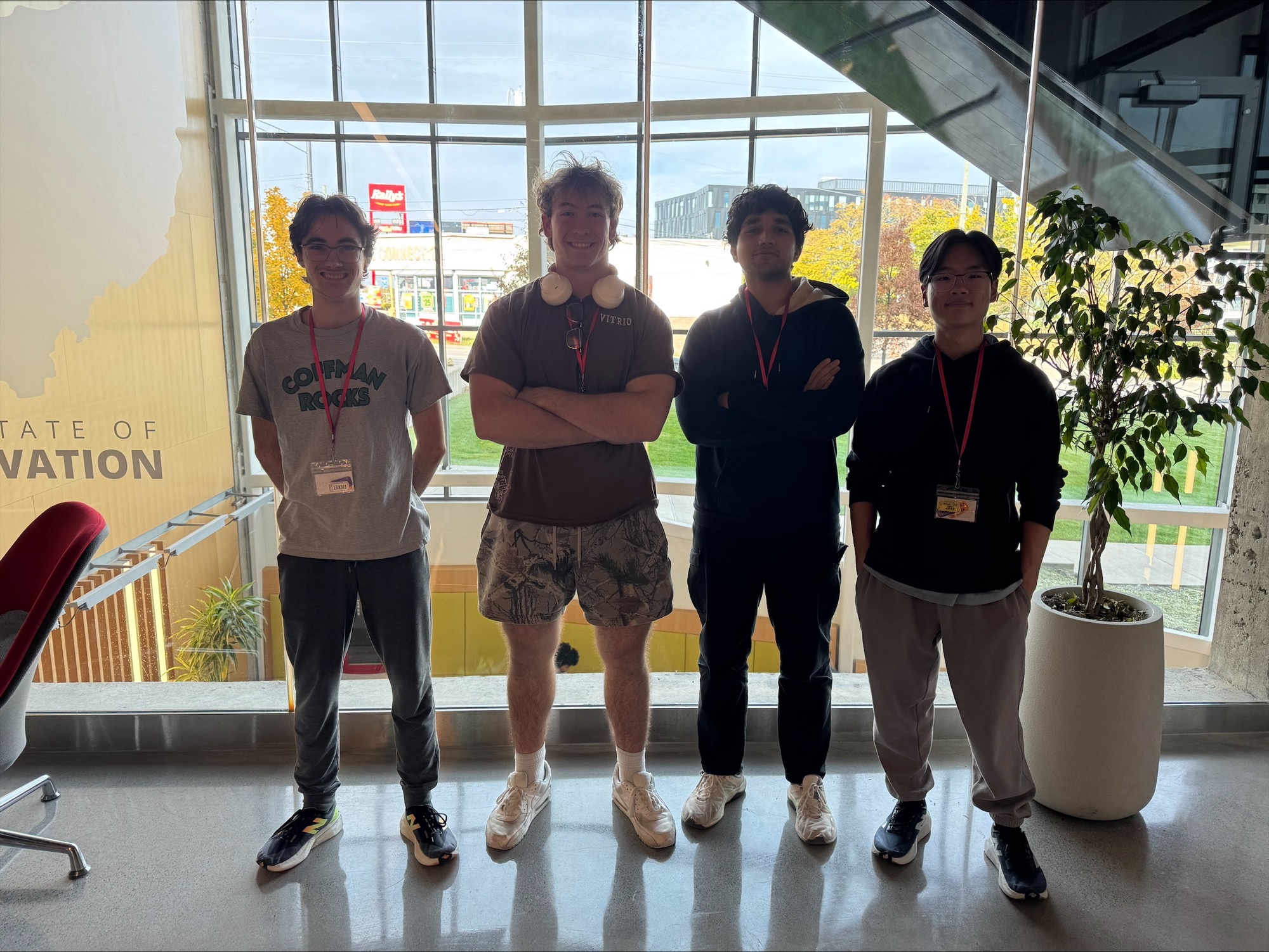
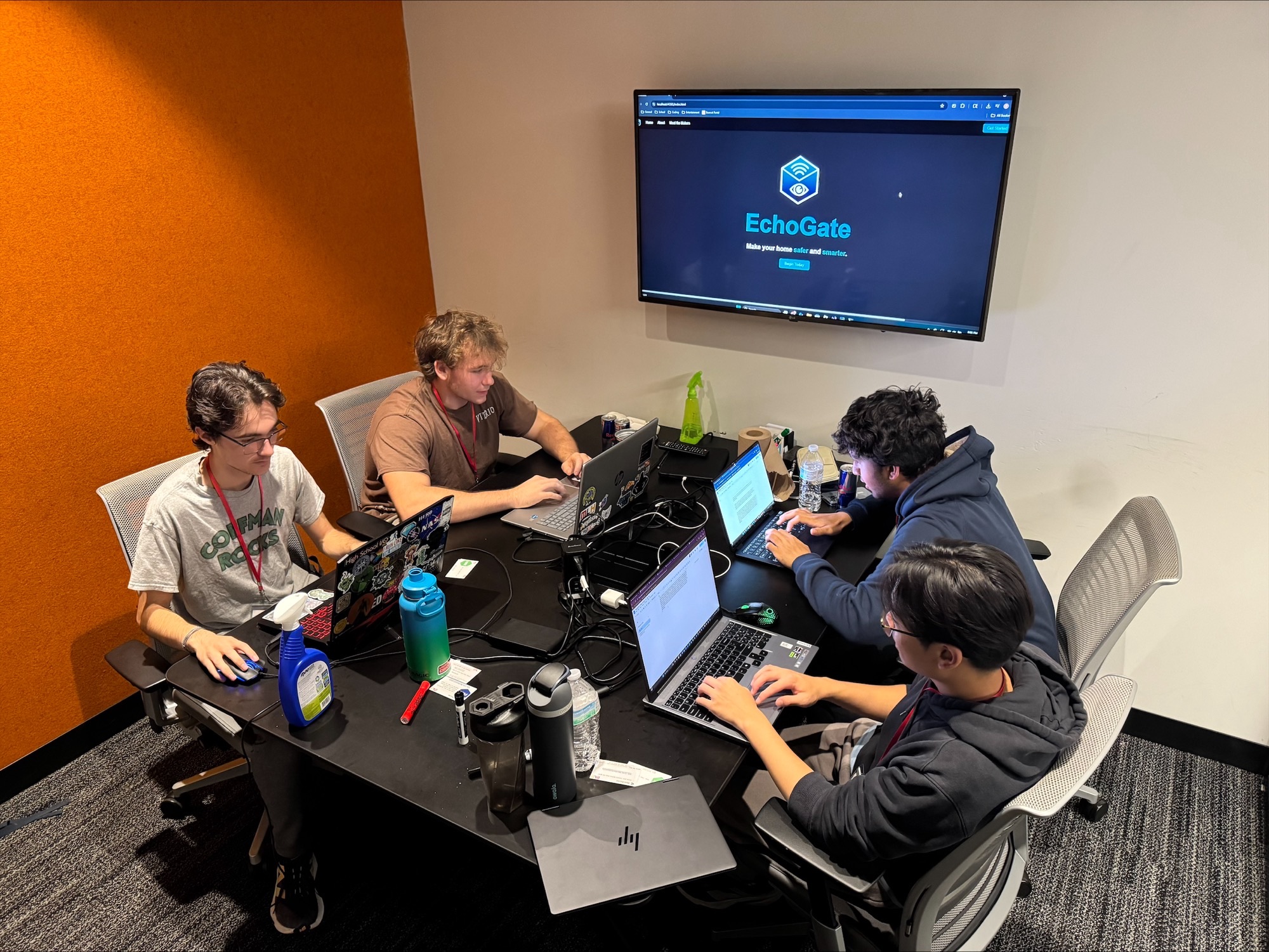
The team.
-
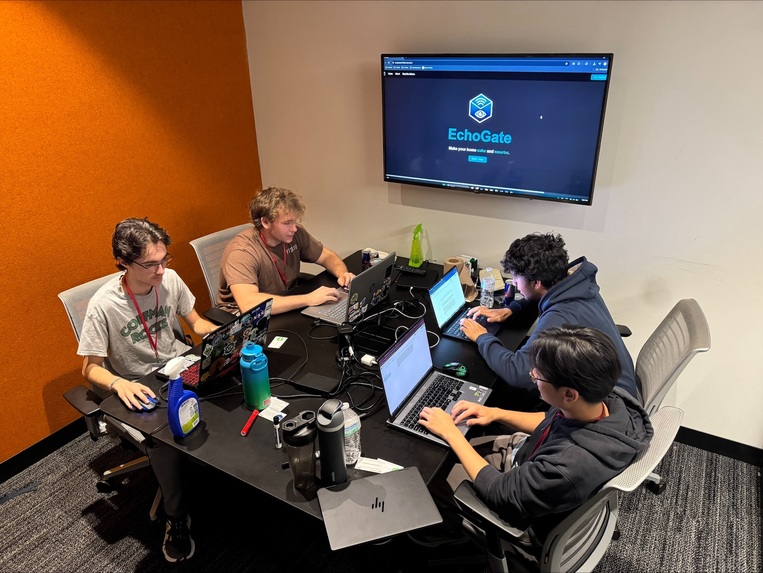
Everyone working on EchoGate together.

Inspiration
We were inspired by the lack of advanced facial recognition capabilities in modern home security cameras. Most current systems can detect motion, but they don’t truly recognize who is at your door. With EchoGate, we set out to build a smarter security system that identifies familiar faces through structured data analysis, alerts homeowners in real time when an unknown person appears, and provides a seamless live feed directly through the dashboard.
What it does
EchoGate provides a way for homeowners to monitor who is at their front door with the use of a fast-acting and lightweight facial recognition algorithm. EchoGate provides a 24/7 live stream to the user's dashboard within the webpage, and when a face is detected during this live stream, the facial recognition program evaluates whether it is a known or unknown face by comparing it with a database of face vectors predetermined by the user. If a face is unrecognized, EchoGate will send an email to the user and a notification through the webapp that there is an unrecognizable person at their door along with an image of the person.
How we built it
Our facial recognition algorithm was built with python. Our webpage was built with HTML, CSS, and JavaScript. We also used Flask to transfer data between the server-side and the client-side to display live streams on the user's dashboard. Our page framework was made with visual basic.net.
Challenges we ran into
In building the webpage for EchoGate, there were a multitude of challenges. From getting the layout of the website to be professionally perfect, to getting all of the JavaScript interactability working, we ran into various challenges. Though, through perseverance and effort, we were able to make a polished, and user-friendly-and-ready webpage and graphical interface for EchoGate.
Accomplishments that we're proud of
A couple accomplishments we are proud of for EchoGate are listed below:
- A working and highly accurate facial recognition system and database
- A professional and polished website and UI
- Real-time data transfer between EchoGate and the website
What we learned
In developing EchoGate, we learned how to build optimized facial recognition algorithms that break down a facial structure into 512 unique data points. Each face is converted into a numerical representation that allows for precise, consistent comparison between known and unknown individuals. We also gained experience in professional web design, learning how to create responsive layouts and intuitive user interfaces that improve accessibility and usability. Additionally, we explored authentication integration with Clerk.dev, enabling secure logins, sign-ups, and personalized dashboards.
What's next for EchoGate | Facial Recognition Home Security System
EchoGate has lots of real-world implementations that can follow this hackathon. Firstly, the implementation of SMS notifications instead of email, or an SMS emergency notification in the case of an emergency. Next, EchoGate could include a microphone function in which the user can speak through whatever device they are using to access the UI and speak through their EchoGate. And finally, EchoGate could become a tangible hand-held product. As of right now, EchoGate is a software that runs through a computer webcam, though with some hardware work and 3D printing, it could easily be converted into a doorbell-style device.


Log in or sign up for Devpost to join the conversation.