-
-
Console
-
Feedback
-
Stripe-Dashboard
-
Slack Use
-
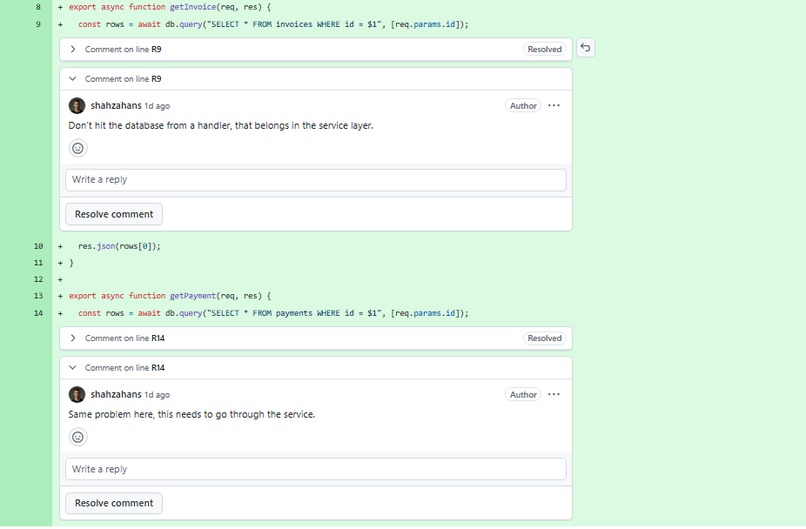
Github Use
-
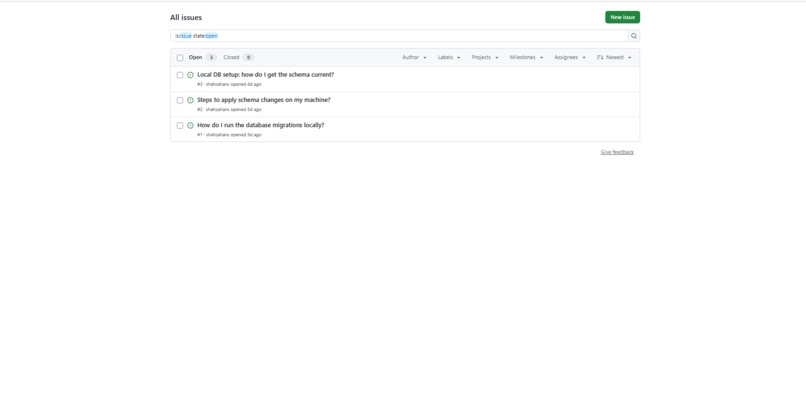
Github use
Echofy
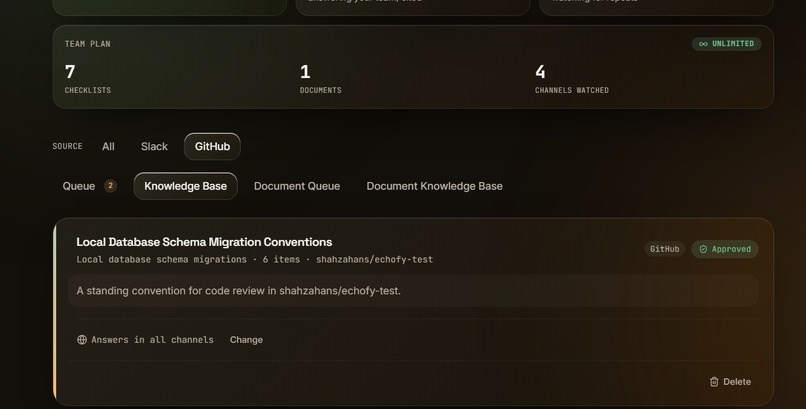
Echofy is a documentation tool for small teams. It watches the places a team already talks, Slack channels and GitHub repositories, notices the questions they keep answering, and drafts a reusable checklist for each one. Then it refuses to tell anybody the answer until a human approves it.
That last sentence is the entire business, and it is also the most interesting thing about how work was divided between the AI and the people.
What the AI decides on its own
Gemini Flash runs on every message that reaches a watched channel, unsupervised, with nobody in the loop. It makes four judgments we never review:
Whether a message repeats something. Not by keyword. Somebody asking "how do we deploy to prod again?" on Thursday is the same question as "what's the process for pushing to production?" from Monday, and the model decides that on shared intent. It returns a structured judgment with a confidence score, and anything under 0.6 is discarded without a human ever seeing it.
What the recurring topic is called. The model names the pattern, and that name is how future occurrences find it.
When something has repeated enough to be worth writing down. Two occurrences.
What the checklist says. Five to eight steps, drafted from the surrounding conversation.
The same model does the second half of the product: a team types /note_it, and has a conversation they were going to have anyway, types /note_ends, and Gemini writes it up as a structured document rendered to both .docx and .pdf.
None of that is reviewed before it happens. On a busy channel, Echofy makes hundreds of these calls a week with no human awake.
What a person decides
One thing. Whether the draft is true.
This is the part that, at first glance, looks like a failure of ambition. The obvious 2026 product points a model at your Slack and lets it answer. I built the gate instead, and I built it on purpose, because of how documentation actually dies.
Documentation does not fail because it is missing. It fails the moment somebody follows it, and it is wrong. A tool that answers from whatever it can find will eventually answer from a message where a colleague was guessing, joking, or describing a process that changed two quarters ago, and it will do so in exactly the confident tone it uses when it is right. A team gets burned once and stops trusting the tool. After that, the tool is worse than nothing because there are now two sources of truth, and one of them lies.
So the division of labor is not "AI does the easy parts, and humans check the work." It is: the AI does all of the judgment that can be wrong cheaply, and a person makes the one judgment that is expensive to get wrong. Noticing a repeat costs nothing if it is wrong. Being trusted and wrong costs the whole product.
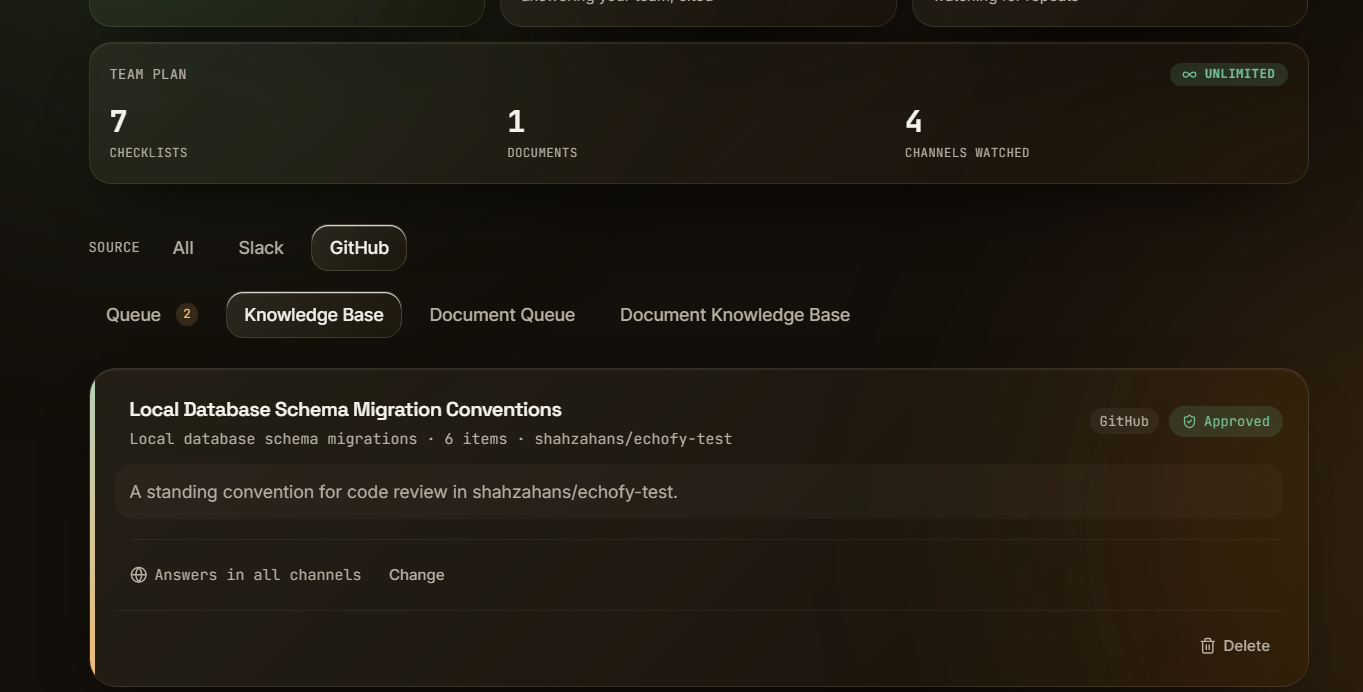
The gate is narrow by design. Approving is one click on a draft that is already written. The AI has done the reading, the noticing, the naming, and the writing. What is left for the person is the thirty seconds of "yes, that is actually how we do it," which is the only part of the job that requires having been in the room.
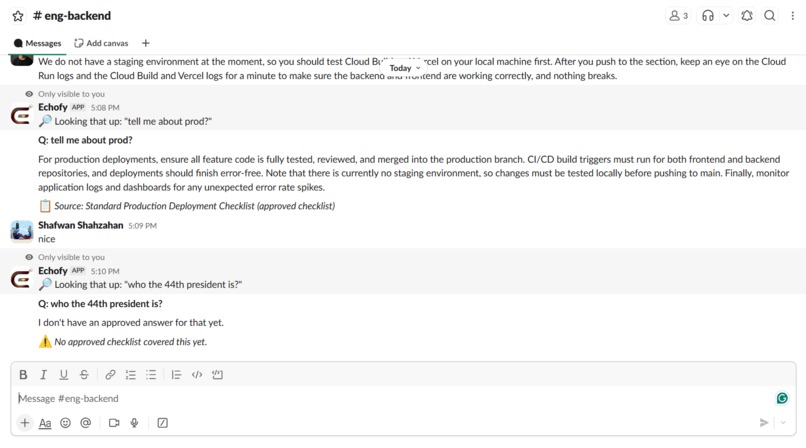
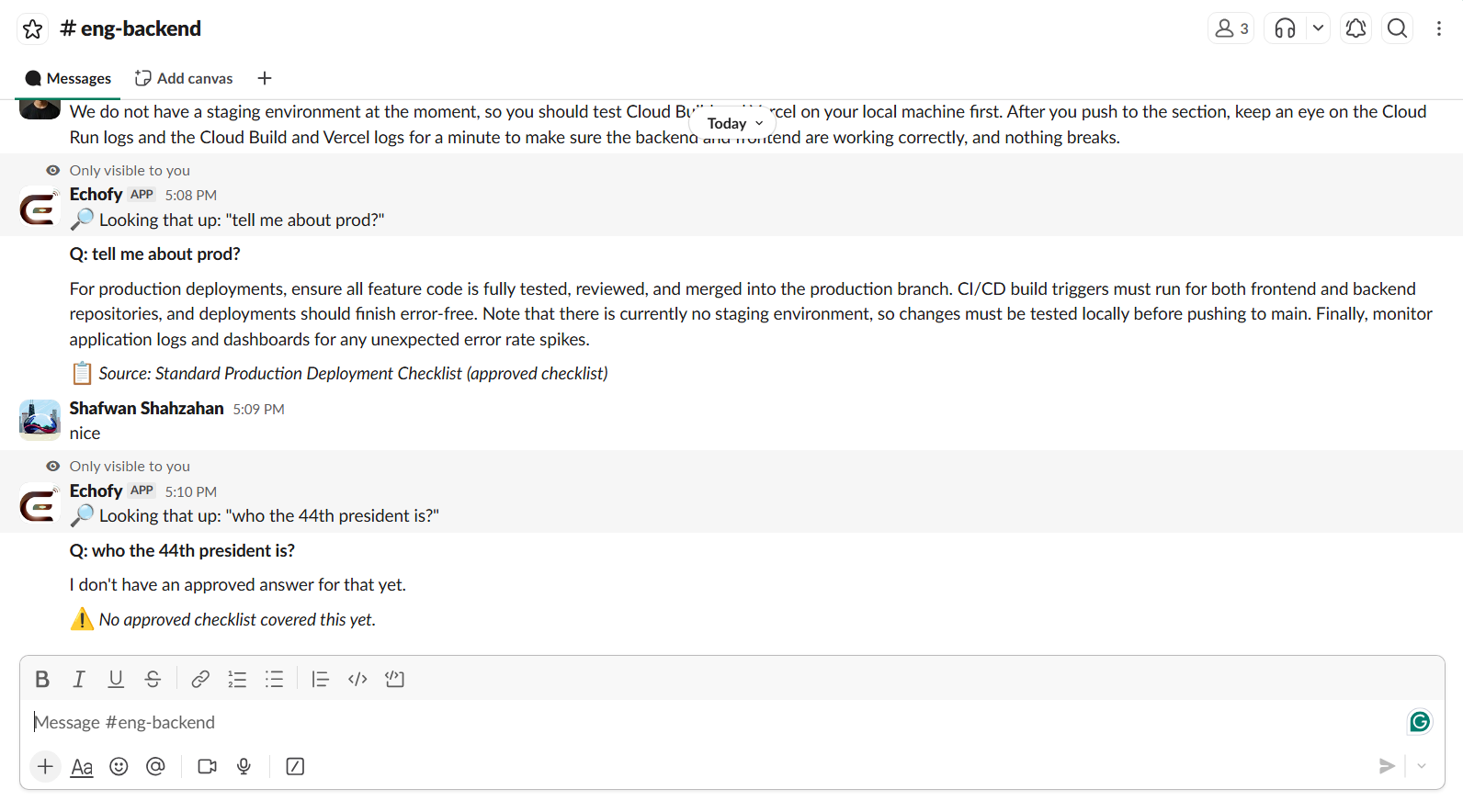
And the refusal matters as much as the answer. Ask Echofy something that no approved checklist covers, and it says so plainly instead of improvising. In demos, that is consistently the moment people relax, which tells you how much everybody already expects to be lied to.
What runs the business without us
Away from the trust boundary, we automated aggressively.
Accounts provision themselves on the first authenticated request. Stripe webhooks are the only writer of a customer's plan, so upgrades, downgrades, failed cards, and cancellations all resolve unattended, including switching a customer's blocked channels back on the moment they pay. Transactional mail sends itself. Idle capture sessions close themselves on a scheduler, because a scale-to-zero service cannot hold a timer. Plan limits, including a hard ceiling on model spend per account, are enforced in a single atomic statement, so two simultaneous messages cannot both slip through the last unit of budget.
We want to be precise here rather than flattering: that layer is deterministic automation, not AI. We are not going to claim a model runs our billing. The AI does the judgment work inside the product. Code runs the business around it.
The business, honestly
Echofy runs on Google Cloud Run with Gemini Flash, and it is live and selling. Solo is free. Team is $20 a month. Studio is $100 for agencies running several client workspaces.
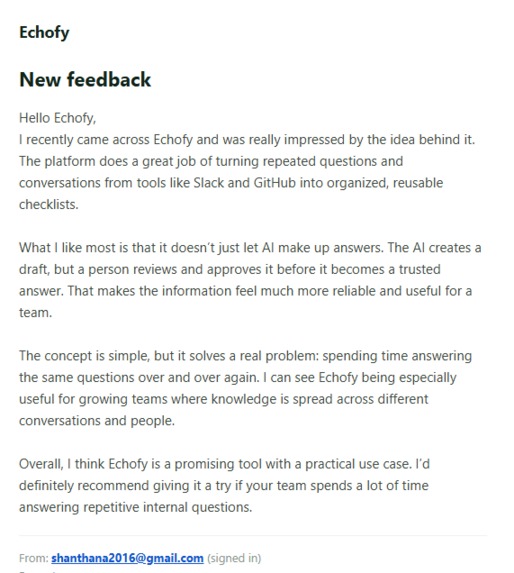
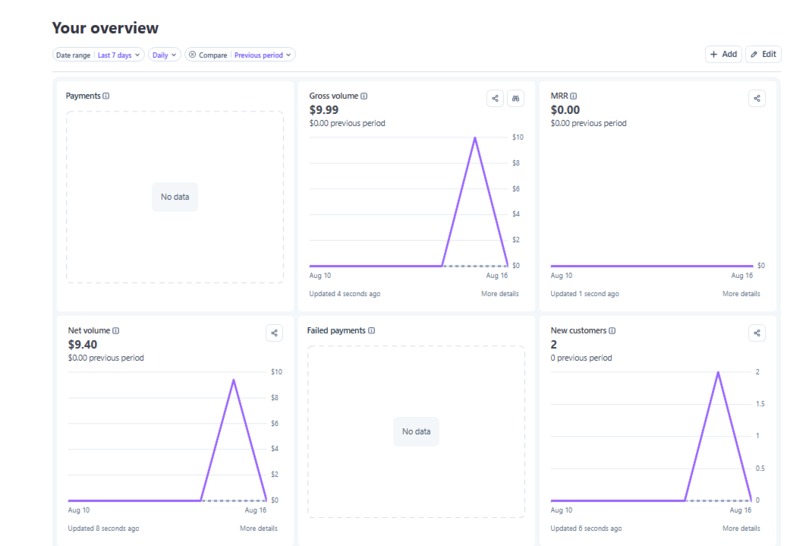
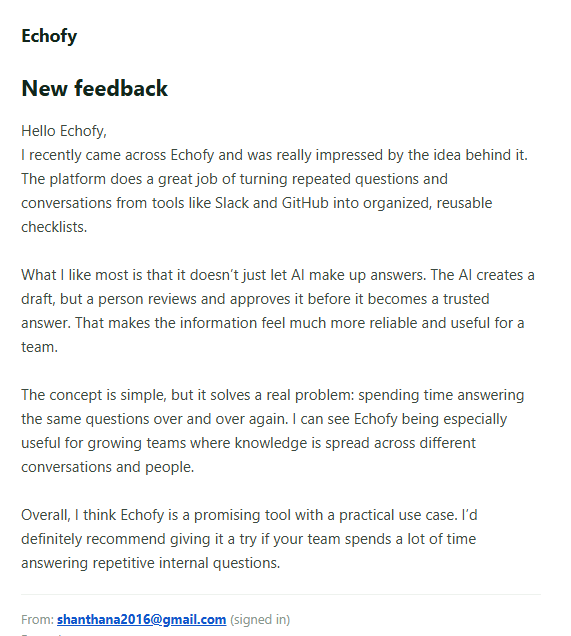
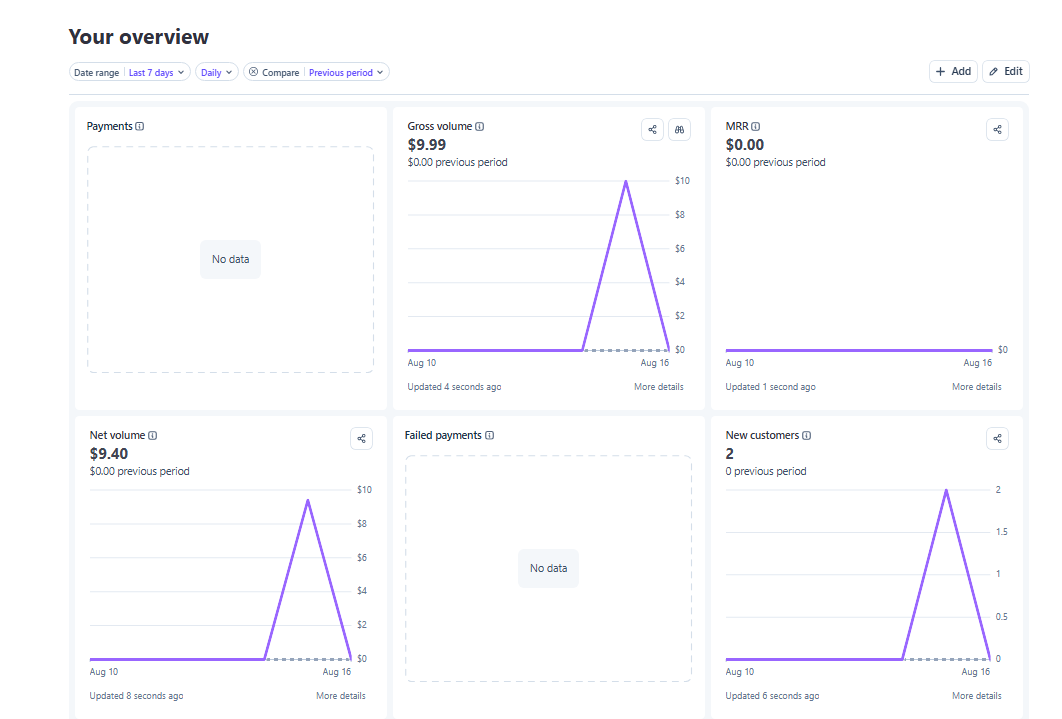
Within the program window, we took our first paying customer: one Team subscription at the $9.99 first-month price, through live Stripe checkout. They found the product, used it, sent us unprompted positive feedback through the site's feedback form, and then paid. That Order matters more to us than the amount.
Against $20.00 of costs that month, $9 of Gemini tokens, and $11 for the domain and site, that is a loss of $10.01. Customer acquisition cost was zero because we did not spend anything on acquisition. These are the real figures, and we would rather submit them than better ones.
What we would change
The honest gap is that the model still drafts a generic first attempt when a channel does not actually contain the answer. Our fix was to let a reviewer correct a draft before approving, rather than only accepting or rejecting it. We shipped this week, moving the product from "approve the AI's guess" to "the AI wrote most of it, and you fixed the two lines only you knew."
That is the direction we think this whole category goes. Not less AI. More AI, doing more of the work, arriving at a boundary that a person still owns.
Live at echofytech.com
Built With
- cloudflare
- docker
- express.js
- github-api
- google-cloud-build
- google-cloud-run
- google-gemini
- next.js
- node.js
- postgresql
- react
- resend
- slack-api
- stripe
- supabase
- tailwindcss
- typescript
- vercel


Log in or sign up for Devpost to join the conversation.