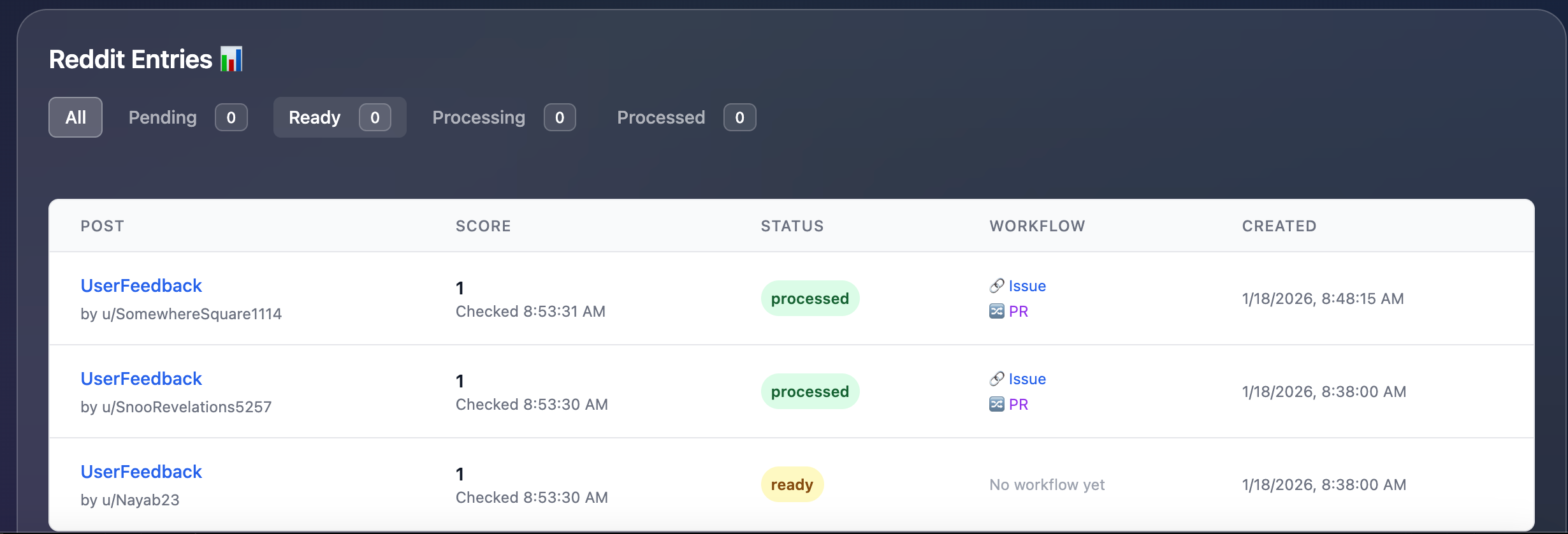
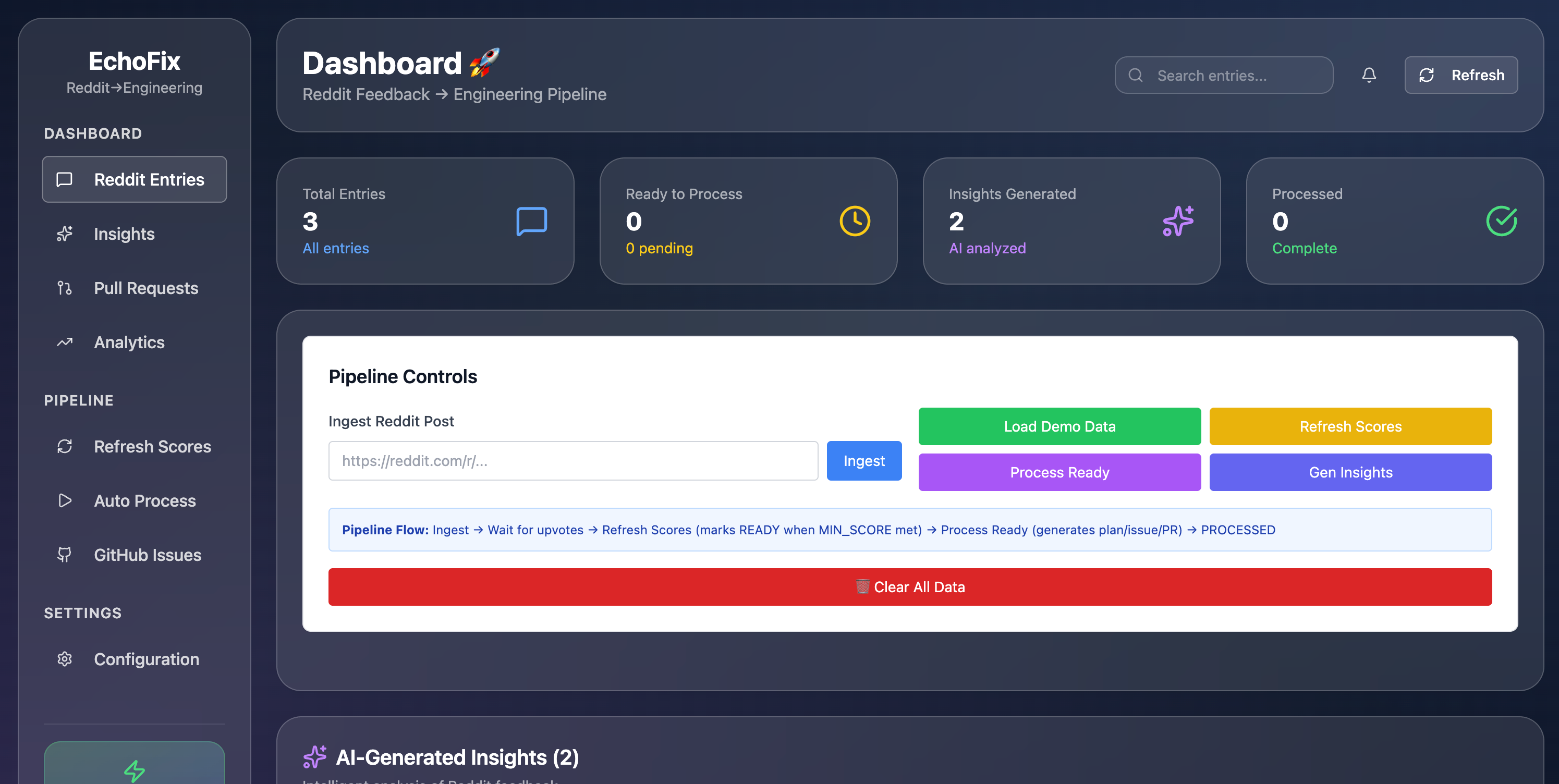
Inspiration Startups with small teams often get their most valuable feedback from places like Reddit and Twitter—but it’s scattered, unstructured, and hard to convert into real engineering work. I wanted to build a system that closes the loop between what users complain about publicly and what engineers can actually ship. What EchoFix does EchoFix is an agentic tool that pulls real user-reported issues from online communities and turns them into developer-ready fixes. Instead of just summarizing complaints, EchoFix structures them into actionable outputs like: Clear issue statements Categorized themes (bugs, UX problems, performance, feature requests) Severity and priority suggestions Reproduction steps (when possible) Suggested fix strategy / patch plan GitHub-ready issue format for engineers How we built it EchoFix works as a pipeline: Collect feedback from sources like Reddit and Twitter/X Filter + score relevance to avoid noise and low-signal posts Cluster similar complaints into meaningful themes Generate an “issue spec” using LLM reasoning Output structured fixes that can directly translate into engineering tasks Challenges The biggest challenge was making the output feel like something an engineer would actually use, not just another AI summary. Real user posts are messy, vague, and emotional—so the system has to extract signal, infer context, and still stay accurate. Another challenge was balancing scope: I wanted the product to feel complete in a hackathon demo while keeping the architecture clean and reliable. What we learned Building EchoFix taught me how important structure is when using AI in real workflows. The value isn’t just in generating text—it’s in producing consistent, actionable artifacts that fit into how teams build software. This project also pushed me to think more like a product engineer: minimizing noise, prioritizing issues, and making the output practical.
Built With
- docker
- fastapi
- gemini
- github-api
- n8n
- python
- react
- reddit/twitter-data
- supabase-(postgres)
- tailwind
- typescript
- unwrap
- vercel
- vite


Log in or sign up for Devpost to join the conversation.