-
-
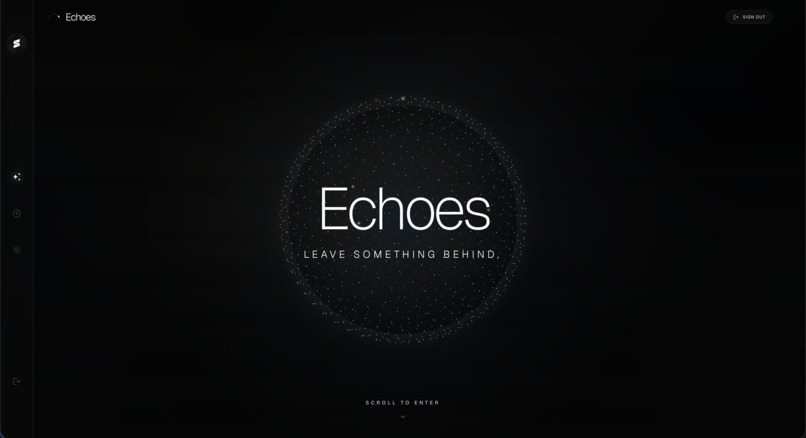
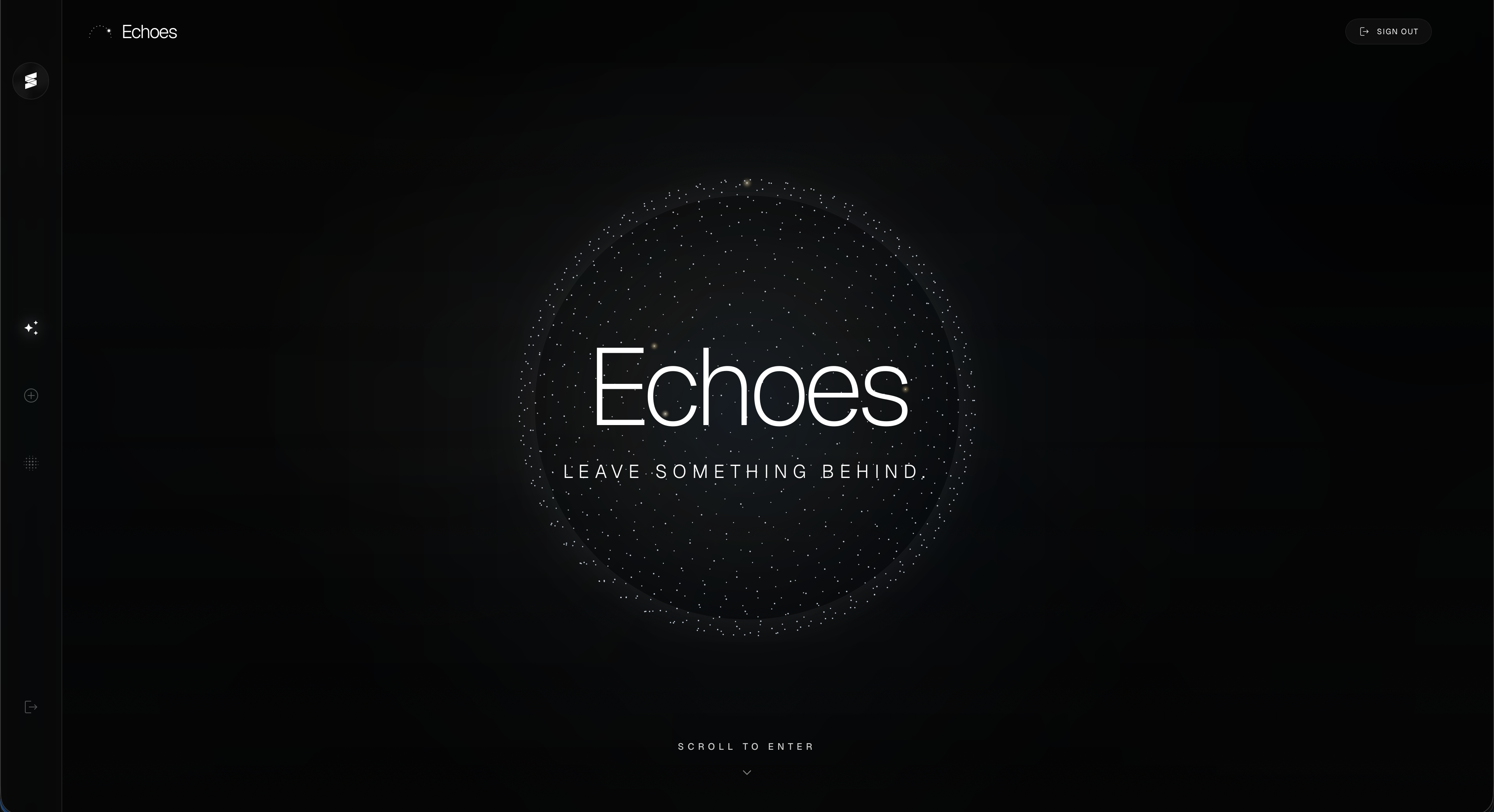
Homepage
-
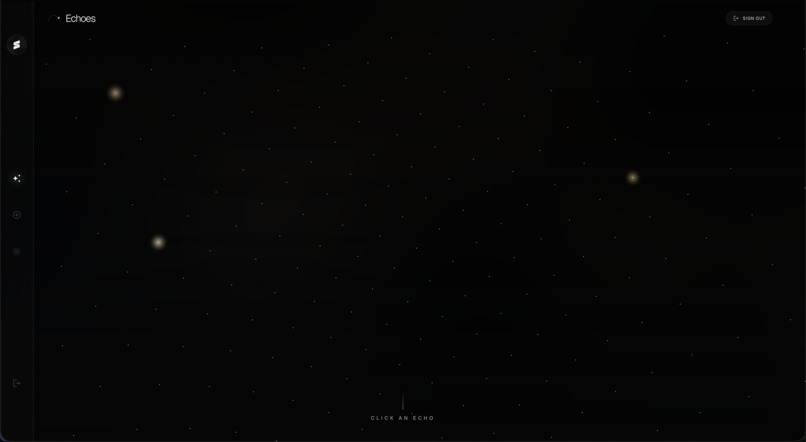
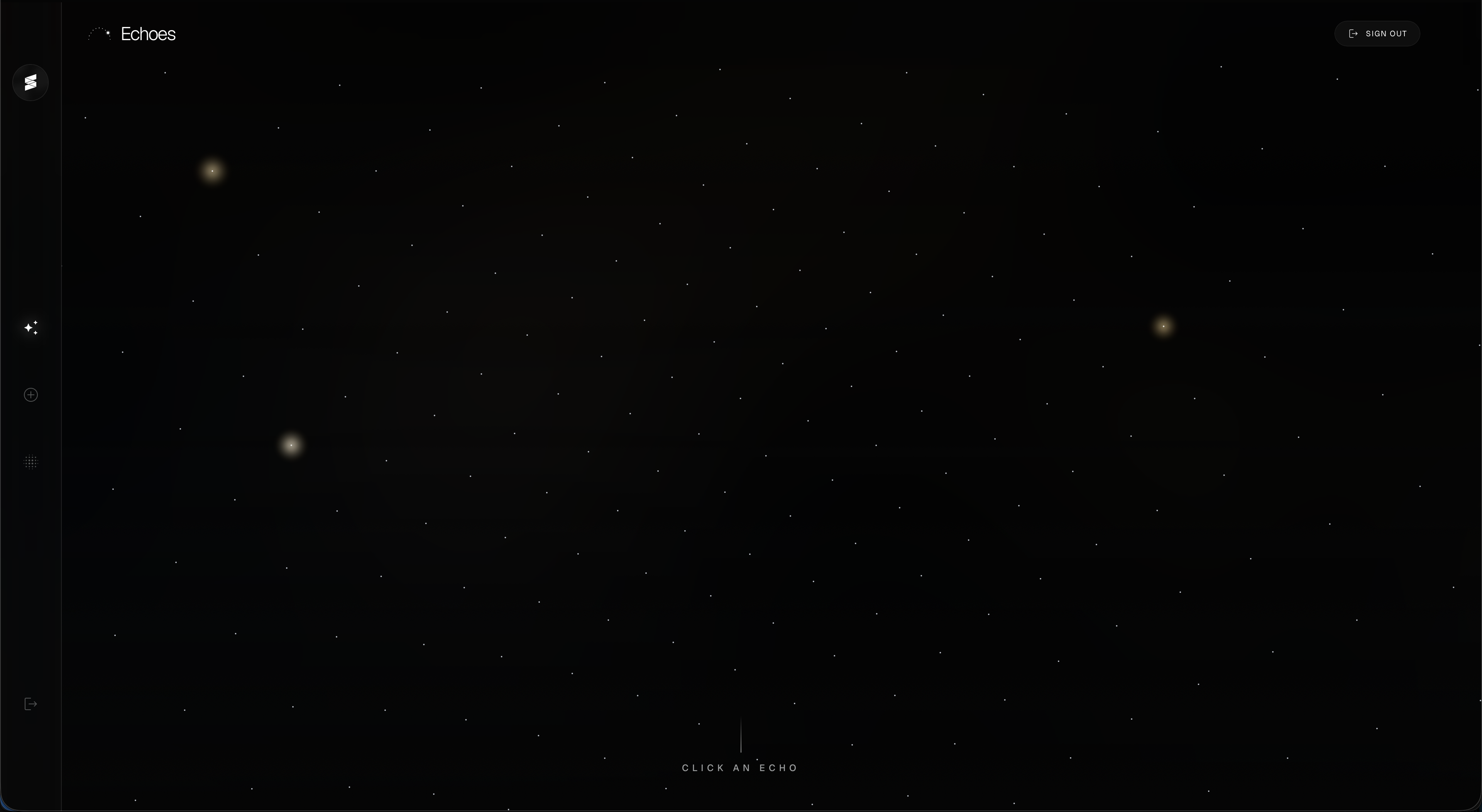
Claimed and Unclaimed Echoes
-
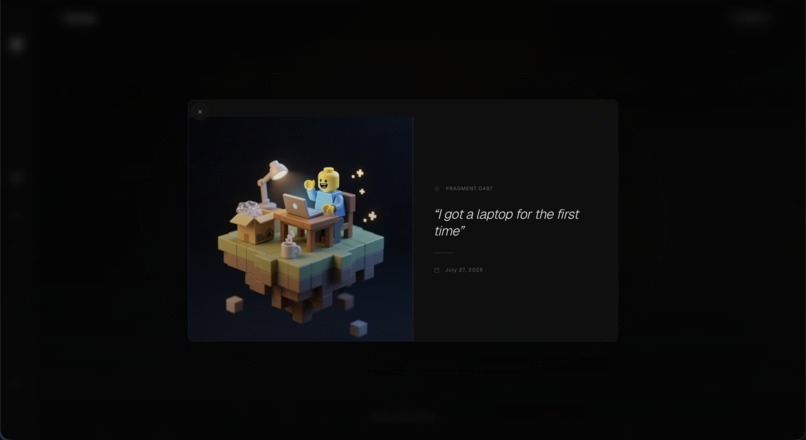
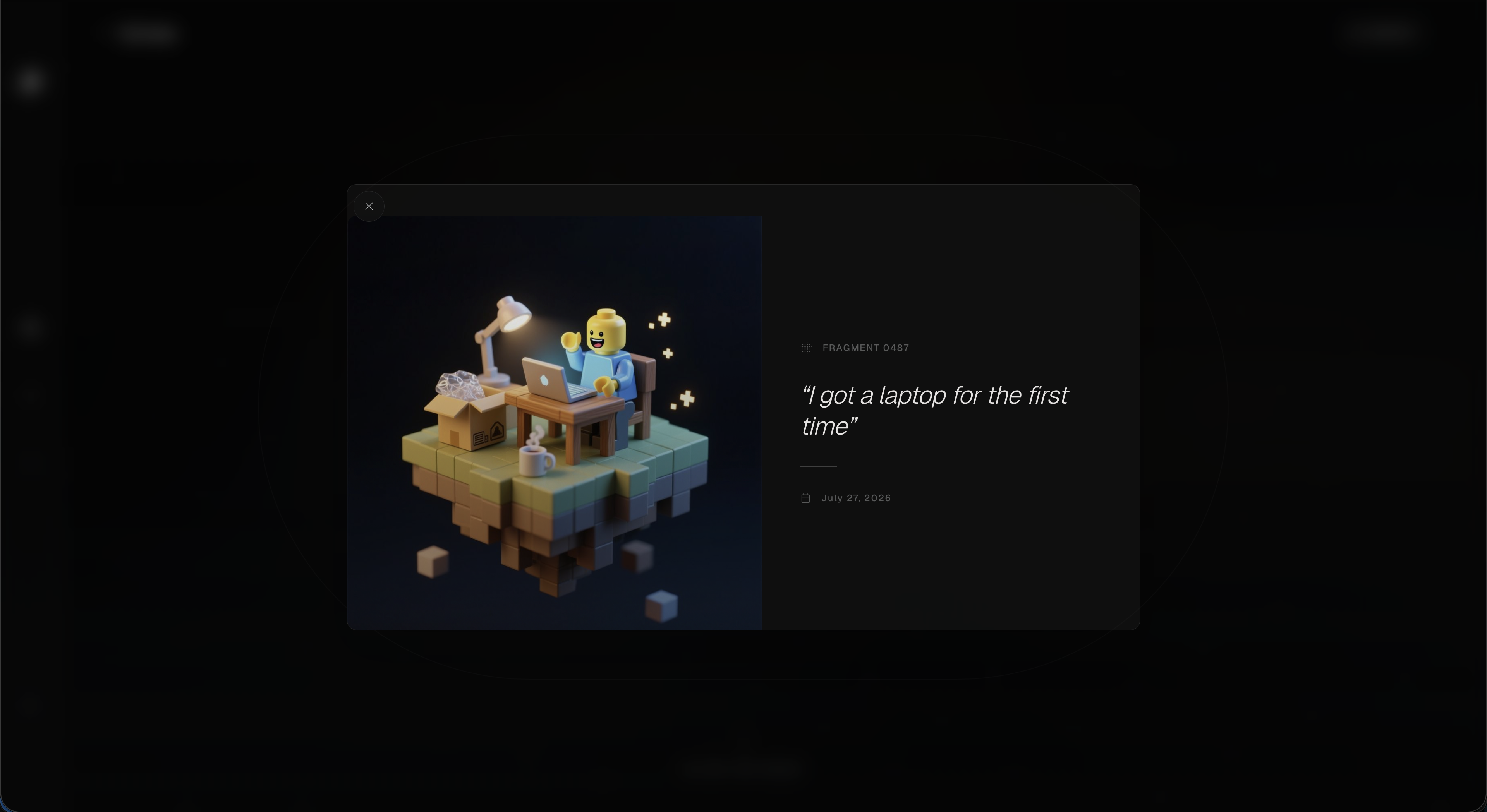
A Claimed Echo
-
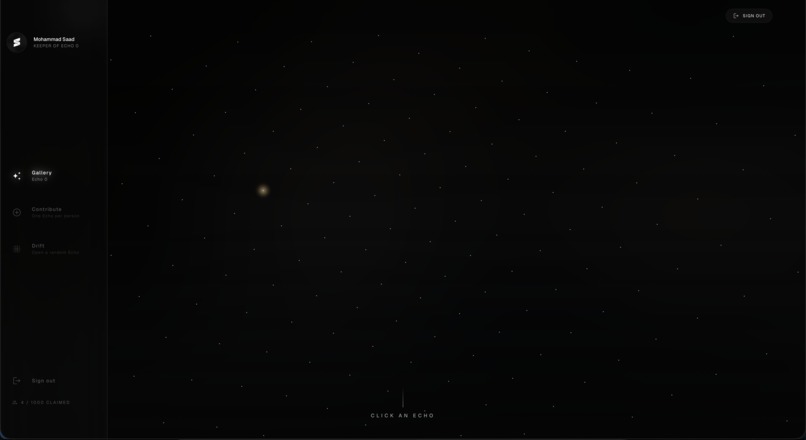
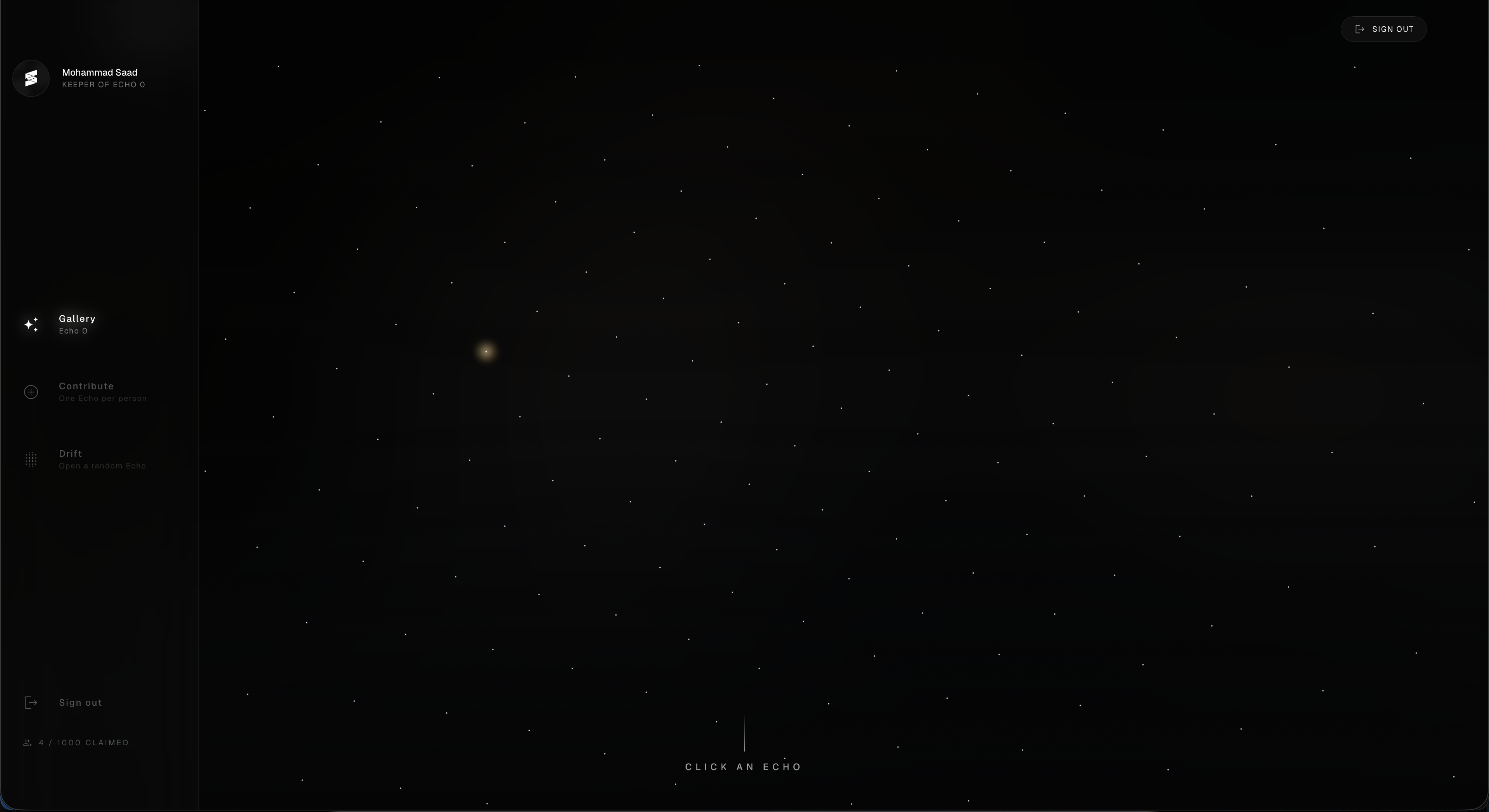
Sidebar
-
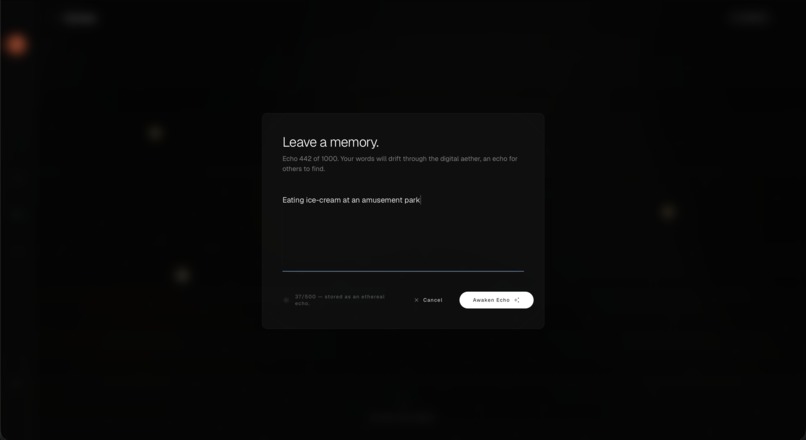
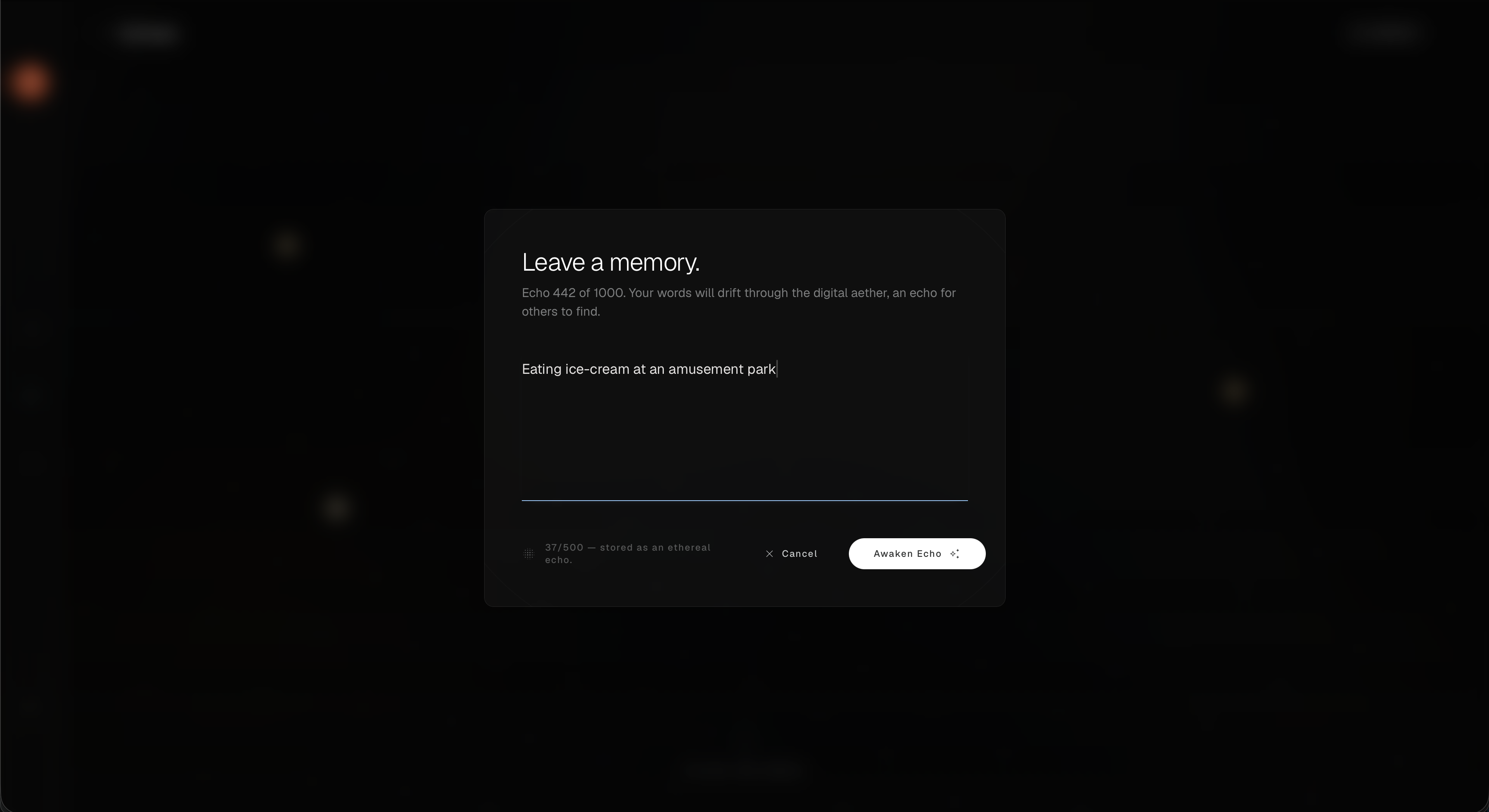
Input Menu
-
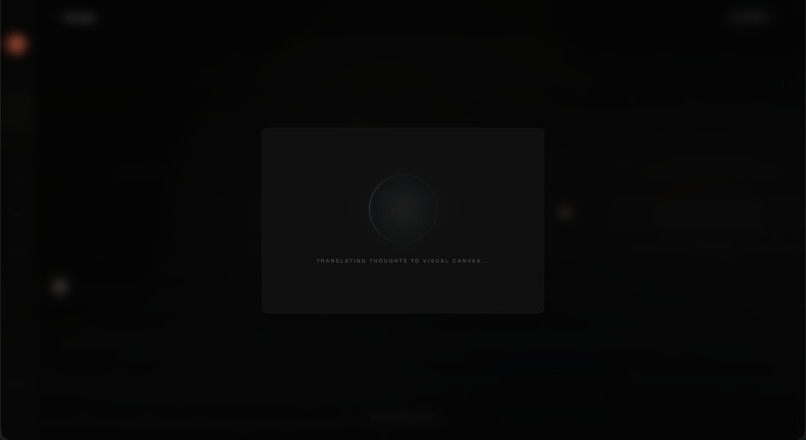
Diorama Creation
-
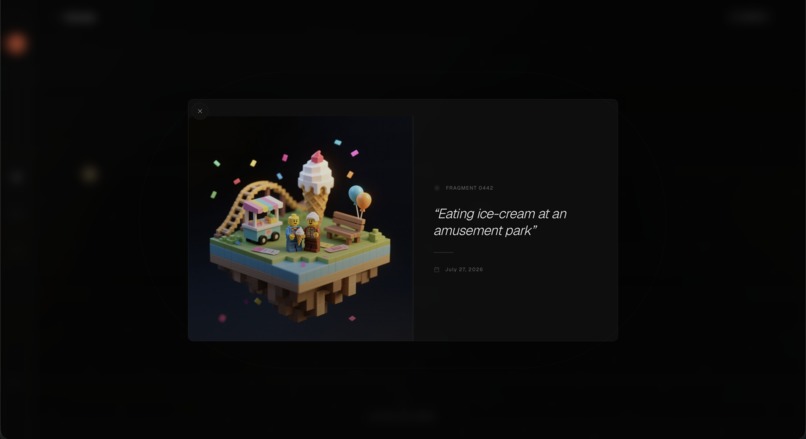
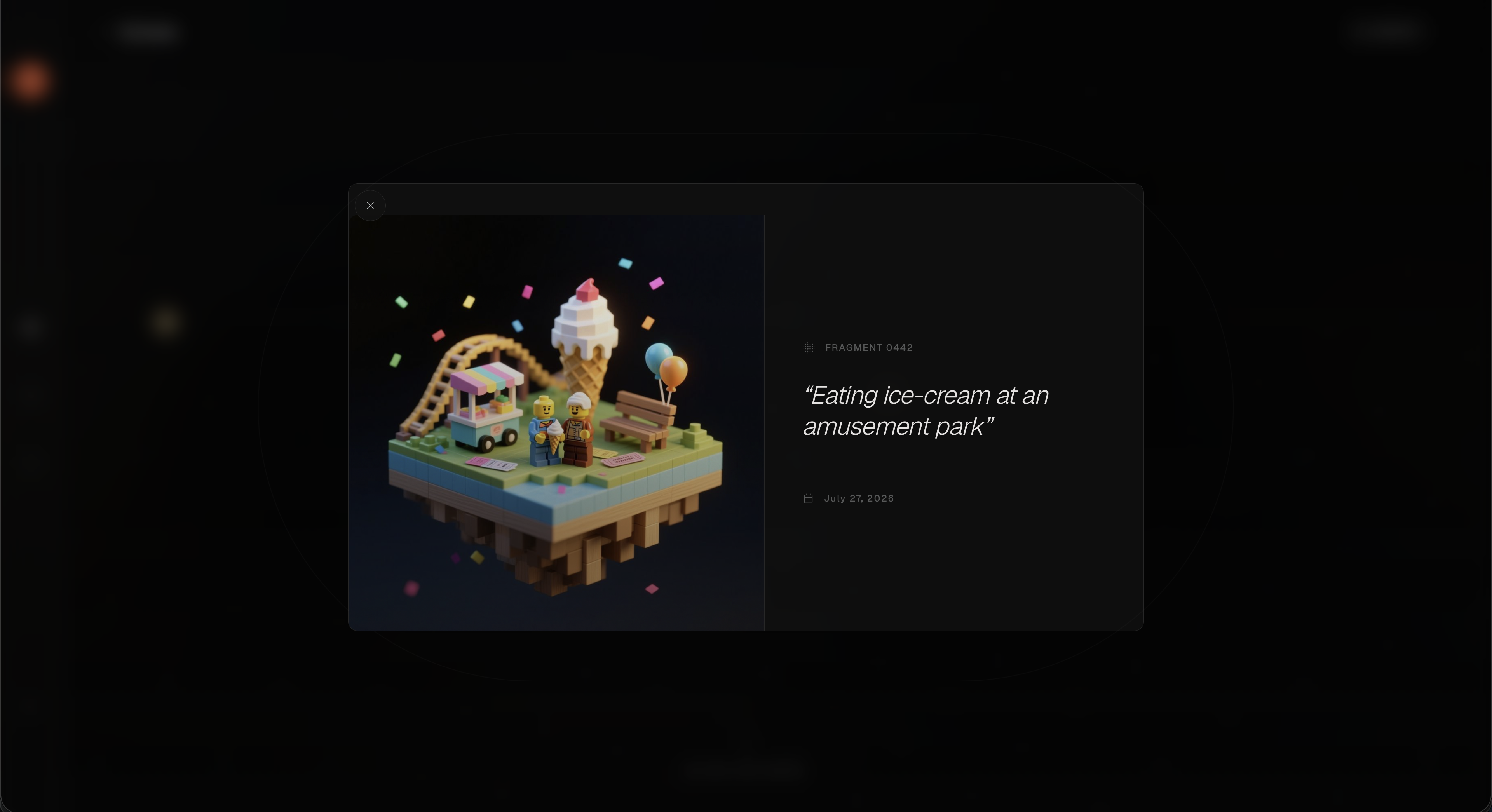
Created Diorama for the same Input
Inspiration
We wanted to build something that lasts. Everyone has memories that shaped who they are, moments of joy, moments of loss, moments of love, hope, or change. We asked ourselves, "What if those memories could become part of a living piece of art?"
That question became Echoes.
What it does
Echoes is an interactive digital art installation built around a sphere containing 1,000 unique placeholders (Echoes), in which every unique user can input their favorite memory in the form of text and that memory can be converted into a uniquely crafted floating island in a voxel / Lego style recreation of it. Our AI pipeline transforms that memory into a handcrafted artistic diorama, giving every story its own visual identity while maintaining a consistent artistic style across the installation.
Once created, the Echo becomes permanent. The corresponding light glows forever, and anyone can revisit it to experience the memory and its accompanying artwork. As more people contribute, Echoes evolves into a collaborative artwork created by hundreds of human experiences.
How we built it
Echoes is an interactive 3D web application built with Next.js 16, React 19, Three.js (@react-three/fiber), Supabase, Google Gemini 3.6 Flash, and Qwen-Image via Hugging Face.
Mathematically, 1,000 dots are evenly arranged on a sphere using a Fibonacci distribution. Custom dual-pass GLSL shaders render soft Gaussian point cores and camera-facing halo quads. Claimed dots burn past 1.0 HDR brightness, triggering an active bloom post-processing effect.
When a user signs in and submits a memory, an atomic Supabase PostgreSQL function (reserve_echo) locks the dot to prevent race conditions. Gemini 3.6 Flash distills the memory into a 40-word scene fragment. The backend wraps this fragment in strict code-defined style constants (LEGO minifigures, low-poly voxel terrain) and negative prompts, which Qwen-Image renders into a 1024×1024 diorama.
The resulting artwork is stored in Supabase Storage and rendered dynamically within a glassmorphic dark interface.
Challenges we ran into
Our biggest challenge was building Echoes as a fully functional prototype without incurring significant costs.
Since our project relies on AI image generation, we quickly ran into the limitations of free inference services. Balancing quality, consistency, and API usage required us to rethink our pipeline multiple times. We experimented with different providers, optimized prompts to reduce unnecessary generations, and engineered the system to make the most of limited free-tier resources.
On the visual side, creating the constellation was equally challenging. We wanted claimed Echoes to feel like genuine stars rather than glowing blobs, which meant carefully tuning custom shaders, bloom, particle sizes, HDR lighting, and animation until the experience felt natural.
Finally, maintaining a consistent artistic identity across AI-generated images proved difficult. We refined our prompting strategy so every memory is transformed into a unique artwork while still belonging to the same handcrafted visual universe.
This constraint pushed us to build smarter rather than simply relying on paid services, and it ultimately resulted in a more efficient and resilient architecture.
Accomplishments that we're proud of
Honestly, making the project work
What we learned
Building Echoes taught us that creating meaningful AI experiences goes far beyond integrating a model into an application.
We learned how to combine AI, real-time 3D graphics, and thoughtful interaction design into a single cohesive experience. Throughout development, we discovered that seemingly small details such as lighting, motion, visual consistency, and user feedback had a huge impact on how the artwork felt emotionally.
Working within free-tier AI resources also taught us how to design efficient, resilient systems instead of relying on expensive infrastructure.
What's next for Echoes
Echoes began with a single question:
“What’s a memory you’ll never forget?”
But memories are only one way people leave a part of themselves behind.
In the future, we envision an entire universe of Echoes, where each sphere explores a different aspect of the human experience through a single question. One sphere might preserve favorite memories, another could capture dreams for the future, words left unsaid, moments of courage, places that felt like home, or people who changed our lives.
Together, these spheres would form a growing digital museum of human experiences, with each one becoming a collaborative artwork shaped by the people who contribute to it.
Our long-term vision is to build a constellation of these spheres, allowing anyone, anywhere in the world, to leave behind a small piece of themselves, creating a permanent archive of humanity through art and technology.
Built With
- css
- gemini
- glsl
- next.js
- postgresql
- qwen-image
- tailwind-css
- three.js
- typescript


Log in or sign up for Devpost to join the conversation.