-
-
Novus AI
-
Novus Ai
-
Novus AI
-
-
-
-
-
🌍 Inspiration
Climate change is one of the biggest challenges facing our world today, yet most people struggle to understand how their everyday choices contribute to it. Existing carbon footprint tools often rely on numbers, charts, and statistics that feel disconnected from daily life.
We wanted to create something more engaging and personal.
The idea behind EchoEarth was simple: instead of just showing users their carbon footprint, what if we could help them visualize the future impact of their lifestyle choices and empower them to take meaningful action?
This vision inspired us to build a platform that combines sustainability, storytelling, and personalized insights into a single immersive experience.
🚀 What It Does
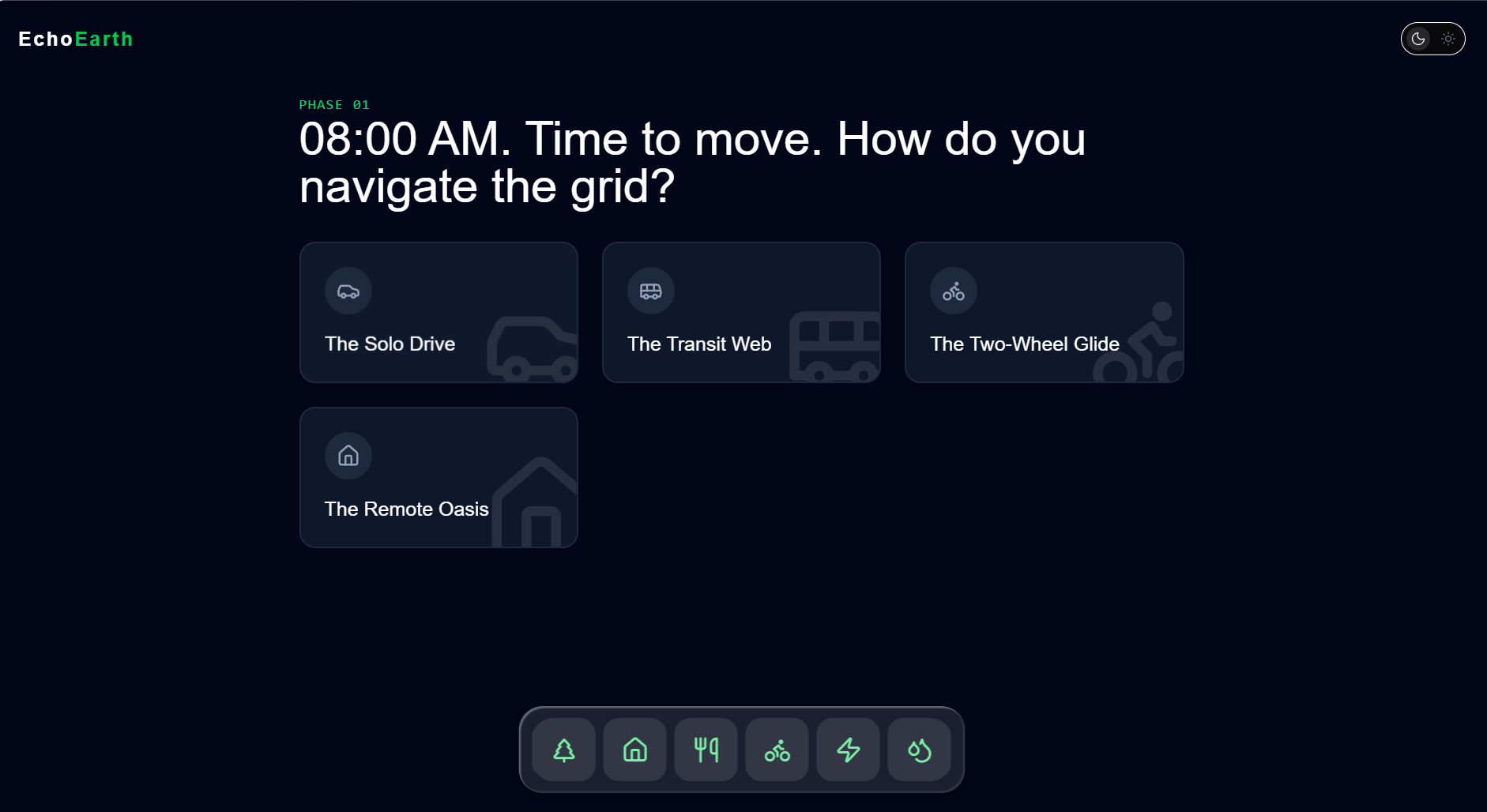
EchoEarth is an AI-powered climate lifestyle platform that helps users understand, track, and reduce their carbon footprint.
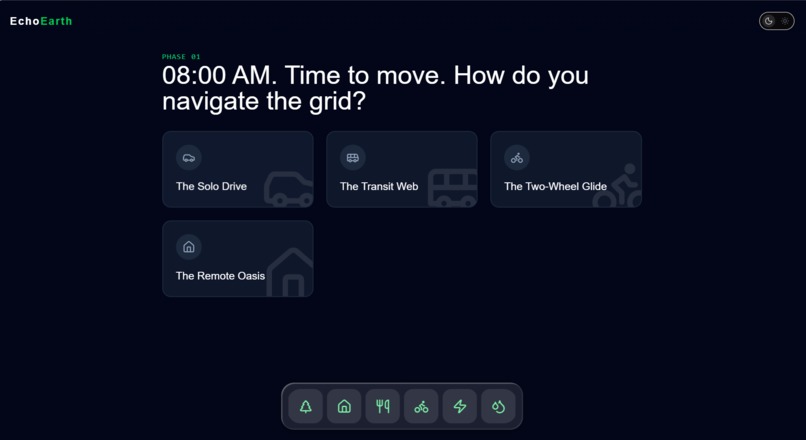
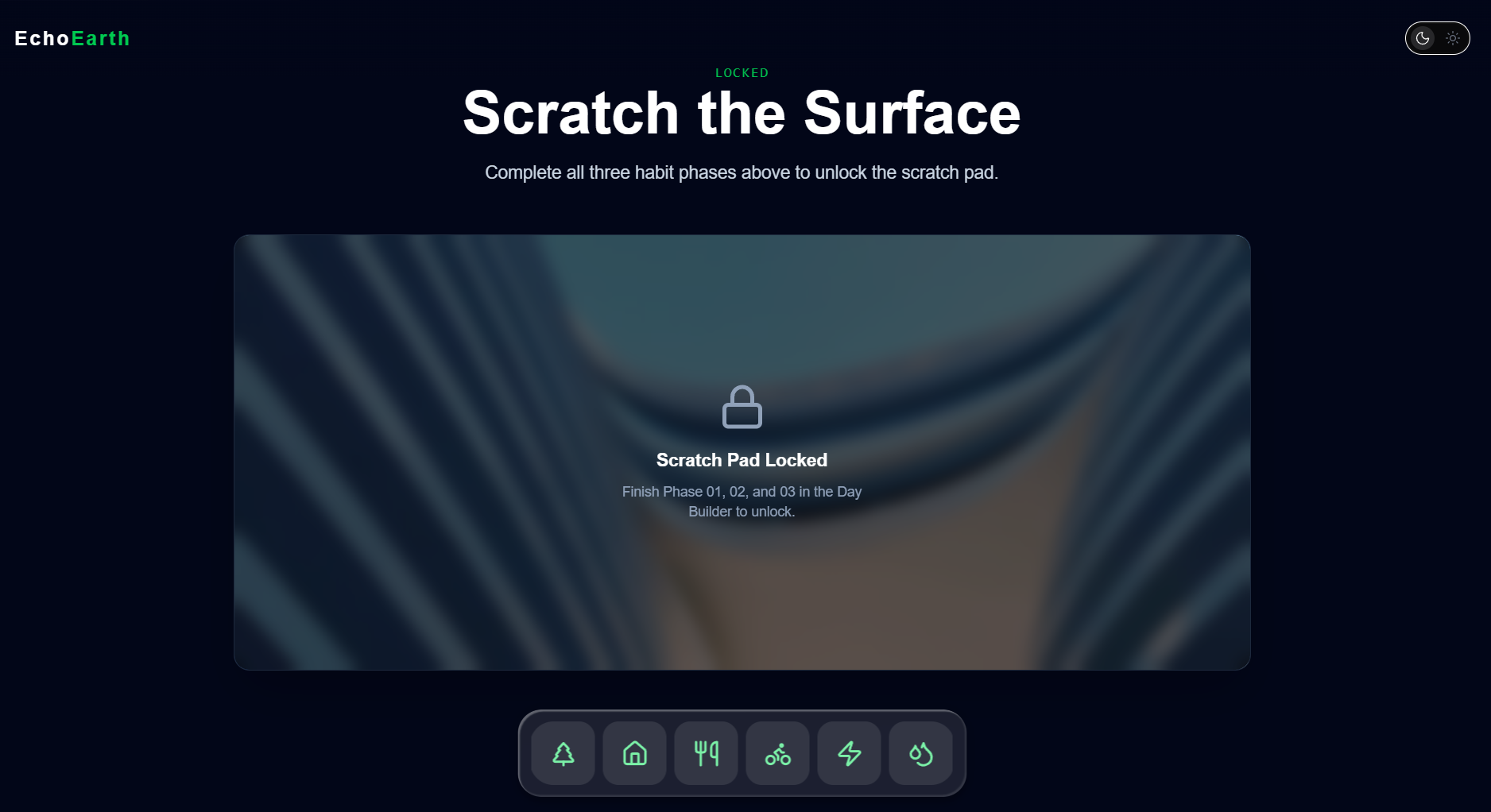
Users complete a short lifestyle assessment covering transportation, food habits, home energy usage, shopping behavior, and everyday consumption patterns.
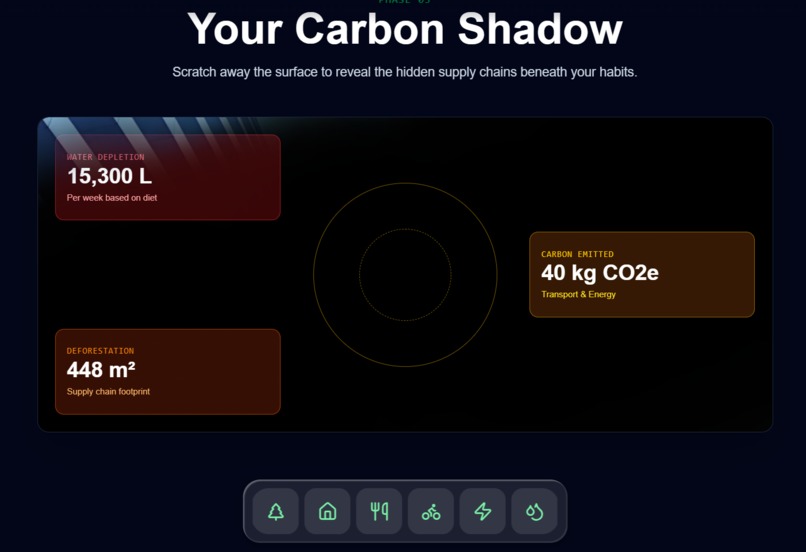
Based on these responses, EchoEarth generates:
- A personalized Carbon Persona
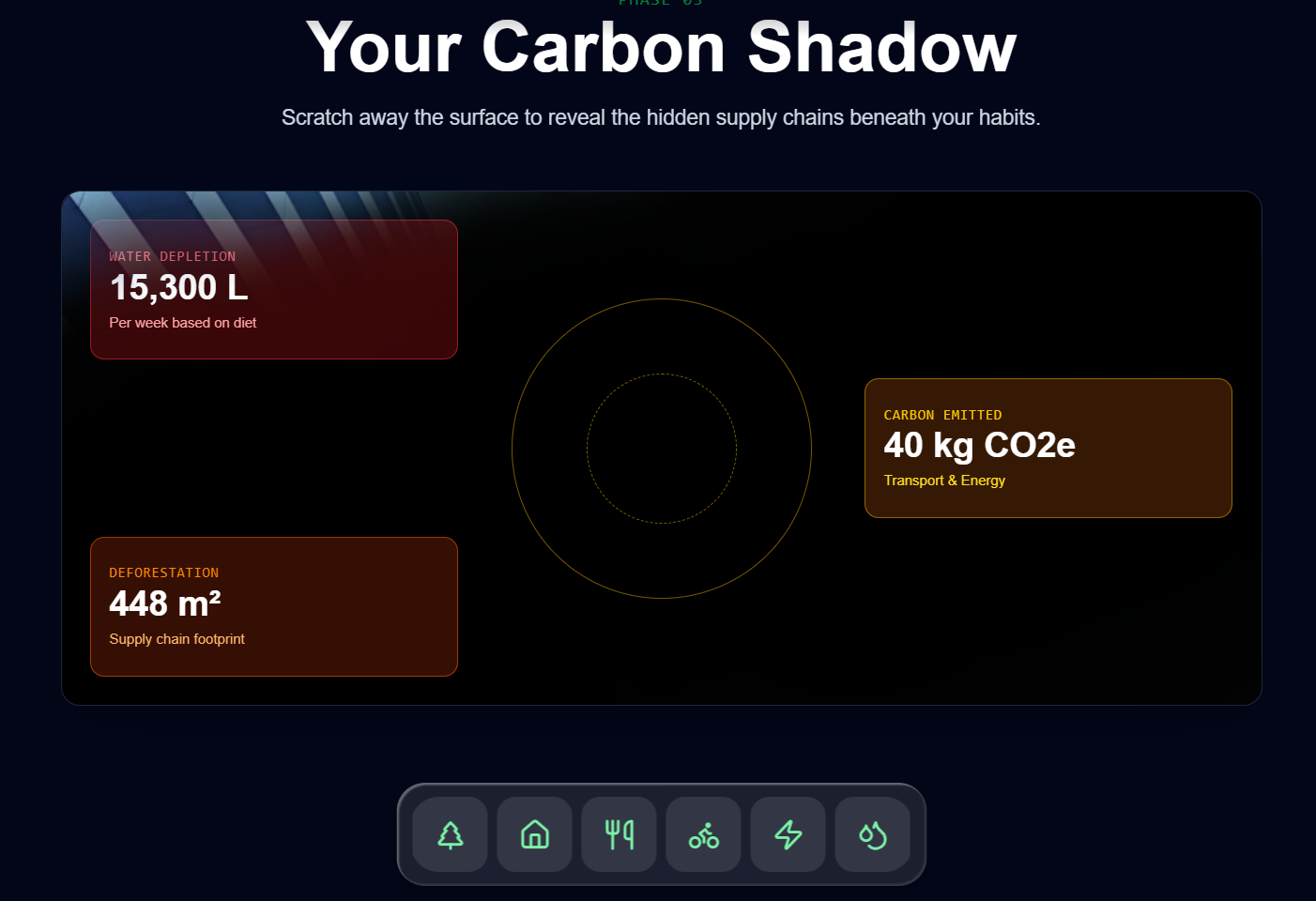
- Category-wise footprint analysis
- Actionable sustainability recommendations
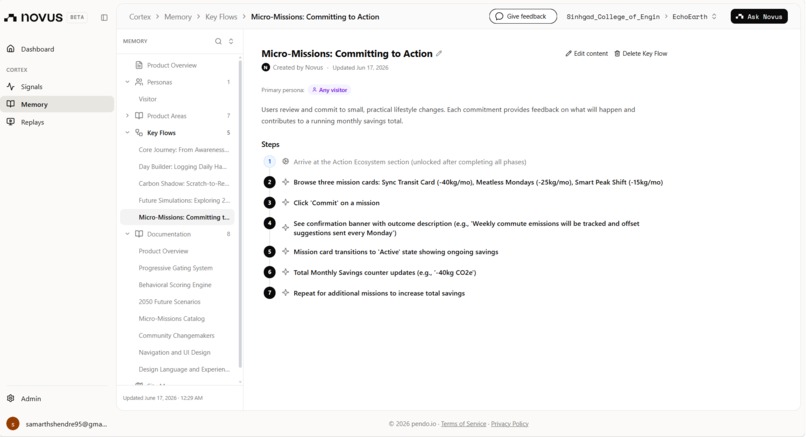
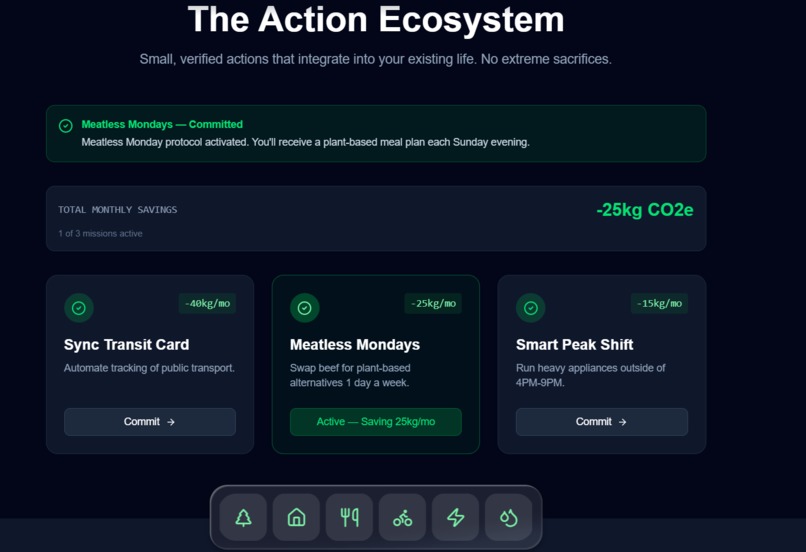
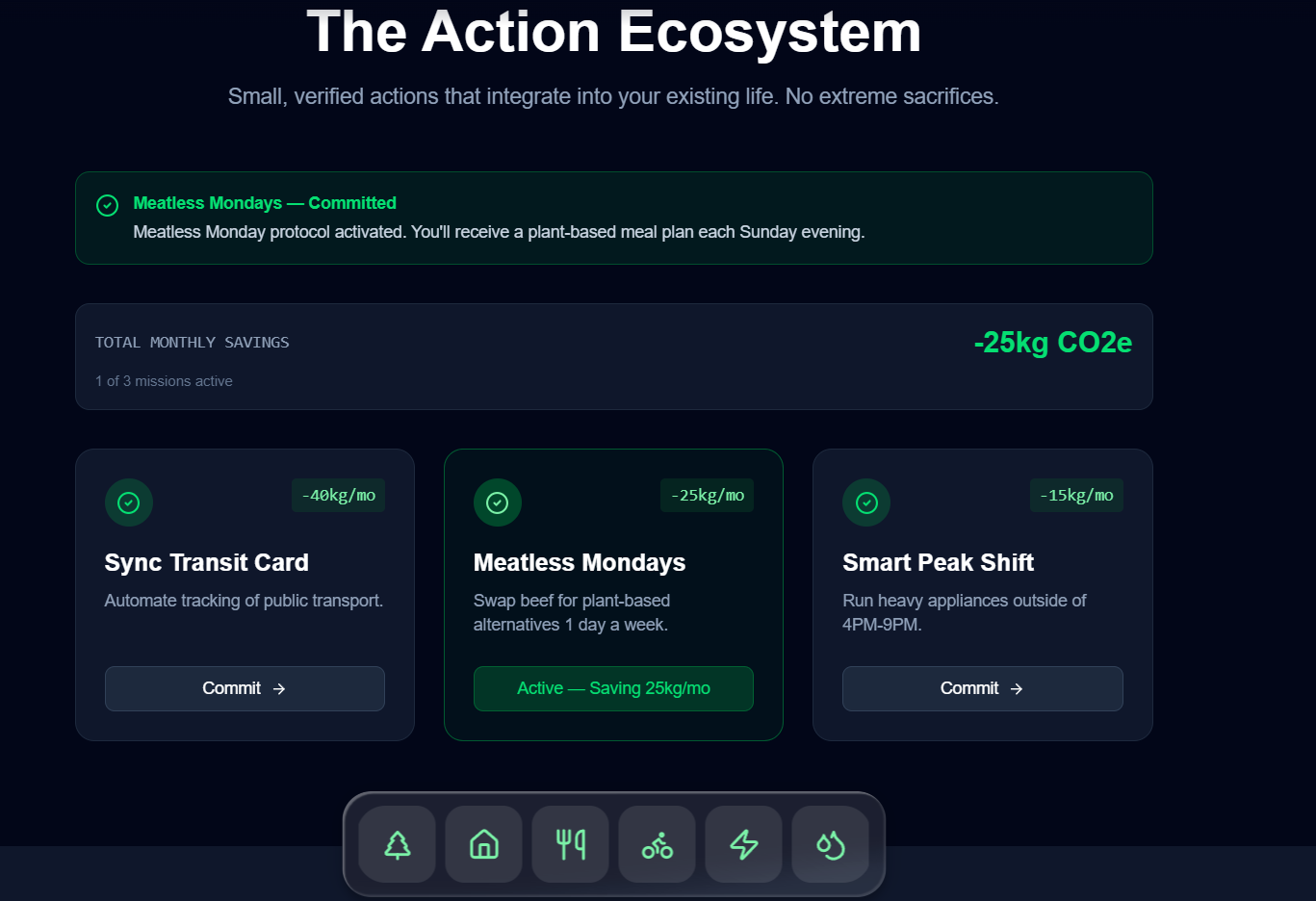
- Weekly carbon reduction missions
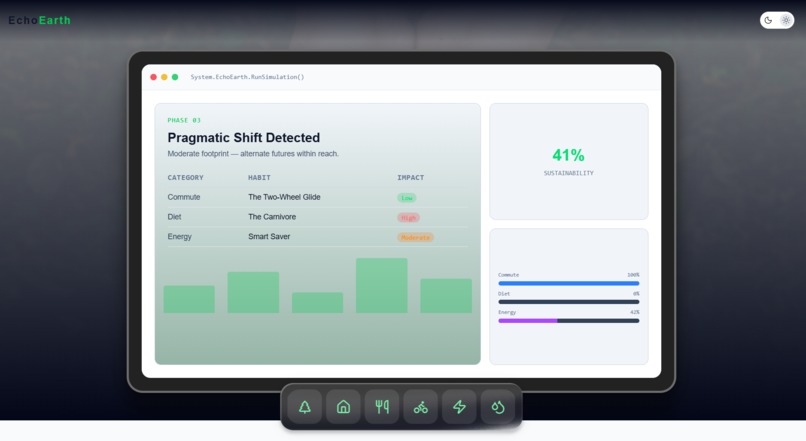
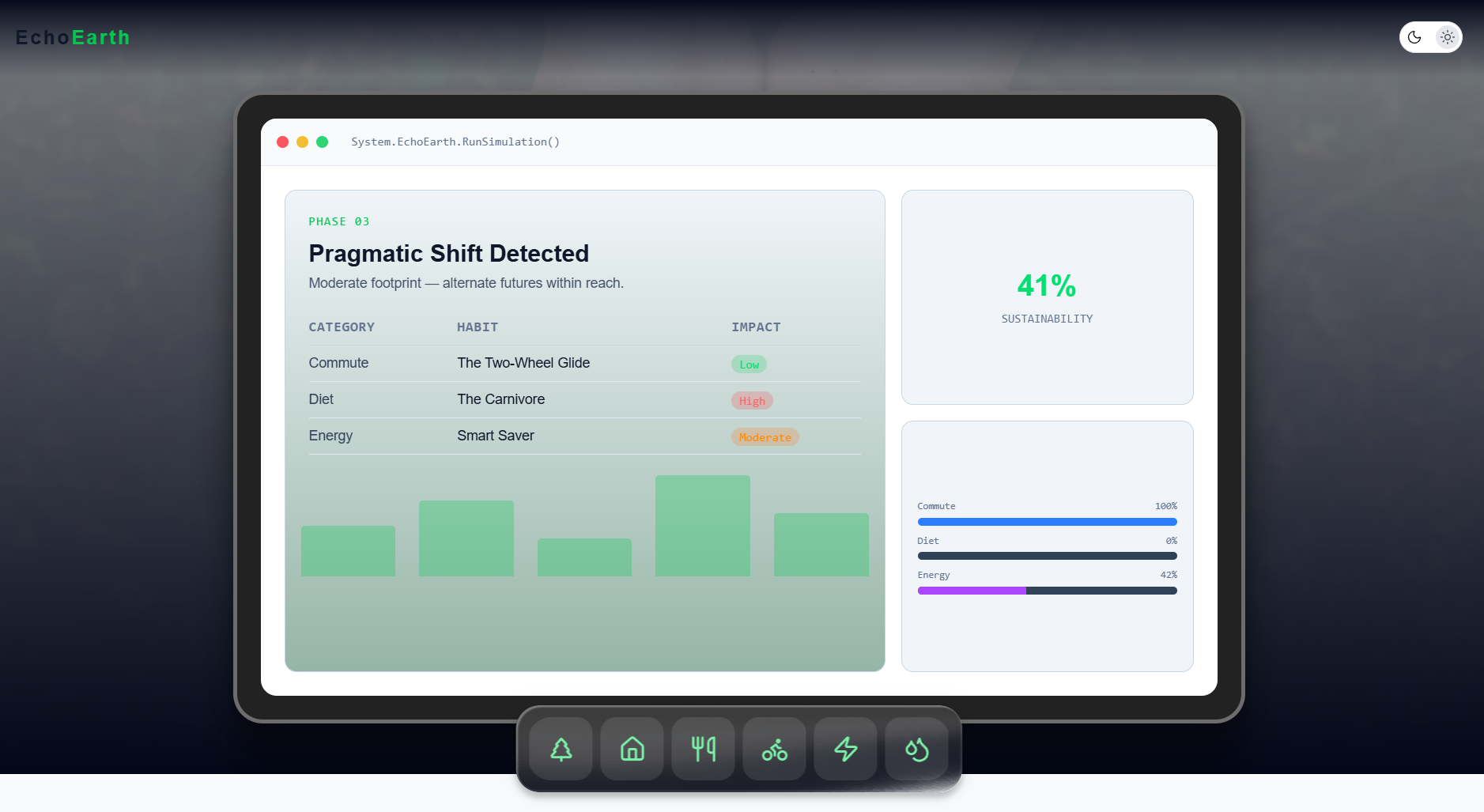
- Interactive future simulations
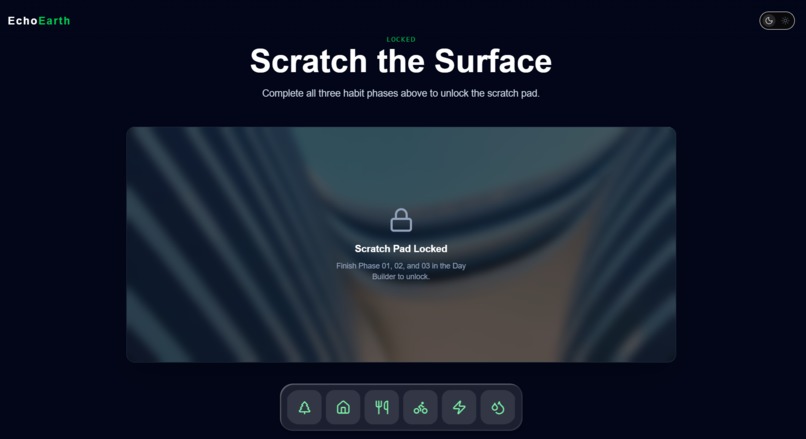
One of our key features is Parallel Futures, which allows users to explore three alternative sustainability journeys:
Convenience Path
Small lifestyle changes with minimal effort.
Smart Saver Path
Sustainable actions that also help save money.
Climate Hero Path
Ambitious lifestyle transformations with maximum environmental impact.
Instead of focusing on guilt or complex calculations, EchoEarth focuses on helping users see how small actions can create meaningful change.
🛠️ How We Built It
We built EchoEarth as a modern full-stack web application focused on personalization, accessibility, and user engagement.
Tech Stack
- Next.js
- TypeScript
- Tailwind CSS
- Framer Motion
- Shadcn/UI
- Lucide React
The platform combines interactive onboarding, dynamic visualizations, personalized recommendations, and immersive storytelling to create a unique sustainability experience.
Our goal was to make environmental awareness feel actionable, visual, and motivating rather than overwhelming.
⚡ Challenges We Faced
One of the biggest challenges was balancing scientific information with a user-friendly experience.
Many sustainability platforms focus heavily on metrics and calculations, which can be difficult for users to understand. We wanted to simplify environmental data while still providing meaningful and personalized insights.
Another challenge was designing recommendations that feel realistic. Every user has different habits, budgets, and sustainability goals, so personalization was a critical part of the product experience.
Creating the Future Simulator was also challenging because we wanted users to clearly understand how lifestyle changes could influence long-term environmental outcomes.
🎯 What We Learned
Building EchoEarth taught us that awareness alone is not enough to drive behavior change.
People are far more likely to take action when they can clearly see the connection between their choices and future outcomes.
We learned the importance of combining:
- Personalization
- Visual storytelling
- Gamification
- Actionable recommendations
to create engaging and impactful user experiences.
We also gained valuable experience in product design, frontend development, sustainability-focused problem solving, and user-centered thinking.
🔮 What's Next
Our vision is to evolve EchoEarth into a personal climate companion that helps people make sustainable decisions every day.
Future enhancements include:
- AI-powered sustainability coaching
- Community challenges
- Localized recommendations
- Real-world carbon tracking integrations
- Progress analytics and achievement systems
Our mission is simple:
Help people understand the future impact of their choices and empower them to build a more sustainable world, one action at a time.
Built With
- aiml
- github
- javascript
- next
- novus
- react
- vercel

Log in or sign up for Devpost to join the conversation.