-
-
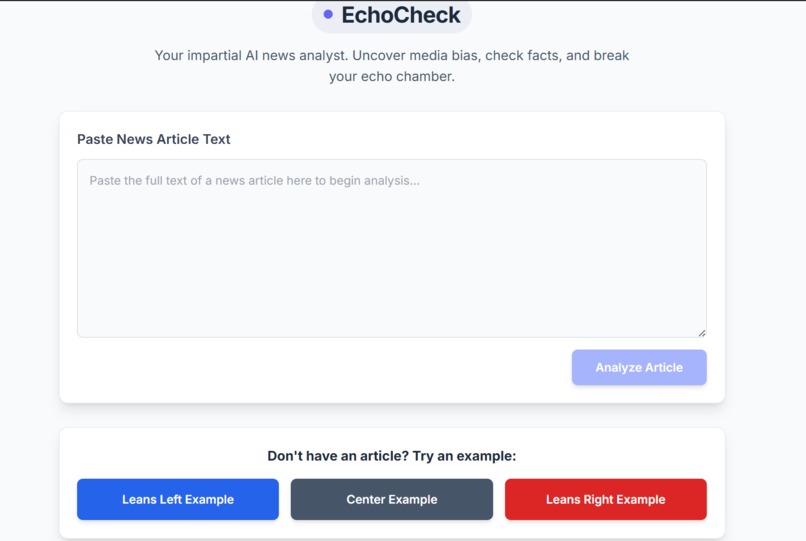
the user interface
-
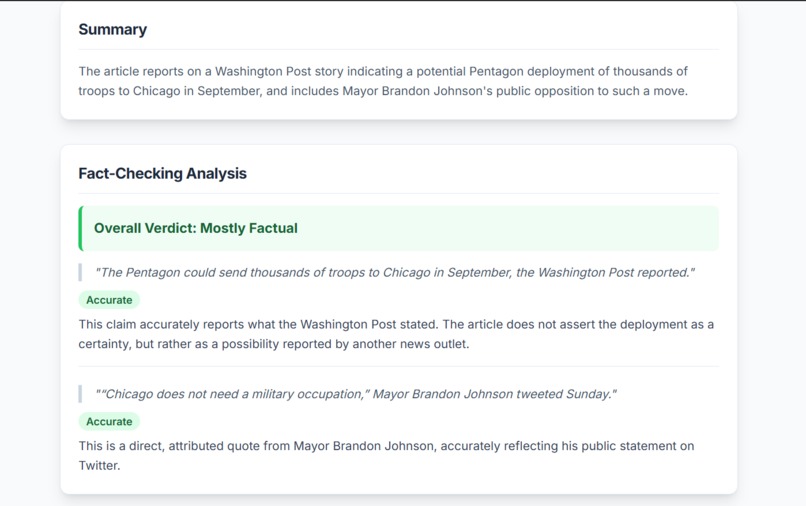
fact check
-
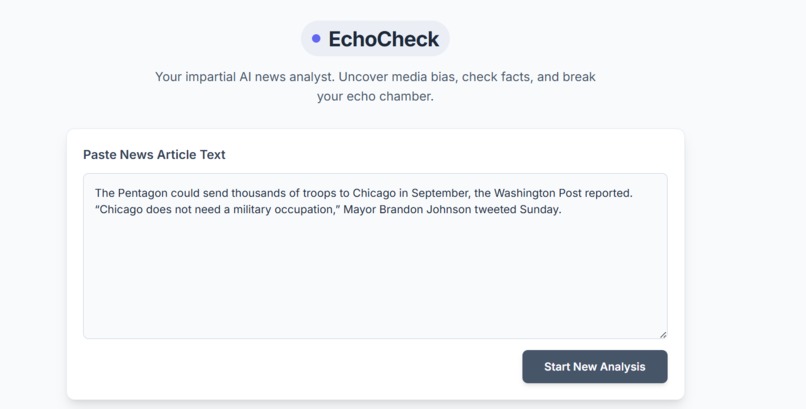
an example article
-
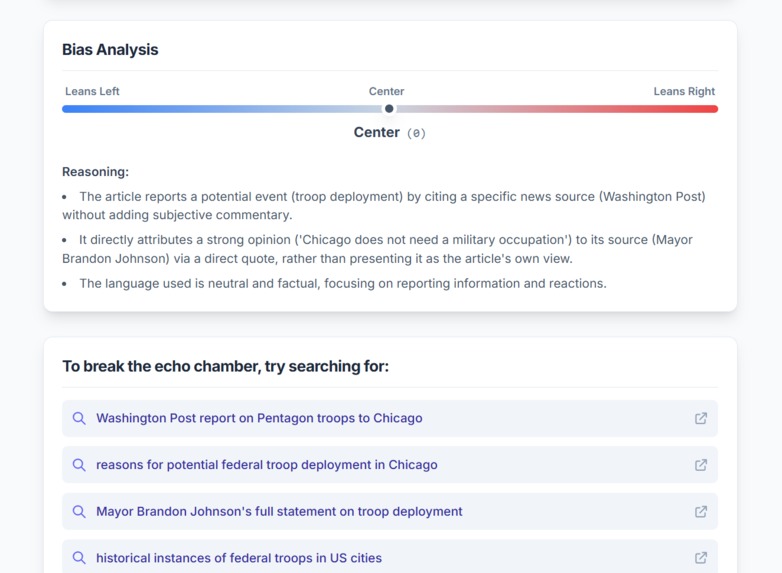
analysis
Inspiration
Have you ever argued with a friend or family member about a news event, only to realize you're both working from completely different sets of facts? It feels like you're living in different realities. This growing sense of division, fueled by social media feeds and partisan news, was the core inspiration for EchoChamber Check.
We realized the problem isn't just "fake news," but the subtle, pervasive bias in the media we consume every day. Words are chosen, facts are framed, and perspectives are omitted in ways that shape our opinion without us even noticing. We wanted to build a tool not to tell people what to believe, but to give them the power to see the full picture. Our goal for this HackSocial event was to create something that could "Hack the Change" by promoting media literacy and fostering more informed, empathetic conversations.
What it Does
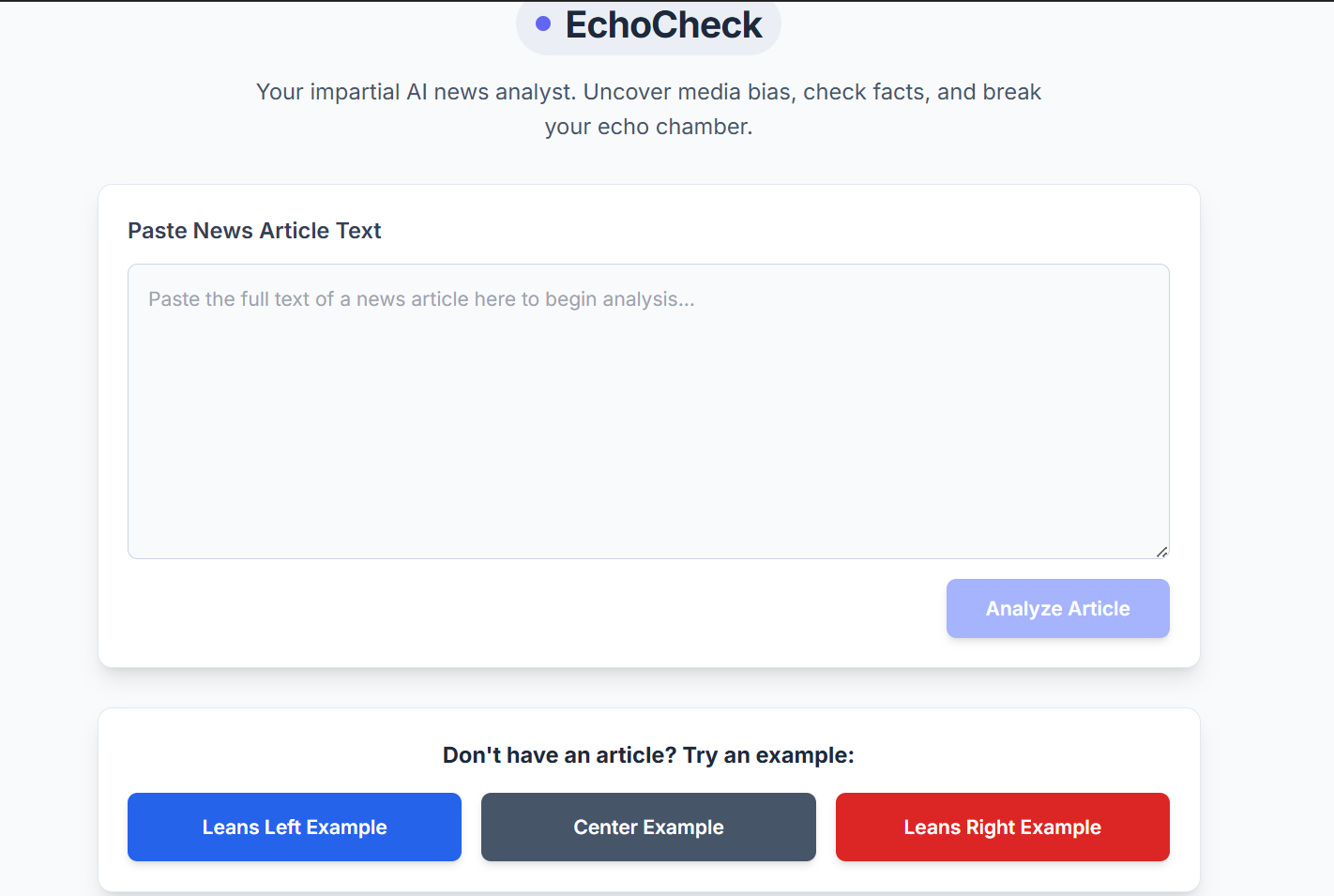
EchoChamber Check is a simple but powerful AI-powered web application that serves as your personal news bias analyst. Here’s how it works:
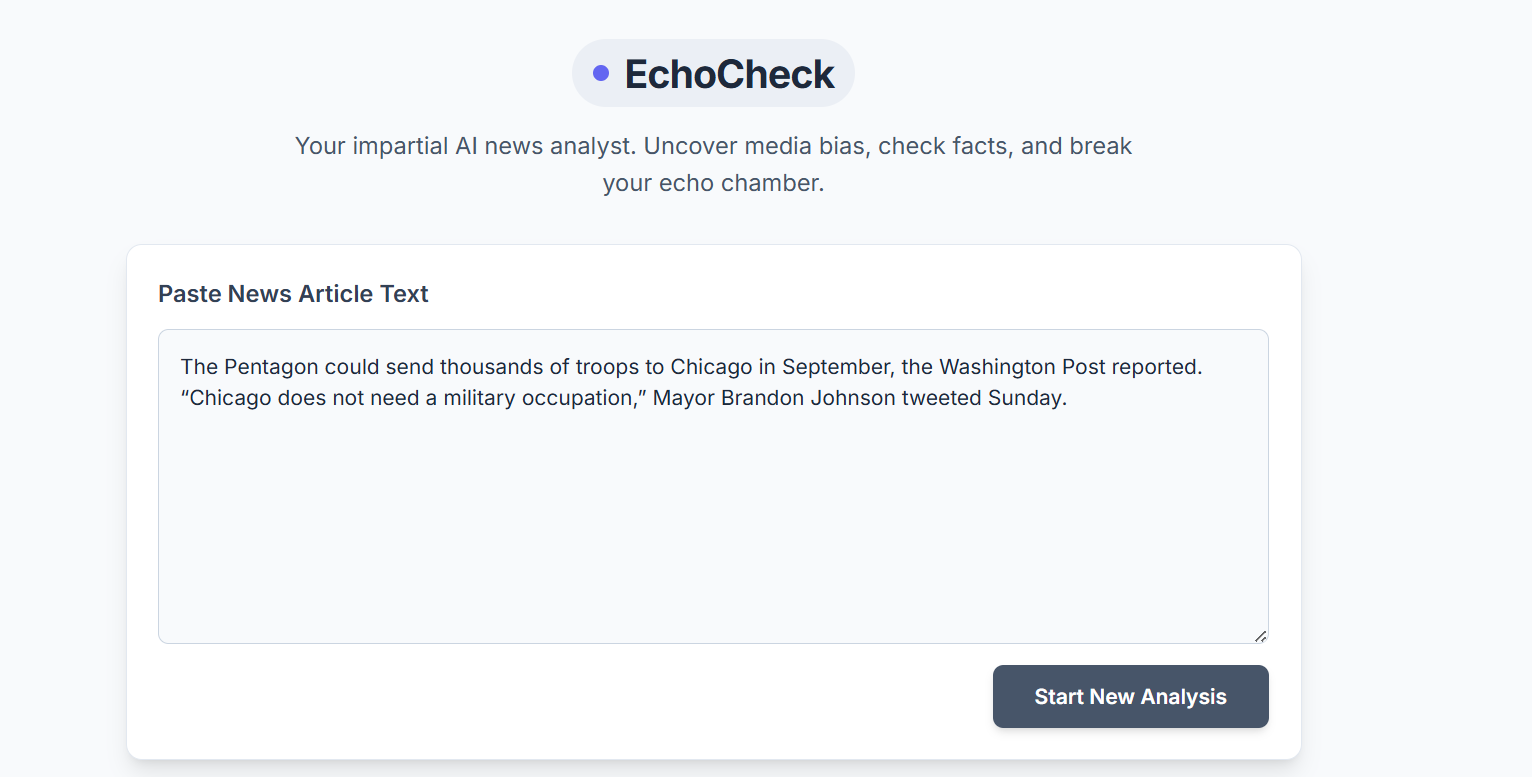
- Paste & Analyze: A user can paste the text from any news article into our application.
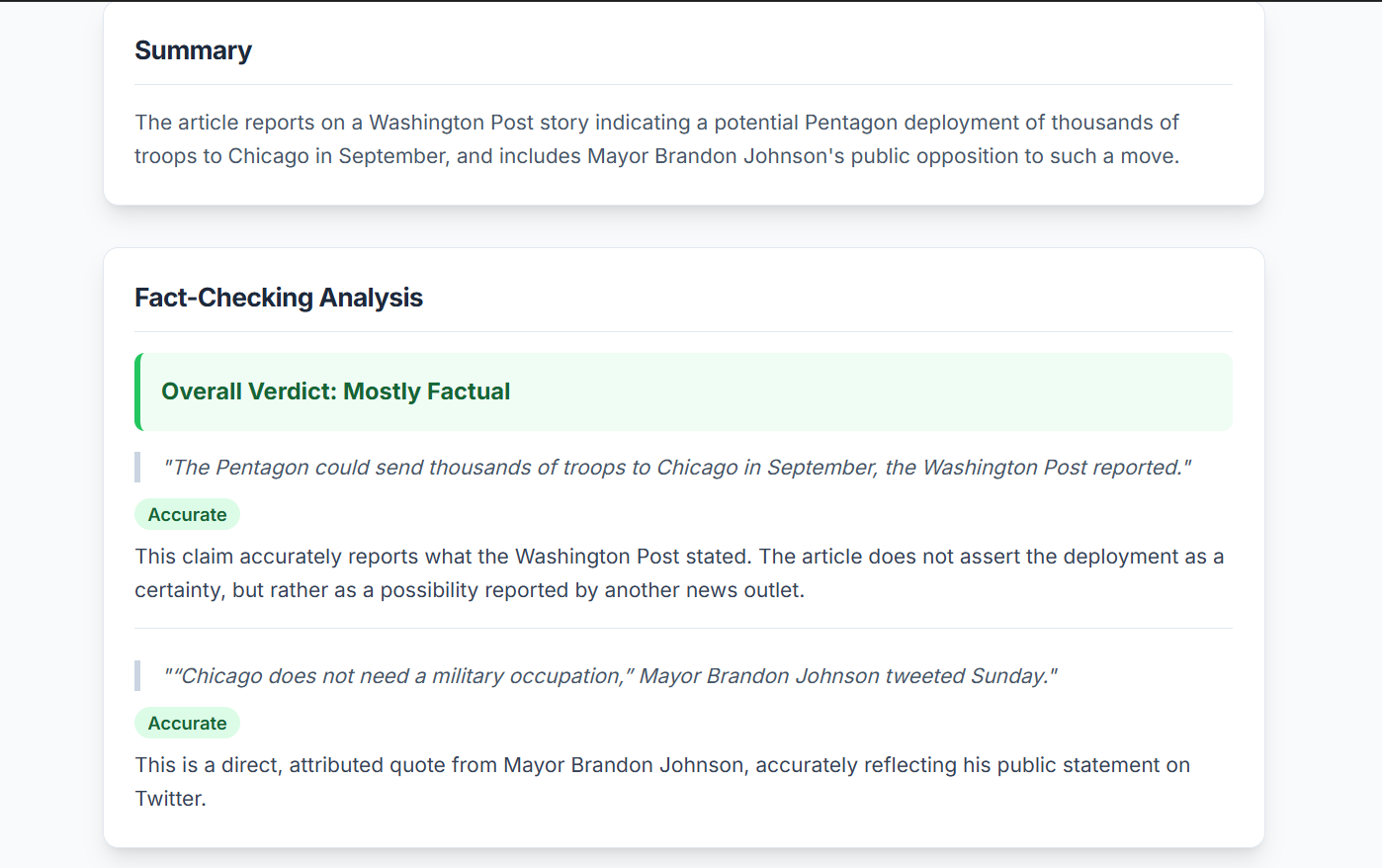
- Get an Impartial Analysis: Using Google's Gemini model, the tool provides a comprehensive breakdown, including:
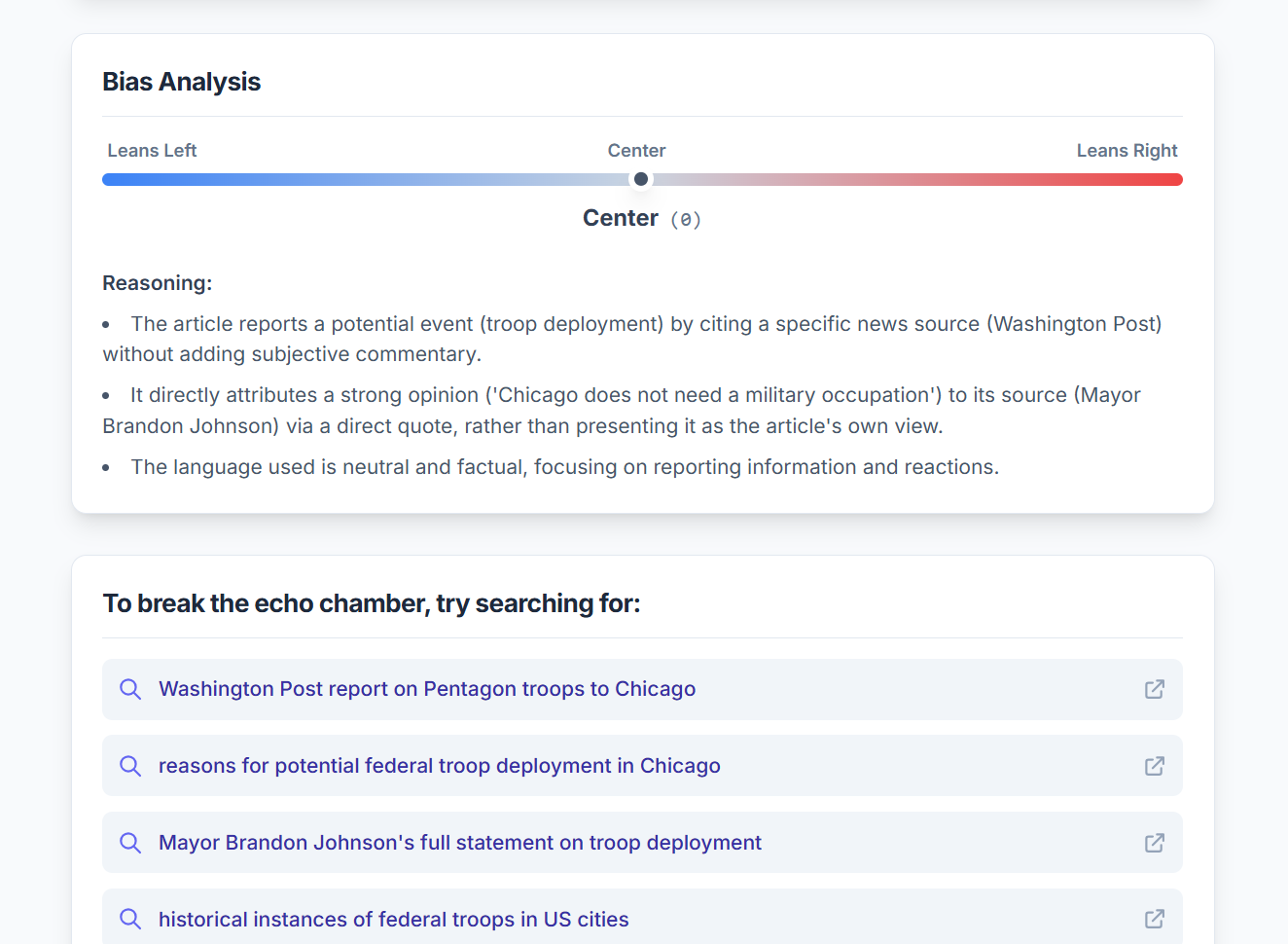
- A Bias Score: A simple rating from -10 (Strongly Left) to +10 (Strongly Right).
- Detailed Reasoning: The AI provides clear, bullet-pointed explanations for its score, citing specific words, phrases, and framing techniques used in the text.
- Alternative Perspectives: Crucially, it generates neutral, actionable search queries to help the user easily find articles and information from different viewpoints.
Our mission is not to label sources as "good" or "bad," but to equip users with the critical thinking tools to understand how a story is being told.
How We Built It
We built EchoChamber Check with a focus on creating a reliable AI core and a clean, intuitive user interface.
The Brain (AI Backend): The heart of our project is Google's Gemini Pro model. We used Google AI Studio's structured prompt ("Build apps with Gemini") feature to create a highly reliable and predictable API endpoint. Instead of a simple prompt, we provided the model with several high-quality examples of biased and neutral text, along with the exact JSON output we expected. This "few-shot" learning approach made the model incredibly consistent.
The Data Structure: The model was trained to return a clean JSON object for every analysis, which our application can easily parse. The structure looks like this:
{
  "summary": "...",
  "bias_analysis": {
    "score": 0,
    "label": "Center",
    "reasoning": [ ... ]
  },
  "alternative_perspectives": {
    "prompt_title": "...",
    "search_queries": [ ... ]
  }
}
The Body (Frontend): We built a clean and responsive user interface using modern web technologies (HTML, CSS, JavaScript). The focus was on making the experience simple and the results easy to digest, using clear data visualizations for the score and formatted lists for the reasoning.
Challenges We Ran Into
The Nuance of Neutrality: Our biggest challenge was prompt engineering. Our initial freeform prompts sometimes resulted in inconsistent or opinionated outputs. Moving to a structured, few-shot prompt in Google AI Studio was the breakthrough. By providing concrete examples of left, right, and center-leaning articles, we trained the AI to be a much more reliable and objective analyst.
Detecting Omission: We learned that the most effective bias isn't just in the words used, but in the perspectives that are left out entirely. We refined our prompt to explicitly instruct the model to identify what information might be missing, which significantly improved the quality of its analysis.
Accomplishments that We're Proud Of
We are incredibly proud of creating a fully functional, AI-powered application within the hackathon timeframe. The structured JSON output from our AI model is consistent and reliable, making it a robust foundation for our app. Most importantly, we're proud of building a tool that aligns with the "HackSocial" mission—it doesn't add to the noise but helps people navigate it.
What We Learned
This project was a deep dive into the practical application of Large Language Models. We learned the immense difference between simple prompting and sophisticated, structured prompting for creating production-ready AI tools. We also gained a much deeper appreciation for the subtleties of language and the importance of user experience when presenting potentially sensitive information.
What's Next for EchoChamber Check
We see a bright future for this tool. Our immediate next steps would be:
- Browser Extension: The most natural evolution is a browser extension that can analyze articles with a single click, right on the news page.
- Source-Level Tracking: Allow users to see a history of bias scores for different news domains over time.
- Deeper Analysis: Expand the analysis to detect other forms of bias, such as sensationalism or the use of specific logical fallacies.

Log in or sign up for Devpost to join the conversation.