-
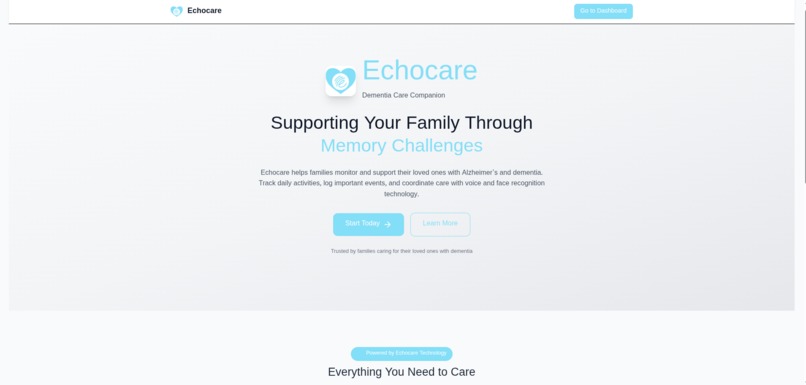
Landing page
-
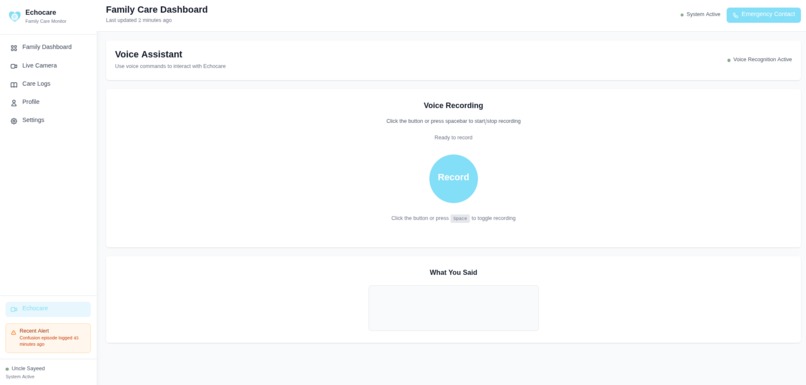
Echocare
-
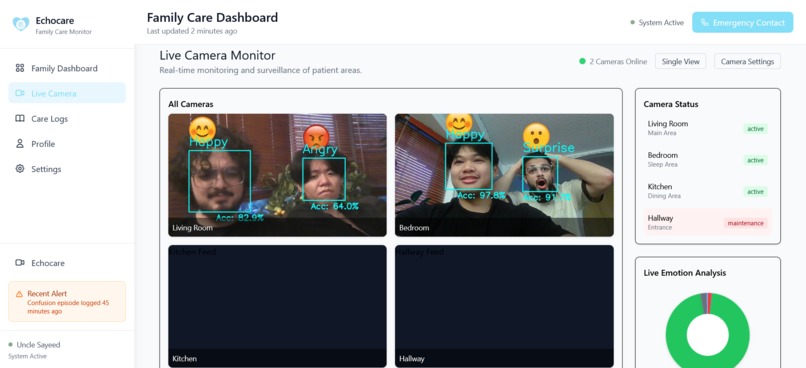
Camera
-
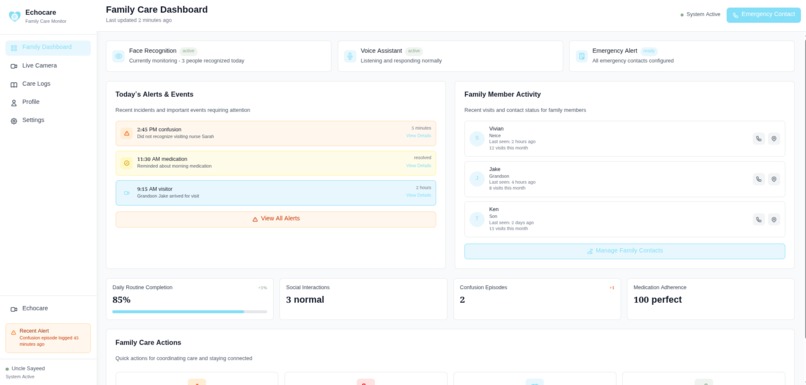
Dashboard
-
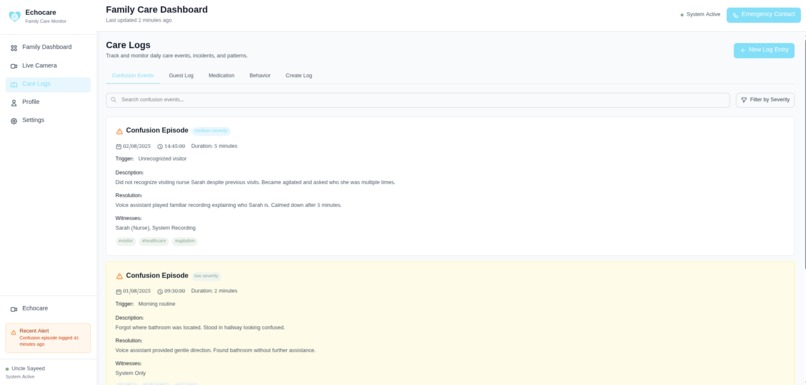
Logger
-
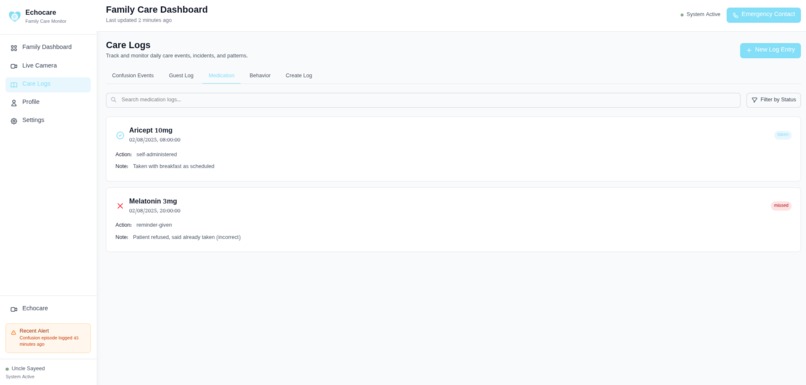
Logger
-
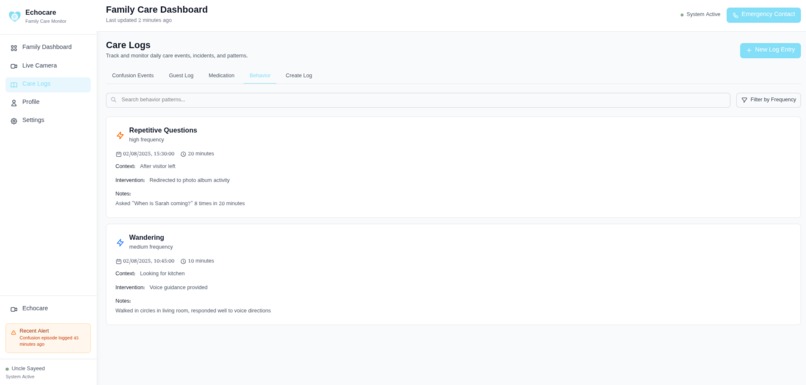
Logger
-
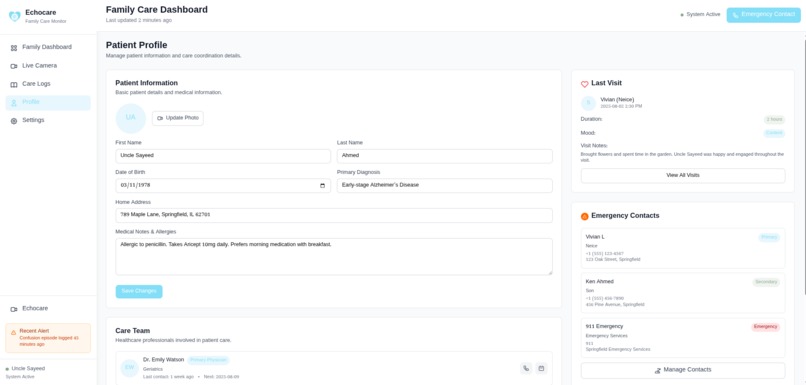
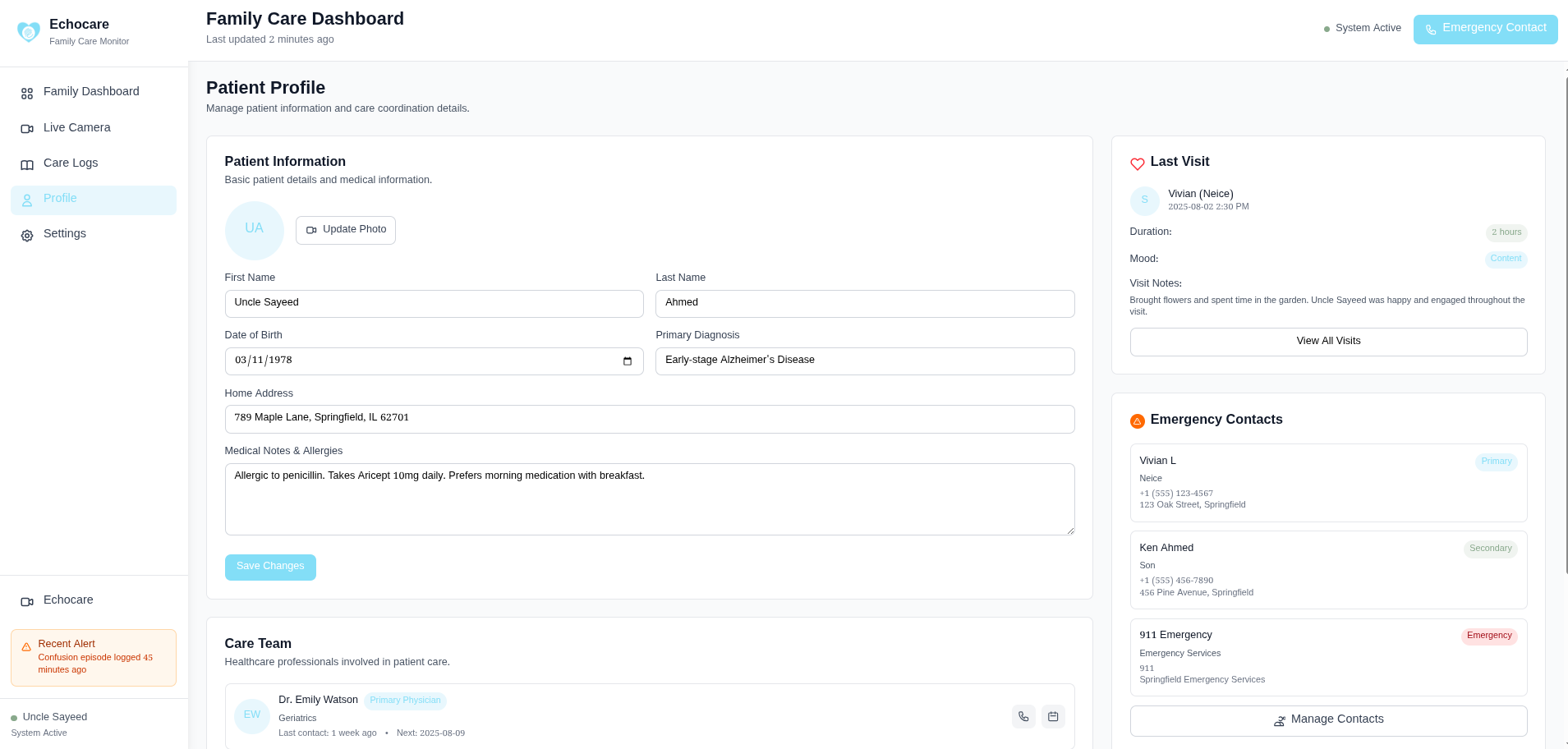
Profile
-
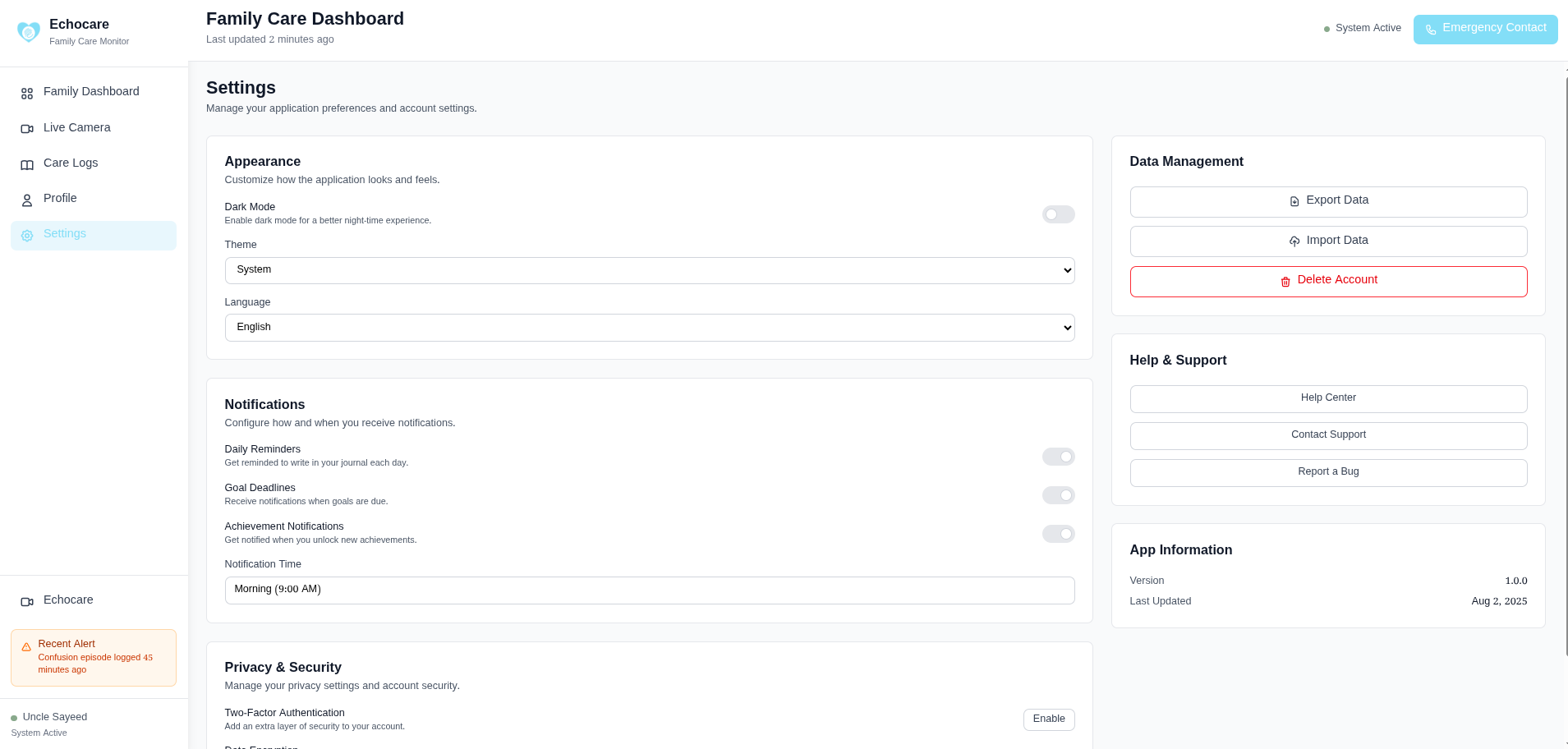
Settings
Inspiration
We were inspired by how hard it can be for families to care for someone with memory loss, all of us on our team have undergone this experience and it meant a lot to us to be able to help others with the same challenges. We wanted to build a helpful tool that makes caregiving a little easier and more organized, without sharing any private family information online.
What it does
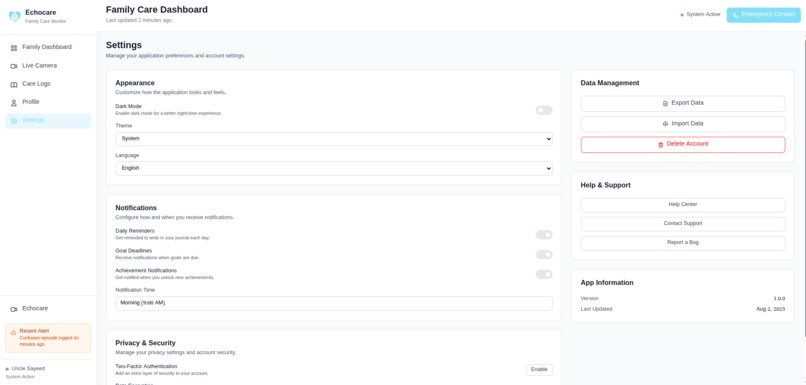
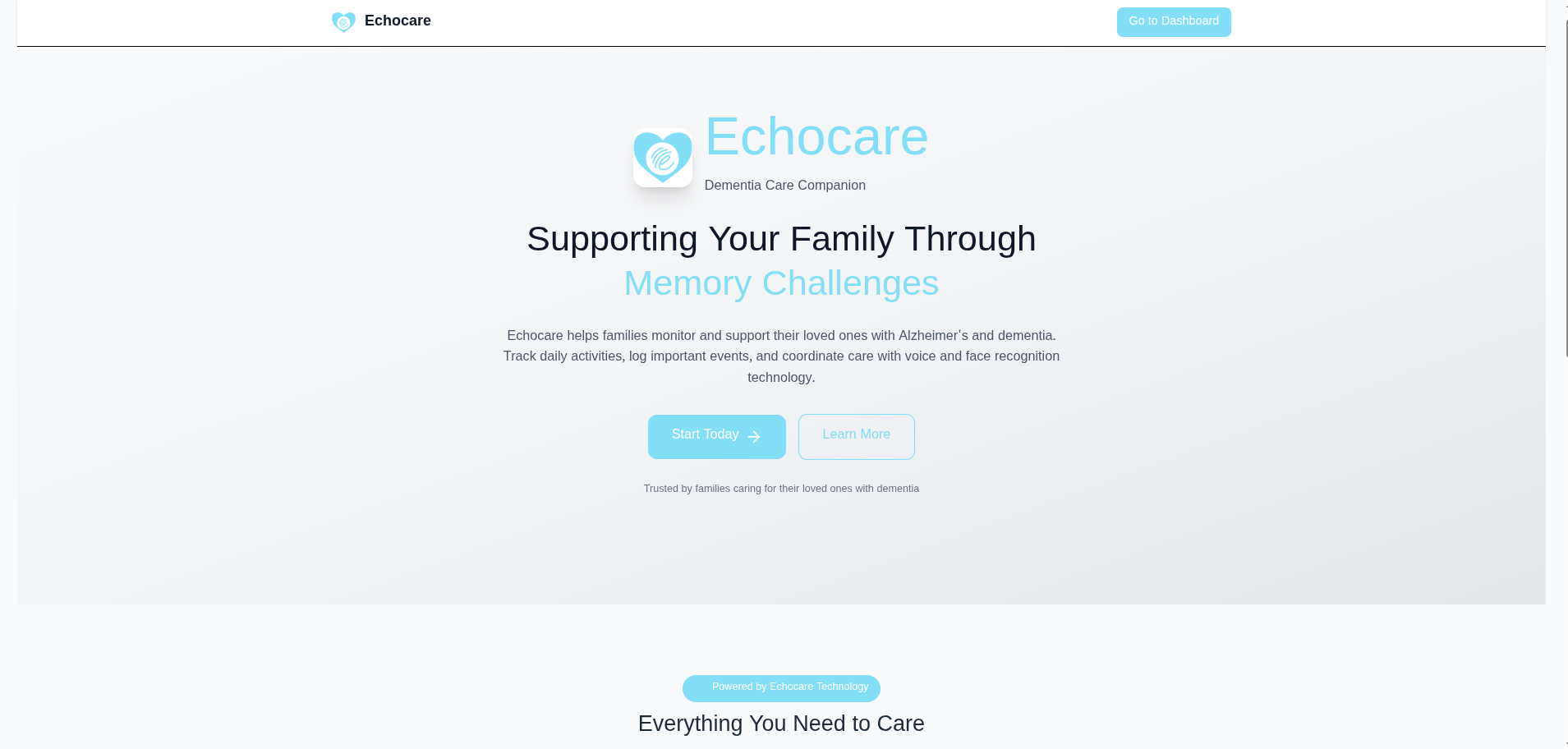
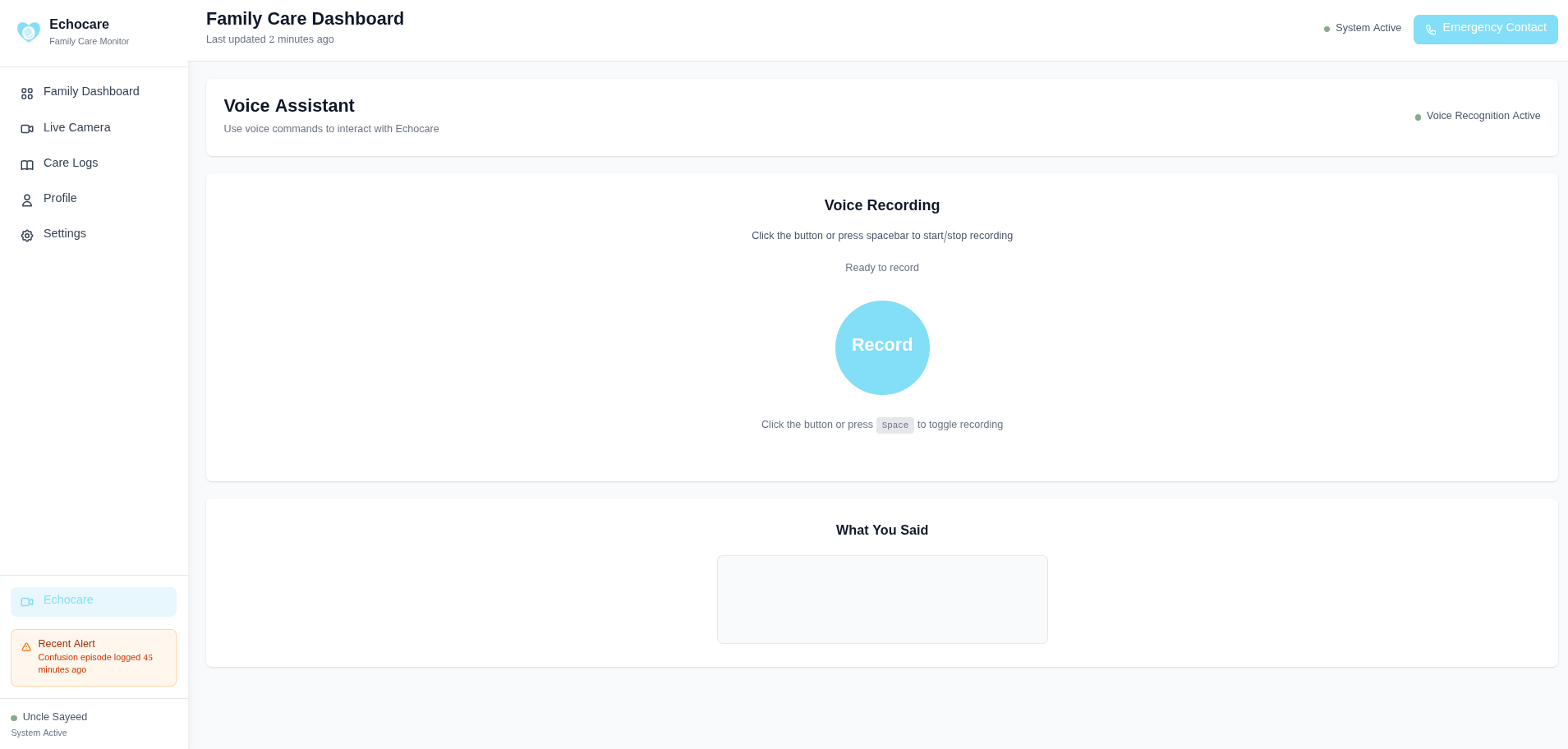
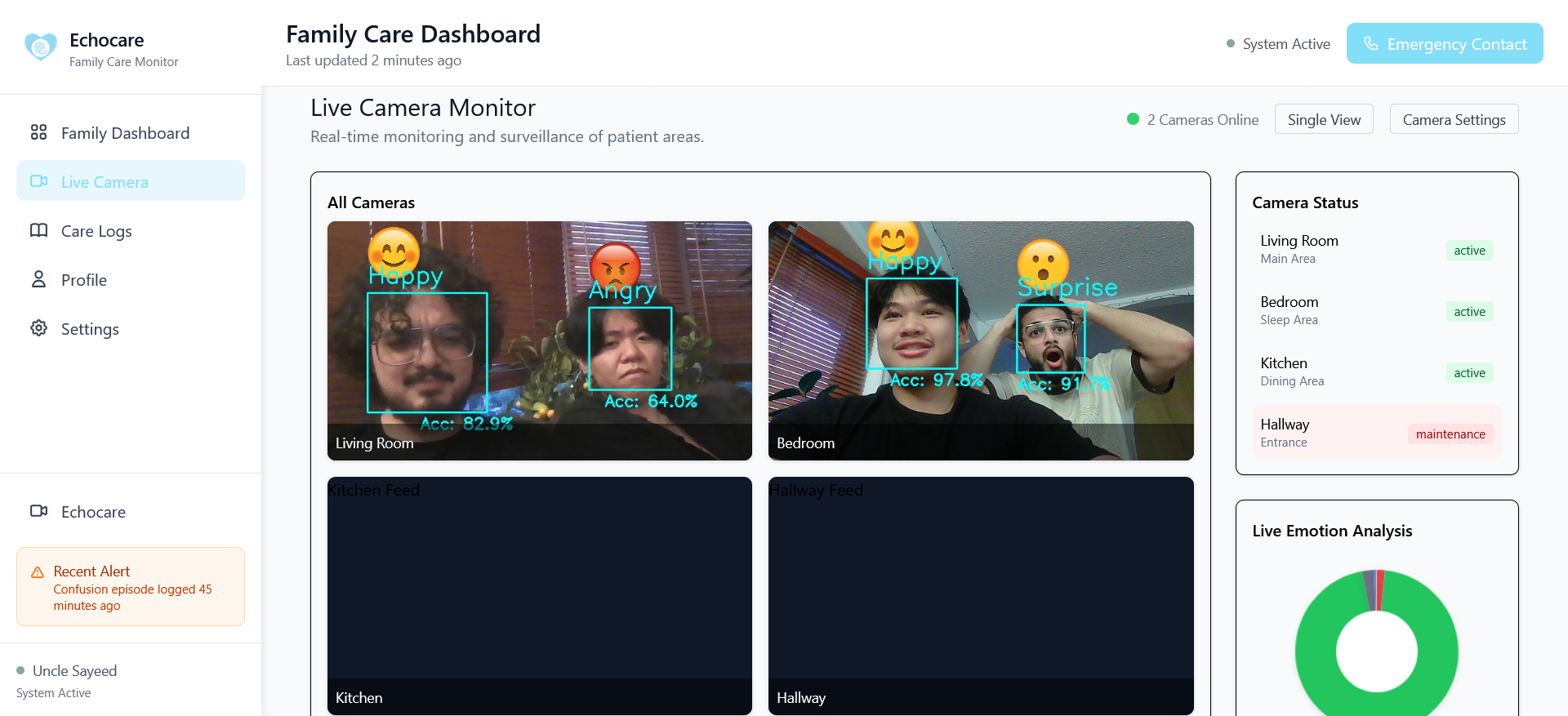
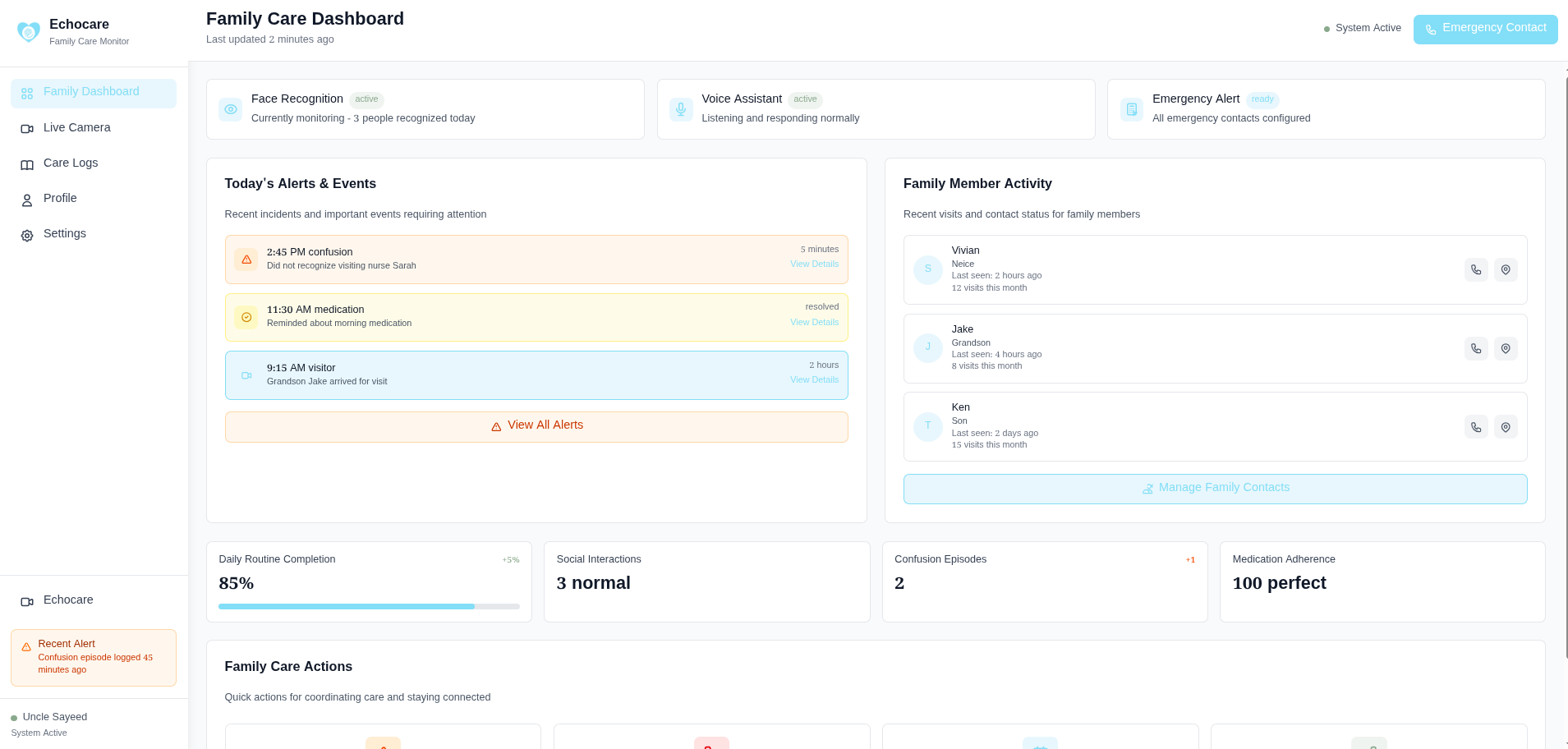
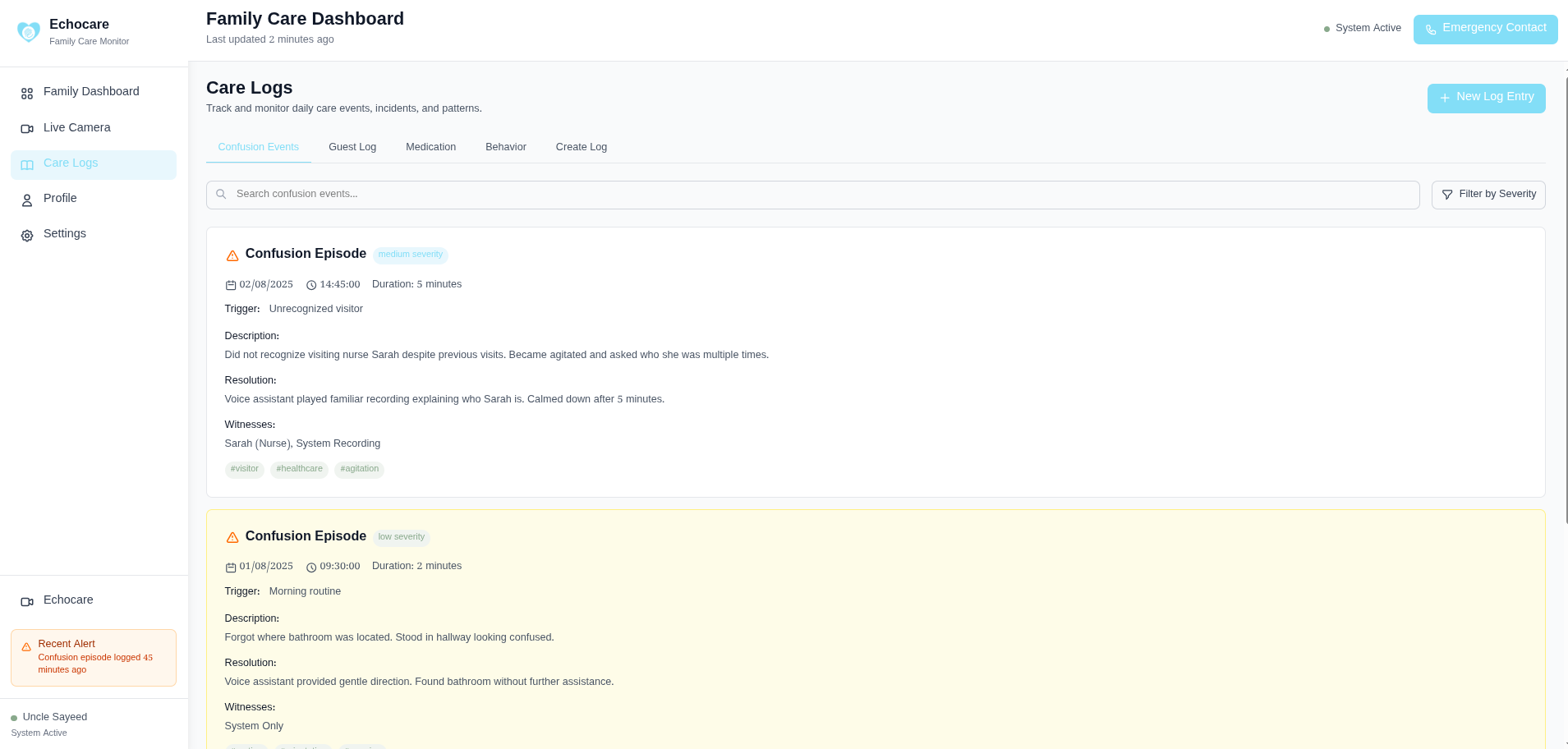
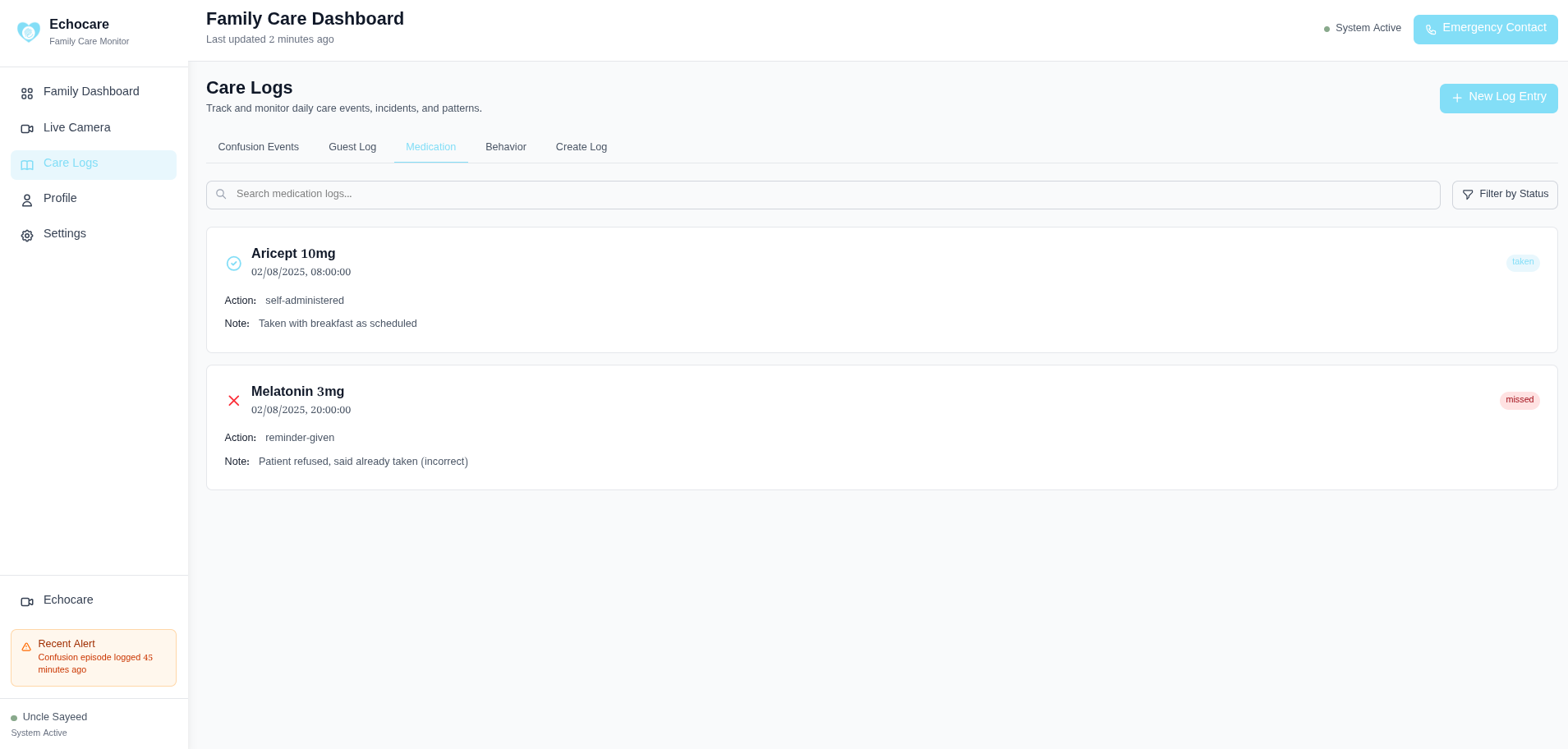
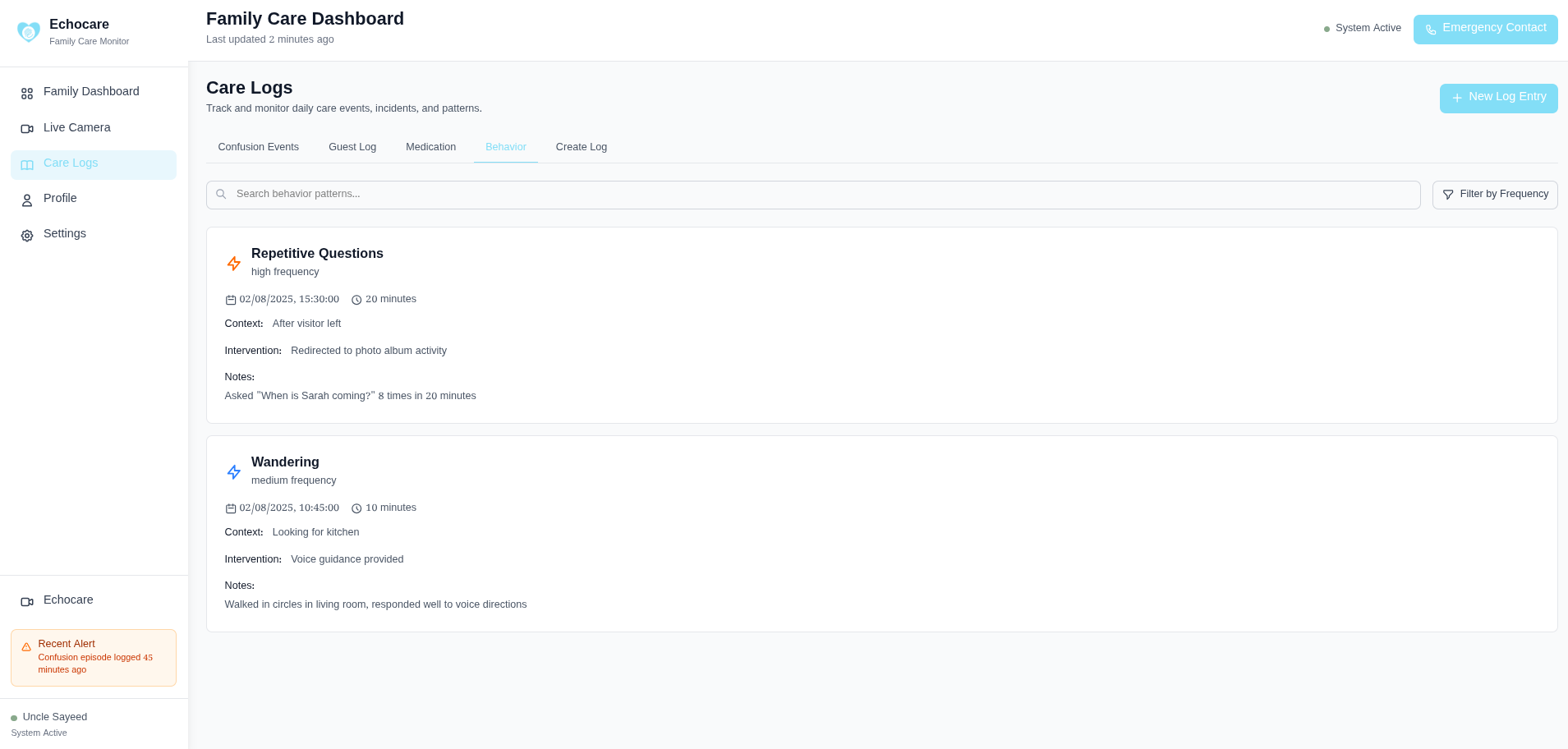
Echocare provides several key tools to assist with caregiving. It includes a Voice Assistant that acts like a simple voice remote, allowing you to get things done just by talking. The app also features Face and Emotion Recognition, which can identify who is in front of the camera and even get a sense of their mood. For tracking important details, there are Care Logs, which serve as a digital journal to record events like medication times or moments of confusion. Finally, the Family Dashboard gives you a main screen to see what's happening in real-time and provides a quick button for emergencies.
How we built it
We created Echocare as a full-stack application, which means we built both the visible parts and the background technology. We used Python for the brains of the app and a framework called Flask to make it run on the web. The smart features like face recognition use special software like TensorFlow and DeepFace. Everything was designed to work on a local computer, so your information stays with you.
Challenges we ran into
One of our biggest challenges was making the smart features work well and quickly on a regular computer, our hardware technology was not stable enough to handle our computational output. We had to work hard to make sure the face and voice tools were accurate and didn't slow the computer down too much by adjusting it to a lower level so that the technology can handle it. While creating some features of our system, we ran into issues such as linking the backend and frontend systems, and were able to dig in deep and find ways to efficiently bridge the two ends.
Accomplishments that we're proud of
We're proud that we made a system that can do complex things like recognize faces and understand voices, but still keep all the information private. It was a big success to create a tool that can truly help others and the healthcare community, as well as being able to create a system that they can trust.
What we learned
We learned a lot about how to build a complete application and how to make machine learning models work with deepface~facial and emotion tracker. We also gained insights about dementia patients on how it could better their lives and how we could contribute to the community. Gained better coding skills such as implementing voice clone and making use of emerging tech.
What's next for Echocare
For the future, we want to make the app even better by: -> Improving emotion detection to recognize more feelings. -> Making the activity tracking smarter so it can understand more daily routines. -> Gain more involvement from new users from vast age groups, more exposure -> Adding a feature that would let users share information with other family members or doctors if they choose to. -> Market out, potentially build with investors


Log in or sign up for Devpost to join the conversation.