-
-
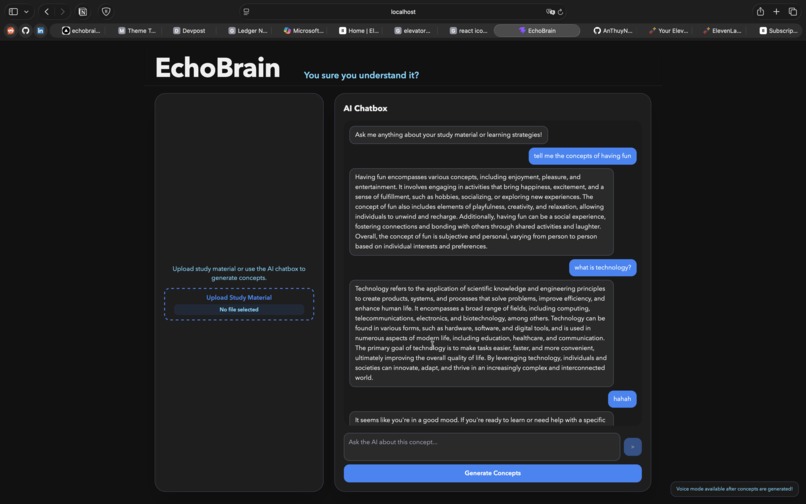
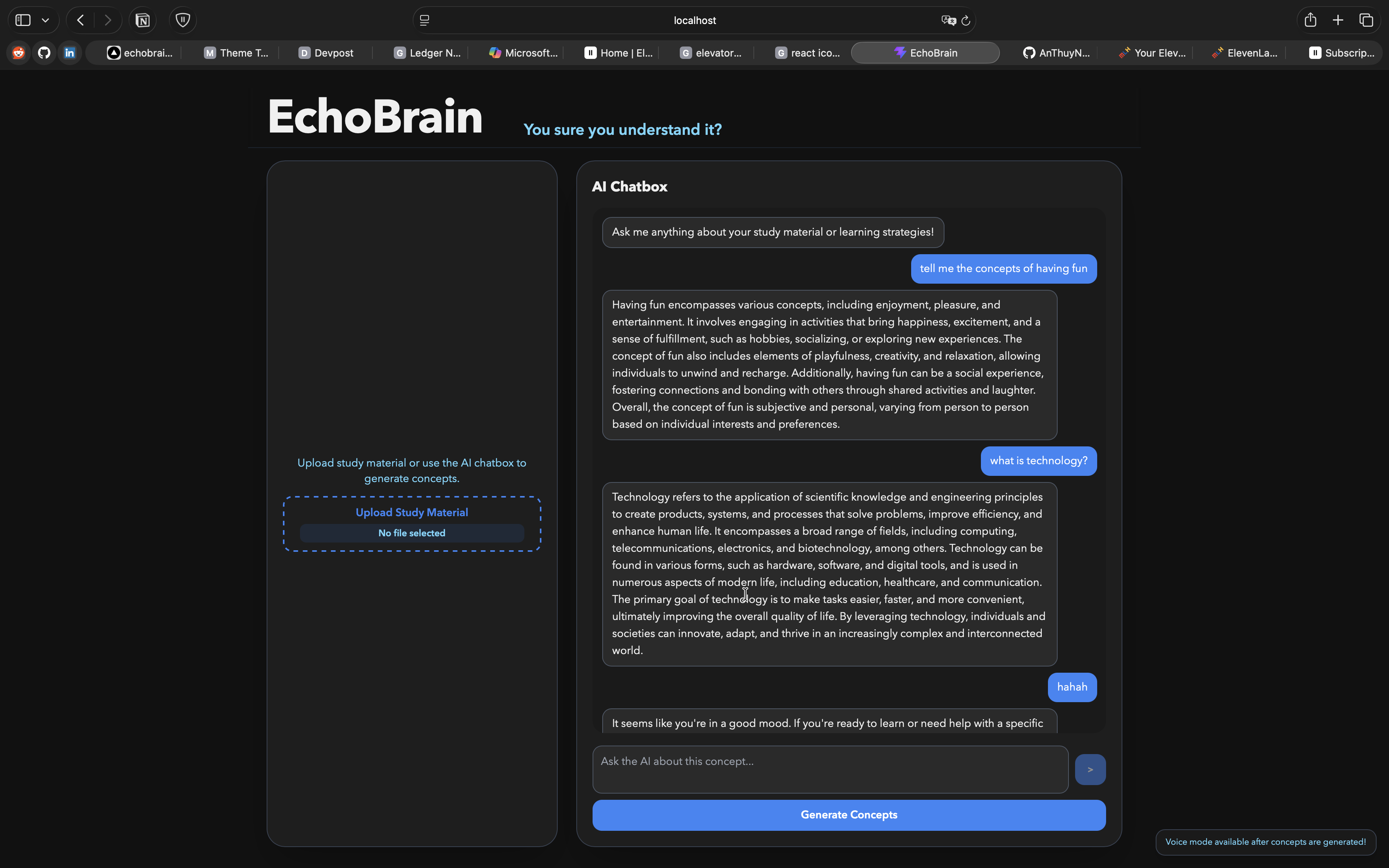
Onboarding
-
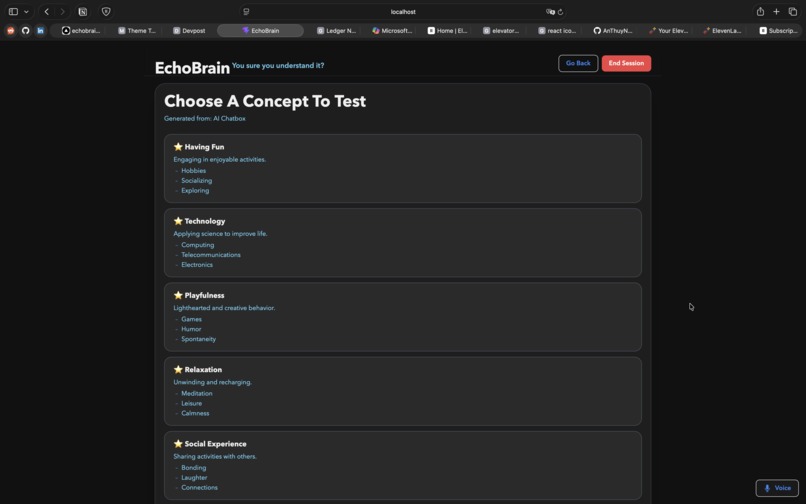
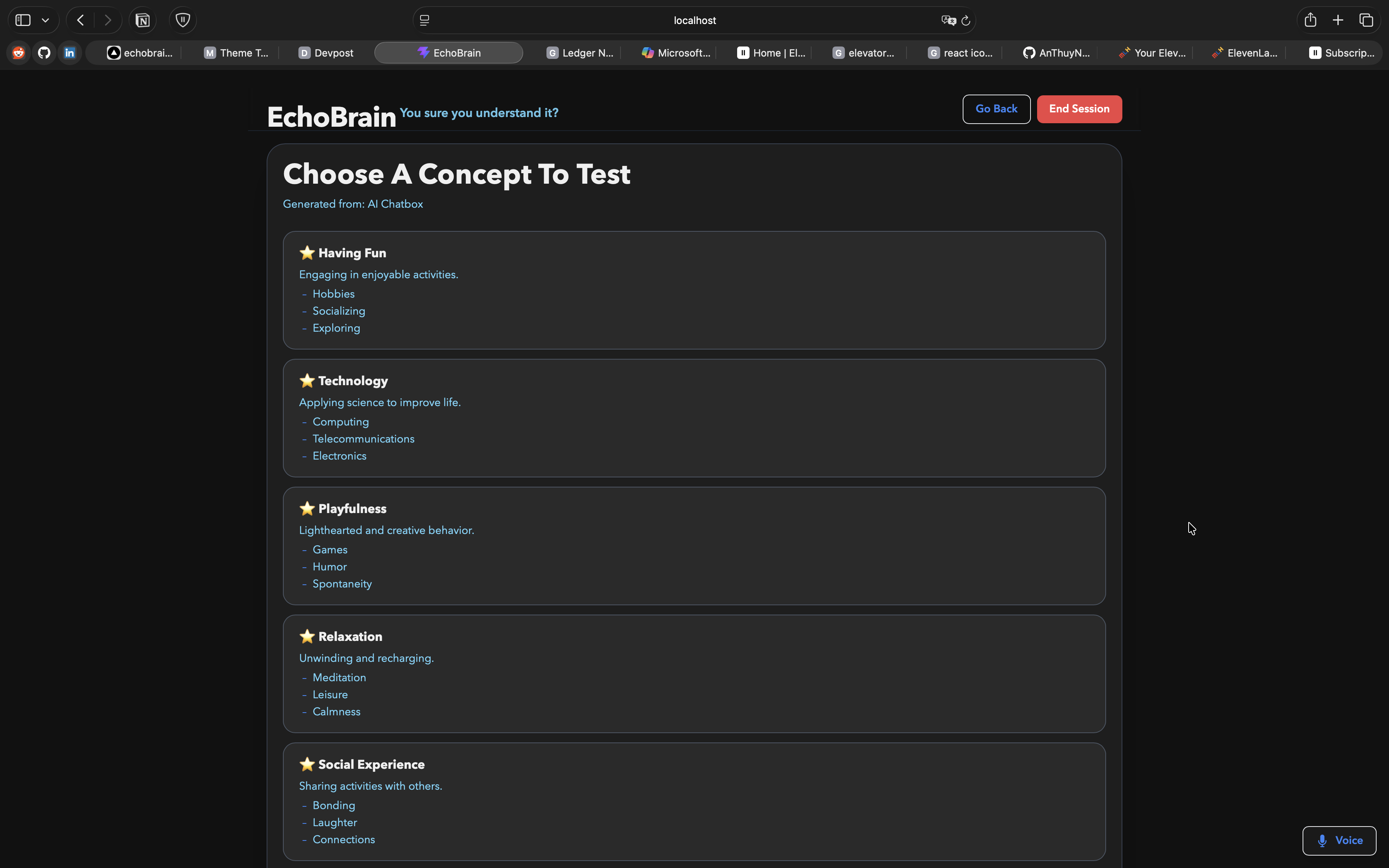
Concept List generated
-
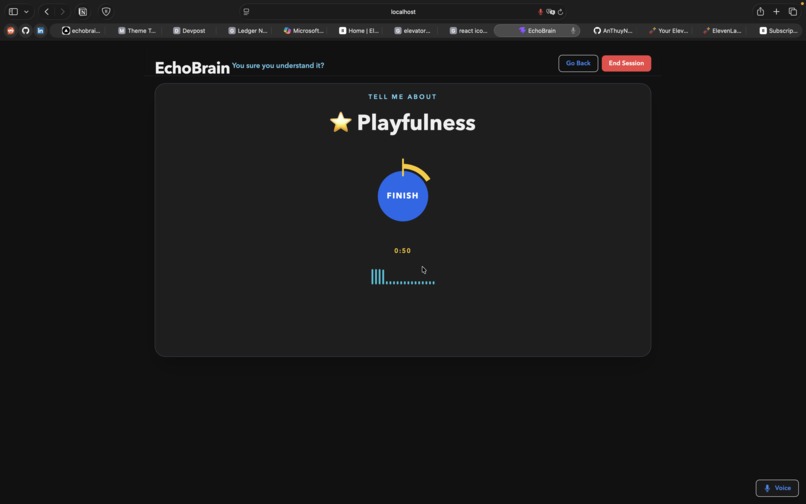
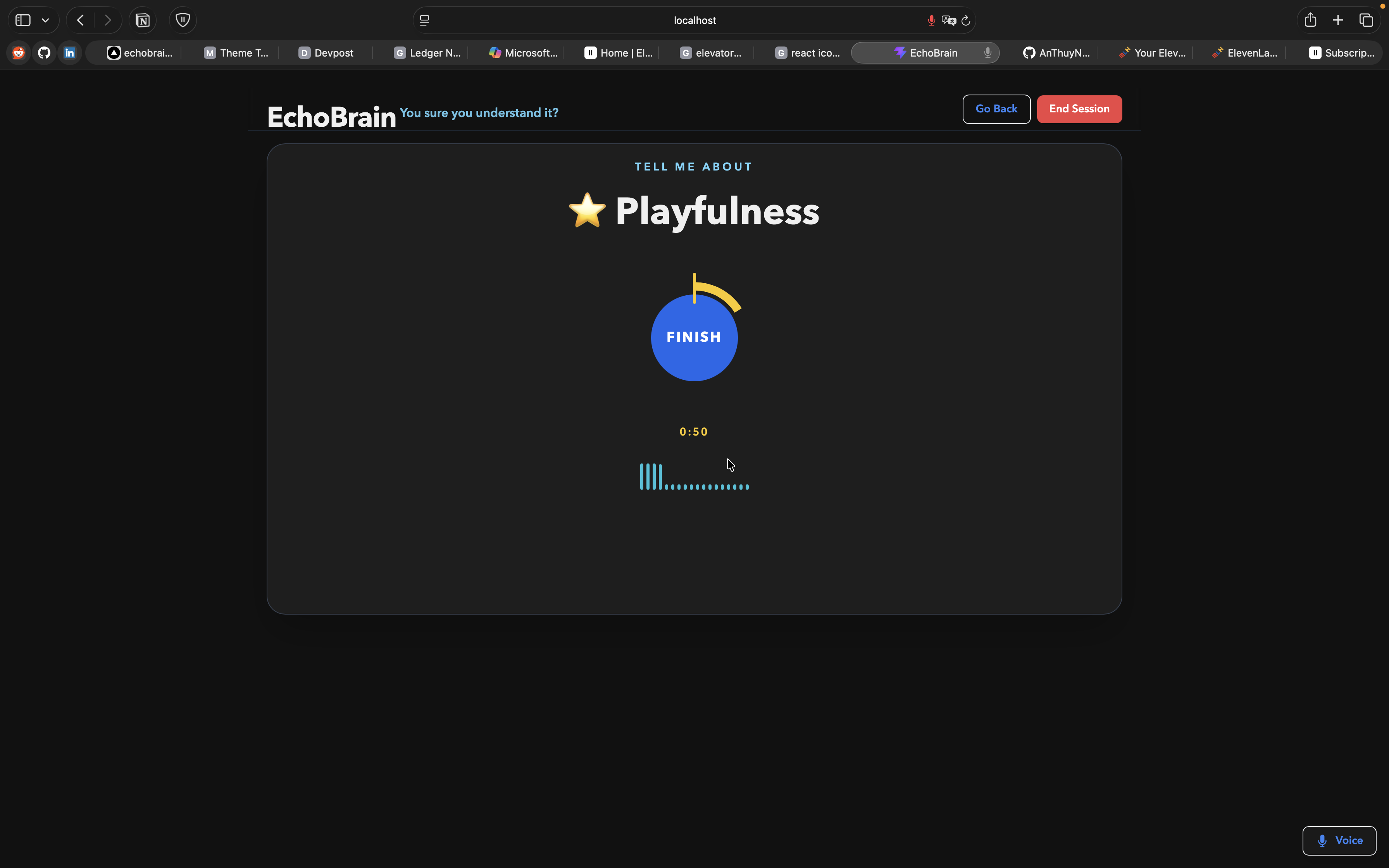
Concept testing
-
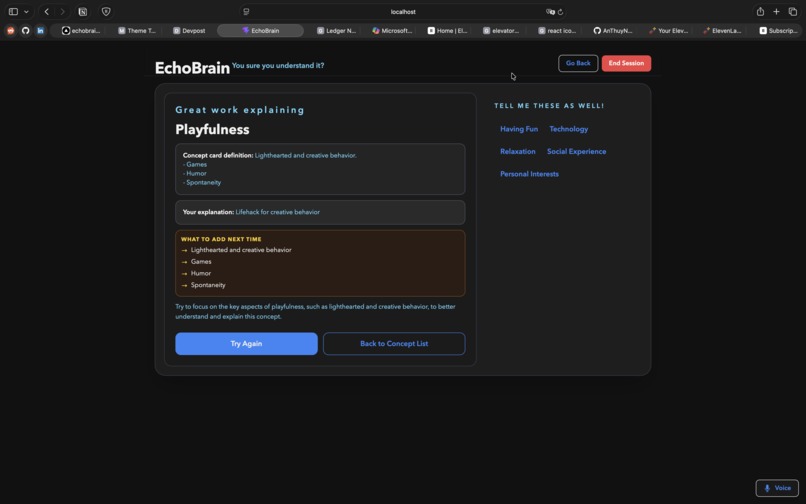
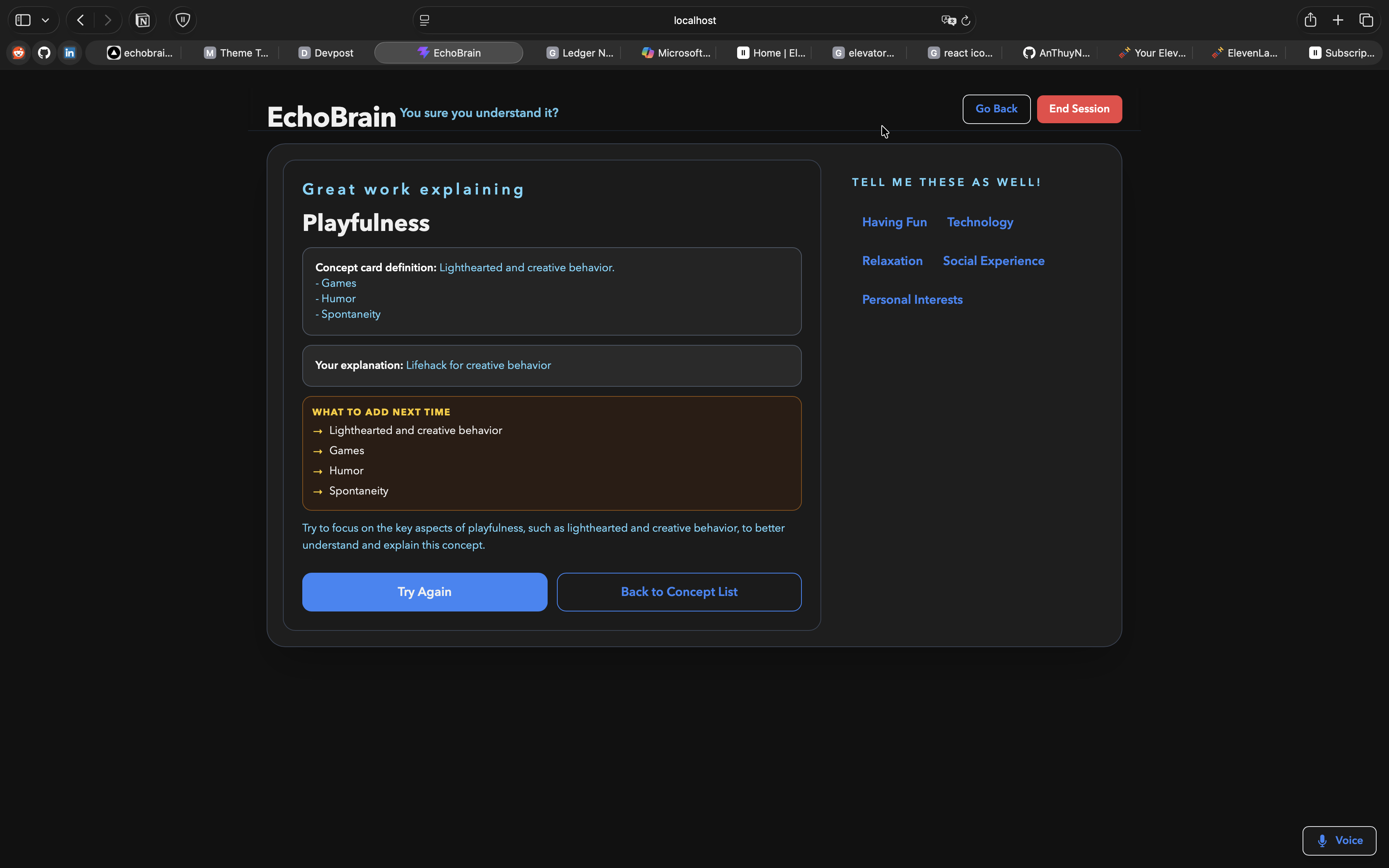
Feedback page
-
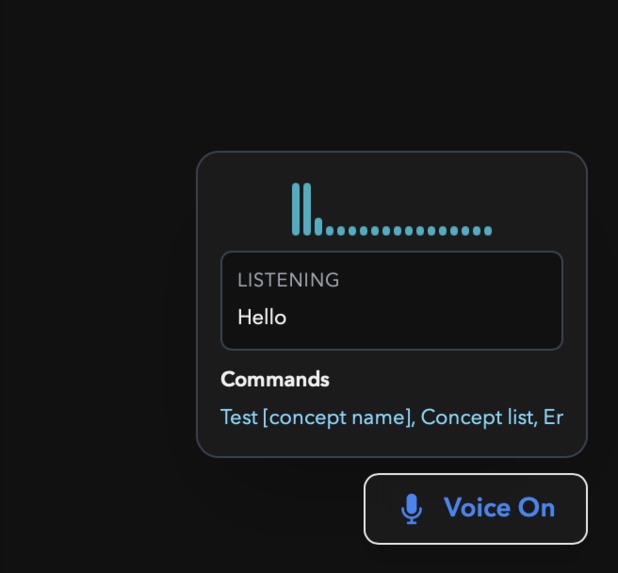
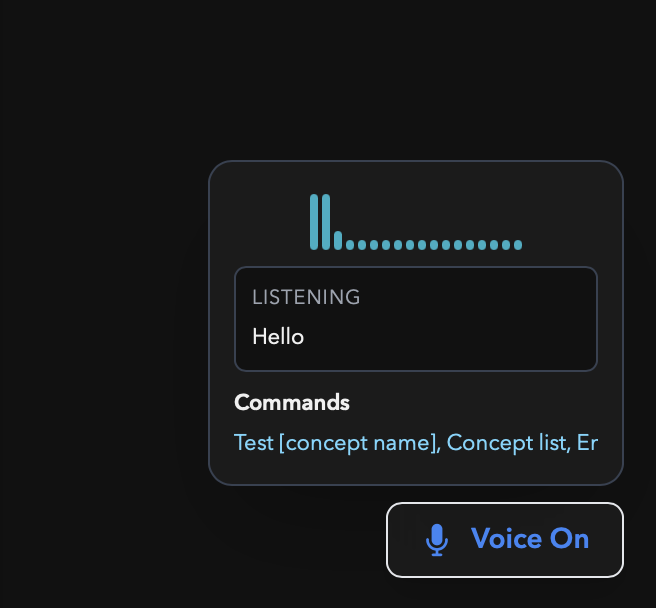
Voice mode activated with command prompt
About the Project
EchoBrain was built to solve a common problem: reading feels like learning, but it often isn’t. This is especially true for ADHD learners, who can read something multiple times and think they understand. The moment you try to explain it out loud is when you discover what you actually get or don't. EchoBrain turns that moment into a study tool.
It’s a voice‑first learning companion that listens to your explanation, compares it to the real concept, and shows you what you got right and what you missed. No quizzes, no pressure — just active recall made simple.
How I Built It
EchoBrain uses a simple loop:
Explain → Analyze → Feedback → Master
- Users speak their explanation.
- Speech‑to‑text converts it into clean text.
- An LLM compares the explanation to short concept cards.
- The system highlights correct points, missing points, and gives supportive feedback.
- Optional TTS reads the feedback back to the user.
The UI is intentionally minimal to reduce cognitive load and keep ADHD users focused.
What I Learned
I learned how to design voice‑first learning flows, build concept extraction prompts, integrate STT and TTS, and create an ADHD‑friendly interface. I also learned how powerful active recall becomes when the feedback loop is instant.
Challenges
Key challenges included parsing PDFs into clean concepts, keeping bullet points short but long enough for information gain, preventing the LLM from over‑explaining, managing latency, and keeping the experience simple enough for ADHD users.
Why It Matters
EchoBrain helps learners break the illusion of understanding, practice active recall effortlessly, and get instant clarity. For ADHD learners, this approach isn’t just helpful, it’s transformative.
Built With
- copilot
- duckduckgo
- elevenlabs
- git
- groq
- pymupdf
- python
- python-doc
- react
- vite

Log in or sign up for Devpost to join the conversation.