-
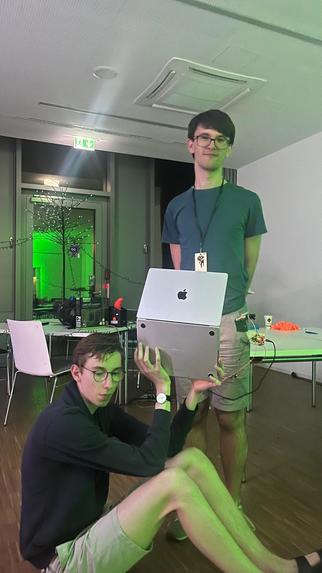
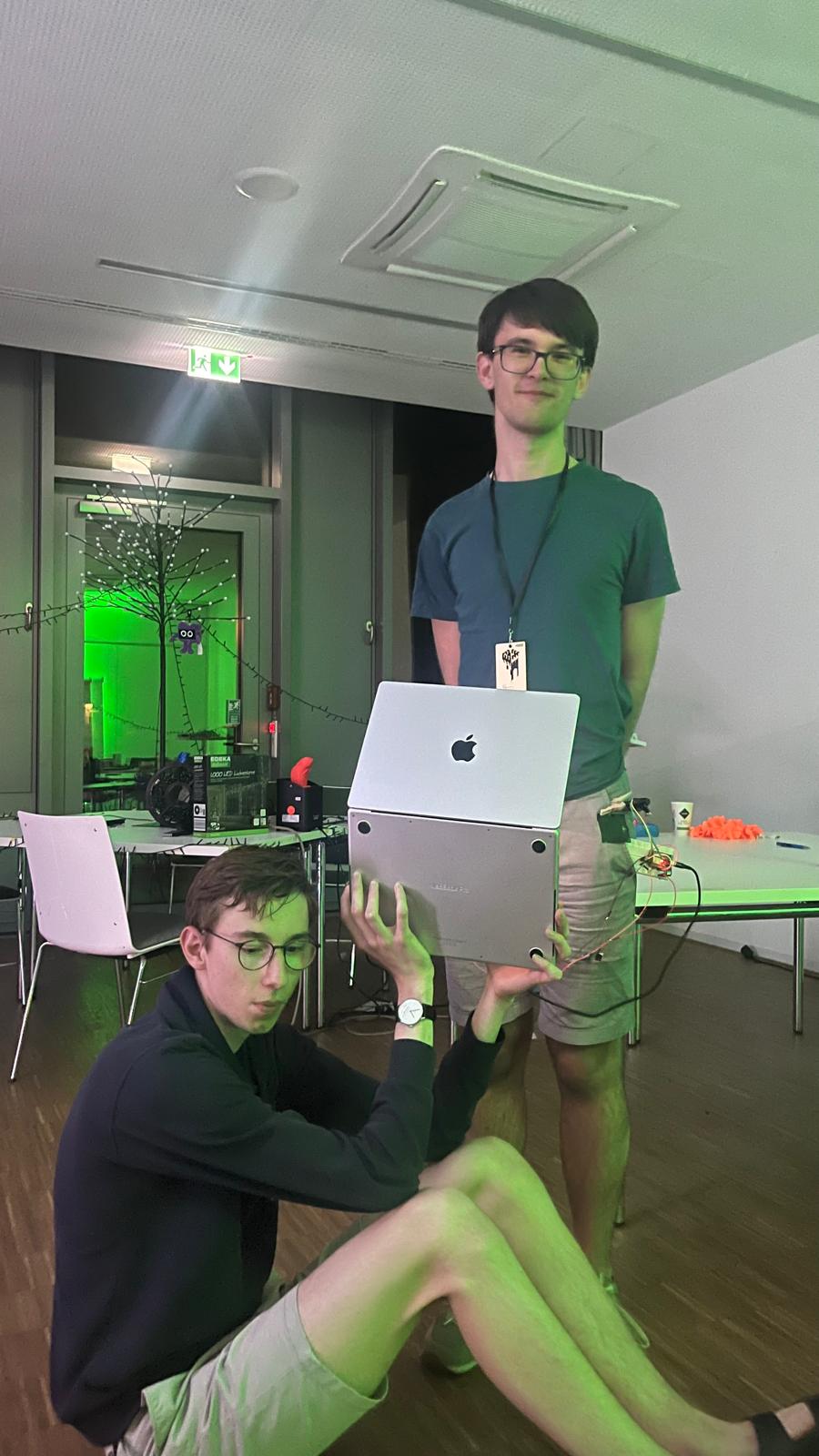
belt in action
-
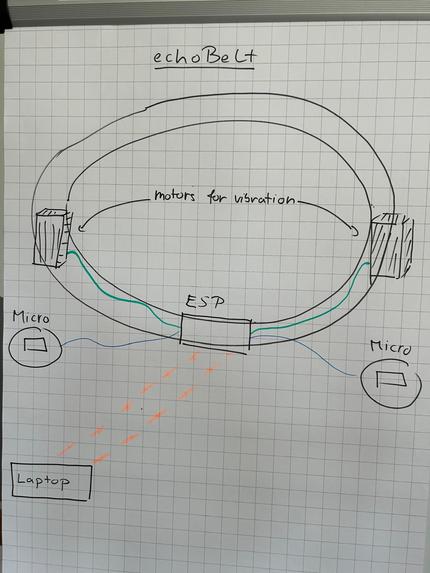
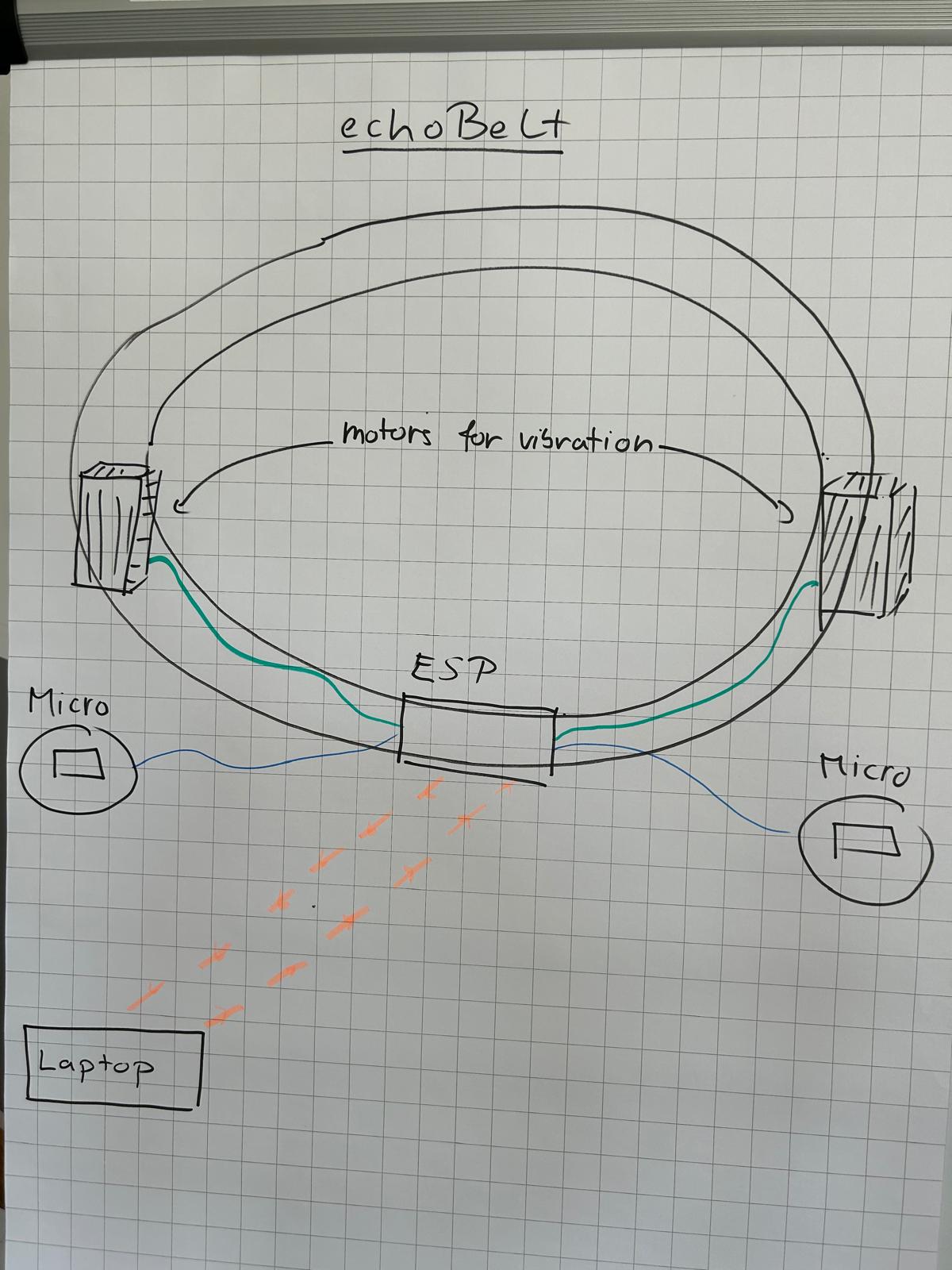
belt design
-
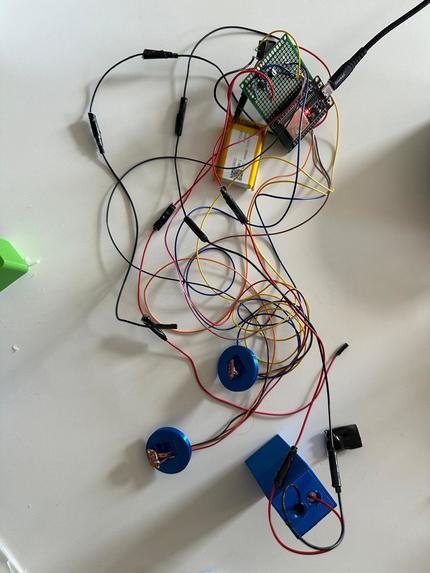
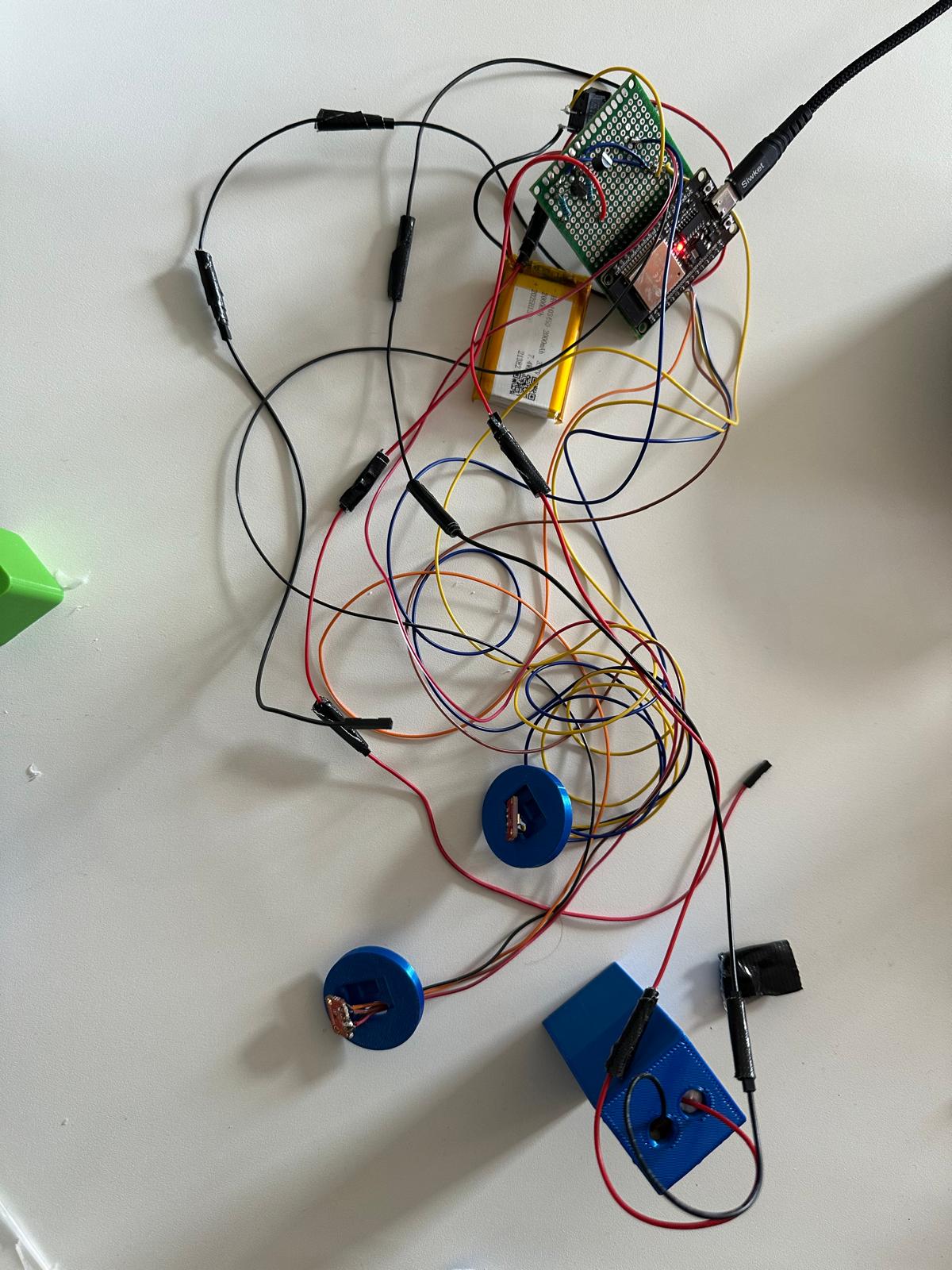
electronical layout
-
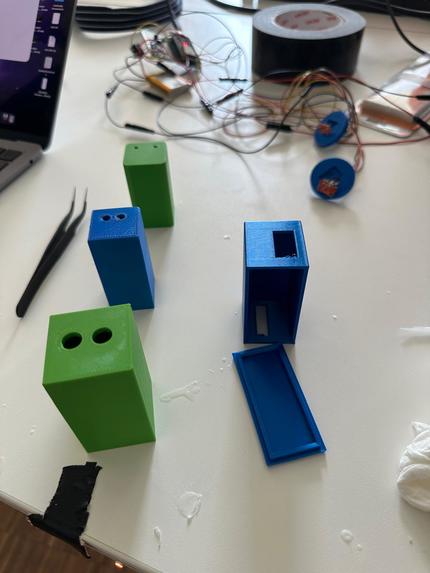
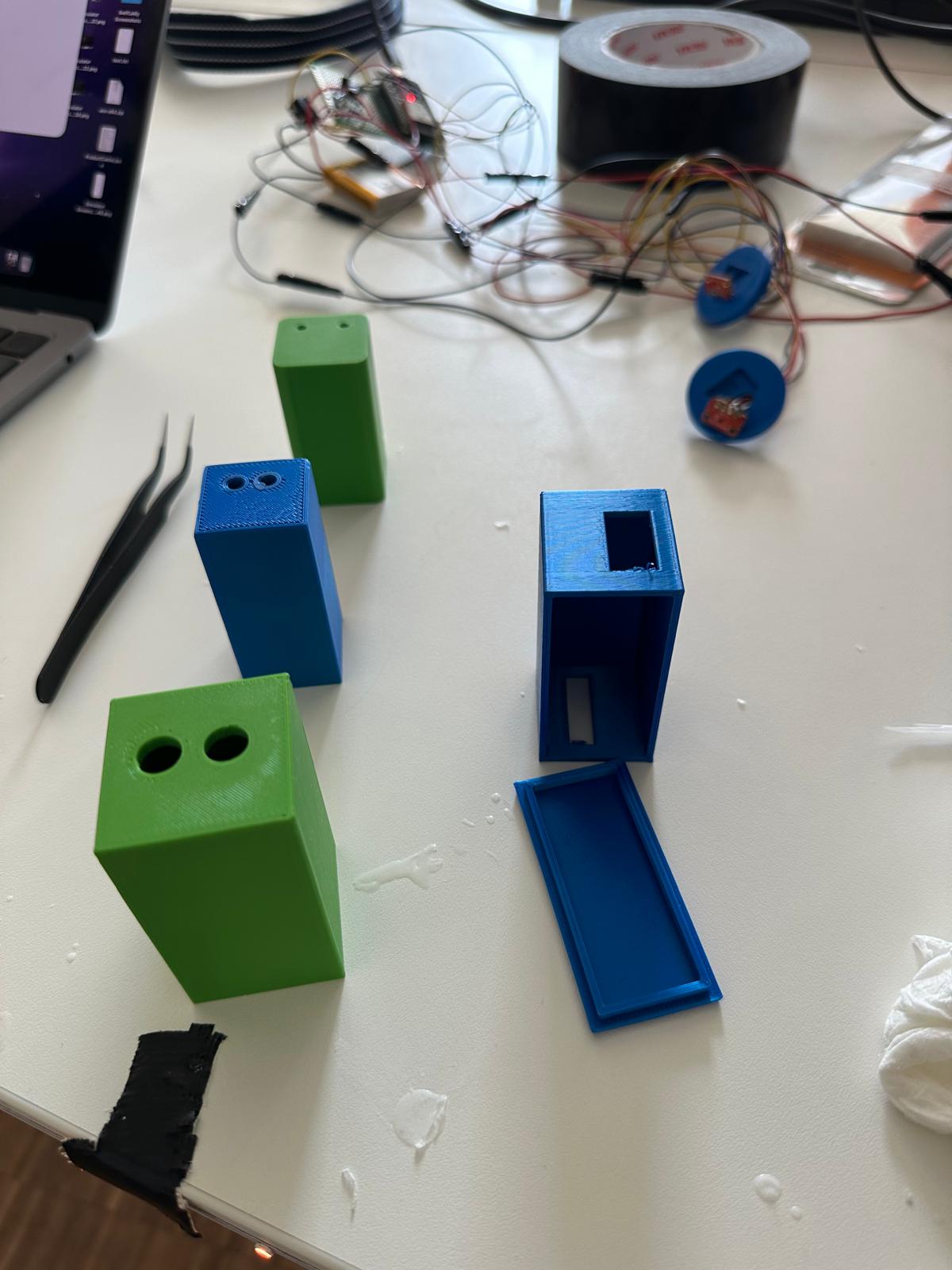
3d-printed cases
Inspiration
The idea for EchoBelt started with a simple question: if people with noise-cancelling headphones can accidentally miss important sounds, how much bigger is that challenge for people who cannot hear at all?
Hard-of-hearing individuals often miss critical sounds such as ambulance sirens, fire alarms, car horns, or warning shouts. Existing solutions frequently rely on visual notifications through smartphones, forcing users to constantly look at a screen and reducing awareness of their surroundings.
After speaking with a social worker who works closely with hearing impaired individuals, we realized this was a real problem worth solving. We wanted to create a solution that allows users to perceive important sounds without relying on hearing or vision.
What it does
EchoBelt converts important environmental sounds into intuitive vibrations.
Using multiple microphones, the system detects sounds and estimates their direction. The belt then vibrates from the corresponding side, allowing the user to instantly know where the sound originated.
This provides hearing impaired users with greater awareness, independence, and safety in everyday situations.
How we built it
We built EchoBelt using:
- two high-precision Infineon microphones
- A signal-processing unit for sound analysis
- Multiple vibration motors integrated into a wearable belt
- Custom 3D-printed hardware components
To detect relevant sounds, we performed the yamnet audio classification model on it. Directional information was estimated by comparing signals from multiple microphones.
OpenClaw helped us accelerate software development and rapidly prototype key parts of the system.
Challenges we ran into
One of the biggest challenges was reliably determining the direction of incoming sounds with a limited number of microphones.
Another challenge was classifying which sound is detected (fire siren, ambulance, car horn). We wanted users to understand alerts immediately without requiring extensive training. That's why after some time we hopped onto our yamnet model.
Integrating electronics, mechanics, and software into a wearable prototype within the limited time of a hackathon was also a significant challenge.
Accomplishments that we're proud of
- Building a fully functional wearable prototype during the hackathon
Successfully translating sound direction into tactile feedback
Developing custom 3D-printed hardware
Validating the idea through discussions with accessibility professionals
Demonstrating the concept live with users identifying sound directions through vibration alone
What we learned
importance of perceptiveness and empathy in development - which challenges do people with hearing impairment experience in navigating everyday life and what are solution that have an actual impact
What's next for echoBelt
- Increase directional accuracy with additional microphones
- Add more vibration zones for richer feedback
- Reduce size and weight for everyday comfort
- Expand support for additional safety-critical sounds (baby screams)
- Creating distinct vibration patterns for different sound events
Safety should not depend on hearing!
Built With
- 3d-printing
- arduino
- autodesk-fusion-360
- c++
- c-sharp
- esp32
- python
- yamnet


Log in or sign up for Devpost to join the conversation.