-
-
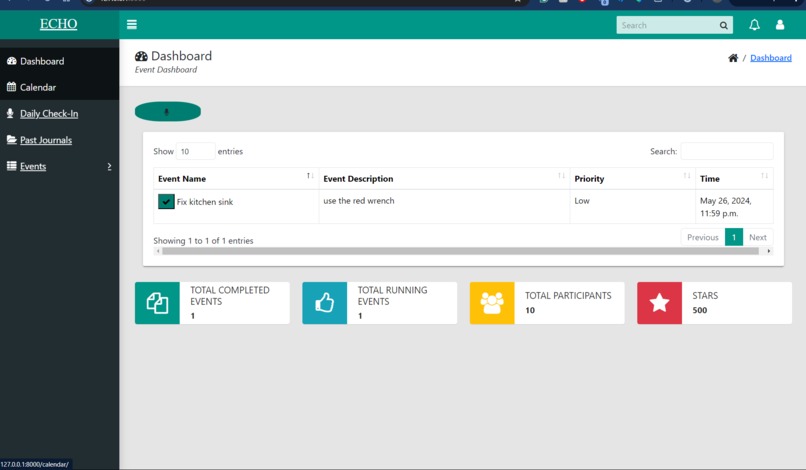
Dashboard To-Do List
-
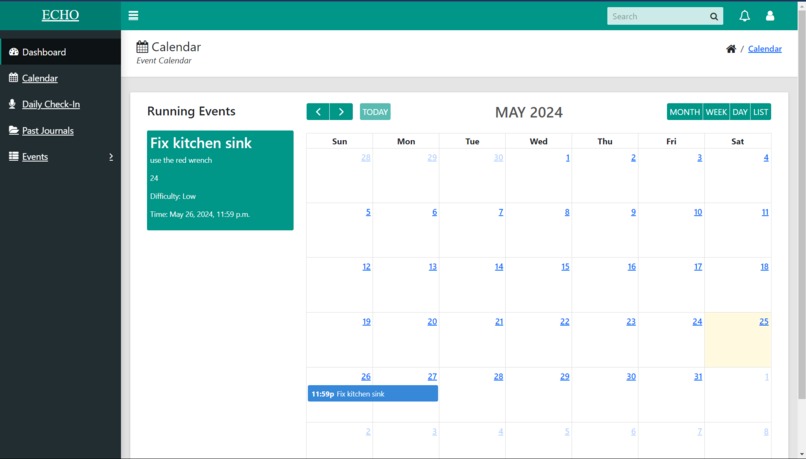
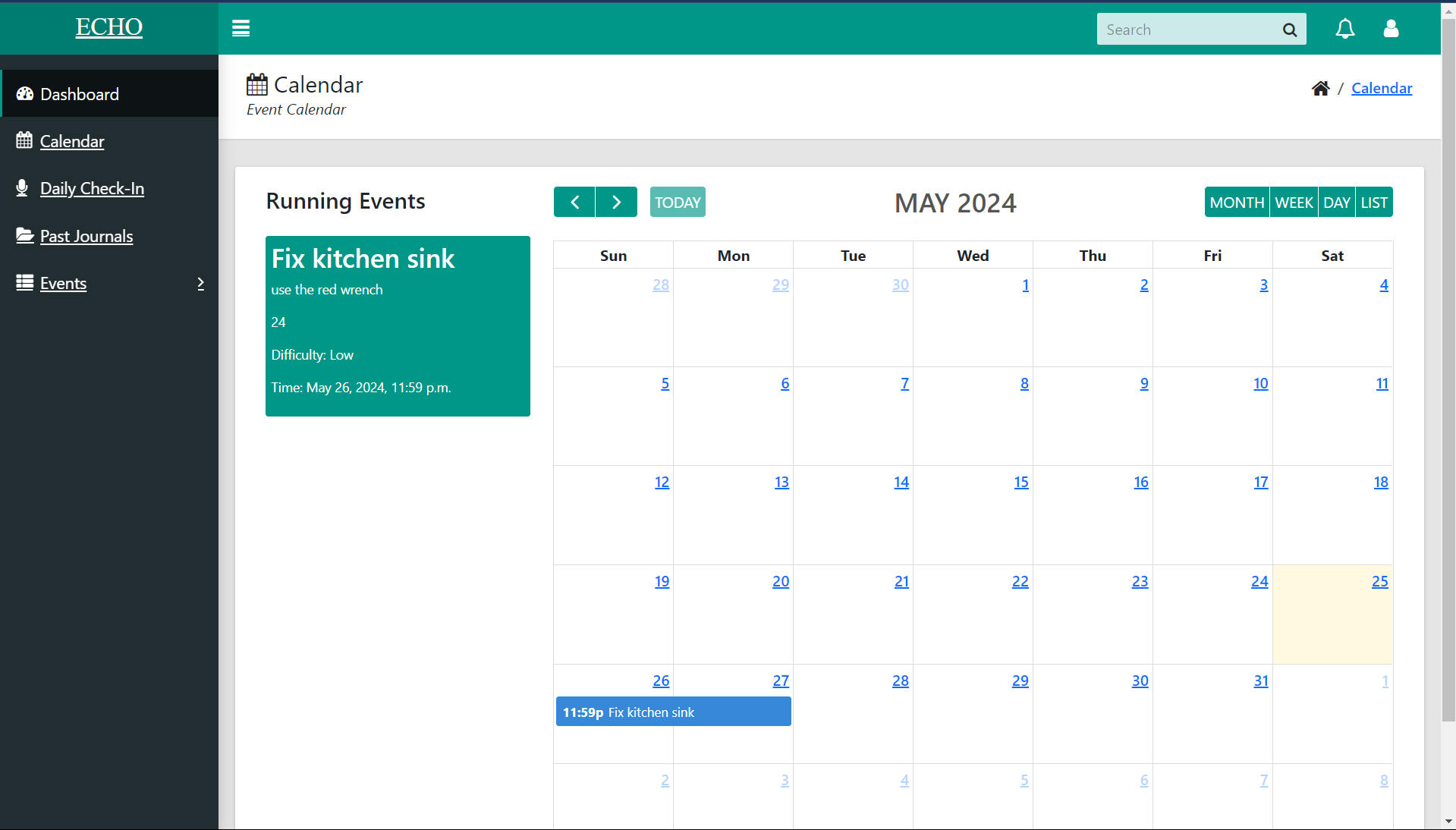
Calendar
-
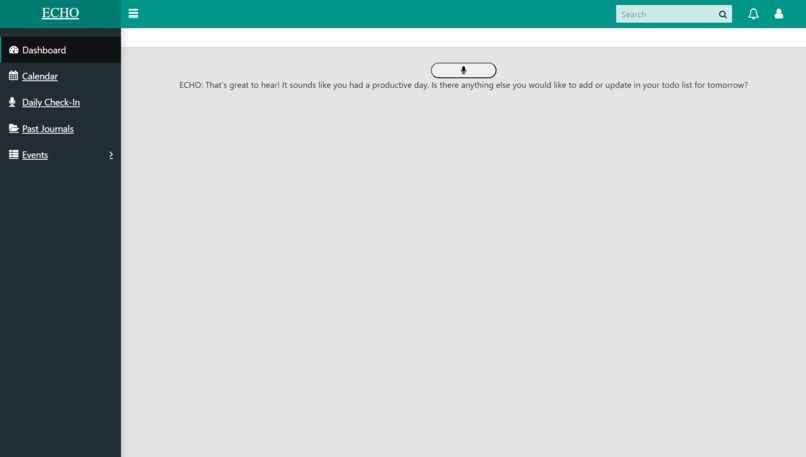
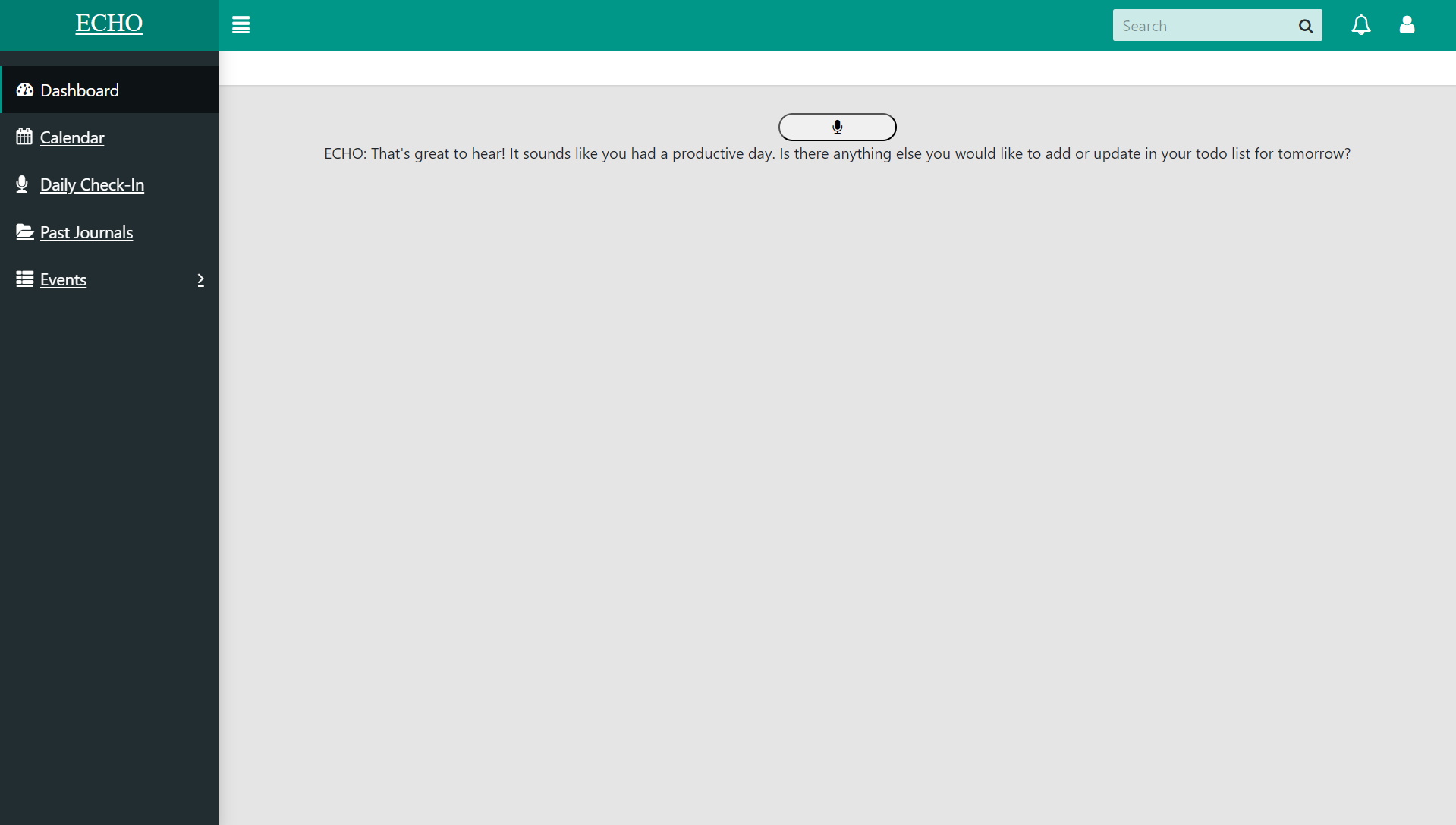
Daily Check-in
Inspiration
We were considering how prevalent procrastination is and its detriments to students' productivity. Some of the best counters to procrastination in our lives are having others keep us accountable and maintaining a to-do list, which are both a lot of work. So, we decided to take the essence of these ideas and combine them in a streamlined way using modern speech recognition and AI models.
What it does
Echo allows users to converse with the app about their tasks and events, and it updates their to-do list and calendar accordingly. It also has an end-of-day check in, where the AI assistant chats with the user about how their tasks went that day and updates their lists. We also remind the user of their tasks over text and/or email to keep them accountable.
How we built it
We used Django, Python, HTML, CSS, and Javascript to build the website. We used Python for most of the backend. We did speech to text with the Web Speech API and Whisper library. We used the library pyttsx3 for speech synthesis (text to speech). We also used Gemini and GPT-3.5 APIs behind the scenes to enable all of the generative AI features, like formatting the to-do lists and doing the check-ins with the user.
Challenges we ran into
Throughout the development, integrating the Python libraries in the backend with the Django framework was challenging.
Accomplishments that we're proud of
We're proud that our primary feature of updating the to-do list based on the user's voice works well.
What we learned
We learned how to use large language models and our coding skills to make a real web app that provides value for users.
What's next for Echo: Your Personalized Manager
We would like to develop a mobile application of this as we see updating the to-do list quickly on the go as a significant use case. We would also polish up the interface further.

Log in or sign up for Devpost to join the conversation.