



Inspiration
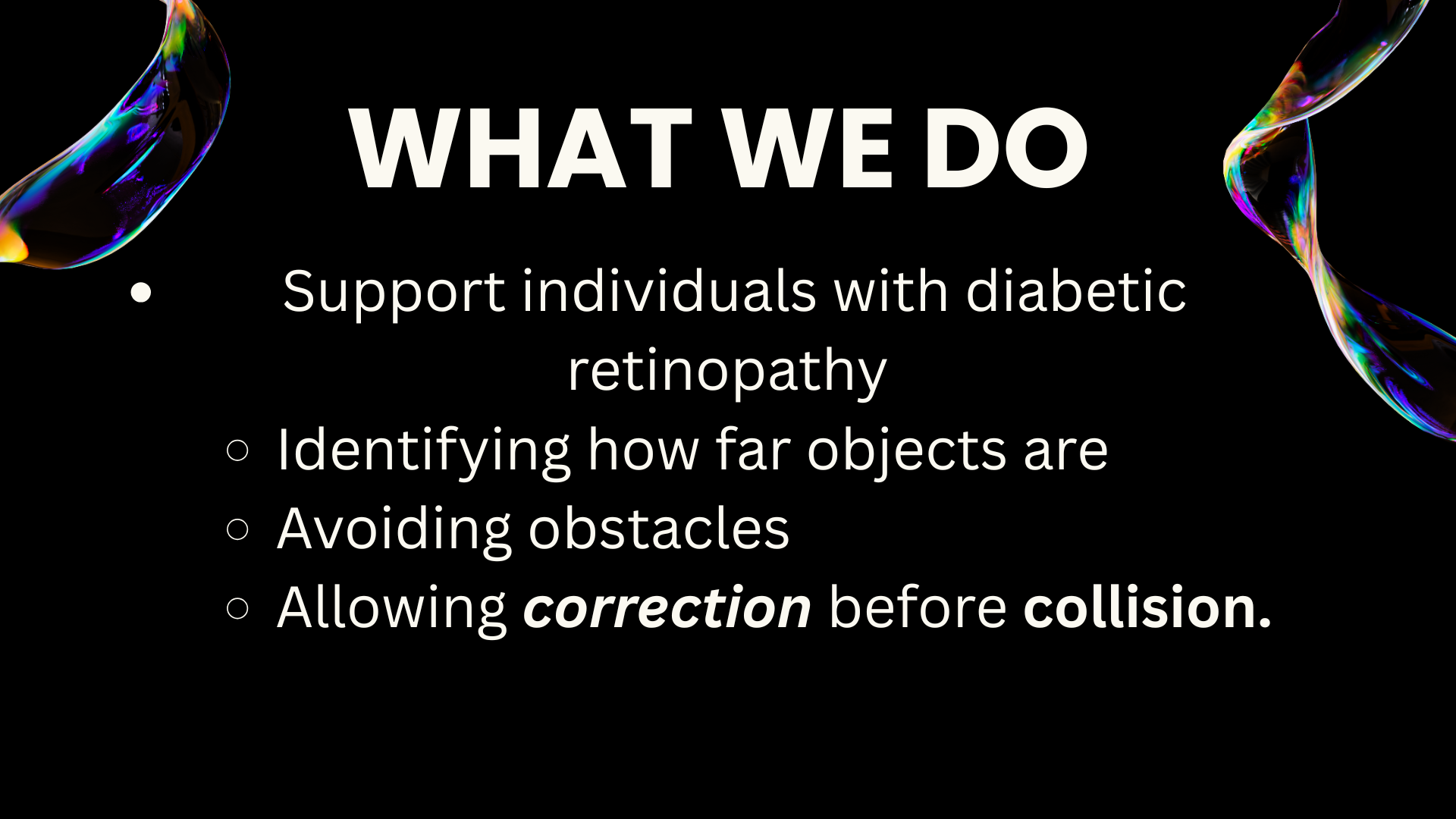
We were inspired by the millions living with Diabetic Retinopathy who struggle with depth perception, stairs, obstacles, and crowded environments. We wanted a solution that restores independence without surgery, medication, or stigma.
What it does
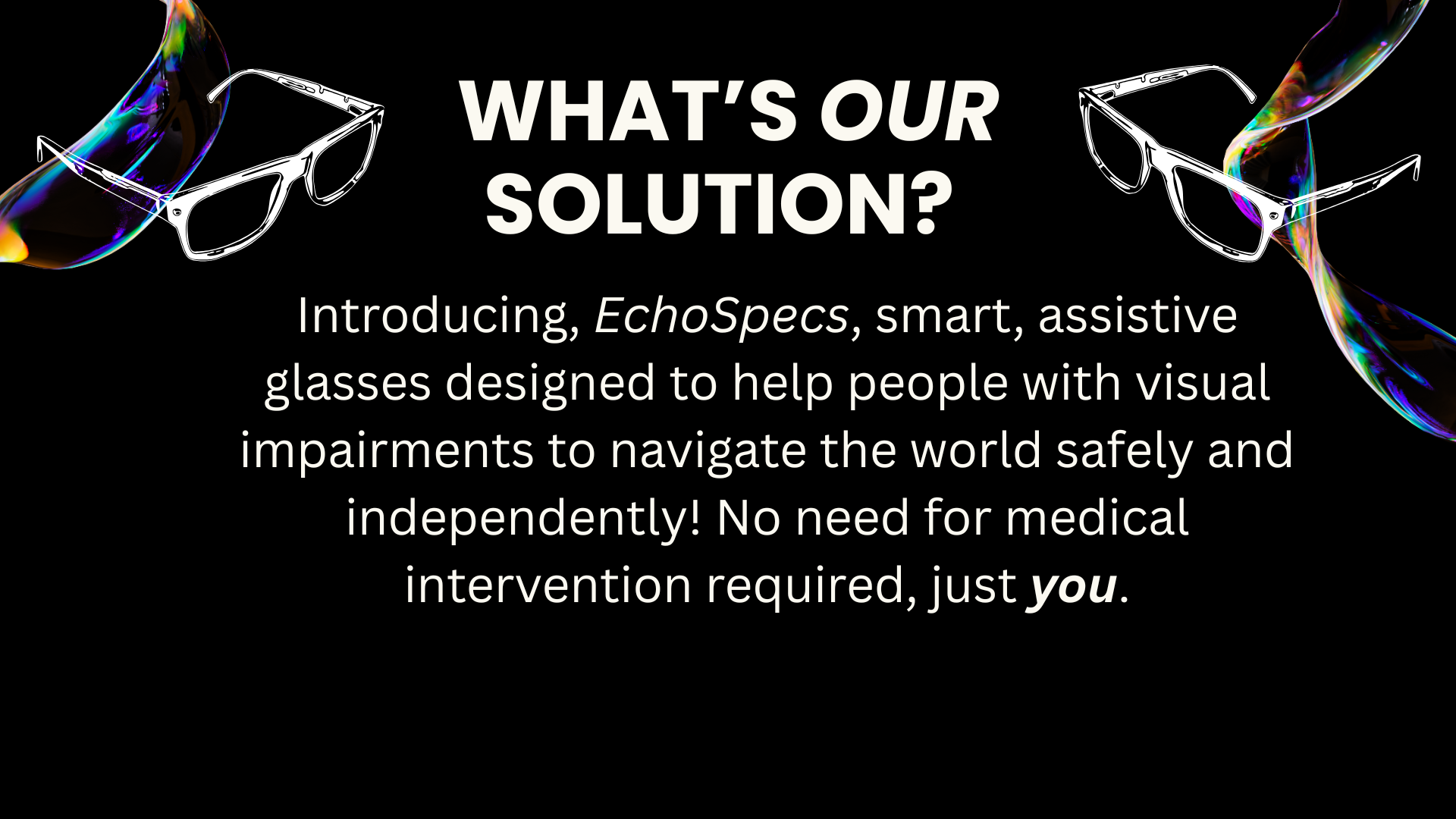
Echo Specs are smart glasses that detect obstacles 3–6 meters ahead and alert users with gentle signals. They help with steps, walls, poles, and crowds, giving users confidence to move safely in everyday life. We are planning to expand our functions to GPS Tracking, Live views, and even emergency alert.
How we built it
We combined ultrasonic distance sensors, a microcontroller, and a lightweight glasses frame. Our software interprets distance data and triggers real-time alerts. We designed the frame, prototyped quickly, and built a working detection system.
Challenges we ran into
- Calibrating distance sensors in noisy environments
- Minimizing false alerts in crowds
- Designing a lightweight, comfortable frame
- Integrating hardware without obstructing vision ## Accomplishments that we're proud of
- Functional prototype.
- Well-designed website that connects with the glasses.
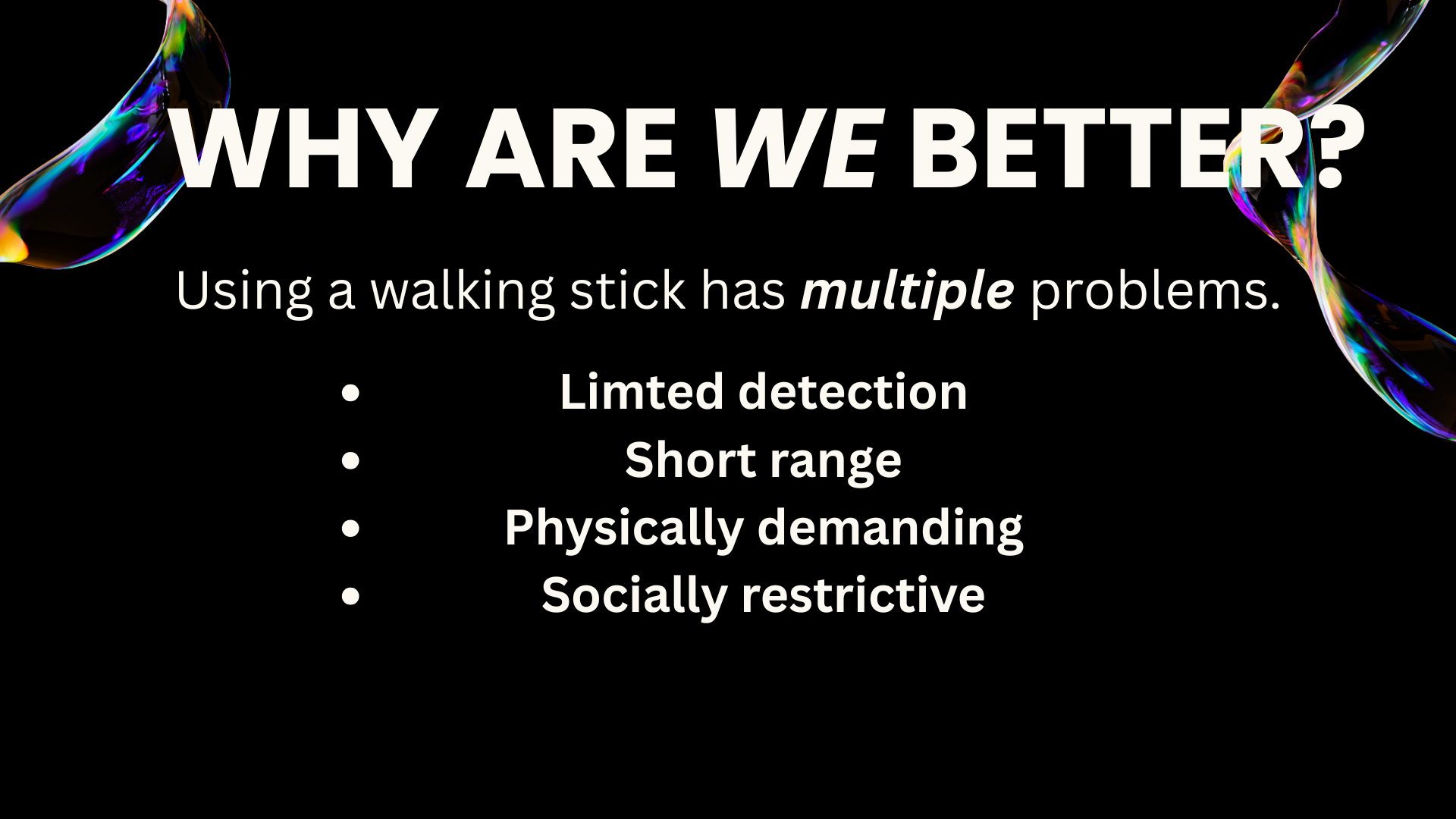
- A solution to the walking stick. ## What we learned We learned how real depth-perception challenges affect mobility, how to optimize sensor feedback, and how important user-centered design is in assistive tech. We also improved our rapid-prototyping and hardware integration skills. ## What's next for Echo Specs
- Adding haptic feedback zones for directional alerts
- Implementing AI object recognition
- Improving long-range detection
- Refining the frame for comfort and style
- User testing with visually impaired individuals
- Preparing for real-world deployment
Built With
- arduino
- canvas
- css
- html
- javascript
- sensor
- ultrasonic


Log in or sign up for Devpost to join the conversation.